Pizza Ovens · 12 of 12
Corrections: What the Research Overturned
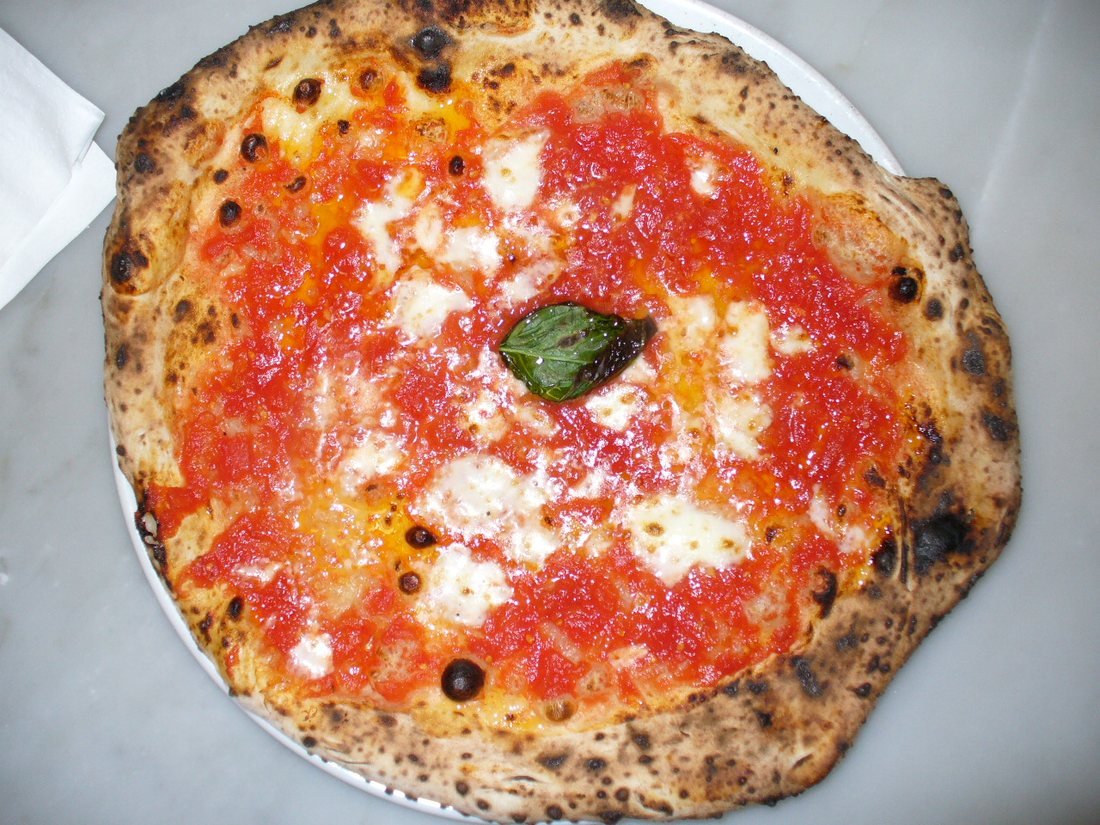
Pizza has more confident stories than most foods, and pizza ovens have more marketing. This page collects what the research for this section found: claims that are false, claims true only in a narrower form, and claims that could not be confirmed — none of which is stated as fact anywhere in the section.
False
| The claim | What the record shows | Where |
|---|---|---|
| The Margherita was invented in 1889 for Queen Margherita. | Basil and sliced mozzarella were on Neapolitan pizza by the 1850s–60s (Rocco). The royal letter is disputed in peer-reviewed work (Nowak, 2014), and even the EU regulation says the pizza dates from 1796–1810 and was only presented to the queen. | History |
| Lombardi’s opened America’s first pizzeria in 1905. | A pizzeria operated at 53 Spring Street from about 1898 under other owners; Lombardi owned it from 1908. | History |
| America’s first pizzerias were wood-fired. | They burned coal — Lombardi’s and Pepe’s both still do. | History |
| Real Neapolitan pizza must come from a wood-fired oven. | True under the EU regulation; no longer true under the AVPN’s trade mark, which now certifies gas and electric ovens. | The rules |
| The EU protects the name “pizza napoletana.” | It was registered “without reservation of the name.” Only the TSG mention and logo are protected. | The rules |
| Neapolitan pizza dates from 1715–1725 (the EU regulation’s own history). | Its source, Vincenzo Corrado, was born in 1736. | The rules |
| The floor cooks the bottom and hot air cooks the top. | In a measured Naples oven, about 73% of the heat reached the food as radiation and only 12% by conduction from the floor. | How it cooks |
| A baking steel is “more radiant” than a stone. | Oxidised steel’s emissivity (~0.79) is lower than rough brick’s (~0.93); steel’s advantage is conduction. | How it cooks |
| An oven’s built-in thermometer tells you when to launch. | Built-in gauges — including the Karu 2 Pro’s digital hub — read the air, not the stone. On wood, ATK measured the Karu 2 Pro’s air at 1,069 °F with the stone at 760 °F. | The Karu 2 Pro |
| ”Kiln-dried” firewood can go anywhere. | From 1 January 2027, Michigan admits only certified heat-treated firewood from out of state; MDARD says kiln-dried is not automatically exempt. | Wood and fire |
| Hardware-store kindling is good pizza-oven fuel. | Most is softwood, too resinous for these ovens (Wirecutter). | Wood and fire |
True, but narrower
- “The oldest pizza on record is from Gaeta, 997.” True — and it is rent owed on a mill; the document does not say what a pizza was. (History)
- “485 °C is the Neapolitan oven temperature.” It is the floor in the EU regulation and the dome in the AVPN’s — the two rulebooks put it in different places. (The rules)
- “Hotter is better.” Only up to a point: above about 900 °F the bottom burns before the top cooks, and sugar and oil in the dough burn at Neapolitan heat. (The dough)
- “A Neapolitan pizza must never be rolled.” Modern rules forbid the rolling pin; the 1850s description of the pizzeria says dough was stretched “with a rolling pin or … the palms of the hands.” (History)
- “Heats up in 15 minutes.” Test kitchens routinely took two to three times the advertised heat-up, especially in wind and cold. (Choosing an oven)
- “Leave it outside under the cover.” Manufacturers say so; testers found rust and mould under covers and recommend bringing ovens indoors. (Using the oven)
- “The emerald ash borer quarantine limits firewood.” The state and federal ash borer quarantines ended in 2018 and 2021 — but a broader firewood rule starts in 2027, and moving firewood is still discouraged. (Wood and fire)
Contested
-
How to cure a masonry oven. Three manufacturers give three schedules — five stepped days up to 500 °F (Forno Bravo), two to three days never above 212 °F (Chicago Brick Oven), and two small one-hour fires (Earthstone). Follow the maker’s. (Choosing an oven)
-
Wood flavour. Serious Eats says wood “imparts a specific flavor”; America’s Test Kitchen says pizza cooks too fast to pick any up; the AVPN wants no smoke flavour at all. No blind test was found. (Wood and fire)
Looked for, not confirmed
- The Il Bersagliere report of 1880 of a royal pizza by Giovanni Brandi, nine years before the Margherita story — reported secondhand only.
- Marinara “created in 1734” and Margherita “1796–1810” — both uncited in the EU regulation.
- Why the first American pizzerias used coal.
- The Karu 2 Pro’s correct fuel-tray limit — its manual says 1 kg in English and 1.3 kg in every other language.
- How many pizzas one load of wood makes in a Karu 2 Pro — no test found.
- Whether a cooking fire in a pizza oven needs a Michigan burn permit — ask the local fire department.
In this dive: The history · What makes it Neapolitan · How the oven cooks · Choosing an oven · The Ooni Karu 2 Pro · Wood and fire · Using the oven · Safety and the law · The dough · Pizza styles · Beyond pizza · Corrections
Comments (0)