Regional Styles
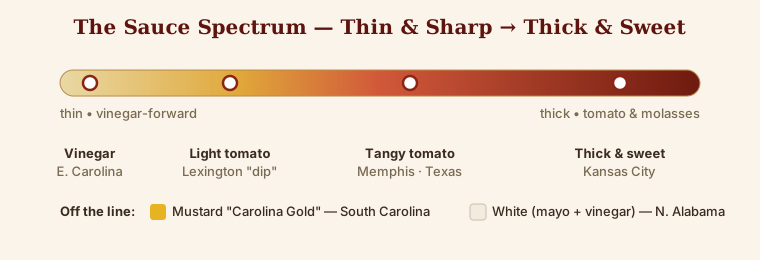
This is the tour. Every one of these styles sits somewhere on a single spectrum — from thin, sharp, and vinegar-forward on one end to thick, sweet, and tomato-heavy on the other — with a couple of famous outliers that jump off the line entirely. Here’s the whole map at a glance, and then I’ll walk through each one with the recipe I make.
Eastern North Carolina — vinegar & pepper
This is the oldest one, and the purest. Cider vinegar, salt, black pepper, crushed red pepper. That’s essentially it — no tomato, no sugar to speak of. It was born on whole-hog pits, and it’s built to season a whole animal’s worth of rich pork with nothing but acid and heat. The first time you taste it straight from the jar it seems almost violently sharp; on a pile of pulled pork it’s perfect. Make it: my North Carolina style and the closely related Southern vinegar sauce.
Lexington / Piedmont — the “dip”
Move west across North Carolina and the sauce picks up a little tomato — usually just ketchup or a spoon of paste — plus a touch of sugar. Locals call it “dip.” It’s still thin and still vinegar-driven, but the tomato rounds the edges and gives it a light red color. This is the bridge between the old vinegar world and the tomato world. Make it: my Piedmont / Lexington style.
South Carolina — mustard, a.k.a. “Carolina Gold”
Here’s the outlier that surprises people. In the South Carolina midlands, German immigrants brought a deep love of mustard, and the local sauce turned gold: yellow mustard, vinegar, a little sugar, and spice. It’s tangy and savory with just enough sweetness, and it is absolutely magic on pork. I make a few versions of it — my South Carolina mustard sauce, a broader Carolina-style mustard, and my everyday mustard sauce.
Memphis — tangy tomato, and the dry-rub question
Memphis is famous for two things: ribs served dry (rubbed with spice, no sauce) and a tangy, tomato-based table sauce that’s balanced rather than sweet — tomato and vinegar in roughly equal conversation, with plenty of spice. It’s a great all-purpose sauce because it doesn’t overwhelm. Make it: my Memphis style, and if you want the dry side, my Memphis rib rub.
Kansas City — thick, sweet, and universal
This is the sauce most Americans picture: thick, deep red, tomato and molasses and brown sugar, with a little vinegar and spice underneath. Kansas City sat at the crossroads of the meat trade, so every kind of meat came through town and the sauce had to work on all of it. It’s the great generalist — clings to ribs, glazes burnt ends, sweetens a rushed weeknight chicken. Make it: my Missouri / Kansas City style.
Texas — thin, savory, beef-first
In Texas the meat is beef, and the sauce respects it. Texas sauce tends to be thinner and more savory than sweet — tomato, but cut with beef drippings, vinegar, Worcestershire, chili, and black pepper, sometimes with a little coffee for depth. It’s a complement to smoke and fat, not a sugar bomb. Make it: my Texas style.
North Alabama — white sauce
The wildcard. In 1925, Big Bob Gibson in Decatur, Alabama started dunking whole smoked chickens in a sauce built on mayonnaise and vinegar — tangy, peppery, pale, and unlike anything else in barbecue. It sounds strange until you have it on smoked chicken or turkey, and then you get it immediately: the fat carries, the vinegar cuts, the black pepper bites. Make it: my Alabama white sauce.
My own additions to the map
Not every good sauce is strictly regional. A few of mine are just built for flavor:
- Sweet & spicy and Southern sweet — for when you want a crowd-pleasing glaze.
- Dr Pepper sauce — soda as a sweetener and flavor base, which is more traditional than it sounds.
- Red-eye sauce — built on coffee, deep and savory, a cousin of the Texas idea.
- Pulled-pork table sauce and my everyday standard sauce.
The whole map in one table
| Style | Base | Body | Sweetness | Best on | My recipe |
|---|---|---|---|---|---|
| Eastern NC | Vinegar + pepper | Thin | None | Whole-hog / pulled pork | link |
| Lexington “dip” | Vinegar + a little tomato | Thin | Low | Pork shoulder | link |
| South Carolina | Yellow mustard | Medium | Low–med | Pork | link |
| Memphis | Tomato + vinegar | Medium | Medium | Ribs, all-purpose | link |
| Kansas City | Tomato + molasses | Thick | High | Ribs, burnt ends, chicken | link |
| Texas | Savory tomato | Thin–med | Low | Beef, brisket | link |
| Alabama white | Mayo + vinegar | Medium | None | Smoked chicken, turkey | link |
Once you’ve got the map, the next question is why these work — which is where the Ingredients & Chemistry come in. And when you’re ready to put sauce on meat, the Pairing page tells you which goes where.
Comments (0)