Making It and Serving It
The order of operations, and the things about serving gumbo that nobody tells you until you are sitting in front of a bowl in Louisiana wondering what the scoop of potato salad is doing there.
The order
Gumbo is not difficult. It is sequential, and the sequence is most of the skill.
1. Prep everything first. All of it. The roux gives you no time to chop once it is going, and the trinity has to hit the pot the second the roux is right.
2. Brown the meat, keep the fat. Sausage first, chicken after. ⭐ Then build the roux in that rendered fat — the smoke goes into the fat, the fat goes into the flour, and it runs through the whole pot.
3. The roux. Thirty-five minutes to an hour, constant attention, and do not stop early.
4. The trinity, straight into the hot roux. The cold vegetables stop the cooking instantly — that is your only brake. Garlic a minute or two later, because it burns faster.
5. Liquid, gradually, whisking. Warm stock into hot roux, a little at a time. Dumping cold stock into a hot roux is how you get lumps you will never fully whisk out.
6. Simmer. An hour at minimum, two or three is better. This is where it becomes gumbo rather than soup with a roux in it.
7. Seafood at the very end. Minutes, not hours.
8. Filé off the heat, or at the table. Never in a boiling pot.
⭐ Salt at the end. A gumbo reduces for hours and the sausage, tasso and stock are all salty already. I have ruined more pots by seasoning early than by any other single mistake.
The day-two rule, and its exception
A chicken-and-sausage gumbo is better the next day. Genuinely, noticeably better — the roux flavour rounds out and the whole thing integrates. Make it a day ahead if you can.
🔴 A seafood gumbo is worse the next day, and this is not a small effect. Reheating shrimp and oysters that have already cooked is how you get rubber.
⭐ So the make-ahead question decides which gumbo you should be making. Feeding a crowd tomorrow? Chicken and sausage. Feeding people tonight? Seafood. You can split the difference: build and refrigerate the base, then bring it back up and add seafood at the moment of serving. That is the only way to have both.
⚠ And if you thickened with filé in the pot, reheating is a problem — you are re-boiling filé, which is the exact failure mode. Thicken at the table if you expect leftovers.
Rice
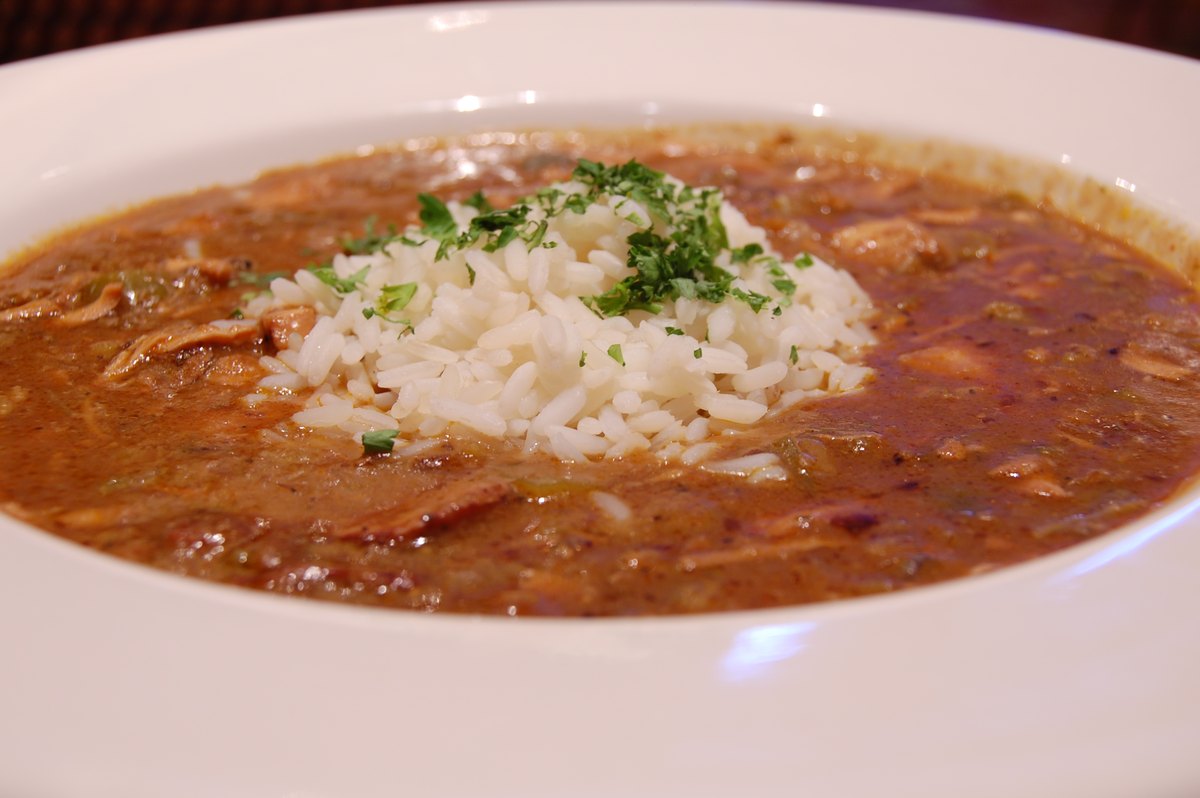
Rice goes in the bowl, and the gumbo goes over it. Not cooked in the pot — that is jambalaya, which is a different dish defined by exactly that difference.
⭐ The ratio is the argument. A New Orleans restaurant bowl tends to be gumbo-forward with a modest scoop; plenty of home cooks build a substantial bed of rice and ladle over. Neither is wrong and both are strongly held. A thin, very dark gumbo wants less rice — you are drinking it more than eating it. A thick okra gumbo carries more.
⚠ Long-grain, cooked separately, and slightly on the firm side, because it will sit in hot liquid.
⭐ The potato salad
If you have not encountered this, it is the most startling thing about eating gumbo in Louisiana.
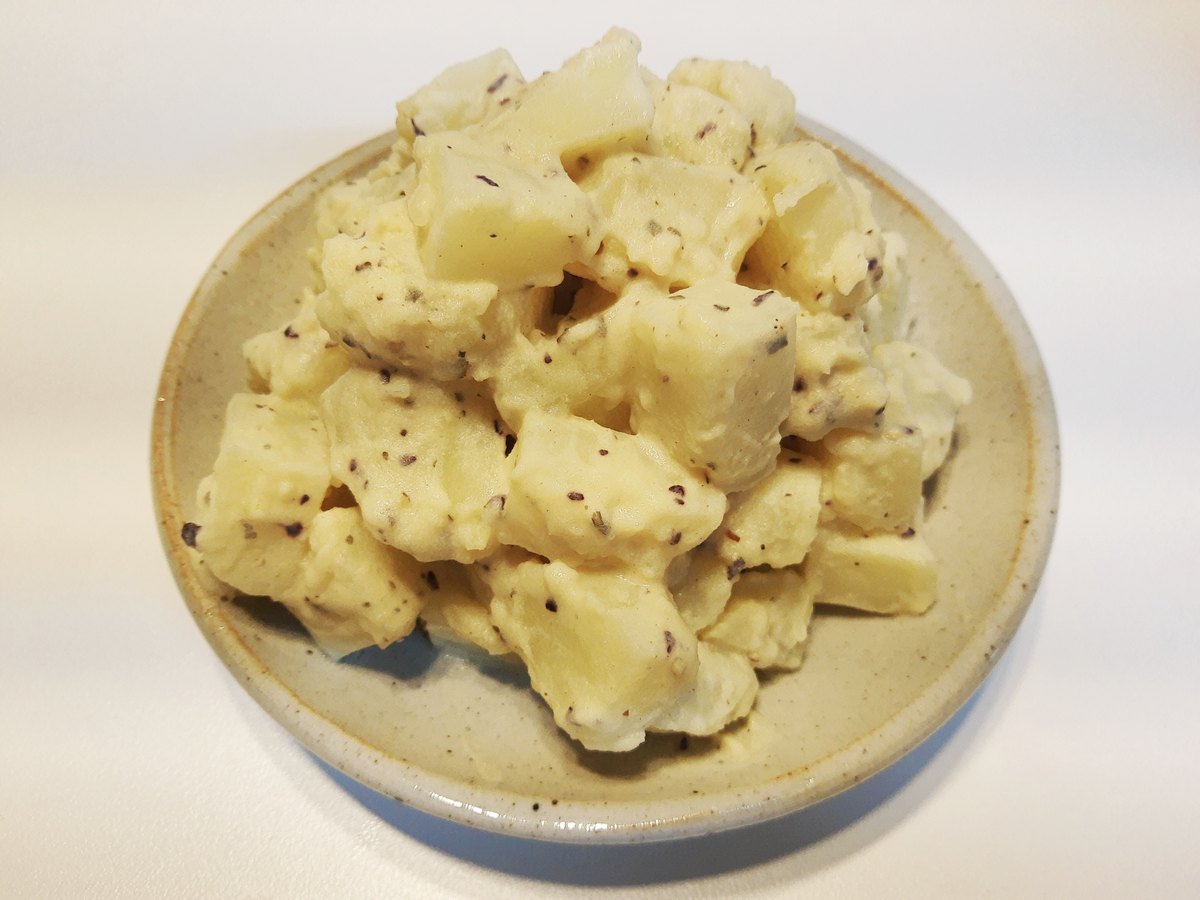
A scoop of cold potato salad goes in the bowl of hot gumbo.
Not on the side. In it. Some people spoon a little onto the spoon and take gumbo on top of it, so you get both in the same bite; some stir it in and let it dissolve into the broth.
The tradition is Cajun, associated particularly with Vermilion Parish and that part of the bayou country, and it spread from there.
⭐ And it makes complete sense once you taste it, for three reasons at once:
- Temperature. Gumbo is served scaldingly hot. Cold potato salad tempers each spoonful.
- Acid. The mustard and vinegar in a Louisiana-style potato salad cut the richness of a dark roux — the same job tomato does against okra, and the same job coffee does against country ham. This section keeps finding the same move.
- It stretches the pot. A practical reason, and probably the original one.
⚠ Where it came from is not settled. One suggestion is German-American influence in nineteenth-century Louisiana; another is simply that it made a pot of gumbo feed more people. I have seen both offered and neither established, so I’m recording it as an open question rather than picking.
⏭ I have not done this yet. I want to. It is exactly the kind of thing that sounds wrong on paper and is obviously right the moment you try it — and everything I know about how acid and temperature work in a rich dish says it should be excellent.
What else goes on the table
Hot sauce, obviously, and at the table rather than in the pot.
Filé in a shaker, for the reasons on its own page.
Something plain and starchy — French bread, saltines. Gumbo is rich and salty and wants a neutral partner.
Green onion tops, sliced raw and scattered over. Not a garnish so much as a required brightness against a long-simmered pot.
How much
⭐ Gumbo is a crowd dish and does not really scale down. The roux takes the same hour whether you make two cups or eight. The simmering takes the same afternoon. Making a small gumbo is a poor use of a gumbo, which is why it belongs to parties, cold weekends and freezers.
It freezes well — the base especially. ⚠ Freeze it before the seafood and before the filé, then finish it fresh when you thaw it. That is the version that comes back tasting like it did on day one.
All my gumbos: browse them here
Back to: Three Thickeners, Three Ancestors
Comments (0)