The Artisan Problem
I want to be careful with this one, because it’s the page where I’m going to say something a lot of people won’t like, and I don’t want to be a jerk about it. So let me put the disclaimer first, in plain language: this is my opinion. Not a lab result, not a regulation, not a fact I can hand you a citation for. It’s the considered opinion of a guy who has made sausage for forty years and who has walked into a lot of shops with real hope in his chest. Where I lean on facts — what a cost-cut actually is, why it saves money — those live on the sister page about where the flavor went, sourced to the CFR, and I’ll point you there rather than re-deriving them. This page is the judgment I’ve drawn on top of those facts. Take it as that.
Here’s the judgment, up front, so nobody has to wonder where I land:
I’ve been to hundreds of artisan, boutique, and craft butcher shops. And in my humble opinion, to a smaller extent, most of them have the same problems as the big companies — and they solve them the same way. Most of them still skimp where it counts most. It’s sad.
I’ll spend the rest of the page defending that, fairly, because it’s not a fashionable thing to believe and I don’t hold it lightly. But I also want to say the thing that keeps it honest, and I want to say it early so you know I’m not just here to swing at people who are trying: the genuinely good craft shops exist. They’re rare, and being rare is exactly the point, and the reason they’re rare is not that butchers are lazy or dishonest. It’s that the economics of running a shop punish the one behavior that makes a great sausage. I’m not better than every professional in this trade. I’m a hobbyist who gets to cheat, and the cheat is the whole story. Hang with me and I’ll show you what I mean.
What “artisan” is supposed to promise
When I walk into a place with a chalkboard, a case of house-ground links, a guy in an apron who’ll talk to you about grind size, I am walking in with a specific hope. The hope isn’t that it’s expensive. The hope is that somewhere back there, somebody made a set of choices the factory refused to make. That’s the entire promise of the word “artisan” — that a human being with a point of view decided the cheaper option wasn’t good enough, and ate the cost.
The cheaper options are all documented, and I laid them out on the flavor page: added water held in place with phosphate, cereal and soy binders that carry no flavor, spices bought pre-ground and faded, garlic delivered as a powder whose flavor enzyme was killed in the drying, natural casings swapped for collagen tubes that run faster on the line. Every one of those is a rational way to make more sausage for less money. The factory makes all of them. And what I want — what the apron and the chalkboard promise me — is a shop that refused a good number of them.
What I find, most of the time, is a shop that refused one or two, kept the rest, and priced it like it refused all of them.
Where the line actually blurs — the snack-stick wall
Let me anchor this in something concrete instead of leaving it as a grievance, because I have a real example that lives right in my own driving radius, and it’s the cleanest illustration I know of how blurry the line between “commodity” and “craft” really is.
Within about twenty miles of me there are two large meat sellers. Not gas-station coolers — real operations, the kind of place that signals quality and variety and we make our own. Between them they carry dozens and dozens of snack sticks. Every flavor you can name. Honey barbecue, jalapeño, teriyaki, cracked pepper, garlic, “old fashioned,” a summer-sausage stick, a venison stick, a something-with-cheese stick. A whole wall of them. It reads like abundance. It reads like craft.
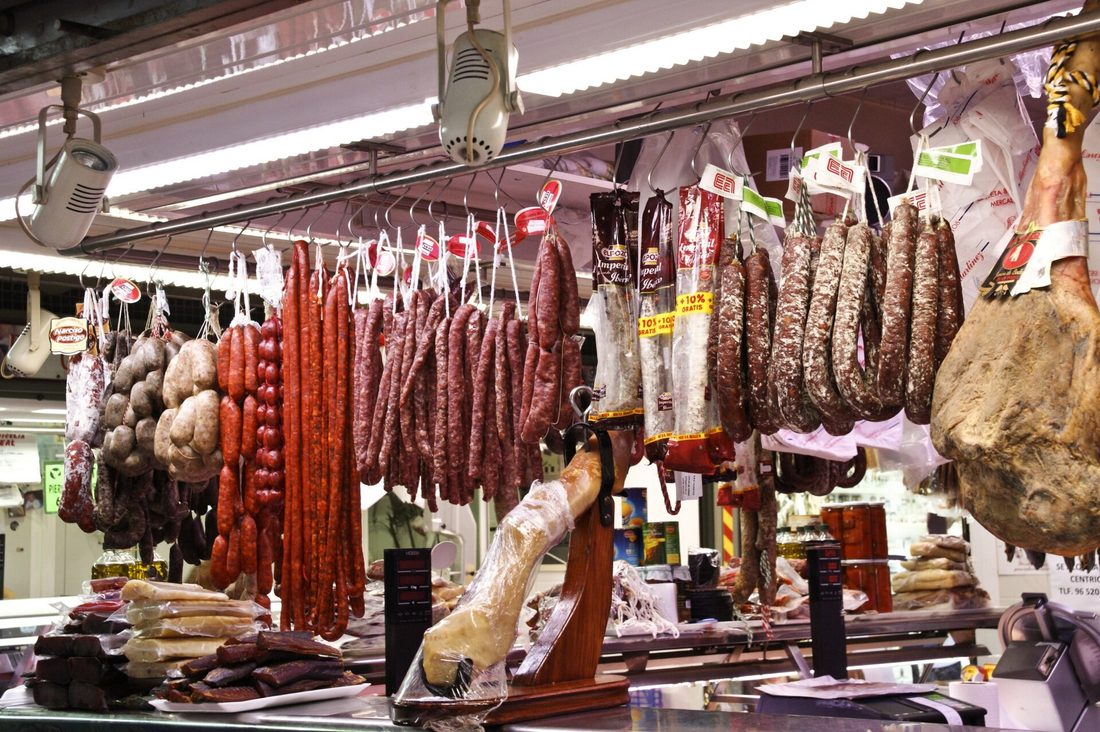
And to my mouth, they all taste the same.
I don’t mean they’re bad. I mean the base is one base. Underneath the honey and the jalapeño and the teriyaki, it’s the same commodity meat, the same background sweetness, the same soft, uniform, faintly one-note stick, and the flavor difference between one variety and the next is a spice coating riding on top of an identical body. Dozens of names, one sausage. The variety is on the label, not in the meat.
I open the commodity-sausage page on exactly this wall, because it’s the perfect specimen of the whole problem — but I want it here too, because here’s the uncomfortable part: at least one of those two places would call itself a craft operation. It signals variety, it signals house-made, it invites you to believe there’s a person and a point of view behind the wall. And what it’s actually producing is sameness at scale. That’s not commodity sausage in a factory in another state. That’s the artisan promise and the commodity reality standing in the same building. The line between them isn’t a wall. It’s a smear, and that wall of sticks is where I can taste the smear most clearly.
The specific skimps a “craft” shop still makes
So let me be concrete about what gets skimped, because “they skimp where it counts” is the kind of sentence that’s easy to say and easy to dismiss. Tie each one back to the flavor page for the mechanism; here I’m just telling you what I keep finding.
The garlic is a powder. This is the one that gets me every time, because it’s the cheapest thing in the world to fix and the easiest to taste. Fresh garlic’s whole character — the sharp, hot, aromatic hit — is allicin, and allicin doesn’t exist in the intact clove; it’s made when you crush a fresh clove and an enzyme reaches the compound it acts on. Most commercial garlic powder is heat-dried, and the heat kills that enzyme, so the powder physically cannot make the sharp note the way a fresh clove does. That’s not my opinion — it’s the enzyme, and it’s on the flavor page with the source. My opinion is only this: a shop that grinds its own meat, prints its own labels, and still reaches for garlic powder made a choice, and the choice was speed over the single easiest flavor upgrade there is. Peeling garlic is annoying. That’s the entire reason.
The spices are pre-ground and have been sitting. Roughly eighty percent of what we call flavor is aroma, aroma is carried by volatile compounds, and “volatile” is a chemist’s word for evaporating. Grinding a spice multiplies its surface area and starts that clock. A craft shop that buys big tubs of pre-ground spice — because it’s cheaper and it’s one less step — is seasoning with spice that lost its top notes somewhere between the mill and the mixing tub. A nicer house blend on faded spice is still faded spice.
The casings are collagen. Natural casing gives the snap and takes the smoke; collagen is cheaper, uniform, needs no soaking, and runs faster on an automated stuffer. That’s a genuine cost-and-speed decision and I don’t pretend otherwise. But a shop selling me “old-fashioned” anything in a collagen tube is selling me the word “old-fashioned” wrapped around the modern shortcut.
The meat comes off the same trucks. This is the quiet one, and it’s the one that most undercuts the whole promise. A lot of boutique shops buy commodity meat from the same distributors the big guys use. Same lean, faster-grown, more uniform hogs; same variable trim on the days the cutting floor ran cheap. I get into what that raw material did to flavor on the meat itself. If the pork walking in the back door is the same pork walking into the factory, then “house-made” describes the last twenty feet of the process and nothing before it.
And there’s water. Added water is cheaper than meat, meat is sold by weight, and the regulations leave real room for it — capped and disclosed, but real. A boutique shop working on thin margins feels that incentive exactly as hard as a factory does. Sometimes harder.
Now — do they do anything better? Yes, and I want to be fair about it, because most of them do. A nicer, coarser grind. A house spice blend with a real idea in it. Fresher product, made this week instead of shipped from three states away. Sometimes a genuinely better casing on the flagship item. These are real improvements and I don’t wave them off. But look at the list: they’re the improvements that cost time and taste, not the ones that cost real money and real speed. Almost nobody skips the water, buys whole spice and grinds it to order, peels fresh garlic by the head, and stuffs everything into natural casing. Those are the expensive, slow, sell-out-early choices. And those are the ones that mostly don’t get made.
Why it happens — and this is where I stop being annoyed
Here’s where I have to turn on myself, because if I stopped at the paragraphs above I’d be exactly the smug hobbyist I can’t stand. The skimps are real. But why they happen is not laziness or fraud, and pretending it is would be the dishonest version of this page.
Running a sausage shop is genuinely hard, and the margins are thin. Meat is the single most expensive input and its price swings around underneath you. Rent doesn’t care how good your kabanosy are. Labor is expensive and skilled sausage labor doubly so. And every single one of the cost-cuts I just complained about works — that’s the miserable part. Water and phosphate really do stretch the meat. Powder really is faster than peeling. Collagen really does run faster on the stuffer. Pre-ground spice really is cheaper and doesn’t have to be babied. A shop owner who refuses all of them is choosing, every day, to make less money and take on more risk in a business that already runs close to the line.
So the decisions aren’t villainous. They’re survival. If you handed me a lease, a payroll, and a wholesale account with a grocery chain that wants a consistent price, I would make some of these calls too. I’d hate them, and I’d make them, because the alternative is closing.
And that’s the real shape of the artisan problem. It isn’t that craft butchers are secretly hacks. It’s that the economics push everyone — factory and boutique alike — toward the same two masters: volume and shelf life. The big company serves those masters shamelessly. The craft shop serves them a little more gently, keeps a couple of the honest choices as its selling point, and drifts toward the same place under the same pressure. Less egregiously. Same direction.
The tell: “we can’t run out”
If I had to name the single attitude that separates the sausage I chase from the sausage I keep finding, it’s this, and once you hear it you’ll notice it everywhere.
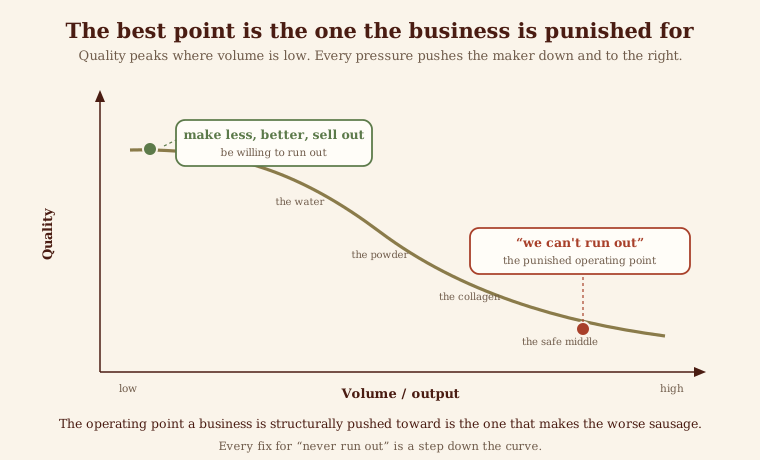
Most shops seem more interested in making as much as they can at a lower quality than in making a genuinely great product they might run out of. The mindset is we can’t run out. Running out is treated as the failure. An empty case at four o’clock is a problem to be solved — make more, make it hold longer, make it consistent enough that today’s batch is exactly like last Tuesday’s so nobody’s ever disappointed and nobody ever leaves empty-handed.
I understand the mindset completely. If you run out, that customer buys nothing, or worse, buys it down the road and maybe doesn’t come back. Running out is lost revenue and it’s a broken promise to the guy who drove over for it. From a business standpoint, “never run out” is just responsible.
But “never run out” is the exact commitment that forces every skimp on the list. To never run out, you make more than the peak of your quality allows. You extend it with water so the yield stretches. You reach for the powder and the pre-ground tub because you don’t have time to peel and grind for a volume that big. You choose the casing and the shelf life that let today’s batch survive until it sells. You standardize toward the safe middle, because a batch that’s occasionally transcendent and occasionally uneven is a batch that generates complaints, and complaints are worse for a business than a wall of pretty-good.
Chase “we can’t run out” and you will, structurally, land on pretty-good-and-plenty. And pretty-good-and-plenty is that wall of snack sticks that all taste the same. It’s not a moral failure. It’s arithmetic. The volume mindset and the quality ceiling are pulling in opposite directions, and in a business, volume almost always wins, because volume is what pays the rent.
Why the best sausage is the one you make yourself
Here’s the turn, and it’s the whole reason this page isn’t just me complaining.
The one constraint that makes a truly great sausage is the willingness to make less, make it better, and be willing to sell out. Make the batch your quality peak actually supports, not the batch your revenue target wants. Peel the garlic. Grind the spice to order. Use the natural casing. Don’t stretch it with water. And when it’s gone at three in the afternoon, let it be gone — put the CLOSED-on-sausage sign up and go home proud instead of tired.
That constraint is exactly the one a business is structurally punished for. Sell out early and you’ve left money on the table, disappointed customers, and paid rent on empty hours. The market doesn’t reward “we made the best forty pounds we could and then stopped.” It rewards “we never make you leave without it.” So the very discipline that produces the best sausage is the discipline the economics select against. The better your restraint, the worse your business behaves — up to a point. That’s not a knock on butchers. It’s the trap they’re standing in.
And this is where I get to admit my unfair advantage, because it’s the honest core of the whole argument. I get to make less, better, and sell out — because I’m not selling anything. I’m a hobbyist. I’m not paying rent on my smokehouse. My payroll is me. If my venison summer sausage batch is forty pounds and forty pounds is what I’ve got, then that’s dinner and gifts and the freezer, and “running out” just means I make more next weekend. Nobody drove twenty miles for it. Nobody’s disappointed but me, and I’m never disappointed by good. I can peel every clove by hand because my labor cost is a Saturday I wanted to spend that way anyway. I can grind whole spice to order because I’m making one batch, not five hundred pounds a shift. I can stuff natural casing all afternoon because the clock isn’t a wage.
That freedom is the entire point. It’s not that I’m a better maker than the professionals — plenty of them would run circles around me if you turned them loose with my constraints. It’s that I have no constraints. I can hold the one discipline that makes great sausage precisely because I’ve been excused from the one force that punishes it. The professional and I could be standing at identical grinders with identical skill, and I’d still make the “better” sausage on any given day, for one reason that has nothing to do with talent: I’m allowed to run out, and they’re not.
So when I say the best sausage is usually the one you make yourself, I’m not being romantic and I’m not knocking the trade. I’m describing a structural fact. The home maker is the only person in the whole chain who is free to make less and better, because the home maker is the only one not being punished for it. That freedom is worth more than any piece of equipment I own. It’s the reason forty years at the bench produced something the wall of sticks can’t.
The standard I’m holding — and the honest exception
So that’s the artisan problem, and I’ll try to land it fairly, because a page that just told you every craft shop is a letdown would be false, and I’d know it.
The great craft shops do exist. Somewhere near you there may be a butcher who peels the garlic, grinds the spice fresh, sources real meat and cares where it came from, stuffs natural casing, makes the batch his quality supports, and puts up the sold-out sign at three with his chin up. If you find that shop, treasure it, pay what they ask without flinching, and understand that they are doing something genuinely hard: holding the discipline the market is trying to talk them out of, every single day, and eating the cost of it. That’s not the easy version of running a business. It’s the defiant one.
But they’re rare. And they’re rare for a reason that isn’t anybody’s fault — it’s the arithmetic I’ve been describing the whole page. The constraint that makes the sausage great is the constraint the business is punished for keeping. Most shops, understandably, don’t keep it, or keep just enough of it to justify the sign out front. Less egregiously than the factory. Same direction, and for the same reason: volume and shelf life pay the rent, and peak quality doesn’t.
Which is why the standard I hold isn’t really available for sale. It’s a hobbyist’s standard, and it’s a hobbyist’s because it’s freed from the one pressure that bends everyone else. Make less. Make it better. Be willing to run out. I can hold that line because nothing’s riding on it but my own dinner.
That said — I’m about to go try to hold that exact line as a business anyway, in the restaurant pages that close out this section, and I already know I’m walking straight into the trap I just spent three thousand words describing. That’s the honest tension, and I’d rather name it than pretend I’ve got it solved. Maybe you can build a place around “make less, better, sell out” and survive. Maybe the willingness to run out becomes the whole brand instead of the fatal flaw. I don’t know yet. But I know the sausage a factory and most of the craft shops are handing you is milder, softer, and more uniform than it has to be — not because anyone’s a villain, but because the machine they’re standing in bends every honest choice toward volume. And I know the one on my own table, made on a Saturday I was free to run out on, is louder in every dimension for exactly the reason I’ve been circling: I declined the cuts, and I got to.
Part of Why Sausage Tastes Different Today. The sourced science behind every cut named here is on Where the Flavor Went; the raw material that came off the same trucks is The Meat Itself; and the person who used to stand between you and all of this is on The Vanished Butcher. Why I make my own is forty years at the bench. Next comes the hardest test of everything I just argued — the standard I hold, tried as an actual business, in the restaurant still to come.
Comments (0)