Hot vs. Cold Smoking
This is the first thing I explain to anyone who wants to get into smoking, because the word “smoking” hides two completely different crafts. They share equipment and they share wood, but what they do to the food could not be more different. Get them confused and, in the case of cold smoking, you can make yourself genuinely sick. So let’s draw the line clearly.
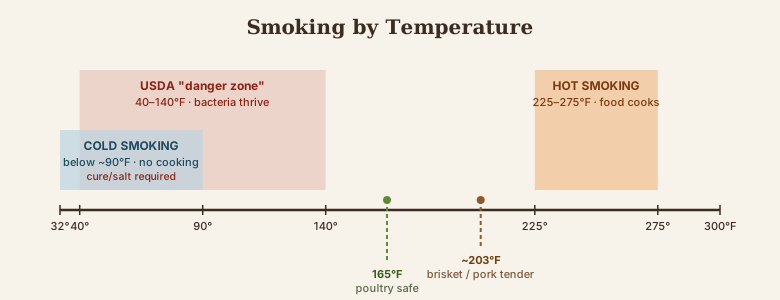
The whole distinction comes down to one number — temperature — so here’s the map I keep in my head:
Hot smoking — cooking with smoke
Hot smoking is what most people mean by “barbecue.” You run the smoker somewhere between 225°F and 275°F, and the smoke flavors the food while the heat cooks it. Brisket, ribs, pork shoulder, chicken, a side of salmon — all hot-smoked. The food goes in raw and comes out cooked, safe, and full of smoke.
Because the food actually cooks, the number that matters most isn’t the smoker temperature — it’s the internal temperature of the meat. Poultry is safe at 165°F. A brisket or a pork shoulder isn’t really done until around 200–203°F, not because of safety but because that’s where the tough collagen finally melts into gelatin and the meat goes tender. This is why I watch internal temps obsessively with my Meater Pro XL probes — in hot smoking, the meat’s own temperature is the entire ball game.
Hot smoking is forgiving and safe. If you’re new, start here.
Cold smoking — flavor without cooking
Cold smoking is the other animal entirely. You keep the smoke chamber below about 90°F — cool enough that the food never cooks. It just absorbs smoke. This is how you make smoked cheese, smoked salt, smoked honey, smoked butter, and true cold-smoked salmon (lox). The food comes out with a deep smoke flavor but the same raw texture it went in with — cheese stays firm, salmon stays silky.
And here’s the part you cannot skip: look at where cold smoking sits on that chart. It’s right in the middle of the USDA danger zone (40–140°F), the temperature range where bacteria multiply fastest. That’s fine for things that can’t grow dangerous bacteria — cheese, salt, honey, nuts, olives, butter, spices — and I cold-smoke all of those freely. But for meat and fish, cold smoking is only safe if the food has first been cured with salt (and often a curing salt / nitrite) to make it inhospitable to bacteria — especially Clostridium botulinum, which loves exactly this low-oxygen, low-heat situation. That’s why real lox is always cured first, then cold-smoked, never just thrown in cold. I keep notes on curing salts for exactly this reason. If you’re not willing to cure properly, cold-smoke the cheese and the salt, and hot-smoke the fish.
The quick comparison
| Hot smoking | Cold smoking | |
|---|---|---|
| Temperature | 225–275°F | below ~90°F |
| Does it cook the food? | Yes | No |
| What matters most | Internal meat temp | Keeping it cold + curing first |
| Typical foods | Brisket, ribs, pork, chicken, salmon | Cheese, salt, honey, butter, lox, nuts |
| Food-safety risk | Low (normal cooking rules) | High for meat/fish unless cured |
| My gear | SmokinTex electrics, offset | DIY Smoke Daddy cold smoker, pellet tube |
Warm smoking, the in-between
There’s a middle ground — sometimes called warm smoking or “smoke-roasting” — up around 150–200°F. It’s how a lot of smoked sausage and some smoked fish get done: warm enough to gently cook and set the texture, cool enough for a long smoke exposure. I don’t treat it as a separate discipline so much as the low end of hot smoking, but it’s worth knowing it exists when a recipe calls for it.
Once the temperature side makes sense, the next choice is flavor — which wood you burn. That’s the Woods for Smoking page. And if you want to see exactly which rigs I use for hot versus cold, that’s My Smokers & Gear.
Comments (0)