My Tips & Tricks
These are the things that took me years — and a lot of ruined cooks — to really understand. None of it is complicated once someone explains it, but nobody explained it to me, so here’s everything I wish I’d known when I started.
Chase thin blue smoke, not white clouds
I’ll say it again because it’s the single most important thing: you want thin, wispy, faintly blue smoke, never thick white billows. White smoke is the sign of a smoldering, oxygen-starved fire, and it deposits bitter, sooty, acrid compounds on your food. Clean-burning wood gives off almost-invisible blue smoke that tastes sweet. If you see white clouds, give the fire more air. Nine times out of ten, bad barbecue is over-smoked barbecue.
Understand the stall — and don’t panic
The first time you smoke a brisket, something alarming happens: the internal temperature climbs nicely to around 150–165°F and then just… stops. For hours. This is the stall, and it’s the most misunderstood thing in barbecue.
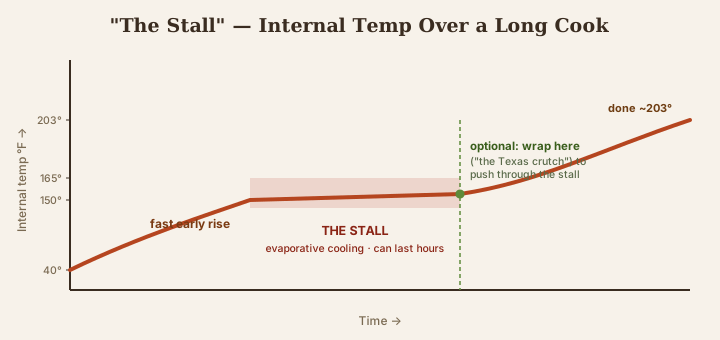
The stall is evaporative cooling — the meat is sweating moisture from its surface, and that evaporation cools it exactly as fast as the smoker heats it, like sweat cooling your skin. It’s completely normal and it’s a good sign. You have two choices: ride it out (the bark gets better, but it can take 2–4 extra hours), or wrap the meat in foil or butcher paper — the “Texas crutch” — which stops the evaporation and pushes the temperature through the stall in a fraction of the time. Foil is faster and softens the bark; butcher paper is a middle path that keeps more bark. I decide based on whether I care more about the clock or the crust.
Build a bark
The bark is that dark, crusty, savory shell on a good piece of smoked meat, and it’s pure flavor. It forms when the surface proteins and the sugars/spices in your rub dry out and go through the Maillard reaction and a little caramelization. To get a great bark:
- Give it a good rub and let it sit — the salt draws moisture to the surface, which then dries into a tacky “pellicle” that smoke and bark love to cling to.
- Don’t wrap too early if bark matters to you — the crust needs dry heat and time.
- Keep the smoke clean — see above; a bitter bark is a smoke problem, not a rub problem.
The smoke ring — pretty, but not flavor
That pink ring just under the surface of good smoked meat is the smoke ring, and it’s a badge of honor. It’s a chemical reaction: nitrogen dioxide from the burning wood dissolves into the moist surface of the meat and fixes the pink myoglobin color before the heat can turn it gray. Here’s the honest truth, though — the smoke ring is about looks, not taste. It’s a sign you smoked with real wood, but it doesn’t actually make the meat taste smokier. Chase flavor first; the ring comes along for free.
Brine and rub before the smoke
Lean proteins — poultry, fish, lean pork — benefit enormously from a brine before they go in. Saltwater (often with sugar) seasons the meat all the way through and helps it hold onto moisture during a long cook. It’s why my brined-and-smoked chicken and brined turkey stay juicy. For a rub, remember that salt is the one ingredient that penetrates — the rest sits on the surface building bark and flavor. I keep a shelf of rubs going, like my basic chicken BBQ rub, Memphis rib rub, and salmon rub.
Rest the meat — really rest it
When a big cut hits temperature, do not cut into it right away. Let it rest — 30 minutes for a rack of ribs, up to an hour or more (loosely tented, or held in a cooler) for a brisket. Resting lets the muscle fibers relax and reabsorb the juices that the heat drove to the center; cut too soon and all that moisture runs out onto the board. The rest is not optional. It’s part of the cook.
Temperature beats the clock, always
Recipes give you times, but times are only estimates — every piece of meat, every smoker, and every day’s weather is different. Cook to internal temperature, not to the clock. This is exactly why I run Meater Pro XL probes in everything. Poultry at 165°F, brisket and pork shoulder around 200–203°F, a side of salmon around 140–145°F — those numbers are the truth. The clock is just a rough guide to when to start checking.
Don’t peek
Every time you open the smoker, you dump heat and smoke and add serious time to the cook. The old pitmaster line is true: “if you’re lookin’, you ain’t cookin’.” Wireless probes exist precisely so you never have to open the door to know what’s happening. Set it, watch your phone, and leave it alone.
Keep a log
The best thing I ever did was start writing down my cooks — the meat, the weight, the wood, the temperatures, the times, and how it came out. After a dozen entries you stop guessing and start knowing: this smoker runs 10° hot on the left, this brisket size takes about this long, this wood blend was perfect. Barbecue rewards attention, and a notebook is the cheapest upgrade you can make.
Ready to put it all together? Here’s everything I actually smoke — and it’s a lot more than brisket.
Comments (0)