Woods for Smoking
The wood is the flavor. The smoker is just a box that holds heat and smoke — it’s the wood burning inside it that decides whether your brisket tastes like a Texas pit or your salmon tastes like a Pacific Northwest smokehouse. I keep five-gallon buckets of wood chunks that I cut up myself: hickory, mesquite, alder, pecan, apple, cherry, oak, post oak, and peach — and I’m always experimenting with something new.
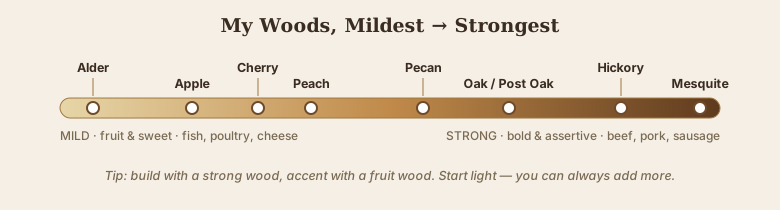
Every wood sits somewhere on a scale from mild and sweet to strong and assertive. Here’s how I line mine up:
The golden rule
Match the strength of the wood to the strength of the food, and lean lighter than you think. A delicate fillet of fish will get bulldozed by mesquite; a big beef brisket will shrug off a whisper of apple. When in doubt, use less — you can always add more smoke next time, but you can’t take a bitter, over-smoked bark back out of the meat.
My woods, one by one
Alder — the mildest in my buckets. Clean, slightly sweet, almost delicate. It’s the traditional wood for Pacific salmon, and it’s my go-to for smoked salmon and anything where I want smoke to whisper, not shout. Great for cheese, too.
Apple — mild, sweet, and fruity, with a subtle tang. This is probably my most-used all-rounder. Beautiful on smoked chicken and pork, and it gives poultry a lovely golden color.
Cherry — mild and sweet like apple but with a gorgeous deep-red color it lends to the bark. I use it as much for looks as for flavor, and it plays beautifully blended with a stronger wood. Fantastic on smoked cheese and poultry.
Peach — a fruit wood in the apple/cherry family: mild, sweet, a little floral. Excellent on pork and poultry, and a nice change of pace when I want fruit smoke that isn’t apple.
Pecan — the friendly middle. It’s in the hickory family (both are from nut trees) but gentler and sweeter — nutty, rich, warm. If hickory is too much and apple is too little, pecan is the answer. Works on nearly everything; especially good on pork and poultry.
Oak / Post Oak — the workhorse. Medium strength, clean, savory, never harsh. Post oak is the classic wood of central-Texas brisket, and oak in general is the perfect base wood — it gives you a solid smoke backbone that you can then accent with a fruit wood. If I could only keep one bucket, it might be this one.
Hickory — the sound of “barbecue” for most of the South: strong, bold, bacon-y, with a slightly sweet edge. Classic for pork ribs, bacon, and ham. Powerful enough to turn bitter if you overdo it, so I often cut it with a fruit wood.
Mesquite — the strongest, sharpest, and fastest-burning wood I use. Earthy, intense, a little tangy. It’s the Texas beef wood for hot-and-fast cooks, but it can overwhelm a long smoke or a delicate food in a hurry. I use it in shorter cooks on beef, often blended with oak to tame it.
The wood × food chart
This is the cheat sheet I wish I’d had when I started. ★ = a classic, can’t-miss pairing; ● = works well.
| Wood | Pork | Beef / Brisket | Poultry | Salmon / Fish | Cheese | Bacon / Ham |
|---|---|---|---|---|---|---|
| Alder | ● | ● | ★ | ● | ||
| Apple | ★ | ● | ★ | ● | ★ | ● |
| Cherry | ● | ● | ● | ● | ★ | ● |
| Peach | ● | ★ | ● | ● | ||
| Pecan | ★ | ● | ★ | ● | ● | ● |
| Oak / Post Oak | ● | ★ | ● | ● | ● | |
| Hickory | ★ | ● | ● | ★ | ||
| Mesquite | ● | ★ | ● |
Mixing woods — my favorite trick
I rarely burn just one wood. The best smoke, to my palate, comes from a base + accent blend:
- Oak + cherry — a clean savory backbone with color and a touch of fruit. My default for brisket when I’m not going full Texas.
- Hickory + apple — classic Southern pork smoke, with the apple rounding off hickory’s hard edge. Perfect for ribs and shoulder.
- Mesquite + oak — Texas beef power, tamed. The oak keeps the mesquite from taking over.
- Pecan + a little cherry — mellow, nutty, gorgeous color. Wonderful on poultry.
Start with roughly two parts base wood to one part accent, and adjust to taste. Half the fun of keeping all those buckets is trying new combinations — that’s the experimenting I never stop doing.
Chips vs. chunks vs. logs vs. pellets
The form of the wood matters as much as the species, because it controls how the wood burns:
| Form | Burns | Best for | Notes |
|---|---|---|---|
| Chips | Fast, in a flare | Short cooks, electric smokers, quick flavor | Soak or don’t — mostly they just burn faster than chunks |
| Chunks | Slow and steady | Long hot smokes; my buckets are all chunks | The sweet spot for most backyard smoking — long, clean smoke |
| Logs / splits | Long, hot | Big offset smokers run on wood alone | This is real “stick burning” — the most work, the most reward |
| Pellets | Very controlled | Pellet grills, and cold-smoke tubes/mazes | Compressed sawdust; burn clean and even, easy to meter |
I cut my own chunks for the electrics and the offset, and I burn pellets in a cold-smoke tube when I want a long, cool, low-and-slow wisp of smoke for cheese or salt. Which rig gets which is all on the Smokers & Gear page.
Thin blue smoke — the one thing to remember
Whatever wood you burn, you’re chasing thin blue smoke — the faint, almost-invisible bluish haze that means the wood is combusting cleanly. Thick, white, billowing smoke tastes acrid and will make your food bitter. If you can see big white clouds rolling out of your stack, your fire needs more air, not more wood. Clean smoke is the whole secret, and it’s worth more than any particular wood species.
Comments (0)