Korea: Gyeran Jjim, and the Case for Direct Heat
계란찜 — gyeran (egg) jjim (steamed dish). Everything about this one is a deliberate move in the opposite direction from chawanmushi, and it’s the best evidence in the dive that the two dials really do control the whole family.
Japan added liquid and lowered the heat until the custard barely held. Korea took liquid out and turned the heat up.
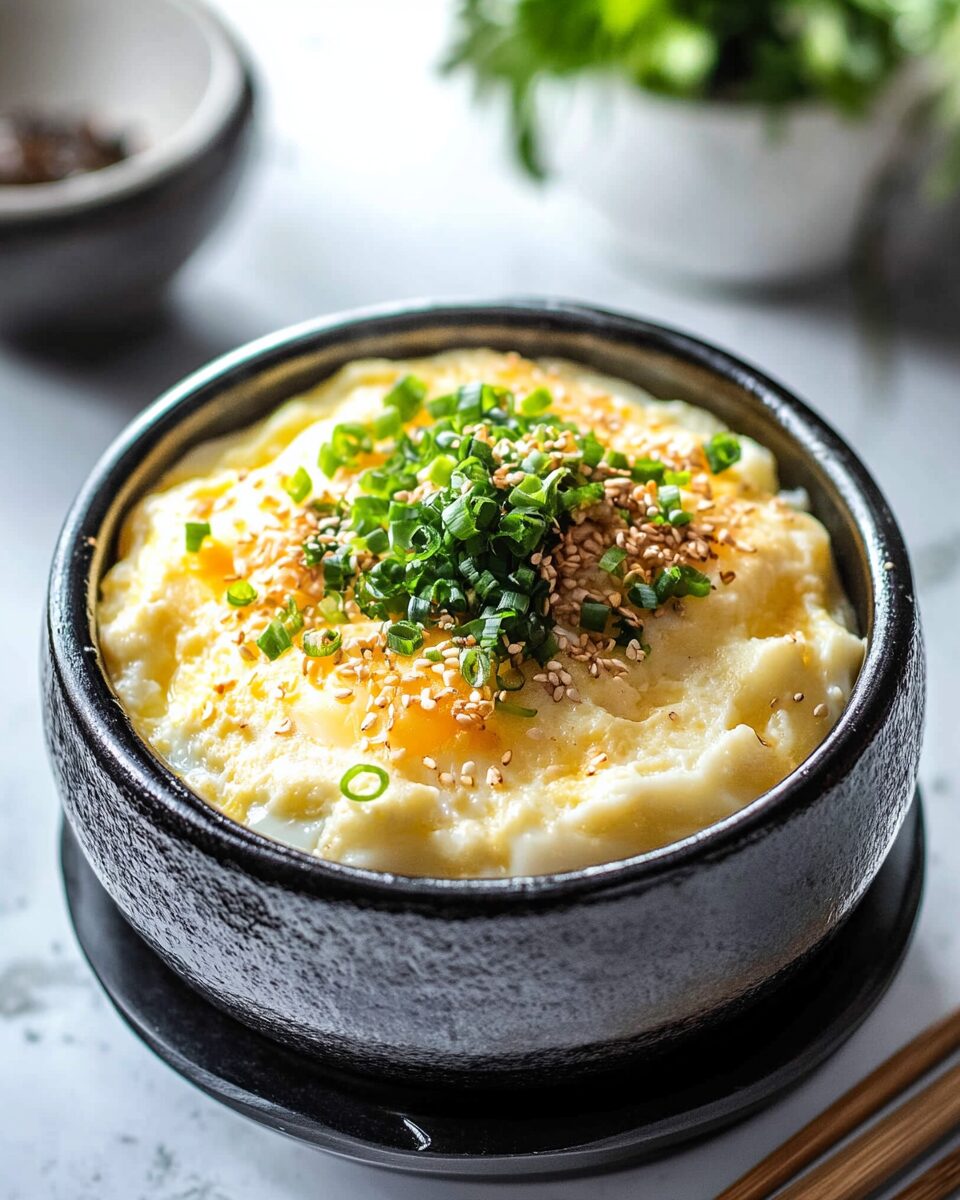
Not silky — fluffy
This is the thing to get straight before you make it. If you’re expecting the glassy, trembling smoothness of the Chinese or Japanese versions, gyeran jjim will read as a failure. It isn’t. It’s supposed to be spongy, risen, and a little coarse — closer to a savoury soufflé than a custard.
The mechanism:
- Less liquid — closer to 1:1, sometimes less.
- Direct heat, not a gentle steam bath. The bowl goes straight on the burner.
- Stirred while it sets, at least at the start, which builds structure instead of a smooth gel.
- It rises. Steam gets trapped in the setting egg and pushes it up over the rim of the bowl, which is the whole visual point.
🔴 And the bottom browns. Where the egg meets the hot clay it fries slightly, exactly like the bottom of a fried egg, and that browned layer under the fluffy top is not a defect — it’s a large part of why the dish tastes good.
The ttukbaegi
The traditional vessel is a ttukbaegi (뚝배기) — a thick, unglazed-or-partly-glazed earthenware bowl. It matters more here than the vessel matters in any other version of this dish:
- It takes direct flame without cracking, which is the whole premise.
- It holds enormous heat, so the dish keeps cooking and stays volcanically hot at the table. Korean food is often served still bubbling and this is part of that.
- It gives the browned bottom.
⚠ Ttukbaegi are cheap and worth buying if you want to make this properly. A small heavy saucepan or a mini cast-iron will get you most of the way. A thin pan will scorch it before the top sets.
⚠ Season a new ttukbaegi — most want a soak and a first use with rice water — and never take one from hot to cold fast. They crack.
The two versions
Gyeran Jjim (Korean Steamed Egg) is the everyday banchan: eggs, water or anchovy stock, salt or saeujeot (salted fermented shrimp, which is the traditional and much better seasoning), scallion, and often a little sesame oil at the end. Cooked in the ttukbaegi, stirred at first, then covered and left to puff.
Gyeran Jjim, Volcano Style is the restaurant showpiece — cooked hotter and taller so it erupts well above the rim of the bowl and arrives at the table looking impossible. Same dish, more drama, and slightly more that can go wrong.
Saeujeot is the ingredient to seek out
Salted fermented shrimp. It’s sold in jars in any Korean grocery and it lasts forever in the fridge. A teaspoon of it in gyeran jjim does what plain salt cannot — it brings a fermented, marine savouriness that is the authentic taste of the dish.
⭐ If you only buy one thing from this page, buy this. It’s also what makes a good kimchi, so it earns its shelf space twice.
Fish sauce is a reasonable substitute. Plain salt works and is noticeably plainer.
Where it sits on the table
It’s banchan — one of the small side dishes that cover a Korean table — and its job is contrast. Korean barbecue is salty, charred, garlicky, spicy; gyeran jjim is soft and mild and hot and slightly sweet. It’s the thing you go back to between mouthfuls of everything else.
Which means: don’t over-season it. It is supposed to be the quiet one.
A note on the two techniques
You can make gyeran jjim in a steamer, and plenty of recipes tell you to. It’ll be perfectly good, and it will be smoother and flatter — you’ll get something closer to a Chinese steamed egg with Korean seasoning.
🔴 The direct-heat version is a different dish. The rise and the browned bottom are the point. If you’re going to make it, make it that way at least once so you know what you’re choosing between.
In this dive: The story · The science · China · Japan · Elsewhere · The espresso steam wand · Vessels and gear
Comments (0)