Bagels
A real bagel is one of the great breads — dense, chewy, glossy, with a crackly-then-tender crust that no soft supermarket “bagel-shaped roll” comes close to. And the secret to all of it is one step no other bread has: you boil it before you bake it. Once you understand that, you can make bagels at home that rival any bakery. I make them often, and here’s the whole method.
What makes a bagel a bagel
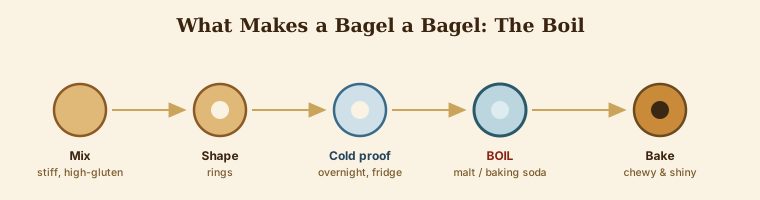
Two things set bagels apart from every other bread: a stiff, high-gluten dough, and a boil before baking. Here’s the sequence:
The dough — stiff and strong
Bagel dough is the lowest-hydration bread you’ll make — around 55% water (see the scale on the Ingredients page), stiff enough that it’s a workout to mix. That low hydration plus high-gluten (bread) flour is what gives bagels their signature dense, chewy pull. A little barley malt in the dough (and the boil) adds the classic flavor and helps the crust brown. Don’t reach for all-purpose here — you want all the protein you can get.
Shape, then cold-proof
Shape the stiff dough into rings — either roll ropes and join the ends, or (my preference) poke a hole through a ball and stretch it. Then cold-proof them overnight in the fridge. This does the same magic it does for sourdough: it develops flavor, and — because a cold, firm bagel holds its shape perfectly — it gives you a better-looking, better-textured result. It also means fresh bagels for breakfast with almost no morning work.
The boil — the whole point
This is the step that makes a bagel a bagel. Before baking, you boil each ring for 30–60 seconds a side in a big pot of water, usually with barley malt syrup (or, in a pinch, a little baking soda and sugar) added. The boil does three crucial things:
- It gelatinizes the starch on the surface, setting a skin that becomes the bagel’s shiny, chewy crust.
- It cooks the outside so the bagel can’t over-expand in the oven — that’s what keeps a bagel dense and chewy instead of light and fluffy like a roll.
- The malt (or soda) in the water boosts browning and flavor and gives that glossy sheen.
Longer boil = chewier, denser bagel; shorter boil = a bit lighter. This one step is the entire difference between a real bagel and bread shaped like one.
Top and bake
Straight out of the boil, while they’re wet and tacky, is the moment to top them — this is when seeds and salt actually stick. Then bake hot until deep golden and glossy. Fresh from the oven, a homemade bagel is a revelation.
My bagels
- Everything bagels — the classic, crusted with that garlicky, oniony, seedy blend.
- Cinnamon-raisin bagels — sweet and chewy, incredible toasted.
- Bagels, many variations — one dough, endless toppings and flavors to riff on.
A cousin worth knowing — the pretzel
If bagels click for you, try their close cousin the soft pretzel, which uses the same boil-before-bake idea but with an alkaline (baking-soda) bath instead of a malt one — that’s what gives pretzels their mahogany color and distinctive flavor. My soft pretzels, pretzel sandwich buns, and even sourdough pretzels all run on the same trick. Once you’ve boiled one bread, a whole family opens up.
Last stop — the ovens & equipment that bring all of this bread to life.
Comments (0)