Buying Used Equipment
Almost everything in my shop that matters, I bought used. That’s not a compromise — it’s the smart play, because good commercial gear is built to be serviced and therefore built to last thirty years, which means the used market is full of excellent machines at a fraction of new. But used cuts both ways: for every clean, low-hours oven there’s a tired one somebody’s dumping the day before it dies. The whole game is knowing how to tell them apart in a parking lot with a flashlight, and I’ve gotten good at it. Here’s how I shop.
Where I actually buy
There’s a ladder here, roughly from safest-and-priciest to cheapest-and-riskiest, and I shop all of it depending on the machine.
Restaurant-supply dealers and their refurb shop. These are dealers who buy used gear, go through it, replace wear parts, and sell it with a warranty — often 30 to 90 days on parts and labor. You pay more than a private sale, but for anything with a compressor or a complex control, that warranty is cheap insurance. This is where I buy refrigeration.
Auctions and liquidations. When a restaurant folds, its equipment goes to auction — online or on-site. Prices can be spectacular. The catch is it’s almost always as-is, no warranty, no returns, and you may only get a short inspection window (or photos). Great for simple, robust machines you can evaluate quickly; dangerous for a fridge you can’t power up first.
Direct restaurant closures. Sometimes you can buy straight from an owner who’s closing, before the auctioneer takes a cut. You get to see the gear in place, running, and ask the person who used it every day what its quirks are. Some of my best buys came this way.
Facebook Marketplace and Craigslist. The bottom of the ladder on price and the top on risk. Lots of home-cook gear and the occasional real commercial gem from a closing business. You have to sort through junk and you have zero recourse, but if you can inspect in person and pay for what you actually see, there are deals. This is where patience pays.
The general once-over
Before I get into category checklists, a few things I do with every used machine, whatever it is: I look at how dirty and greasy it is (neglected cleaning usually means neglected maintenance), I check for rust and corrosion on the frame and especially the feet, I wiggle everything that’s supposed to be tight and everything that’s supposed to move, and — this is the big one — I insist on powering it up. A machine the seller “can’t plug in right now” is a machine you should assume is broken. If it can’t run, I don’t buy, or I pay scrap price and no more.
Per-category inspection checklists
Refrigeration
The compressor is the machine; everything else is a box. This is the category where I most want a dealer refurb with a warranty, and where a bad buy hurts the most.
- Compressor hours / age — ask, and read the nameplate date. Compressors have a lifespan; an old one is a bomb with a timer.
- Do a pulldown test — plug it in and time how fast it cools. A healthy unit pulls down to temperature briskly and the compressor then cycles off. One that runs forever and never quite gets cold is failing (low refrigerant, tired compressor, or a filthy condenser).
- Condenser coil — pull the grille and look. Caked with grease and dust means it’s been overheating and running hard its whole life. Cleanable is fine; damaged fins aren’t.
- Door gaskets — cheap to replace but a tell: torn, hard, gappy gaskets mean the unit’s been fighting to stay cold and running constantly.
- Listen — a healthy compressor hums; knocking, rattling, or short-cycling is a walk-away.
Ovens
My favorite used category, because ovens are mostly simple, serviceable, and honest about their condition.
- Elements (electric) — inspect for breaks, blistering, or heavy scale; power up and confirm every element actually heats.
- Thermostat calibration — set it to a known temperature and check with your own probe thermometer. Drift is common and often just needs recalibration, but you want to know going in — a wildly-off thermostat can mean a failing control.
- Door seals and hinges — a door that won’t seal or won’t stay shut dumps heat and kills recovery. Feel the gasket; work the latch.
- Deck / cavity condition — look for cracked deck stones, warped racks, burnt-out interior. Surface grime cleans; structural damage doesn’t.
- Blower (convection) — listen for bearing noise and confirm the fan actually moves air.
Mixers
Planetary mixers are tanks, but a worn one telegraphs it if you know where to feel.
- Bearing / head play — grab the mixer head and the planetary shaft and rock them. A little is normal; sloppy, clunky play means worn bearings and an expensive rebuild.
- Gear oil — check the level and look for leaks around the head. Run it through the gears and listen for grinding.
- Bowl, hook, paddle, whip — confirm they’re all there (attachments are pricey to replace), the bowl isn’t dented out of round, and the bowl lift raises and locks solidly.
- Planetary wear — run it empty and watch the head travel; wobble or noise under no load gets worse under dough.
Griddles
Simple and cheap to buy used, but flatness is everything.
- Surface flatness — lay a straightedge across the cold plate and look for warp or dishing. A badly warped plate cooks unevenly and can’t be fully fixed; eggs and smash-patties need flat.
- Thermostats / zones — power it up and confirm each zone heats and holds; drifting or dead zones mean control work.
- Surface condition — pitting and heavy scoring hurt release and cleaning. Light seasoning buildup is fine and expected.
Red flags, and how I negotiate
The walk-aways: won’t power on, a compressor that runs forever without cooling, structural rust, a warped oven or griddle deck, missing attachments the seller shrugs about, and a seller who’s cagey about the machine’s age or history. Any of those and I either leave or offer scrap money.
When I do want it, the inspection is the negotiation. Every worn gasket, every recalibration, every part I’ll have to source is a line item I bring up — not to insult the seller but to price the machine honestly at “what it costs me to get it right.” A tired door gasket is fifty dollars off. A recalibration is my afternoon. I’ve never had a fair seller object to a number backed by a flashlight and a straightedge.
And I always weigh the two ways to buy: refurb-with-warranty from a dealer costs more but someone’s already done this inspection and stands behind it — worth it on refrigeration and anything with electronics. As-is from an auction or a private seller is cheaper but the risk is entirely yours — which is fine on a simple, robust machine I can fully evaluate on the spot.
The double Blodgett
Here’s the buy I’m proudest of. When I bought my double Blodgett electric convection oven — the classic bakery workhorse, and the heart of the shop — it was used, out of a closing kitchen, and I went through it like a detective.
The first thing I checked, before anything else, was the elements: I powered it up and confirmed every element in both decks came up to heat, no breaks, no cold spots. An oven that won’t heat evenly is worthless to a baker, and elements are the thing most likely to be quietly dead. Then I ran each thermostat against my own probe thermometer and found them close enough that a small recalibration would dial them in — not a failed control, just drift, exactly what I hoped. I worked both doors, feeling the gaskets seal and the hinges hold, because a convection oven lives or dies on holding heat between loads. I looked at the deck racks and the cavities for cracks or burn-through, listened to both blowers for bearing noise, and checked the nameplate for the 208–240V supply I already knew my panel could feed.
What made it a great buy wasn’t luck — it was that a Blodgett is serviceable, so even the things that weren’t perfect were things I could fix myself for the price of a part. That’s the whole reason I trust used commercial gear: the machine is honest about its condition if you know how to ask, and everything that wears is replaceable.
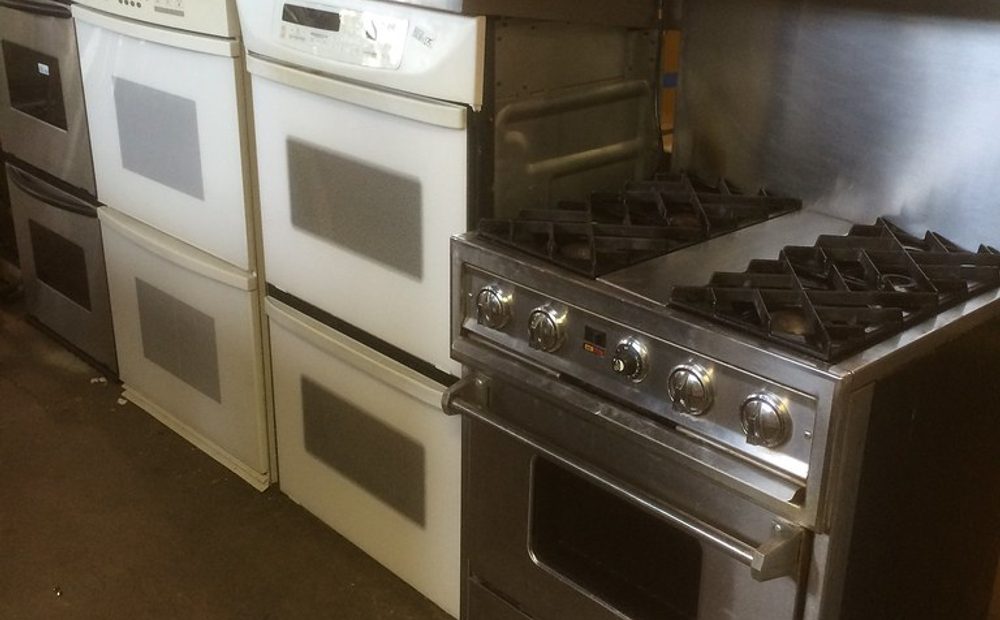
Once you’ve bought the machine, the next fork is fuel and ventilation — read electric vs. gas — and then run the real cost through the numbers.
Comments (0)