Smoked Fish & Meat
Smoke is the flavor I keep coming back to. Somewhere between a bakery run and a batch of jam, I started thinking about adding smoked products to the operation — smoked salmon on a bagel with cream cheese is one of the great breakfasts of the world, and I’ve chased it from Scandinavian fish counters to New York appetizing shops. But smoking for sale is a different animal than smoking for my own table, and the gap between the two is where people get hurt. So this page is two things at once: what you can make, and the very real safety line you cannot cross when money changes hands.
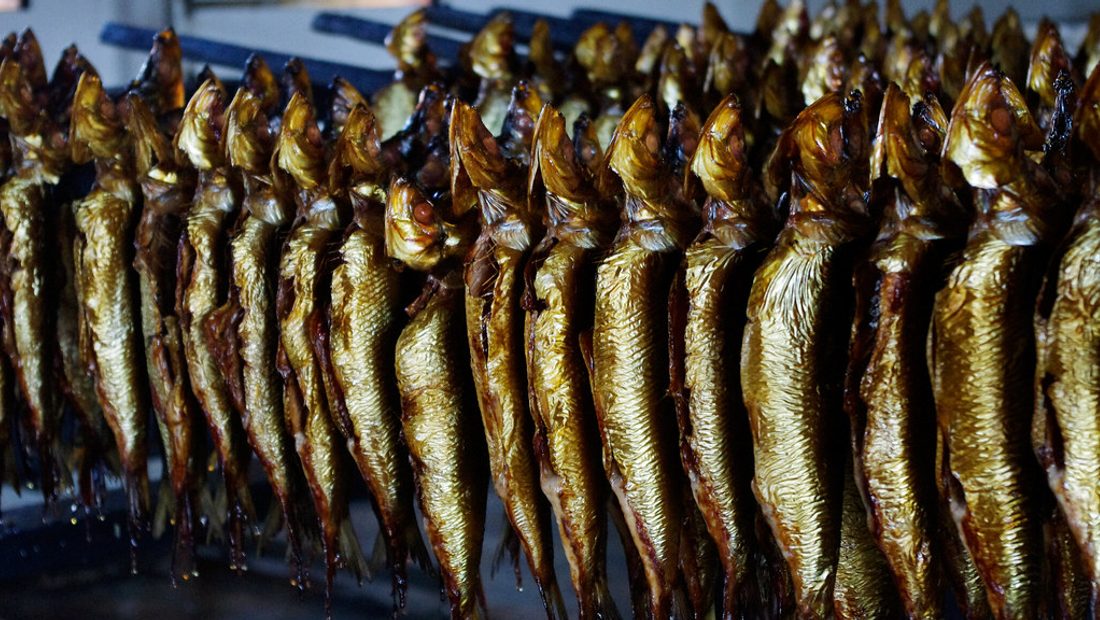
Before anything else, the physical rule I never bend: the smokers live outdoors, or under proper exhaust — never indoors without it. A smoker is a device for filling the air with combustion products and particulate, and running one in an enclosed kitchen is both a fire and a carbon-monoxide problem and a health-code violation. Mine sit outside on a pad. If you must bring smoking under a roof, it goes under engineered exhaust designed for it, full stop. On the mobile side that outdoor rule solves itself nicely: I put the smokers on a trailer I tow behind the truck, in open air with the split wood and a generator right there — the smoke stays outside where it belongs, and the truck’s cramped, hooded galley never has to make room for it (I lay out that support-trailer rig on fixing up a truck). There’s much more on the hardware itself on my Smoking dive and Smokers & gear pages.
What you can produce
Once you’ve got a smoker you trust, the menu opens up fast. A tour of what I’d bring to the shop:
- Smoked salmon & lox — the crown jewel. Cold-smoked lox (silky, barely-cooked, cured) and hot-smoked salmon (flaky, fully cooked) are two completely different products from the same fish, and both sell. Pair either with a fresh bagel and you’ve got a signature.
- Smoked trout — quicker and more forgiving than salmon, gorgeous hot-smoked, great as a spread.
- Smoked meats — brisket, pork shoulder, ribs, poultry. This is the BBQ side, and it’s a natural fit alongside sandwiches.
- Snack sticks & sausages — cured, smoked, shelf-stable-ish with the right process. A great grab-and-go item, but firmly in “cured meat” territory where nitrite and process control matter.
- Smoked cheese — cold-smoked, low effort, high margin, and it keeps well. An easy add.
The technique differences — hot vs. cold, which woods, times and temps — I’ve written up in detail on Hot vs. cold smoking, What I smoke, and Woods. Read those for the craft. This page is about what changes when you put a price tag on it.
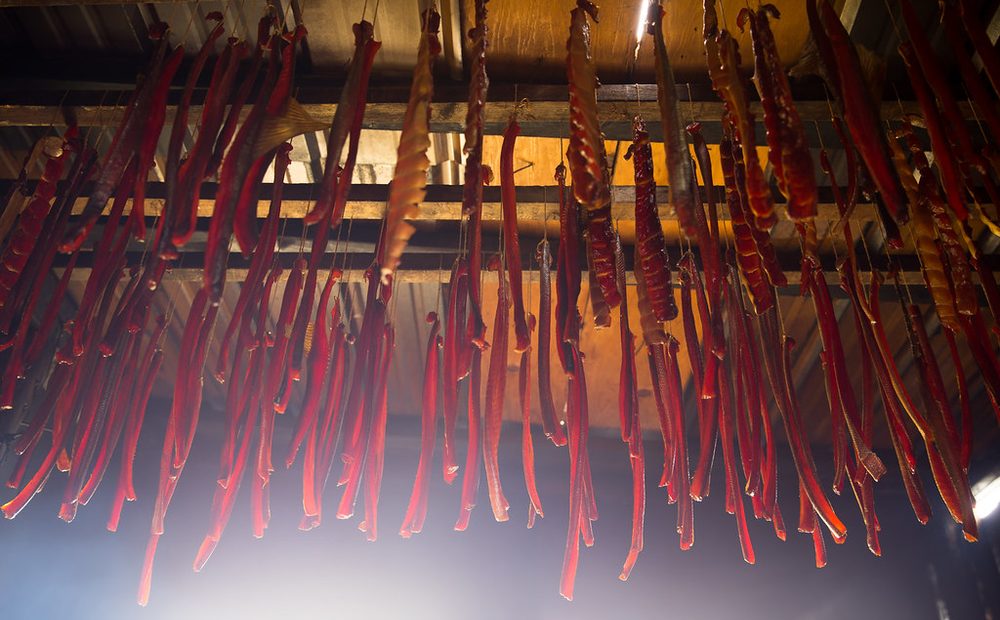
Selling smoked fish is a different, serious thing
Here’s where I get deadly serious, because smoked fish is one of the highest-risk foods a small producer can sell. It is not a place to wing it.
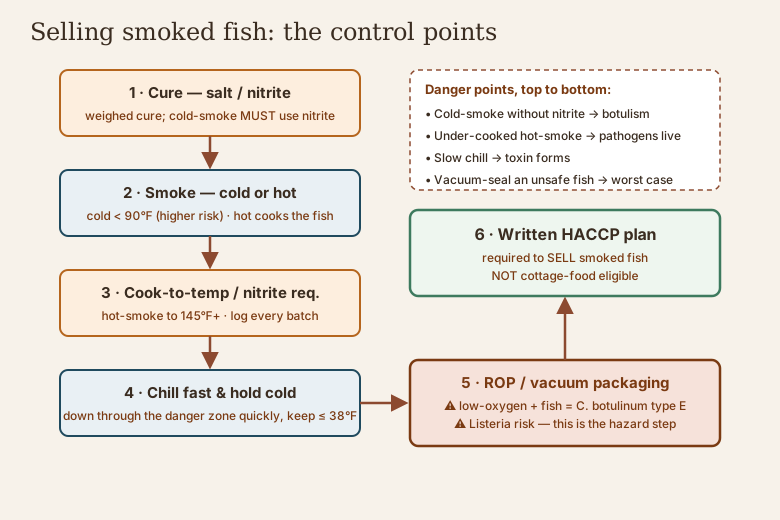
The core hazard is a pair of organisms. Clostridium botulinum type E is the big one: it’s a cold-tolerant strain that lives in aquatic environments, and it produces one of the deadliest toxins known. It thrives in exactly the conditions smoked fish creates — low oxygen, low acid, mild temperatures — which is why the combination of smoked fish and reduced-oxygen or vacuum packaging (ROP) is the single most dangerous step in the whole process. Seal an under-processed fish in a low-oxygen bag and you’ve built the perfect botulism incubator. The second organism is Listeria monocytogenes, which grows even under refrigeration and is especially dangerous to pregnant women, the elderly, and the immunocompromised — and ready-to-eat smoked fish is a classic Listeria vehicle.
Those two facts drive every rule that follows.
The control points
Walking the flow in the diagram, top to bottom:
- Cure — salt / nitrite. A weighed salt cure isn’t just flavor; it lowers water activity and helps hold botulism in check. Cold-smoked and cured products require a nitrite cure — this is not optional and not a seasoning choice, it’s a safety barrier. Never eyeball cure; it’s weighed to the gram.
- Smoke — cold or hot. Cold-smoking (below ~90°F) never cooks the fish, so it leans entirely on cure, salt, and cold-chain to be safe — the higher-risk path. Hot-smoking cooks the fish as it flavors it, which is a real safety asset.
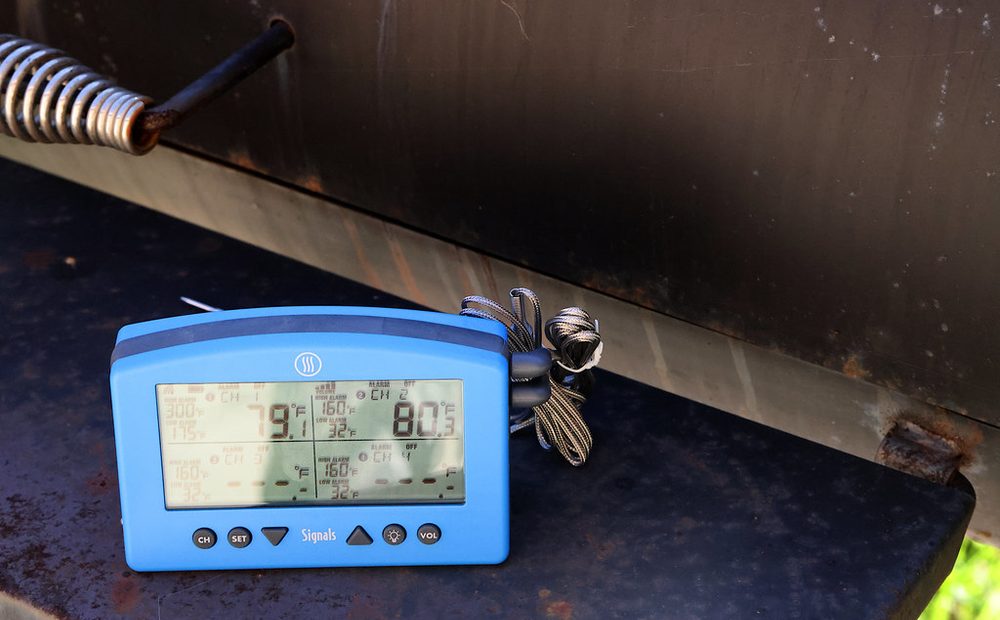
- Cook-to-temp / nitrite requirement. Hot-smoked fish must reach a safe internal temperature (commonly 145°F+, per the process you’re operating under) and you log it, every batch, with a calibrated probe. Cold-smoked products lean on the nitrite cure and documented process instead.
- Chill fast & hold cold. Get the product down through the danger zone quickly and hold it cold (≤38°F). Slow cooling is where toxin forms.
- ROP / vacuum packaging — the hazard step. If you vacuum-seal, you’ve removed oxygen, and now every earlier control point has to have been perfect. This is where a small mistake upstream becomes a fatal product. Many small producers simply don’t ROP smoked fish, or do so only under a validated process.
- HACCP plan over all of it. See below.
HACCP, and why cottage food doesn’t apply
To sell smoked fish in most jurisdictions, you must operate under a written HACCP plan — a Hazard Analysis and Critical Control Points plan that identifies each hazard, defines the critical limits (cure weights, temperatures, times), and records that you hit them every single batch. It’s a document and a discipline, and for smoked fish it’s typically required by regulation, not a nice-to-have.
And to be blunt about the legal wall: smoked fish is NOT eligible under cottage-food rules. Michigan’s Cottage Food Law covers non-hazardous items like breads and jams from a home kitchen — it explicitly does not cover smoked fish, low-acid canning, or reduced-oxygen packaged products. Selling smoked fish means a licensed establishment, a HACCP plan, and inspection. The general food-safety framework — pH, water activity, the botulism line — is on my Preservation food-safety page, and the mobile/vending overlay (if you ever want to sell smoked product off a truck) is on the Food Truck rules and regs page. As always: rules change — confirm the current HACCP and licensing requirements directly with MDARD and your local health department before you sell a single package.
Where I’d start
Given all that, if I were adding smoke to the business I’d stage it. Smoked meats and BBQ are the lower-regulatory-friction entry — cooked to temp, sold hot, squarely in normal food-establishment territory — and they play beautifully with the sandwich and bakery menu. Smoked cheese is easy and safe. I’d treat smoked fish as a deliberate, HACCP-backed project, not a casual add-on: get the plan written, the process validated, the logs running, and the licensing squared away first. Done right, a smoked-salmon bagel is worth every bit of that discipline. Done casually, it’s the kind of product that ends a business.
For the craft side of all of this — building and running the smokers, choosing woods, hot vs. cold — start at the Smoking dive and Smokers & gear. For where smoked products fit into the wider build-out and its costs, see Outfitting a small kitchen and The Numbers.
Comments (0)