Starting in a Food Truck
The hardest part of opening a bakery isn’t the baking — it’s the months and the tens of thousands of dollars you sink into a room before it earns a single dollar back. That’s the problem a food truck solves. This is the bridge page: the case for starting in a truck and cooking out of it while the brick-and-mortar comes together behind you — or keeping the truck as the main kitchen indefinitely if that’s the business that works. I’ve eaten street food on five continents, and some of the best food I’ve ever had came out of a window, not a dining room. A truck is not a lesser version of a restaurant. It’s a different, and often smarter, way in.
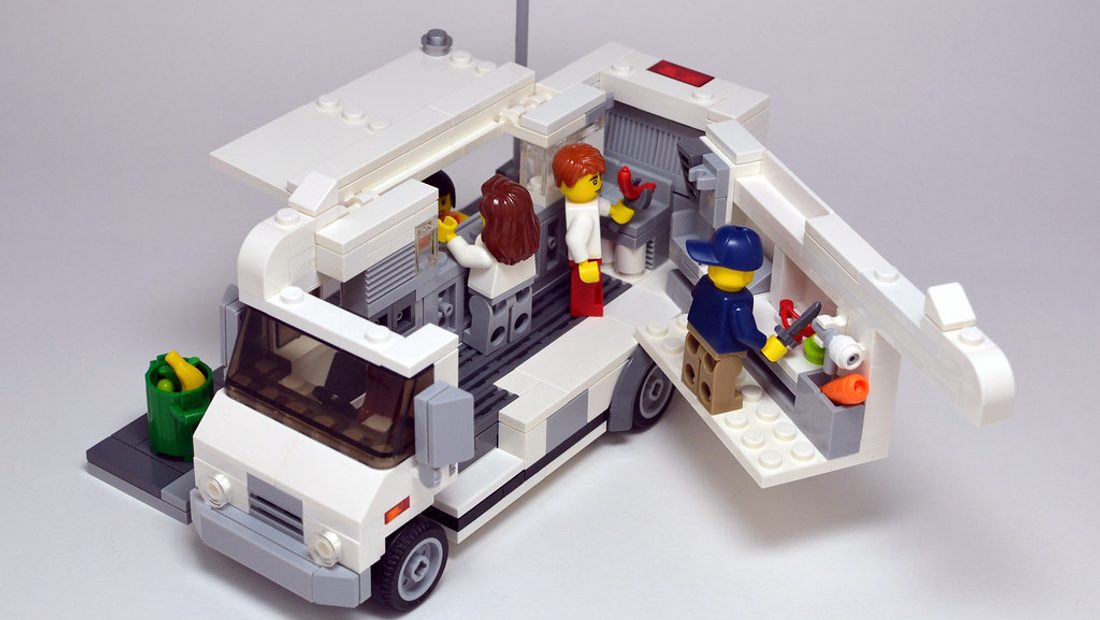
Why a truck first
The math is the whole argument. Outfitting even a lean bakery runs somewhere around $12,000 used to $31,000 new before you touch rent — I break every line of that down on The Numbers. A used truck that’s already built out can put you in business for a comparable or smaller number and start generating revenue immediately, instead of after a six-month build. The advantages stack up:
- Much lower startup capital. A single mobile unit versus a full room of fixed equipment plus a lease. You’re buying one thing that already has cooking, refrigeration, and water in it.
- Revenue while you build. This is the big one. The truck earns this weekend — at markets, events, and lunch spots — and that cash flow can literally fund the bakery build-out instead of a bank loan.
- Real-world market and menu testing. Before I commit a lease to a neighborhood, a truck tells me exactly what sells, to whom, at what price, on what days. You learn your actual menu by watching what walks off the window. My take on the mobile menu is on the Food Truck menu page.
- Brand building. A truck is a rolling billboard. By the time the shop opens, you’ve already got customers who know your bagels and your smoked-brisket sandwich by name.
I make the fuller version of this argument, with the pros and the honest cons, on Why a truck — start there if you’re weighing it seriously.
The commissary catch
Here’s the thing nobody tells you up front, and it’s the hinge this whole page turns on: a food truck almost always needs a licensed commissary base to operate legally. A mobile unit has limited water, storage, and waste capacity, so the health code requires it to be tied to an approved, licensed commissary — a fixed kitchen where you take on fresh water, dump waste, store food, and clean the truck. And critically, a home kitchen does not qualify. You cannot legally run a truck out of your garage and your house sink.
At first that sounds like a catch-22 — you need a licensed kitchen to run the truck, but building a licensed kitchen is the expensive thing you were trying to avoid. But look closer and it’s actually the key that unlocks the whole strategy: the commissary doesn’t have to be your kitchen yet. Plenty of shared-use commercial kitchens and existing licensed establishments rent commissary time to trucks by the month. You tie your truck to one of those, run and earn, and build your own kitchen at your own pace.
And then the payoff: when your bakery is built and licensed, it becomes your commissary. The truck and the shop stop being two separate projects and become one system — the bakery bakes the bread and preserves the jam and services the truck, and the truck sells all of it plus cooked street food. That reinforcing loop is the heart of this business, and I lay it out fully on The truck & the bakery. The regulatory specifics — Michigan’s STFU (Special Transitory Food Unit) versus a local Mobile Food Establishment license, the commissary requirement, fire and LP-gas inspections — all live on the Food Truck rules and regs page. As always, verify the current requirements with MDARD and your local health department before you build anything.
The exception: a cottage-food truck needs no commissary at all
Everything I just said about needing a commissary is true for a truck that cooks. There’s one model where it doesn’t apply at all — and it’s the leanest possible start there is. If the “truck” is really a rolling retail stand selling my packaged, labeled home-baked goods — loaves, bagels, cookies, granola, jars of jam and jelly — direct to customers, then I’m operating under the cottage food law, not as a food establishment: no commissary, no MDARD license, no inspection. A home kitchen isn’t allowed to be a truck’s commissary, but a home kitchen is exactly where cottage food is supposed to be made — so the whole catch simply doesn’t apply. The same works for a small trailer with a sales window: as long as what goes out the window is packaged goods sold direct, it’s a farm stand on wheels.
The trade is the cottage ceiling — a sales cap, direct-to-consumer only, non-hazardous foods only, and everything pre-packaged, with no cooking on board. The second I fry an egg or build a sandwich to order in that window, it becomes a licensed mobile establishment and the commissary rule snaps right back. But as a first rung it’s hard to beat: park at markets and events, sell what I baked at home this morning, and use the cash and the customer list to fund the licensed kitchen that comes next. The precise legal lines are on the rules and regs page; the standalone-business version of this is on the truck and the bakery. As always, verify the current cottage cap and rules with MDARD before you lean on them.
The sequencing options
There’s no single right order — there are three, and which one fits depends on your capital, your timeline, and how much you like being on wheels.
| Path | How it goes | Best when |
|---|---|---|
| Truck-first → add shop | Buy/build the truck, tie it to a rented commissary, earn and test the market, then build the bakery and make it the commissary. | You’re capital-light and want revenue and market feedback before committing a lease. My default recommendation. |
| Shop-first → add truck | Build the licensed bakery first, then add a truck later as an extra sales channel that the bakery already commissaries. | You’ve got the capital, a location you’re sure of, and the shop is the main event. |
| Run both from day one | Stand up a modest licensed kitchen and a truck together, designed as one system from the start. | You’ve done this before, have the capital and the crew, and want to hit the ground at full stride. |
For most people starting out, the truck-first path is the one I’d point to. It’s the cheapest way to find out whether the business is real, it pays you while you learn, and every dollar the truck earns is a dollar you don’t have to borrow to build the kitchen that will eventually service it.
Getting into a truck
Buying and fixing up the actual vehicle is its own subject — used versus new, what to inspect, what a build-out really costs, and how to bring a tired truck back to code. I’ve written all of that up on the Food Truck side: start with Used vs. new and Fixing one up, then run the mobile Numbers against the bakery numbers so you’re comparing the two paths with real figures in front of you.
However you sequence it, the point of this page is simple: you don’t have to wait for the building to start cooking. The truck lets the kitchen earn while you build it, teaches you your market before you bet a lease on it, and — once the bakery is up — becomes the mobile front end of a single, self-servicing operation. That’s the on-ramp I’d take. When you’re ready, the whole mobile story starts at the Food Truck dive.
Comments (0)