Why a Food Truck
I’ve spent years cooking for people — smoking fish and brisket, baking bread and bagels, putting up jam by the case — and the question that finally got serious was not “can I cook well enough to sell it?” It was “what’s the least ruinous way to find out if strangers will pay me for it?” A food truck is my answer to that question. Not because it’s romantic (it is, right up until the generator dies at a festival), but because it is the cheapest, most honest test of a food business I know of. This page is the case for the truck — and, because I’d want the same from anyone giving me advice, the case against it too.
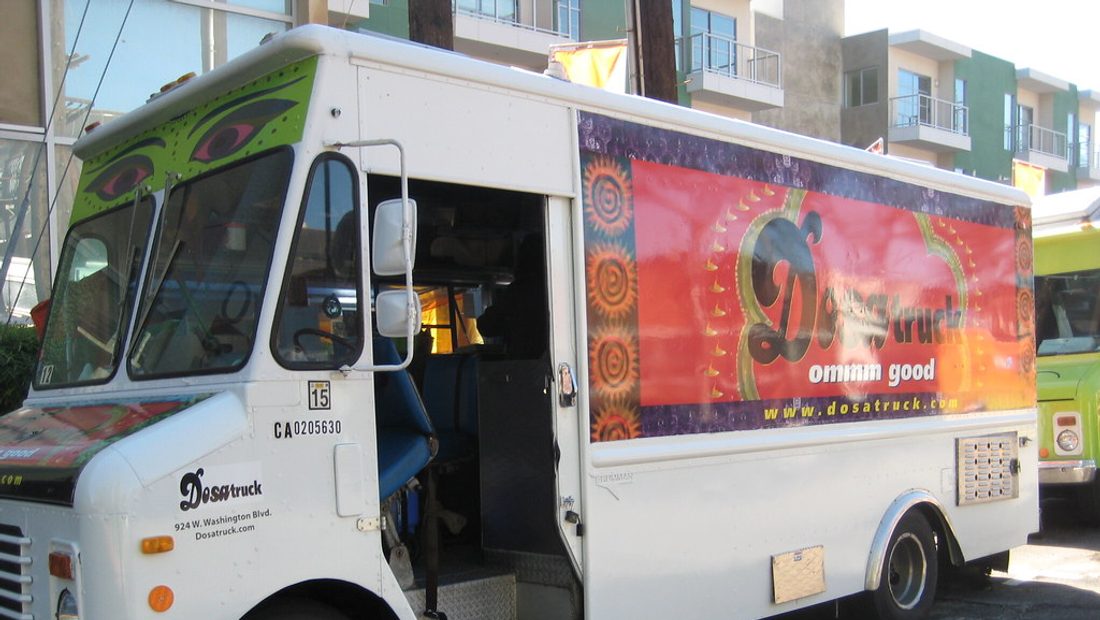
The capital argument, plainly
A brick-and-mortar restaurant is a money furnace before you sell a single plate. You sign a lease, then you pay a build-out — hood, grease trap, ADA bathrooms, a health-code kitchen, dining-room finishes, a POS, signage — and in most towns that’s a low-six-figure hole in the ground before day one. Then rent keeps coming whether it rains, whether you’re sick, whether the neighborhood turns out to have no lunch traffic after all.
A truck flips that math. My whole rolling kitchen — vehicle, build, equipment, first permits — can land in the range where a restaurant build-out starts. Here’s the comparison that made the decision for me.
| Cost line | Brick-and-mortar restaurant | Food truck |
|---|---|---|
| Space | 5-, 10-, 15-year lease; rent regardless of sales | The truck is the space — no landlord |
| Build-out / kitchen | $150k–$500k+ tenant improvement | $40k–$150k for the whole unit |
| Ongoing overhead | Rent, utilities, more staff, dining-room upkeep | Fuel, propane, a commissary fee, insurance |
| Break-even | Big, slow | Small, fast |
| If it flops | You’re stuck on a lease | You sell the truck and recover a chunk |
That last row is the quiet one. If the concept is wrong, a restaurant traps you; a truck is an asset you can resell. The downside is bounded. For a first venture that matters more than almost anything else. I dig into the real dollars — build cost, day-rates, food cost, what a slow event actually loses — over on the numbers.
Mobility is the whole point
A restaurant waits for customers to come to it. A truck goes to where the customers already are, and that turns out to be a genuine superpower. I can chase the demand instead of praying it shows up at my door:
- Festivals and fairs — thousands of hungry people funneled past a service window.
- Breweries and taprooms — a lot of them have no kitchen and want a rotating truck out front; the beer’s already selling, you just feed the drinkers.
- Office parks and industrial lots — a fixed weekday lunch route, the same trucks the same days, a built-in crowd on a schedule.
- Farmers markets — a natural fit for the bakery side; I can sell bread and jam off the same unit.
- Private catering and events — weddings, company picnics, graduation parties. This is where a truck quietly makes its best margins, because you’re paid a guaranteed minimum before you tow in.
If one spot is dead, I don’t renew a lease — I just drive somewhere else next week. That freedom to fail cheaply and move is something no fixed restaurant ever gets.
A truck is a market test you can afford
This is the part I’d underline for anyone. Before you sink your life savings into a five-year lease on a concept, a truck lets you test the market and the menu for real money, at real events, with a fraction of the risk. Which items actually sell? What price will people pay standing up in a parking lot? Does the smoked-fish taco move, or is it the brisket sandwich that clears out by 1pm? You learn all of that with a resellable asset under you instead of a landlord over you. Half the restaurants that succeed as bricks-and-mortar should have been a truck for a year first — it would have saved them from opening the wrong restaurant.
Brand-building on wheels
A parked, wrapped truck is a billboard that also happens to make money. Every event, every brewery lot, every farmers market puts the name in front of a few hundred new people, and the ones who love the food follow it around on social media — “where’s the truck this weekend?” becomes free marketing. By the time I’d ever want to open a fixed location, the truck has already built the audience that walks through its door. The truck isn’t just a business; it’s the marketing budget for whatever comes next.
How the truck and the bakery reinforce each other
Here’s the vision that ties it together, and the reason I’m building both. The bakery is a fixed, licensed commercial kitchen — where I bake the artisan breads and bagels, run the smoker for fish and meat, and put up the jams and jellies. The truck is the mobile storefront that carries those products out to the crowds plus cooks street food to order. Neither one is dead weight to the other:
- The bakery gives the truck product with almost no extra labor — bread, bagels, cookies, jars of jam that were going to be made anyway now have a second sales channel on wheels.
- The truck gives the bakery reach and a brand it could never build from one fixed address.
- Critically, in Michigan a mobile unit must be tied to a licensed commissary — and the bakery is that commissary. The kitchen I already need for the bakery is the servicing base the law requires for the truck. One investment, two revenue streams, one set of licenses that support each other. I walk through exactly how that pairing works on the truck and the bakery, and the licensing that makes it legal on rules and regulations.
Now the honest downsides
I’d be doing you no favors if I only sold you the dream. A truck is hard in specific, physical ways, and some days it will test whether you actually want this.
Weather runs your business. Rain, wind, brutal heat, an early cold snap — the crowd evaporates and there’s nothing you can do. A restaurant’s dining room doesn’t care if it’s drizzling; your service window very much does. You will drive to an event, pay the vendor fee, and go home having lost money because it stormed.
Things break, always at the worst time. A truck is a vehicle and a kitchen and a power plant and a plumbing system, all shaking down the road together. The generator, the propane regulator, the water pump, the transmission — any of them can strand you mid-service. You become a mechanic whether you wanted to or not. (That’s exactly why I care so much about buying and rehabbing the unit right — see buying used vs. new and fixing up a truck.)
The days are brutally long. People see the four hours of service. They don’t see the prep the night before, the drive out, the setup, the service, the teardown, the drive back, the cleaning, the restocking, and the dishes — a “lunch shift” is a twelve-hour day. Do that in July inside a metal box next to a fryer and a griddle and you’ll understand why turnover in this business is real.
The workspace is tiny. However you lay it out, you are cooking in a corridor. Every inch is contested; two people is a crowd; you learn to work with your elbows in. There’s a real craft to a good truck layout, and it never stops feeling small.
Permitting is a patchwork. This is the one that surprises people most. Rules change town to town. A truck that’s perfectly legal to operate in one jurisdiction may need different permits, a different fire sign-off, or a different vending license one county over. Michigan’s statewide STFU license helps a lot with this, but you’re still navigating local zoning, township permits, and fire-marshal sign-offs everywhere you park. Budget time and patience for paperwork; it’s covered in detail on rules and regulations.
So — is it worth it?
For me, yes, and the reason is proportion. Every downside above is real, but none of them is ruinous the way a failed lease is. Weather costs you a day, not a decade. A breakdown costs a repair, not a build-out. The workspace is small, but it’s yours and it’s paid for. The truck lets me test whether people will pay for my food, build a brand while I learn, sell the bakery’s products on the side, and keep my worst-case loss to something I can walk away from. If you’re weighing the same thing, don’t start by asking whether you can cook. Start by pricing the two ways in — and if you’re leaning toward keeping the door open to a fixed kitchen later, read starting in a truck, where I lay out how the truck can be the first chapter of a bigger business rather than the whole book.
Comments (0)