Buying Used vs. New
The unit is the single biggest check you’ll write to get on the street, and it’s the decision that most quietly determines whether your first year is fun or miserable. Buy the wrong used truck and you’ll spend your opening season under it with a wrench instead of behind the window with a spatula. Buy new without thinking and you’ll hand a chunk of your working capital to a builder for shine you didn’t need. I’ve walked a lot of lots and crawled under a lot of trucks, and this is how I think about it — vehicle type first, then used, then new, then how to decide.
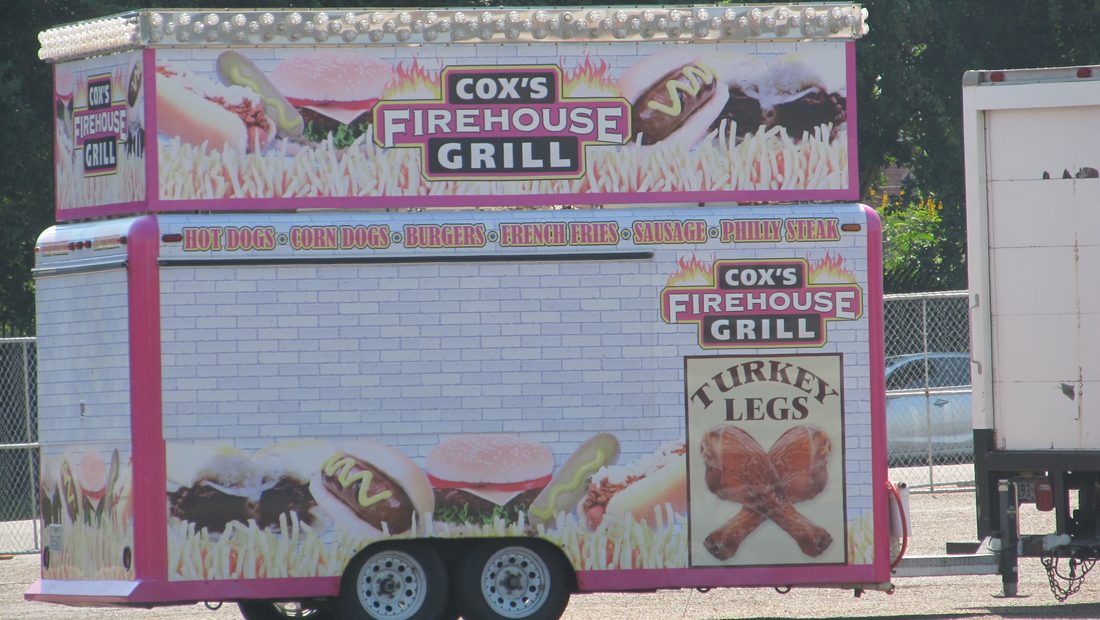
First decide the format: truck, trailer, or cart
Before “used or new,” answer “truck, trailer, or cart?” These are three different businesses, and the money and mobility profiles are genuinely different.
A truck — a self-propelled step-van or box truck with the kitchen built into the back — is the most mobile option. You drive it, you park it, you cook. Nothing to tow, nothing to hitch, and you can change your daily route on a whim. You pay for that freedom two ways: the vehicle itself costs more, and the cab eats length you can’t cook in. And when the engine dies, your kitchen is stranded — the two are welded to the same fate.
A trailer is a towable box: all kitchen, no cab, hitched behind a pickup or van. Dollar for dollar it buys you the most kitchen — every foot of the box is line, none of it is a driver’s seat — and it’s usually cheaper to buy because there’s no engine or transmission to fail. The catch is you need a tow vehicle rated for the load (a loaded concession trailer is heavy), and hitching, maneuvering, and parking a trailer is a real skill. But if the truck engine grenades, you just tow with a different vehicle; the kitchen and the drivetrain aren’t married.
A cart or concession stand is the cheapest way onto the street and the smallest. One cook, one signature item, pushed or hauled to a farmers market or fair. It’s a fantastic way to test a single product for a few thousand dollars, but you’ll outgrow it the moment you want a real menu.
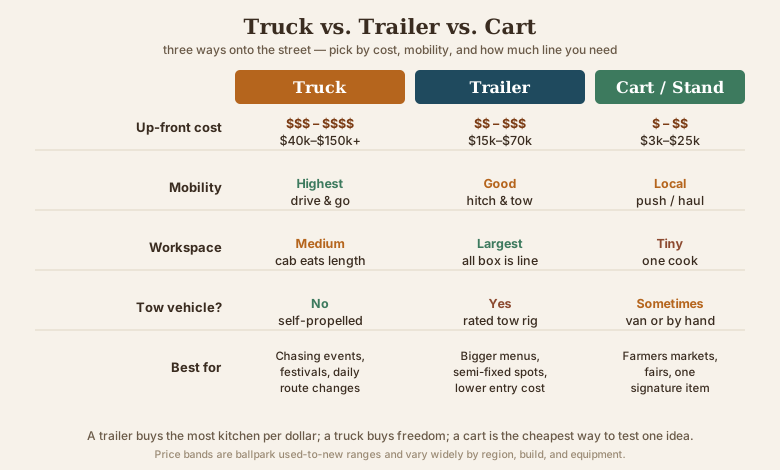
| Factor | Truck | Trailer | Cart / Stand |
|---|---|---|---|
| Typical price band | $40k–$150k+ | $15k–$70k | $3k–$25k |
| Kitchen per dollar | Medium (cab eats length) | Highest | Tiny |
| Mobility | Highest — drive & go | Good — hitch & tow | Local — push / haul |
| Tow vehicle needed? | No | Yes, rated for the load | Sometimes (van or by hand) |
| Failure coupling | Engine + kitchen share fate | Drivetrain separate from kitchen | Minimal |
| Best for | Chasing events, changing routes daily | Bigger menus, semi-fixed spots, lower entry | One item, markets & fairs |
My own read: a trailer is the smart-money choice for the most cooking capacity per dollar if you can tow and you park semi-fixed; a truck is worth the premium if your whole model is chasing events and changing spots constantly; a cart is how you test one idea before committing to either. Everything below applies to trucks and trailers alike, but I’ll flag where a truck’s engine and a trailer’s axles diverge.
Or both: a truck that tows a trailer
The formats aren’t mutually exclusive, and one of my favorite configurations is a cooking truck that tows a trailer. The truck is the licensed kitchen with the hood and the cook line; the trailer behind it carries the things that don’t belong in the galley — the smokers and the wood (which have to be outdoors anyway), the generator (noise and heat pushed off the line), and bulk storage — and it can even wear a second service window to sell packaged bakery goods while the truck sells hot food. I get a bigger, more capable operation without paying for a bigger truck, and I can leave the trailer at the commissary on days I don’t need it. The catch is the obvious one: watch the truck’s tow rating and GVWR, wire trailer brakes and lights to code, and know the combined length changes where you can legally park and how you turn. I detail that trailer build on fixing up a truck.
Buying used — where the deals (and the traps) live
A used unit is where most people should start, because someone else already ate the depreciation and the build cost. Used mobile kitchens turn over constantly for reasons that have nothing to do with the truck — an operator burns out, moves, or the concept flops — and you can inherit a solid build for a fraction of new. Where to look:
- Specialty dealers / used-truck lots — priciest, but often “turn-key,” sometimes with a limited warranty and financing. You pay for the convenience and the vetting.
- Auctions — municipal, restaurant-liquidation, and online auctions can be genuinely cheap, but it’s almost always as-is, sight-unseen or brief-inspection. High risk, high reward; only for buyers who can inspect hard and fast.
- Facebook Marketplace / Craigslist — the real hunting ground. Enormous range of quality. Some are gems; some are money pits with a fresh wrap hiding rot. This is where the checklist below earns its keep.
- Going-out-of-business sales — a whole operation selling at once, often motivated to move fast. Motivated sellers make good prices, but ask why they’re closing.
What a used build hides
A wrap and a clean service window hide a lot. A pretty truck can be rotten underneath, and the seller is not obligated to volunteer any of it. These are the things I go looking for specifically, because every one of them is expensive and none of it shows in the listing photos:
- Rusted-out plumbing. Water tanks, fittings, and lines corrode, crack, and leak. A failed fresh or grey tank is a real cost and, worse, a health-inspection failure that keeps you off the street.
- A dead or undersized generator. The onboard generator is the heart of an electric build, and it’s often the most abused, worn-out thing on the truck. Undersized for the load, it browns out under your fridge and griddle; dead, it’s thousands to replace.
- Non-compliant propane. Old regulators, cracked hoses, tanks out of certification date, hard-lines that were never done to code. LP gas is exactly where a cheap prior build cuts corners, and it’s exactly where an inspector — rightly — will not budge.
- No fire suppression, or an expired ANSUL tag. Grease cooking requires a Type I hood with a tagged, in-date wet-chemical (ANSUL) system. A missing system, or one with a lapsed inspection tag, is an automatic fail and a several-thousand-dollar fix.
- Failed-inspection history. Ask directly whether the unit has passed inspection recently and in what jurisdiction. A truck that quietly failed and got parked is on the market for a reason.
- Engine, chassis, and mileage (trucks). It’s a vehicle too. High miles, a tired transmission, frame rust, brakes, tires — a step-van drivetrain repair can dwarf the kitchen’s problems. Get the VIN, run the history, and treat it like buying a work truck, because you are.
- Axles and tires (trailers). A trailer has no engine, but it has axles, bearings, brakes, and tires that rot from sitting. Trailer tires age out and blow even with low mileage; check dates.
- Water damage and soft floors. Press on the floor everywhere, especially near the sinks and the service window. Spongy, soft, or springy floor means water got in and the subfloor is rotting — one of the most expensive and disruptive things to fix, because everything sits on it.
A used-unit inspection checklist
Take this with you, and don’t fall in love before you finish it. Bring a flashlight, an outlet tester, a moisture read if you can, and old clothes to get under it.
- Floor — walk every square foot; probe for soft spots near sinks, window, and door.
- Walls & ceiling — FRP intact, seams sealed, no water staining or soft drywall behind.
- Fresh & grey tanks — fill, run, and drain them; look for leaks and check the grey tank is at least as large as fresh (code, and common sense).
- Water heater & pump — hot water actually gets hot; pump holds pressure and doesn’t cycle.
- 3-compartment sink + separate hand sink — both present, both drain, hand sink is dedicated.
- Generator — start it cold; run it under load (turn on fridge, lights, griddle) and watch for brownout; note the make, model, hours, and whether it’s big enough for everything at once.
- Propane — tank cert dates, regulator age, hoses supple not cracked; ask for a recent leak-test / gas inspection record.
- Hood & fire suppression — Type I hood present for grease cooking; ANSUL system installed with a current inspection tag; pull-station and nozzles in place.
- Electrical panel — labeled breakers, no scorching, GFCI where wet, no extension-cord “wiring.”
- Appliances — every piece powers on, holds temperature, and isn’t cobbled together.
- Engine / chassis (truck) — cold start, test drive, brakes, transmission, frame rust, VIN history, mileage.
- Axles / tires (trailer) — bearing play, brake function, tire manufacture dates not tread.
- Paper — title in hand, VIN matches, and any recent inspection history and jurisdiction.
The point most people miss: it has to pass your jurisdiction’s inspection
Here’s the crucial thing about any used build: it doesn’t matter that it was legal where it came from — it has to pass inspection where you will run it. Codes differ. A truck built and permitted in one state, or even one Michigan county, may not meet another’s requirements for hood type, sink configuration, water capacity, propane, or fire suppression. I’ve seen people buy a “fully permitted” out-of-state truck and discover it needs thousands in changes to pass at home. Before you buy, talk to the health department and fire marshal you will operate under, tell them the exact unit, and ask what it will take to license it. Don’t inherit someone else’s approval and assume it transfers — it usually doesn’t. This is a whole topic on rules and regulations.
Buying new — custom builds, lead times, financing
A new build fixes the biggest problem with used: you know what you’re getting, and you can spec it to pass your inspection and fit your menu exactly. You’re choosing between two flavors of new:
- Off-the-shelf / semi-custom — a builder’s standard layout, lightly configured. Faster, cheaper, proven. You take their floor plan and their equipment list, largely as-is.
- Fully custom — you (or a designer) lay out the line, pick every appliance, and the shop builds to it. You get the exact kitchen you want; you pay for the exact kitchen you want.
Two realities to plan around. Cost: a professional new build runs from the middle five figures into six, depending on size, equipment, and how custom you go — you’re paying for a compliant hood, a right-sized generator, a proper propane and plumbing system, and a warranty. Lead time: good builders have a queue. A custom unit can be months out from deposit to keys — often three to six, sometimes more in a busy season. If you’re aiming at a specific summer, order in the winter. On financing, new units are easier to finance than a private used sale — dealers and builders often arrange equipment loans, and a documented new build with a warranty is collateral a lender understands. Factor the payment into the numbers; a monthly note changes your break-even.
When used wins, when new wins
| Situation | Lean toward |
|---|---|
| Tight capital, first venture, testing the concept | Used (with a merciless inspection) |
| You’re handy and can rehab systems yourself | Used — you capture the sweat-equity margin |
| A specific menu that needs a specific line and hood | New (or heavy-custom used) |
| You value certainty, warranty, and passing inspection first try | New |
| You need it this month | Used (new has a lead time) |
| You can wait a season and finance it | New custom, ordered in the off-season |
My honest default for most first-timers is a good used unit, bought after a brutal inspection, in a format (usually a trailer) that maximizes kitchen per dollar — then rehab it right. But “good used” and “rehab it right” are doing a lot of work in that sentence, and if the bones are rotten, walk away no matter how cheap it is. The rehab itself — system by system, what I’d do myself and what I’d hire out — is its own page: fixing up a truck. And whichever way you go, run the whole thing through the numbers before you sign, because the cheapest truck to buy is often not the cheapest truck to own.
Comments (0)