Menus That Sell
The menu is the business plan. Everything I decide about the truck — how fast the line moves, what I prep at the commissary the night before, what my food cost lands at, whether people remember me and come back — all of it is baked into the menu long before a single ticket prints. I’ve eaten street food in every US state and something like thirty countries, and the carts and trucks that stick in my memory almost never had a long menu. They had a tight one, executed cold. So that’s where I start: not with “what could I sell,” but with “what can I sell a hundred times a day without falling apart.”
Start with the workhorses
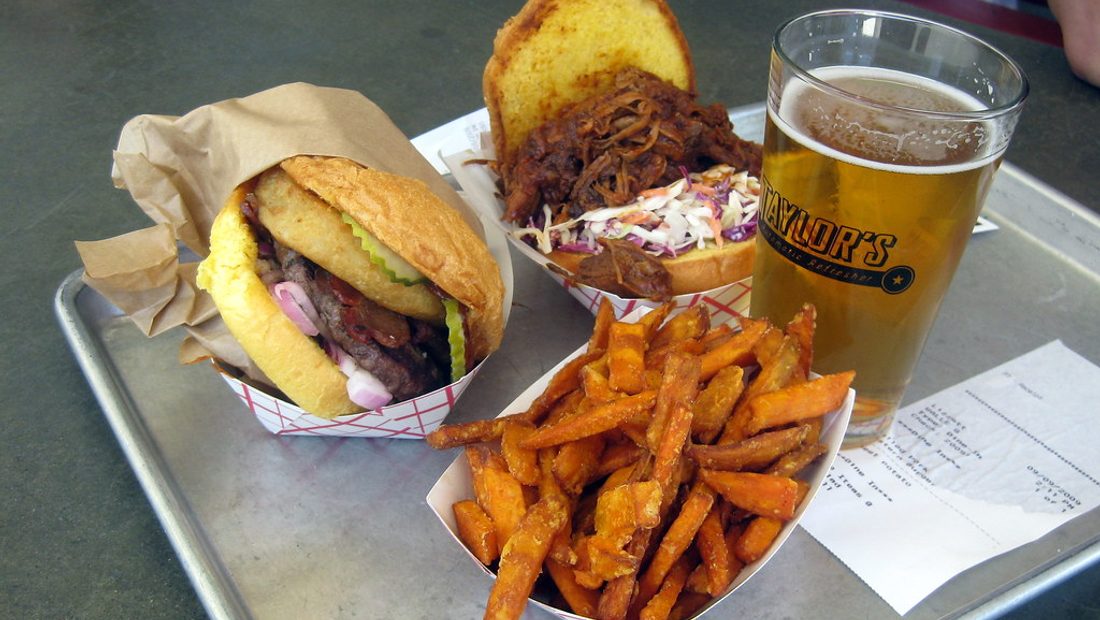
There’s a reason certain items show up on trucks the world over. They’re fast, they’re cheap to make, they travel well in a hand, and everybody already knows what they are — I don’t have to educate the customer, I just have to be good. These are my foundation.
Tacos are the single best street-food format ever invented. A tortilla, a scoop of one well-braised protein, onion, cilantro, a squeeze of lime, a spoon of salsa — thirty seconds to assemble from prepped components, and the flavor ceiling is enormous. I braise the fillings in bulk at the commissary (carnitas, al pastor, a chile-braised beef) and hold them hot; the line is just assembly. Look through the taco recipes — the whole point is that the hard work happens the day before, off the truck.
Hot dogs are the format people underrate. A quality all-beef dog, a good bun, and a point of view on the toppings turns a fifty-cent commodity into a signature. I’ve had the Sonoran dog wrapped in bacon in Tucson, the Chicago drag-it-through-the-garden, the Danish ristet hotdog with remoulade and crispy onions, the Colombian perro with everything on it. A dog cart is nearly all margin and it cooks off a flat-top or a roller with no hood drama.
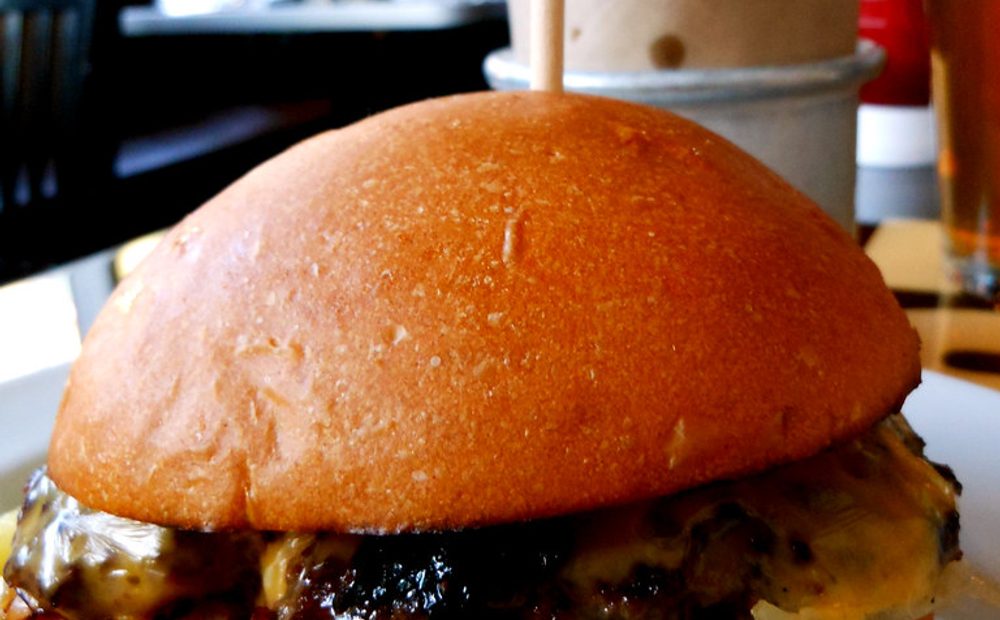
Burgers, and specifically smash burgers, are the throughput champion of the flat-top. A thin ball of 80/20 chuck smashed hard onto a screaming-hot griddle develops a lacy brown crust in about ninety seconds a side, gets a slice of American melted on in the last thirty, and goes onto a toasted potato bun. Two smashed patties cook as fast as one thick one and sell for more. The economics of the smash burger are why it took over American street food in the last decade — it’s fast, it’s craveable, and the raw material is cheap.
| Workhorse | Prep-ahead at commissary | On-truck step | Why it earns its spot |
|---|---|---|---|
| Tacos | Braise & hold fillings, chop garnish, make salsas | Assemble to order (~30 s) | Highest flavor-per-dollar; infinite variety off one base |
| Hot dogs | Portion dogs, prep toppings | Griddle/roller + dress | Near-all-margin, no hood drama, everyone knows it |
| Smash burgers | Ball & portion patties, toast setup | Smash, melt, build (~3 min) | Throughput champion; cheap chuck, premium price |
Then the ideas that make people drive across town
Once the workhorses are dialed, I earn the right to a few items that make the truck a destination instead of just lunch. These lean on things I’ve actually eaten and can execute honestly.
Birria and quesabirria are the item that pulls a line down the block right now, and for good reason — a deeply spiced, chile-and-adobo beef or goat braise, the meat shredded, the tortilla dipped in the rust-colored fat and griddled with cheese until it crisps, served with a cup of consommé for dipping. It’s a taco and a soup and a grilled cheese at once. It’s also perfect truck food because the braise is a commissary job and the assembly is a griddle job. Search my birria and taco recipes for the build I use.
Loaded fries are how you turn a cheap side into a headline. A base of fries, then anything — birria and consommé, carne asada and crema, buffalo chicken, a proper chili and cheese. High perceived value, low food cost, and they use proteins I’m already braising for the tacos.
Elevated grilled cheese is a griddle item that punches way above its cost. Good bread, real cheese blended for melt and flavor, and a twist — short rib, caramelized onion, a smear of jam against a sharp cheddar. This is also my first bridge to the bakery: the better my bread, the better this sandwich, and I’m baking the bread anyway.
Gyros work best on a truck off pre-cooked seasoned meat crisped on the flat-top and folded into warm pita with tomato, onion and tzatziki. I’ve chased the real thing across Greece and the version the Turkish shops run across Europe; it’s fast, aromatic, and travels beautifully in a hand.
Korean bulgogi and bao are my nod to the flavors that reset American street food in the 2010s — thin marinated beef seared hard and piled into a taco, a rice bowl, or a pillowy steamed bao bun with quick-pickled daikon and a swipe of gochujang mayo. The marinade is a commissary job; the sear is thirty seconds.
Breakfast sandwiches are, quietly, some of the best money on the truck — and they tie straight to my electric griddle line. A folded egg fried soft on the flat-top, cheese, a sausage patty or thick bacon, all on a griddled bagel or a soft roll. Egg, cheese and bread cost almost nothing and sell for real money, breakfast service fills a slot when lunch trucks are dark, and — this matters — an electric griddle frying eggs can often run without a Type I grease hood where a gas one couldn’t, which is exactly why I lean electric for this station (verify locally; it’s covered in electric vs. gas). And the bagel under that egg? I baked it. More on that below.
Wood-fired and smoked specials
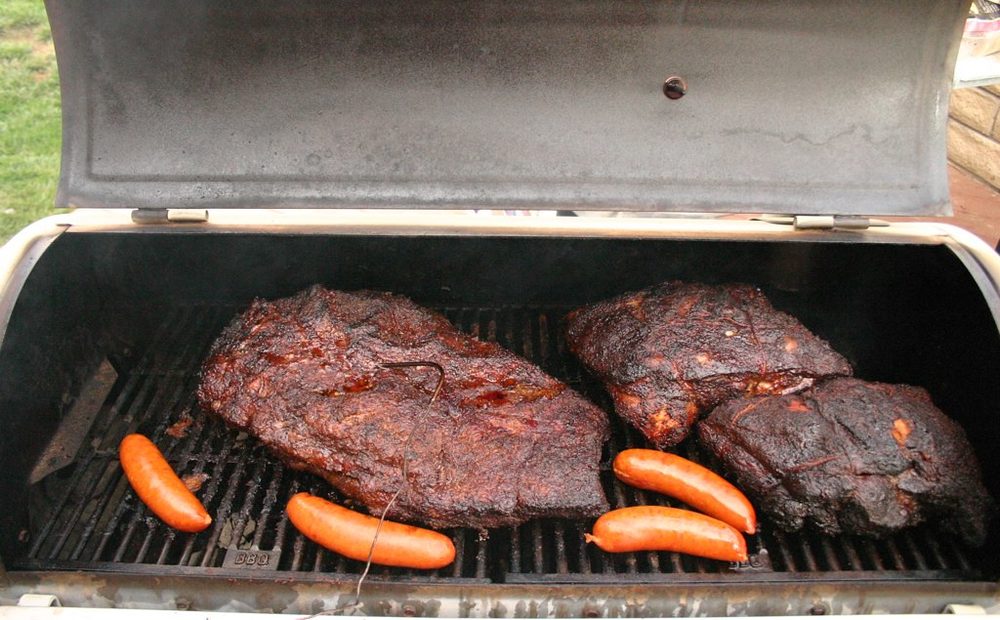
A rotating special keeps regulars curious without blowing up the prep list, and smoke is my favorite lever. Pulled pork or brisket I’ve hot-smoked low and slow becomes a taco, a loaded fry, a sandwich, a special of the week. The smoker lives at the commissary or outdoors under proper exhaust — often on a trailer I tow right to the event with the split wood loaded alongside it (more on that rig in fixing up a truck) — you never smoke indoors without ventilation, and if I ever want to sell smoked fish that’s a whole HACCP conversation, not a casual special (the safety story is in my smoking dive and food-safety notes). A house barbecue sauce — see my BBQ sauces — ties the smoked specials together and becomes a thing people ask for by name.
The bakery cross-sell — my real edge
Here’s what almost no other truck can do, and it’s my whole angle: I also run a coffee shop and bakery. That means two things at once — the truck is a mobile storefront for baked goods and good coffee, and every cooked item on it rides on bread I made myself. A brisket melt on my own fresh sourdough, a breakfast sandwich on a bagel I boiled and baked this morning, a smash burger on a house-baked potato bun — that is simply a different food than the truck next to me is selling off a bag of commissary buns, and customers taste it on the first bite. It changes the math completely.
- Every hot sandwich on my own bread. The bagel, the sub roll, the burger bun, the sourdough for the melt — all baked by me. It’s the cheapest upgrade on the whole menu, because the bread was going to exist anyway, and it’s the single thing people remember and come back for.
- Bagel sandwiches built on bagels I boiled and baked that morning — the breakfast sandwich above, but the bagel is the star, not an afterthought. See my bagels writeup.
- Fresh loaves for sale off the truck — the same artisan breads I bake for the shop, sold to the person who just ate a sandwich on that bread and wants a loaf for home. Zero extra labor; it’s already baked.
- Cookies at the register — the classic impulse add-on. A warm cookie is a dollar of ingredients and a two-dollar sale, and it lifts the average ticket on nearly every order.
- Coffee, poured from the truck. The same coffee program that anchors the shop travels to the window — drip and espresso, a Cuban cafecito, a cold brew in summer. Coffee is the highest-margin thing I sell anywhere, it turns a bagel sale into a breakfast order, and a warm cup is exactly what a festival crowd wants on a cool morning.
- Jars of jam to take home. Under Michigan’s cottage-food rules jams and jellies are one of the things I can make and sell direct, and a shelf of jars on the truck turns a food sale into a pantry sale — higher margin, no spoilage clock, and a jar with my label sitting in someone’s fridge for a month is free advertising. Browse the jam recipes.
That cross-sell is the heart of the combined business, and I lay the whole flywheel out in the truck + the bakery. The short version: every cooked-food customer is a warm lead for a baked-goods sale, and every baked-goods customer already trusts my food.
Menu engineering — the rules I hold to
A menu that sells isn’t the longest one, it’s the one designed for money and speed. Here’s how I keep myself honest.
Keep it tight. A short menu is faster to cook, cheaper to prep, wastes less, and is easier for the customer to decide from. Every item I add slows the line and lengthens the prep list. I want a menu I can hold in my head and cook in my sleep — a handful of workhorses, two or three signature ideas, one rotating special, and the bakery shelf.
Prep ahead at the commissary. The truck is an assembly station, not a from-scratch kitchen. Braises, marinades, sauces, portioned proteins, sliced garnishes, baked goods — all done at the licensed commissary (which is my coffee shop and bakery) the day before. On the truck, the longest step should be a sear or a griddle, never a braise.
Target food cost around 28–35%. Every item earns its place partly on food cost — the share of the menu price that goes to ingredients. Tacos, dogs, loaded fries and grilled cheese live at the low, happy end; a brisket special runs higher and I price it accordingly. I’ll drop my real numbers in here, but the discipline is: know the plate cost of every item before it goes on the board.
| Item | Rough food cost | Why |
|---|---|---|
| Loaded fries | low (~20–25%) | Cheap base, reuse braised proteins |
| Tacos / hot dogs | low (~25–30%) | Cheap raw material, small portions |
| Smash burger | mid (~30–35%) | Beef + cheese + premium bun |
| Brisket / smoked special | high (~40%+) | Expensive cut, long cook, yield loss |
| Cookies / jam | very low | Flour, sugar, butter — priced as treats |
Price for margin, not for the person behind you. I set prices off plate cost and the local market, then hold them. The average ticket — the workhorse plus a loaded fry plus a cookie — is what actually pays the bills, which is why the cheap add-ons matter so much. The full money picture is in the truck’s numbers.
Design for throughput. On a truck, dollars-per-hour beats dollars-per-plate. A festival rush rewards items I can build in under two minutes off one hot surface. If a dish needs a burner I don’t have or a step that clogs the line, it doesn’t belong at an event no matter how good it is.
Pick a signature. People need one reason to seek me out. Maybe it’s the quesabirria, maybe it’s a smoked-brisket grilled cheese on my own sourdough, maybe it’s the breakfast bagel. One item I’m known for, that I never take off the board, that shows up in every photo. Everything else is supporting cast.
Get those six right and the menu does the selling for you: fast enough to survive a rush, cheap enough to profit, memorable enough to bring people back, and wired to the bakery so a five-dollar lunch turns into a sandwich, a cookie, a loaf and a jar of jam on the way out.
Comments (0)