The Coffee Program
People assume the bread is the star of my coffee shop and bakery and the coffee is the thing you grab on the way out. I run it the other way around. Coffee is a genuine co-headline of this business — the drink that pays the rent while the ovens do the slow, expensive work — and I take it as seriously as I take a laminated croissant. I’ve drunk espresso standing at a bar in Italy, whipped-sugar cafecito in a Miami window, and cà phê sữa đá dripping through a little metal phin in Vietnam, and I want all of that on my menu, done right. This is the page where I lay out the whole program: the beans, the machines, the drinks, and the honest economics that make the café side the engine of the shop.
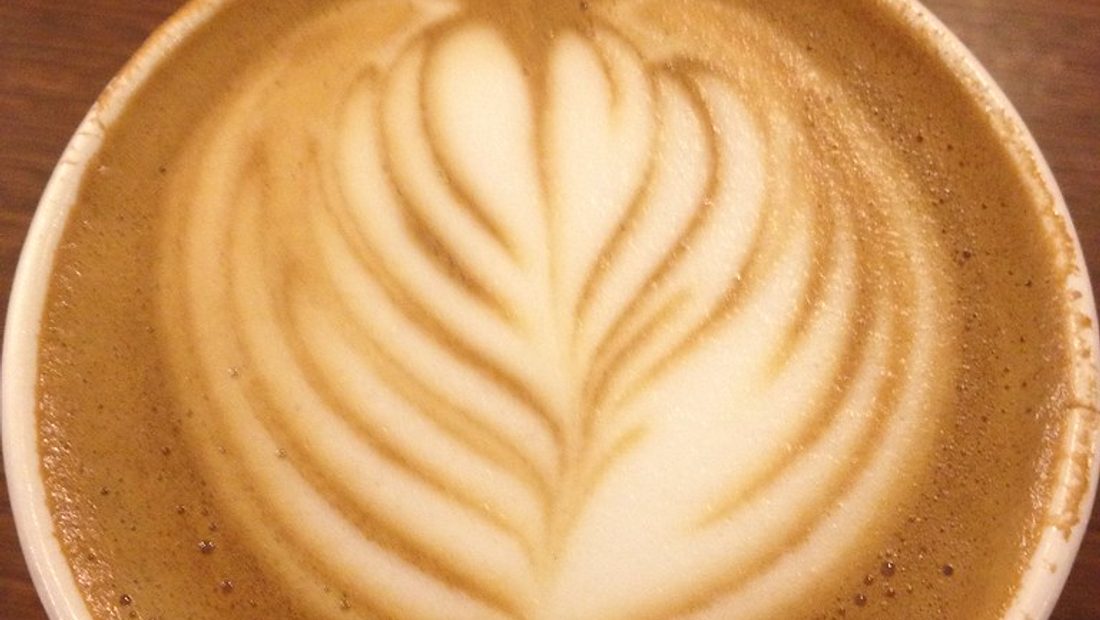
Beans — the whole thing starts here
You cannot fix bad coffee downstream. No machine, no barista, no latte art rescues a stale or poorly roasted bean. So the bean is where I spend my attention first.
Arabica vs. robusta. Most specialty coffee is arabica — sweeter, more aromatic, more acidity and nuance, grown at altitude, and more expensive. Robusta is hardier, higher in caffeine, harsher and more bitter, with a heavier body and a thicker crema. The specialty world spent decades treating robusta as a defect, and cheap robusta genuinely is rough. But good robusta has a place: a small amount in an espresso blend adds body, a lingering crema, and a caffeine kick, and it’s traditional in exactly the styles I love — southern Italian espresso and Vietnamese coffee both lean on it. My house espresso is arabica-forward with a touch of quality robusta for crema and punch; my Vietnamese coffee is deliberately dark robusta because that’s what makes it taste like the real thing.
Roast levels. Roast is where the roaster turns green, grassy seeds into coffee. As a rough map:
| Roast | Color / surface | Flavor | Where I use it |
|---|---|---|---|
| Light | Light brown, dry | Bright, acidic, origin-forward, tea-like | Single-origin pour-overs |
| Medium | Medium brown, dry | Balanced, sweet, rounded | Batch drip, house blends |
| Medium-dark | Darker, first oil sheen | Fuller body, chocolate, low acidity | My espresso blend |
| Dark | Dark, oily surface | Bold, smoky, bittersweet | Cuban & Vietnamese styles |
Darker isn’t stronger — that’s the great myth. Dark roast tastes bolder but actually loses a little caffeine and a lot of the origin character; light roast keeps more of both. “Strength” in the cup is really about dose and brew ratio, which is a machine question, not a bean question.
Freshness. Roasted coffee is a fresh product with a clock on it. It’s best from about three days off roast (it needs a few days to degas its CO₂) out to roughly three to four weeks; after that it goes flat and papery no matter how you store it. I buy in a rhythm that keeps beans moving, store them in airtight containers away from light and heat, and never freeze my daily-use beans. The tell is the espresso: fresh coffee blooms and gushes a thick, tiger-striped crema; stale coffee runs pale and thin no matter how I dial it.
Grind. Grind is the single most important variable a shop actually controls day to day, and it is not “set it and forget it.” Espresso wants a fine, even grind; drip wants medium; French press and cold brew want coarse. Even more important than how fine is how even — a good burr grinder produces uniform particles that extract evenly, while a cheap blade grinder produces dust and boulders that extract unevenly and taste both sour and bitter at once. And espresso grind drifts all day with humidity and temperature, so a barista re-dials the grinder every morning and tweaks it through the day. That’s why the grinder matters as much as the espresso machine.
Buy from a roaster, or roast your own. For a shop, the honest answer is to build a relationship with a good local roaster. They roast to order, deliver fresh, will develop a house espresso blend with me, and it’s one less craft to master while I’m already running ovens. The maker in me loves that roasting your own from green beans is very doable — green coffee is cheap and keeps for a year, and a small drum or fluid-bed roaster or even a modified popcorn popper will get you there — but roasting for a whole café’s volume, consistently, day after day, is a second full-time trade. My plan is to start with a roaster partnership and keep a small roaster in the back for single-origin specials and for the fun of it.
Brew methods — the physics of getting flavor out
Every brew method is the same job: use water, temperature, time, and grind to dissolve the good stuff out of ground coffee and stop before you dissolve the bad stuff. The variables just get traded around.
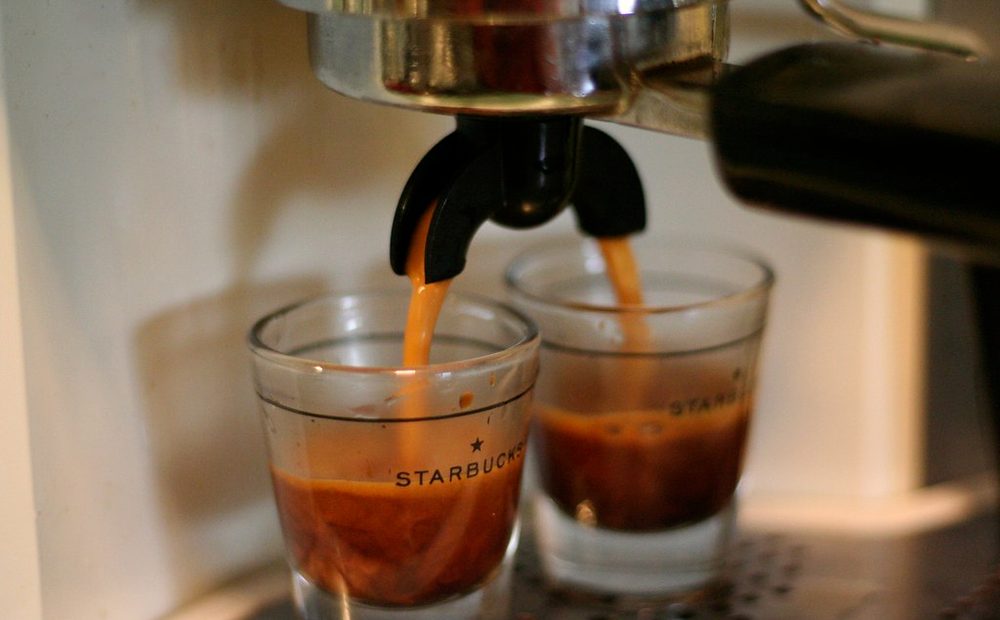
Espresso is the heart of the bar, and it’s the most demanding. The recipe I hold to: about 9 bar of pressure pushing water at around 200°F through a tightly packed puck of 18–20 g of finely ground coffee, pulling roughly a 2:1 shot (36–40 g out) in 25–30 seconds. Change one number and I chase the others: too fast and pale means grind finer or dose more; too slow and dark and bitter means grind coarser. Dialing in the espresso every morning — grind, dose, tamp, time, taste — is the ritual that sets the tone for the whole day.
Milk steaming is the other half of espresso work and where most cafés fall down. I steam milk to about 140–160°F — hot enough to be properly hot, never past ~165°F where it scalds, goes thin, and tastes of cooked eggs. The technique is two stages: a short “stretch” with the wand tip near the surface to pull in air and build microfoam, then submerge to spin the milk into a smooth, glossy, paint-textured whirlpool with no big bubbles. Good microfoam is what makes a proper flat white and pours latte art; it’s a skill you drill, not a button you press.
Batch drip is the workhorse for volume. A commercial brewer flows about 200°F water evenly through a bed of medium-ground coffee at roughly a 1:16–1:17 coffee-to-water ratio, and holds the result in an insulated air-pot (never a hot plate, which stews it). This is the cup most people order, so a clean, fresh, well-made batch matters enormously — I brew to demand and dump anything older than about 30–45 minutes.
Pour-over is batch drip’s hand-made cousin for single-origin specials — a slow, deliberate pour over a paper filter, one cup at a time, showing off a bright light-roast bean. It’s a low- volume, high-touch offering that signals I care.
Cold brew is the summer money-maker and the easiest thing on the list to make well: coarse- ground coffee steeped in cold water for 12–24 hours, then filtered. Low acidity, naturally sweet, smooth, and it keeps for a week or two in the fridge, so I can make it in big batches on my own schedule. High margin, low labor, no machine time — it’s a gift.
The drink menu
Here’s the core of what goes on the board. Every espresso drink is built on the same shot; the difference is milk and water. The drink-build diagram shows the ratios at a glance.
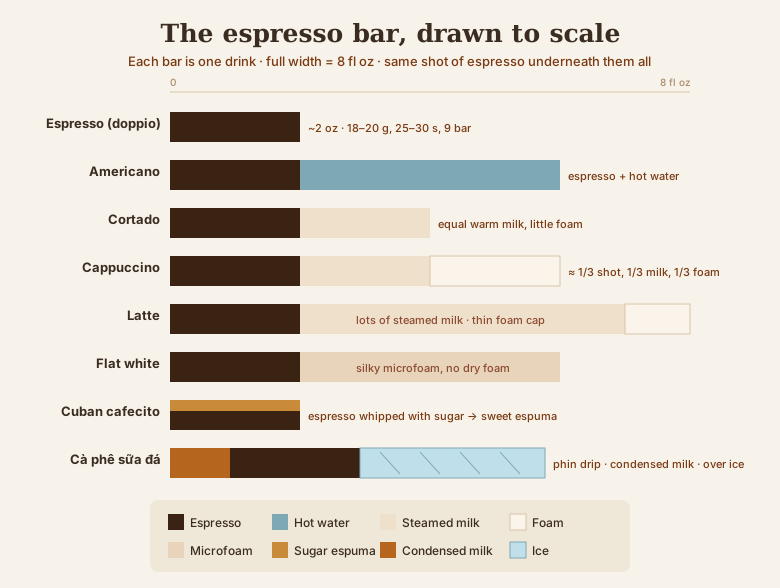
| Drink | Espresso | Milk | Notes |
|---|---|---|---|
| Espresso / doppio | 1–2 shots | none | The shot, straight; the reference for everything else |
| Americano | 1–2 shots | none | Espresso lengthened with hot water; like drip, espresso-built |
| Macchiato | 1–2 shots | dollop of foam | ”Marked” espresso; small and strong |
| Cortado | 2 shots | equal warm milk | Espresso cut 1:1 with steamed milk, little foam |
| Cappuccino | 1–2 shots | ⅓ steamed, ⅓ foam | Classic; dry, airy foam cap |
| Flat white | 2 shots | silky microfoam | Smaller, stronger, all microfoam, no dry foam |
| Latte | 1–2 shots | lots of steamed | Milky and mild; the canvas for flavors |
| Mocha | 1–2 shots | steamed + chocolate | Latte with real chocolate; a bridge to the pastry case |
Flavored lattes are, frankly, where a lot of the volume and margin live, and I don’t sneer at them — I just make them with real syrups I control: vanilla, caramel, hazelnut, and the seasonal ones people line up for (a proper spiced pumpkin in fall, peppermint mocha at the holidays). A pump of syrup is pennies and turns a $4 latte into a $5.50 one people are delighted to pay.
The specialties I chased around the world
This is where my coffee shop and bakery stops being generic. These are drinks I’ve actually had at the source, and putting them on the board is how I make the café a destination.
Cuban coffee. I had my first real café cubano in a walk-up window in Miami, and it rewired what I thought espresso could be. A cafecito is a shot of strong dark espresso sweetened not by stirring sugar in afterward but by whipping the very first dark drops of the shot together with sugar into a pale, creamy sweet foam — the espuma — then pulling the rest of the shot up through it. The result is a small, intense, syrupy-sweet crema-topped jolt. A cortadito is that cafecito cut with a little steamed milk, roughly half and half. A colada is a big batch of café cubano poured into a foam cup with a stack of little plastic tacitas to share — the drink you bring back to the shop for your coworkers. It’s social, it’s fast, and it costs me almost nothing but sugar and a good dark shot.
Vietnamese coffee. In Vietnam I drank cà phê sữa đá every morning, and it’s beautiful in its simplicity: a small metal drip filter, the phin, sits on top of the glass, packed with dark, coarsely ground robusta (Trung Nguyên is the classic), and hot water drips through it slowly onto a layer of sweetened condensed milk waiting in the bottom. You stir the sweet milk up through the strong bitter coffee and pour the whole thing over ice. Sweet, powerful, and built for heat. I also make cà phê trứng — Hanoi egg coffee — where an egg yolk is whipped with condensed milk into a warm, custardy, meringue-like cloud floated on strong coffee; it drinks like a warm tiramisu and it sells itself once someone sees it go by. Both are low-cost, high-story drinks, and they’re the kind of thing regulars bring friends in to try.
Teas — the other side of the counter
A serious café doesn’t treat tea as an afterthought, because a real slice of my customers don’t drink coffee. I carry proper loose-leaf black, green, and herbal teas brewed at the right temperature (green wants ~175°F, not boiling, or it turns bitter), whisked matcha, a spiced chai I can serve straight or as a chai latte with steamed milk, and a London Fog — Earl Grey steamed with milk and a little vanilla, which is essentially a tea latte and moves like one. Tea has a wonderful COGS: a few cents of leaf sold for four dollars.
The economics — why coffee funds the bakery
Here’s the part I want to be honest about, because it’s the whole reason a coffee shop and bakery is a smart pairing rather than two hard businesses stapled together.
Coffee is the highest-margin item in the building. A latte’s ingredients — a dose of espresso, some milk, a cup and lid — run maybe $0.50 to $0.80 all in, and it sells for $4.50 to $6. That’s a gross margin north of 80%. Drip coffee and tea are even better on a percentage basis. Nothing else I make comes close: a croissant is expensive butter and an hour of skilled labor; a loaf of bread is cheap flour but a full day of fermentation, shaping, and oven time.
| Item | Rough COGS | Menu price | Gross margin |
|---|---|---|---|
| Latte | $0.50–0.80 | $4.50–6.00 | ~80%+ |
| Drip coffee | $0.20–0.35 | $2.75–3.50 | ~85%+ |
| Tea | $0.10–0.25 | $3.00–4.00 | ~90%+ |
| Croissant | $0.80–1.20 | $4.00–5.00 | ~70% but labor-heavy |
| Loaf of bread | $0.60–1.00 | $6.00–9.00 | good %, very labor-heavy |
So the model is a flywheel. The coffee margin funds the labor-heavy bakery, and the bakery smell and the pastry case pull the coffee crowd in and lift every ticket. Nobody buys just a $3 drip — they buy a drip and a scone, a latte and a cookie. And because coffee is an all-day, everyday habit, it fills the dayparts the bakery alone can’t: morning coffee-and-pastry, a lunch of sandwiches on our own bread, an afternoon coffee-and-cookie pick-me-up. That daypart spread is what turns a building full of expensive equipment into a business. The full money picture for the combined operation lives in the numbers, and the way the café, bakery, and truck reinforce each other is laid out in bringing it together.
The equipment — what it takes to do this right
Great coffee at volume is an equipment problem as much as a skill problem, and this is where the café side asks for real capital. The gear side and the dollars are covered in depth over on my kitchen equipment dive — here’s the coffee-specific list and why each piece earns its place.
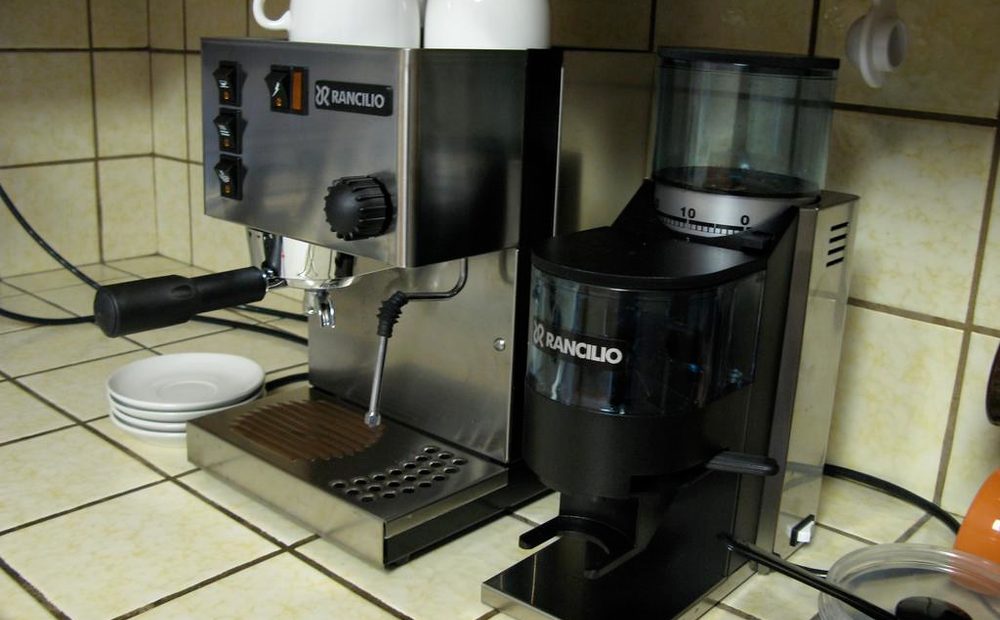
- A commercial 2-group espresso machine. The heart of the bar. Two groups let a barista pull drinks in parallel through a rush; a commercial boiler holds temperature shot after shot where a home machine would sag. This is the La Marzocco Linea / Nuova Simonelli Aurelia class of machine — a serious five-figure purchase, and worth every dollar because it’s the item customers literally taste. Buying this kind of gear new versus used is its own decision; see buying used.
- A good on-demand grinder. A Mazzer (or equivalent) grind-on-demand espresso grinder, dosing fresh into the portafilter for every shot. As I said above, the grinder is half the espresso quality. Most serious bars run a second grinder for decaf so they’re not re-dialing between orders.
- A batch brewer. A Fetco or Bunn commercial drip brewer with insulated air-pots for the drip crowd — high volume, consistent, hands-off while the barista works the espresso.
- A hot-water tower for tea and americanos — a dedicated, always-hot dispenser so tea service and long blacks don’t tie up a boiler.
- Water filtration and a softener — this is not optional. Espresso is ~98% water, so water chemistry is flavor; and just as importantly, hard-water scale will destroy a boiler and clog a group head faster than anything else you can do to a machine. A proper filtration and softening setup protects a five-figure machine and makes every drink taste better. I treat it as part of buying the espresso machine, not an accessory. Water and utilities also shape the whole build-out — see outfitting my kitchen.
- The supporting cast. A knock box for spent pucks, a dedicated milk fridge at the bar so the barista never leaves the station, and a blender for frappes and blended iced drinks in summer.
None of this is cheap, and that’s exactly why the margins on the previous section matter — the coffee program has to earn back a serious equipment investment, and it does, faster than almost anything else in the shop. If you’re wondering whether to start smaller and mobile before committing to the full brick-and-mortar bar, that’s the whole argument in starting in a truck, and the truck’s own coffee-to-go angle ties back through the truck and the bakery.
The beans I run, the flour I bake with, and the chocolate that goes into a mocha are all part of one decision — buy the best inputs the business can carry — and I make that case in full over on the best ingredients. Coffee done right is a craft, a ritual, and the most reliable dollar in the building all at once. Get it right and it carries the ovens.
Comments (0)