Honey from Our Hives
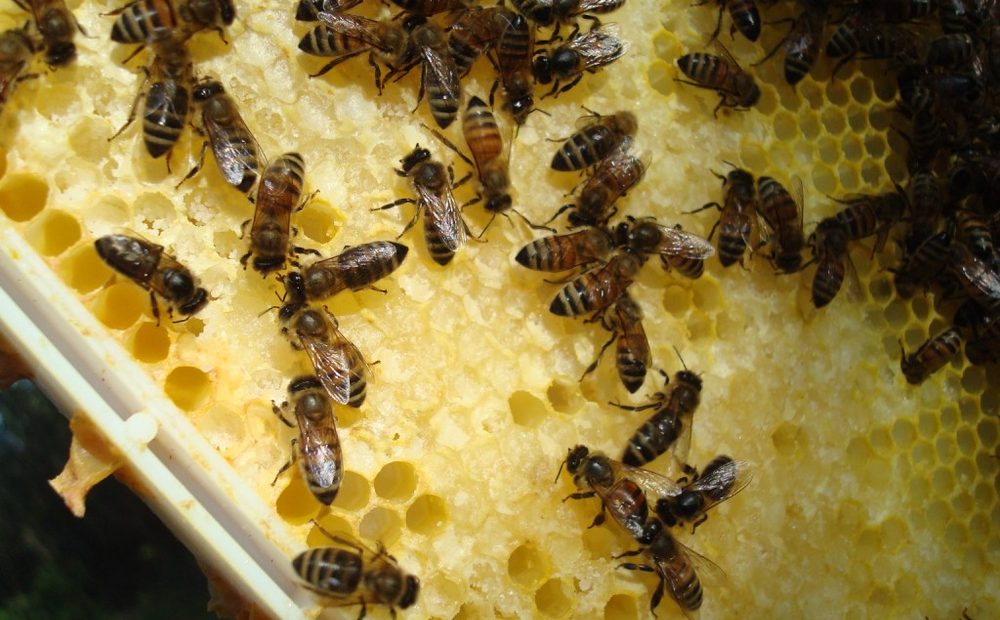
Behind my coffee shop and bakery, past the back door and the herb beds, there’s a row of white boxes humming in the sun. Those are my beehives — a lot of them — and they are the reason a jar on my counter says something no supermarket jar can say: this came from right here. I’ve kept bees for years, and bringing them into the business was one of the easiest decisions I ever made. The bees don’t ask for wages, they pollinate the whole neighborhood, and every season they hand me one of the finest ingredients I own, for the price of the woodenware and my time. Honey runs through the café, through the bakery, and across the retail counter, and this page is the story of how it gets from the frame to your cup.

Why I keep so many hives
People ask why one shop needs that many hives. The honest answer is that bees are wonderful and I got hooked, but the business case is real too. A healthy hive in a good year can put up 40 to 80 pounds of surplus honey above what the colony needs to overwinter, and once you’re selling honey by the jar and baking with it and sweetening drinks with it, that surplus disappears fast. Many hives also means resilience — some colonies boom, some struggle, some don’t make it through a hard winter, and having a yard full rather than a single box means one bad colony never empties my shelf. It means I can split strong hives to make new ones, requeen the cranky ones, and always have honey to sell.
There’s a second payoff that never shows up on an invoice: the bees pollinate everything for a couple of miles in every direction. My herb beds, the neighbors’ gardens, the fruit trees down the block — all of it sets better fruit because my yard is here. When I talk about the shop being rooted in its neighborhood, I mean it down to the pollinators.
Raw honey vs. the honey in the supermarket bear
Here’s the thing most people don’t know: the honey in the plastic bear at the grocery store and the honey in my jars are barely the same product. The difference is what happens after the bees make it.
Commodity honey is usually heated and micro-filtered — warmed until it flows like water and pushed through fine filters (sometimes to the point of ultrafiltration, which strips out even the pollen). That makes it pour clear and pretty and sit on a shelf without crystallizing, and it also cooks off the delicate aromatics and knocks back the natural enzymes. What’s left is sweet, and not much else.
My honey is raw — unheated and only coarsely strained. I never take it above hive temperature, so nothing gets cooked. That means it’s still alive in the ways that matter: it carries its pollen (which is how you can actually trace honey back to a region and a set of flowers), its natural enzymes like glucose oxidase and invertase, and the full bouquet of floral aromatics that heat would drive off. It tastes of something — of the specific flowers the bees worked — instead of just tasting sweet.
| My raw honey | Typical supermarket honey | |
|---|---|---|
| Heat | Never above hive temp | Heated to flow & delay crystallizing |
| Filtering | Coarse strain only | Fine-filtered, often ultrafiltered |
| Pollen | Intact (traceable to source) | Often removed |
| Enzymes & aromatics | Preserved | Diminished by heat |
| Crystallizes? | Yes — naturally, and that’s fine | Resists it by design |
| Tastes like | The flowers it came from | Generic sweet |
Crystallization is not spoilage
I put a little card by the register about this because it comes up every week: when honey turns solid and grainy, it has not gone bad. Crystallization is just glucose coming out of solution — a completely natural thing that raw honey does, and honeys high in glucose (like clover) do it faster than others. It’s still perfectly good; a lot of people actually prefer that thick, spreadable, “set” texture. If you want it runny again, stand the jar in warm — not hot — water and it’ll come right back. Please don’t microwave it; that’s just heating it the way the commodity guys do and throwing away the very thing that makes it good.
Honey essentially never spoils
The other fact I love telling people: honey does not really go off. It’s so low in water and naturally acidic, and the bees’ own enzymes make it mildly antimicrobial, that bacteria and mold simply can’t get a foothold. Sealed and kept dry, a jar will outlast all of us — archaeologists have famously found edible honey in Egyptian tombs. That’s part of why it’s such a good retail item: nothing on my counter has a longer, more forgiving shelf life. (The one rule: keep water out of it, and never give raw honey to a baby under one year old — that’s the standard infant-botulism caution and it’s non-negotiable.)
Varietals — the honey changes with the season
The best part of keeping bees where things actually bloom is that the honey changes through the year, because the bees follow whatever nectar is flowing. I don’t truck my hives around to a single crop, so most of what I get is a true wildflower honey — a moving snapshot of everything within flying range at that moment.
Early in the season, when the fruit trees and dandelions and locust are going, the honey comes off light, floral, and delicate. Mid-summer, when clover and the garden flowers dominate, I get that classic pale, mild, family-favorite honey. Late in the year the honey pulls darker, richer, and more robust — more minerally, almost molasses-edged, as the bees work goldenrod, aster, and the late wildflowers. If I keep the harvests separate by when I pull the supers, I can bottle distinct seasonal honeys, and I love watching a regular figure out that they prefer the dark fall jar for their toast and the light spring jar for their tea. A nectar flow is a real, datable event — a stretch of days when a particular bloom is pouring nectar — and you can taste exactly which flows made each batch.
Comb honey and creamed honey
Two special forms earn their own place on the counter.
Comb honey is honey the way the bees packaged it — still sealed in the wax comb they built, cut straight into chunks or produced in little frames. Nothing is extracted, nothing is strained; you eat the honey and the tender wax cappings together. It’s about as unprocessed as food gets, it looks gorgeous in the jar, and it commands the highest price of anything I sell because it’s the most labor for the bees and the most delicate for me to handle.
Creamed (or whipped) honey goes the other way — I take crystallization, the thing people fear, and control it. By seeding liquid honey with a little finely-crystallized honey and holding it cool while it sets, I get honey that crystallizes into microscopically fine grains instead of coarse ones. The result spreads like soft butter, never drips, and is heaven on a warm biscuit or a slice of my artisan bread. Same honey, no additives — just physics, managed.
The harvest
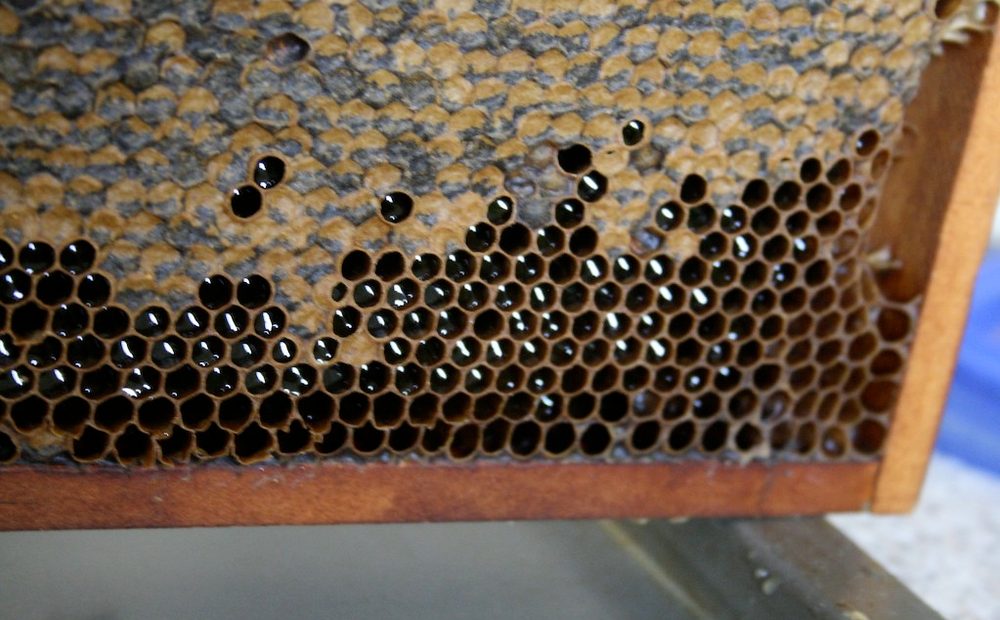
Come late summer I bring the honey in, and it’s my favorite messy week of the year. Here’s the shape of it. When a frame of honey is ripe, the bees have capped each cell with a thin lid of wax, which is their signal that they’ve dried the nectar down to honey (below about 18–20% water, or it could ferment). I pull those capped frames from the supers, and back inside I uncap them — slicing or scratching off that wax layer — over a tub that catches the drippings and cappings.
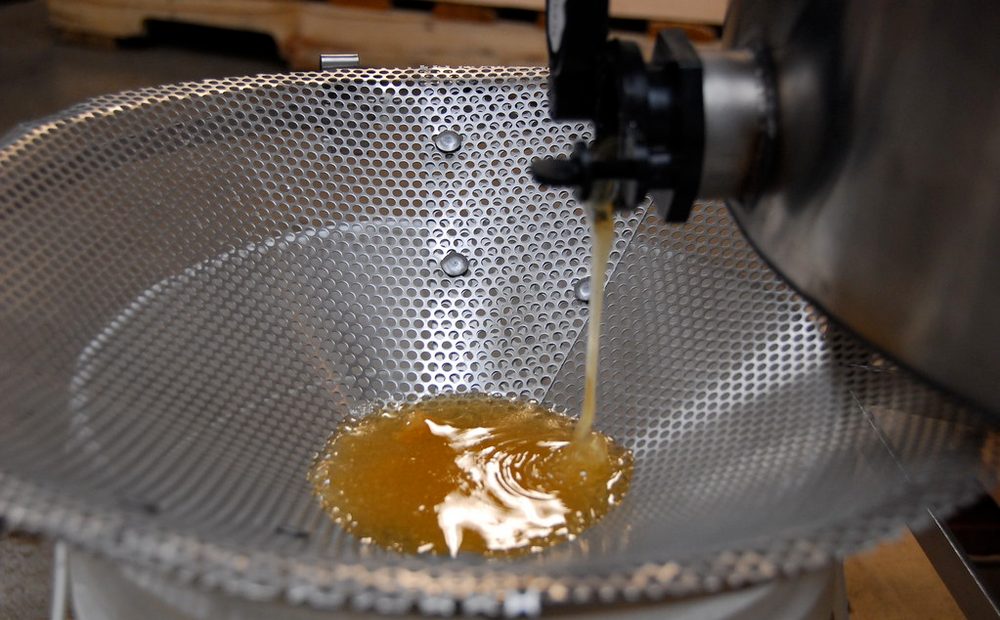
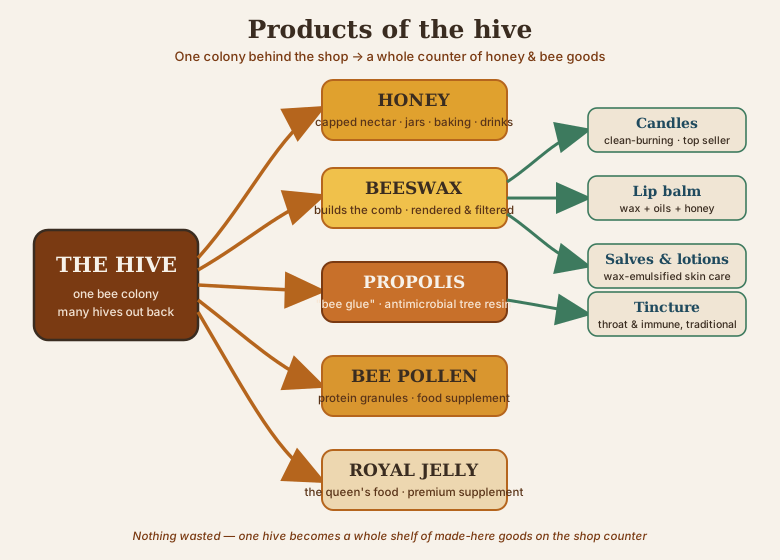
Then the frames go into the extractor, a drum that holds them and spins, throwing the honey out against the walls by centrifugal force so it runs down and out the bottom without destroying the comb — which means I can give the emptied comb back to the bees to refill, saving them the enormous effort of building it fresh. From the extractor the honey passes through a coarse strainer to catch bits of wax and the odd bee leg, and then it rests in a settling tank for a day or two so the last fine air bubbles rise. That’s it. No heat, no fine filter. Then I bottle it. The wax cappings I’ve set aside don’t go to waste either — they’re the raw material for a whole second product line, which I get into on the whole hive.
How honey runs through the whole shop
Once you have great honey by the bucket, it stops being a novelty and becomes a workhorse ingredient that touches nearly everything I sell.
In the café. Honey is a beautiful sweetener for coffee and tea because it brings flavor, not just sweetness. My honey latte — espresso, steamed milk, and a spoon of our own honey stirred in warm so it dissolves clean — is one of the most-ordered drinks on the board, and it pairs the malty side of a good espresso with the floral side of the honey perfectly. I sweeten hot teas with it by default (a spoon of honey in a strong black tea or a chamomile is exactly right), it’s the sweetener in my London Fog and my honey-chamomile steamers, and it turns up in seasonal drinks all year. The whole drink lineup lives on the coffee program; honey is quietly behind a lot of it.
In the bakery. Honey does things sugar can’t. It’s hygroscopic — it pulls and holds water — so honey-sweetened breads and cakes stay moist longer, and it browns beautifully because of its fructose. I bake honey oat bread and honey whole-wheat loaves, sweeten cookies and muffins with it, brush it into the glaze on morning pastry, and whip it into honey butter for the biscuits and toast. A drizzle of raw honey over a warm scone, a wedge of cheese, or a bowl of Greek yogurt with granola is one of those five-second finishes that makes a plate feel special. The craft of the baking is on artisan breads and pastry, and why I insist on top inputs like this is on the best ingredients.
In the jam kitchen, too. Most of the jams and jellies I put up are sweetened with honey — or offered both ways, honey and sugar — because honey gives a rounder, more floral sweetness than straight sugar and ties the preserves back to the same hives everything else comes from. Honey does change how a jam behaves (it’s higher in fructose and moisture than sugar, so the pectin and the cook need adjusting), but the payoff is a jar that tastes unmistakably of this place. The putting-up craft is over on canning.
Sold by the jar. And of course honey stands on its own as a signature retail item. A row of my jars sits right on the counter by the register — light spring, mild clover, dark fall, comb honey, and creamed honey — with my own label saying it was made behind this building. It’s the perfect impulse buy on the way out the door: it never spoils, it photographs beautifully, and it turns a $5 coffee run into a $15 sale while sending a jar of my brand home to sit on someone’s kitchen table. That’s the whole retail logic I lay out on the vision.
Smoked honey — a trick worth its own mention
One more thing I do with my own honey that people don’t expect: I smoke it. Cold or gently warm smoking honey over a mild wood gives it this incredible savory-sweet, campfire edge that is unbelievable drizzled on cornbread, brushed on wings, stirred into a glaze, or — I’m not kidding — floated on top of a bourbon. Because I raise the honey myself, I can smoke small batches and sell a smoked jar right alongside the raw ones. I walk through exactly how I do it in the smoking dive: see smoking and the rundown of what I smoke.
Bring it home
That’s honey in my coffee shop and bakery — from a row of humming boxes out back to your latte, your toast, and a jar in your bag on the way out. If you want to cook with it, I’ve got plenty of honey recipes in the collection to browse, and the rest of what these same hives give me — the wax, the propolis, the pollen, the whole shelf of bee products the shop carries — is the story on the whole hive.
Comments (0)