Bringing It All Together
Every page in this whole food program has been a piece of one machine, and this is where I bolt the pieces together and step back to look at the finished thing. The smoking, the preservation, the bread, the gear, the truck, the coffee shop and bakery — none of them was ever meant to stand alone. They were always meant to become a single business that starts small, grows into a licensed anchor, and then spins as a flywheel where coffee, bread and a truck each make the other two stronger. If you read one page in this dive, I’d want it to be this one, because it’s the answer to the question underneath all the others: what is the actual plan?
One journey, three stages
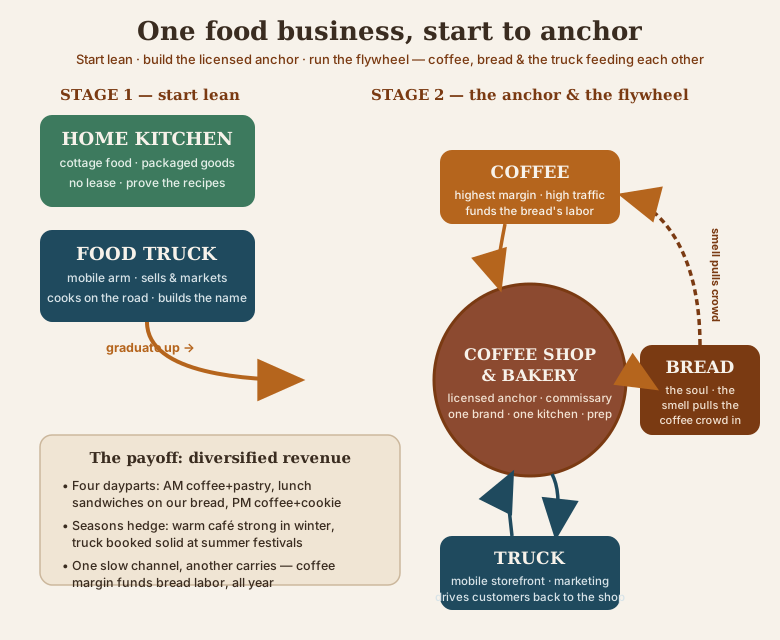
The plan is a journey, not a leap. You don’t wake up owning a licensed coffee shop and bakery with a truck out front. You get there in stages, and — this is the important part — each stage earns the money and proves the recipes for the next one. Here’s the whole arc in one diagram, and then I’ll walk it.
Stage one — start lean
The first stage costs the least and teaches the most. Before any lease, I start under Michigan’s cottage-food rules and/or with a small mobile operation, and I sell what I can make with no commercial kitchen at all: bread, bagels, cookies, and jars of jam from the preservation side, packaged and sold direct at farmers markets and events. No lease, no commissary, no MDARD license — a genuine little business that proves the recipes, builds the name, and banks cash. The cottage-food and packaged-goods truck path is exactly this: the leanest legal way in, and the one I’d point most people toward first.
The next rung up is a cooking food truck — the moment I want to fry an egg or build a sandwich to order, I cross into the licensed world and need a commissary, but I also unlock hot street food and a much bigger business. The food-truck dive is the full story of that arm: why a truck, the build, the menu, the numbers. Whether I run a cottage stand, a packaged-goods truck, or a full cooking truck, the point of stage one is the same — get out there cheaply, earn while I learn, and build a customer list I can walk into a bank with.
Stage two — build the licensed anchor
Stage two is the big one: I build the coffee shop and bakery — a licensed brick-and-mortar food establishment — and it immediately does three jobs at once. It’s the vision realized: a neighborhood coffee shop and artisan bakery under one roof. It’s the production hub — one commercial kitchen with the ovens, mixers and proofers that bake for the café case, the wholesale orders, and the truck, all from a single line. And it’s the commissary — the licensed base that lets the truck legally operate, which erases the truck’s single biggest fixed cost. The starting-a-bakery page is the how-to for standing this up, and the truck + bakery page works the commissary lock in detail.
The sequencing between stage one and stage two isn’t rigid — some people run the truck for a year first and let it fund the lease, some build the shop first and add the truck after, some do both at once. I lean shop-anchored, truck-forward, but the destination is identical either way: a licensed anchor with a mobile arm.
Stage three — run the flywheel
Stage three isn’t a new thing you build; it’s what happens once the anchor exists and starts to spin. The shop is the fixed address; the truck is the mobile storefront that drives to festivals, office parks and markets and sells while it advertises, then sends everyone back to the shop. Coffee, bread and the truck stop being three businesses and start being one loop. That loop is the whole payoff, so let me take it apart.
The flywheel, part by part
A flywheel is a loop where every turn makes the next turn easier. Here’s exactly what’s spinning in mine.
Coffee funds the bread. This is the engine at the center of the whole thing. Coffee is the highest-margin item in the building — a latte costs me well under a dollar and sells for five or six, better than 80% gross margin — and it’s high-traffic and low-labor per cup. Bread is the opposite: labor-heavy, early, thin-margined, perishable. The coffee’s fat margin is what pays for the expensive hours a real bread program demands. Without the coffee, the bread is a constant financial knife-edge; with it, the bread gets to be as good as I want to make it.
Bread sells the coffee. Flip it around and the bread earns its keep as marketing. The smell of a fresh bake is the single most powerful draw a food business has ever had — it pulls the coffee crowd through the door in a way no sign or ad ever could. And the quality of the bread is the reason someone drives past three chain cafés to reach mine. Anybody can pull a shot; nobody down the street is doing it next to a case of loaves they can smell from the sidewalk. The craft of that bread — artisan loaves, bagels, sourdough — is what makes the coffee shop uncopyable.
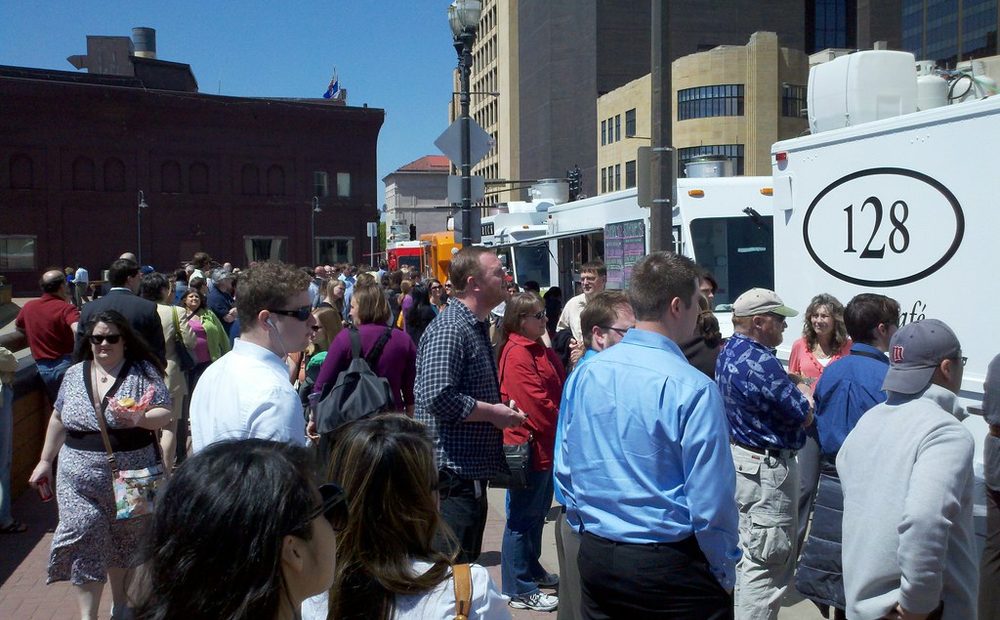
The truck carries both out and drives customers back. The truck takes the brand and the bread to where the people already are and turns every festival and lunch rush into both a sale and an advertisement. Someone eats a brisket melt on my sourdough off the truck, loves it, and becomes a shop regular; a shop regular follows the truck to an event and hires it for a party. The menu is engineered around exactly this cross-sell, and the smoker feeds both the truck’s specials and the shop’s lunch case.
| Piece | What it gives the loop | What it takes from the loop | The result |
|---|---|---|---|
| Coffee | Highest margin, high traffic, funds labor | Draws from shared prep & brand | Pays the bills, all day |
| Bread | The smell, the soul, the reason to come | Coffee margin funds its labor | Uncopyable draw + lunch daypart |
| Truck | Mobile marketing + a moving storefront | Free commissary + ready-made product | Reach & customers, near-zero fixed base |
| Shared hub | One brand, one prep, one kitchen, one ingredient buy | Everyone’s effort | Nothing duplicated, everything leveraged |
Why one business beats three
Read that table as a system and the argument makes itself. The three pieces share a hub — one brand, one prep, one kitchen, one ingredient order — so nothing is duplicated and everything is leveraged. I mix one batch of dough and it becomes shelf loaves, café sandwiches, and truck bagels. I buy flour and butter at one volume for one operation and get a better price. I put one name on a truck wrap and a storefront sign and get two touchpoints for one brand.
And the revenue is diversified across dayparts and seasons, which is the quiet thing that keeps a food business alive through the years that kill single-channel operations. Across a day: morning coffee and pastry, lunch sandwiches on our own bread, afternoon coffee and a cookie — four waves from one room. Across a year: a warm café with fresh bread is at its best in a Michigan January when nobody’s standing outside for a taco, while the truck is booked solid at every festival and market all summer when the café’s quiet. The two halves are counter-cyclical — when one channel is slow, another carries. That’s not a nice-to-have; it’s the difference between a business that survives a bad season and one that doesn’t.

Where each piece is written up
I’ve kept this page at altitude on purpose — it’s the map, not the territory. Each piece has its own deep treatment, and this is where they connect:
- Start lean: starting in a truck and the whole food-truck dive — the cottage and packaged-goods on-ramp, and the mobile arm.
- The anchor’s concept: the vision — why a coffee shop and bakery is stronger than either alone.
- Building the anchor: starting a coffee shop & bakery and the commissary lock.
- The craft inside it: the breads dive for the bread, and the coffee, oven and ingredient pages of this dive — the coffee program, the best ovens, the best ingredients.
- The gear it runs on: the kitchen-equipment dive, and the sister crafts that feed it — smoking and preservation.
- What it costs: the bakery numbers and the kitchen-equipment numbers. (As always — rules and figures change; verify licensing with MDARD and your local health department, and every dollar figure against real bids, before you build.)
That’s the machine, whole. Start lean and cheap enough that a first stumble doesn’t end you. Build the licensed coffee shop and bakery as the anchor that bakes for everything and serves as the truck’s commissary. Then let it spin — coffee funding bread, bread selling coffee, the truck carrying both out and driving customers home, all sharing one brand and one kitchen, diversified across every daypart and every season. It’s not a bakery, plus a coffee bar, plus a truck. It’s one business wearing three faces, and every page in this program has been a step toward building it.
Comments (0)