The Numbers: What It Costs
Every time somebody tells me they want to open a little bakery, the conversation gets quiet the moment I ask “okay, but what’s the number?” So this is the page I wish somebody had handed me: what it actually costs to outfit and run a small bakery-and-preserves kitchen, laid out in real line items. I’m an engineer at heart — I don’t trust a plan I can’t put dollars against — so I’ve built two honest columns for every piece of gear: what it runs new, and what a patient shopper pays used.
Read this first — these are ballparks. Every number below is a realistic 2020s range from what I’ve seen at auctions, restaurant-supply floors, and dealer used lots, but prices swing hard by region, condition, brand, and how the market’s moving. Treat them as a shape, not a quote. Get your own numbers before you commit, and pair this with Buying used for how I actually shop, and Cheap vs. quality for where I spend and where I save.
(A) Initial capital — what it costs to outfit
This is the electric bakery build from Outfitting a small kitchen, priced line by line. The “Used” column is realistic good-condition used, not junk.
| Item | New | Used | Notes |
|---|---|---|---|
| Double convection oven (electric, Blodgett-class) | $9,000–$14,000 | $2,500–$5,000 | The big-ticket item; used bakery ovens are plentiful. Check both decks heat evenly, gaskets, elements, and your voltage/phase. |
| 20-qt planetary mixer | $1,200–$1,800 (Vevor) | $700–$1,100 | Vevor mixers review well and are cheap even new; a used Hobart/Globe runs far more but lasts forever. |
| Proofer / retarder | $3,500–$6,000 | $1,200–$2,500 | Worth buying reliable — it’s what lets you schedule the bake. Combo warm/cold units cost more. |
| Reach-in refrigerator | $2,500–$4,000 | $800–$1,800 | Buy on compressor health, not looks. Refrigeration is the riskiest used purchase. |
| Reach-in freezer | $2,800–$4,500 | $900–$2,000 | Same rule; freezers work harder, so scrutinize the used compressor harder. |
| Electric griddle (24–36”) | $700–$1,500 | $300–$700 | Electric on purpose — often no full grease hood required. See Electric vs. gas. |
| 3-compartment sink | $700–$1,400 | $300–$700 | Non-negotiable for code. Stainless lasts forever, so used is fine. |
| Hand sink (dedicated) | $150–$400 | $80–$200 | Cheap and required — buy it, don’t improvise it. |
| Mop sink | $200–$500 | $100–$250 | Floor-level basin for cleaning water. |
| Stainless worktables (several) | $600–$1,500 | $250–$700 | Indestructible; buy used all day. |
| Speed racks / wire shelving (several) | $800–$1,600 | $350–$800 | You’ll always want one more rack. |
| Jam/jelly kettle + water-bath canner | $600–$1,500 | $300–$700 | Heavy-bottomed kettle so fruit doesn’t scorch. See Canning. |
| Smallwares bundle | $2,000–$4,000 | $1,000–$2,000 | Sheet pans, scales, bench knives, bins, thermometers, jar tools — easy to underbudget. |
| Subtotal (equipment) | ≈ $25,000–$44,000 | ≈ $9,800–$18,500 | Excludes any hood. |
| Hood + fire suppression (only if a hooded appliance is used) | $6,000–$15,000 | $3,000–$8,000 | A grease-heavy appliance forces a Type I hood + ANSUL suppression, inspected. Going electric/no-grease is how many small shops dodge this entirely. |
The two totals
Rounding the ranges to a realistic middle, here’s where a small bakery lands without a grease hood (the electric build):
| Build | Cooking | Refrigeration | Prep & wash | Smallwares | Total |
|---|---|---|---|---|---|
| Lean used build | $4,400 | $4,300 | $1,700 | $1,400 | ≈ $11,800 |
| Buy-new build | $13,000 | $11,300 | $3,800 | $3,000 | ≈ $31,100 |
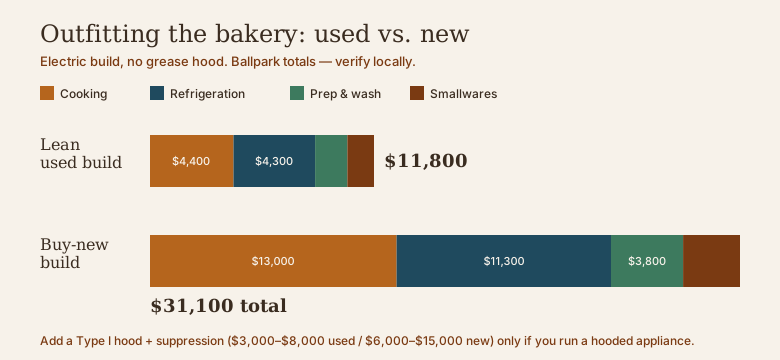
Those two totals are exactly what the bar chart shows. The takeaway that changed my whole plan: a patient, mostly-used electric build comes in around $12,000, versus roughly $31,000 buying everything new — and if you can honestly stay out of grease-hood territory, you save another $6,000–$15,000 on top. That gap is the difference between “someday” and “this year.” Add a hood only if your menu truly needs one.
(B) Monthly operating — what it costs to run
Owning the gear is the easy part; the meter runs every month whether you bake or not. Here’s the recurring side, again as ballparks to verify locally:
| Line | Monthly ballpark | Notes |
|---|---|---|
| Rent / lease | $800–$3,500 | Wildly location-driven; a small commercial bay in a Michigan town is a different animal than a storefront. Biggest single variable. |
| Electric | $200–$700 | The oven, proofer, and reach-ins are the hogs. An all-electric shop runs higher here than a gas one — the trade for hood flexibility. |
| Gas | $0–$250 | Near zero if you go all-electric; a line item only if you run gas appliances or heat. |
| Water / sewer | $60–$250 | Bakeries and canning use real water; three sinks plus cleanup adds up. |
| Insurance (liability + property) | $80–$300 | Product-liability coverage matters the moment you sell food. Get a real quote. |
| Licensing / permits (amortized) | $30–$120 | MDARD food-establishment license, local health permits, sales-tax license, fire sign-off — spread the annual fees across the year. |
| Maintenance / repair reserve | $100–$300 | Set it aside before the compressor dies, not after. Used gear especially. |
| Ingredients (COGS) | ~25–35% of sales | Flour, sugar, butter, eggs, fruit, jars. Scales with what you sell, not a flat monthly figure. |
| Labor | ~25–35% of sales | Even if it’s mostly you, pay yourself in the model or the business is lying to you. |
Ingredients and labor are the two that don’t fit a flat row — they move with revenue, which is why I’ve listed them as a percentage of sales rather than a dollar amount. As a rough shape, if food and labor each run about a third of sales, rent and everything else has to fit in the rest and leave a profit. That’s the whole game.
A note on the Michigan side
If you’re just selling jams, jellies, and non-hazardous baked goods direct to consumers, Michigan’s Cottage Food Law may let you do it from your home kitchen with no license and no inspection (the product needs the required “made in a home kitchen…not inspected by MDARD” label), under an annual gross-sales cap — historically $25,000, but as of writing it has been rising, so verify the current figure. That’s a genuinely cheap way to start and test recipes. But the moment you want a truck, smoked fish, low-acid canning, or wholesale, you’re out of cottage food and into a licensed establishment with MDARD plan review and inspection — which is exactly why the real kitchen above pays for itself. Rules and dollar figures change: confirm everything directly with MDARD and your local health department before you build. More on the smoked-fish licensing wall on Smoked fish & meat.
Reading these numbers against a truck
Before you sign a lease, it’s worth seeing how these figures stack up against starting mobile. A food truck’s startup capital can be lower and it earns revenue while a shop is being built — but it carries its own monthly load and a mandatory commissary tie. I lay that comparison out on the Food Truck numbers page and make the case for using a truck as the on-ramp on Starting in a food truck. Run both sets of numbers side by side — that’s the honest way to decide where to point your money first.
Comments (0)