The Best Ovens for a Bakery
The oven is the single most important — and most expensive — decision on the bakery side of my coffee shop and bakery. It sets the ceiling on quality: a great baker with a bad oven makes decent bread, but a great oven lets even an ordinary loaf develop a blistered, glass-thin crust and real oven spring. It also sets a big chunk of the build cost, the electric-or-gas question, and the hood you have to hang over it. This page is the comparison I wish someone had handed me: the four kinds of oven a real bakery runs, what each one is for, the steam question that separates artisan-bread ovens from everything else, and how I’d combine them in a small shop. The home-baker’s version of this — how to fake a deck oven in a kitchen range — lives over in breads/ovens; this is the commercial version.
The four ovens, and what each is really for
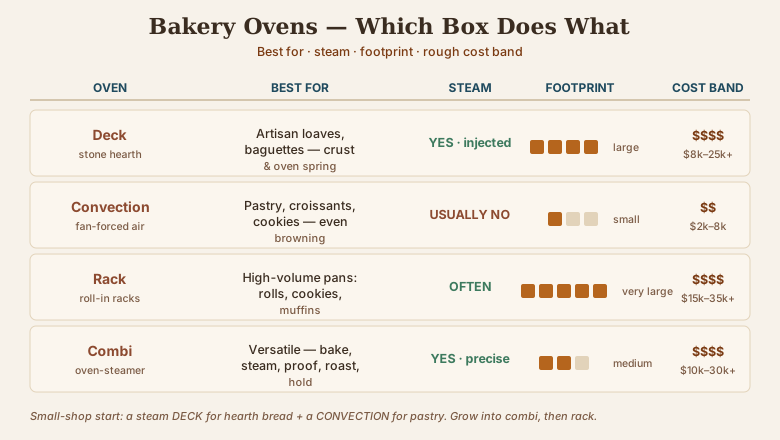
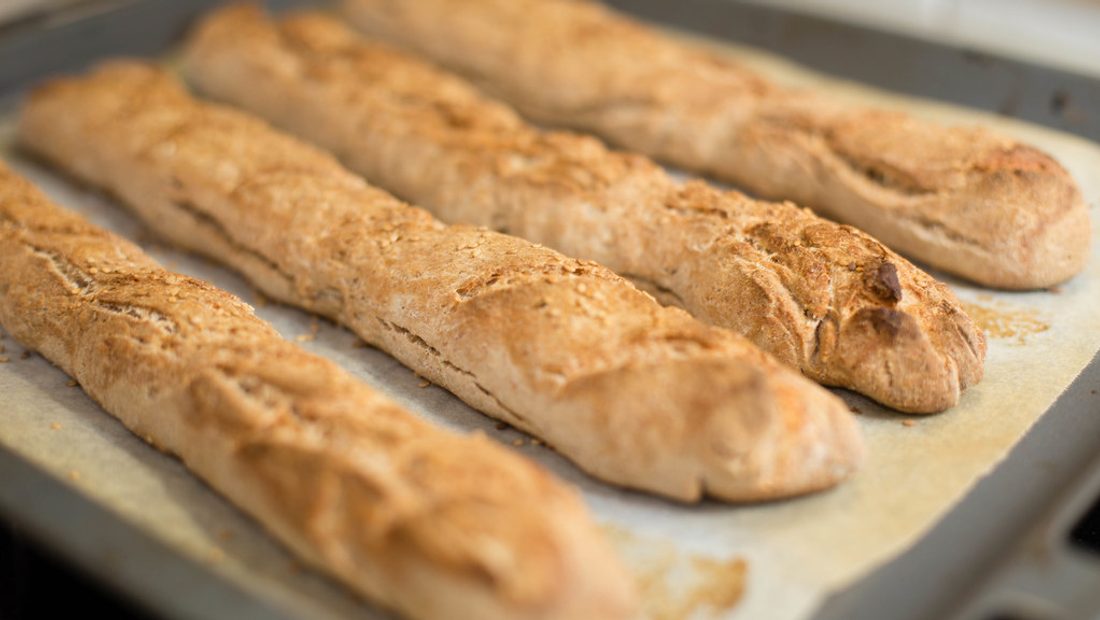
Deck ovens are the gold standard for artisan bread, full stop. Instead of a wire rack, you bake directly on a thick stone or refractory hearth — usually two, three, or four independently controlled “decks” stacked in one cabinet. The stone stores enormous heat and dumps it into the bottom of the loaf the instant it lands, which is what drives oven spring (that last violent rise as the dough hits the heat). And the good ones have steam injection — a burst of steam into the chamber in the first minutes of the bake. That steam is the whole secret to a great crust: it keeps the loaf’s surface soft and elastic just long enough for it to spring fully, then it gelatinizes the surface starches into a thin skin that bakes to a lacquered, blistered, crackling crust. I go deep on why steam and hearth matter in artisan breads and sourdough; the short version is that no other oven touches a steam-injected deck for a country loaf or a baguette. The trade-offs: decks are heavy, they’re slow to load (peel in, peel out, one deck at a time), and they cost the most. For a serious bread bakery, that cost is non-negotiable — it’s the reason the bread is worth walking in for.
Convection ovens move hot air with a fan, which browns everything evenly and fast. That makes them the champion of the pastry side — croissants, danishes, cookies, muffins, scones. Even browning is exactly what laminated pastry needs (you want every layer to color the same), and the fan lets me bake full sheet pans, multiple racks at once, with no hot spots. A half- or full-size convection oven is cheaper than a deck, far more compact, and versatile enough to be the only oven in a small café that isn’t chasing artisan bread. What it can’t do well is bread crust: no hearth means no bottom-heat blast for spring, and most convection ovens have no steam, so a country loaf comes out paler and flatter than it should. Some higher-end convection ovens add a steam feature, which narrows the gap for enriched breads and rolls — but for a real hearth loaf, it’s still not a deck.
Rack ovens are about volume. You roll an entire speed rack — fifteen or twenty full sheet pans — straight into the oven, where it rotates while it bakes for even results, and roll it back out. That’s how a high-output bakery pushes hundreds of dozens of cookies, rolls, and muffins a day without a baker babysitting individual pans. Many rack ovens have steam too, and a rack oven can bake a respectable pan loaf. The catch is throughput cuts both ways: a rack oven is big, it’s built for scale I probably don’t need on day one in a small neighborhood shop, and running one half-empty is just heating air. I’d grow into a rack oven, not open with one.
Combi ovens (combination oven-steamers) are the Swiss Army knife — precise control of both dry heat and injected steam, anywhere from a little steam to a full steam bath, plus convection. They’re brilliant for a kitchen that does more than bake: proofing, steaming, roasting, holding, and baking off pastry and enriched breads. For a coffee shop and bakery that also feeds a food truck and needs one flexible workhorse, a combi earns its keep. But it is not a hearth: it bakes on racks, so for artisan bread crust and spring it still can’t replace a deck. Think of a combi as the versatile second oven, not the bread oven.
The steam question
If you take one thing from this page: steam is what separates an artisan-bread oven from a general baking oven. In the first few minutes of a bread bake, moisture in the chamber does three jobs — it delays the crust setting so the loaf can spring to full volume, it gelatinizes the surface starch into a glossy skin, and it lets the crust get thin and shatteringly crisp instead of thick and leathery. A deck oven injects it on demand; a combi controls it precisely; some rack and convection ovens offer it as a feature; a basic convection oven has none. For the loaves and baguettes that are my signature, steam isn’t optional, which is why the deck oven sits at the top of my list even though it’s the priciest box in the building.
Is the Dutch oven method worth it in a commercial convection oven?
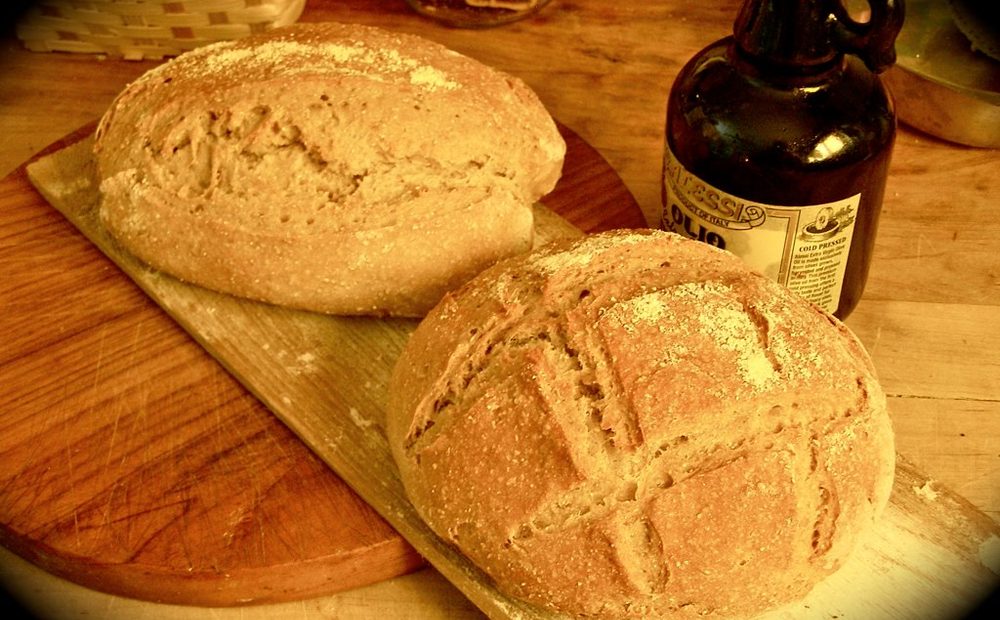
This is a question I had to settle for my own line, and the answer surprised me: yes — and it matters more in a convection oven than almost anywhere else. A home baker reaches for a preheated Dutch oven because a home oven can’t make steam; the covered pot traps the loaf’s own moisture for the first twenty minutes, and that trapped steam is what gives you oven spring, a glossy blistered crust, and a proper ear. Now put that same loaf in a bare convection oven and it’s worse than a still home oven, not better: the moving air is a drying machine. The fan strips moisture off the surface before the crust can set, blows away any steam you try to introduce, and leaves you a pale, matte, thin crust with muted spring. Convection is superb for even browning — cookies, pastry, enriched loaves — but for a hearth boule’s first phase, that fan is the enemy.
A Dutch oven (or a covered cloche or combo cooker) fixes both of convection’s problems at once: the lid seals in the loaf’s steam despite the fan, and the cast iron physically shields the crust from the direct blast of moving hot air. So the covered bake turns a mediocre convection loaf into a genuinely bakery-grade one. I run it in two phases and let convection do the thing it’s actually good at: covered for the first 15–20 minutes (steam and shield — I drop the fan to low or off here if the oven allows), then lid off and fan on to brown the crust fast and evenly. Best of both worlds.
The catch is production, not quality. Dutch ovens are the slowest, heaviest, lowest-density way to bake bread there is — a long preheat, one loaf per vessel, and a lot of lifting 500°F cast iron, which is a burn risk and a real labor cost that caps your throughput hard. For a few signature boules a day, it’s completely worth it. For volume it becomes a bottleneck, and that’s exactly when the answer changes from “Dutch oven” to “buy steam”: a steam-injected deck oven, or a combi that injects humidity, steams the whole chamber and bakes dozens of loaves without a single cast-iron pot. Cheaper tricks that scale better than individual Dutch ovens: cover a tray of loaves with an inverted hotel pan or a second sheet pan for the steam phase, or run a steam pan (a preheated tray you throw ice or lava rocks into). None match a real steam-injected deck — but all of them beat a bare convection fan. Bottom line: worth it for small batches and signature loaves, where it’s the single biggest upgrade you can make; not worth it at volume, where the money goes to a deck or a combi instead.
The four ovens compared
| Oven type | Best for | Steam? | Footprint | Rough cost (commercial) |
|---|---|---|---|---|
| Deck (stone hearth) | Artisan loaves, baguettes — crust & oven spring | Yes — injected, the gold standard | Large, heavy, floor-mounted | $8,000–25,000+ |
| Convection (fan) | Pastry, croissants, cookies, muffins — even browning | Usually none (some add it) | Compact, countertop to floor | $2,000–8,000 |
| Rack (roll-in racks) | High-volume pans of rolls, cookies, muffins | Often yes | Very large | $15,000–35,000+ |
| Combi (oven-steamer) | Versatile: bake, steam, proof, roast, hold | Yes — precise, adjustable | Medium | $10,000–30,000+ |
Cost ranges are wide on purpose — a single-deck electric oven is a world away from a four-deck gas unit, and used gear changes the math entirely. I keep the running-cost and payback side of this on the numbers, and buying-used strategy carries straight over from kitchen-equipment/buying-used.
Electric vs. gas, and the hood
Every one of these ovens comes electric or gas, and that choice ripples through the whole build. Gas is often cheaper to run where I am and heats fast; electric decks hold a steadier, more even hearth temperature that a lot of bread bakers swear by, and electric can dodge some of the ventilation and gas-line cost. But the big one is the hood: a gas oven is a combustion appliance and almost always needs a Type I (grease/heat) or at least a Type II (heat/steam) exhaust hood and make-up air, which is frequently the most expensive single line item in a bakery build. An electric oven may get by with lighter ventilation. This is exactly the trade-off I lay out in electric vs. gas — read that before you fall in love with a particular oven, because the hood and gas line can cost more than the oven itself. And the reason to buy commercial gear at all — the duty cycle, the recovery, the warranty, the code compliance — is in why commercial.
How I’d combine them in a small shop
You don’t buy one oven; you build a bake line, and in a small neighborhood coffee shop and bakery I’d start with two boxes that cover the whole product list between them:
- A deck oven — even a single- or double-deck with steam injection — as the bread oven. This is the non-negotiable piece: it’s what makes the sourdough, the country loaves, and the baguettes worth crossing town for, and it’s the same bread that makes the truck’s sandwiches special. If budget forces one great box, it’s this one. On a shoestring, though, you don’t have to spend $8,000 to get stone-deck bread to start: a Rofco B40 — a ~$2,000 Belgian electric brick oven that bakes a dozen loaves on three firebrick decks — is how a lot of micro-bakeries (mine included, if I go this route) begin, and it’s cheap and durable enough to keep for specialty batches long after a full deck oven arrives. I make the whole case in the Rofco B40 deep dive.
- A convection oven as the pastry-and-cookie oven — croissants, danishes, muffins, scones, and cookie waves all day. It’s cheaper, compact, and frees the deck to run bread on its own schedule.
That two-oven line — a steam deck for hearth bread, a convection for everything else — is what I’d open with. A combi is the smart third oven once volume justifies it (versatility for the truck prep and enriched breads), and a rack oven is the growth purchase when the case and the wholesale orders outrun what the deck and convection can push. Buy the deck new or from a trusted rebuilder — it’s the heart of the shop; a convection or combi is a fine place to buy used and save real money.
One honest caveat before you spend: ovens are the biggest, heaviest, most permitting-sensitive gear in the building, and rules and figures change — verify the ventilation, gas, and electrical requirements with your local building and health department before you buy. The full outfitting walkthrough is in outfitting my kitchen, and the licensing that governs the whole kitchen — the same kitchen that serves as the truck’s commissary — is treated in rules and regs. Get the oven right and everything downstream — the pastry case, the truck, the margins — gets easier.
Comments (0)