Pickling
This is the short version. Pickling got its own full section — seventeen pages of it — at Pickled: the history, the brine, the honest safety answer, the crunch problem, and the whole world tour, from my great-grandmother’s peaches through Japan, Korea, the Philippines, the American South, Turkey, India, Russia, the Caribbean and the olive. Start there if you want the whole thing. This page stays as the one-page overview in its place among the other preservation methods.
Pickling is preservation by acid: you make the food too sour for spoilage bacteria to survive, and in doing so you turn a cucumber that would have gone soft in a week into something that keeps for a year and tastes better than the vegetable it started as. The distinction that matters most is where the acid comes from. In pickling, you add the acid — you pour vinegar, already sour, onto the food. That is a different craft from fermenting, where you grow the acid from the vegetable itself, and it is worth being clear about which one you are doing before you start. This page is the vinegar side, the one I reach for when I want something fast, bright, and predictable. My pickle-and-kimchi shelf is one of the busiest corners of my kitchen, and easily half of it is vinegar work.
Add the acid, or grow it
If you take one idea from this whole section of the site, take this one. There are two roads to a sour, shelf-stable pickle, and they are not the same technique wearing two names.
Vinegar pickling — this page — pours acid onto the food. You boil a brine of vinegar, water, salt, and spices and pour it over the vegetables (or eggs, or fish). The vinegar does all the preserving, so the result is consistent, quick, and shelf-stable when properly canned. Nothing has to grow; nothing can go wrong in the way a ferment can.
Fermenting — the Fermenting page — grows the acid. You submerge vegetables in a plain salt brine, no vinegar at all, and the wild lactic-acid bacteria living on the vegetables eat the sugars and make lactic acid that both sours and preserves. It is alive, tangier, more complex, and full of probiotics — but slower and a little more demanding. If you want that, go there. Everything below assumes a bottle of vinegar.
Three modes, one decision
Almost anything you can pickle can be done three ways, and choosing between them is the first thing I do:
- Refrigerator (quick) pickles. Pour hot brine over raw vegetables, cool, refrigerate. Ready in hours to a day, crunchy and fresh, keeps a few weeks cold. No canning, no risk. This is my default for a small batch — my refrigerator pickles, refrigerator garden pickles, Mom’s sliced-cucumber refrigerator pickles, and spicy refrigerator pickles all live here.
- Canned, shelf-stable pickles. Same acid brine, but you water-bath-can the jars so they keep a year on a shelf with no refrigeration — for example canned garlic-dill pickles and spicy canned garlic pickles. This is where the safety rules get strict; see below and Canning.
- The ferment alternative. When you want depth and probiotics instead of speed, ferment the same vegetable instead — see the Fermenting page.
The brine
The brine is the whole game. Get it right and everything else is seasoning.
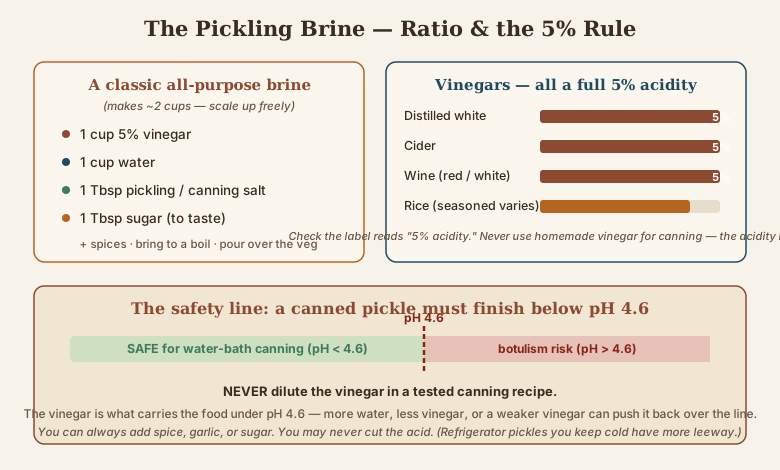
Vinegar and the 5% rule. Distilled white vinegar gives the cleanest, sharpest result and lets the vegetable’s color and the spices show; cider vinegar adds a mellow, orchard-y warmth I love with anything sweet; wine vinegars bring their own character; rice vinegar is soft and low-key for Asian-leaning pickles. What every one of them must share for canning is a labeled 5% acidity. That number is not decoration — it is the entire safety margin. A canned pickle is only safe because its finished acidity carries it below pH 4.6, the line under which botulism cannot grow (the same line the whole Canning craft turns on). So the iron rule: never dilute the vinegar in a tested canning recipe. You can add spice, garlic, heat, or sugar freely, but you may not add water or cut the vinegar — that is the one change that can push a jar back over the line. Never use homemade or unlabeled vinegar for canning; its acidity is unknown. (And note that a pH meter does not settle that question — pH tells you how strongly the acid acts, not how much of it is there, which is what the 5% rule is about. Measuring pH covers what a meter is and isn’t good for.) (Refrigerator pickles you keep cold have more leeway, since the cold, not just the acid, is protecting them — see Food Safety.)
Water and salt. The water simply tempers the vinegar’s bite. The salt should be pickling or canning salt — pure sodium chloride, nothing else. Table salt is iodized and carries anti-caking agents that cloud the brine and can dull the color; those additives do no harm but they make the jar look murky and off. Pickling salt dissolves clear and keeps the brine bright.
Sugar. Sugar is optional and to taste. A sharp dill brine may have none; a bread-and-butter brine is nearly a syrup. Sugar balances the acid — it does not preserve — so treat it as flavor, not safety.
A classic ratio. My all-purpose starting point is equal parts 5% vinegar and water, with 1 tablespoon each of pickling salt and sugar per two cups of brine. Bring it to a boil, pour it over the packed vegetables, and adjust the sugar next batch. From there, more vinegar for a sharper pickle, more sugar for a sweeter one — but in a canned recipe, only ever adjust up on sugar and spice, never down on vinegar.
Spices
Spices are where a pickle stops being generic. A jar of premixed pickling spice — mustard seed, coriander, allspice, bay, dill seed, peppercorn, chili, a little clove and cinnamon — is the easy button, and I keep a jar of my own blend on hand. Beyond that, the workhorses are fresh dill heads and garlic (the two that define a proper deli pickle), mustard and coriander seed for warmth, black peppercorns, bay leaves, dried chilies for heat, and turmeric for that golden bread-and-butter color. Add whole spices to the jar and let the hot brine draw them out; they keep tasting stronger for the first week.
The crunch problem
The single most common complaint about home pickles is that they go soft, and every fix comes down to keeping the vegetable’s cell walls firm:
- Start with fresh, firm produce. A cucumber picked this morning makes a crisp pickle; one that has sat a week never will. Pickle the same day you pick or buy.
- Trim the blossom end. The blossom end of a cucumber carries pectinase, the enzyme that softens pickles. Slice a thin coin — about 1/16 inch — off that end and discard it. ⚠ This is worth doing and it is not the whole story. The enzyme is also native to the cucumber’s own flesh, and a 2022 study measuring the four things people routinely add to a jar found the highest activity in the fresh dill — about eight times that of mustard seed, with onion and vinegar low. The herb that defines a dill pickle is the largest enzyme source you add on purpose. The full version is on the Crunch Problem page.
- Cold soak. An hour or two in ice water before packing firms the vegetable and helps it stay crunchy.
- Add tannins. A grape leaf, oak leaf, or a pinch of black tea in each jar contributes tannins that inhibit the softening enzymes. This is the old-timers’ trick and it works — the same principle the ferment crowd relies on.
- Calcium chloride (“Pickle Crisp”). A pinch of food-grade calcium chloride firms pectin directly and is the one modern additive I keep around for canned pickles.
- Never overcook. For a raw-pack pickle, the hot brine should be the only heat the vegetable sees. Boiling the cucumbers themselves is how you make relish, not a crisp pickle.
Hot-pack vs raw-pack
Two ways to fill the jar. In a raw pack you put the vegetables in cold and raw, then pour the boiling brine over — best for anything you want crunchy, like dills and sliced cucumbers. In a hot pack you briefly heat the vegetables in the brine before filling — better for dense vegetables like beets that need a head start, and it drives out air so the jars pack tighter and float less. Crunch says raw pack; density says hot pack.
A tour of what to pickle
Once the brine is second nature, almost everything is fair game. A walk down my shelf, all linked to the recipes (browse them all here):
- Cucumbers, the classic — as garlic dills, sweet bread-and-butters, or little gherkins.
- Giardiniera — that Italian-American mix of cauliflower, carrot, celery, and peppers in a sharp brine; the Chicago condiment.
- Red onions — quick-pickled red onions are the fastest upgrade in cooking; ten minutes in hot brine and they go on every taco and sandwich I make.
- Jalapeños and escabeche — sliced jalapeños in brine, or the whole Mexican escabeche of carrots, onions, and chilies.
- Beets — sweet, earthy, and gorgeous; a hot-pack job.
- Dilly beans — green beans packed with dill and garlic, the best pickle you can eat straight from the jar.
- Okra — a Southern staple, spicy and snappy.
- Cauliflower and carrots — both take a brine beautifully; carrots stay crisp for weeks.
- Eggs — a proper Southern bar tradition. My easy classic pickled eggs, the best spicy pickled eggs, sriracha pickled eggs, and the whole quail-egg world — easy pickled quail eggs and my spicy Cajun pickled quail eggs. (Note: pickled eggs are a refrigerator pickle — never can them at home.)
- Seafood — pickled shrimp, the Southern-style pickled shrimp I bring to every gathering, and Scandinavian-style pickled salmon.
- Fruit — sweet-and-sour and wonderful: pickled cherries, sweet pickled cherries for canning, pickled peaches, and the frugal classic, watermelon-rind pickles.
- Pork — the old Southern tradition of soured pork: pickled pork the Alton Brown way, pickled pork in the slow cooker, pickled pork hocks, and souse, the pickled-pork-and-onion sandwich. For more on curing meat, see Curing.
Canning your pickles for the shelf
To make a pickle truly shelf-stable, you water-bath-can it, exactly as you would any high-acid food. The pickle’s job is easy on the canning front because the vinegar has already put it far below pH 4.6 — the acid is doing the safety work, and the boiling-water bath just seals the jar and knocks back surface microbes. Follow a tested recipe for headspace (usually ½ inch), process for the listed time, and — this is the one that trips people up — do not alter the acidity. No extra water, no swapping in a weaker vinegar, no “I like them less sour so I cut the vinegar.” The full method (headspace, altitude, processing times) lives on the Canning page.
Troubleshooting
| Problem | Likely cause | Fix |
|---|---|---|
| Soft or mushy | Old produce; blossom end left on; overcooked; too little acid | Fresh produce, trim blossom end, raw-pack, add a tannin leaf or Pickle Crisp |
| Hollow pickles | Cucumbers were old or grew too fast; floated in storage | Use fresh, sound cucumbers; float-test and discard hollow ones before packing |
| Shriveled | Brine too strong (too much sugar, salt, or vinegar); cukes too dry | Ease off the sugar/salt; use fresh, firm produce |
| Cloudy brine | Iodized or anti-caking table salt; hard water; (or normal, in a ferment) | Use pickling salt and soft/filtered water; cloudiness in a ferment is normal |
| Discolored / dark | Iodized salt; iron or copper from reactive pots; ground spices | Use pickling salt, non-reactive pots, and whole spices in a bag |
| Garlic turned blue-green | Harmless reaction of garlic with acid | Cosmetic only — safe to eat |
Equipment
You need almost nothing, but two things matter. First, non-reactive pots — stainless steel, enamel, or glass. Never heat pickling brine in reactive aluminum (or unlined copper or cast iron); the acid pulls metal into the brine, giving off-flavors and a dark, dingy pickle. Second, clean jars — Mason jars for canning, any clean jar for the fridge. A stoneware crock is lovely for a big batch and essential once you cross over into fermenting. A gram scale and a candy thermometer round it out, but honestly a pot and a jar will get you your first crisp dill.
Pickling is the friendliest preservation there is — low stakes, fast payoff, endless variety, and a brightness on the plate that nothing else gives. Once the vinegar brine is second nature, walk over to the living side of the craft: Fermenting, where you grow the sour instead of pouring it. Or head back to the Preservation hub to see how it all fits together.
Comments (0)