Fermenting
This is the short version. Fermenting got its own full section — eighteen pages of it — at Fermentation: the history, the science, how to start in a jar, the crocks, the honest safety answer, and a page each for sauerkraut, cucumber pickles, kimchi, yogurt, kefir, kombucha, koji and miso, vinegar and the rest. Start there if you want the whole thing. This page stays as the one-page overview in its place among the other preservation methods.
Fermenting is the trick that still feels like magic to me even after all these years of doing it: you put vegetables in salt water, leave them on the counter, and instead of rotting they get safer, tangier, and more alive. No vinegar goes in — you don’t add the sour, you grow it. The wild lactic-acid bacteria that already live on every cabbage leaf and cucumber skin wake up in the brine, eat the vegetable’s sugars, and make lactic acid that both sours the food and preserves it. This is the oldest, cheapest, most flavorful preservation there is, and it is the other half of my pickle-and-kimchi shelf — the half that bubbles. If you want the fast, bottled-acid version instead, that’s Pickling; this page is the living one.
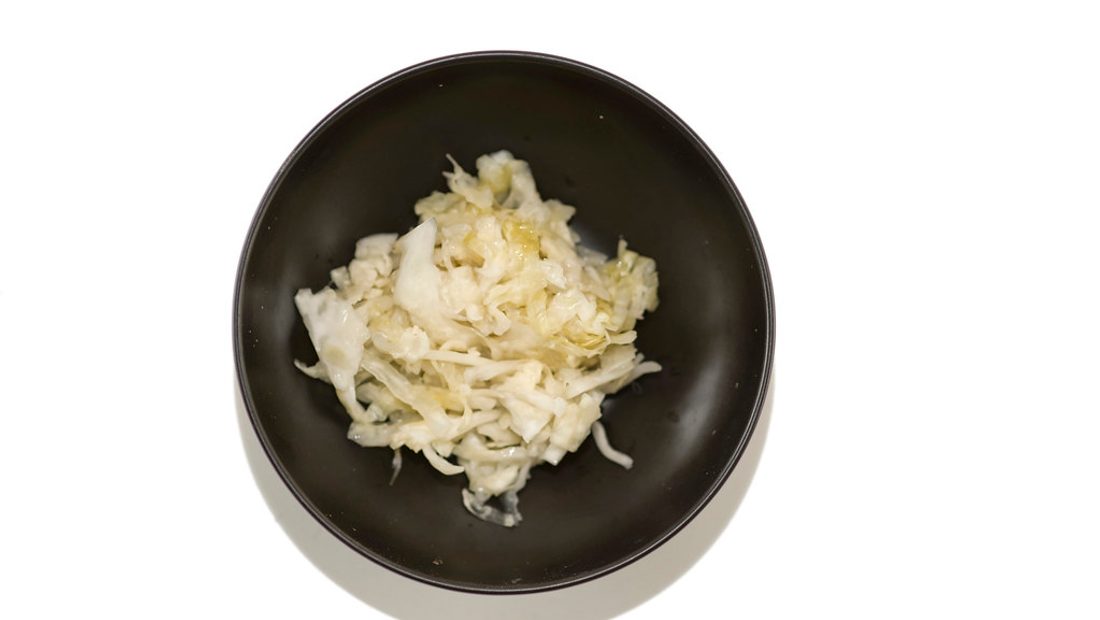
What lacto-fermentation actually is
“Lacto” is for lactic acid, not dairy. You submerge vegetables in a plain salt brine — water and salt, nothing else — and the Lactobacillus and related bacteria native to the vegetable surface go to work anaerobically, converting sugars into lactic acid. That acid is what makes sauerkraut sour, what makes a real deli half-sour taste the way it does, and what preserves the whole batch. Vinegar pickling pours a finished acid over dead-still food; fermenting cultivates a living population that manufactures the acid in place. The difference you can taste immediately — a ferment has a depth, a funk, a roundness that vinegar simply cannot reach.
Why it gets safer, not spoiled
This is the part worth understanding, because it is what makes fermenting safe rather than reckless. It is not luck — it is a predictable succession of microbes.
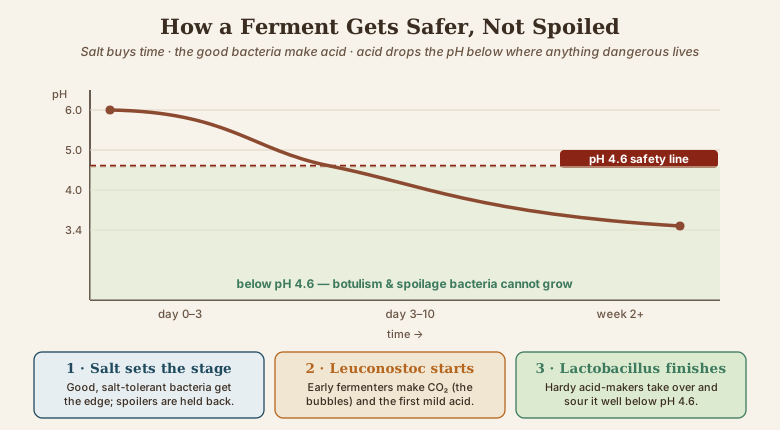
At the start, the salt gives the salt-tolerant good bacteria an edge over spoilage organisms, most of which don’t tolerate salt well. First a group called Leuconostoc gets going — these are the early fermenters that produce carbon dioxide (the bubbles you’ll see) and the first mild acid. As the brine sours and the oxygen is used up, the hardier Lactobacillus species take over and finish the job, driving the pH steadily down from around 6 to roughly 3.4. Somewhere around pH 4.6, the batch crosses the line below which nothing dangerous can grow — including Clostridium botulinum, the botulism organism. The good bacteria also crowd out competitors by sheer weight of numbers. So the timeline runs: salt buys time, the early bugs start the acid, the finishers drive it well past safe, and the sourness that results is the very thing protecting the food. That’s why a ferment gets safer the longer it goes — the acid only deepens. Humans did this for thousands of years with nothing but a crock and got it right; the science just explains why. See Food Safety for the full picture, and Measuring pH if you want to watch that number come down yourself rather than take it on trust — a ferment is the case where the acid is grown rather than added, so nobody can predict where a given jar lands.
The two rules
Everything else on this page is refinement. These two are the ones that actually keep you safe:
- Keep everything under the brine, away from air. Fermentation is anaerobic; the bacteria you want thrive without oxygen, and the mold and yeast you don’t want need air. Any vegetable poking above the brine is where trouble starts. Weigh it all down.
- Get the salt right, by weight. Enough salt to favor the good bacteria over the bad, measured on a scale, not guessed with a spoon.
Nail those two and fermenting is remarkably forgiving. Miss either and you invite the fuzzy stuff.
The salt
Salt is the one number you never eyeball, and the way to get it right is by weight, as a percentage.
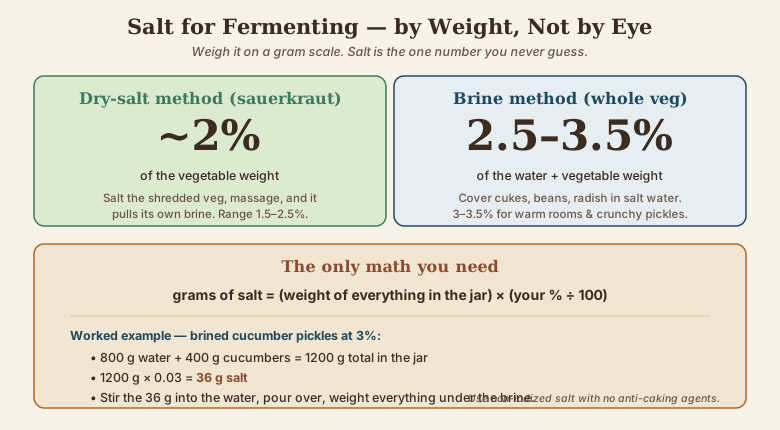
There are two methods, and they take slightly different percentages:
- Dry-salt method (sauerkraut and other shredded veg): about 2% of the vegetable’s weight. You salt the shredded cabbage directly, massage it, and it pulls out its own brine. A workable range is 1.5–2.5%.
- Brine method (whole or chunked vegetables — cucumbers, beans, radish): about 2.5–3.5% of the combined water plus vegetable weight, made up as a salt solution you pour over. Lean toward 3–3.5% for a warm kitchen or when you want the pickle extra crunchy.
The math is the only arithmetic you need:
grams of salt = (weight of everything going in the jar) × (your % ÷ 100)
For example, brined cucumber pickles at 3%: 800 g water + 400 g cucumbers = 1,200 g total, and 1,200 × 0.03 = 36 g salt. Weigh, multiply, done. And use non-iodized salt with no anti-caking agents — iodine can inhibit the bacteria you’re courting, and anti-caking additives cloud the brine. Pickling salt, kosher salt, or plain sea salt all work.
Dry-salt vs brine, in practice
The dry-salt (massage) method is for shredded vegetables with enough moisture to make their own brine — cabbage above all. You weigh the shredded veg, add 2% salt, and then squeeze and massage for several minutes until the cabbage weeps enough liquid to cover itself when packed down. No water added; the vegetable’s own juice is the brine. This is sauerkraut and most kimchi.
The brine method is for whole or chunky vegetables that won’t release enough liquid on their own — cucumbers, green beans, whole radishes, cauliflower. You dissolve the calculated salt in water and pour that brine over the packed vegetables until submerged. This is fermented dill pickles and most single-vegetable ferments.
Temperature and time
Fermentation is a living process, so it runs on a thermostat and a clock.
Temperature. The sweet spot is a cool room, roughly 60–70°F. Warmer (say a summer kitchen at 75–80°F) ferments faster but riskier — it favors softening and can turn out mushy or off before the acid sets. Cooler (a basement at 55°F) ferments slower but cleaner, and many old hands swear the best kraut is a long, cool one. If your kitchen runs hot, bump the brine to the top of the salt range to compensate.
Time. There is no clock you can trust blindly — you taste to decide doneness. A cucumber ferment might be a bright half-sour in 3–4 days and a full-sour in a week or two; sauerkraut wants three to six weeks; kimchi is often eaten after just a few days at room temperature and then keeps developing for weeks. When it tastes right to you, move it to the cold — the refrigerator or a cold cellar slows the bacteria almost to a stop, holding the flavor where you like it. Cold-stored, a good ferment keeps for many months.
Submersion gear and burping
Rule one — keep it under the brine — has a small industry of gadgets behind it, and you need exactly one of them:
- Glass or ceramic weights sit on top of the vegetables and hold them below the surface. Simplest and best.
- A brine bag — a zip bag filled with brine (not plain water, in case it leaks) — molds over the surface and seals out air.
- Airlock lids let the CO₂ escape while keeping air out, so you don’t have to think about burping.
- A water-seal crock — the traditional heavy stoneware crock with a moat around the rim — does the same thing at scale and looks wonderful doing it.
If you use a plain sealed jar instead, you must burp it — crack the lid once a day for the first week to release the CO₂ pressure the ferment builds, or it can push brine out or, rarely, pop.
Sauerkraut
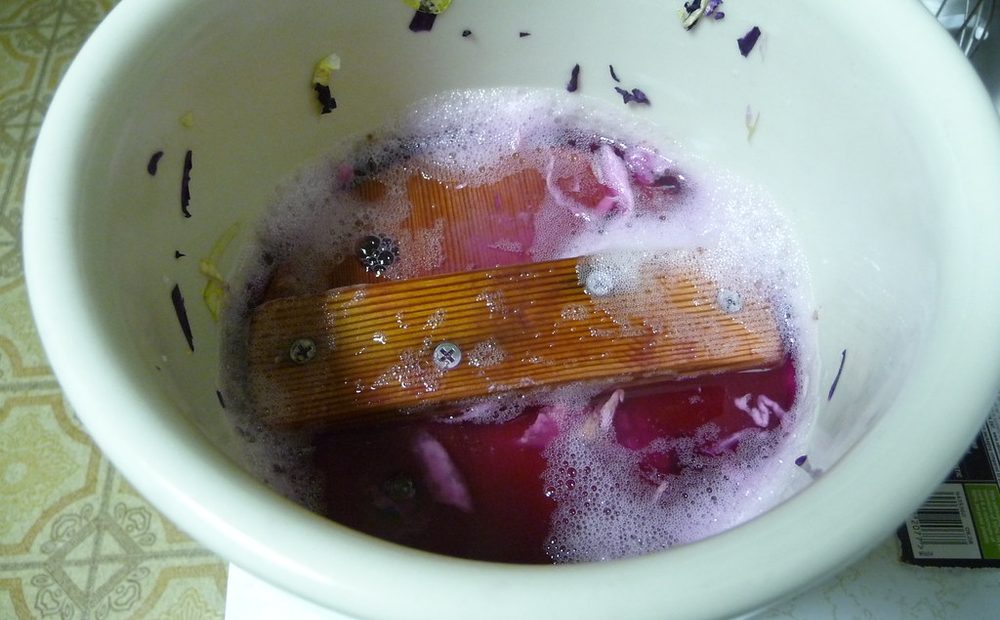
The place everyone should start. Shred cabbage fine, weigh it, add 2% salt, and massage until it weeps a brine that covers it when packed. Weight it down, keep it cool, and taste from about two weeks on — it’s ready when it’s sour and still has snap, usually three to six weeks. Then refrigerate. That’s the whole thing. My sauerkraut in a crock is the full walkthrough, and there’s a plain-jar sauerkraut version too. Once you’ve made one good batch you’ll never look at the bagged stuff the same way.
The kimchi world
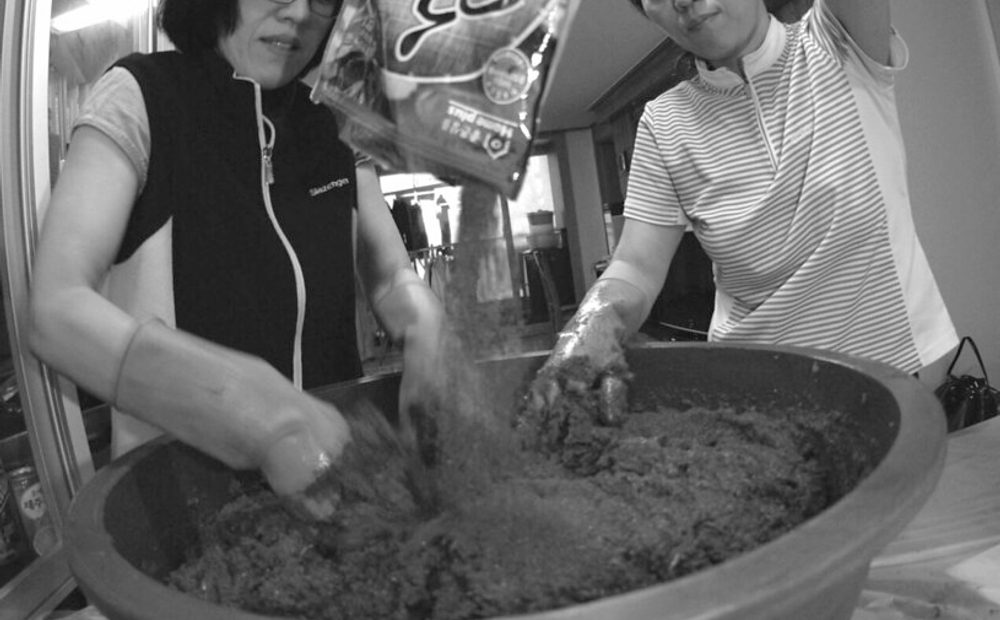
Kimchi is fermenting at its most exciting, and it’s a whole universe, not a single recipe. The classic is napa cabbage kimchi (baechu): you first salt the cabbage to wilt and season it, then coat every leaf in a paste of gochugaru (Korean chili flakes), fish sauce or salted shrimp, garlic, ginger, and a little sugar, often thickened with a rice-flour porridge, then let it ferment. Start with traditional napa cabbage kimchi or this version, and for a faster weeknight batch, easy fast kimchi or simple kimchi. From there the variations are endless:
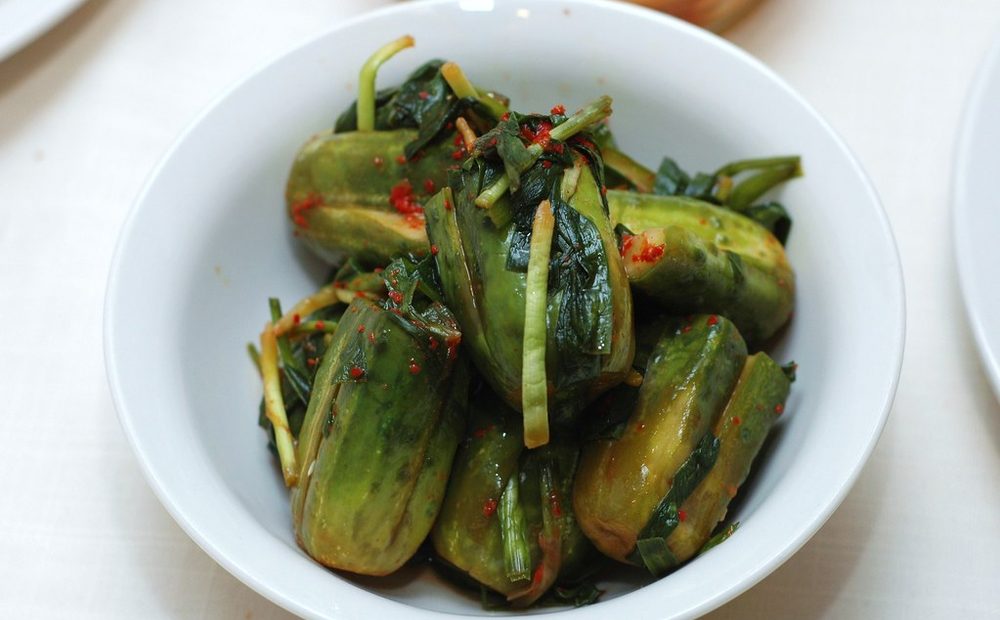
- Cucumber kimchi — crisp and quick: cucumber kimchi, oi kimchi, and the stuffed oi sobagi.
- Kkakdugi — cubed radish kimchi, all crunch and funk, and the ponytail-radish chonggak kimchi.
- White and green — the mild, chili-free baek kimchi and a green cabbage kimchi for when napa’s scarce.
Fermented pickles — half-sours and full-sours
The real deli pickle is fermented, not vinegared. Pack fresh cucumbers with garlic and dill into a 3–3.5% brine, add a grape or oak leaf or a pinch of black tea for the tannins that keep them crisp, weight them under, and wait. Pull them at 3–4 days and you have a bright, still-green half-sour; leave them a week or two longer and they become a deep, olive-green full-sour with a mellow, complex tang. My fermented dill pickles and the kosher-style fermented dill pickles are exactly this, and there are easy fermented pickles for a first try. The tannin-for-crunch trick matters more here than anywhere — a naked cucumber ferment goes soft fast.
Fermented hot sauce
This is my favorite thing to make from a garden glut of chilies, and it’s the best hot sauce you’ll ever pour. Ferment a mash: blend or roughly chop chilies (and garlic, if you like) into a coarse mash, salt it to about 2–3% by weight, and ferment it submerged under its own liquid for one to several weeks — the same lactic bugs at work, building a deep, funky, complex heat that fresh chilies can’t touch. Then blend it smooth and add vinegar to bottle it — that’s the homemade sriracha or Tabasco-style path, where the ferment does the flavor and a splash of vinegar finishes it for the shelf. Browse my hot sauce recipes for jumping-off points, and see how the vinegar finish ties back to Pickling.
Other vegetables
Almost anything crunchy ferments. Carrots, green beans, radishes, beets, and cauliflower all take a 3% brine happily; a mixed jar becomes a fermented giardiniera that beats the vinegar version for depth. The gateway batch for a nervous beginner is the easiest fermented vegetables ever — one jar, one brine, a few days. From there, fermented zucchini pickles, tangy pickled Brussels sprouts, and fermented cauliflower are all worth a jar.
Looks scary, is fine — vs actually toss it
The number-one reason people quit fermenting is that they open a jar, see something on top, and panic. Almost always it’s fine. Here’s how I read a jar:
| What you see | What it is | What to do |
|---|---|---|
| Flat white film on the surface | Kahm yeast — harmless surface yeast, common on warmer or slower ferments | Skim it off. The ferment underneath is fine. Get things better submerged and cooler. |
| Cloudy brine | Bacteria multiplying and lactic acid forming | Totally normal — it means it’s working |
| Bubbles / fizz | CO₂ from the fermentation | Normal, especially the first week; burp sealed jars |
| Sour, tangy, sharp smell | Lactic acid | Normal and good — sour is the goal, not spoilage |
| Fuzzy spots — pink, green, blue, or black | Mold | Toss the whole batch. Fuzz that stands up off the surface is mold, not kahm |
| Rotten, putrid, sewage smell; slimy mush | Spoilage from too little salt or air exposure | Toss it. This is the rare genuine failure |
The line to memorize: kahm yeast is a flat film you skim; mold is fuzzy, colored, and three-dimensional, and it means the batch goes in the bin. When in doubt, trust your nose — a healthy ferment smells sour and clean, never rotten.
A word on gut health
The reason fermented foods are having their moment is that they’re alive — a jar of raw sauerkraut or kimchi is teeming with lactic-acid bacteria and the good things they make, and eating them regularly is one of the easiest ways to feed a healthy gut. Vinegar pickles, delicious as they are, are pasteurized by their acid and heat; a ferment you keep raw and cold is a living food. That’s the bonus prize on top of the flavor.
Fermenting is the liveliest, most rewarding corner of preservation — low cost, huge flavor, and a little bit of daily wonder watching a jar come to life. Start with a batch of kraut, graduate to kimchi, and you’ll be hooked. For the fast, bottled-acid cousin, see Pickling; to understand the safety underneath it all, Food Safety; or head back to the Preservation hub.
Comments (0)