Meat Preservation: The Old Ways
We as humans have always tried to make our food last. When you catch a big run of fish, take down a large animal, or pick fruit and vegetables at the peak of ripeness, you suddenly have far more than you can eat before it spoils — and for as long as there have been people, there have been ways to save that bounty for the lean days ahead. Long before refrigeration, our ancestors worked out an astonishing number of ways to keep meat, and I’ve spent years actually trying them to see which ones still hold up.
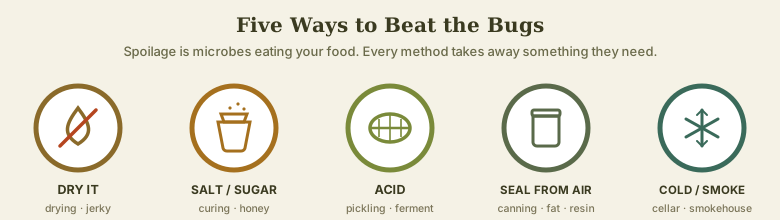
The short answer: a lot of them are far better than you’d ever guess. Some are genuinely delicious. A couple are the direct ancestors of foods we still love — bacon, prosciutto, confit. And a few, honestly, taste like dirt. Below is my field guide to the old ways, grouped by how they work, with my own tasting notes on each. First, the framework — because every one of these methods is really just one of five tricks:
⚠️ Read this first. These are historical and experimental methods, and I share them as a fascinated cook and student of history — not as tested, guaranteed-safe recipes. Several of them keep low-acid meat moist at room temperature, which is exactly the condition that can grow Clostridium botulinum (botulism) — a toxin you cannot see, smell, or taste, and that can kill you. When I do these, I treat them as curiosities, I cook the results thoroughly, and I lean on the safe modern equivalents for anything I actually rely on. Please read Food Safety & the Law before you try any of them.
Sealing it away from the air
If air (and its microbes) can’t reach the meat, spoilage slows dramatically. Three very old methods all work on this same idea — an airtight coat.
Pitch & resin dipping — the 90-day coat
One of the oldest tricks there is: cook the meat through, melt tree resin (pitch), and dip the meat several times until it’s sealed in a hard shell. Stored cool, a piece treated this way will keep at least 90 days. The resin locks out air and moisture, and pine pitch itself is mildly antimicrobial.
How mine turned out: dry and, honestly, yummy — the meat concentrates as it sits, almost like a hard salami. The novelty of cracking open a resin shell never gets old.
⚠️ Sealing cooked low-acid meat in an airtight coat at room temperature is a textbook botulism setup. I keep mine cold and eat it soon — I don’t rely on the “90 days.”
Confit — cook it in its own fat
The French turned this into an art, but the idea is ancient: gently cook the meat submerged in its own rendered fat (duck in duck fat is the classic), then store it packed in that fat in a cool place — traditionally up to six months. When you want it, you heat the whole thing back up in the fat. The layer of solid fat seals the meat from air, and the low-moisture, low-oxygen environment holds spoilage at bay. This one didn’t just survive — it became a beloved dish.
How mine turned out: amazing. Tender, juicy, rich — the best-eating method on this whole page. This is the old way that fully earned a permanent place in my kitchen.
Make the real thing: duck confit, confit egg yolks, or salmon confit in olive oil.
✅ Confit is the safest of the seal-from-air methods when done right — proper salt cure first, fully submerged in fat, and kept refrigerated (modern food safety treats it as a short-term fridge preserve, not a room-temperature one).
Honey — nature’s preservative
Cook the meat through, warm honey gently, and submerge the meat completely in the honey. Kept sealed, it holds for around 45 days. Honey is one of the few foods that essentially never spoils on its own: it’s extremely low in available water, acidic, and even produces a little hydrogen peroxide — a triple threat to bacteria. The ancient Egyptians preserved all kinds of things in honey.
How mine turned out: so very good. The meat isn’t sweet the way you’d fear — the honey mostly seasons and protects it — and the texture stays lovely. A genuine surprise.
⚠️ The catch: the meat adds moisture to the honey, diluting the very thing that makes honey safe, and honey can carry botulism spores. Keep it cold, and never feed honey-anything to infants under one year.
Salt, sugar & wine — drawing out the water
Salt is the king of preservation. It pulls water out of both the meat and any bacteria on it through simple osmosis, leaving an environment too dry and salty for spoilage. These are the methods that gave us the world’s great cured meats.
Salt-cured pork belly — the ancestor of bacon
Take a slab of pork belly (or wild boar) and bury it in a cure of salt and sugar with oregano, parsley, and black pepper. Cover it completely and leave it 1–2 days, then brush off the salt — it’s now cured. Hang it on a tree, out of the sun, the cooler the better, for about 8 days, then slice and cook.
How mine turned out: taste good — super porky, savory, and salty. This is essentially the predecessor to bacon and pancetta, and you can taste the family resemblance immediately.
This is the one traditional method that maps almost perfectly onto safe modern practice. Do the tested versions: homemade pancetta, bacon (wet & dry cure), or home-cured corned beef, and read up on curing & salt.
The Greek wine cure — soak, salt, and hang
The ancient Greeks and Romans preserved with wine. Soak raw meat in wine for a while, then salt it and hang it to dry — about 32 days — before you cook or smoke it. The wine brings acid and alcohol (both hostile to microbes) plus a load of flavor; the salt and drying finish the job. Dry reds with good tannin and acidity work best — a sturdy Cabernet, Syrah, or a resinous Greek red — while delicate whites don’t have the backbone.
How mine turned out: wow. Amazing flavor — probably the most interesting result on this page. Finishing it with a cook or a light smoke makes it sing.
⚠️ Hanging salted-but-still-moist meat for a month is real charcuterie, and real charcuterie uses cure salts, controlled temperature, and humidity to stay safe. Treat this as a flavor experiment, not a substitute for proper cured-meat technique.
Fermentation — putting good microbes to work
Instead of killing every microbe, fermentation recruits the helpful ones: they acidify the food and crowd out the dangerous species.
Medieval Japanese rice-fermented meat
An old Japanese idea, cousin to the fermented fish (narezushi) that eventually became sushi: combine rice and garlic with ground beef, wrap it in a leaf (banana leaf works), and let it ferment up to 10 days. The rice’s starches feed lactic-acid bacteria that sour and preserve the meat. Then you cook it all the way through. Sealed and cool, it reportedly keeps for years.
How mine turned out: it smells weird — genuinely funky — but cooked through it doesn’t taste too bad. A bit funky, in an intriguing, fermented-and-savory way. Not an everyday food, but a fascinating one.
⚠️ Fermenting raw ground meat at room temperature is the highest-risk method here; safe fermented sausages depend on cure salts, tested starter cultures, and a measured pH drop.
Smoke & brine on the water
The Viking way — seawater and smoke
Vikings had to carry food on long sea voyages, so they leaned on what was all around them: seawater and smoke. Fish brined in salt seawater and then smoked would keep for around 2 months at room temperature — long enough to cross open water. It’s the salt of the brine plus the drying and antimicrobial phenols of the smoke, working together. This is the same logic behind every smoked-and-salted fish tradition of Northern Europe.
The smoke half of this story is its own craft — see my Smoking pages, where the Hot vs. Cold distinction and the food-safety rules for smoked fish live.
Drying — the oldest way of all
Take the water out and nothing can grow. Drying is almost certainly the very first preservation method humans ever used, and it’s still one of the safest.
Ancient jerky — herbs, sun, and patience
The simplest version, and possibly the oldest: cut the meat into small strips, cover them with tarragon and rosemary (the herbs help keep insects off), then cover and hang out of the sun for about 3 days to dry, and bring them inside to store cool.
How mine turned out: great flavor. This is basically ancient jerky, and it’s excellent — the herbs make it, and the low, slow air-dry gives a clean, savory chew.
The Native American way — juniper, salt, sage
Indigenous peoples across the Americas were masters of drying. One approach: a light rub of juniper, salt, black pepper, and sage (the sage helps keep bugs away), then hang in the sun to dry into a hard, brittle, ancient beef jerky — the same family as the dried provisions that fueled long overland journeys.
How mine turned out: very dry and brittle. Honestly, not too good on its own — more survival ration than snack — but I suspect it would come alive rehydrated in a stew.
Modern, dialed-in versions are some of my favorite things to make: basic beef jerky, venison jerky, and my jerky marinades and ingredient notes — more on the Drying & Jerky page.
Ash — the desert-dry burial
Ashes
Cook the meat thoroughly, then place it in a container on a bed of wood ashes and cover it completely with more ash — about 80 days. Wood ash is intensely drying and alkaline, and burying meat in it pulls out moisture while the high pH discourages microbes (the same alkaline trick behind century eggs).
How mine turned out: very dry, and — I’ll be honest — yucky. It tastes like dirt. My running note on this one is a genuine question: what about in a stew? I suspect that’s the only way I’d happily eat it — crumbled into a long-simmered pot where the dryness becomes an asset and the earthiness reads as depth.
Acid — the pickling route
WWII-era pickled meat
A method that saw real use in the lean years of the World Wars: cook the meat through, then submerge it in a pickling mix and store it in a cool place — about 70 days. The acid of the vinegar drops the pH below what most spoilage bacteria can tolerate.
How mine turned out: slightly dry and very acidic. Not too good, to my taste — really quite vinegary. Pickling shines on vegetables and eggs; on a whole piece of meat it’s a harder sell.
The tradition lives on in dishes like pickled pork and souse — and pickling really comes into its own with vegetables, on the Pickling & Fermenting page.
The whole field guide at a glance
| Method | Where it’s from | Keeps (traditionally) | My verdict |
|---|---|---|---|
| Confit (cook in fat) | France (ancient idea) | ~6 months | Amazing — tender & juicy |
| Honey submersion | Ancient Egypt & beyond | ~45 days | So good — not sweet |
| Wine cure | Greece / Rome | ~32 days | Wow — amazing flavor |
| Salt-cured pork belly | Old-world Europe | ~8 days hang | Good — the ancestor of bacon |
| Ancient herb jerky | The oldest way | store cool | Great flavor |
| Resin/pitch dip | Prehistoric | ~90 days | Yummy, very dry |
| Viking fish (brine + smoke) | Scandinavia | ~2 months | Good — travels well |
| Rice fermentation | Medieval Japan | years | Funky; OK cooked |
| Native American jerky | The Americas | store cool | Very dry & brittle |
| WWII pickling | 20th-c. wartime | ~70 days | Too vinegary |
| Ash burial | Ancient & widespread | ~80 days | Yucky — maybe in stew? |
What I take from all this
Two things. First, our ancestors were brilliant — with nothing but salt, fire, fat, and patience they kept food through winters we’d find terrifying, and the best of their methods gave us foods we still treasure. Second, the old ways still work today, sometimes better than the modern shortcut — as long as you bring modern understanding to them. Know why each method works, respect where the danger lives, cure with the right salts, keep things cold when in doubt, and cook thoroughly. Do that, and you can eat a little bit of history.
Ready to do it safely and well? Start with Curing & Salt and, most importantly, Food Safety & the Law.
Comments (0)