Brewed and Chemical: How to Read the Label, and Why 3-MCPD Matters
There are two entirely different ways to turn soybean protein into a savoury brown liquid, and only one of them involves fermentation.
The first takes six months to three years and uses a mould, a bacterium and a yeast. The second takes hours and uses hydrochloric acid. Both can be sold as “soy sauce” in the United States. Telling them apart is the most useful skill in this entire dive, and it is not difficult once the vocabulary is known.
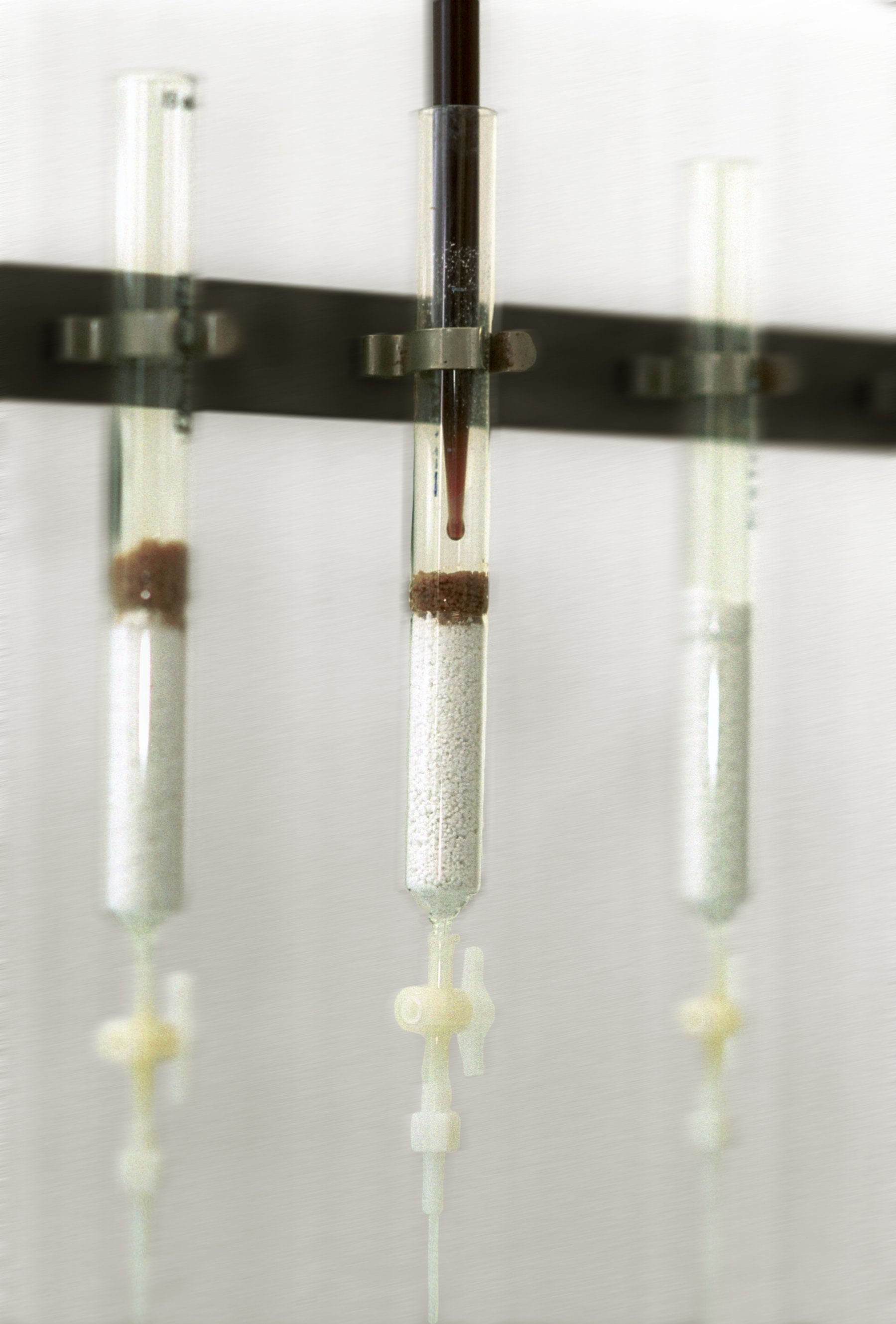
What acid hydrolysis actually is
Defatted soy meal is refluxed with concentrated hydrochloric acid at high temperature. The acid tears the protein apart into amino acids by brute force, doing chemically in a few hours what proteases do enzymatically over months. The resulting liquor is neutralised with sodium carbonate, filtered, and sold as hydrolysed vegetable protein (HVP) or hydrolysed soy protein.
It contains glutamate. It tastes savoury and salty. And it has no aroma whatsoever, because none of the aromatic chemistry of a real ferment has happened — no HEMF, no HDMF, no esters, no alcohols. So the finished product is built back up with additives:
La Choy Soy Sauce, ingredients: Water, Salt, Hydrolyzed Soy Protein, Corn Syrup, Caramel Color, Potassium Sorbate.
⭐ Read that list again and note what is absent: soybeans as such, wheat, and any fermentation at all. Corn syrup supplies the sweetness the ferment would have made; caramel colour supplies the colour; potassium sorbate keeps it stable. It is a reconstruction of soy sauce from parts, and it is a mainstream American supermarket product.
⚠ This is not a claim that the product is dangerous. Modern acid-HVP is made to specifications that keep contamination low. It is a claim that it is a different food, and that the difference is not declared on the front of the bottle.
”Naturally brewed” is not a regulated term
The phrase appears on a great many bottles. In the United States it carries no legal definition: there is no FDA standard of identity for soy sauce, and “naturally brewed” is not defined the way “organic” is. A manufacturer’s use of it is a claim, not a certification.
🔴 But “unregulated” is the American answer, not the universal one, and this is where most English-language writing on the subject goes wrong. Three of the four major producing countries regulate exactly this distinction, and they regulate it well:
| Country | The rule |
|---|---|
| Japan | JAS defines 本醸造 (honjōzō) — brewed, no amino acid liquid — against 混合醸造 (kongō-jōzō), hydrolysate added before fermentation, and 混合 (kongō), hydrolysate blended into finished sauce. Added hydrolysate is capped at 80% or less on a nitrogen-equivalent basis |
| China | GB/T 18186 requires the bottle to state 釀造醬油 (brewed) or 配制醬油 (prepared/blended) |
| Korea | MFDS categories distinguish 양조간장 (brewed) from 산분해간장 (acid-hydrolysed) and 혼합간장 (blended) |
| United States | No equivalent requirement. Read the ingredients |
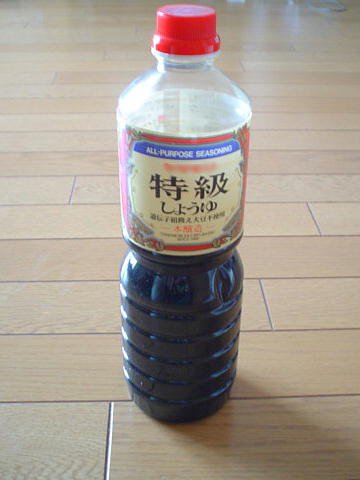
⭐ A Japanese, Chinese or Korean label will simply tell you. An American one usually will not, and the ingredient list is the only reliable route.
The label test, in order
1. Read the ingredients, not the front.
| Brewed | Hydrolysed |
|---|---|
| Water, soybeans, wheat, salt | Hydrolyzed soy protein or hydrolyzed vegetable protein |
| (and nothing else, in the best case) | Corn syrup, caramel color, potassium sorbate |
2. Look for a regulated term — honjōzō, 釀造醬油, 양조간장. Their presence is meaningful; their absence on a US-market bottle means nothing either way.
3. Look for the grade. Japanese 特級 or Chinese 氨基酸态氮 ≥0.80 g/100 mL are compositional claims that a hydrolysate blend cannot easily reach honestly.
4. Ignore colour entirely. Colour is the cheapest thing on the shelf to add, as the Chinese dark soy panel demonstrates.
3-MCPD: the real hazard, correctly located
Acid hydrolysis has a specific chemical liability. Residual lipids in the soy meal react with chloride from the hydrochloric acid to form chloropropanols — principally 3-MCPD (3-monochloropropane-1,2-diol) and 1,3-DCP (1,3-dichloro-2-propanol).
This was identified as a by-product of acid-HVP production in 1978. It took twenty years to act on.
The 2000 UK Food Standards Agency survey is the one that broke the story, and its numbers are worth stating exactly, because they are far worse than the summaries suggest:
- 3-MCPD was quantified in 32 of 100 samples.
- Normalised to 40% dry matter, 25 samples were at or above 0.02 mg/kg.
- 16 samples exceeded 1 mg/kg — fifty times the limit.
- The worst single sample contained 82.8 mg/kg.
- 1,3-DCP was found in 17 samples, at 0.006–0.345 mg/kg. 1,3-DCP is a genotoxic carcinogen in animal studies; 3-MCPD is nephrotoxic and a non-genotoxic animal carcinogen.
And then the regulation worked, quickly and measurably. Limits were adopted on 8 March 2001 and applied from 5 April 2002. In the 2002 follow-up survey, roughly 6% of samples exceeded the limit, against nearly a quarter the year before.
The limits as they now stand:
| Body | Limit or value |
|---|---|
| EU — Reg. (EU) 2023/915 | 0.02 mg/kg free 3-MCPD in the liquid product at 40% dry matter (= 50 µg/kg dry matter), for soy sauce and HVP |
| Codex Alimentarius | 0.4 mg/kg in liquid condiments containing acid-HVP |
| JECFA (2016) | PMTDI 4 µg/kg body weight/day |
| EFSA | TDI 0.8 µg/kg bw (2016), revised to 2.0 µg/kg bw (2017) |
⚠ Note that the expert bodies disagree by a factor of five, and that EFSA revised its own figure upward within a year. This is a live toxicological question, not a settled number, and anyone quoting a single threshold as definitive is over-claiming.
The conclusion that actually matters
🔴 3-MCPD is a contaminant of the acid process. It is not a property of soy sauce.
Brewed soy sauce does not generate chloropropanols, because there is no hydrochloric acid anywhere in the process — the chloride simply is not there to react. Every survey that found the problem found it concentrated in acid-hydrolysed and blended products.
⭐ So the headline “soy sauce contains a carcinogen” is a category error, and a damaging one. The accurate statement is: a product sold as soy sauce, made by acid hydrolysis, can contain chloropropanols; this was a serious and widespread problem around 2000; it was regulated hard; compliance improved dramatically within two years; and buying brewed soy sauce avoids the question entirely.
That is also, conveniently, the same advice that gets the better-tasting bottle.
In this dive: The story · How it is made · Tamari and shoyu · The Japanese types · Chinese soy sauces · Korean ganjang · Beyond the big three · Brewed and chemical · Salt, time and aging · The gluten question · Buying, storing and using · Corrections
Comments (0)