Korean Ganjang: The Liquid and the Solid of the Same Jar
Korean soy sauce is the most instructive of the three great traditions, because it never took the step the other two took. It is still made the way soy sauce was made before soy sauce existed — as the liquid fraction of a fermenting bean paste, drawn off and boiled.
Understand ganjang and the whole subject reorganises itself, including the argument about tamari.
It starts with meju, and there is no koji in it
Japanese and Chinese soy sauce begin by growing a known, purchased mould — Aspergillus oryzae — on a mixture of soybeans and a grain. Traditional Korean ganjang does neither.
It begins with meju (메주):
- Soybeans are soaked and boiled until soft. Nothing else. No wheat, no barley, no rice.
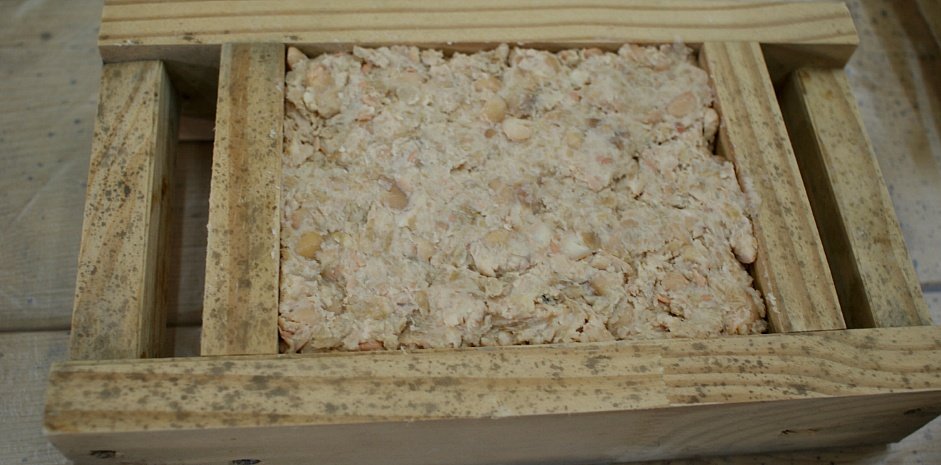
- They are pounded and formed into bricks or spheres.
- The blocks are hung in straw rope under the eaves, or set on straw, and left through the cold months.
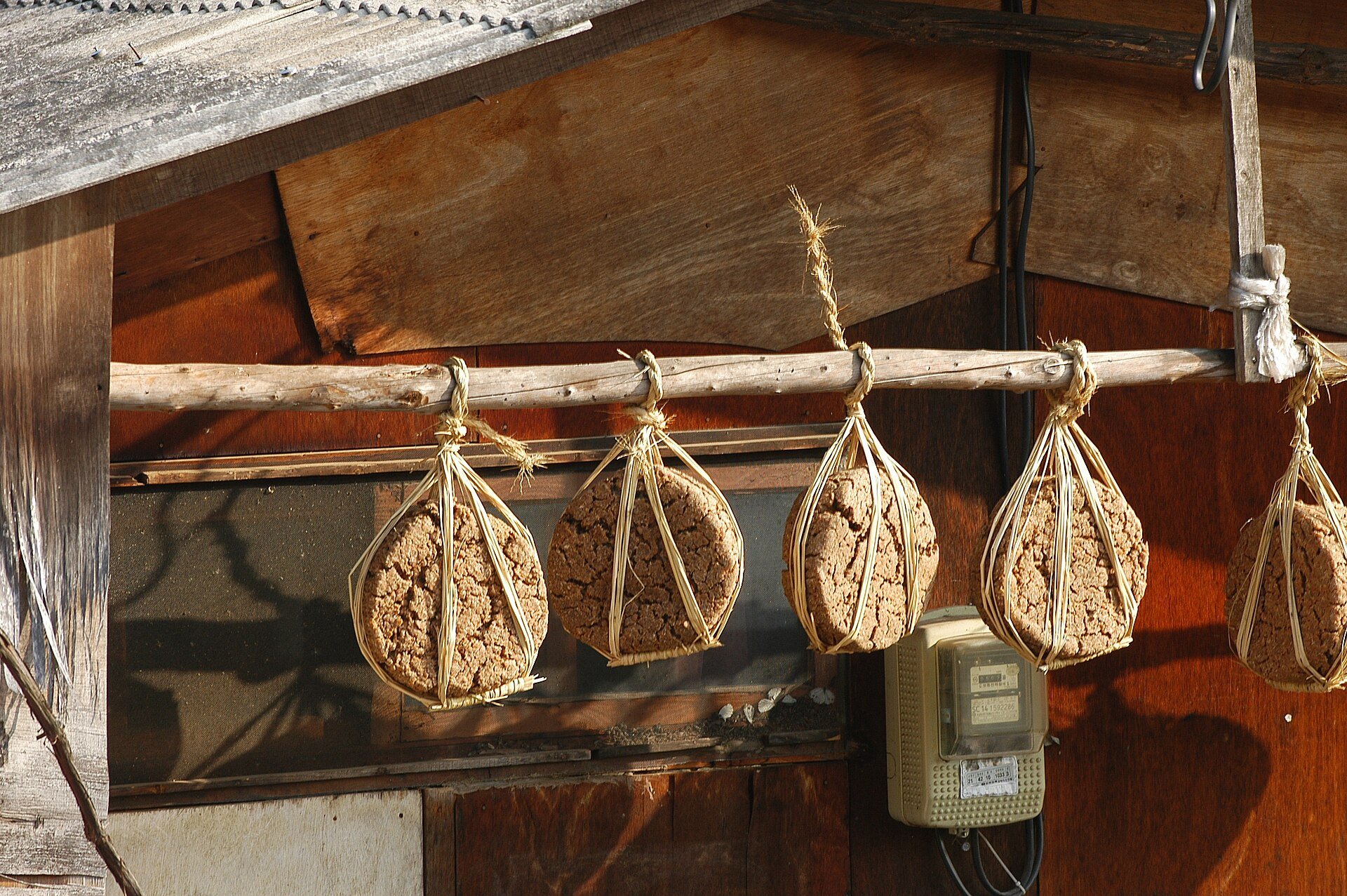
- Whatever is in the air and the straw colonises them — principally Bacillus subtilis, together with wild moulds including Aspergillus and Mucor species. Then they dry hard.
🔴 This is a wild, mixed, ambient inoculation, and the bacteria matter as much as the moulds. It is a fundamentally different microbiology from the Japanese process, and it is why ganjang and shoyu taste nothing alike — ganjang is deeper, funkier, more sharply savoury, and lacks shoyu’s sweet aromatic top note entirely, because there is no wheat and no Zygosaccharomyces sugar fermentation to produce one.
The Korean process is far closer to Japanese miso — or to hatchō miso specifically, which is also soybean-only — than to Japanese soy sauce.
The jar: one process, two products
Around late winter, the dried meju goes into an onggi — a breathable unglazed earthenware crock — with brine. Traditionally, charcoal, dried red chillies and sometimes jujubes go in too: the charcoal adsorbs off-flavours and the chillies are held to discourage spoilage, and both are also ritual.
Then, after roughly 50 to 60 days, the jar is separated:
- The liquid is drawn off and boiled. That is 간장 — ganjang, soy sauce.
- The softened meju solids are mashed and packed back down to age on. That is 된장 — doenjang, soybean paste.
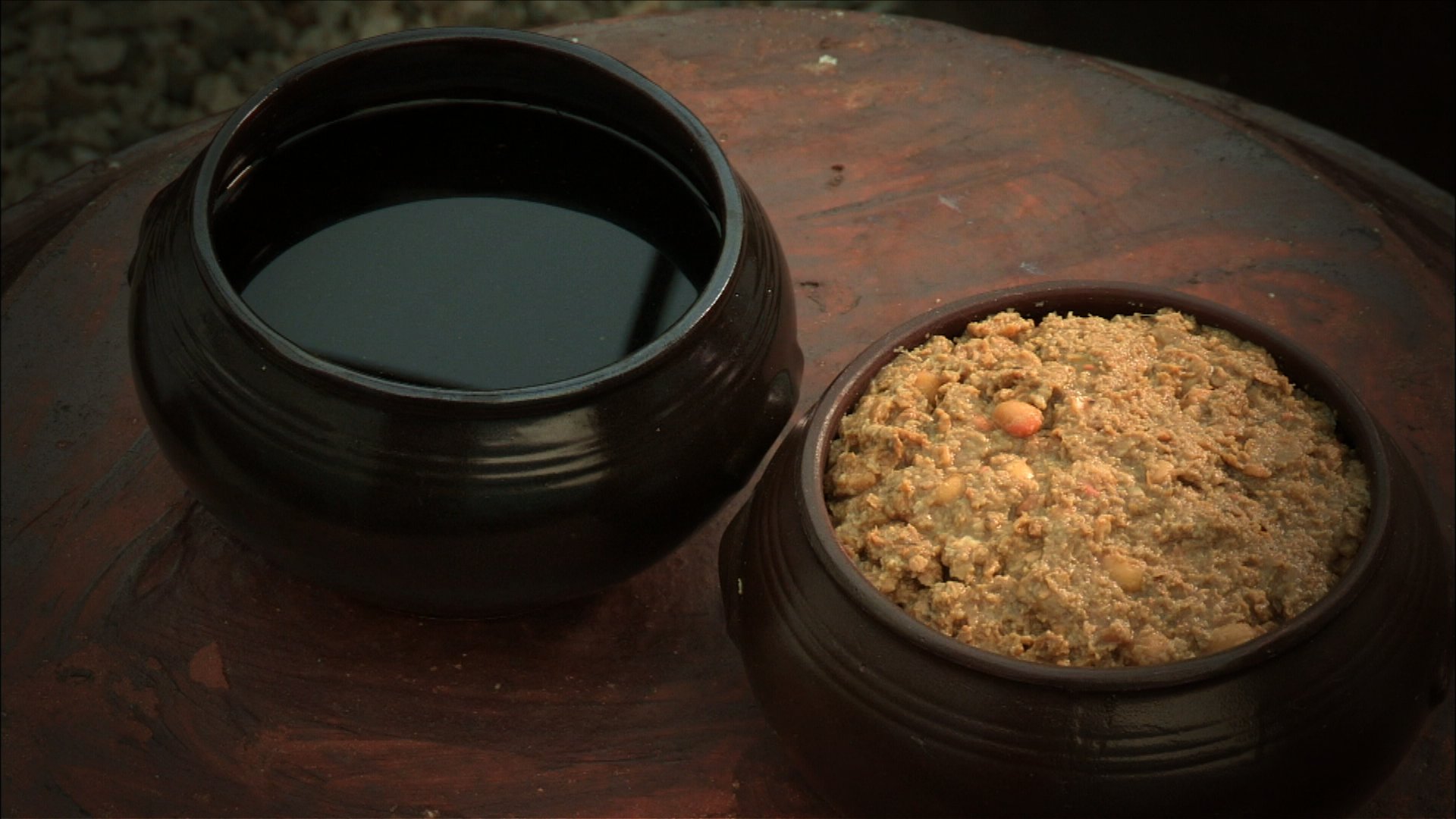
⭐⭐ Ganjang and doenjang are not two recipes. They are the liquid and the solid of one jar, separated on one day. A household that makes good doenjang gets good ganjang as a matter of arithmetic, and vice versa — which is why they are always discussed together, and why the Korean word for the whole family, jang (장), covers both.
This is exactly the relationship the 1603 dictionary describes for tamari — “a liquor that is drawn from miso.” Japan industrialised that run-off into a separate brewing process and mostly forgot the origin. Korea never separated them, and so the original logic is still visible in every farmhouse yard.
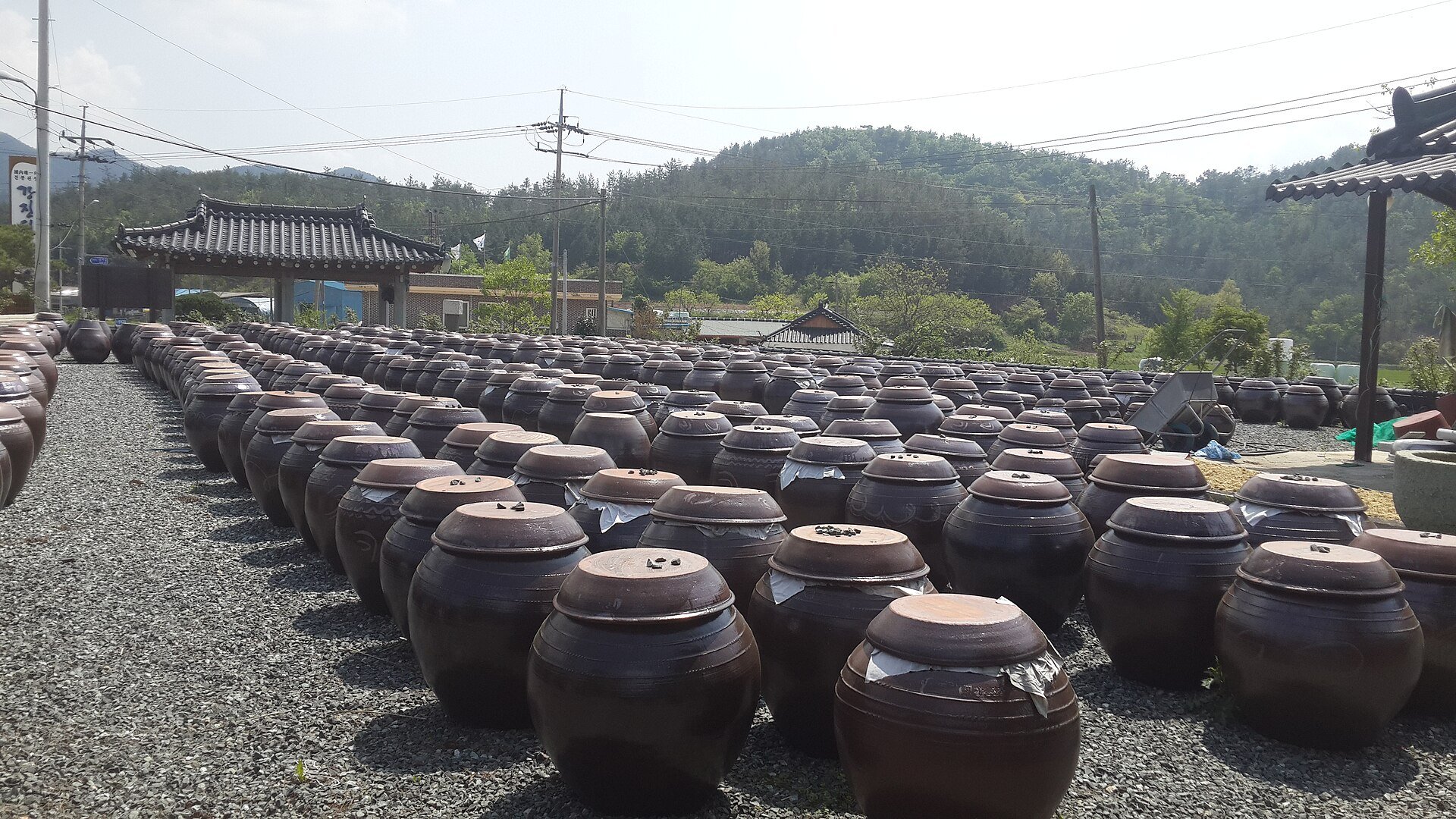
The 장독대 (jangdokdae) — the crock platform — is a fixture of traditional Korean domestic architecture: a raised, open, sunny terrace where the jars stand outdoors year-round, lidded against rain and opened to the sun. The jars are unglazed on purpose. Onggi breathes, and the ferment needs it to.
On 3 December 2024, UNESCO inscribed “Knowledge, beliefs and practices related to jang making in the Republic of Korea” on the Representative List of the Intangible Cultural Heritage of Humanity, at the 19th session of the committee in Asunción. It had been designated a national intangible heritage in 2018. The inscription is explicitly about the communal and familial practice — jang-making transmitted within households, largely between women across generations — rather than about a product specification.
The modern types, and the one to check
The Korean market divides into categories that are regulated by the Ministry of Food and Drug Safety, and they are not interchangeable:
| Type | Korean | What it is |
|---|---|---|
| Hansik ganjang | 한식간장 | Traditional Korean-style — meju and brine, no wheat. Subdivided into jaerae (재래, traditional) and gaeryang (개량, modernised) |
| Guk-ganjang | 국간장 | ”Soup soy sauce” — the everyday name for hansik ganjang. Light in colour, high in salt |
| Yangjo ganjang | 양조간장 | Brewed in the Japanese manner — soybeans and wheat, at least six months. Darker, sweeter, less salty |
| Sanbunhae ganjang | 산분해간장 | Acid-hydrolysed. Soy protein broken down with hydrochloric acid |
| Jin ganjang / honhap | 진간장 / 혼합간장 | A blend of brewed and acid-hydrolysed |
🔴 The one most households actually buy is jin ganjang, and jin ganjang is usually a blend containing acid-hydrolysed sauce. It is cheaper, darker and richer than pure brewed sauce, it is entirely legal, and it is clearly categorised — but anyone who assumes a Korean bottle is a traditional ferment because it is Korean has assumed wrong. The category name on the bottle is the check.
⚠ Guk-ganjang is both paler and saltier than the other Korean sauces — the same counterintuitive pairing found in Japanese usukuchi, arrived at independently. Substituting it volume-for-volume for a dark sauce will oversalt a dish badly.
What each is for
The Korean kitchen keeps at least two bottles, and the division is strict:
- Guk-ganjang / hansik ganjang → soups, stews and namul. Anything where the broth must stay clear and light-coloured but needs depth: miyeokguk, doenjang-jjigae, seasoned spinach. It is a seasoning, used by the teaspoon.
- Jin ganjang / yangjo ganjang → braises, marinades, glazes and dipping sauces. Jangjorim, bulgogi, soy-braised potatoes, soy-marinated eggs and crab. Anything wanting colour and sweetness.
⚠ Using guk-ganjang in a braise gives a pale, flat, aggressively salty result. Using jin ganjang in a clear soup makes it muddy brown. Neither is a subtle failure and both are common.
The third sibling
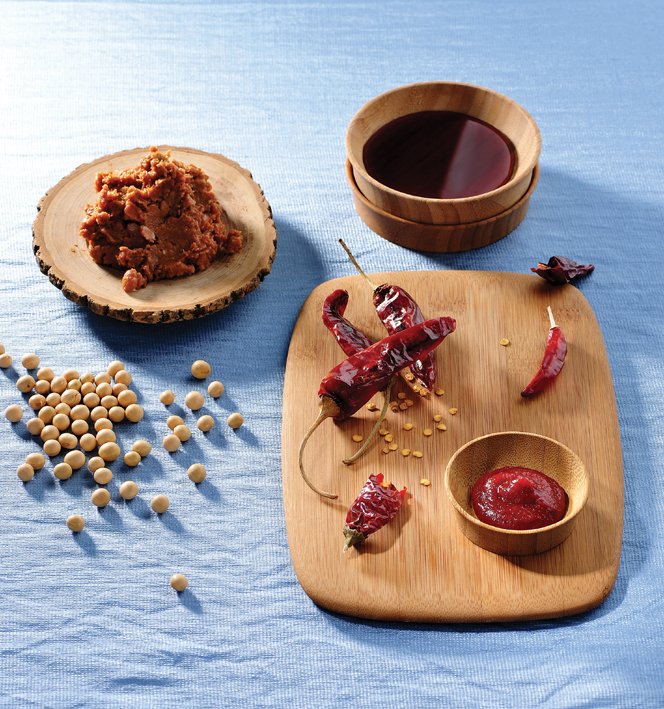
The same meju underlies gochujang (고추장), with the addition of chilli powder and a starch — usually glutinous rice — to feed a sweet fermentation alongside the savoury one.
⭐ Three of the foundational seasonings of an entire cuisine come out of the same block of pounded soybeans. That is not a coincidence of ingredients; it is a single technology with three outputs, which is exactly the structure of the koji family described on koji, miso and soy — reached independently, from a different organism, on the other side of a sea.
In this dive: The story · How it is made · Tamari and shoyu · The Japanese types · Chinese soy sauces · Korean ganjang · Beyond the big three · Brewed and chemical · Salt, time and aging · The gluten question · Buying, storing and using · Corrections
Comments (0)