Curry Powder, Garam Masala, and When Each Goes In
Two yellow-brown powders that look almost identical in a jar, do opposite jobs, and go into the pan at opposite ends of the cooking. Getting this backwards is the single most common way a home curry comes out tasting flat.
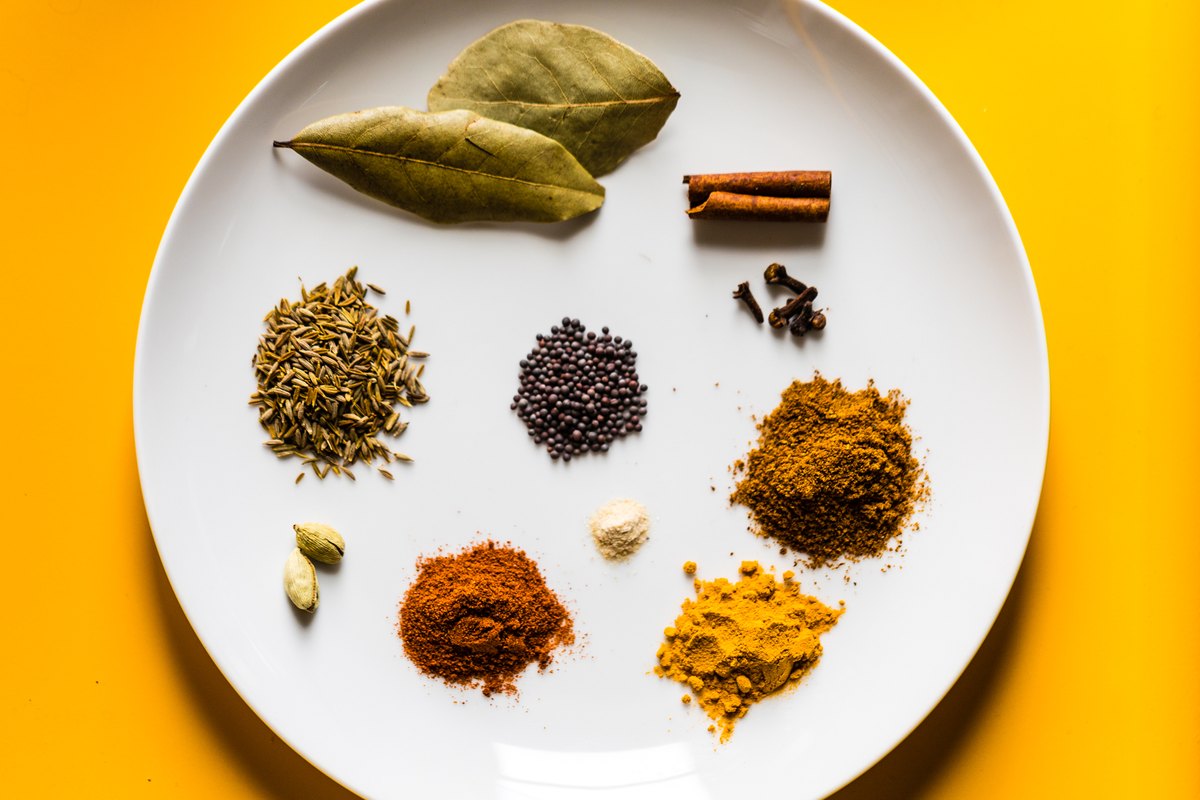
Curry powder is a base. Garam masala is a finish.
Curry powder is turmeric-forward, built for volume, and designed to be cooked. It contains raw-tasting ground seed — coriander, cumin, fenugreek, turmeric — that needs heat and fat to become pleasant. Put it in at the end and the dish tastes chalky and slightly bitter, because you are essentially eating uncooked flour-fine seed.
Garam masala is the opposite. Garam means hot in the sense of warming — the Ayurvedic sense, not the chili sense. There is usually no chili in a garam masala at all. It is the warm group: cardamom, cinnamon, clove, black pepper, cumin, bay, sometimes nutmeg and mace. Those are volatile and aromatic, and heat drives them off. So garam masala goes in late — the last few minutes, or sprinkled over the finished dish.
The rule: curry powder at the beginning, garam masala at the end.
If you take one thing off this page, take that.
“Masala” just means a mix
Worth saying plainly because it demystifies half the menu. Masala = spice blend. That’s all. So:
- Garam masala — a warm blend.
- Chaat masala — a sour/funky blend with amchoor and black salt, for fruit and snacks.
- Chai masala — the blend for spiced tea.
- Tikka masala — the sauce that goes with tikka (grilled chunks), which is why chicken tikka masala is grammatically “grilled chunks in a spiced sauce” and not the name of a place.
- Sambar podi, rasam podi — podi being the southern word for powder.
A masala can be dry (ground powder) or wet (ground with water, oil, onion or coconut into a paste). The wet ones are closer in kind to a Thai curry paste than to anything in a tin.
Curry powder is not one recipe
There are at least five meaningfully different products all called curry powder, and swapping them changes the dish:
| Style | Character | Where it goes |
|---|---|---|
| British / standard | Turmeric-heavy, mild, coriander-and-cumin base | The default tin; coronation chicken, mulligatawny, Japanese curry |
| Madras | The same idea plus real chili heat, often curry leaf and mustard seed | Anything wanting heat and a southern edge |
| Sri Lankan, unroasted | Pale, mellow, coriander/cumin/fennel | Vegetable and delicate seafood curries |
| Sri Lankan, dark roasted | Deep brown, toasted, smoky, sharper | Meat and robust fish curries |
| Caribbean (Trinidad/Jamaica) | Very turmeric-forward, heavy on geera (cumin), often with allspice; Jamaican versions often include mustard and pimento | Curry goat, curry chicken, doubles, roti |
The Sri Lankan split is the most instructive one, because it is the same spice list treated two ways. Roasting drives out the fresh top notes and builds toasty, darker ones; the roasted blend also tends to carry proportionally more cumin and fennel. The result is strong enough to bully a delicate fish, which is exactly why the unroasted version exists alongside it. Two products, one list, one variable: heat applied before grinding.
The thing curry powder cannot do
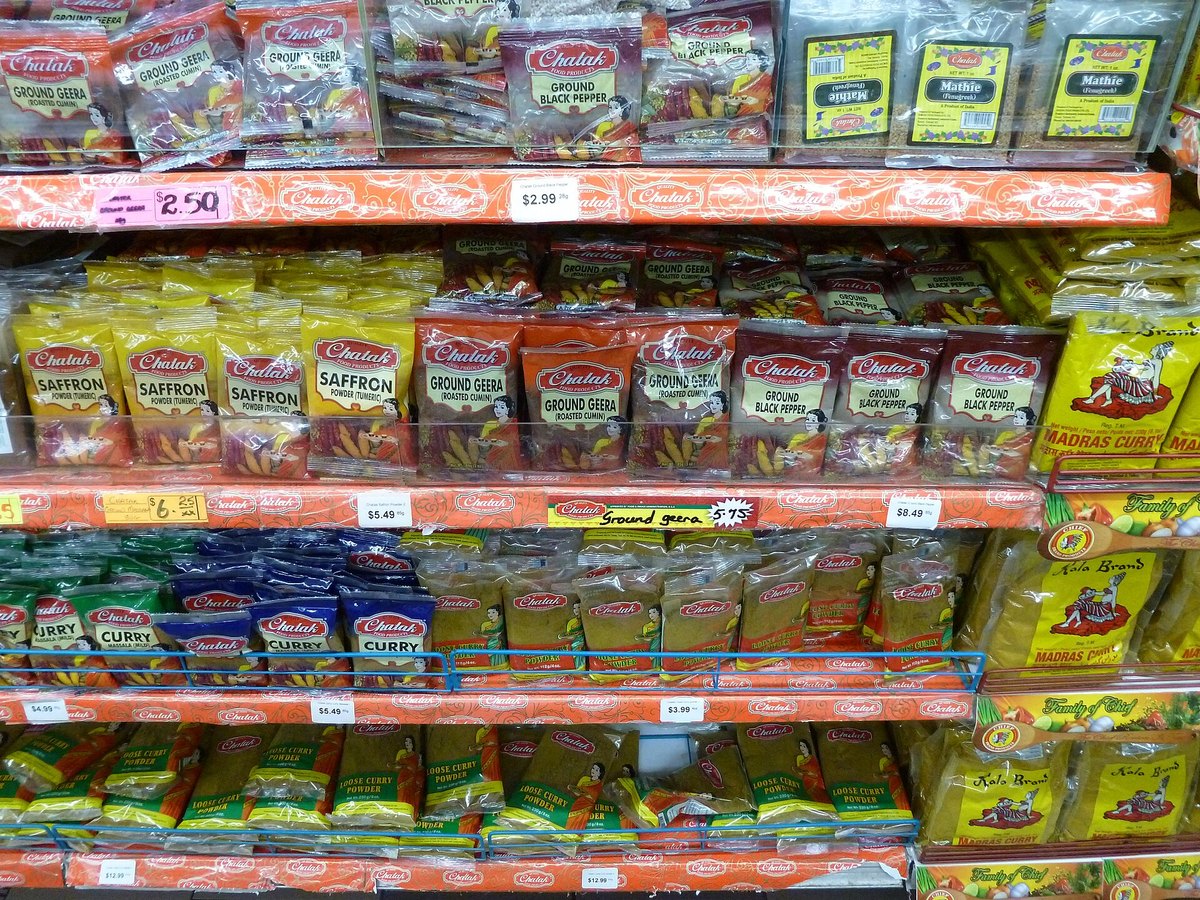
A tin gives you one ratio. A dish wants its own.
The clearest demonstration is in my own file. Rub, Curry Powder Spice is a perfectly good blend — cumin, coriander, turmeric, garlic, ginger, cayenne, cinnamon — with salt and sugar in it, because it is a rub, meant to go on the outside of shrimp or chicken and hit direct heat. Curry Rub is a twelve-spice blend built to season a bird. Neither would make a decent sauce base, and a sauce base would make a mediocre rub. Same category, different jobs, and the tin does not know which one you are cooking.
⚠ One small ambiguity in my own file worth flagging:
Curry Rubopens with “2 teaspoons yellow curry.” That could mean yellow curry powder or Thai yellow curry paste, and those are wildly different ingredients. From the rest of the list — dry, ground, allspice and cardamom — it is plainly the powder. Fixing that wording is on the list.
Blooming: the step that is not optional
Ground spice is full of fat-soluble aromatic compounds. Water will not extract them; fat will. So every good curry method, everywhere in the world, has a moment where the spice or paste is cooked in hot fat before the liquid arrives:
- North Indian: onions cooked down hard, then ginger-garlic, then the ground spice in the oil for 30–60 seconds until it darkens and smells cooked (bhuna).
- South Indian: mustard seed popped in hot oil with curry leaf, poured in at the end (tarka).
- Thai: the paste fried in coconut fat cracked out of the cream — the same principle with different fat (here).
- Japanese: the powder toasted into a butter-and-flour roux — literally a French technique doing the same job (here).
Four cuisines, four vocabularies, one chemistry. That is covered properly on the technique page.
Make your own
I have written both blends up as proper recipes, along with the Sri Lankan pair and the Caribbean version:
They take about fifteen minutes and they are not close to the tin.
Comments (0)