The Word Nobody Was Using
Start with the thing that reorganizes everything else:
“Curry” is a European word for a category that the people cooking it did not have.
Not a British word, either — that is the second surprise. It is Portuguese first, and it is older than most people guess.
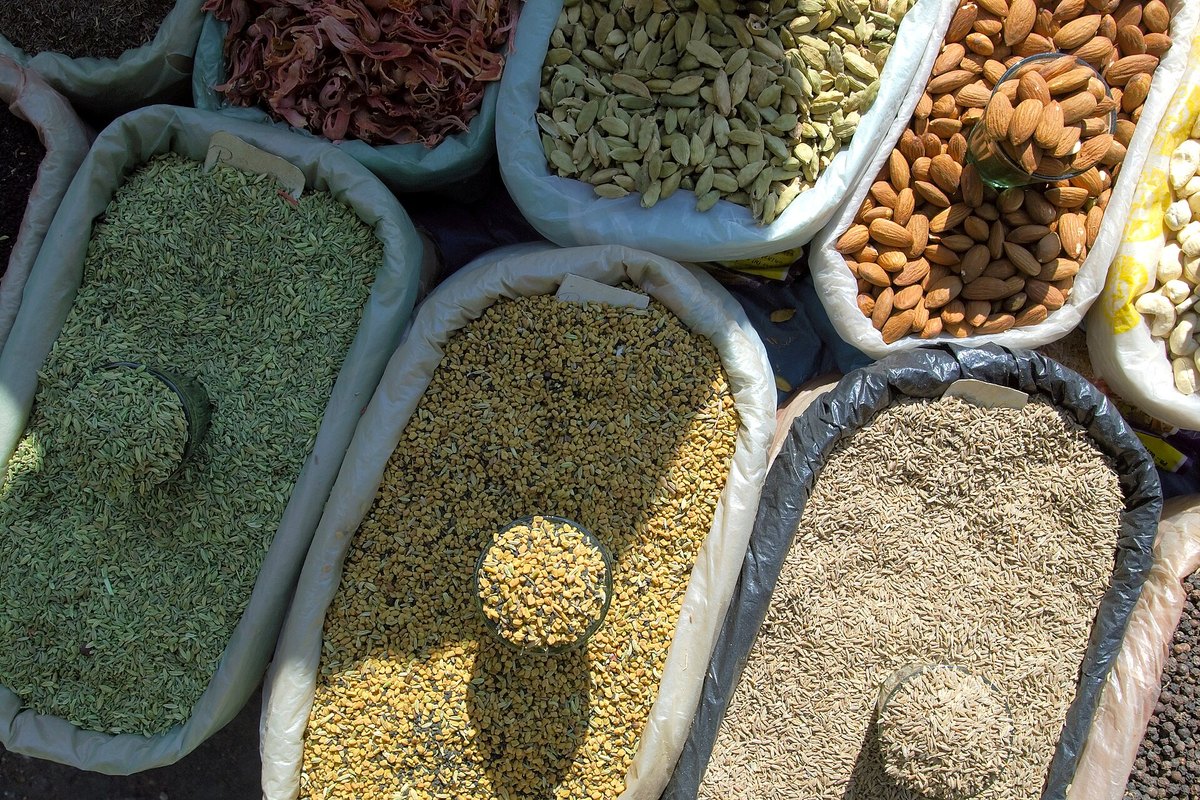
1563, Goa, a Portuguese doctor writing about plants
Garcia da Orta was a physician in Portuguese Goa. In 1563 he published Colóquios dos simples e drogas da India — a book about the medicinal and useful plants of India, and the first serious European treatise on the subject. Somewhere in it he mentions that the locals made dishes of fowl and flesh “which they call caril.”
That is the word. Caril is the Portuguese rendering of Tamil கறி (kari) — which in Tamil means something closer to a relish eaten with rice, or the act of cooking a thing down with seasoning. Kannada has karil. The Portuguese heard it, wrote it down as caril, and it travelled into English as curry.
So the chain is: a Tamil word for one specific thing → a Portuguese loanword for a whole class of things → an English word for an entire cuisine. Each step widened it, and each step lost information. By the time it reaches an English menu it has stopped describing a dish and started describing a continent.
What the cooks themselves say
This is the part worth internalizing, because it changes how you read a recipe.
In India there is no word “curry.” There is sabzi and dal and korma and rogan josh and sambar and rasam and kuzhambu — dozens of names for dozens of dishes with different techniques, different regions, different degrees of liquid, different everything. Lumping them under one English noun is roughly like walking into Europe and calling stew, soup, ragù, cassoulet, goulash and bouillabaisse “sauce.” You would be understood. You would also be missing the whole argument.
In Thailand the word is แกง (kaeng, often written gaeng). And kaeng does not mean “curry” — it means a liquid, seasoned dish, usually built on a pounded paste. Some kaeng have coconut milk; plenty do not. Kaeng som is sour and thin and has no coconut in it at all. Calling all of them “curry” flattens a distinction Thai cooks make constantly.
In Japan the word is カレー (karē) — and that one really is borrowed, straight from English, because the dish itself was borrowed from the British. Japan is the one case where “curry” is the right word, because Japan got the word and the food in the same box. More on that on the Japanese page.
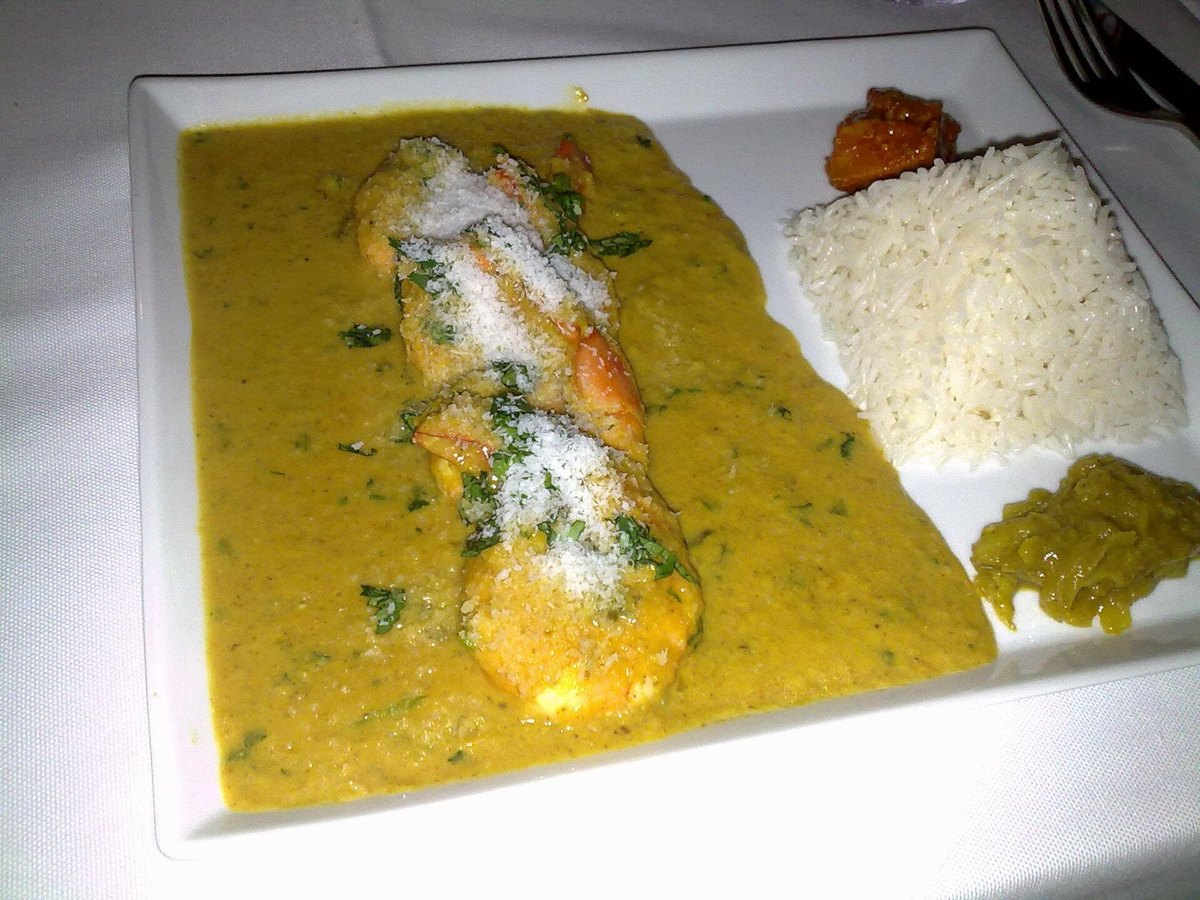
And the Portuguese word never went away where the Portuguese went. In Goa today the dishes are still called caril — caril de frango, caril de camarão — which is the same word Garcia da Orta wrote down in 1563, still in everyday use on the coast where he heard it.
The thing the word does get right
I want to be fair to it, because there is a reason “curry” stuck and it is not only laziness.
There is a real family resemblance across an enormous stretch of the world: a seasoning base, usually built on aromatics and ground spice, cooked in fat until it changes, then let down with a liquid and simmered with a main ingredient. That description covers a Goan vindaloo, a Thai kaeng phet, a Japanese karē raisu, a Durban lamb curry, a Trinidadian goat curry and a Jamaican curry chicken. The technique genuinely rhymes.
What the word gets wrong is the implication that they rhyme because they are the same thing. They rhyme because they all descend from, or were shaped by, the spice trade — and several of them were shaped by it in the last four hundred years, not the last four thousand.
The one that surprised me
I assumed, before I looked, that “curry powder” was the British corruption and “curry” was the authentic word. It is the other way around in an interesting way: the word is a genuine borrowing from a real Tamil word, and the thing it eventually named — a single pre-mixed shelf-stable spice blend sold in a tin — is the invention. The word is real and old. The powder is the fiction.
That is the next page.
Where this dive goes
- The history — how a Tamil noun became a tin, and why the first English curry recipe contains no turmeric and no chili.
- The spice cabinet — what each spice is actually doing.
- Curry powder, garam masala, and when each goes in.
- The Thai system — my favourite of the lot, and the one with the most internal logic.
- Buying paste and making your own.
Comments (0)