Green — *Kaeng Khiao Wan*
The one everybody gets backwards.
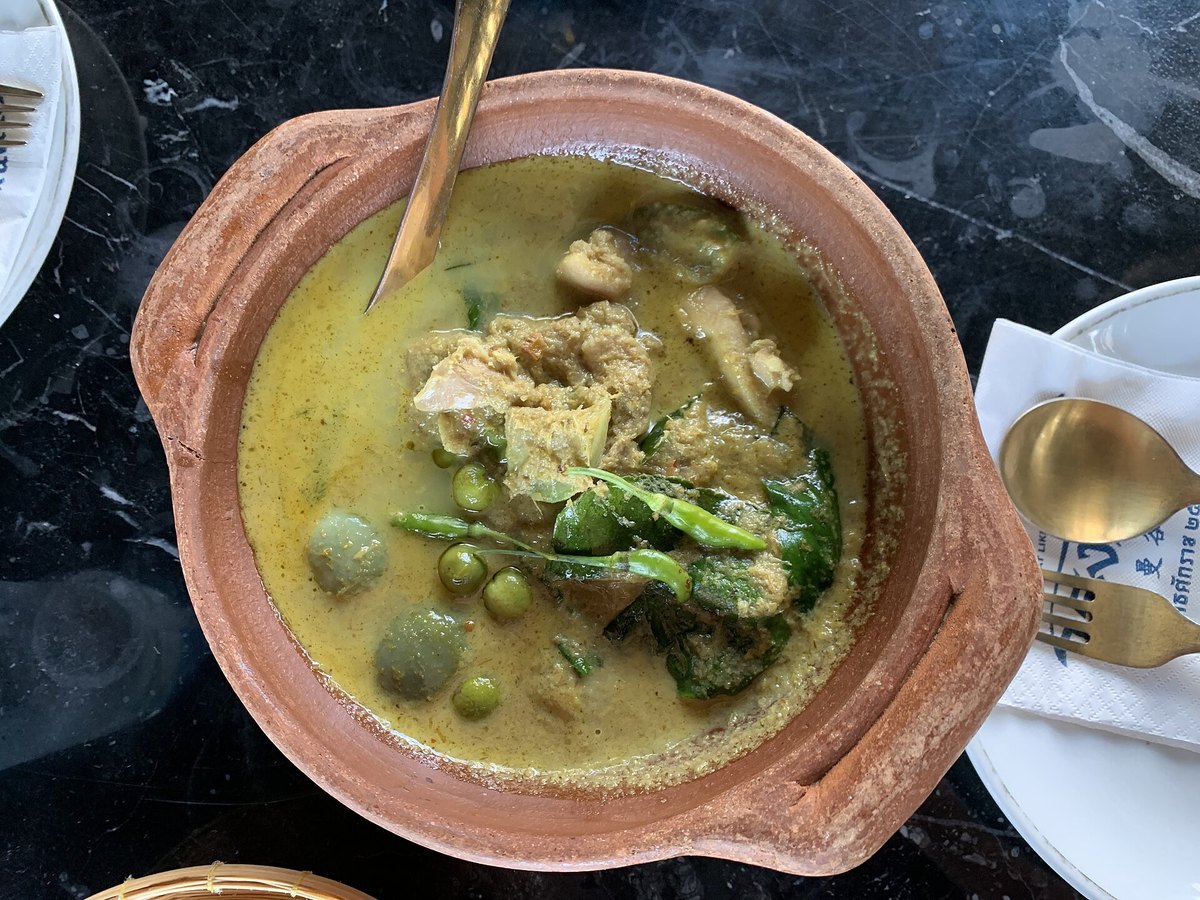
Green is usually the hot one
Here is the correction that matters most on this page:
🔴 In Thailand, green curry is normally hotter than red.
The Western intuition runs green → unripe → mild, red → ripe → hot, and reads the traffic light the wrong way round. What actually decides it is which chili goes in, and in what state:
- Red paste uses dried long red chilies, soaked. Drying rounds the heat off and deepens it.
- Green paste uses fresh green bird’s eye chilies — phrik khi nu — pounded in raw.
Fresh bird’s eyes sit far up the scale, and going in fresh rather than dried, the heat arrives sharp, bright and immediate rather than slow and warm. Traditional red paste uses no fresh chilies at all.
The confusion is not entirely the diner’s fault, either. Export and Western-market red pastes are often built with fresh red chilies like cayenne, which pushes red’s heat up and blurs the distinction. So “red is hotter” can be true of the jar in a Western supermarket and false of the same two curries cooked in Bangkok. Worth knowing which one you are holding.
”Sweet green” is a colour, not a flavour
Khiao wan translates literally as “sweet green.” Every English menu that renders it “sweet green curry” is inviting you to expect a dessert-ish mild thing.
It is not describing the taste. Wan here is describing the shade of green — a soft, sweet, pale green, the colour the curry goes once the paste meets coconut milk. It is a colour word doing colour work. The curry is hot.
What goes in the paste
The green set is the red set with the chili swapped and a couple of green things added:
- Fresh green bird’s eye chilies — a lot of them, seeds usually in
- Fresh green long chilies — for bulk and colour without proportional heat
- Lemongrass, galangal, garlic, shallot, coriander root, makrut zest
- Coriander leaf and stem — green paste often carries fresh coriander, and some cooks add a little holy basil or sweet basil; this is part of why green tastes herbal where red tastes toasted
- White peppercorn, roasted coriander and cumin seed
- Shrimp paste and salt
My recipe: Thai Green Curry Paste (Prik Gaeng Khiao Wan)
⚠ Colour is fragile. Green paste browns and dulls with heat and with time. A commercial green paste that is still vivid emerald after a year in a tub has usually been helped. A homemade one will be a duller, greyer green within days in the fridge and that is normal — it is oxidation, not spoilage. Freeze it if you want the colour to hold.
Cooking it
Same method as the rest of the coconut pastes — crack the cream, fry the paste in the coconut fat, then let it down (the technique).
Green curry’s classic partners:
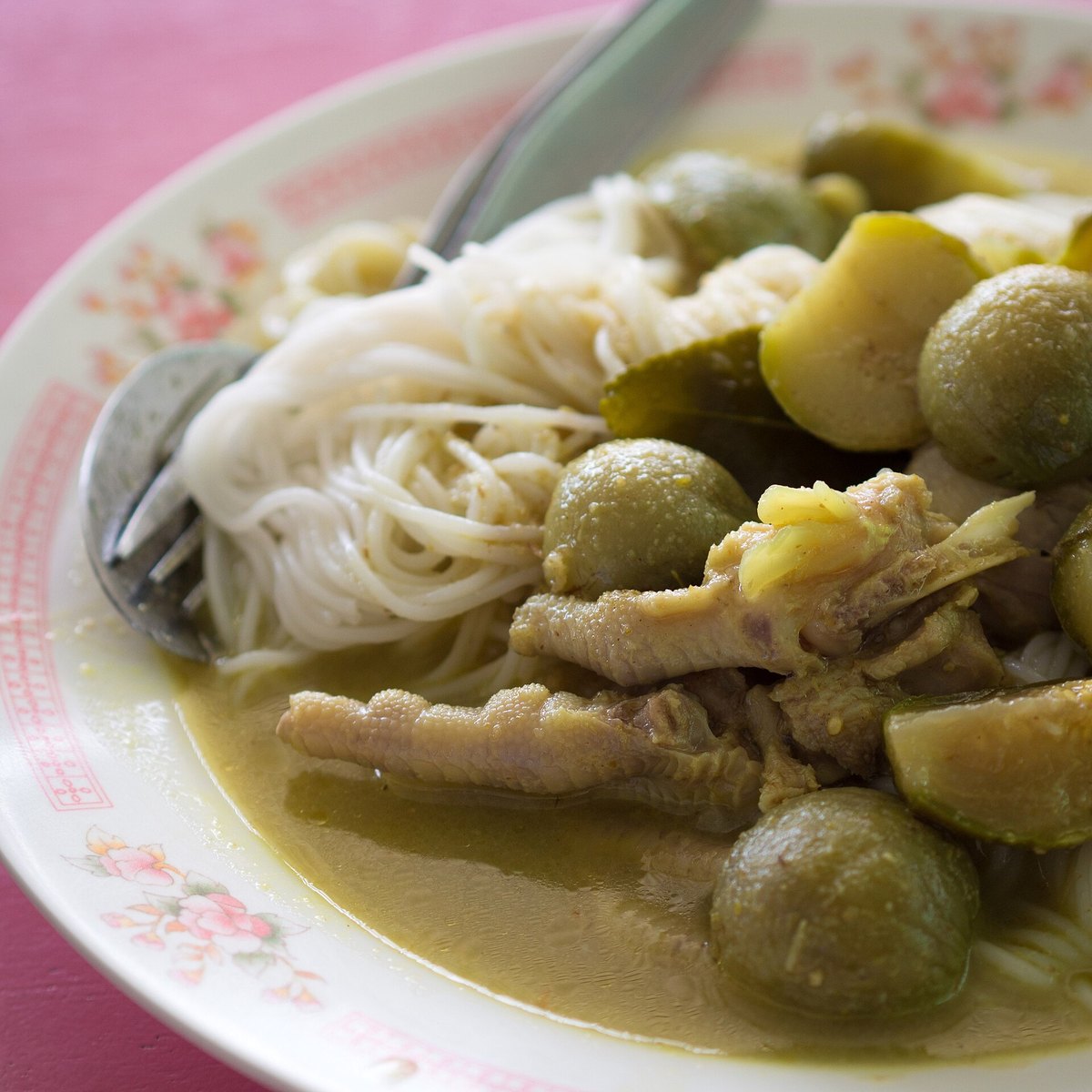
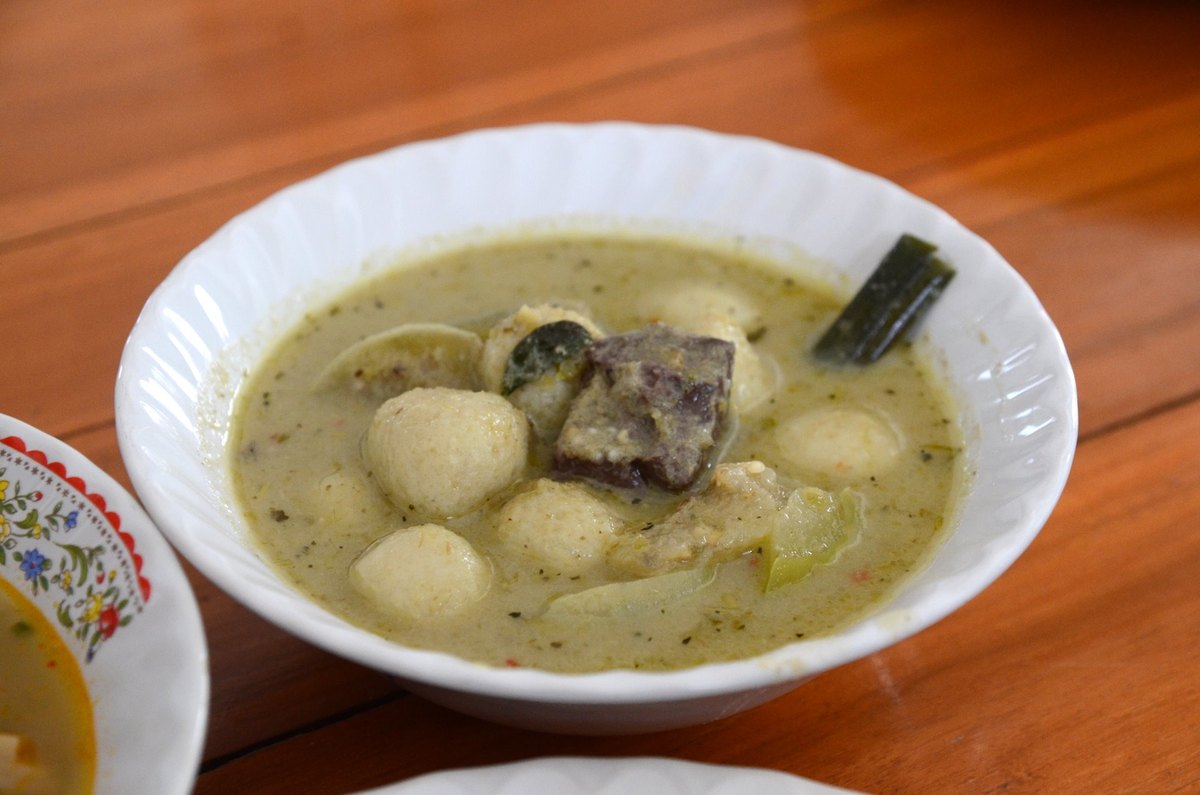
- Chicken (kaeng khiao wan kai) or fish balls (luk chin pla), which is a very common street version
- Thai eggplant — the small round green ones — and pea eggplant, which are bitter little pellets and are supposed to be
- Bamboo shoots
- Thai basil in at the end, torn makrut leaves, fish sauce and palm sugar to balance
It is also very good over khanom chin (fermented rice noodles) rather than rice, which is how a lot of Thailand actually eats it.
My own recipe, and what I would change
Thai Green Curry in my file is a solid weeknight version — chicken thigh, mixed vegetables, fish sauce, palm sugar, makrut leaves, Thai basil off the heat. The Notes already carry the right instinct: “Frying the curry paste in oil before adding coconut milk is essential.”
Two things I would change now:
- Fry it in cracked coconut cream, not neutral oil. Same step, better fat, and it is the difference the Thai system page argues for at length.
- Less liquid. Two full cans of coconut milk plus a cup of broth for a pound and a half of chicken makes a curry you eat with a spoon. Thai green curry is meant to be loose but not soupy — one can, cracked, and broth only if it needs it.
And the naming: that recipe used to say “kaffir lime leaves” and now says makrut — see the note on the spice cabinet page for why. Both changes above are still suggestions rather than edits; the quantities in my file are untouched, and its Notes now carry this argument so it travels with the recipe.
Comments (0)