Massaman and Panang
Two pastes that sit slightly outside the main family — one because it came from Persia, one because it is barely a sauce at all.
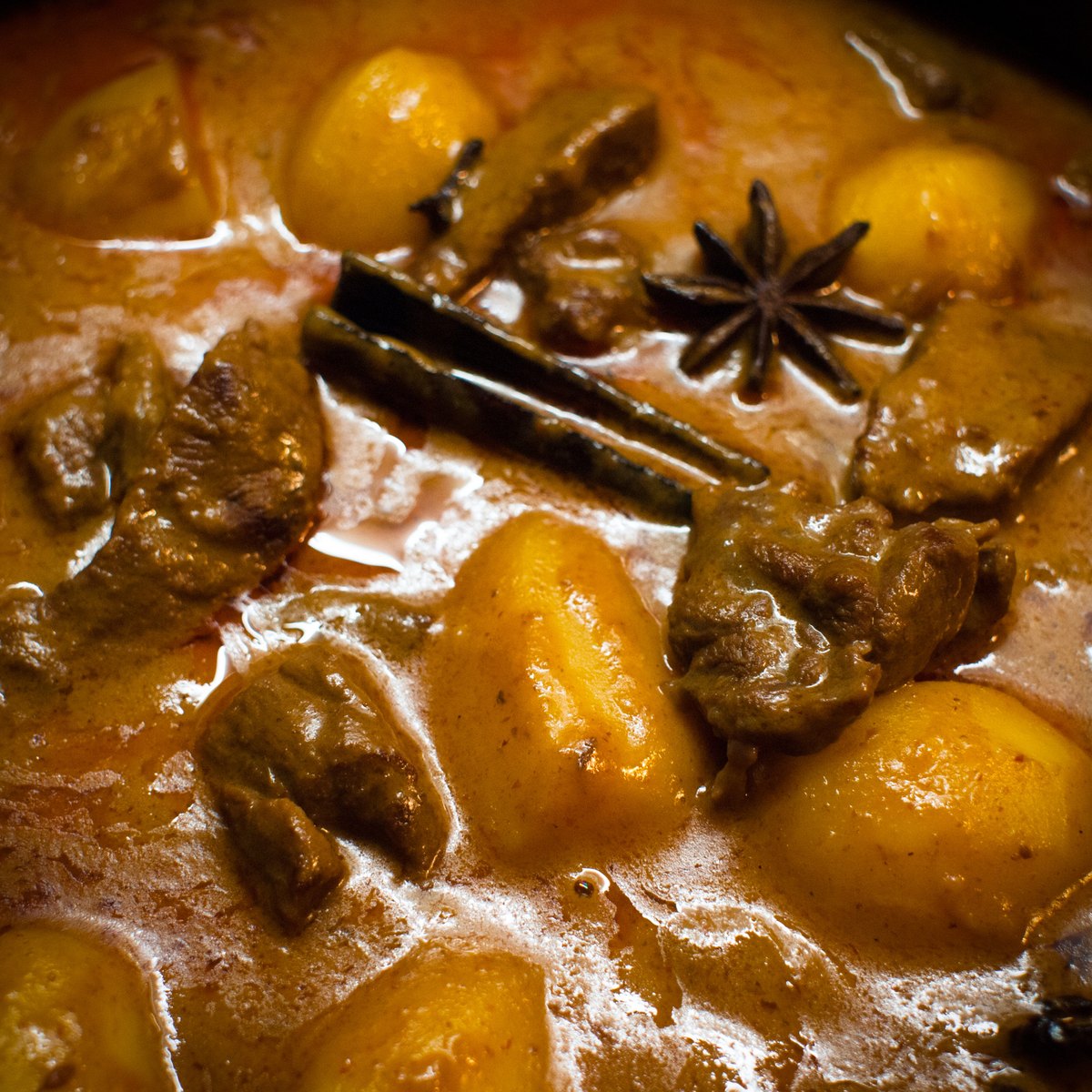
Massaman: the curry named after Muslims
Kaeng matsaman. The name is a Thai rendering of มุสลิม / mosalmân — the Persian and Arabic word for Muslim. Nineteenth-century English-language records call the dish “mussulman curry” outright, using the archaic English form of the same word.
So this is a curry whose name is a demonym. It says, plainly, this is the Muslims’ curry — and the ingredient list backs the label up.
Where it came from
The setting is Ayutthaya, the Siamese capital, in the seventeenth century — a genuinely cosmopolitan trading city. King Narai came to the throne with Persian support and granted Shiite Persian Muslims residence inside the city walls, a privilege normally reserved for close allies. Persian merchants, Persian court officials, Persian food.
David Thompson, whose work on Thai cooking is about as authoritative as it gets in English, attributes massaman to that court, and one account names a specific Persian merchant, Sheikh Ahmad Qomi. Other accounts put it later and more diffusely — created in Siam’s Muslim communities over the Ayutthaya and Thonburi periods rather than by one hand.
⚠ I would not print the single-inventor version as settled fact. The Persian-Muslim origin is firmly established; the specific attribution to one merchant is an account, repeated widely, and I have not seen a primary document for it.
Why it tastes so different
Look at what is in the paste that is in no other Thai curry:
Cinnamon. Cardamom. Clove. Star anise. Cumin. Bay. Nutmeg or mace. Whole, dry-roasted, then pounded in.
Those are not Thai flavours. They are the Persian and Indian warm-spice set — the same group that makes a garam masala. Massaman is a Thai paste (chilies, lemongrass, galangal, shallot, garlic, shrimp paste) with a Persian spice cabinet emptied into it, and you can taste the seam.
The rest of the dish follows the same logic:
- Beef, lamb, mutton, goat or chicken — the meats of a Muslim kitchen, and notably not pork, which is otherwise everywhere in Thai cooking
- Potatoes and onions, in large pieces
- Roasted peanuts, whole
- Tamarind, for a sourness that is central rather than incidental
- Palm sugar, generously — massaman is the sweetest of the family
- Cooked long and slow, unlike the fast simmer of a green curry
My recipe: Massaman Curry Paste (Prik Gaeng Matsaman)
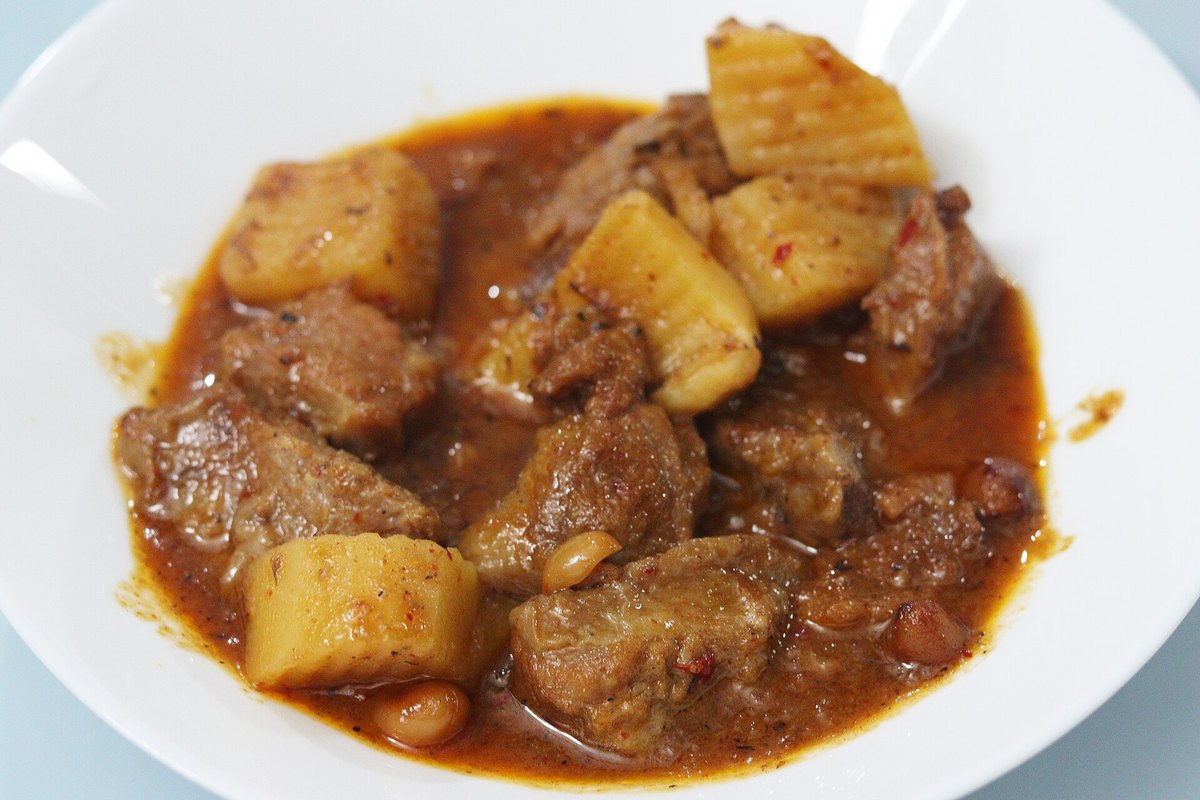
Panang: the one that is barely a curry
Phanaeng (พะแนง), variously spelled panang, penang, phanang.
First, the name
You will read that it is named after Penang, the Malaysian island. That is the popular explanation and it may be right. But there are competing accounts — one deriving it from a word for crossed, describing how a whole chicken was traditionally trussed with its legs crossed for this dish; another pointing at Khmer or Malay roots.
⚠ I do not think the Penang derivation is established, and it is repeated far more confidently than the evidence supports. What is not in dispute: panang is a southern dish, from the part of Thailand nearest Malaysia, so a Malay connection of some kind is likely even if the etymology is not the one usually given.
What makes it panang
Two things:
1. Peanuts. Roasted peanuts are pounded into the paste itself, not just scattered on top. That is the defining ingredient and it gives panang its particular sweet, rounded, slightly gritty richness.
2. Almost no liquid. Where a green curry is loose and a massaman is a stew, panang is nearly dry — the sauce clings to the meat rather than pooling around it. You reduce it hard. A properly made panang has a visible slick of broken coconut oil on top and just enough sauce to coat.
The paste otherwise is red-curry base plus the peanuts, usually with a little extra dry spice — cumin and coriander seed — and often fewer chilies than red, so it reads richer rather than hotter.
My recipe: Panang Curry Paste (Prik Gaeng Phanaeng)
Cooking it
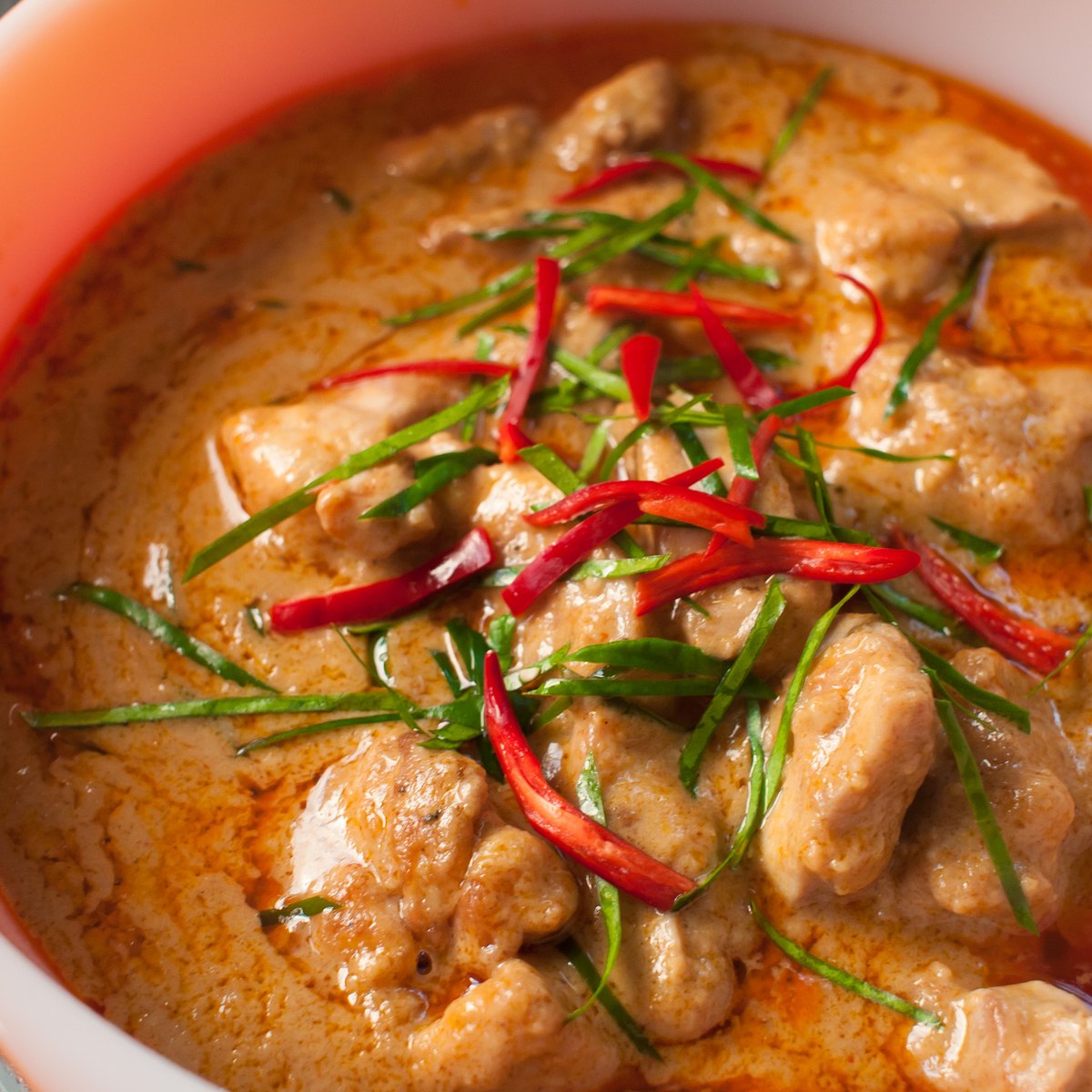
Panang is usually beef or chicken, sliced thin rather than cubed, and it is finished with a drizzle of thick coconut cream, very finely julienned makrut lime leaves and sliced red chili on top. Those shredded lime leaves are not decoration — on a dish this concentrated they are a significant part of the aroma.
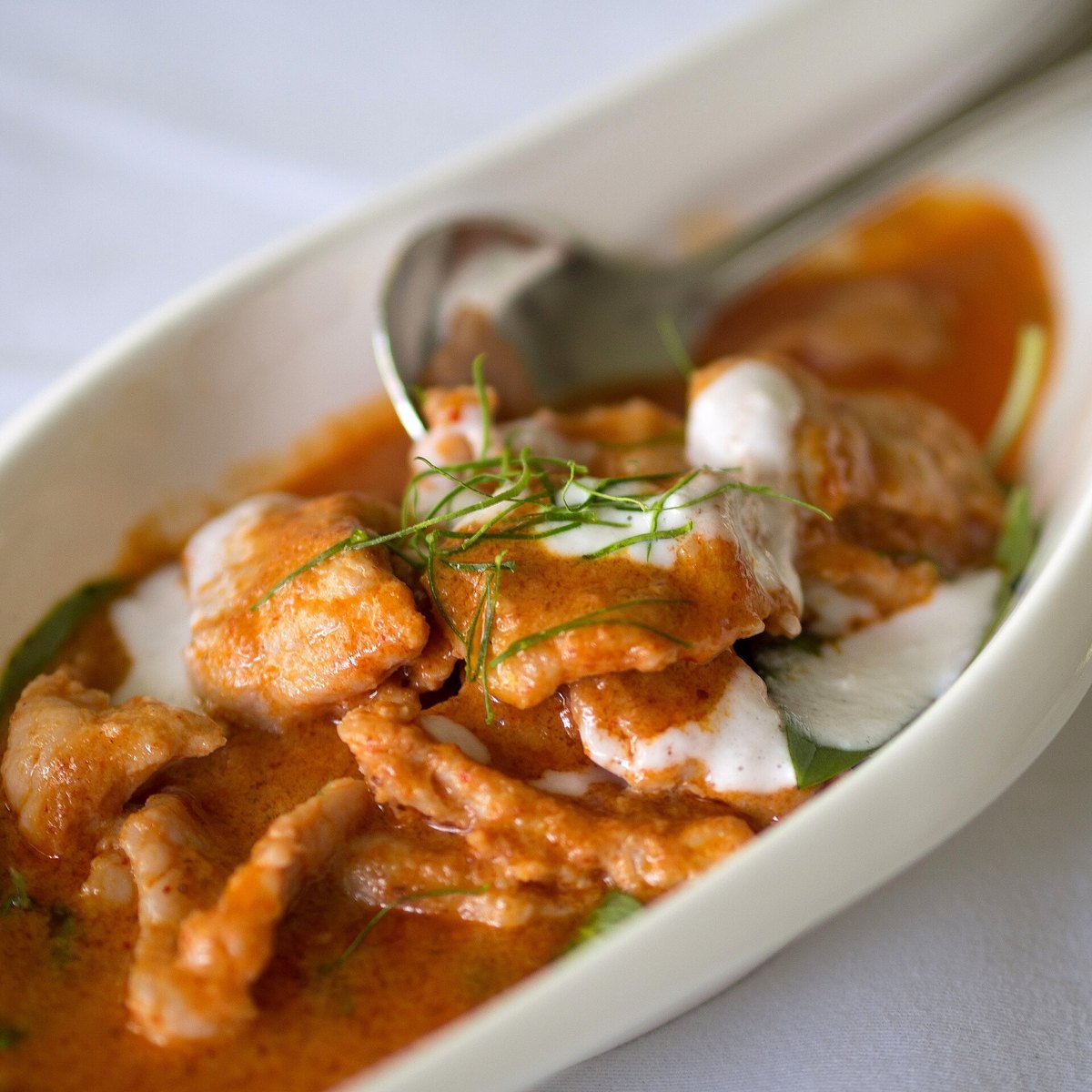
Because there is so little liquid, the paste has nowhere to hide. A mediocre panang made with a weak commercial paste is obviously mediocre in a way that a soupy green curry can disguise. It is the best test of a paste I know, which is why it turns up as a benchmark on the buying page.
The pattern across both
Massaman and panang are the two Thai curries that borrow most obviously from elsewhere — one from Persia via a royal court, one from the Malay peninsula via a land border. Both are southern. Both carry dry warm spices that the northern and central curries do without. Both are sweeter than the rest.
And both are the ones foreigners tend to like first, which I do not think is a coincidence: they are the Thai curries that were already meeting somebody else halfway.
Comments (0)