Yellow — *Kaeng Kari*
The Thai curry that is openly, admittedly Indian — and the one that closes the loop on this whole dive.
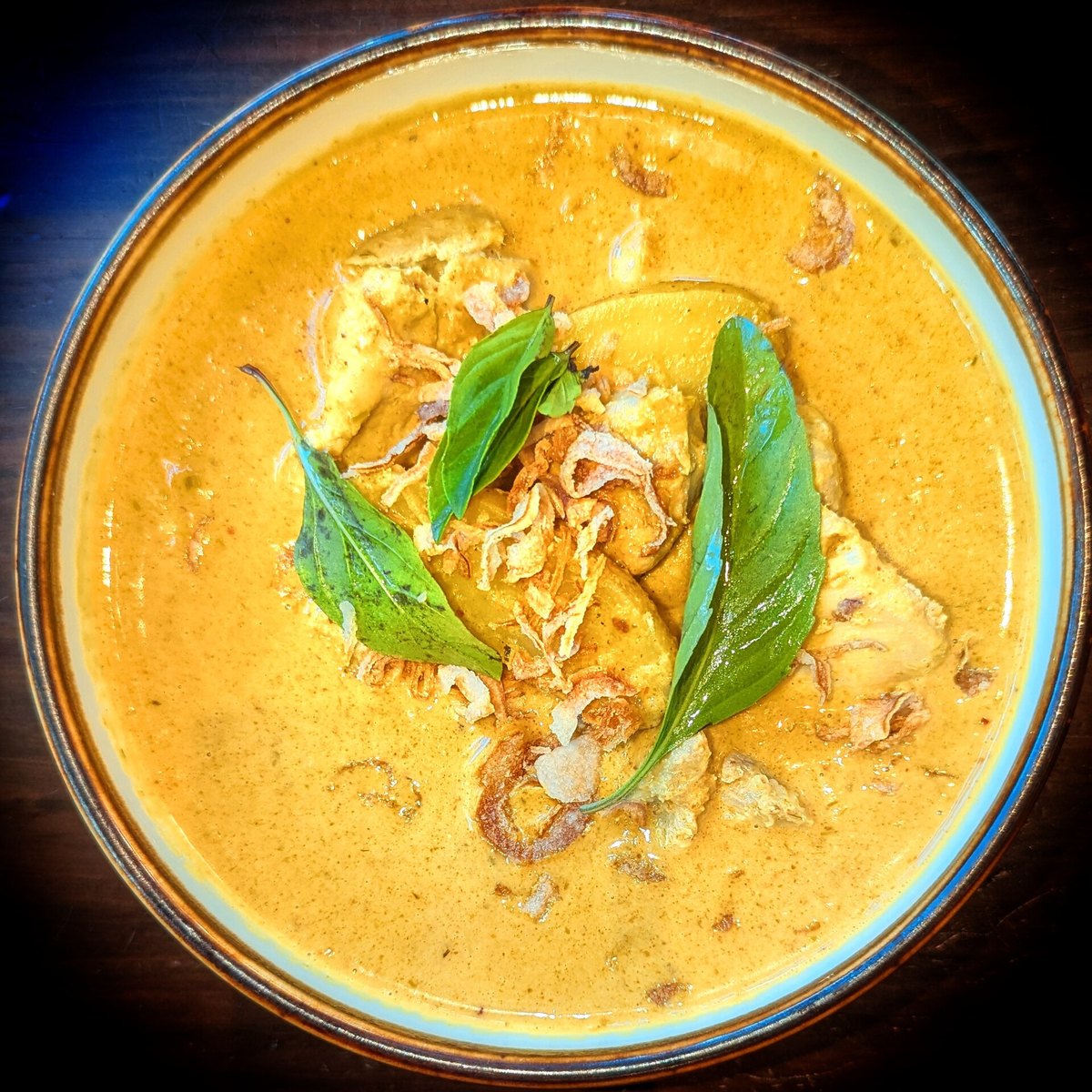
Yellow is red paste plus a tin of curry powder
That is very nearly the literal formula, and the Thai name says so out loud.
Kaeng kari — and kari is the same word this dive opened with: Tamil kari, Portuguese caril, English curry. Thailand borrowed the foreign word for the one curry that came from outside. Everything else in the family is a kaeng with a Thai descriptor. This one is named after the loanword, because Thai cooks were quite clear that it was an import.
The build:
- A red-paste base — dried chilies, lemongrass, galangal, garlic, shallot, coriander root, shrimp paste
- plus turmeric — fresh if you can get it, which is what makes it yellow
- plus a dry-spice set that is straight out of an Indian masala — cumin, coriander, and very often curry powder itself, plus cinnamon, cardamom, clove, bay, mace or nutmeg depending on the cook
My recipe: Thai Yellow Curry Paste (Prik Gaeng Kari)
Where it came from
Southern Thailand. The peninsula — Nakhon Si Thammarat, Songkhla, Satun, down toward the Malaysian border — has been Muslim and trade-connected for centuries, and the maritime spice route ran right past it. Indian, Persian and Malay cooking all left marks there, and yellow curry is one of them, as is massaman.
So the two Thai curries carrying dry warm spices are both from the same cultural direction, and it is not coincidence. Thailand’s own curries are built on fresh wet aromatics; the ones with cinnamon and cardamom in them came off a boat.
What it tastes like, and who it is for
Yellow is the mildest and roundest of the three colours. The turmeric and the warm spices soften the chili edge, and it is usually built sweeter, with more coconut and more onion.
That makes it the sensible entry point. If you are cooking for people who find green curry punishing, this is the one to make — it tastes recognisably Thai but its nearest relative is a mild Indian korma.
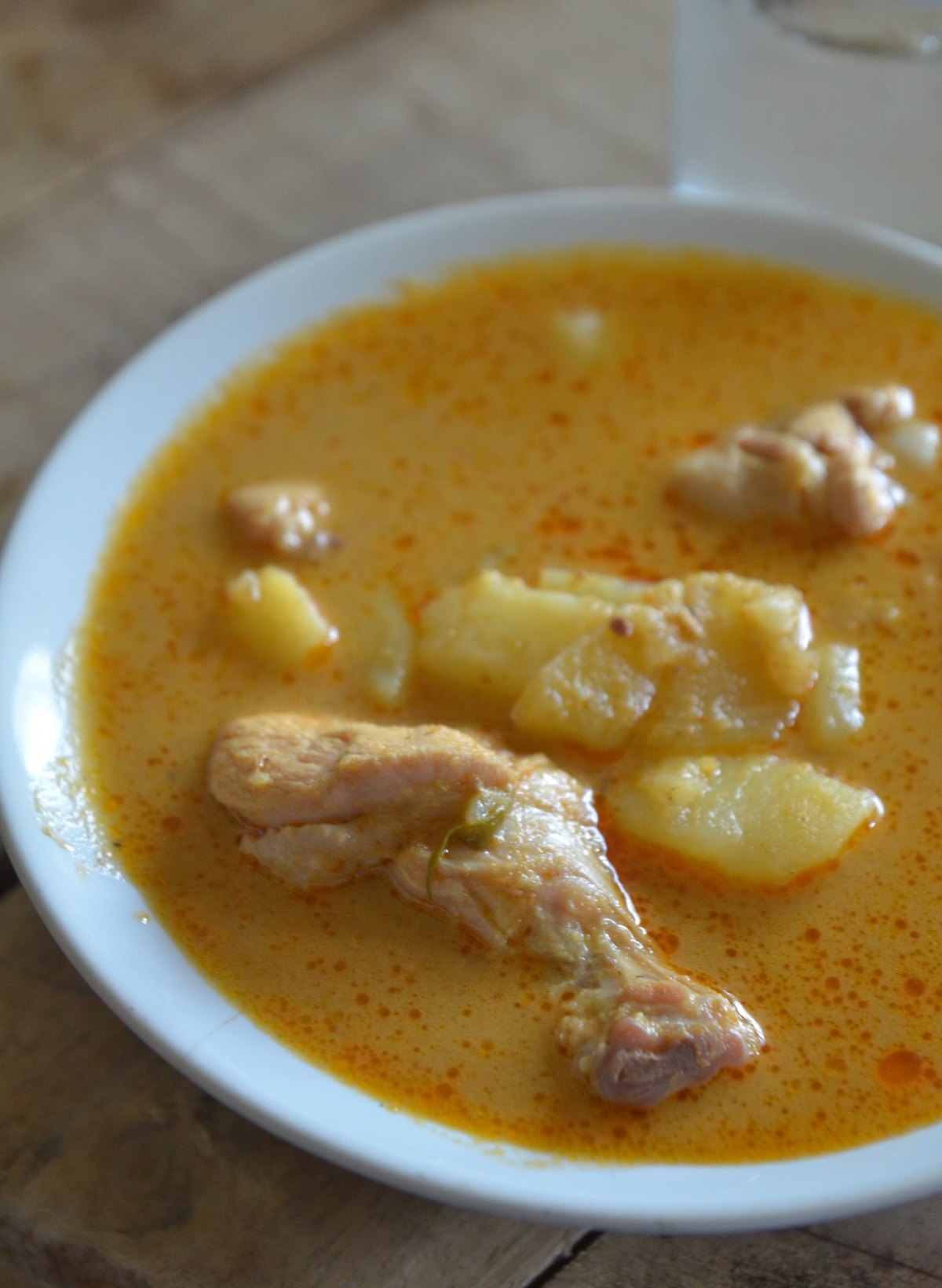
The classic version is with chicken and potato, sometimes sweet potato, often with a heap of crispy fried shallots on top, and it is nearly always the coconut-rich, gently simmered kind. The potatoes are not a Western concession, incidentally — they arrived with the same trade that brought the spices.
Yellow vs Indian: what actually differs
Since the two are close relatives, the distinctions are worth naming:
| Thai yellow | A comparable Indian curry | |
|---|---|---|
| Aromatic base | Pounded fresh paste: lemongrass, galangal, coriander root | Onion cooked down, then ginger-garlic |
| Fat | Coconut, usually cracked out of the cream | Ghee or neutral oil |
| Liquid | Coconut milk | Yoghurt, cream, tomato, stock or water |
| Salt | Fish sauce | Salt |
| Sour | Tamarind or lime | Tomato, yoghurt, amchoor, lime |
| Finish | Thai basil, makrut leaf | Coriander leaf, garam masala, kasuri methi |
The dry spices overlap almost completely. Everything else is different, and that is a decent one-line summary of what makes a Thai curry Thai.
And khao soi, while we are here
Northern Thailand has its own curry-powder curry: khao soi, from Chiang Mai — a coconut curry noodle soup whose paste carries curry powder and turmeric, served over soft egg noodles with a nest of crisp fried noodles on top, plus pickled mustard greens, shallot and lime.
Its ancestry runs the other way from yellow curry — north, through the Burmese and Yunnanese Muslim trade routes rather than the sea route. Two curry-powder dishes, arriving in the same country from opposite directions, three hundred miles apart. It is the single best illustration I know of how this ingredient actually travelled.
Next
- Massaman and Panang — the other spiced pastes.
- Buying paste — yellow is the one where commercial quality varies most.
Comments (0)