What's Actually In It
For a sauce that lives in nearly every kitchen, Worcestershire keeps its secrets well. The label reads like a spice-cabinet inventory, the flavor is impossible to name, and most people who splash it into a Bloody Mary or a pot of chili have no idea they’re eating fermented fish. So let me open the bottle up and go through it one ingredient at a time — what each thing is doing in there, why it matters, and how the recipe has drifted over almost two centuries.
The classic list, decoded
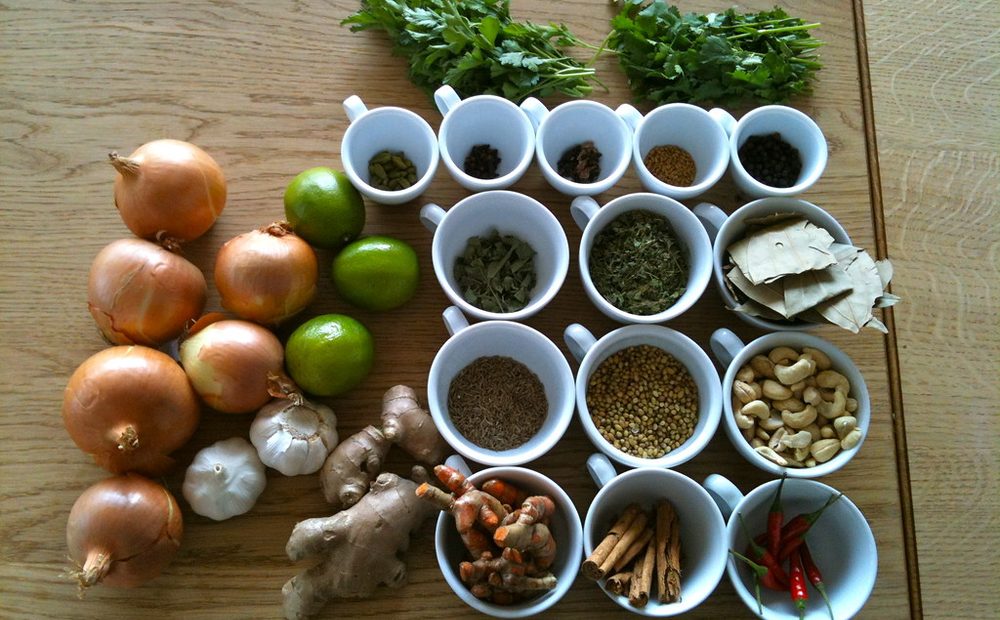
Here’s the original Lea & Perrins idea, more or less as it has stood since 1837: vinegar, molasses, sugar, salt, anchovies, tamarind extract, onions, garlic, cloves, chili/capsicum, and a secret spice blend — all married together and then aged for a year and a half to three years in oak before it’s fit to bottle. That aging is not a footnote. It’s the whole game, and I’ll come back to it.
The genius of the formula is that it isn’t one flavor, it’s a stack of them. I find it easiest to think about the sauce as five pillars, each built by a couple of ingredients pulling in the same direction.
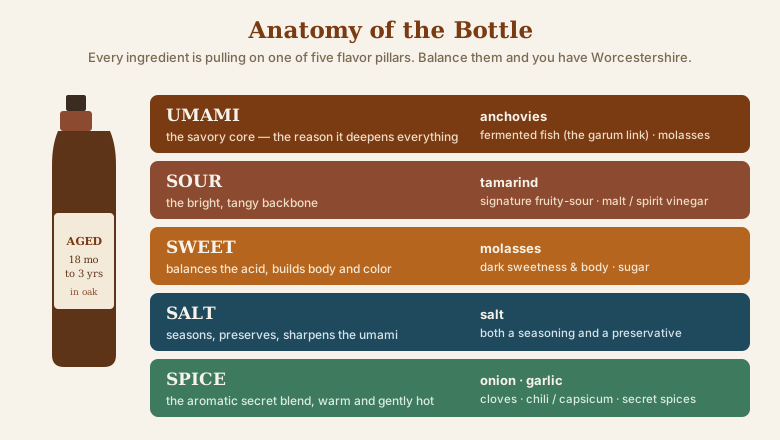
| Component | Flavor pillar | What it actually does |
|---|---|---|
| Anchovies | Umami | The fermented-fish savory core — the thing you can’t identify but would miss instantly |
| Tamarind | Sour | The signature fruity-sour tang that sets Worcestershire apart from every other brown sauce |
| Vinegar (malt or distilled) | Sour | The acidic backbone; carries the flavor and keeps it shelf-stable |
| Molasses | Sweet / Umami | Dark sweetness, body, color, and a bitter-savory depth of its own |
| Sugar | Sweet | Balances the acid and the salt; rounds the whole thing off |
| Salt | Salt | Seasons, sharpens the umami, and helps preserve |
| Onions & garlic | Spice | Savory aromatic base — the “cooked” background note |
| Cloves | Spice | Warm, sweet, penetrating; a little goes a very long way |
| Chili / capsicum | Spice | A low, gentle heat you feel more than taste |
| Secret spice blend | Spice | The proprietary flourish nobody outside the company has ever confirmed |
Anchovies — the fermented-fish heart of it
This is the ingredient that surprises everyone, and it’s the most important one. Worcestershire is, at its core, a fermented anchovy sauce. The little fish are salted and left to break down over months, and as they do, their proteins dissolve into free glutamates — the same compounds that make Parmesan, soy sauce, and ripe tomatoes taste so deeply savory. That’s the “umami” you can’t put your finger on.
I can’t stress enough how directly this ties Worcestershire to the oldest sauce tradition on earth. The Romans had garum (also called liquamen) — a fermented-fish condiment they poured on nearly everything, made exactly this way: small fish, salt, time. The fish sauces of Southeast Asia — Thai nam pla, Vietnamese nước mắm — are the same idea, still alive. When the British met those sauces under empire and then bottled their own fermented-fish umami in Worcester, they were reinventing a 2,000-year-old wheel. If you want to understand what’s really happening in that oak barrel, read how I think about controlled rot on the fermenting page — Worcestershire is a fermentation project that happens to come in a fancy bottle. There’s more on that lineage over on the history page.
One consequence worth saying plainly: the anchovies mean it isn’t vegetarian. For decades people put Worcestershire on everything assuming it was just “brown sauce,” and plenty of would-be vegetarians got a surprise. There are now anchovy-free “vegan Worcestershire” versions that swap in extra tamarind, soy, and mushroom or seaweed for the umami — they’re genuinely good, if not quite the real thing.
Tamarind — the signature sour-fruity note
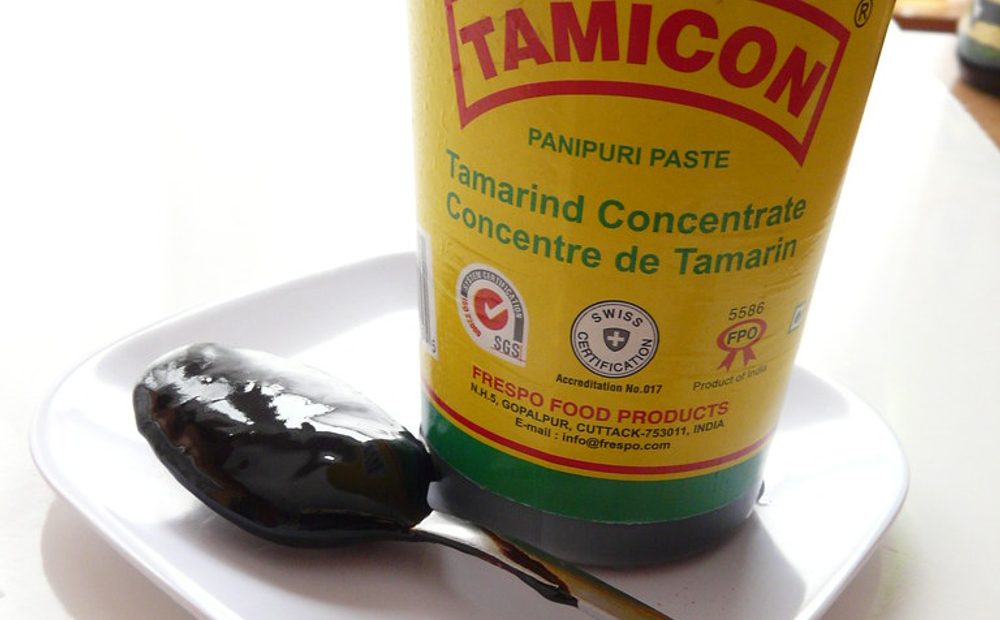
If anchovy is the soul, tamarind is the fingerprint. Tamarind is the sticky, sour pulp from the pods of a tropical tree, and it brings a tangy, dried-fruit sourness that’s rounder and fruitier than plain vinegar. It’s the note that makes Worcestershire taste like Worcestershire and not like steak sauce or soy. It’s also the most obvious tell of the sauce’s Indian ancestry — tamarind is a workhorse of South Asian cooking, and its presence is a fingerprint of the Bengal-inspired original the founders were chasing.
Vinegar — malt versus distilled
Vinegar is the carrier and the preservative, and here’s where the two great versions of Worcestershire part ways. The UK formula uses malt vinegar — made from malted barley, darker, maltier, and rounder. The US formula uses distilled white vinegar — cleaner, sharper, more neutral. That single swap is a big part of why the two bottles taste different, and it has a practical consequence too: malt vinegar means the UK sauce contains barley, and therefore gluten, while the American bottle is gluten-free. If you cook gluten-free and travel, that’s a genuine gotcha.
Molasses and sugar — sweetness, color, and body
Molasses does triple duty. It’s the source of most of the sauce’s dark mahogany color; it adds body so the sauce has some cling instead of running like water; and it brings a sweetness that’s shot through with its own bitter, almost savory depth. Sugar is the finishing balance — just enough to keep the vinegar and salt from being harsh. Together they’re the counterweight that keeps all that acid and salt from tasting aggressive. It’s the same sweet-versus-acid dance I write about in the barbecue-sauce ingredients — Worcestershire is running the identical playbook, just with fish and tamarind stirred in.
Salt — more than seasoning
Salt in Worcestershire isn’t only there to season. It’s a preservative — part of what let the original sauce survive a sea voyage across the Empire without refrigeration — and it sharpens and lifts the umami from the anchovies. Reduce the salt and the whole thing tastes flat, not just less salty.
The aromatics — onion, garlic, cloves, chili, and the secret blend
The last pillar is the spice cabinet. Onions and garlic give a cooked, savory background — the smell of something good on the stove. Cloves are the sneaky one: warm, sweet, and so penetrating that a pinch too many will take over the whole bottle, which is exactly why you taste them only as a faint warmth. Chili and capsicum bring a low heat that sits under everything rather than announcing itself. And then there’s the famous secret spice blend — the proprietary mix Lea & Perrins has never disclosed, the reason no clone is ever quite right. Home cooks and food writers have spent a century guessing (allspice, mace, black pepper, tamarind seeds, cinnamon all get named), but nobody outside the company knows the exact set or proportions.
The step that isn’t an ingredient: aging
Here’s the part that no ingredient list can convey. After everything is mixed, the traditional sauce is left to ferment and mature for eighteen months and up to three years in wood. During that long rest, the harsh edges round off, the anchovies finish breaking down, the flavors marry, and the raw, sharp mixture transforms into something mellow and deep. The famous origin legend — barrels of a failed first batch forgotten in a Worcester cellar, rediscovered months later and found transformed — is almost certainly marketing (see the history page for how that story falls apart). But the lesson buried in the myth is completely real: time is the secret ingredient. You cannot rush Worcestershire, and that’s precisely why the supermarket bottle and a properly aged one are not the same animal.
How the formula changed over two centuries
A recipe that’s sold continuously since 1837 doesn’t stay frozen. Over the decades, the mass-market product drifted the way most mass-market foods do: milder, sweeter, more standardized, and more shelf-stable. Aging times got shorter and more consistent because a global brand can’t wait three years for every batch. Sweeteners changed with the industry — most notoriously, US Lea & Perrins ran for years on high-fructose corn syrup instead of sugar or molasses. The result is a sauce that’s rounder and easier and, to my palate, flatter than the sharp, funky, complicated thing it used to be. None of this is a scandal — it’s just what happens when a craft product becomes a commodity. It’s also the single best argument for making your own.
US versus UK — genuinely two different sauces
This deserves spelling out, because most people assume the bottle is the same everywhere. It isn’t. The American and British formulas differ in the vinegar, the sweetener, the gluten, the aging, and the anchovy proportion and spicing — and they taste noticeably different side by side. The UK version is sharper, tangier, and saltier; the US version is sweeter, milder, and rounder.
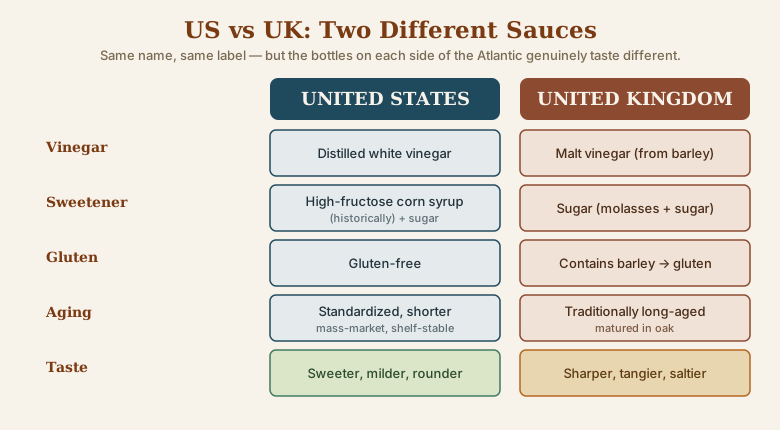
| United States | United Kingdom | |
|---|---|---|
| Vinegar | Distilled white vinegar | Malt vinegar (from barley) |
| Sweetener | High-fructose corn syrup (historically) + sugar | Sugar, with molasses |
| Gluten | Gluten-free | Contains barley → gluten |
| Aging | Standardized, generally shorter | Traditionally long-aged in oak |
| Anchovy & spice | Somewhat different proportion and spicing | The older, sharper balance |
| Taste | Sweeter, milder, rounder | Sharper, tangier, saltier |
If you ever have both in front of you, do the taste test — it’s one of those experiments that changes how you cook. I keep the UK bottle around for anything that wants that sharper edge, and I reach for my own homemade sauce when I want the full, aged, funky version that neither supermarket bottle quite delivers anymore.
Where to go from here
Now that you know what’s actually in it, the natural next questions are why bother making it yourself and what do you do with it. I make my own precisely because I can control every one of these levers — real aging, no corn syrup, as much anchovy funk and chili heat as I want; that’s the why-homemade page, and it links straight to my recipes at /recipes/worcestershire-sauce/ and /recipes/worcestershire-sauce-2/, plus everything tagged Worcestershire. For how the same fermented-fish umami idea circled the globe and became Japanese tonkatsu sauce and Salvadoran salsa inglesa, see around the world; and for the everyday jobs it does in my kitchen — steaks, marinades, BBQ sauces, Bloody Marys, Caesar dressing — head to how I use it.
Comments (0)