Buying & Storing Rice
This is the practical page — the one about the bag on the shelf and the container in your pantry. There’s a lot of romance in rice, and I’ve spent a lot of these pages on it, but at some point you have to actually buy the stuff, get it home, and keep it from going bad or growing bugs. Most of that is easy. One part of it — brown rice — is genuinely a trap that catches people, and it’s the reason this page exists.
I’ll say up front that I lean on a rice cooker for the cooking, but storage happens outside the machine, in the bag and the bin, and it’s worth getting right — a good bag of rice is cheap, but a pantry full of rancid brown rice or a bin of weevils is a genuine, avoidable waste.
Here’s the headline, and if you read nothing else, read this: white rice keeps essentially forever; brown rice goes rancid. That one fact, which almost nobody is told when they “switch to brown rice for health,” reorganizes how you shop and store. I’ll get to exactly why (it’s the oil in the bran, oxidizing) and exactly how long you’ve got. But first, buying.
Buying: what to actually look for
For everyday rice, the truth is that rice is a well-behaved commodity and most of what’s on the shelf is fine. But there are real differences worth paying for, and some package terms worth decoding.
Match the grain to the job. This is the biggest lever, and it’s covered in full on the types page: long-grain (basmati, jasmine) for fluffy, separate grains; short-grain (sushi rice, arborio) for sticky or creamy; and so on. Buying “rice” without asking which rice is how people end up with gummy pilaf and soupy risotto. Get the variety right first; everything else is a detail.
Aged basmati is worth understanding — because it’s one of the few cases where old rice is the premium product and fresh rice is the cheap one. I checked the numbers on this. Freshly harvested rice carries a fairly high moisture content, around 14–16%. Good basmati is deliberately aged for a year or two, during which it dries down to roughly 10–11% moisture. That drying does two things cooks prize: the drier grain absorbs more water and elongates dramatically when cooked (a well-aged basmati grain can nearly double in length — that’s the dream for biryani and pilaf), and it cooks up firmer and less sticky, the grains staying separate. So “aged” on a basmati bag is a genuine quality claim, not marketing, and it’s why premium basmati costs more and why the best biryani houses insist on it. Fresh, new-crop basmati is more moist, cooks stickier and elongates less — fine for everyday, not for the showpiece.
That’s the flip side of a package term to watch for: “new crop.” On most rice — jasmine especially — new crop is a good thing, meaning fresh and fragrant. On basmati, you specifically don’t want new crop; you want aged. Same words, opposite signals, depending on the grain.
A few other terms decoded:
- Parboiled / converted — this rice was partially precooked in the husk before milling, which drives some of the bran’s nutrients into the grain and changes the starch so it cooks up firmer, separate, and forgiving (hard to overcook to mush). The science page explains the mechanism. “Converted” (the Uncle Ben’s–style product) is the same thing. It’s not a lesser rice; it’s a different, sturdier one.
- Enriched — white rice with vitamins (iron, folic acid, B vitamins) sprayed back on to replace some of what milling stripped away with the bran. A public-health measure, and the reason you should not rinse enriched rice if the box says so — you’d rinse the added nutrients down the drain.
- Broken grades — rice is graded partly by how many grains are broken. Whole grains cost more and look prettier; broken rice (sold explicitly as such) is cheaper, cooks faster and softer, and is genuinely preferred for some dishes (Senegalese thieboudienne traditionally uses broken rice, and it’s the natural choice for congee and puddings where you want it to break down). Cheaper doesn’t mean worse — it means a different texture.
Where the good stuff is. Two tips that have served me well. First, for heirloom American rice — real Carolina Gold, the historic Lowcountry variety with the story I told on the history page — the name to know is Anson Mills (and a handful of other Carolina Gold revival growers). It’s a specialty purchase, not a supermarket one, but it’s a living link to that whole history. Second, and more everyday: buy your basmati, jasmine, and sticky rice at an Asian or South Asian grocery, not the supermarket. You’ll get bigger bags, better prices, faster turnover (which matters — see storage below), and a far wider selection of real, named varieties than the two sad boxes in a typical American grocery aisle. It’s the single easiest upgrade to your rice cooking.
Storing white rice: basically forever
Now the good news, and then the trap.
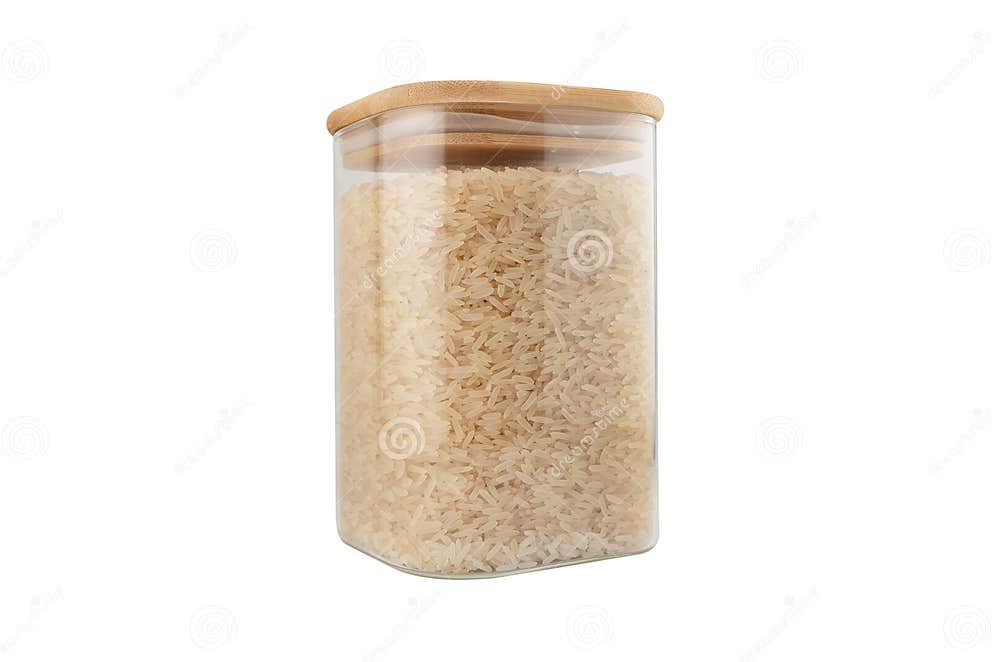
Uncooked white rice keeps almost indefinitely. Milling removed the bran and germ — which is to say it removed the oil and most of what could spoil — leaving a starchy grain that’s shelf-stable for years if you keep it in an airtight container in a cool, dark, dry place. Kept that way, white rice (and its cousins — jasmine, basmati, arborio, sushi rice) will still be perfectly good long after any “best by” date on the bag, which for white rice is really about peak aroma, not safety. The airtight container matters mostly for keeping pests out (next section) and for keeping the rice from picking up moisture and odors — not because the rice itself is racing to spoil. It isn’t.
Judging a bag at the store. A few quick tells. Give the bag a look for whole, uniform, unbroken grains (unless you want broken rice) and no visible powder, webbing, or tiny holes — powder and webbing can mean pests have already been at work. A clear window or bag lets you check color: white rice should be bright and clean, jasmine and basmati should look translucent rather than chalky (a chalky, opaque grain is often immature or poorly stored). And with fragrant rices, freshness is aroma — jasmine and new-crop rice should smell faintly floral and popcorn-like through the bag. Buy from a store with fast turnover (another vote for the busy Asian grocery) so the bag hasn’t been sitting for years.
For real long-term storage — if you want to lay in a big supply, which white rice is ideal for — the technique is oxygen exclusion. Rice sealed in food-grade Mylar bags with oxygen absorbers, tucked into airtight buckets, will keep for decades, because removing the oxygen stops both oxidation and any insect eggs from developing (they can’t survive without air). This is why white rice is a cornerstone of long-term food storage the world over. Brown rice, with its oil, is a poor candidate for this no matter how you seal it — the oil oxidizes eventually regardless — which is one more reason the two rices call for opposite strategies.
Storing brown rice: the trap nobody warns you about
Here’s the part I most want people to know, because it catches health-minded shoppers constantly. Brown rice goes rancid, and not slowly enough to ignore.
The whole reason brown rice is “healthier” is that it still has its bran and germ — and the bran and germ contain oil. That’s also its downfall: oils oxidize. Left in a warm pantry, the oil in brown rice slowly turns rancid, and rancid rice smells stale, musty, or paint-like and tastes bitter and off. It’s the exact same oil that gets extracted and stabilized to make rice bran oil; in the intact grain, sitting in your cupboard, it just quietly oxidizes instead.
Real timelines, because “goes bad” is useless without numbers:
- White rice — years in an airtight container at room temperature. For practical purposes, indefinite.
- Brown rice — roughly 3 to 6 months in the pantry before rancidity sets in. In the refrigerator, closer to 6 to 12 months. In the freezer, well over a year.
So the rules for brown rice are the opposite of the “buy the giant bag” instinct: buy brown rice in smaller amounts, store it somewhere cool and dark, and if you won’t use it within a few months, put it in the fridge or freezer. The cold slows the oxidation dramatically. And when you open a bag of brown rice, smell it — your nose catches rancidity long before it hurts you, and a musty or oily-paint smell means it’s past its best. This single habit — refrigerate or freeze brown rice — is the most useful thing on this page.
How to tell if raw rice has gone bad. For white rice, spoilage is rare, but trust these signs: an off, musty, or oily-paint smell (rancidity, most likely on any rice that’s been near heat or is actually brown/wild rice); visible bugs, webbing, or fine powder (pests — see below); clumping, sliminess, or any discoloration or mold (moisture got in, usually the sign of a container that wasn’t airtight or rice put away damp). Dry, clean-smelling rice with whole separate grains is good, full stop — a “best by” date that’s passed means nothing for properly stored white rice. When in doubt, your nose is the reliable instrument; rancid and moldy both announce themselves.
Pests: the rice weevil and the pantry moth
Rice, like all stored grain, can host a couple of uninvited guests, and the frustrating thing is that they usually arrive inside the bag, having hitched a ride as eggs from before you ever bought it.
The two main culprits are the rice weevil (Sitophilus oryzae — a tiny dark reddish-brown beetle with a long snout that lays its eggs inside individual grains) and grain/pantry moths (whose larvae leave telltale webbing and clumping in the rice). By the time you see adults crawling or flying, they’ve usually been breeding a while.
Prevention, in order of how much they actually help:
- Airtight containers. The single most effective measure — not because it kills anything, but because it contains an outbreak (bugs can’t spread from an infested container to the rest of your pantry) and keeps new ones from wandering in. Move rice out of its flimsy original bag into a sealed glass or hard-plastic container the day you get it home.
- Freeze new bags for a few days. This is the one that actually kills the eggs. Pop a new bag of rice in the freezer for 3 to 4 days when you bring it home; the cold kills any weevil or moth eggs already hiding in the grains, so nothing can hatch later in your pantry. Then store it airtight at room temperature. This is the professional move and it’s nearly foolproof.
- Bay leaves — the classic folk remedy: tuck a few bay leaves into the rice container to repel bugs. I looked into whether this actually works, and the honest answer is marginal and mostly anecdotal. There is some lab evidence that bay leaves have real repellent and even mildly insecticidal properties against stored-grain pests — one study found bay laurel caused roughly 49% mortality in rice weevils, and bay contains aromatic compounds (eucalyptol among them) that insects dislike. But there’s no solid evidence it reliably stops pantry moths, and lots of people swear by it on pure faith. So: harmless, cheap, possibly a little helpful, not a substitute for the airtight container and the freezer treatment. Label it what it is — folk wisdom with a thin scientific thread, not a guarantee.
If you do find an infestation, throw out the affected rice, empty and thoroughly clean the pantry (bugs travel), and start the survivors on the freezer treatment. It’s a nuisance, not a health emergency — weevils won’t hurt you — but nobody wants beetles in their dinner.
Storing COOKED rice: this is the safety one
Everything above is about the raw grain. Cooked rice is a different animal, and this is where the real food-safety stakes are — serious enough that I gave it full treatment on the cooking page and it ties into the nutrition-and-arsenic page too. Here’s the short, important version.
Uncooked rice commonly carries spores of a bacterium called Bacillus cereus. The nasty trick is that these spores survive cooking — boiling doesn’t kill them. If cooked rice is then left sitting out at room temperature, the spores wake up, multiply, and some strains produce a heat-stable toxin that reheating will not destroy. Eat that rice and you get the vomiting-and-diarrhea illness sometimes called “fried rice syndrome” (because reheated leftover rice is a classic vehicle). It’s rarely dangerous to a healthy adult, but it’s genuinely unpleasant and entirely avoidable.
The rule is about speed and temperature, not about the rice being “old.” The enemy is the “danger zone” — roughly 40 °F to 140 °F (4 °C to 60 °C) — the temperature band where bacteria multiply fastest. A pot of rice left on the stove or counter sits right in the middle of it for hours, which is exactly the condition Bacillus cereus is waiting for. Everything below is about getting rice through that zone fast on the way down and keeping it out of it once cooked:
- Cool cooked rice fast — don’t let it sit on the counter cooling slowly for hours. Spread it out (a wide dish, a sheet pan) so it drops out of the danger zone quickly instead of holding warm in a deep pot where the center stays cozy for the bacteria.
- Refrigerate within 1 to 2 hours of cooking. The sooner the better.
- Use refrigerated cooked rice within about a day (a couple at most), and when you reheat it, get it piping hot all the way through — reheating won’t kill the toxin if it’s already formed, but it will kill live bacteria and is basic good practice.
- Never leave cooked rice out overnight and then use it. That’s the exact scenario that makes people sick.
Note the irony with fried rice, which the around-the-world page told you wants day-old rice: day-old rice that’s been properly refrigerated the whole time is perfect and safe; day-old rice that sat out on the counter is the danger. Same age, opposite outcome. It’s all about whether it was kept cold.
Freezing cooked rice: the best-kept trick
Since refrigerated cooked rice only lasts a day or two, and since you almost always cook more rice than you need, freezing cooked rice is one of the genuinely great kitchen shortcuts — and it works far better than most people expect. Frozen and reheated correctly, cooked rice comes back nearly as good as fresh, which is not true of refrigerated rice (which goes hard and dry as its starch retrogrades — the science page has the details).
The method:
- Cool the rice quickly after cooking (same food-safety rule as above — into the danger zone and out fast, not a slow counter cool).
- While it’s still slightly warm-but-cooled, pack it into a flat, thin layer in a freezer bag or a shallow container and seal it. Flat matters: it freezes faster (better texture, less time in the danger zone) and thaws and reheats evenly. Some cooks bag it while it’s still steaming and press it flat so the trapped steam keeps it moist — the trick is to move fast and get it into the freezer promptly, not to let it sit around steaming on the counter.
- Reheat straight from frozen by steaming — microwave it (a damp paper towel over the bowl, or a splash of water, traps steam and revives it) or tip it into a hot pan with a spoonful of water and a lid. The steam rehydrates the grains and reverses the staling. Do not thaw it slowly on the counter first; go from freezer to hot.
Done this way, frozen cooked rice keeps for a month or more and reheats in a couple of minutes into something genuinely good — the fastest possible foundation for a weeknight bowl, a fried rice, or a bed for last night’s leftovers.
Why does freezing beat refrigerating? Because the thing that ruins day-old fridge rice is starch retrogradation — the cooked starch slowly re-crystallizing into a hard, dry, chalky structure as it sits cold (the science page covers the chemistry). Retrogradation actually happens fastest right around fridge temperature, which is why refrigerated rice goes hard so quickly. Freezing rushes the rice past that zone and locks it before much crystallizing can happen, and then steam reverses what did occur — the moist heat re-gelatinizes the starch and the grains plump back up soft. That’s the whole reason a splash of water and a lid (or a damp cover in the microwave) revives frozen rice so well while dry reheating just makes it worse: you’re not warming the rice, you’re re-steaming it. The same trick rescues hard fridge rice, too — never reheat leftover rice dry.
So: buy the right grain, keep white rice airtight and forget about it, treat brown rice like the perishable it secretly is, freeze new bags to kill bugs, and respect cooked rice’s short, cold-dependent life. Get those five things right and you’ll never throw out rice again. For the chemistry behind the rancidity and the staling, see the science; for the cooking methods and the Bacillus safety rules in full, the cooking page; and for which variety to buy in the first place, the types page.
Comments (0)