Beyond the Grain: Rice Products
Everything on the around-the-world page is still recognizably rice — a bowl of grains, cooked one way or another. But rice has a second life that’s just as large and a lot less obvious. Grind it, ferment it, pound it, pop it, press it, wring the oil out of its bran, and it becomes a whole shadow pantry: flours and noodles, wines and vinegars, chewy cakes and crackly papers, puffed cereal and cooking oil. A surprising amount of what’s in your kitchen right now is rice wearing a disguise — the vinegar in your sushi, the syrup in your granola bar, the noodles in your soup, maybe the anti-caking agent in your table salt.
This page is the catalog of those disguises. Some of it I cook with constantly; some of it I’ve only eaten; a couple of the entries are here mostly because the internet gets them wrong and I wanted to set them straight — especially the fermentation science, which is genuinely beautiful and genuinely mangled in most explanations. Where a product connects to a recipe in the box, I’ve linked it.
Rice flour: two of them, and they behave differently
Grind rice to a powder and you get rice flour — but you get two fundamentally different flours depending on which rice you started with, and confusing them ruins recipes.
Regular (plain) rice flour is milled from ordinary long- or medium-grain rice. It’s gritty-fine, brilliant white, and — crucially — gluten-free, because rice has no gluten to begin with (see the science page for why that matters to structure). That makes it a backbone of gluten-free baking, though it can’t do the stretchy, gas-trapping job wheat gluten does, so it usually works in blends with starches and binders. It’s also the secret to the lightest tempura — a rice-flour batter fries up shatteringly crisp precisely because it can’t develop gluten and turn tough — and it thickens sauces cleanly without the raw-flour taste.
Glutinous rice flour — sold as mochiko (Japanese) or sweet rice flour — is milled from sticky/glutinous rice. Same “glutinous” naming trap as before: it still contains zero gluten. What it does have is a nearly pure load of the sticky starch amylopectin, which is why it turns chewy, stretchy, and cohesive when cooked. This is the flour behind mochi, mochiko chicken, and a hundred chewy Asian sweets. Do not swap the two flours — regular rice flour where mochiko belongs gives you a sandy, crumbly mess, and vice versa.
Rice flour’s gluten-free nature is exactly why I keep it in the baking rotation. My box has two gluten-free sourdoughs built on it: Bread, Sourdough, 100% Brown Rice, Gluten Free and Bread, Sourdough, Brown Rice Flour, Gluten Free — proof that you can get real fermented-bread character without a speck of wheat, if you understand what the rice flour can and can’t do.
Rice flour is also the quiet secret behind a lot of textures you didn’t know were rice. A little of it in shortbread or cookies makes them sandy and tender (it interrupts gluten, so the crumb goes short and delicate). It’s the traditional dusting flour that keeps proofing dough from sticking without adding chew. And across Asia it’s the base of countless steamed cakes and snacks — from Chinese turnip cake to Filipino puto — wherever a cook wants a soft, clean, faintly sweet crumb that wheat can’t give.
The fermented-batter branch: idli, dosa, appam
There’s a whole South Indian cuisine built on fermenting rice flour — or really, ground soaked rice — rather than baking it. Soak rice and a lentil (usually urad dal) overnight, grind them wet into a batter, and leave it out to wild-ferment for a day. Naturally occurring bacteria and yeasts sour it and fill it with gas, and from that one living batter come idli (steamed into soft, spongy savory cakes), dosa (spread thin and griddled into a huge, crisp, tangy crepe), and appam (a lacy, bowl-shaped Keralan pancake). It’s the same fermentation-makes-it-better principle as sourdough or sake, run on rice batter — and it’s a reminder that “rice product” includes things that are alive. I don’t have these written up in the box yet, but they’re some of the best breakfasts on earth.
Rice noodles: the same grain, extruded
Make a batter or dough of rice flour and water, steam or extrude it, and you get rice noodles — the staple noodle of a huge swath of Asia and, again, naturally gluten-free. They come in a family of widths and forms:
- Rice vermicelli (bee hoon, bún, sen mee) — thin, wiry, dried; soak and they go tender in minutes. The stuff of Vietnamese bún bowls and Singapore noodles.
- Banh pho — the flat rice noodle of Vietnamese pho, sold dried in ribbons.
- Ho fun / shahe fen — the wide, slippery fresh rice noodle of Cantonese chow fun, sold in sheets or ribbons and best fresh.
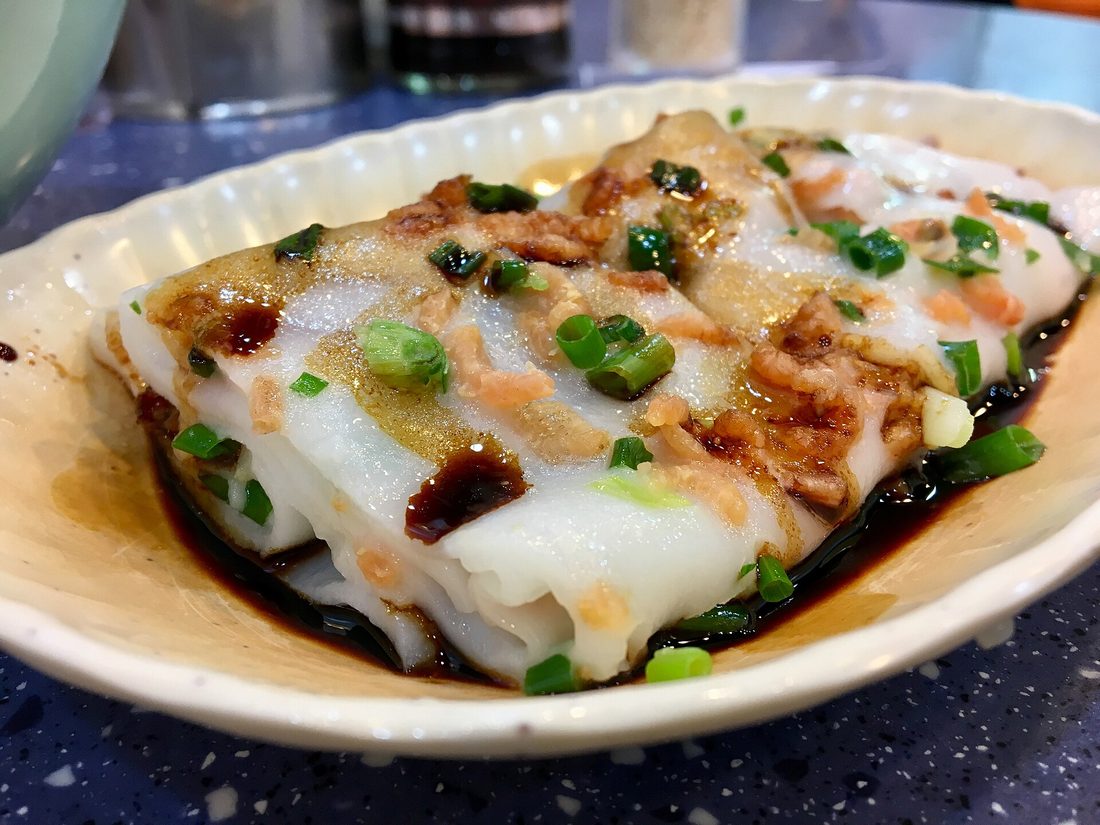
There’s also jelly-like rice noodle — Korean and Chinese cold noodles and the wobbly bánh canh — and the fresh rice-sheet cheong fun that gets rolled around shrimp or char siu at dim sum. They’re all made by grinding soaked rice into a slurry, steaming it into thin sheets, and cutting or pressing it into strands — the same principle whether it ends up hair-thin or an inch wide. Because they’re already fully cooked in the making, most dried rice noodles just need a soak rather than a boil, which is why they’re such fast weeknight food. My box’s entry point is Chicken Stir Fry with Rice Noodles — a straight-ahead lesson in not overcooking them into mush.
Mochi, tteok, and the pounded-rice sweets
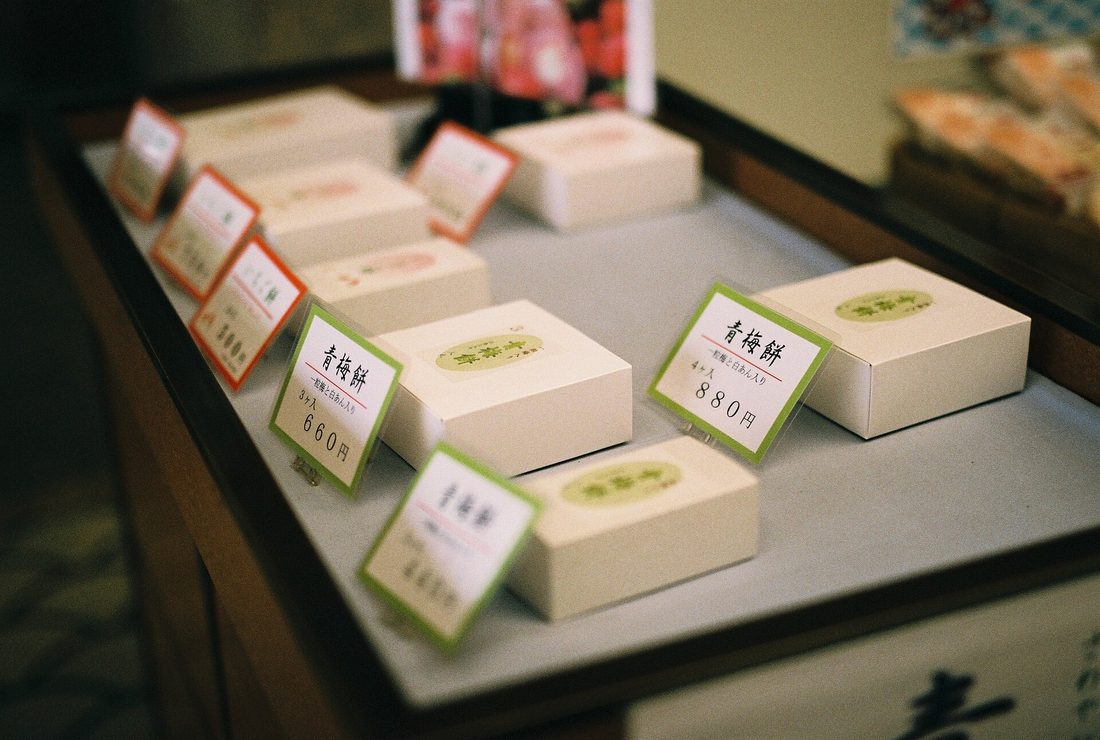
Here’s a whole food category built on one violent, wonderful idea: you can pound cooked glutinous rice until the grains disappear and it becomes a single stretchy, chewy mass. No flour, no grinding — you literally beat steamed sticky rice with a mallet (traditionally in a giant mortar, in Japan’s case in the communal, slightly dangerous ritual of mochitsuki) until the starch smears into a smooth, elastic dough. That dough is mochi.
From that base a continent of sweets and snacks:
- Mochi (Japan) — the pounded-rice cake itself, eaten grilled, in soup (ozoni), or wrapped around sweet bean paste (daifuku). The ice-cream kind is a modern spin.
- Dango (Japan) — chewy little dumplings on a skewer, made from rice flour rather than pounded whole rice, but the same chewy family.
- Tteok (Korea) — the enormous Korean category of rice cakes, some pounded, some steamed from rice flour, ranging from the plain chewy cylinders of tteokbokki to elaborate celebration cakes. My box runs deep here: Tteokbokki (Spicy Korean Rice Cakes), two Tteokbokki (Spicy Stir-Fried Rice Cakes) versions, the milder Korean Royal Court Stir Fried Rice Cakes, and the sweet Korean Rice Cakes with Honey.
- Nian gao (China) — the sticky “year cake” eaten at Lunar New Year, its name a pun on “higher year,” steamed dense and sliced.
The through-line is texture: all of it is that uniquely satisfying, slightly resistant, glutinous-rice chew that no wheat product can quite imitate — because it comes from amylopectin, not gluten.
Rice wine and fermented rice — get the science right
This is the section the internet mangles most, so I dug into it. Fermenting rice into alcohol requires solving a problem that grapes don’t have, and the solution is one of the most elegant tricks in all of food. Let me lay it out properly.
The koji problem, and why sake is not “rice wine” in the wine sense
Wine is easy in principle: grapes are full of sugar, and yeast eats sugar and makes alcohol. Rice has almost no sugar — it’s packed with starch, and yeast can’t eat starch. So before you can ferment rice, something has to break the starch down into sugar (saccharification). Beer solves this by malting, using the grain’s own sprouting enzymes. East Asian rice fermentation solves it a different way: with a mold.
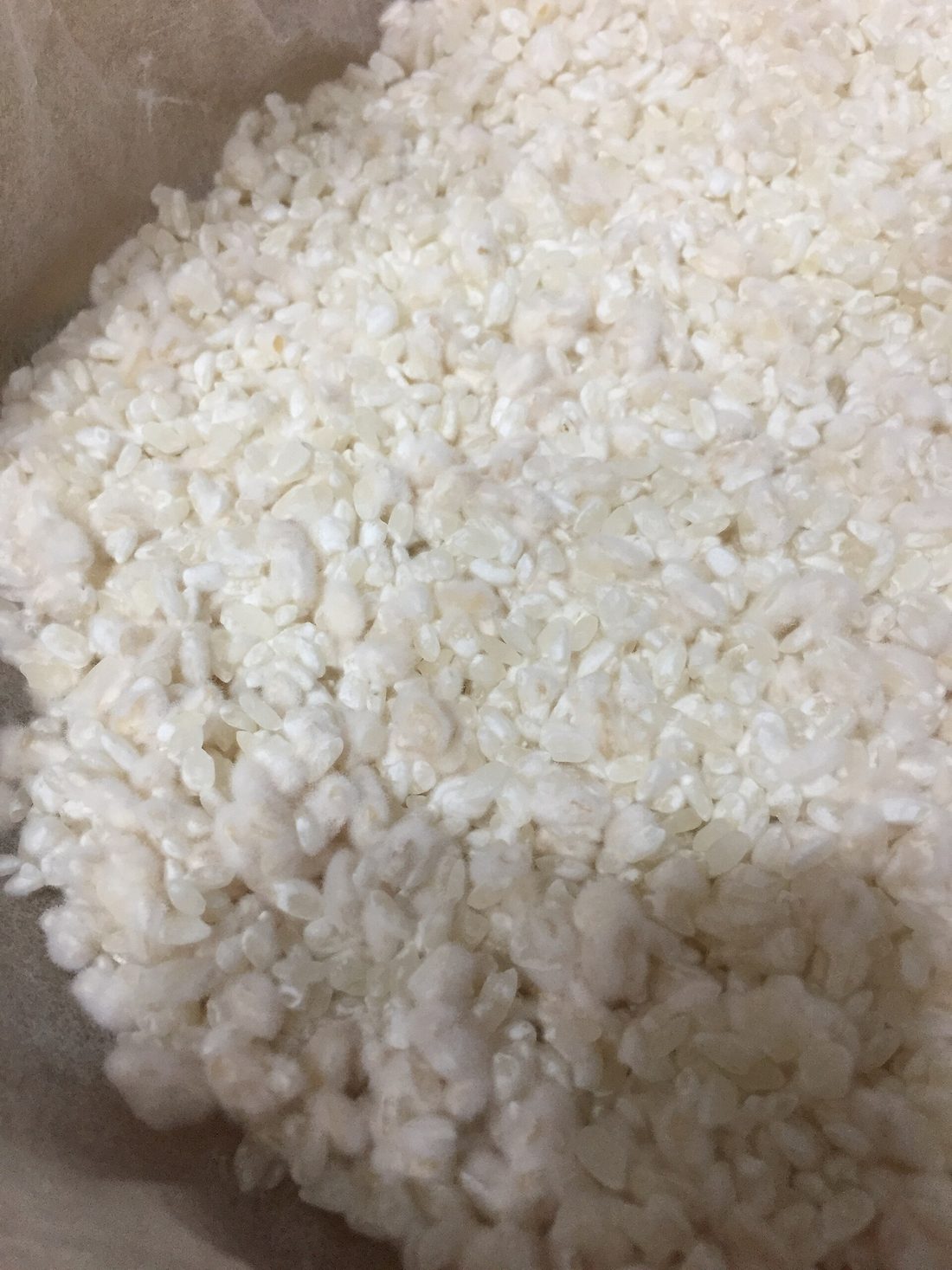
That mold is koji — Aspergillus oryzae — grown deliberately on steamed rice. As it grows, its hyphae push into the grains and pump out amylase enzymes that chop the rice starch into sugars. In sake brewing, the koji rice is combined with more steamed rice, water, and yeast (Saccharomyces cerevisiae), and here’s the beautiful part I want to get exactly right: the saccharification and the alcoholic fermentation happen at the same time, in the same tank. The koji enzymes release sugar; the yeast immediately eats that sugar and makes alcohol; the koji keeps releasing more. This simultaneous double act is called multiple parallel fermentation (heikō fukuhakkō), and it is unique to sake. Because the sugar never builds up — it’s consumed as fast as it’s made — the yeast can be pushed to unusually high alcohol, and sake ferments up to around 20% ABV, higher than beer or wine reach naturally. That’s the real reason sake is special, and “rice wine” undersells it: it’s not fermented like wine at all.
One more sake term worth knowing because it’s on every good bottle: the polishing ratio (seimaibuai). The outer layers of the rice grain hold fat and protein that muddy the flavor, so sake rice is milled down before brewing — and the ratio is stated as the percentage of the grain that remains, so lower is more polished. Ordinary sake might be milled to around 70% remaining; ginjo to 60% or less; daiginjo to 50% or less, throwing away half the grain to get a cleaner, more fragrant sake. It’s a rare case where the number goes down as the quality goes up.
The wider world of rice alcohol
Every rice culture ferments its rice, and the koji-or-cousin trick shows up all over:
- China — mijiu is the everyday clear rice wine; huangjiu (“yellow wine”) is the aged, amber, sipping-and-cooking category, of which Shaoxing wine is the famous example — indispensable in Chinese cooking, where it does for a stir-fry what dry sherry does for a sauce. Chinese rice ferments use a starter cake called qū (the ancestor of Japanese koji, using a mix of molds and yeasts).
- Korea — makgeolli is the cloudy, milky, lightly fizzy, slightly sweet farmhouse rice wine, low in alcohol and drunk fresh; cheongju is the clear, refined version strained off the top (Korea’s answer to sake). Both use a starter called nuruk.
- Southeast Asia — tapai/tapé (fermented sticky rice, sweet and boozy, eaten as much as drunk), Indonesian/Balinese brem, Lao lao-lao (a distilled rice spirit), and a whole family of home ferments made with a starter yeast-and-mold cake (ragi).
Mirin, and the koji that’s hiding in your whole pantry
One more rice-alcohol product deserves its own name because it’s on your shelf right now: mirin. It’s a sweet, low-alcohol rice wine made specifically for cooking — glutinous rice and koji fermented with a distilled rice spirit — and it’s the sweet, glossy backbone of Japanese cooking, the thing that makes teriyaki shine and a simmered dish taste round and finished. (Watch the label: true hon-mirin is the real fermented product, while cheap “mirin-style seasoning” is just corn syrup and additives faking it.) It’s what glazes my Gyudon (Japanese Beef Rice Bowl) and Oyakodon (Chicken and Egg Rice Bowl).
And here’s the thing that made me sit up when I learned it: koji — that same Aspergillus oryzae — is the invisible engine behind an astonishing share of Japanese flavor. It’s not just sake. Soy sauce, miso, and mirin all start with koji, the mold grown on rice or soybeans, its enzymes breaking proteins and starches down into the glutamate and sugar that make those seasonings taste the way they do. Japan actually declared A. oryzae its national fungus (kokkin). When people say Japanese food tastes “umami,” a huge amount of that is one mold doing the same starch-and-protein-cleaving trick over and over on different substrates. Learn koji and you’ve found the skeleton key to the whole cuisine.
Amazake: the sweet, (mostly) sober cousin
Stop the koji process before the yeast gets going — just let the mold’s enzymes turn the rice starch to sugar and no further — and you get amazake: a thick, sweet, cloudy rice drink that is little or no alcohol at all. It’s essentially the saccharification step of sake, bottled as a beverage. Sweet without any added sugar (the sweetness is entirely the broken-down rice starch), traditionally drunk warm in winter in Japan, and increasingly sold as a natural sweetener and a probiotic health drink. Same koji, same enzymes, deliberately stopped one step short.
The one distinction people blow constantly: rice wine vs “rice wine vinegar”
Rice wine and rice wine vinegar are not interchangeable, and swapping them wrecks a dish. Rice wine (mijiu, Shaoxing, sake, mirin) is an alcoholic ingredient you cook with for depth and aroma. Rice vinegar is what you get when you take that wine one step further and let acetic-acid bacteria turn the alcohol into acid — it’s sour, not boozy. “Rice wine vinegar” is just a wordy name for rice vinegar; despite the “wine” in the middle it is vinegar, full stop. If a recipe wants Shaoxing wine and you pour in rice vinegar, you’ve made it sour instead of aromatic. Keep them straight.
Rice vinegar: mild, and the soul of sushi rice
Following that thread: rice vinegar is milder, sweeter, and less harshly acidic than Western distilled or wine vinegars, which is exactly why it’s the vinegar of choice across East Asia for dressings, pickles, and dipping sauces where you don’t want a vinegar to shout.
Its single most important job is sushi rice. What makes sushi rice sushi rice isn’t the shaping — it’s the seasoning: warm cooked short-grain rice folded with a mix of rice vinegar, sugar, and salt (the mixture is sushi-zu). That’s the whole trick, and it’s why the around-the-world page sent you here. Note the two grades on the shelf: unseasoned rice vinegar is pure vinegar; seasoned rice vinegar already has the sugar and salt added for exactly this purpose. If a sushi-rice recipe assumes unseasoned and you use seasoned, you’ll double the sugar and salt — a small mistake that throws the balance off. My sushi recipes — Vegetable Sushi Rolls, the playful BBQ Bacon Sushi and Sushi, Roll, Grilled Bacon — all live or die by getting that vinegar seasoning right.
Rice bran and rice bran oil: the good stuff we usually throw away
When brown rice is milled into white rice, the bran — the outer layer — is stripped off. That bran is where all the oil, fiber, and nutrients live, and it mostly gets sold as animal feed. But two valuable products come out of it:
- Rice bran oil — pressed from the bran, it has a high smoke point (around 450 °F / 232 °C) and a clean, neutral, faintly nutty flavor, which makes it excellent for high-heat frying and a favorite in Japanese tempura and Asian kitchens generally. It’s the same oil that made the bran go rancid in storage if you left brown rice too long — the difference is that here it’s been extracted and stabilized on purpose rather than quietly oxidizing in your pantry.
- Rice bran wax — a byproduct refined out of the oil, it’s a food-grade and cosmetic wax used to glaze candy, coat fruit, and give shine and body to lipsticks and polishes. Rice, it turns out, is in your makeup drawer too.
There’s also a third, wonderful use for rice bran that has nothing to do with oil: the pickling bed. In Japan, raw rice bran (nuka) is mixed with salt and water and left to ferment into a living paste called nukadoko, and vegetables buried in it come out as nukazuke — deeply savory, sour, funky pickles, cured by the bran bed’s bacteria and yeasts (the same fermentation family as everything else on this page). A well-kept nukadoko is stirred by hand daily and passed down for generations; some are decades old. The bran that white-rice milling throws away becomes, in this tradition, a treasured heirloom. Rice bran is also sold on its own as a fiber-and-nutrient supplement and is a natural source of GABA and vitamin E — the reason “rice bran” shows up on health-food shelves at all.
The odds and ends — and rice’s greatest hit, the crust
A grab-bag of everything else rice becomes:
- Rice milk — soaked rice blended with water and strained, a mild, naturally sweet, dairy-free milk (and the base of Mexican horchata, which is really a spiced, sweetened rice milk). Thinner than oat or soy milk because rice has no fat or protein to give it body, and it separates on standing — but it’s the least allergenic of the plant milks (no nuts, no soy, no gluten), which is exactly why it exists as a commercial product. Commercial versions often use the enzyme trick again to coax a little natural sweetness out of the starch.
- Rice paper / spring-roll wrappers (bánh tráng) — thin, translucent, brittle sheets made by drying a rice-flour slurry on bamboo mats (the crosshatch weave of the mat is often printed right into the finished sheet). Dip one in warm water for a few seconds and it turns pliable and sticky — the wrapper for fresh Vietnamese summer rolls, and the crackly shell of fried spring rolls. A dry ingredient that comes to life with a splash of water, stores for a year in the cupboard, and needs no cooking at all in the fresh-roll version. The thicker sesame-studded kind (bánh tráng nướng) gets grilled directly over coals into a crisp “Vietnamese pizza” — the same sheet, three completely different textures depending on what you do to it.
- Puffed and popped rice — heat rice grains under pressure (or dry-roast them) and they explode into airy puffs. This is a global staple in disguise: Indian murmura (the base of Bombay’s street-food bhel puri), the Latin American arroz inflado, the sugar-syrup-bound snack bars of a dozen cuisines, and, yes, breakfast-cereal Rice Krispies — same principle, industrial scale. The pressure-gun version makes a satisfying bang when it fires (Korea’s street-corner ppeongtwigi puffing carts are named for exactly that noise), and the same technology gives us the flat, dry puffed rice cakes sold as a diet snack. Puffing is one of the oldest ways to make rice storable, portable, and instantly edible — no cooking, no water, just crunch.
- Rice syrup / rice malt syrup — rice starch broken down (again by enzymes — same saccharification trick as amazake and sake, just carried all the way to a syrup) into a mild, mellow sweetener. A staple sweetener in Korean and Japanese cooking (Korean jocheong and Japanese mizuame are this), the sticky binder that holds sesame brittle and puffed-rice bars together, and a common “natural” sugar substitute in health foods. Note that it’s mostly glucose and maltose with little to no fructose — a real difference from cane sugar or agave, for better or worse depending on who you ask.
- Beaten / flattened rice (poha, chira, aval) — rice parboiled, rolled flat, and dried into light papery flakes that rehydrate almost instantly. A beloved quick breakfast across India (the dish is also called poha), needing only a rinse and a quick sauté. No cooking, no waiting.
And then there’s my favorite category of all, the one the around-the-world page kept circling back to: the crust. Nearly every rice culture independently discovered that the layer of rice left against the hot bottom of the pot, crisped golden and crunchy, is the best part — and turned it into a beloved product with its own name:
- Persian tahdig — the deliberately built crust of a chelow pot.
- Spanish socarrat — the toasted bottom of a paella.
- Japanese okoge — the “scorched rice” prized from the bottom of the pot.
- Korean nurungji — the scorched-rice crust, so loved it’s scraped out, dried, and sold as a snack and simmered with water into a comforting toasted-rice tea (sungnyung). You get it for free in the bottom of a Hainanese Chicken Rice pot or a stone-bowl bibimbap.
- Chinese guoba — crispy rice crust, sometimes deep-fried into crackers to catch a sauce.
Same accident, discovered a dozen times, loved everywhere. The cooking page tells you how to make it happen on purpose instead of by luck.
Non-food rice: starch, beer, and the salt-shaker myth
Rice’s second life isn’t even all edible:
- Rice starch — extracted pure, it’s used to stiffen and finish fabric (the “starched shirt”), as a dusting powder, and in papers and cosmetics.
- Rice in beer — a lot of mass-market lager uses rice as an adjunct: a cheap, flavor-neutral source of fermentable sugar added alongside malted barley to lighten the body and crisp the finish. (It’s why certain famous American lagers taste as light as they do.) This is the same fermentation world as the rice wines above, just playing a supporting role in a barley drink rather than the lead. The family’s Brewing and Distilling project treats the adjunct question properly if you want to go down that road — same fermentation science, aimed at a glass instead of a bowl.
- Rice husk — the tough, silica-rich outer hull is burned for fuel, used as an abrasive, milled into insulation and building board, and turned into a soil amendment. Almost nothing of the grain is actually wasted.
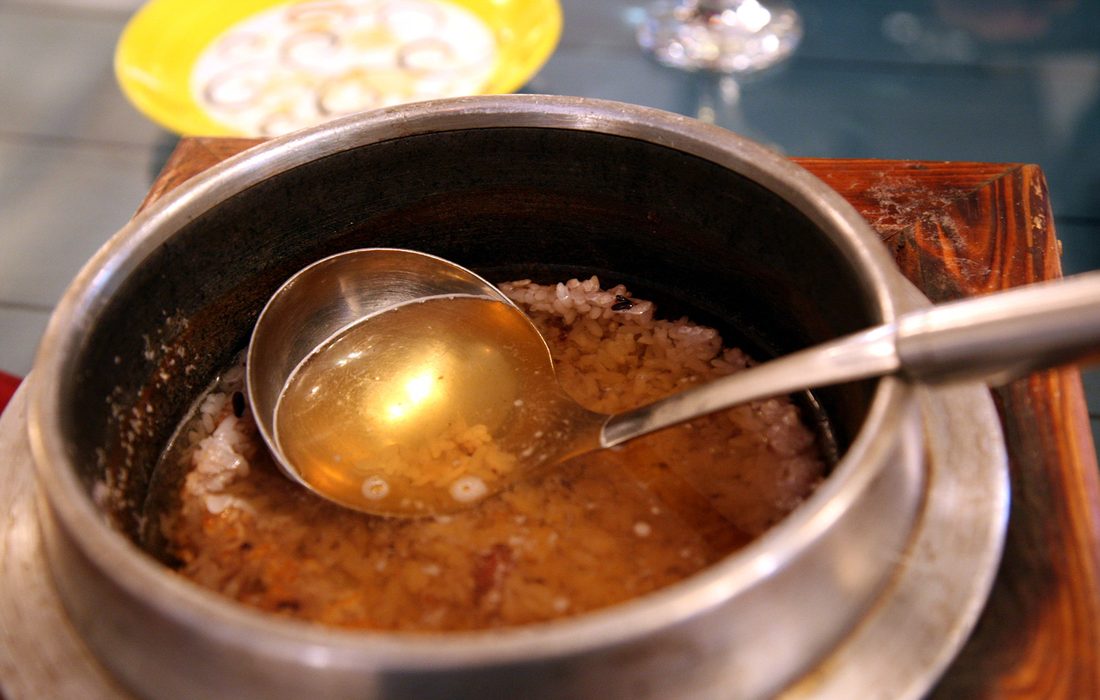
And finally, the myth I promised to check: does the rice in a restaurant’s salt shaker actually keep the salt from clumping? The verdict — and I looked it up rather than repeating the folklore either way — is yes, modestly, and for a real reason. Salt clumps because it’s hygroscopic: it pulls water out of humid air, dissolves slightly at the surface, and recrystallizes into hard lumps. Uncooked rice is also hygroscopic — in fact it grabs moisture from the air a little faster than salt does — but unlike salt it’s not deliquescent, meaning it soaks up water without dissolving or breaking down. So a few grains of rice in the shaker act as a small desiccant, keeping the air inside a touch drier so the salt stays free-flowing. It’s a marginal effect, not magic — in a truly humid kitchen the salt will still cake eventually — but it isn’t a pure old wives’ tale. The physics is sound; the grains really are doing a little work. (A handful of grains is plenty; too much just clogs the holes.)
That’s rice’s shadow pantry — the flours and noodles, the wines and vinegars, the pounded cakes and puffed cereals and crackly crusts, right down to the anti-caking grains in the salt. For the chemistry underneath the fermentation and the starch, or the question of which rice variety becomes which product, follow the links. And when you’re ready to buy the raw grain and keep it from going bad, that’s the next page over.
Comments (0)