Rice Around the World
Here is the thing about rice that took me a long time to feel in my bones: for most of the people on earth, rice is not a side dish. It is the plate. In a lot of the places I’ve been lucky enough to eat — and I’ve made it to more than thirty countries and every one of the fifty states — the meat was the garnish and the rice was the meal, the thing you actually filled up on, the thing that was there every single day. We grew up in the United States treating rice as the beige stuff under the stir-fry. Half the planet would find that backwards.
What fascinates me is that it’s one grain and yet every rice culture cooks it like the others are doing it wrong. The Persian wants his grains separate and standing at attention, with a golden crust at the bottom of the pot he’d fight you for. The Italian wants his bound in a glossy, spoonable cream. The Thai wants it sticky enough to pinch into a ball with his fingers. The Cajun — that’s the tradition I actually cook from — wants it to soak up everything in the pot until it is the pot. These aren’t degrees of skill. They are completely different philosophies of what rice is for, and most of them are built around one variety of one plant.
So this is a tour. Not a comprehensive one — you could write a shelf of books and not finish — but a tour of the big traditions, organized by technique, because technique is the honest way to see how they relate. Two dishes that look nothing alike on the plate can be cousins in the pot, and two that look identical can be built on opposite principles. Where a dish connects to something in my recipe box, I’ve linked it. Along the way I’ve flagged the myths, because the fun of this — same as with everything else I write up here — is getting it right where the internet gets it lazy.
If you want the mechanics behind any of this, the cooking page covers the methods, types covers which grain does what, and history covers how rice got everywhere in the first place — including some of it that isn’t a pretty story.
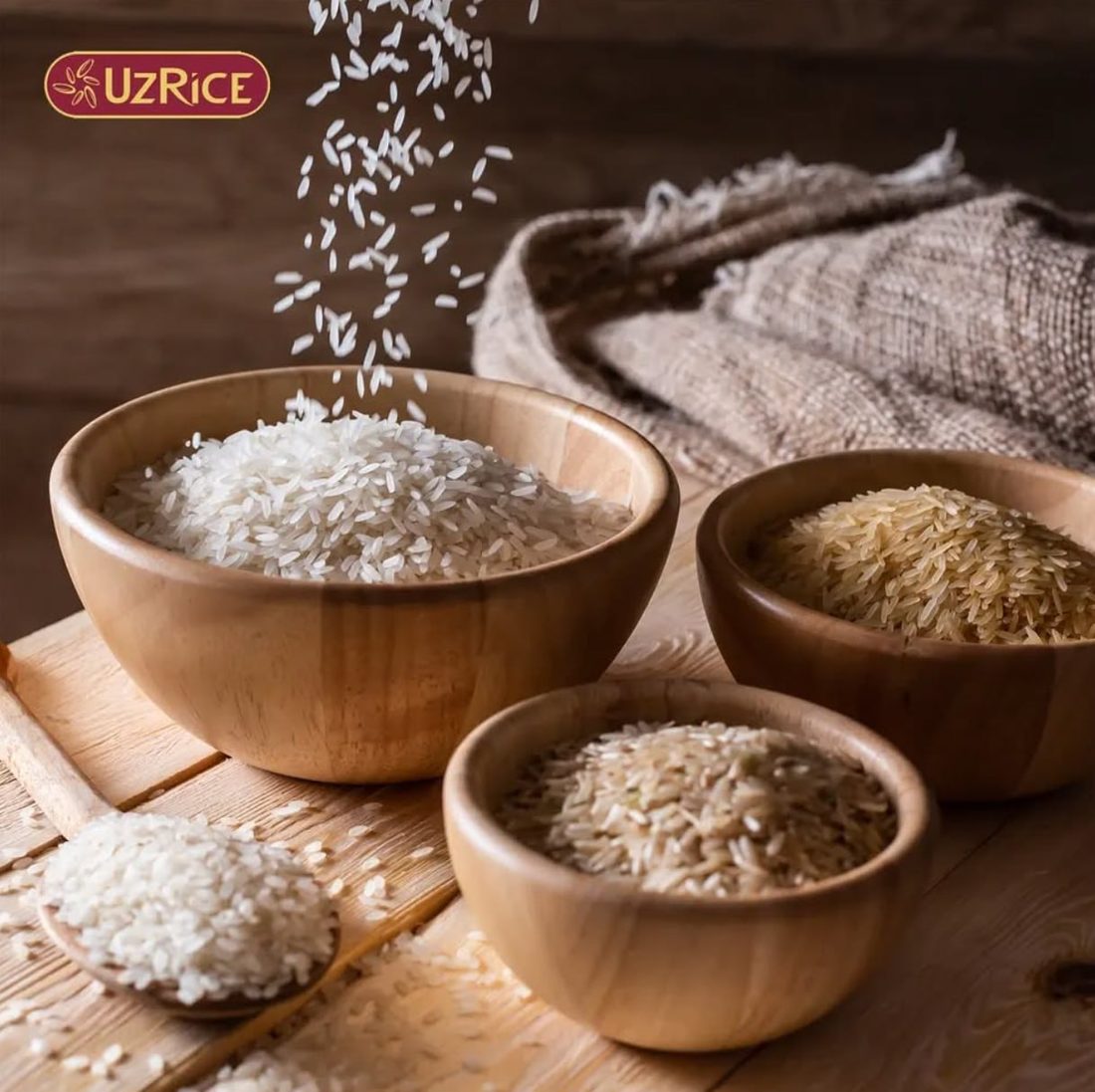
The pilaf family: toast, then absorb, and keep the grains apart
Start with the biggest technique family on earth, because once you see it you see it everywhere. The pilaf method is: coat or toast the dry rice in fat (often with aromatics), then add a measured amount of hot liquid, cover, and let the grains absorb it without stirring. The point is separate, distinct grains — every grain fluffy, defined, standing on its own. This is the opposite of the risotto and the sticky-rice philosophies, where you want the grains to cling. Toasting in fat before the liquid goes in coats each grain and helps keep them from gluing together, and cooking by absorption rather than in a flood of water means the starch that would make them sticky mostly stays put.
The word travels almost as far as the technique. Pilaf is the Turkish and English form; pilau/pulao in South Asia, polow in Iran, pilav, plov, pilafi — they’re all the same root word chasing the same idea across half the globe. Persia is usually credited as the culture that perfected it, and from there it radiated out along trade and empire in every direction.
Persia: chelow, polow, and the crust worth fighting over
Iranian rice cooking is, to my mind, the most exacting in the world, and it’s built on one obsession: every grain separate, long, and standing — and a crust at the bottom of the pot so prized that families argue over who gets it.
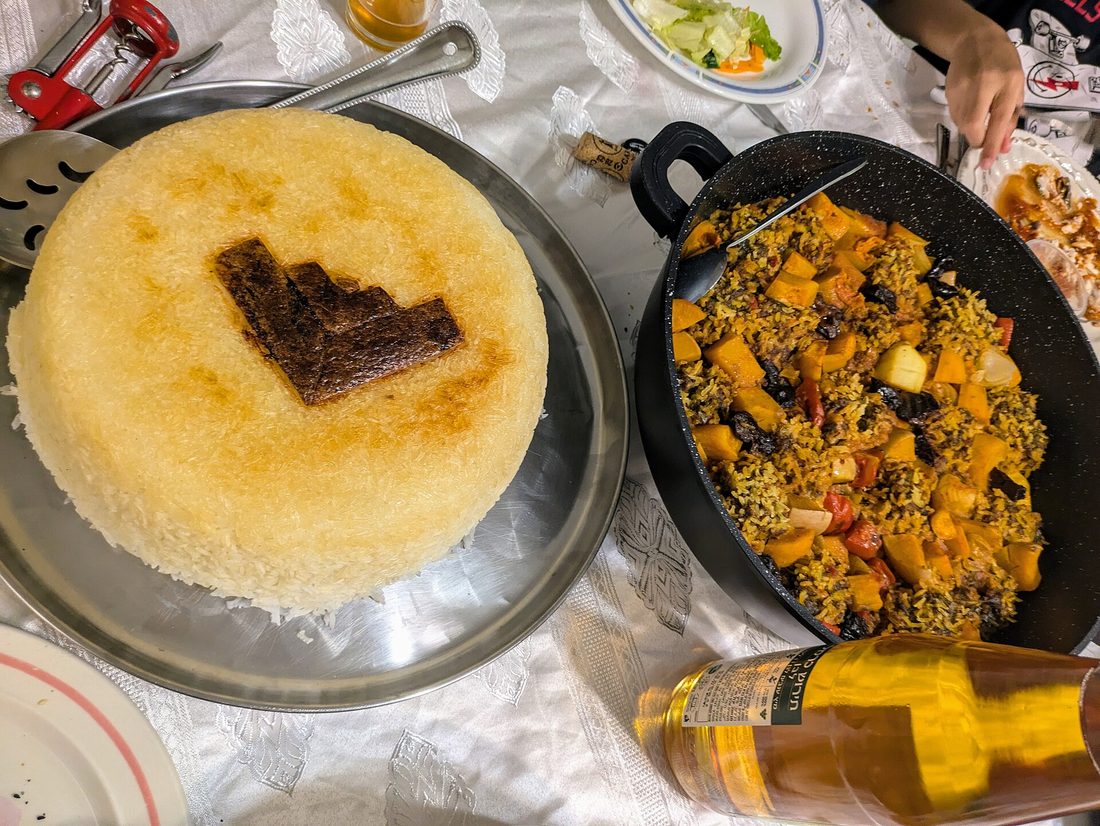
Persians distinguish chelow (plain steamed white rice, served alongside a stew) from polow (rice cooked with things mixed through it — herbs, favas and dill, sour cherries, lentils). Both start the same surprising way: the rice is soaked, then parboiled in heavily salted water and drained while still firm — you actually boil it like pasta and pour it off. Then it goes back into the pot to steam the rest of the way, usually mounded up over a layer of fat (and sometimes bread, potato, or yogurt-and-rice batter laid across the bottom). A cloth under the lid catches the condensing steam so it doesn’t drip back and turn things gummy.
That bottom layer, crisped golden in the fat while the rest steams above it, is tahdig — literally “bottom of the pot.” A shattering, deep-gold crust of crackly rice (or the potato/bread beneath it), it is the single most fought-over thing at a Persian table, and getting a clean, unbroken tahdig out of the pot in one piece is a genuine point of pride. Hold onto the idea of that crisp bottom layer, because it turns out nearly every rice culture invents its own version of it, and I’ve collected them all on the rice products page.
Central Asia: plov, cooked in the cauldron
Push north and east into Uzbekistan, Tajikistan, and the Silk Road cities and the pilaf becomes plov (or osh) — a heartier, one-cauldron affair cooked in a wide kazan over fire. The signature move is a base of lamb or beef browned hard in a lot of oil or rendered fat-tail, then a mountain of carrots cut into matchsticks, onions, whole garlic heads and chickpeas, with the rice laid over the top and steamed through the meat-and-carrot stock beneath. It is the centerpiece of weddings and celebrations across the region, cooked in quantities that feed a village, traditionally by men who specialize in it. Same family as Persian polow — toast, layer, absorb — but built for a crowd and a fire.
India and Pakistan: the real biryani-vs-pulao difference
Here’s one the internet muddles constantly, so let me be precise, because I checked it. Pulao and biryani are not the same dish cooked two ways — they are two different techniques.
Pulao is the pilaf proper: rice and everything else (meat, vegetables, spices) go into one pot and cook together from the start in a measured amount of seasoned broth, absorbing it. Milder, faster, one vessel, harmonious.
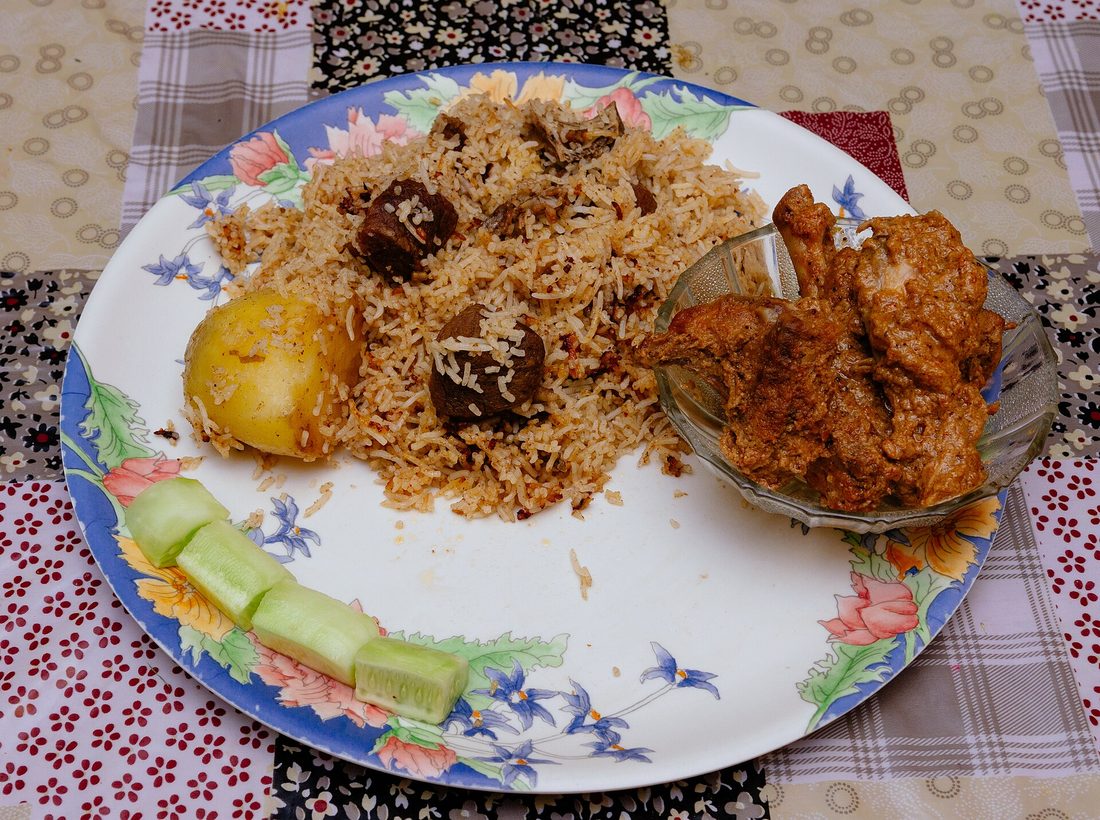
Biryani is the layered dum dish. The rice and the meat are cooked separately and only partway — the rice parboiled to about 70% and drained, the meat cooked down into an intense spiced masala — and then the two are layered in a pot (fried onions, saffron milk, mint and cilantro between the strata), sealed under a tight lid (classically with a rope of dough), and finished together on low heat. That final sealed steaming is the dum: the trapped steam marries the layers, and because the layers stay distinct you get variation from top to bottom — the top rice lightly perfumed, the bottom rice soaked in the richest, darkest masala. It’s slower, fussier, and built for occasions.
So: pulao = cooked together; biryani = cooked apart, then layered and dum-steamed. If someone combined everything in one pot and called it biryani, they made a very good pulao. My box has a proper Chicken Biryani (Dum Style) that does it the layered way, which is the version worth the effort.
The Arab and Turkish table
The same pilaf idea anchors the eastern Mediterranean and the Gulf. Across the Levant and the Arabian Peninsula, spiced rice — often toasted with vermicelli, studded with nuts and dried fruit, scented with cinnamon, cardamom and clove — is the standard bed for roasted or braised meat; think of the great platters of rice crowned with lamb that a whole table eats from. My Arabic Style Rice with Lamb Meat is squarely in this tradition. Turkish pilav keeps it simpler and often finishes with a knob of butter stirred through; the toasted-vermicelli move that shows up in American “rice pilaf” mixes is a direct import from here.
And though it isn’t rice, the same technique carries over to other grains: my Quinoa Pilaf with Seared Scallops and Steak + Brussels Sprouts + Quinoa Pilaf are pilaf in method even though the grain changed. Toast, add measured liquid, absorb, keep it separate. Once you own the move, you can run it on anything. A plain-and-lovely version of the rice itself is my Green Pea Rice, Asparagus Rice.
Louisiana: where I actually cook
This is home base for me. The rice cooking I do with my own hands is Cajun and Creole, and Louisiana is a rice culture — south Louisiana grows a lot of the American crop, and the food is built around it. What I love about it as a teaching example is that it contains, within one small corner of one state, two opposite philosophies of rice sitting right next to each other on the menu.
Jambalaya: the rice cooks in the pot
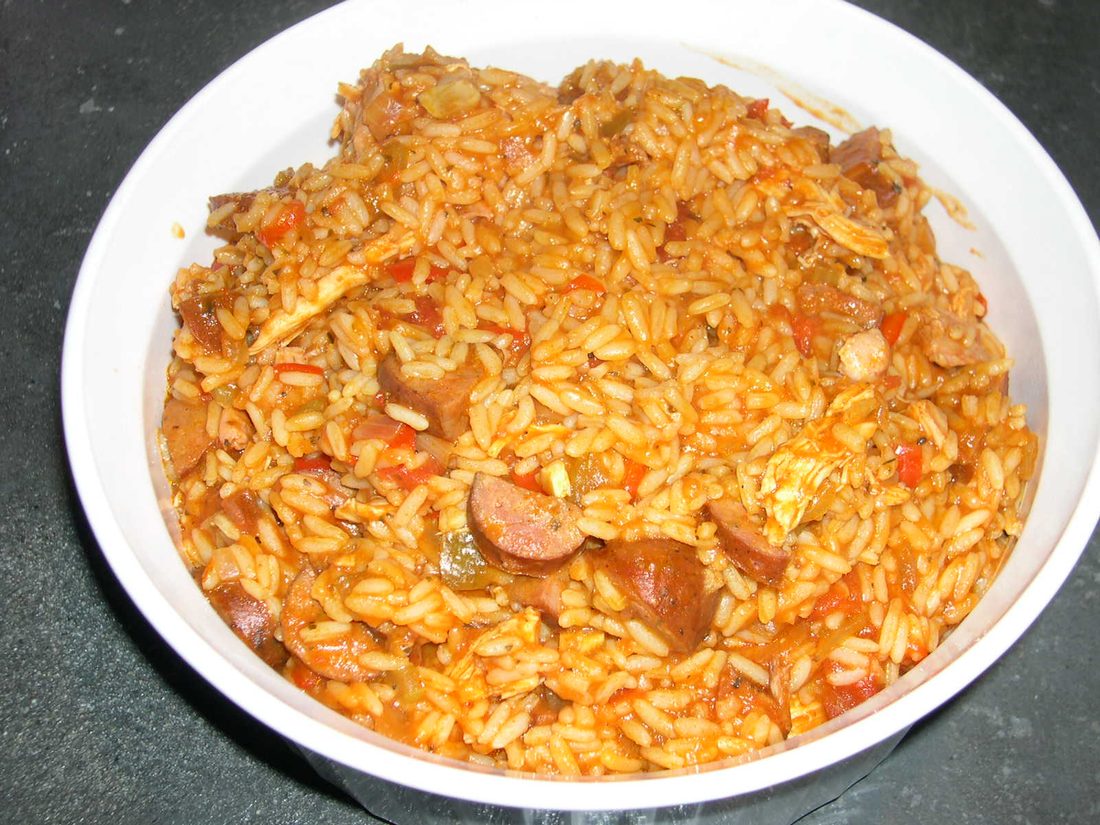
Jambalaya is Louisiana’s pilaf — and it really is one, a first cousin of paella and plov. You build a base (the “holy trinity” of onion, celery, bell pepper; meat and sausage; tomato in the Creole version, often none in the Cajun), then you add the raw rice right into the pot and let it cook in the seasoned liquid, absorbing all of it, until the rice is the dish and carries every bit of flavor you built. Nothing is served alongside; it’s all one pot. That’s the pilaf principle wearing a Louisiana accent.
The Creole/Cajun split is real and worth knowing: Creole (New Orleans) jambalaya is red — it has tomatoes — while Cajun (rural, prairie) jambalaya is brown, no tomato, its color coming from meat browned hard and the fond scraped up off the pot. I keep my own version going: Jambalaya, Louisiana, Jeff’s ongoing recipe — “ongoing” because I’m never quite done tuning it. The box has a whole rack of them to compare against: the classic Jambalaya, a Cajun Jambalaya, Chicken and Sausage Jambalaya, Jambalaya, Seafood, Creole, Jambalaya, Shrimp, Jambalaya, Ground Beef, a Tennessee Valley Jambalaya for the up-country variation, and the two from the old masters — Justin Wilson’s Chicken and Sausage Jambalaya and Virginia Willis’ Seafood and Chiken Jambalaya.
Gumbo: the rice is served under the stew
Now the opposite. Gumbo is not a rice dish — it’s a stew with rice. The gumbo is built on its own (a dark roux, the trinity, okra or filé to thicken, seafood or chicken-and-sausage), simmered long, and then ladled over a scoop of plain white rice cooked completely separately. The rice here is the pilaf’s philosophical opposite: it’s a neutral, fluffy platform that soaks up the stew but never joins it in the pot. Same kitchen, same week, same cook — but jambalaya says the rice is the dish and gumbo says the rice is the plate. That contrast is the whole reason I lead with Louisiana when I try to explain rice to people.
My own is Gumbo, New Orleans Creole, Jeff’s, and the box runs deep on this one: Chicken and Andouille Gumbo, Chicken and Smoked Sausage Gumbo, Andouille Sausage Gumbo, Gumbo, Seafood, Gumbo, Seafood, Chicken and Sausage, Gumbo, Shrimp, Mr. B’s Gumbo Ya-Ya, and Justin Wilson’s Seafood Gumbo.
Dirty rice, red beans, and Savannah red rice
Between those two poles Louisiana has a whole middle. Dirty rice is white rice cooked and then “dirtied” by cooking it with finely chopped chicken livers and gizzards, ground pork, and the trinity — the offal is what turns it brown and gives it the name, and it’s one of the great uses of the parts nobody else wanted. See Dirty Rice and Justin Wilson’s Dirty Rice.
Red beans and rice is the Monday tradition — beans simmered all day with a ham bone (Monday was wash day, and the pot could sit unattended), served over rice like a gumbo. My box has the New Orleans Style Red Beans and Rice, Red Beans and Rice, Justin Wilson’s Red Beans and Rice, Pableaux’s Monday Night Red Beans, and a Pressure Cooker Red Beans and Rice for when Monday got away from you.
And carry the rice tradition east along the coast and you get Savannah red rice — the Lowcountry’s tomato-y, sausage-and-bacon rice pilaf that’s a direct descendant of the Carolina rice culture (and, honestly, of West African rice cooking — more on that below). It’s jambalaya’s Georgia cousin. See Savannah Red Rice. There’s even a Louisiana-Italy crossover I love — Saffron Crawfish Risotto — which brings us neatly to Italy.
Spain: paella, and the crust called socarrat
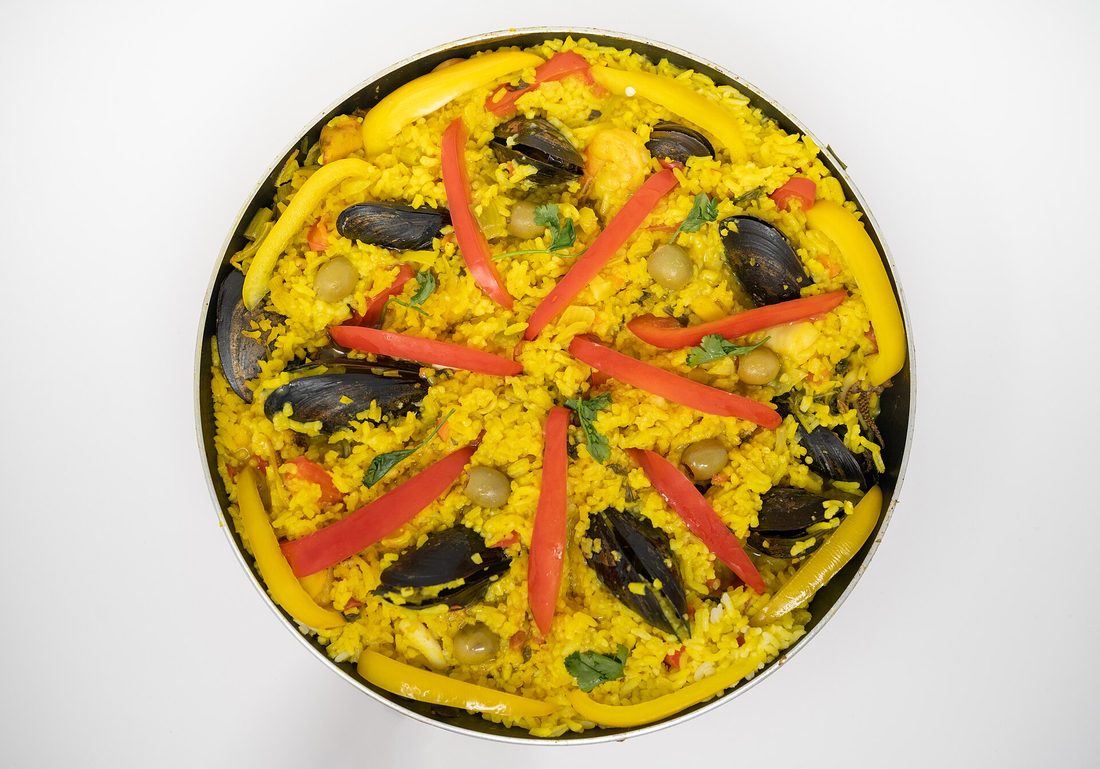
Cross to Spain and the pilaf idea turns into paella — but with a crucial twist that makes it its own thing. Real paella (from Valencia; the name is the pan, a wide shallow two-handled dish) is cooked in a thin layer over a wide fire so that a huge amount of surface is in contact with the heat. You add the rice, spread it out, and — this is the rule that separates paella from every other rice dish — you do not stir it. Ever. Stirring is for risotto. Here you want the grains to sit still, absorb the saffron-and-stock broth, and — the payoff — let the very bottom layer caramelize against the hot pan into a toasted, crackly crust called socarrat. Same beloved-bottom-crust idea as Persian tahdig, arrived at completely independently.
The other rule is the rice itself: Spain uses short, thirsty, absorbent varieties — bomba is the famous one — that drink up two or three times their volume in broth while staying separate and toothsome, and forgive you if you slightly overshoot the liquid. Long-grain rice will not do this; this is a case where the variety genuinely matters. I’ll be honest that I don’t have a from-scratch Valencian paella written up in the box — the closest is a low-carb Mexican Paella with Cauliflower Rice, which borrows the flavors and the shape but not the grain.
Italy: risotto, and the creaminess you build by stirring
Now flip the philosophy completely. If paella forbids stirring, risotto demands it. Here the goal is not separate grains — it’s a bound, glossy, spoonable creaminess, and every step is designed to coax starch out of the rice instead of keeping it in.
Italy uses high-starch short-grain varieties — Arborio, Carnaroli, Vialone Nano — that are loaded with the sticky-making starch (amylopectin; the science page explains why that matters). You toast the rice in butter (the tostatura), then add hot stock a ladle at a time, stirring almost constantly, so that friction and the slow feeding of liquid draw the surface starch off each grain into the broth, thickening it into a natural cream — no flour, no dairy needed for the body. The grains stay al dente at the core while the sauce around them turns silky.
And it ends with a flourish worth naming: the mantecatura, the final off-heat beating-in of cold butter and grated Parmesan that whips the whole thing into that signature loose, glossy, wave-when-you -shake-the-pan texture. That last step is the difference between rice-in-sauce and true risotto.
My box is deep here. Start with the Basic Risotto to own the method, then range out: Mushroom Risotto, Risotto with Wild Mushrooms (Risotto ai Funghi), Risotto with Vegetables, the dramatic Black Squid Ink Risotto with Grilled Prawns, Lobster and Green Onion Vinaigrette, and the saffron classic in three different masters’ hands — Risotto alla Milanese (Bastianich), Risotto alla Milanese (Frugal Gourmet), and Risotto alla Milanese (Saffron Risotto). That my Louisiana Saffron Crawfish Risotto even exists tells you how far these techniques travel once a cook gets hold of them.
East Asia: where rice is the meal, plainly
Move to East Asia and something shifts. Here rice is most often cooked plainly — steamed or in a cooker, no fat, no toasting, no stirring — precisely because it’s the foundation everything else sits on. The technique gets quiet so the rice can be the constant. (I lean on my Zojirushi rice cooker for exactly this reason; it makes the foundation foolproof.) But quiet doesn’t mean simple, and the dishes built on that foundation are some of the world’s greatest.
Japan: gohan and everything it holds up
In Japanese, cooked rice is gohan — and the same word means “meal.” That tells you everything. The rice is short-grain japonica, faintly sticky on purpose so it can be picked up with chopsticks and shaped by hand, cooked plain and treated with real reverence.
From that one pot of rice comes an entire cuisine of forms:
- Sushi — vinegared rice (the vinegar step is important enough that I gave it its own section on the products page) shaped and topped or rolled. My box goes playful here with BBQ Bacon Sushi, Sushi, Cheeseburger, Sushi, Roll, Grilled Bacon, and a classic Vegetable Sushi Rolls.
- Donburi — a bowl of rice with something savory over it, the Japanese weeknight workhorse: Gyudon (Japanese Beef Rice Bowl), Oyakodon (Chicken and Egg Bowl) (the name means “parent-and-child” — chicken and egg, which is a little dark and very Japanese), the Soy-Marinated Tuna Rice Bowl (Maguro No Zuke Donburi), the Unagi Hitsumabushi Grilled Eel Rice Bowl, and the Ishiyaki Buri Bop (Hot Stone Yellowtail Rice Bowl).
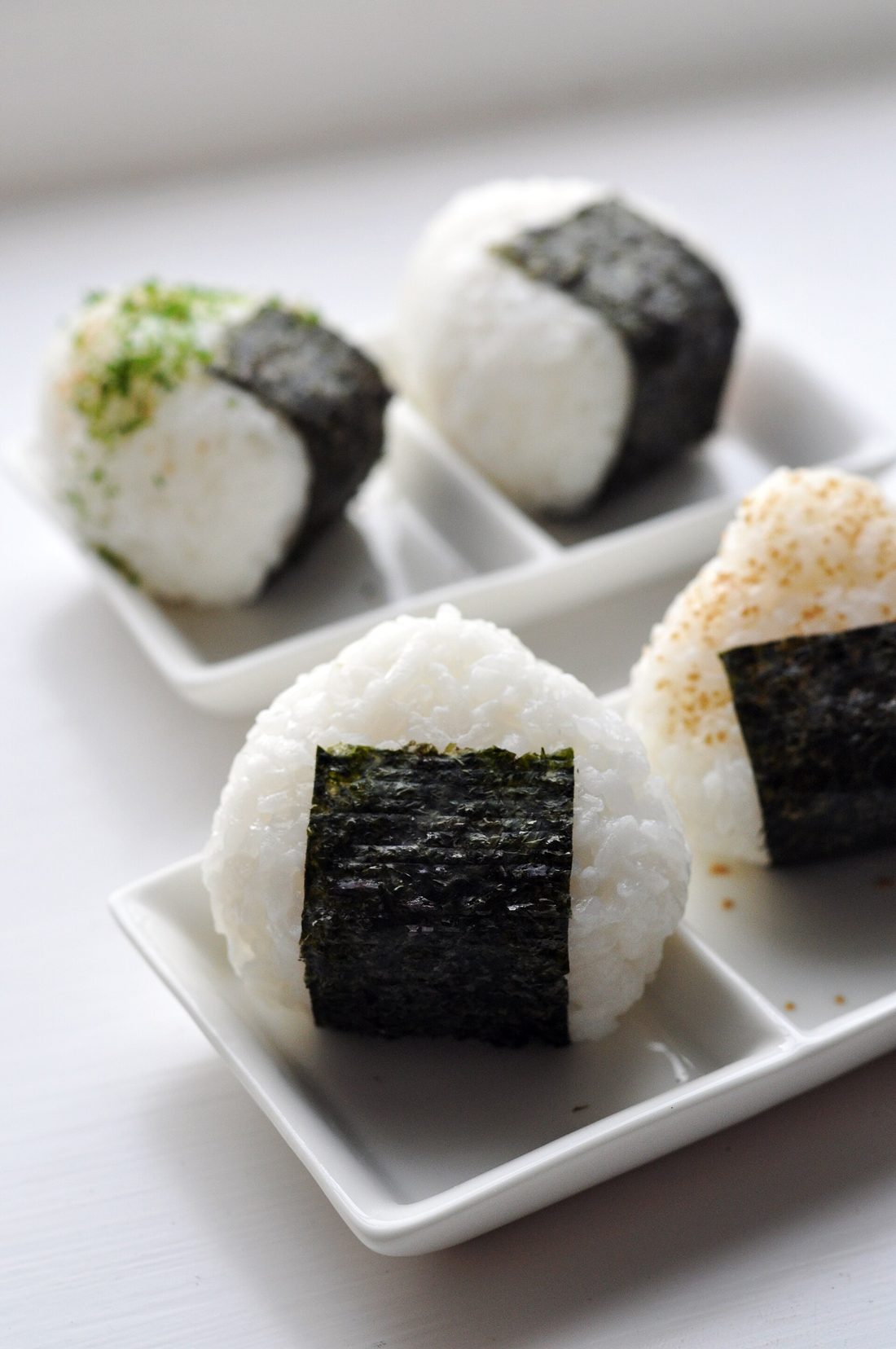
- Onigiri — rice pressed by hand into triangles around a filling and wrapped in nori, the original and best packed lunch: Onigiri (Japanese Rice Balls), Bento Box, Salmon Onigiri, Salmon Seaweed Rolls (Onigiri Rolls), and the grilled version, Yaki Onigiri Rice Balls with Miso, where the outside crisps into — you guessed it — another beloved rice crust.
- Ochazuke — the humblest and one I have real affection for: hot green tea (or dashi) poured over a bowl of rice with a few savory toppings, the classic answer to leftover rice and a late, quiet hunger. Nothing in the box for it yet, but it’s the most soothing thing you can do to a bowl of cold rice.
And when Japan wanted comfort food it borrowed the British navy’s curry and made it its own: Japanese Curry Rice (Kare Raisu), thick and sweet and poured over rice, is now one of the country’s genuine national dishes.
Fried rice: the day-old-rice science
Nearly every rice culture invented something to do with yesterday’s rice, and the Chinese answer conquered the world: fried rice. The single most important thing about it is counterintuitive — you want day-old, cold, dried-out rice, not fresh. Fresh hot rice is too moist and gummy; it steams and clumps in the wok. Rice that’s spent a night in the fridge has firmed up (its starch has partly retrograded — again, the science page has the details) and lost surface moisture, so the grains stay separate and fry instead of steam. The cooking page walks through it, but the one-line rule is: great fried rice starts the day before.
The box is full of it: Chinese Fried Rice, Traditional Mandarin Fried Rice, the Korean Kimchi Fried Rice (Kimchi Bokkeum Bap), a Southeast-Asian-leaning Garlic-Black Pepper Lobster with Lemongrass Fried Rice, and — closing the loop back to home — my own Fried Rice with Crawfish, Shrimp & Andouille Sausage - Jeff’s, which is fried rice with a Louisiana passport. The humblest version of the idea is just the Leftover Rice Frittata — proof that “what do I do with leftover rice” is a universal question with a hundred delicious answers.
China: congee, the other way to cook rice
If plain steamed rice is the everyday and fried rice is the leftover, congee (jook) is rice taken in the opposite direction entirely: cooked with far too much water, for a long time, until the grains break down completely into a savory porridge. It’s the sickbed food, the breakfast, the gentle-on-the-stomach staple of a huge part of Asia, endlessly customizable with whatever you stir in. See Century Egg Congee and the easy Instant Pot Congee (Jook).
Korea: bap, bibimbap, gimbap, and rice cakes
Korean rice is bap, and it anchors the meal the same way gohan does in Japan. The showpiece is bibimbap — literally “mixed rice” — a bowl of rice topped with an array of seasoned vegetables, meat, a fried egg and gochujang, all of it mixed together at the table by the eater (and, in the stone-bowl dolsot version, with a crust forming against the hot stone — that crust again). See Bibimbap and Bibimbap (Korean Mixed Rice with Meat and Assorted Vegetables), plus the simpler weeknight Korean Ground Beef and Rice Bowls.
Gimbap is Korea’s rice roll — rice and fillings rolled in seaweed like a sushi roll but seasoned with sesame oil and salt rather than vinegar, and built as picnic food: Gimbap (Korean Seaweed Rice Roll).
And then there are tteok, Korean rice cakes — chewy cylinders and disks made from pounded rice that are a whole food category unto themselves (I dig into how they’re made on the products page). The famous dish is tteokbokki, the rice cakes simmered in a sweet-spicy gochujang sauce until glossy and chewy — genuine national street food. My box has it several times over: Tteokbokki (Spicy Korean Rice Cakes) and two versions of Tteokbokki (Spicy Stir-Fried Rice Cakes), the milder royal-court Korean Royal Court Stir Fried Rice Cakes, and a sweet Korean Rice Cakes with Honey.
Hainanese chicken rice: the rice is the point
One dish deserves singling out because it upends the Western hierarchy so completely. Hainanese chicken rice — Chinese-diaspora cooking that became a defining dish of Singapore and Malaysia — is a plate of poached chicken with rice, but the secret every cook there will tell you is that the rice is the real star. It’s cooked in the chicken’s poaching stock with garlic, ginger and rendered chicken fat, so that each grain is saturated with savory chicken flavor. People choose their stall based on the rice. It’s the clearest possible statement of the whole philosophy of this page: the chicken is good, but you came for the rice. See Hainanese Chicken Rice.
Southeast Asia: sticky rice you eat with your hands
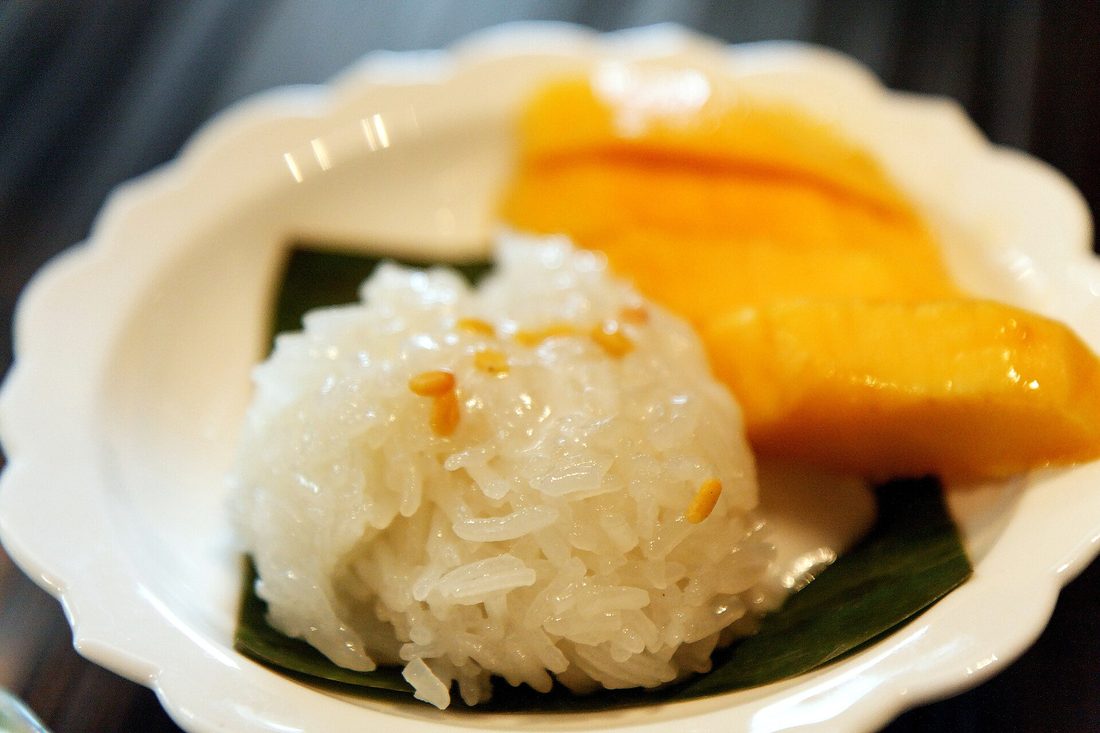
Now to a rice you eat with your fingers. Across Laos, northern and northeastern Thailand (Isan), and neighboring regions, the daily staple isn’t fluffy steamed rice — it’s glutinous, or “sticky,” rice. (Quick correction the internet loves to muddle: “glutinous” has nothing to do with gluten — rice contains no gluten at all. The name is purely about texture. The science page explains that it’s a variety almost pure in the sticky starch amylopectin.)
Sticky rice is soaked for hours and then steamed, not boiled — traditionally in a woven bamboo basket over a pot — until it turns translucent, tender, and cohesive enough to be pinched off in a lump, rolled into a ball against your palm, and used to scoop up laap, grilled meat, or a fiery dip. Laos may eat more sticky rice per person than anywhere on earth, and there it’s served in its own little lidded basket at every meal. Eating with your hands isn’t casual here — it’s the way, and the rice is built for it.
Elsewhere in Southeast Asia rice runs to the fragrant and the rich. Nasi lemak — Malaysia’s unofficial national dish — is rice cooked in coconut milk with a knot of pandan leaf, served with sambal, fried anchovies, peanuts, egg and cucumber; nasi goreng is the Indonesian/Malay fried rice, often darkened and sweetened with kecap manis and crowned with a fried egg. I don’t have those two written up, but the coconut-rice thread runs right through my box: Restaurant Style Coconut Rice (Coconut Milk) and Chicken, Coconut Milk Braised with Sweet Potatoes and Rice show what coconut does to a pot of rice — makes it rich, faintly sweet, and impossible to stop eating.
West Africa: jollof, and the honest thread back to Carolina
West Africa is one of the world’s original rice cultures — and I mean original in a way most people don’t know. There’s a whole separate species of rice, African rice (Oryza glaberrima), that was domesticated independently in the inland delta of the Niger River thousands of years ago — a second, separate invention of rice farming with no connection to the Asian one. West Africans were sophisticated rice growers before any European set foot there. The history page tells this properly, including the hard part I’ll state plainly here: the rice wealth of colonial South Carolina and Georgia — “Carolina Gold” — was built directly on the agricultural knowledge and the enslaved labor of West Africans from exactly these rice-growing regions. The tidal-field techniques that made Lowcountry rice possible came with the enslaved people who already knew how to do it. Savannah red rice and Carolina rice are not distant relatives of West African rice cooking; they’re the same tradition, carried across the Atlantic in chains. That’s not a footnote. That’s the story.
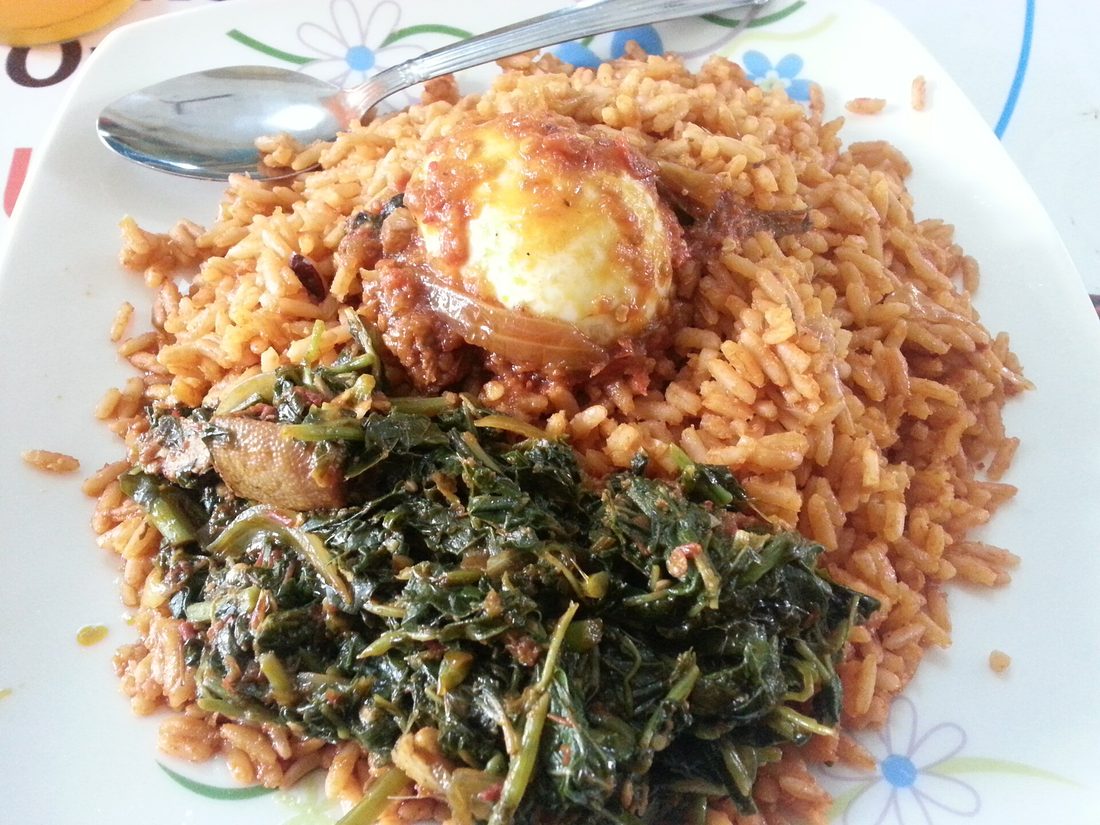
The dish that carries the West African rice flag today is jollof — a one-pot tomato-and-pepper rice, deeply seasoned, cooked until the bottom catches into (there it is again) a smoky crust. I checked its origins: it very likely began in the Senegambian region — Senegal and The Gambia — among the Wolof people, whose empire rose there by the 14th century, and the name “jollof” comes straight from Wolof; in the Wolof language the word points at the “one pot” that defines the technique. The Senegalese ancestor dish is thieboudienne (ceebu jën, literally “rice and fish”), now recognized by UNESCO as intangible cultural heritage. From that Senegambian root, jollof spread across West Africa and picked up a new name in every country — benachin in the Gambia, riz gras in the Francophone countries, and so on.
Which brings us to the jollof wars — the running, mostly good-natured, occasionally very serious argument between Nigeria and Ghana (with Senegal entitled to roll its eyes at both, being the likely origin) over whose jollof is supreme. It’s a real cultural phenomenon, it flares up on social media constantly, and it is exactly the kind of fierce love a staple food earns when it is the culture. My box has the gorgeous West African Red-Red Beans with Coconut Rice, Avocado, & Sweet Plantain — “red-red” being the Ghanaian bean stew — which puts a West African plate on your table even if the jollof itself is still on my to-write list.
The Americas: rice and beans, red rice, and something to drink
Rice came to the Americas from every direction — with the Spanish, with enslaved West Africans, with Asian immigrants — and put down deep roots.
Mexican and Spanish rice (arroz rojo, “red rice”) is a genuine pilaf: the raw rice is toasted in oil until it smells nutty and turns golden, then simmered in a tomato-and-broth blend until fluffy and separate. That toasting step is the whole game, and skipping it is why home versions come out mushy. See Mexican Rice II, Spanish Rice, and the hands-off Rice Cooker Mexican Rice.
Rice and beans is the daily bread of the Caribbean and Latin America, in a hundred regional forms. Cuban cooking gives us both the two-pots-served-together style and congrí (or moros y cristianos), where rice and black or red beans cook together in one pot until the rice takes on the beans’ color and flavor — a pilaf, technically. See Cuban Rice & Beans. The one-pot-with-protein tradition that gives us arroz con pollo all over Latin America is well represented in spirit by my One Pot Lemon Garlic Shrimp and Rice — same idea, rice and protein cooking down together in a seasoned pot.
And the Americas do wonderful things with rice as a drink and a dessert. Horchata — in its Mexican form — is rice (and often cinnamon and almond) soaked, blended, strained, and sweetened into a cooling milky drink, and it’s one of the great uses of rice that isn’t a bowl of rice at all. See Horchata (Authentic Mexican Recipe) and Traditional Mexican Horchata. For dessert, rice pudding shows up in nearly every rice culture on earth — arroz con leche, kheer, sütlaç, rice pudding plain — because slow-cooked rice, milk, and sugar is a comfort that needed no inventing twice. See Rice Pudding and the tropical Pineapple Rice Cream. (For much more on what rice becomes when it stops being a bowl of grains — the flours, noodles, wines, vinegars and puffed things — head to Beyond the Grain.)
One grain, a hundred grammars
Here’s what I keep coming back to. You can travel the whole world on one plant. The same species — sometimes the same variety — becomes a fluffy Persian pilaf, a bound Italian cream, a fingertip lump of Lao sticky rice, a smoky Nigerian jollof, a cool Mexican drink, and a bowl of plain white grains under a Louisiana gumbo. Nobody planned that. It happened because rice is generous: it will do almost anything you ask, and every culture that got its hands on it asked something different.
What strikes me most, having eaten across a lot of the places on this page, is how local the ritual is and how universal the grain is. The cook toasting arroz rojo in Guadalajara and the cook steaming sticky rice in a Lao basket and the cook stirring risotto in Milan would each find the others’ method strange — and each of them is completely, unarguably right, because rightness in rice is a local truth. The technique is the accent. The grain is the language everybody happens to speak.
If this whetted your appetite for the mechanics, go build the foundation on the cooking page, figure out which grain you actually want on the types page, read the sometimes-uncomfortable history, or see what rice turns into once it leaves the bowl over on Beyond the Grain.
Comments (0)