How to Cook Rice
There’s a strange gap in cooking. People who can bone a chicken and build a five-hour gumbo will tell you, straight-faced, that they “can’t make rice.” It comes out mushy, or crunchy, or scorched to the pot, and they’ve quietly decided rice is a personality flaw they were born with.
It isn’t. Rice is easy — but only once you stop treating “cook rice” as one thing. It’s a dozen different techniques, each built for a different grain and a different result, and most rice disasters are just the wrong technique aimed at the wrong grain. Fluffy pilaf rice cooked like risotto is a gluey mess; risotto rice cooked like pilaf is sad wet gravel. Get the method matched to the goal and the failures mostly evaporate.
So this page is organized by method — what each one does, when to reach for it, and the bit of science that makes it work — plus the two things nobody teaches and everyone needs: the rinse question, settled honestly, and the leftover-rice food-safety story, which is real and which reheating will not save you from. That second one is the spine of this page. Get everything else wrong and you’ll eat disappointing rice; get that one wrong and you’ll spend a night you won’t forget.
I cook a lot of rice — Louisiana long-grain mostly, in jambalaya and dirty rice and under red beans, plus whatever the rest of the world has taught me to want. I also lean on a Zojirushi rice cooker for the everyday pot, and we’ll get to why that machine is smarter than it looks.
The one idea under all of it: starch
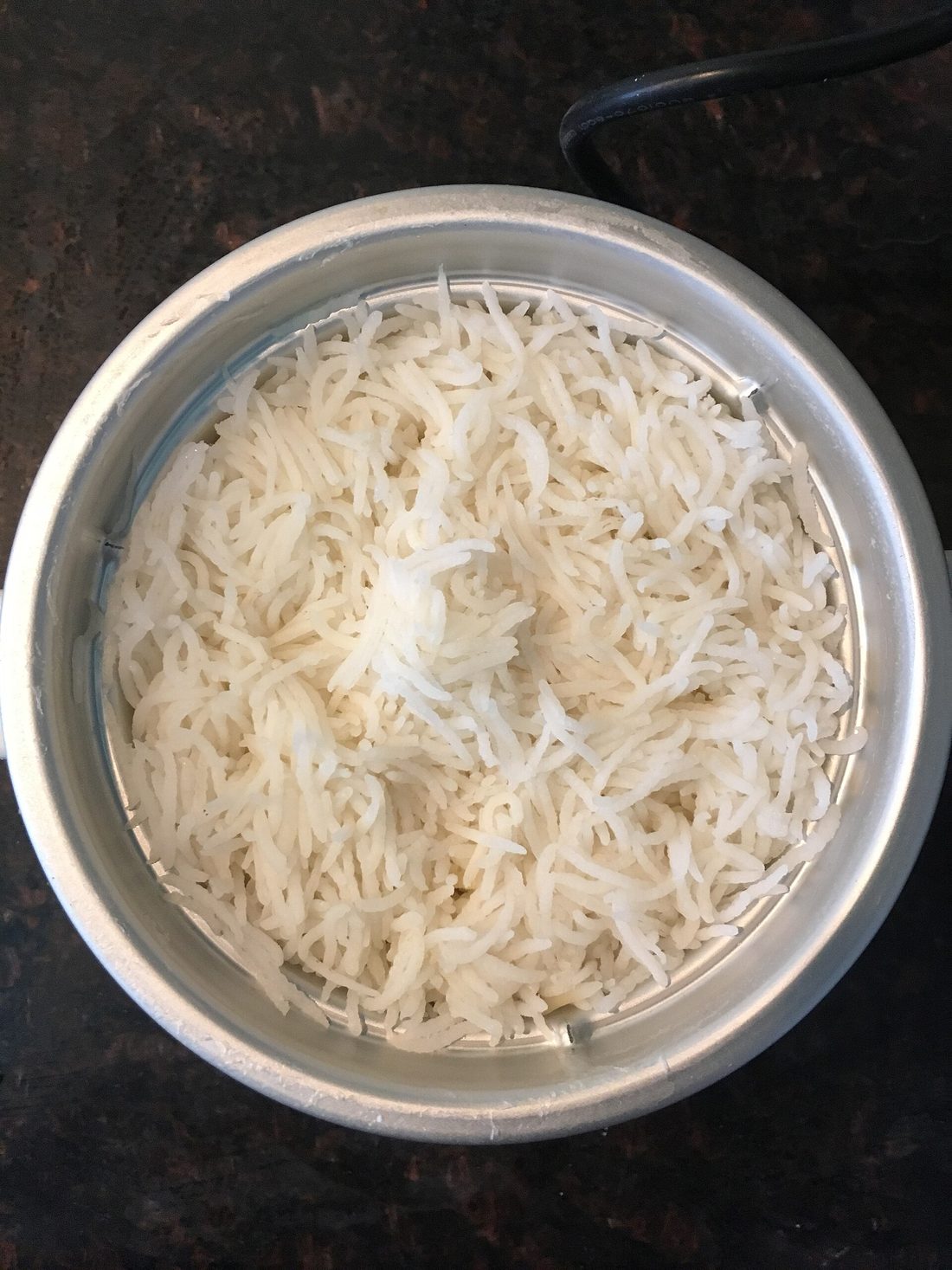
Before the methods, the thing that explains all of them. Rice is mostly starch, and rice starch comes in two molecules: amylose, which is long and straight and stays put, and amylopectin, which is bushy and branched and gets sticky when it gelatinizes. The ratio between them, set by the variety, decides everything about texture. High-amylose rice (most long-grain, basmati) cooks up separate and fluffy; low-amylose, high-amylopectin rice (short-grain, sushi rice, glutinous rice) cooks up soft and clingy. When you cook rice, water and heat make the starch granules swell and gelatinize; the amylopectin near the surface is what makes grains stick to each other, and it’s what you either wash away (for fluffy) or deliberately release (for creamy). The full chemistry is on the science page — but hold onto that one sentence: amylose fluffs, amylopectin clings. Half of what follows is just deciding which one you want and cooking to get it.
The methods
Absorption — the everyday default
The absorption method is the one most home cooks mean by “cooking rice”: measure rice, measure a fixed amount of water, bring it to a boil, then cover, drop to the lowest heat, and let the rice drink every drop until it’s tender and the water’s gone. All the starch and all the (enriched) nutrients stay in the pot because nothing gets poured off.
The craft is in the details:
- Don’t peek. Every time you lift the lid you dump the steam that’s doing the top third of the cooking. The steam finishes the grains above the waterline; let it work.
- Rest off the heat. When the timer’s up, pull it off the burner and let it sit, covered, 10 minutes. The grains redistribute moisture and firm up — the difference between gummy and fluffy is often just that ten-minute rest.
- Fluff, don’t stir. Loosen with a fork; a spoon smears starch and turns fluffy into paste.
This is how a straightforward pot like Boiled Rice or a one-pot One Pot Lemon Garlic Shrimp and Rice works, and it’s what a rice cooker automates.
Pilaf / pilau — toast first, grains apart
This is my Louisiana home turf. In the pilaf method (pilau, pilav, and the whole Cajun family of rice dishes) you first toast the dry rice in fat — butter, oil, whatever’s carrying the aromatics — for a minute or two before any liquid goes in, usually after sweating onions or the holy trinity. Then you add hot stock and cook by absorption.
The toasting does real work: coating each grain in fat and lightly cooking the outside sets the surface so the grains stay distinct and separate instead of clumping. It also builds a nutty, toasted flavor you can’t get by boiling. This is the method under Cajun Jambalaya, Dirty Rice, Spanish Rice, Mexican Rice II, and my own Jambalaya, Louisiana, Jeff’s ongoing recipe — in jambalaya the rice cooks in the seasoned liquid with the meat, so it comes out carrying the whole flavor of the pot, which is the entire point. Get the liquid ratio right and don’t stir it to death and jambalaya rice comes out tender and separate, every grain seasoned through.
Boil-and-drain — the pasta method
Here you throw rice into a big pot of abundant boiling water, cook it loose like pasta, and drain off the excess when it’s tender. It gives up the fixed-ratio precision of absorption, and it pours some water-soluble (enriched) nutrients down the sink — but it earns its place two ways. First, it’s forgiving and fast for older rice or parboiled rice, where you just want done grains without fuss. Second, and more important, cooking in lots of water and draining measurably lowers the inorganic arsenic in the finished rice — the arsenic leaches into the cooking water you throw away. That’s not folklore; it’s a real, studied effect, and it’s the practical link between how you cook and the safety story on Nutrition, Arsenic & Health, which covers the ratios and the even-better parboil-then-absorb variant.
Steaming — sticky rice in a basket
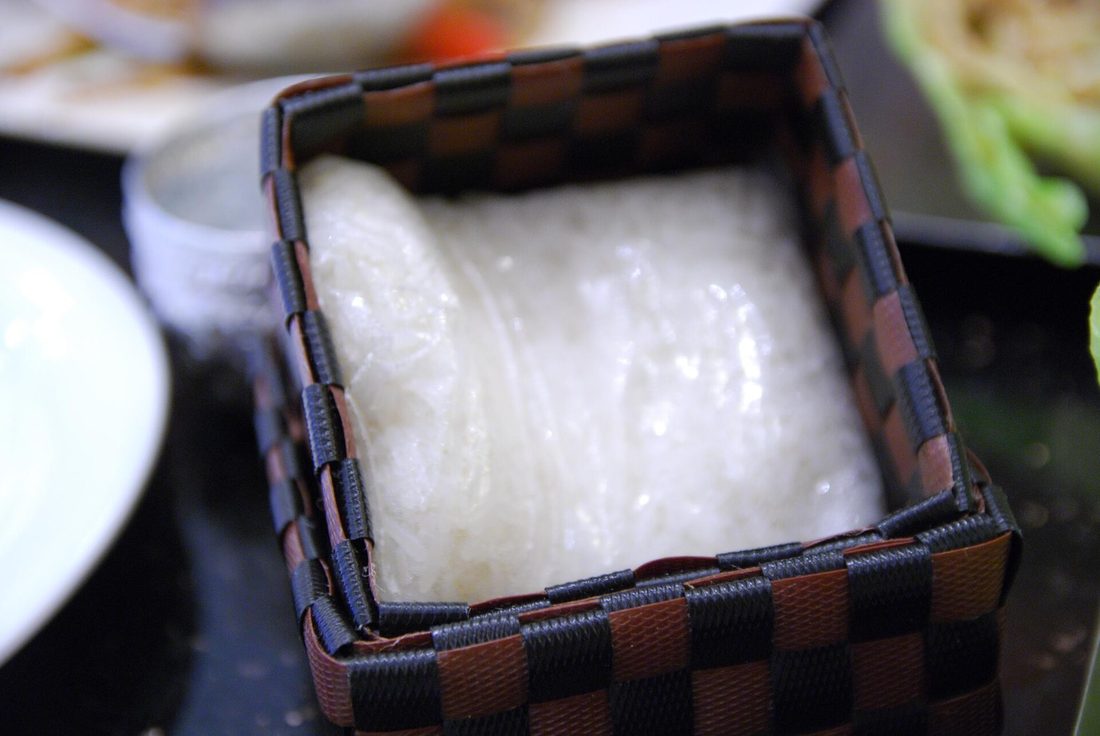
Glutinous (“sticky”) rice for Southeast Asian meals isn’t boiled at all in the classic method — it’s soaked for hours (often overnight), then steamed over water in a woven bamboo basket until it turns translucent and chewy. The long soak is non-negotiable: sticky rice is so dense with amylopectin that dropping it in boiling water turns the outside to glue before the inside hydrates. Soaking hydrates the whole grain evenly first, and steaming then cooks it through without waterlogging it, so you get that tender, cohesive, pull-apart texture you eat with your fingers. (Remember: “glutinous” is about the glue-like stickiness, not gluten — there’s no gluten in rice at all.)
The rice cooker — the machine that knows when it’s done
I use a Zojirushi, and once you understand the trick inside it you’ll never quite trust a “1 cup rice, 1 cup water, walk away” instruction the same way. Here’s the elegant part. As long as there’s free water in the pot, the contents can’t get hotter than the boiling point of water — around 212°F / 100°C — because all the incoming heat is going into boiling that water, not raising its temperature. The rice sits there at a steady boil. The instant the last of the free water is gone — absorbed into the grains and boiled off — there’s nothing left to hold the temperature down, and the bottom of the pot suddenly shoots above boiling. A basic rice cooker is just a heater with a spring-loaded thermal sensor against the pot: it watches for that temperature jump past 100°C, reads it (correctly) as “the water’s gone,” and clicks itself off to keep-warm. That’s the whole magic. It’s not timing the rice; it’s sensing the transition.
A fuzzy-logic cooker like mine goes further — a little microprocessor reads temperature (and sometimes moisture) continuously and adjusts heat through the cook rather than just watching for the one cliff, which is how it can run different programs for white, brown, sushi, porridge, and so on, then hold the finished rice at a gentle keep-warm without turning it to paste. It’s doing by algorithm what a careful cook does by attention. Jeff’s collection leans on it for exactly that everyday reliability — see Rice Cooker Mexican Rice, and my Wild Rice Zojirushi (though wild rice, worth saying, isn’t botanically rice at all — that story’s on the wild rice page). An Instant Pot does much the same job by pressure — Rice in the Instant Pot.
Parboiled (“converted”) rice — pre-cooked in the husk
Worth its own note, because it behaves differently and people misread the name. Parboiled rice is not quick-cooking rice. Before milling, the rough rice — still in its husk — is soaked, steamed, and dried. That partial pre-cooking does two useful things. First, the heat and moisture gelatinize the starch inside the grain and drive the water-soluble B-vitamins out of the bran and inward into the endosperm, so that when the bran is later milled off, much of the thiamin and niacin has already migrated into the part you keep — parboiled white rice is genuinely more nutritious than ordinary milled white (more on that on the nutrition page). Second, it firms the grain, so parboiled rice cooks up especially separate and forgiving — hard to overcook to mush, which is exactly why it’s the classic choice for big pots, cafeteria rice, and dishes where you can’t babysit it. It wants a bit more water (around 2:1) and a few extra minutes because the pre-gelatinized starch has been set. If you’ve used a “converted” rice and wondered why it stayed so obediently separate, that’s why.
Tahdig and crispy crust — burning it on purpose
The one place you want the scorched bottom is a triumph, not a failure: the golden, crackling crust of rice deliberately crisped against the bottom of the pan. In Persian cooking it’s tahdig (“bottom of the pot”); the same idea is the socarrat in paella, the crust in a Korean stone bowl Bibimbap or Ishiyaki Buri Bop (Hot Stone Yellowtail Rice Bowl), the nurungji Koreans scrape and eat, and the crust on a good jambalaya. Persian tahdig is usually made by par-boiling and draining long-grain rice first, then returning it to a pot slicked with fat (often with a layer of thin-sliced potato or bread on the bottom), and steaming it over low heat until the bottom layer turns into a crisp, deep-gold sheet you flip out and break apart. The controlled version of the “scorched pot” failure — thin even layer, enough fat, patient low heat, and you listen for the crackle rather than walking away — is one of the great textures in all of rice cookery.
Cooking brown rice — respect the bran
Brown rice throws people because they cook it like white and get crunchy, underdone grains. The difference is the intact bran, which is a water barrier: it slows how fast water gets into the grain, so brown rice needs more water (around 2 to 2.25:1) and more time (commonly 40–50 minutes by absorption) than white. Two things make it much easier: a soak beforehand (even 30–60 minutes) softens the bran and cuts the cook time, and the boil-and-drain pasta method is honestly the most foolproof way to cook brown rice — plenty of water, cook until tender, drain, and steam-dry off the heat for a few minutes. It also happens to be the arsenic-reducing method, which matters a little more for brown rice since brown carries more arsenic than white (again, the nutrition page). See Chicken & Broccoli Stir-Fry with Brown Rice.
Congee / jook — rice as comfort
Flip everything and drown the rice: congee (jook) is rice simmered in far more water than usual — many times its volume — for a long time, until the grains collapse into a soft, soothing porridge. Long-grain, short-grain, leftover rice, it all works; the point is the breakdown, not separate grains. It’s sickbed food, breakfast food, all-day food, and it’s the most forgiving thing you can do with rice. See Instant Pot Congee (Jook) and Century Egg Congee.
Risotto — releasing the starch on purpose
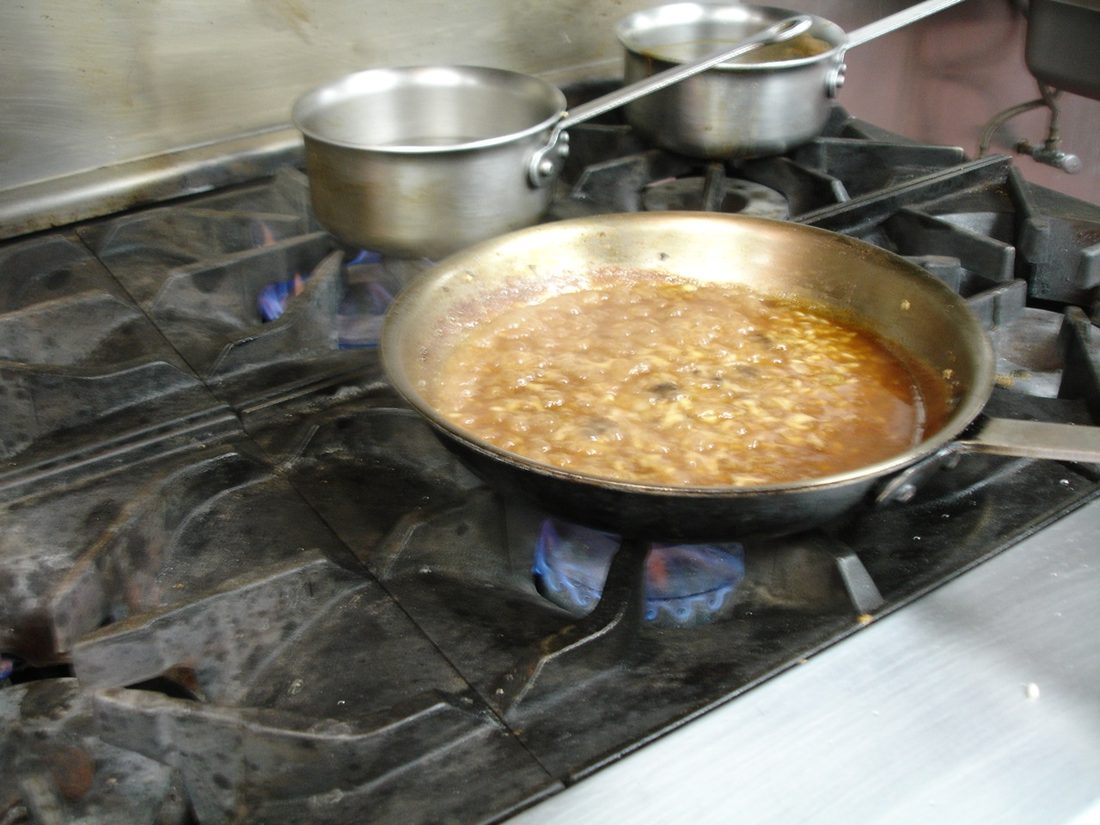
Risotto is the exact opposite of fluffy rice, and it’s built to be. You use a high-amylopectin short-grain rice (Arborio, Carnaroli), you toast it in butter and onion, deglaze with wine, then add hot stock a ladle at a time, stirring constantly so the grains rub against each other and shed their surface starch into the liquid. That released starch is what makes risotto creamy — no cream required; the creaminess is dissolved amylopectin. At the end you pull it off the heat and beat in cold butter and cheese (the mantecatura), which emulsifies it glossy. This is why you never rinse risotto rice: the surface starch you’d wash away is the whole dish. See Basic Risotto, Mushroom Risotto, Risotto alla Milanese (Saffron Risotto), and — pulling it back to my Louisiana bias — Saffron Crawfish Risotto. The starch mechanics get the full science treatment on the science page.
Paella — the crust is the reward
Spanish paella uses a short-grain rice (Bomba is the prize) but treats it like risotto’s mirror image: you spread the rice in a thin layer across a wide pan, add your stock, and then do not stir it. At all. No stirring means the grains stay separate and, crucially, means the bottom layer stays in contact with the pan long enough to form the socarrat — the prized toasted, faintly caramelized crust of rice stuck to the pan bottom that people fight over. Stir a paella and you’ve made a bad risotto and destroyed the one thing that made it paella. Not rinsed, thin layer, left alone, listen for the crackle: that’s the whole discipline.
Sushi rice — seasoned and cooled with care
Sushi rice is short-grain cooked (usually rinsed well first, then absorption or rice cooker) to a tender, sticky-but-distinct texture, then seasoned while warm with a vinegar-sugar-salt mix and cooled — traditionally fanned — as you fold it. The rinse here matters (you want clingy, not gluey), and so does gentle folding rather than mashing. It’s the base for Onigiri (Japanese Rice Balls), Vegetable Sushi Rolls, Gimbap (Korean Seaweed Rice Roll), and even the fusion stuff like BBQ Bacon Sushi.
Fried rice — where day-old rice is the point
Fried rice is the one dish that wants leftover, refrigerated rice: cold day-old rice has dried out and its starch has firmed up (retrograded), so the grains stay separate and fry instead of steaming into mush. Freshly cooked rice is too wet and too soft — it clumps and goes gummy in the wok. This is the delicious end of the same leftover-rice story whose dangerous end is coming up next, so keep reading before you leave rice on the counter. See Chinese Fried Rice, Kimchi Fried Rice (Kimchi Bokkeum Bap), and my own Fried Rice with Crawfish, Shrimp & Andouille Sausage - Jeff’s.
The rinse debate, settled honestly
Should you rinse rice? The internet screams both answers, and both camps are half right. Here’s the honest version, because it genuinely depends on what you’re cooking:
- Rinse it for anything where you want separate, fluffy, or clean-tasting grains — basmati, jasmine, plain long-grain, sushi rice. Milling leaves loose surface starch dust on the grains; rinsing until the water runs clearish washes that off, and less surface starch means less clumping and a cleaner texture. This is why basmati and sushi cooks rinse as a matter of course.
- Don’t rinse it when you want the surface starch: risotto and paella rice are never rinsed — that starch is the creaminess and the crust. Rinsing them would sabotage the dish.
- The real trade-off: enriched rice. In the US, most white rice is enriched — sprayed after milling with a coating of iron and B-vitamins (thiamin, niacin, folic acid) to replace what polishing stripped out. Because that coating sits on the surface, rinsing washes a big chunk of it straight down the drain — studies find rinsing can remove well over half of the added iron and folate. So rinsing enriched white rice is a small nutrition cost for a texture gain. It also rinses off a little surface arsenic, a small point in its favor. Brown rice barely loses anything to rinsing, because its nutrients are locked inside the bran, not sprayed on top.
My rule of thumb: rinse when the goal is fluffy or clean (basmati, jasmine, sushi, plain long-grain), skip it when the goal is creamy or crusted (risotto, paella), and don’t lose sleep over the enriched-nutrient loss unless rice is genuinely carrying your whole diet’s iron — in which case eat some other iron. It’s a nuance, not a commandment.
Water ratios: measure the type, not one magic number
The great myth is that there’s a single correct rice-to-water ratio. There isn’t, because different grains hold different amounts of water. Here are honest working ranges — approximate, because your pot, your lid, and your rice all matter:
- Long-grain white (basmati, jasmine, plain): about 1.5–1.75 : 1 water to rice.
- Medium/short-grain white (sushi-style): roughly 1.25–1.5 : 1 — a touch less, because you want cling, not fluff.
- Brown rice (any length): 2 – 2.25 : 1 and a longer cook — the intact bran resists water, so it needs more liquid and more time.
- Parboiled (“converted”) rice: around 2 : 1 — the pre-cooking (see below) firms the grain so it drinks more.
The lesson isn’t the exact numbers — it’s why they differ. Brown needs more water than white because the bran is a barrier. Short-grain needs less than long because you’re chasing a different texture. Match the ratio to the grain in your hand, adjust once for your own stove, and then trust it. A rice cooker’s fill lines encode exactly this per grain type.
Soaking — and why
Soaking rice before cooking (30 minutes to a couple hours for basmati; hours to overnight for sticky rice) pre-hydrates the grains so they cook more evenly and, for long-grain like basmati, elongate into those prized long separate grains without cracking or cooking unevenly. For sticky rice steamed in a basket, soaking isn’t optional — it’s the only way the dense grain hydrates through before the outside overcooks. Soak when the grain is long and you want length and evenness, or when you’re steaming glutinous rice. Everyday long-grain in a rice cooker doesn’t need it.
Food safety: leftover rice and Bacillus cereus
This is the section to read even if you skip the rest. There’s a real illness — sometimes called “fried rice syndrome” — and it’s caused by a bacterium called Bacillus cereus, and the way most people think about leftovers gets it dangerously wrong.
Here’s the mechanism, and it’s the whole thing:
- The spores survive cooking. Uncooked rice commonly carries B. cereus spores, and those spores are heat-resistant — boiling does not kill them. You cook the rice, you kill the ordinary bacteria, but the spores ride right through, alive.
- Room temperature wakes them up. If the cooked rice then sits out at room temperature, those surviving spores germinate and multiply, and as they grow they produce a toxin called cereulide.
- Cereulide is heat-stable, and this is the trap. Unlike the bacteria, the toxin is not destroyed by reheating. You can stir-fry that rice screaming hot the next day, kill every living bacterium in it, and the cereulide sails through untouched — cereulide withstands temperatures far above boiling. Reheating makes the rice safe from live bacteria and does nothing about the poison already made. That’s why hot fresh fried rice made from mishandled leftover rice can still make you violently sick: the damage was done on the counter, not in the wok. It hits fast — vomiting within a few hours — and while it’s usually short and self-limiting, severe cases have caused real harm.
The fix is simple and it’s entirely about time and temperature, before the fridge, not after:
- Cool cooked rice fast. Don’t leave it sitting on the counter to “cool down” for hours. Spread it out to cool quickly (a wide dish, not a deep pot).
- Refrigerate within about an hour or two of cooking — the sooner the better. Cold stops the spores from germinating and stops the toxin from forming.
- Use it within a day or so, and reheat it thoroughly and only once.
- When in doubt, throw it out. Rice is cheap; a night over the toilet is not.
None of this is a reason to fear rice — I make fried rice from yesterday’s rice all the time. It’s a reason to get the cooling right. Cool it fast, fridge it quick, use it soon, reheat once. The bacteria you can kill; the toxin you can only prevent. (This is exactly why fried rice loves proper day-old rice — the trick is that “day-old” means “cooked, cooled fast, and refrigerated,” not “left on the stove overnight.”)
Salt, fat, and the small things that matter
A few details that quietly separate good rice from great:
- Salt the water, not the finished rice. Salt dissolved in the cooking liquid seasons every grain from the inside; salt sprinkled on afterward sits on the surface and tastes harsh. A modest amount — think how you’d salt pasta water, but lighter — is right for plain rice. (In a seasoned dish like jambalaya the stock is already carrying the salt, so taste the liquid, not the raw rice.)
- A little fat buys separation and shine. A knob of butter or a spoon of oil in the pot — or the toasting fat in a pilaf — coats the grains and helps them stay distinct, and it carries flavor. It’s optional for plain absorption rice and essential for pilaf.
- Aromatics ride in the liquid. Cook rice in stock instead of water, or drop in a bay leaf, a bruised lemongrass stalk, a knob of ginger, a cardamom pod — the grain absorbs it as it drinks. This is the whole idea behind Restaurant Style Coconut Rice (Coconut Milk), Tea-Rubbed Salmon with Scallion-Lemon Rice, and coconut-rice plates like West African Red-Red Beans with Coconut Rice, Avocado, & Sweet Plantain.
Reheating rice — do it right, and once
Refrigerated rice reheats beautifully if you add back a little moisture: a splash of water and a cover in the microwave, or a splash of water and a lid on the stovetop, so it re-steams rather than drying to gravel. The two rules that matter: reheat it thoroughly hot all the way through, and reheat it only once — repeated cool-and-reheat cycles are both a texture problem and, per the food-safety section above, another chance for trouble. And remember the hard limit from that section: reheating fixes texture and kills live bacteria, but it does nothing to a toxin that already formed on the counter. Reheating is not a rescue for rice that was left out.
Troubleshooting, tied to the science
Almost every rice failure is one of a handful, and each one traces back to the starch and the water:
- Mushy / gluey. Too much water, or you stirred it (which smears surface amylopectin into paste), or you cooked past done. Cut the water a bit, stop stirring, and rest it off the heat instead of cooking longer.
- Crunchy / hard center. Not enough water or not enough time — the starch never fully gelatinized. Add a splash of hot water, cover, and give it more low, gentle heat.
- Scorched bottom. Heat too high, or too little water for the pan, so the bottom hit that above-boiling cliff (see the rice cooker section) while the top was still cooking. Lower the heat; in a heavy pot the rest-off-heat step also helps the moisture even out. (In paella and tahdig, a controlled version of this is the whole point — the socarrat and the crust — but there the layer is thin and even and you’re doing it on purpose.)
- Gummy but undercooked at once. Usually unrinsed high-starch rice cooked too wet — the outsides went to glue before the insides softened. Rinse next time, and check your ratio against the grain type.
Match the method to the grain, get the water right for that grain, respect the rest, and cool your leftovers fast. Do those four things and rice stops being the thing you “can’t make.” For where the grains and the starch come from in the first place, see Types of Rice and the science page; for what rice does around the globe, Rice Around the World.
Comments (0)