The Types of Rice
Walk down the rice aisle of a good international grocery and you’ll see thirty bags that all contain, botanically, almost the same thing: Oryza sativa, the seed of a domesticated grass. Basmati, jasmine, arborio, sushi rice, sticky rice, Carolina Gold, bomba, black rice — the overwhelming majority are the same species. What separates them is a handful of variables — grain length, subspecies, starch ratio, milling state, and a few genetic quirks — combining into a family of grains diverse enough that you genuinely can’t swap one for another and get the dish you wanted. Put Arborio in a paella or bomba in a risotto and both dishes fail, even though the two rices sit inches apart on the shelf.
This page is a guided tour of that family — what each rice is, where it comes from, how it behaves, and what it’s for. I’ll group them so the logic holds together, and I’ll cross-link the recipes where each one earns its place. But first, the two axes that organize everything: length and subspecies. Get those, and the rest of the page is just examples hanging off a frame.
The deep why — the starch chemistry that actually decides sticky versus fluffy — lives on The Science of Rice, and I’ll point back there constantly, because the science is the spine and this page is the anatomy it holds up. If you want the one-sentence version to carry through everything below: the ratio of two starch molecules, amylose and amylopectin, is what makes rice fluffy or sticky, and grain length is a rough proxy for that ratio — useful, but not a law.
I come to rice as a long-grain cook first. Louisiana Cajun and Creole cooking runs on long-grain rice, and I’ve got a shelf of it — jambalaya, gumbo over rice, dirty rice, red beans and rice. But I’ve been lucky enough to eat in a lot of places where rice wasn’t the side dish, it was the plate — the center of the meal, cooked a dozen ways I didn’t grow up with — and this page is partly an attempt to map what I learned wandering through them.
The first axis: grain length
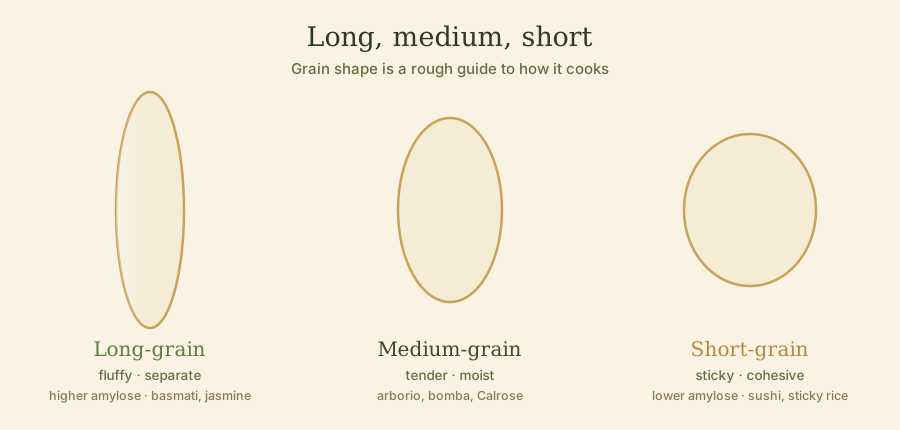
Look at rice and the first thing you notice is shape. The trade sorts rice into three length classes, and the classes really do predict behavior — because, as you’ll see, length correlates with the underlying starch chemistry.
- Long-grain — grains three to five times longer than they are wide, slender, pointed. Cooks up dry, firm, and separate, the grains standing apart. Basmati, jasmine, American long-grain. Think of the fluffy rice under a curry or beside gumbo.
- Medium-grain — shorter and plumper, about two to three times longer than wide. Cooks up moist and tender, the grains clinging a little but not gluey. Arborio, bomba, Calrose, most “sushi rice” sold in the West.
- Short-grain — almost round, barely longer than wide. Cooks up soft and sticky, the grains cohering into a mass you could pick up in a pinch. Japanese short-grain, glutinous rice.
The correlation with texture is real: long tends toward fluffy-and-separate, short tends toward sticky-and-cohesive, medium sits between. But — and this is the caveat the science page hammers — length is a proxy, not the mechanism. The mechanism is amylose content. Long grains tend to be higher-amylose (which is what makes them fluffy) and short grains tend to be lower-amylose (which is what makes them sticky), but the two can come apart. Arborio is a plump medium grain that goes gorgeously creamy; bomba is a similar shape that stays defiantly separate. When length and texture disagree, it’s the starch talking. So use length as your first read, then check what the specific variety actually does.
The second axis: indica vs japonica
Underneath length is a deeper split, and it’s genuinely a fork in the evolutionary road. Asian rice, Oryza sativa, comes in two main subspecies that were domesticated and bred along divergent paths: indica and japonica.
- Indica is the tropical, long-grain lineage — the rice of South Asia, Southeast Asia, southern China, and, by way of that heritage, American long-grain. Indica grains run long and slim, higher in amylose (roughly 18–25%), and cook up separate, light, and fluffy. Basmati and jasmine are indica.
- Japonica is the temperate, short-grain lineage — the rice of Japan, Korea, northern China, and (via that heritage) California’s Calrose and Italy’s risotto rices. Japonica grains are short, round, and plump, lower in amylose and higher in amylopectin, and cook up moist, tender, and sticky. Sushi rice, Koshihikari, and Arborio are all japonica-type.
So the two axes line up: indica ↔ long ↔ fluffy, japonica ↔ short ↔ sticky. That’s the master frame. Nearly every rice below is a variation on one of these two themes — with a few genuine outliers (like true glutinous rice, and the separately-domesticated African rice) that I’ll flag as we go.
One outlier worth naming right at the top, because it upends the definition: African rice, Oryza glaberrima, is a completely separate species, independently domesticated in the inland delta of the Niger River in West Africa some 3,000 years ago — a second, parallel invention of rice farming that owed nothing to Asia. It’s a different plant, not a variety of sativa. Most rice grown in West Africa today is the higher-yielding Asian sativa, but glaberrima still grows, and it matters enormously to the history of rice in the Americas, which I get into on the history and around-the-world pages. Keep it in mind: when this page says “rice is one species,” that’s almost true — there are two, and the second one is West African.
Long-grain aromatics: basmati and jasmine
Now the varieties, starting with the two most famous fragrant long-grains — the rices that smell like something before you’ve even cooked them.
Basmati (India and Pakistan)
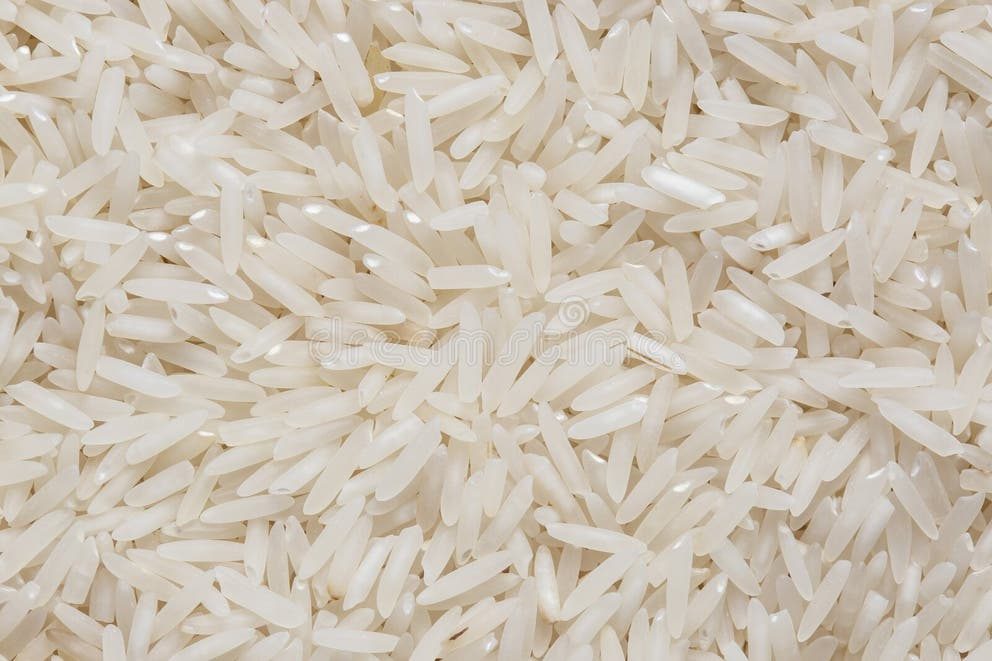
Basmati is the queen of long-grain, grown for centuries in the foothills of the Himalayas across northern India and Pakistan. The name comes from Hindi for something like “fragrant” or “queen of aromas,” and the fragrance is the point. Basmati is high-amylose (roughly 22–28%), so it cooks up exceptionally dry, firm, and separate — the anti-sticky rice, each grain standing alone. That’s exactly what you want under a rich, saucy dish where the rice’s job is to stay distinct and soak up flavor without turning to paste.
Two things make basmati special beyond ordinary long-grain. First, the aroma — that popcorn-and-flowers scent comes from a compound called 2-acetyl-1-pyrroline, and the genetic story of why fragrant rice is fragrant (spoiler: a broken gene) is one of my favorite bits of the science page. Second, the aging. Good basmati is deliberately aged one to two years before it’s sold, which dehydrates and re-crystallizes the starch so the grain hydrates slowly and evenly — and the payoff is dramatic elongation. Well-aged basmati can nearly double in length when it cooks, stretching into those long, slender, needle-like grains that make a plate of biryani look like a special occasion. That elongation is length-only — the grain gets longer, not fatter — which is a genuinely distinctive basmati trait. When you want rice that stays separate and elongates, basmati is the answer, and it’s the classic choice for biryani, pilaf, and anything from the tandoor-and-curry world.
Jasmine / hom mali (Thailand)
Jasmine rice — hom mali in Thai, “fragrant rice” — is Thailand’s aromatic long-grain, and it’s a study in contrast with basmati. It’s also fragrant, also long-grain, and it carries the same 2-AP aroma. But its texture is nearly the opposite: jasmine is low-amylose (around 15%), so where basmati cooks up dry and separate, jasmine cooks up soft, moist, and gently clingy — tender grains that hug each other just enough to scoop up with a spoon or lift with chopsticks, without ever being truly sticky.
That softness is a feature, not a flaw — it’s what makes jasmine right for the food it accompanies. Thai and broader Southeast Asian cooking wants a rice that’s tender and slightly cohesive to carry a curry or a stir-fry, and jasmine delivers it with a floral fragrance that basmati’s drier, nuttier scent doesn’t quite match. It’s the everyday rice of Thailand and much of mainland Southeast Asia, and it’s the rice I’d reach for with a coconut curry — see restaurant-style coconut rice, which is jasmine’s natural habitat. The two great aromatic long-grains, then, split by texture: basmati for dry and separate, jasmine for soft and fragrant. Don’t swap them and expect the same plate.
American long-grain: Carolina Gold and the Louisiana crop
America grows a lot of rice — Arkansas, Louisiana, Texas, Mississippi, California — and most of it is workaday long-grain, indica-heritage, medium-high amylose, cooking up separate and fluffy. It’s the rice of the American South and of my own kitchen. But two names deserve more than a passing mention.
Carolina Gold — and an honest history
Carolina Gold is America’s great heirloom rice, a long-grain variety that made the South Carolina and Georgia Lowcountry fabulously wealthy in the 1700s and 1800s. It’s a superb rice — versatile, with a texture that can go fluffy or creamy depending on how it’s cooked — and it nearly went extinct before a revival beginning in the 1980s brought it back; today the Carolina Gold Rice Foundation and growers like Anson Mills cultivate it again.
But the wealth Carolina Gold generated was not built on the ingenuity of the planters, and it’s important to say so plainly. The Lowcountry rice economy was built on the knowledge, skill, and forced labor of enslaved West Africans. Rice had been cultivated in West Africa — the “Rice Coast,” a 700-mile stretch spanning several nations — for thousands of years before European colonists arrived, using their own domesticated species (Oryza glaberrima) and a sophisticated command of tidal-flooded rice cultivation. The planters of Carolina did not know how to grow rice in tidal wetlands; the Africans they enslaved did. Scholars including Joseph Opala and others have documented the deep parallels between Lowcountry Gullah culture and West Africa’s rice-growing regions, and the technical debt is unmistakable — the dikes, the flooding schedules, the winnowing with fanner baskets all trace to West African practice. Enslaved African women hand-pounded and winnowed the crop by hand. As rice grew profitable, the slavery that produced it grew crueler. Carolina Gold is a genuinely wonderful rice, and it is also a monument to expertise and suffering that the people who profited never credited. Both things are true, and the history page takes the story further.
Carolina Gold’s texture, incidentally, is a nice illustration of the length caveat: it’s a long grain but relatively low-amylose for a long-grain, which is why it can be coaxed toward creaminess — it’s flexible in a way that harder long-grains aren’t. Try it in something like Savannah red rice, a Lowcountry classic.
Louisiana long-grain
The everyday long-grain of Louisiana — Cajun and Creole country — is the rice I cook most. It’s a straightforward American long-grain: fluffy, separate, neutral, and built to be the foundation under a dark roux. This is the rice for gumbo (where the rice is the platform and the gumbo the star), for jambalaya (where the rice cooks in the pot and absorbs everything — long-grain’s separateness keeps it from going gluey), for red beans and rice, and for dirty rice. A lot of Louisiana cooks reach for parboiled long-grain here specifically because it holds its shape and stays separate under a wet, long-simmered stew — more on parboiled below.
Medium and short: the sticky and creamy specialists
Now the plump-grained rices, where the whole game is controlled cohesion — grains that release starch or cling together on purpose, in service of a specific dish.
Italian risotto rices: Arborio, Carnaroli, Vialone Nano
Risotto is a dish built on a paradox: you want the rice to release a flood of creamy starch into the pan while each individual grain stays firm and distinct — al dente — at its core. Only certain japonica-type medium grains do this, and Italy grows the three that matter, graded by size on Italy’s own system (superfino, fino, semifino).
- Arborio is the famous one, a big superfino grain, widely available and forgiving. It releases plenty of surface starch for a rich, creamy risotto. Its weakness is a narrow window — overcook it a minute and the whole grain goes soft — but for most cooks it’s the reliable default. This is the rice for basic risotto, mushroom risotto, and the saffron-gold Risotto alla Milanese.
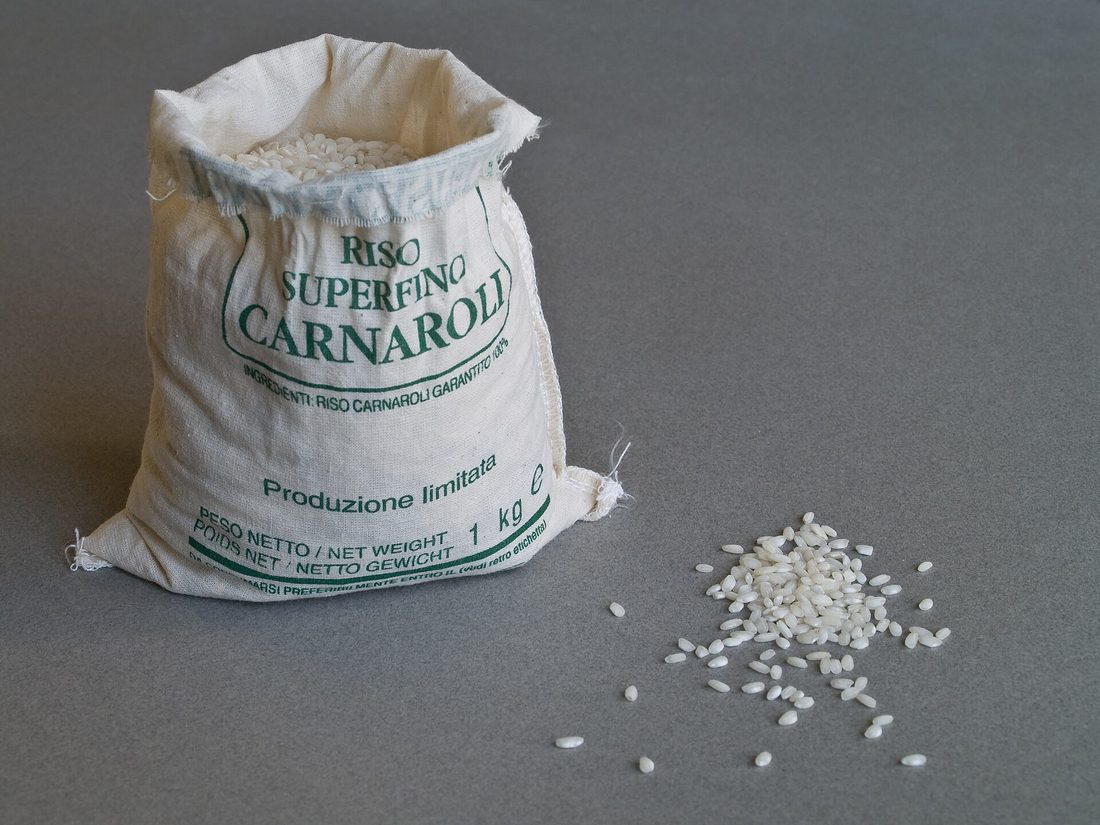
- Carnaroli is the connoisseur’s choice — a superfino grain that many Italian cooks consider the best risotto rice there is. It has a firmer, more forgiving structure than Arborio (a starch profile that keeps the grain’s shape better while still going creamy), so it’s harder to overcook and holds a more distinct al-dente bite. It’s pricier and harder to find, but for a risotto you care about it’s worth seeking out — reach for it in something like risotto ai funghi or a showpiece squid-ink risotto.
- Vialone Nano is the smaller semifino grain favored in the Veneto, especially for looser, soupier risottos (all’onda, “wavy”). It absorbs a lot of liquid, roughly triples in size, and gives a slightly different, more separate texture. It’s the traditionalist’s pick for Venetian-style risotto.
The one rule that unites all three, and it’s a rule enforced by the science page: never rinse risotto rice. That loose surface starch you’d wash away is the entire mechanism of the creaminess. Rinsing risotto rice sabotages the dish. (This is exactly why you do rinse long-grain rice and don’t rinse this — same starch, opposite intention.) You’ll see it claimed that Arborio is “high in amylopectin”; the real picture is intermediate-amylose grains whose creaminess comes from surface starch releasing during stirring plus a soft outer layer over a firm amylose core — the soft outside goes creamy, the firm core stays al dente. That two-part structure is the whole trick.
Spanish paella rices: Bomba and Calasparra
Cross to Spain and the requirement flips. Paella wants the opposite of risotto: grains that soak up an enormous amount of intensely flavored liquid but stay separate and distinct, never creamy, never stirred into a mass. The prized Spanish rices — bomba and Calasparra, both grown in the Murcia and Valencia regions, both carrying protected Denominación de Origen status — are bred exactly for this.
Bomba’s signature trick is thirst: it absorbs as much as three times its volume in liquid while holding its shape, soaking up all that saffron-and-seafood stock without bursting or turning to paste, and — crucially — it does it “without releasing excess starch,” so the grains stay separate, never sticky. Calasparra behaves almost identically, with a slightly lower absorption rate; Valencian cooks use them nearly interchangeably. This absorb-a-lot-but-stay-separate behavior is why you build a paella flat and don’t stir it — you want each grain to drink the stock in place and stay individual, plus the prized socarrat, the crisp caramelized crust on the bottom. Note the contrast the paella world itself draws with risotto rice: Arborio’s starch release, so wonderful in a risotto, would muddy a paella’s clean grain separation. Different dish, opposite rice. This is the rice for a proper Spanish rice done right, or an actual paella.
Japanese short-grain: sushi rice, Calrose, Koshihikari
Japanese cooking runs on japonica short-grain — plump, round grains, low in amylose, that cook up glossy, tender, and cohesive enough to be picked up with chopsticks or pressed into shapes, but not the extreme stickiness of true glutinous rice. This is the rice that clings, gently and on purpose.
- Koshihikari is the most prized eating variety in Japan — a short-grain celebrated for its aroma, sweetness, and ideal sticky-tender texture, eaten plain as the centerpiece of a meal.
- Calrose is the California-grown medium-grain (a japonica developed for the American climate) that’s become the workhorse “sushi rice” of the West — widely available, affordable, and cohesive enough for most home sushi and rice-bowl work.
- “Sushi rice” on a bag usually means a Calrose-type short/medium grain, seasoned after cooking with rice vinegar, sugar, and salt. The cohesion is what lets it hold a nigiri shape or roll up in nori.
This is the rice for sushi and onigiri, for gimbap, for the rice under a gyudon or oyakodon or a soy-marinated tuna bowl, and the base for bibimbap. The one thing it is not is fluffy-and-separate — reaching for long-grain to make sushi is the single most common rice mistake I see, and it can’t be fixed by technique because the amylose is wrong. Cohesion is baked into the grain.
Glutinous / sticky / sweet rice
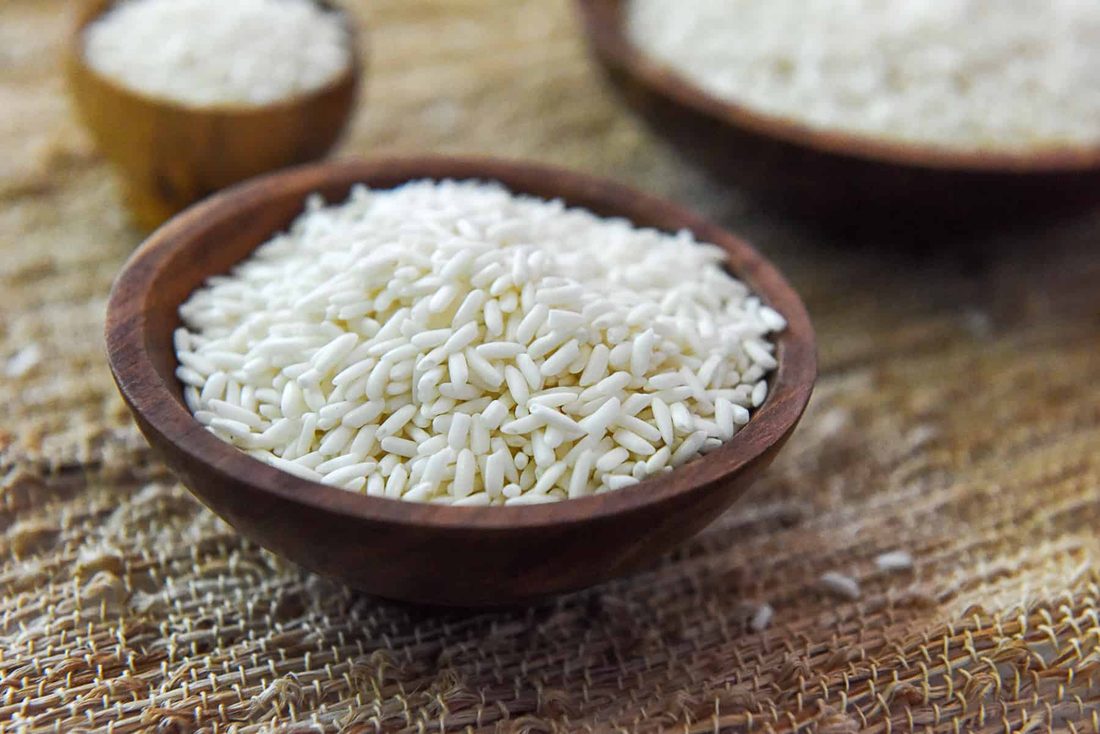
And then the extreme end of the sticky axis: glutinous rice, also sold as sticky rice or sweet rice. This is a genuine botanical variant — Oryza sativa var. glutinosa — carrying a mutation in the “waxy” gene that leaves it with essentially no amylose at all (around 2% or less; measured as low as 1.93%). It’s nearly pure amylopectin, which is why it’s so extravagantly, adhesively sticky: there’s almost none of the straight-chain amylose molecule that would firm it up and hold the grains apart.
Two vital corrections about this rice, because both names mislead:
- “Glutinous” does not mean it contains gluten. It contains no gluten — no rice does. The word means glue-like, describing the texture. Sticky rice is completely safe for people with celiac disease. The name is one of the most persistent false alarms in food, and it’s worth being emphatic: glutinous rice is gluten-free.
- “Sweet rice” isn’t especially sweet. That’s another texture-adjacent name; it’s no sweeter than other rice.
Glutinous rice comes in white and there’s also a black/purple glutinous rice (see the pigmented section below). In its white form it’s the Thai and Lao staple sticky rice — steamed, not boiled, in a bamboo basket, and eaten by hand, rolled into balls to scoop up lardb and grilled meats; it’s the base of Thailand’s beloved mango sticky rice. In Japan it’s mochigome, the rice pounded into chewy mochi and used in festival foods. Across East and Southeast Asia it turns up in dumplings, in the sticky filling of lotus-leaf parcels, in sweets. It’s the one rice you reach for specifically because it glues together — the opposite intention from everything in the long-grain section.
Pigmented rice: black, red, and purple
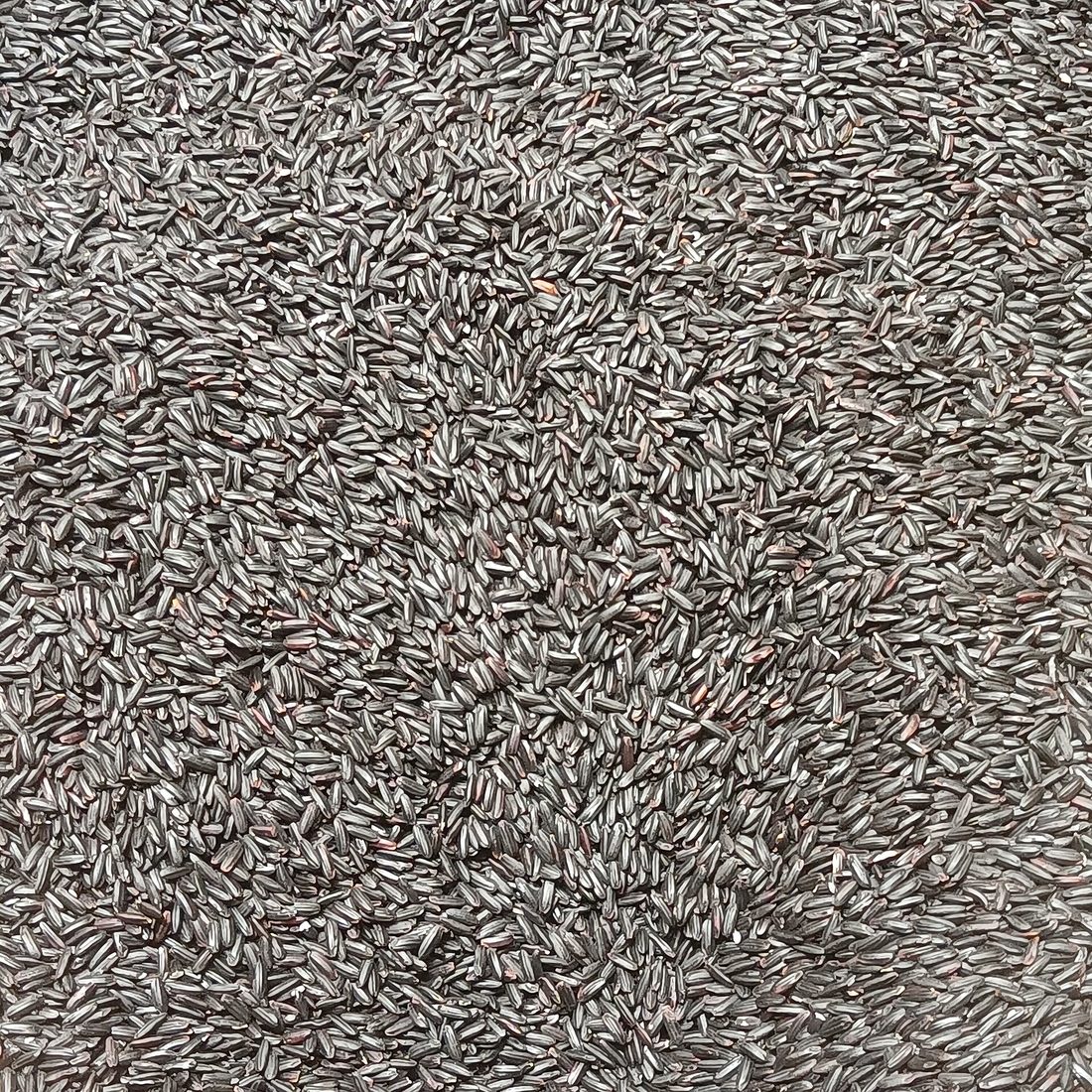
Most rice, milled to white, is white because the endosperm is white. But some rices carry pigment in the bran — the outer layer that white milling removes — and if you leave the bran on, the color comes with it. These pigmented rices are eaten as whole grains (the color literally is the bran), and their pigments are the same class of antioxidant compounds prized in blueberries and red wine.
Black / “forbidden” rice
Black rice — often marketed as “forbidden rice,” from a (possibly apocryphal) legend that it was reserved for Chinese emperors — is a whole-grain rice whose bran is so deeply pigmented it looks black-purple raw and cooks to a dramatic deep purple. The color comes from anthocyanins — the same family of flavonoid pigments that color blueberries, blackberries, and purple cabbage — concentrated in the bran. Black rice’s anthocyanins run to very high levels, and its dominant one is cyanidin-3-glucoside. It has a nutty, slightly sweet flavor, a pleasant chew from the intact bran, and it makes a striking plate. There’s a glutinous (sticky) black rice too, popular in Southeast Asian desserts like black rice pudding.
Red rice — and a correction about its color
Red rice is a whole-grain rice with a red-to-maroon bran, and it grows in several distinct varieties around the world: Bhutanese red rice (a short-grain from the Himalayan kingdom, quick-cooking and russet), Camargue red rice (a chewy French variety from the Rhône delta), and Thai red rice, among others. Like black rice, the color is in the bran and it’s a whole grain.
But here’s a correction worth making, because nearly every casual source gets it wrong: red rice’s color is not anthocyanins. The red pigment is a different class of compound — proanthocyanidins, also called condensed tannins — built from flavan-3-ol units, chemically distinct from the anthocyanins that color black and purple rice. It’s an easy thing to blur, since both are flavonoid antioxidants in the bran, but they’re genuinely different molecules: black/purple rice = anthocyanins; red rice = proanthocyanidins (condensed tannins). If you see a source that says red rice is colored by anthocyanins, it’s repeating a common error. The practical difference is minor for a cook, but it’s the kind of thing this dive exists to get right.
Both black and red rice cook longer than white (the intact bran resists water — same reason brown rice does) and both bring an earthy, nutty, whole-grain character. They’re worth having around for color and texture as much as nutrition.
Milling states, not varieties: brown, white, parboiled, enriched
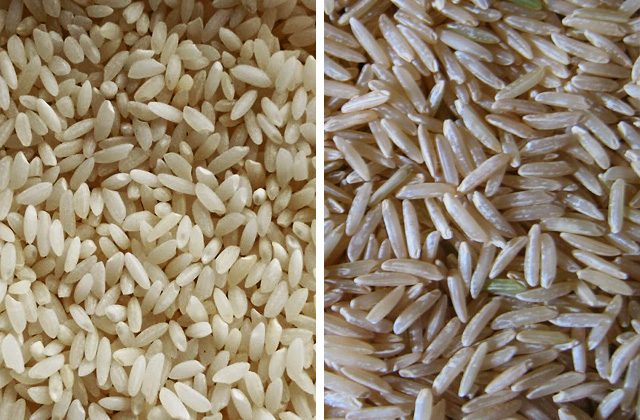
Here’s a distinction people constantly miss: brown and white are not varieties of rice. They’re milling states. Any variety — long, short, basmati, Calrose — can be sold brown or white, depending on how far it’s polished. It’s worth pulling these apart from the variety list because they cut across it.
- Brown rice is the whole grain with only the inedible hull removed — the bran and germ stay on. It’s more nutritious (fiber, oil, vitamins, minerals), chewier, nuttier, and cooks longer. Its catch is shelf life: the oil in the bran goes rancid in three to six months. The full story of why — the bran, the germ, the oil, the enzyme that turns that oil rancid — is on the science page and the buying-and-storing page.
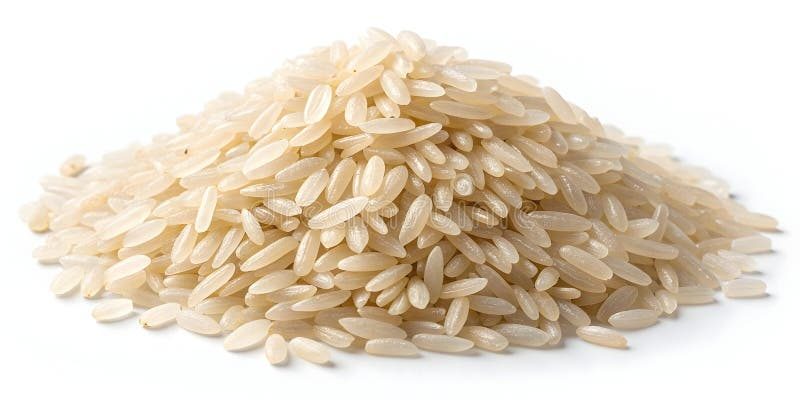
- White rice is the same grain milled further, with the bran and germ polished away, leaving just the starchy endosperm. It cooks faster and softer, keeps for years, and tastes neutral — but it’s nutritionally stripped compared to brown.
- Parboiled (converted) rice is a genuinely clever product that’s neither simply brown nor white. The rough rice is soaked, steamed, and dried in the husk before milling, which gelatinizes the starch, drives the bran’s nutrients into the endosperm (so milling doesn’t lose them), and hardens the grain. The result — often sold as the “Uncle Ben’s” style — is a white rice that’s more nutritious than ordinary white rice, cooks up firm, and stays gloriously separate, which is why Louisiana cooks and food-service kitchens love it under saucy dishes. The molecular play-by-play is on the science page; the short version is that it’s precooked inside its own husk, which is not what most people picture.
- Enriched white rice is white rice sprayed with vitamins (thiamine, niacin, iron, folic acid) after milling, to patch back some of what polishing removed. If you see enriched white rice, don’t rinse it before cooking in a way that would wash the coating off, and don’t rinse away the enrichment — it’s a light nutritional Band-Aid over the losses of milling, and it’s the reason polished white rice in the US doesn’t cause the vitamin-deficiency diseases it once did (a story for the nutrition page).
A few more worth a line
Rice has thousands of named varieties; here are several you might meet that don’t fit neatly above:
- Kalijira and Gobindobhog — tiny-grained aromatic rices from Bengal. Kalijira (“baby basmati”) is a minuscule, quick-cooking aromatic long-grain; Gobindobhog is a small-grained fragrant rice used in Bengali sweets and offerings. Both prized for aroma out of proportion to their size.
- Wehani — an American-bred aromatic red rice from the Lundberg family in California, russet-colored with a popcorn aroma; a domestic answer to imported red and aromatic rices.
- Bhutanese / Himalayan red rice — covered above; a fast-cooking short-grain red rice, semi-milled so it keeps some bran.
- Valencia rice — the broader Spanish short/medium rice category behind paella (bomba and Calasparra are its aristocrats); a regular Valencia rice is the everyday paella grain.
- Camargue red — the chewy French red rice from the Rhône delta, good in salads and alongside braises.
- Forbidden (black) and glutinous black rice — covered above; the sticky black form is a dessert rice across Southeast Asia.
Which rice for which dish
Here’s the practical wrap-up — the whole page compressed into a lookup table, cross-linked to real recipes. The governing question is always the same: do you want the grains separate, cohesive, or creamy? Answer that and the rice picks itself.
| You’re making… | Reach for… | Because… |
|---|---|---|
| Risotto, mushroom risotto, Milanese | Arborio or Carnaroli (never rinse) | surface starch = creaminess; firm core = al dente |
| Paella, Spanish rice | Bomba / Calasparra | drinks 3× its volume, stays separate |
| Sushi, onigiri, bibimbap, rice bowls | Japanese short-grain / Calrose | cohesive enough to shape, not gluey |
| Biryani, pilaf | aged basmati | elongates, stays fluffy and separate |
| Thai curries, coconut rice | jasmine / hom mali | soft, moist, fragrant |
| Jambalaya, gumbo, red beans and rice, dirty rice | American / Louisiana long-grain (parboiled holds best) | stays separate under a wet, saucy stew |
| Mango sticky rice, Korean rice cakes, mochi | glutinous / sticky rice | near-zero amylose = glues together |
| Fried rice, kimchi fried rice, my crawfish fried rice | day-old long-grain or jasmine | retrograded grains stay firm and separate in the wok |
| Congee, rice pudding | short/medium-grain | breaks down into creamy softness on purpose |
| A striking, nutty side | black / red pigmented rice | color + chew from the intact bran |
And the one thing that isn’t rice at all: wild rice. Despite the name, wild rice is the seed of an entirely different aquatic grass (genus Zizania), not Oryza — a North American native grain with its own deep and important story, including the Ojibwe/Anishinaabe manoomin traditions. I keep a Wild Rice Zojirushi in the rotation and it’s wonderful, but it’s a different plant with different behavior, and it gets its own page: Wild Rice.
Keep going: the starch chemistry behind every texture on this page is on The Science of Rice; how to actually cook each one is on Cooking Rice; the global journey of the grain is on Around the World; and the not-actually-rice outlier is on Wild Rice.
Comments (0)