A Grand Tour
Forty years of making sausage and I still find new ones. This page is the wide shot — forty-six sausages from ten regions, one paragraph each, arranged so you can see the scale of the thing in about ten minutes of scrolling. It is deliberately not an essay. If you want the logic underneath it, read the family tree first; every entry below names its class, and those classes are defined there, not here.
A few things to watch for as you go. The same word means different products in different countries, and in two cases — andouille and chorizo — the confusion is bad enough that people cook the wrong thing. One ingredient, Spanish pimentón, draws a line across an entire peninsula. And the difference between two sausages is more often caliber than seasoning: a merguez and a rosette de Lyon could carry the same spice and still be unrecognizable as relatives, because one is 24 mm and the other is 60 mm.
I’ve flagged where I already have a recipe, and — more usefully — where I don’t. There are conspicuous holes in my collection, and this page is partly how I found them.
British Isles
The British sausage tradition is the most grain-forward in Europe and the least apologetic about it. Rusk, oatmeal and barley are not padding here; they are the texture people actually want.
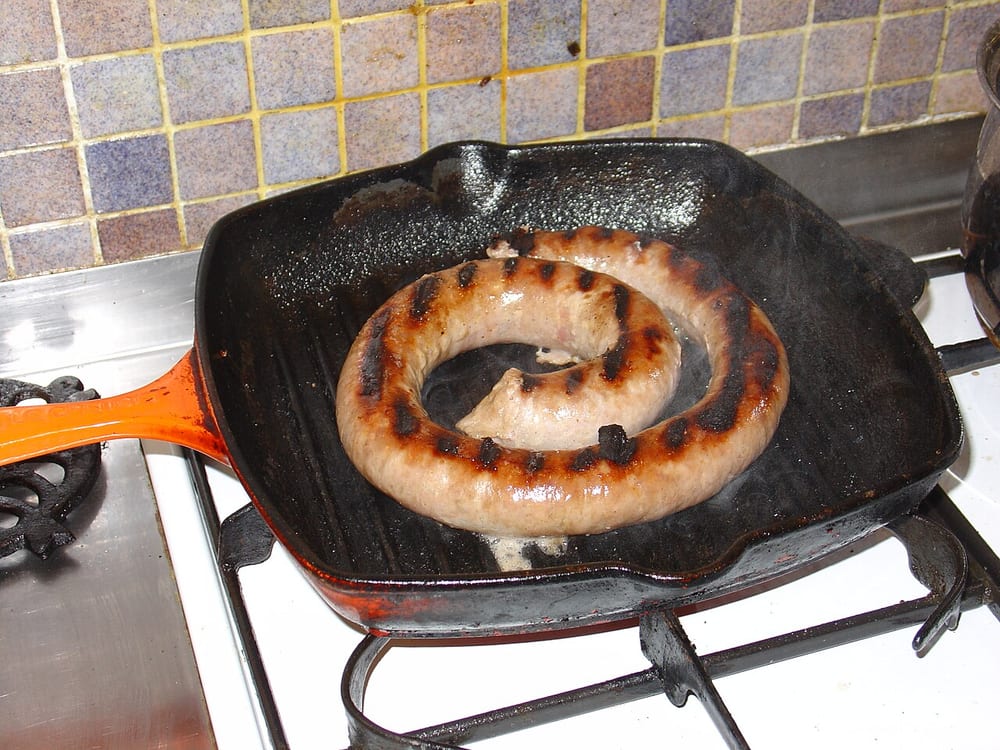
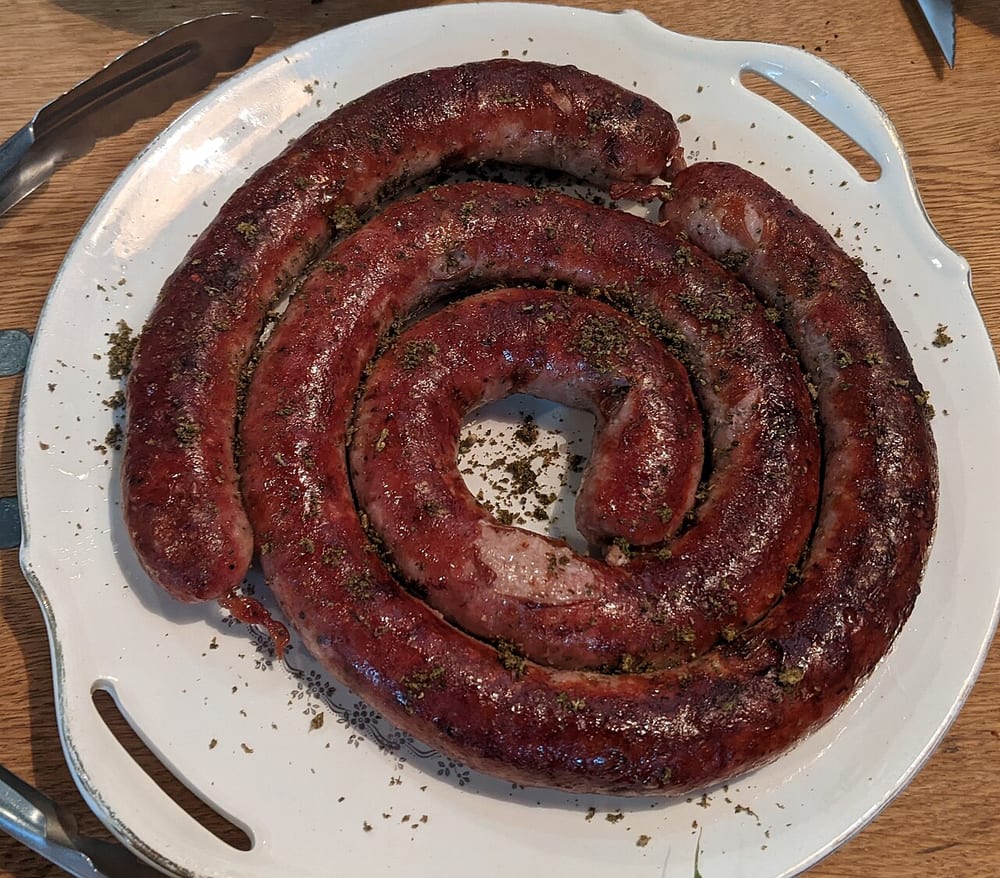
Cumberland — A coarse fresh pork sausage sold as one long unlinked spiral, traditionally sold by the yard rather than the link. Class: fresh. Heavily peppered, a little nutmeg and mace, and almost no herb — which is what separates it from every other British regional. The coil is not presentation; leaving it unlinked means the whole thing goes in the pan and comes out as one continuous piece you cut at the table.
Lincolnshire — The sage one. Same fresh-pork construction as a Cumberland but coarser still, and dosed with enough dried sage that the herb is the first thing you taste rather than a background note. Class: fresh. Where Cumberland is pepper-led and mysterious, Lincolnshire is blunt and green. Put the two in a pan together and a stranger can tell them apart blindfolded, which is not true of most regional pairs on this page.
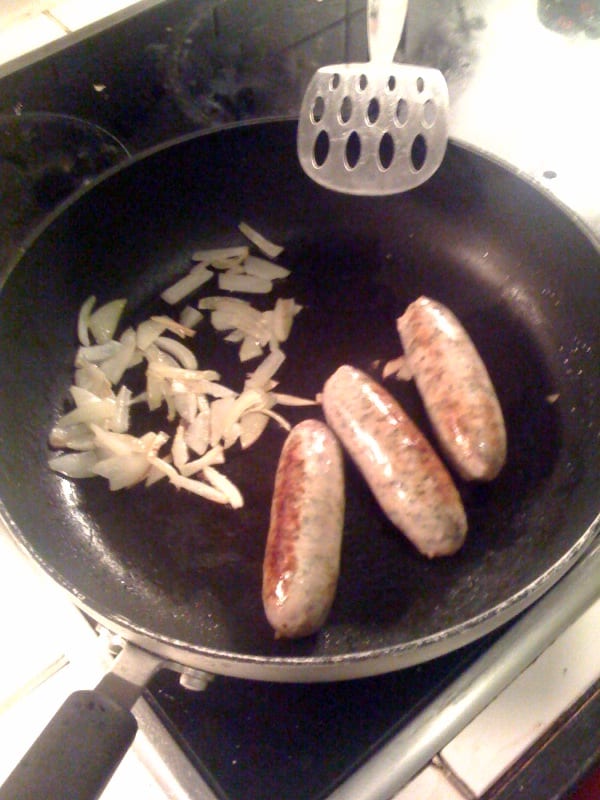
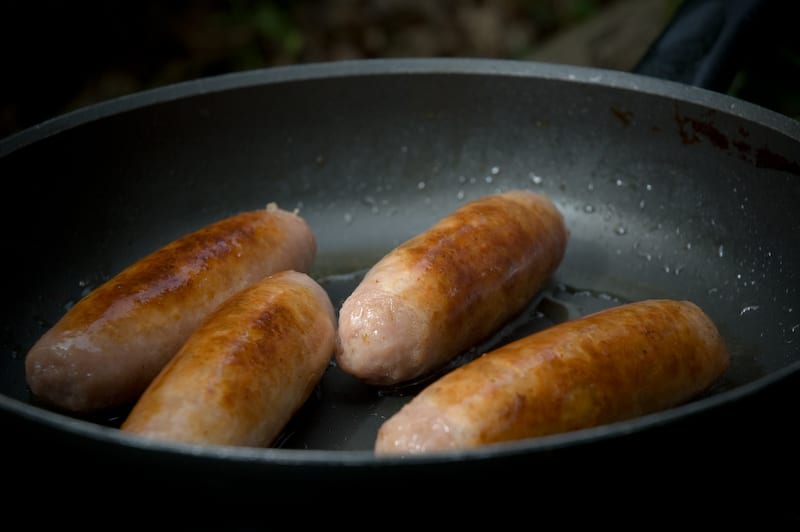
The banger — The everyday British breakfast sausage, and the one that gets sneered at unfairly. Class: fresh, grain-extended. The rusk is the point: it holds water and gives a soft, yielding, slightly bouncy bite that a hundred-percent-meat sausage physically cannot produce. I have a rusk banger in the collection. ⚠ The “banger = WWI shell that exploded in the pan” etymology is disputed — the word is attested well before the war, and as praise.
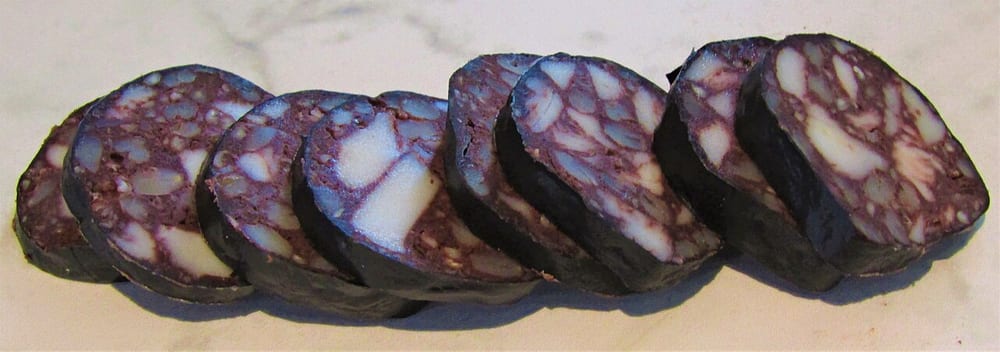
Black pudding — Blood, oats or barley, and cubed fat, poached and then fried in slices. Class: blood. There is no meat bind in it at all — coagulating blood protein grips a scaffold of grain and fat, which is why the white cubes in a good slice are structural rather than decorative. I’ve made it with frozen blood from a market near the MSU campus. The Irish breakfast dive covers it properly.
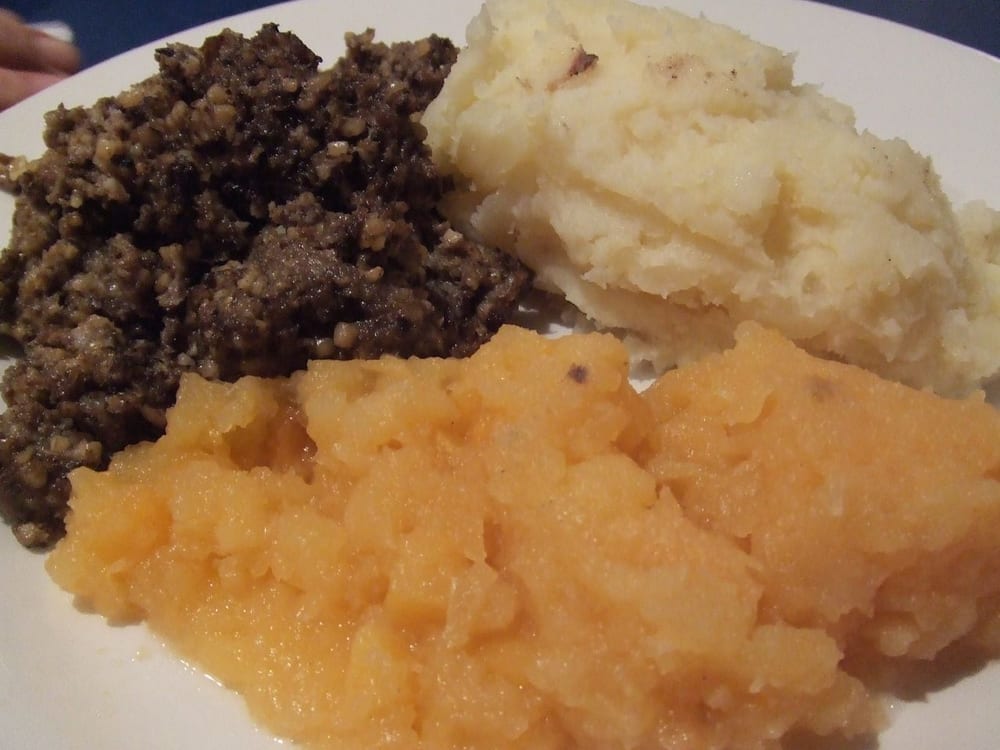
Haggis — Sheep’s pluck, oatmeal, suet and onion, traditionally cooked in a stomach. Class: grain-extended and offal at once. It is also the closest living relative of the blood-and-fat-stuffed stomach roasting on the fire in Book XX of the Odyssey, which makes it the oldest continuously recognizable form on this page. Peppery, nutty from the oats, and far less alarming than its reputation. The stomach is a vessel, not an ingredient.
Germany & Austria
The Germans have the best sausage taxonomy in the world — Rohwurst, Brühwurst, Kochwurst — and I have zero German sausages in a collection of sixty-one. That is not a preference. It is an accident of which recipes crossed my path, and it is the largest single hole in my collection.
Nürnberger Rostbratwurst (g.g.A.) — Tiny: 7–9 cm, about 20 g, in sheep casing, eaten three to a roll. Class: fresh. Marjoram is the entire personality. The smallness was a documented 16th-century quality decision — when meat prices spiked, Nuremberg permitted a smaller sausage rather than a worse one. And it is not lean: EU Regulation 973/2013 exists specifically to name belly and jowl as permitted, because the earlier “defatted pork” wording had caused a dispute.
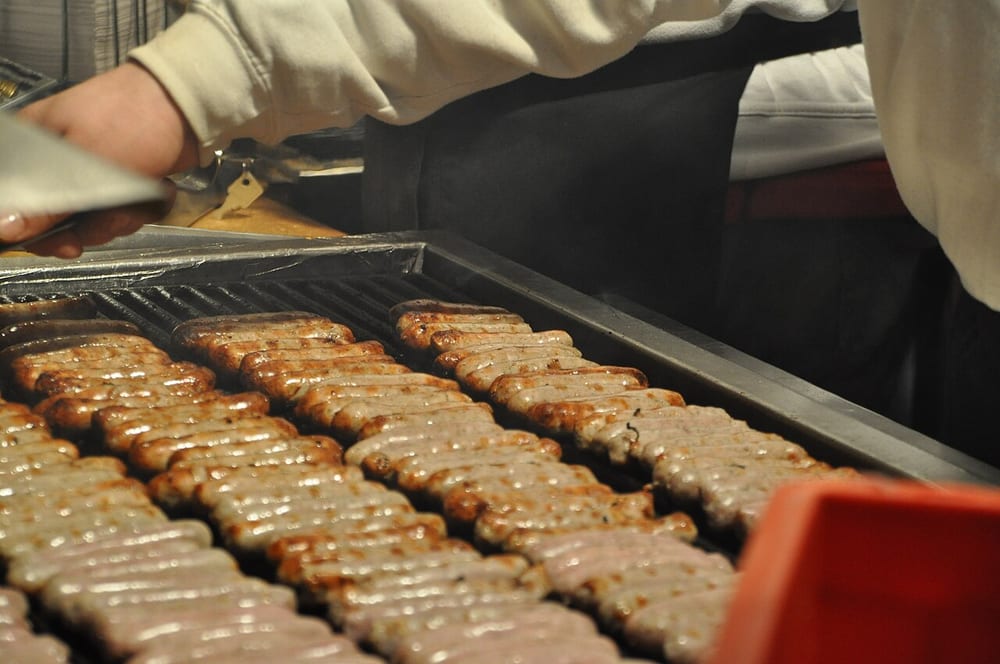
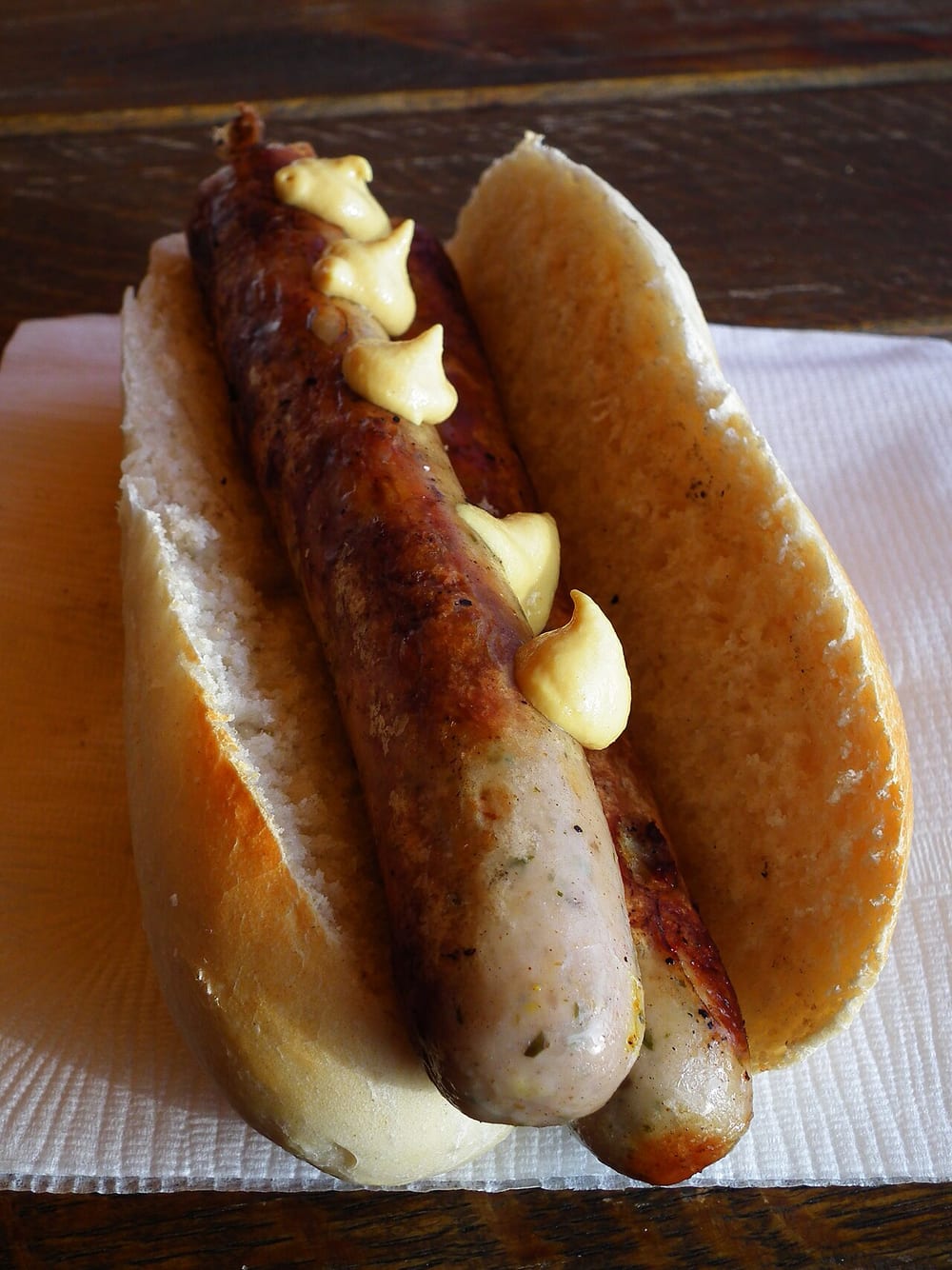
Thüringer Rostbratwurst (g.g.A.) — Three times the length of a Nürnberger, notably lean at around 25% fat, and carrying caraway and garlic alongside the marjoram. Class: fresh. The caraway is traditionally dosed both whole and ground — the whole seed gives an intermittent pop, the ground gives the baseline. Grilled over charcoal and, by custom, never pricked. If you remember one German contrast, make it this pair.
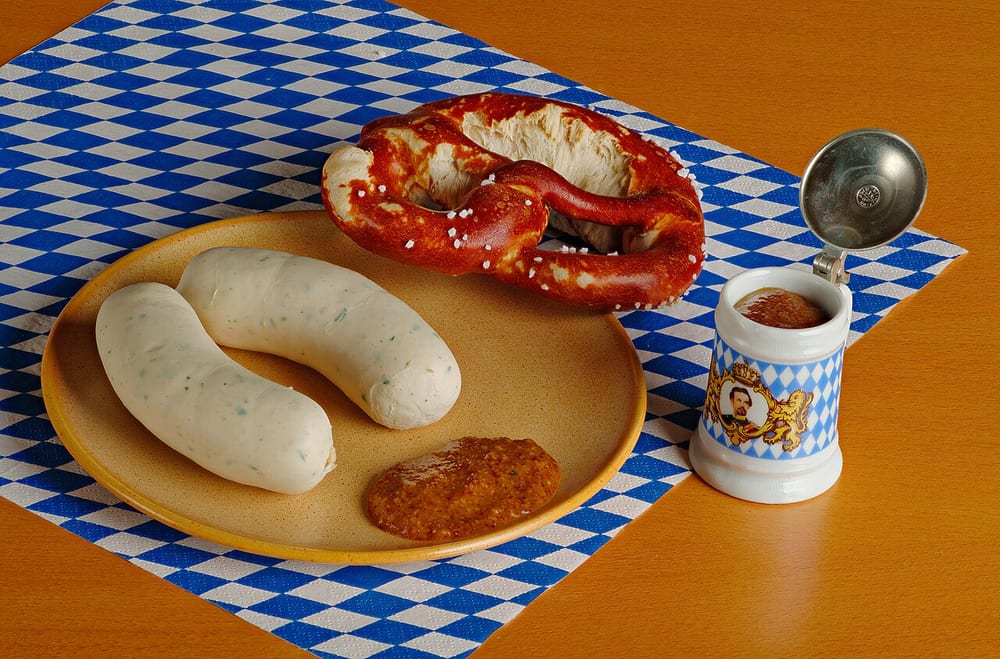
Weisswurst (Münchner Weißwurst) — Veal and pork emulsified fine, parsley, lemon zest and mace, poached and never grilled. Class: cooked, emulsified. Uncured and unsmoked, which is why the noon-bell rule existed at all — a butcher managing a very perishable product without refrigeration, not folklore. The casing is peeled, not eaten. ⚠ American formulas that substitute beef are making something else; the name means white.
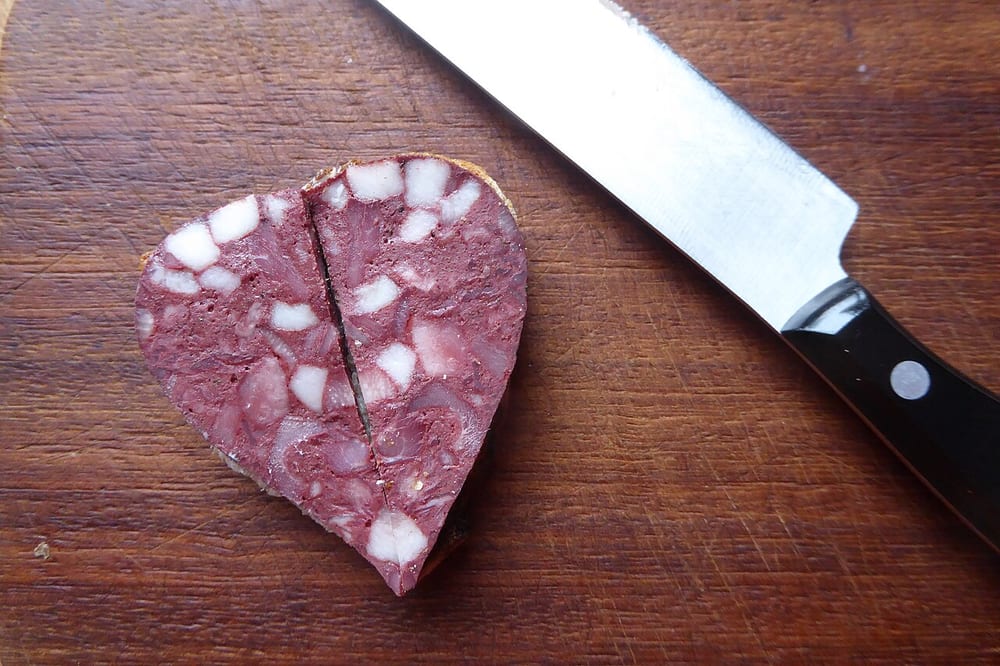
Blutwurst — German blood sausage is a grain sausage as much as a blood sausage, and the grain names the region: Graupen (pearl barley), Gersten, Hafer (oat), Buchweizen (buckwheat). Class: blood, Kochwurst. It carries far more actual meat and skin than a British black pudding, and leans on marjoram and allspice. Cook it at 80 °C and no higher — blood proteins above that go gritty and it cannot be undone.
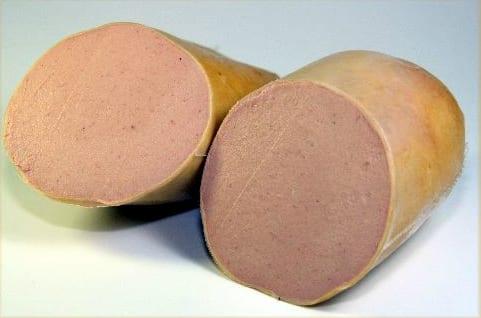
Braunschweiger Leberwurst — Roughly half pork liver, half jowl and fat, cured, cooked, often cold-smoked, and spreadable as butter. Class: Kochwurst. ⚠ In Germany Braunschweiger is a place adjective naming two unrelated products — this one, and Braunschweiger Mettwurst, which is raw, fermented, cold-smoked and contains no liver at all. Conflating them is the standard English-language error. Scald the liver, never boil it; cooked liver will not emulsify.
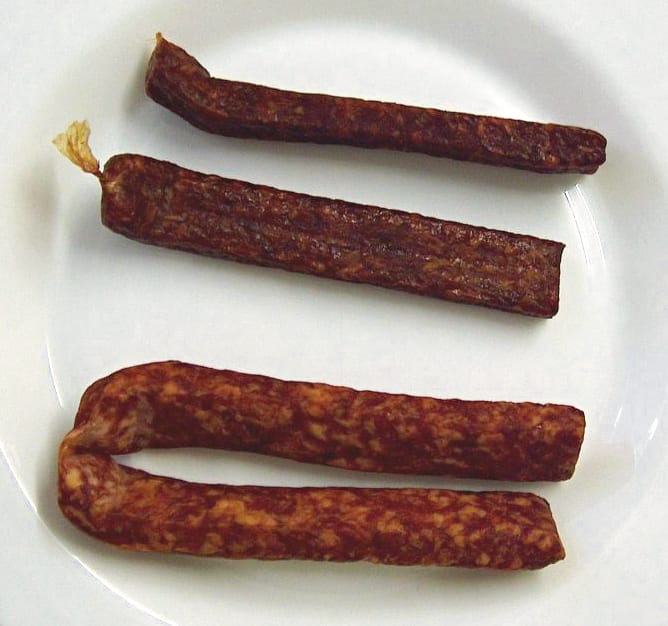
Landjäger — Fermented and pressed flat in molds during its cycle, which is why it comes out rectangular rather than round. Two sausages share the name, and the class depends on which one you mean. The traditional European one is a Rohwurst: raw, Cure #2, never cooked at any point, cold-smoked, dried to 30–40% weight loss — the German food code defines it as “storable uncut without refrigeration.” The American one is semi-dry: Cure #1, smoked to a 160°F internal, dried only to about 15%, with the cook step doing the safety work. I have both kinds in the collection now, and the cooked one’s own notes make a good point about the fork — Cure #2 works in it, but gives you a very hard link, nitrate chemistry showing up as texture. The whole argument gets its own deep dive.
France
France is the other total hole in my collection: no French sausages at all, in a collection carrying six Cajun andouilles. That is a slightly embarrassing thing to discover about yourself after forty years.
Saucisse de Toulouse — Coarse pork, salt, pepper, and essentially nothing else, sold as an unlinked coil. Class: fresh. It is the control experiment of sausage-making: an Italian sweet sausage minus the fennel, a banger minus the rusk, a Polish minus the marjoram. With nothing to hide behind, every failure shows — smeared fat, a broken bind, under-salting. If you want one sausage to teach fresh technique, this is it.
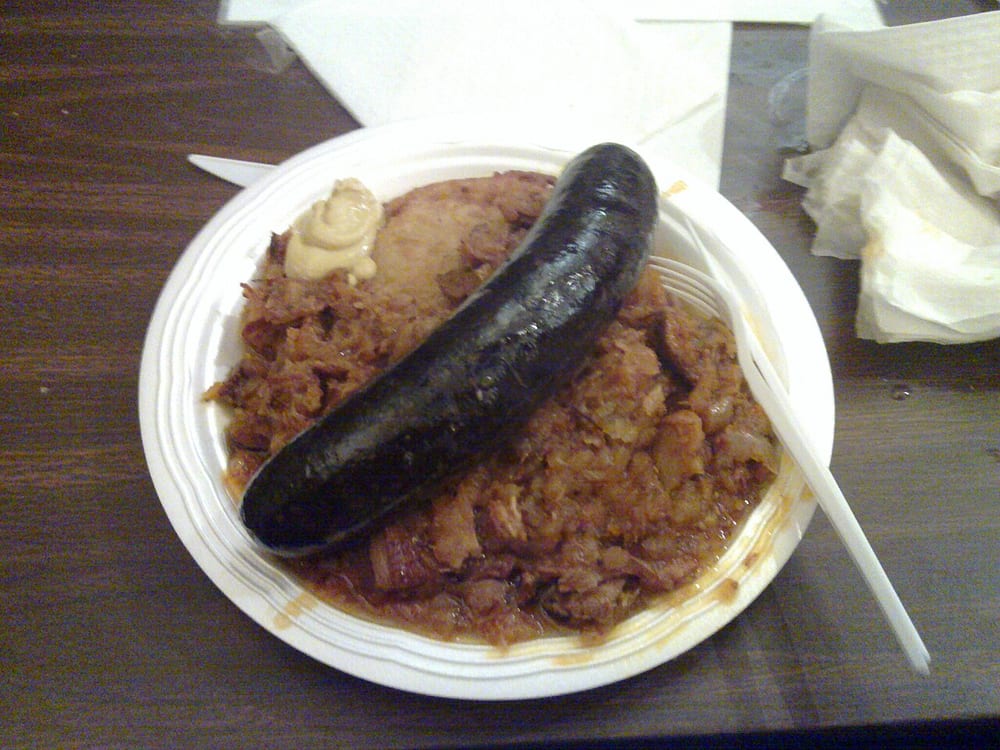
Boudin noir — French blood sausage, and the instructive thing about it is what it does not contain: no grain at all. Class: blood. The space oatmeal occupies in an Irish pudding is occupied here by onion at around 25%, sweated for a full hour without browning. It is blended smooth, almost a custard, and seasoned toward sweet spice and rum. Served with apples. The filler tells you the country.
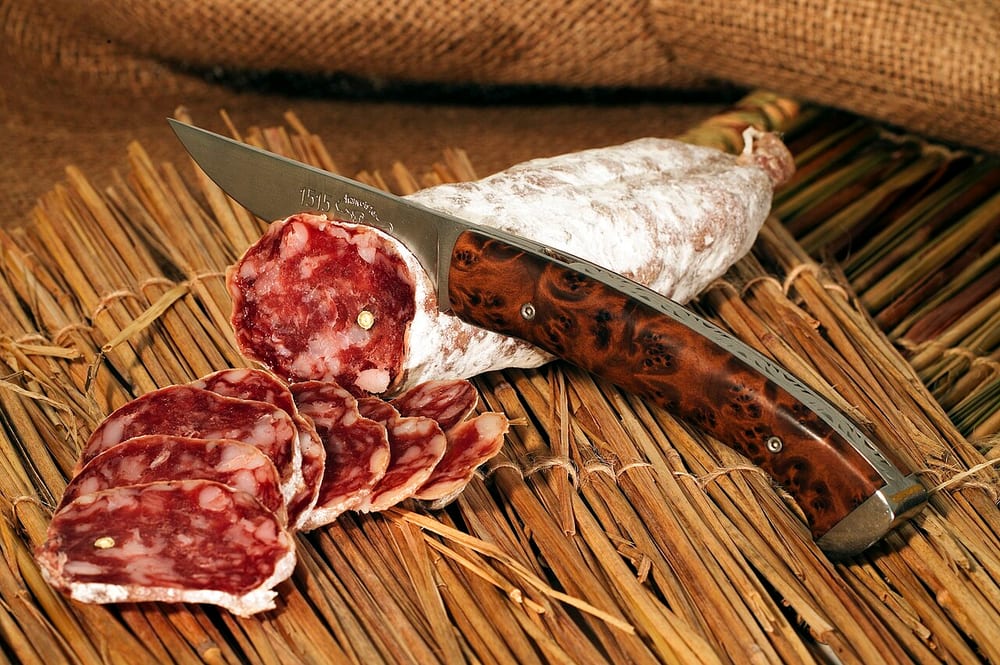
Saucisson sec — The plain dry sausage of every French market: pork, salt, pepper, garlic, a white bloom of Penicillium, sliced thin. Class: dry-cured, fermented. Structurally it is a salami, and the difference from the Italian article is that it is deliberately low-acid — a slow culture, a target pH of 5.2–5.4, not the 4.9 that gives an American or Italian product its tang. Traditional saucisson does not taste sharp. pH is a flavor dial, not only a safety one.
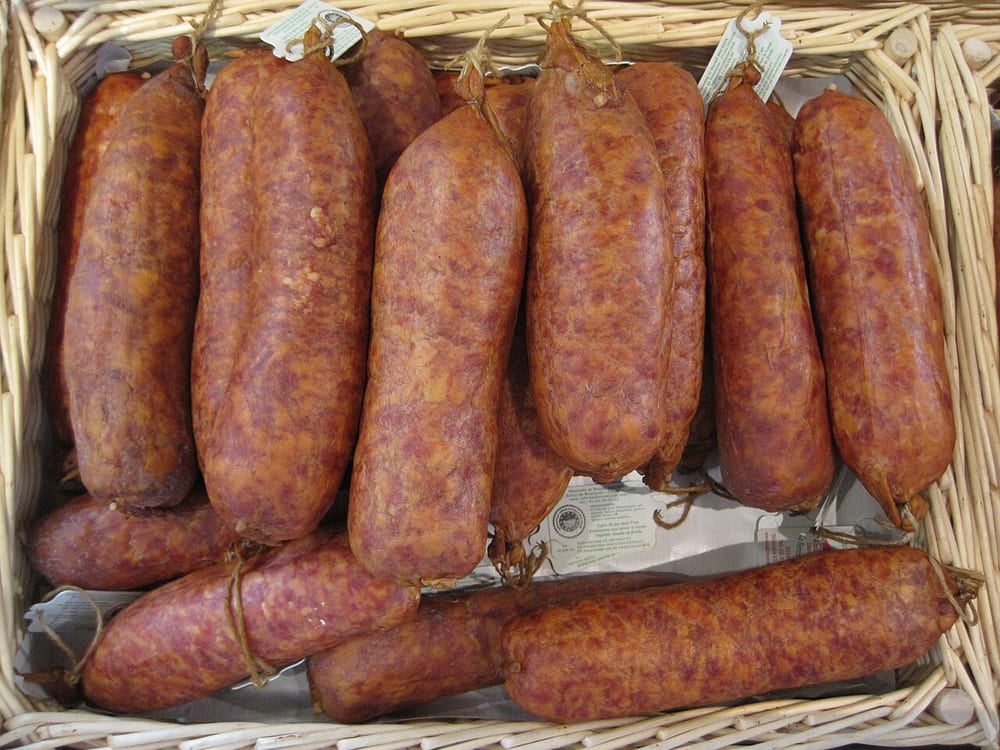
Saucisse de Morteau (IGP) — A fat, straight, cold-smoked Jura sausage sold raw-smoked and poached by the eater — a category I own nothing in. Class: cured, cold-smoked, cooked at service. Smoked over spruce or fir in a tuyé, a conical farmhouse chimney that is architecture used as equipment. Identified on the shelf by the wooden peg closing one end. You can only make a Morteau-style sausage; the real one requires whey-fed Franche-Comté pigs.
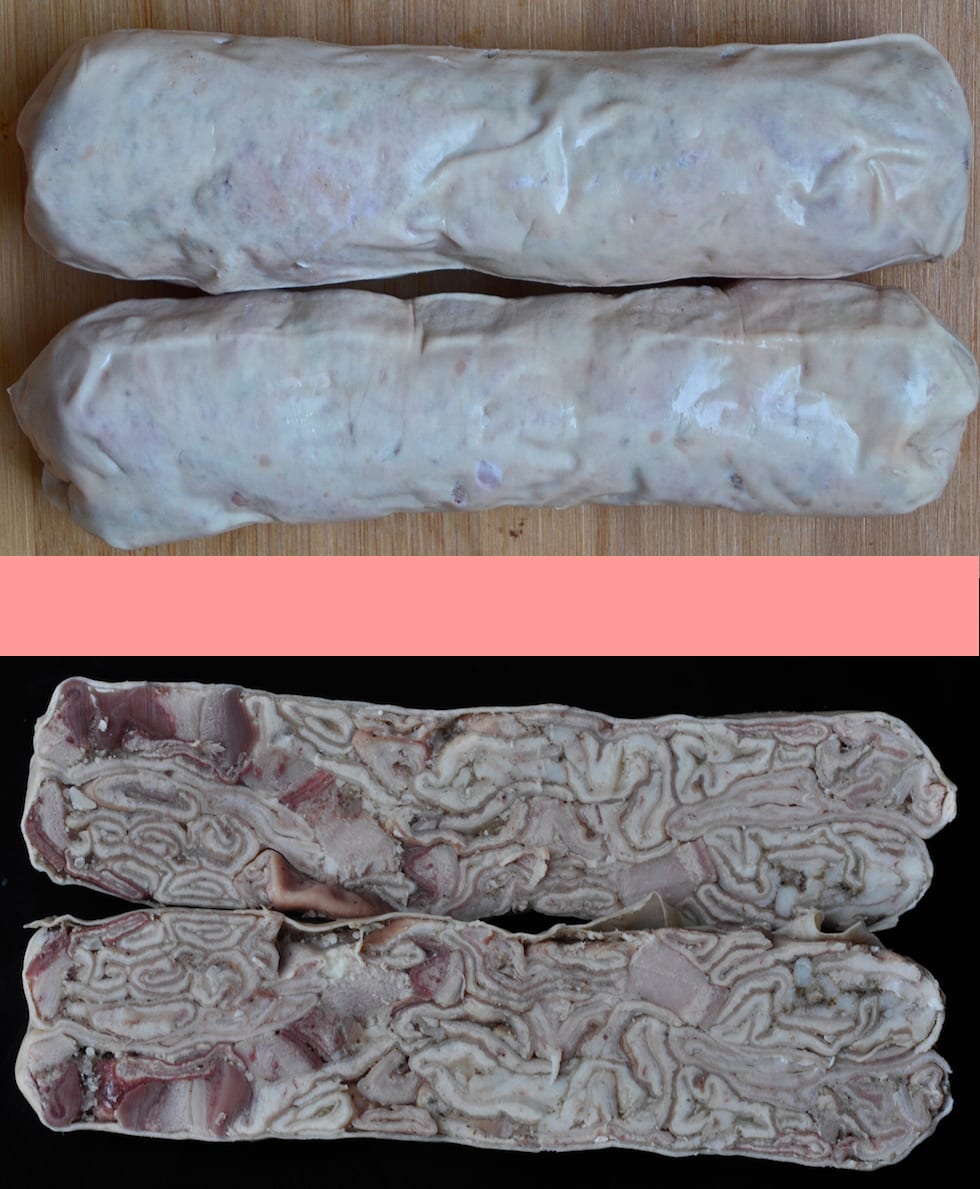
Andouillette — Pig chitterlings and stomach, cut into long strips, packed lengthwise rather than ground, poached for hours and then grilled. Class: offal. The parallel strands on the cut face are the diagnostic. It smells strongly of what it is made from, and that is the product, not a fault — it is divisive within France. 🔴 Completely unrelated to Cajun andouille despite the shared root word. See the Americas section.
Spain & Portugal
One ingredient organizes this whole region. Pimentón — Spanish smoked paprika — is the dividing line of Iberian sausage, and at 2.5–7% of the meat weight it is not a seasoning at all. It is a functional ingredient: its carotenoids are a genuine antioxidant protecting a high-fat sausage through months of drying, the dry powder binds free water and builds the paste, and the smoke phenolics are mildly antimicrobial. 🔴 Hungarian paprika is not a substitute. It is air- or kiln-dried, not smoked over holm oak, so you get the color and the bulk and none of the guaiacol and syringol. The result is a perfectly good generic red salami that no one who knows chorizo will accept.
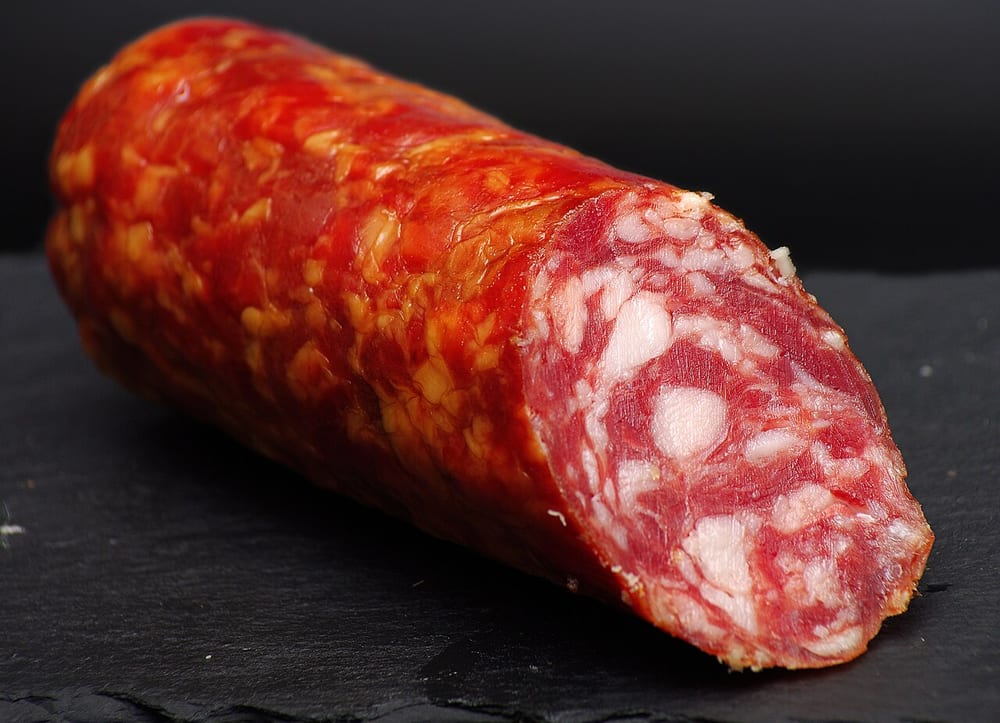
Chorizo español — Fermented, dry-cured, sliceable, eaten raw like salami. Class: dry-cured. Pimentón at around 2.5% does the color, the flavor and the structural work; the heat comes from hot pimentón itself, not from added chili. There is no vinegar and no guajillo paste. 🔴 This is a different category of product from Mexican chorizo, not a regional variant — see the Americas section, and note that I own four of the Mexican and none of this.
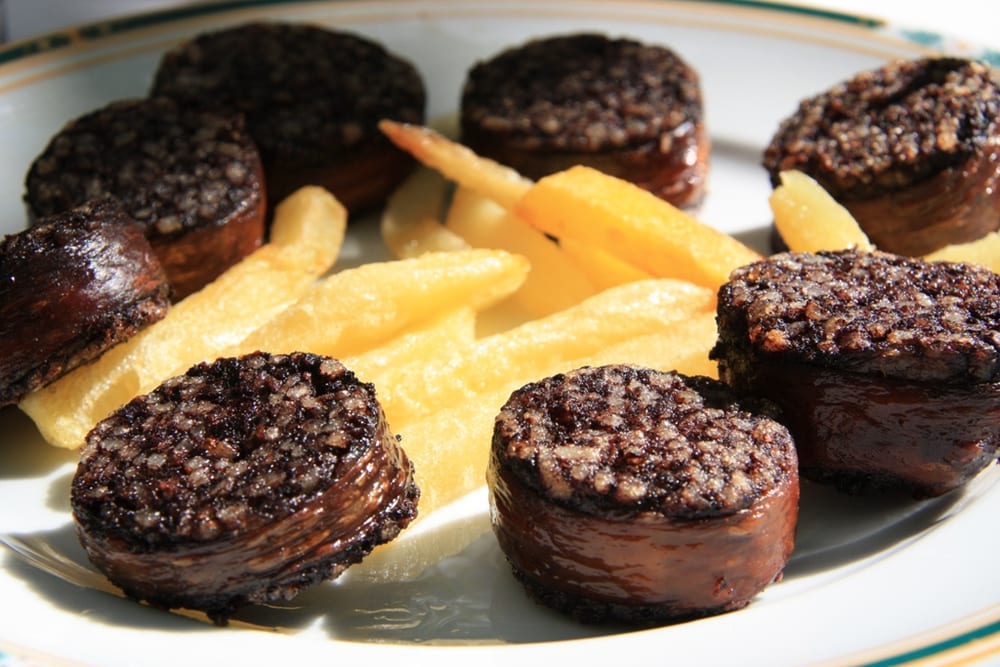
Morcilla de Burgos (IGP) — A blood sausage that is mostly onion and rice, with blood as binder and color rather than bulk. Class: blood. The IGP requires at least 30% Horcal onion, 10–40% rice, and merely more than 9% blood — and specifies no meat at all. Stuff it loose, because the rice swells; undercook the rice, because it finishes in the casing. It crumbles when fried, and that is correct.
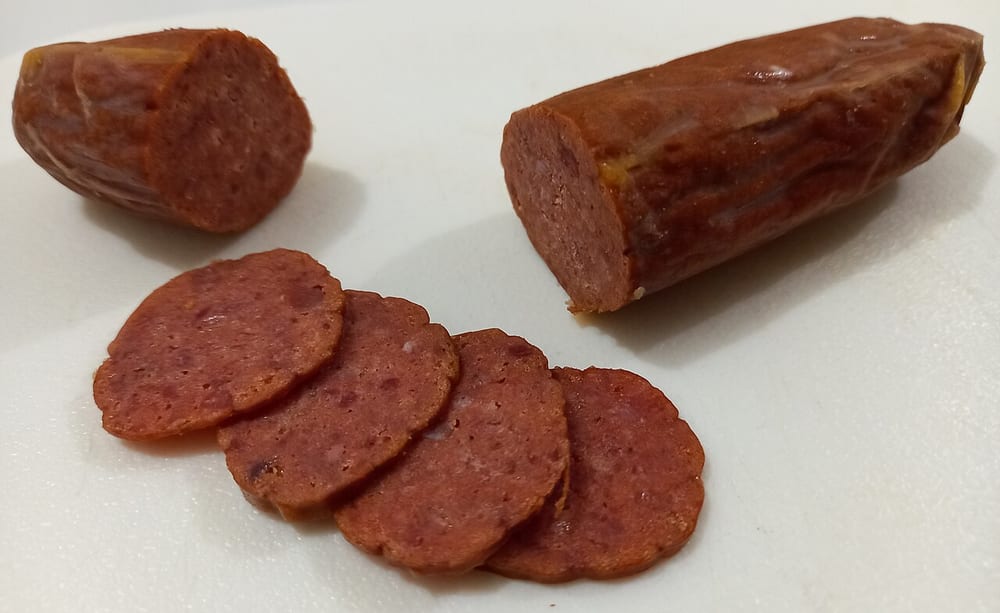
Salchichón (de Vic) — Spain’s plain dry sausage: pepper, not paprika, with whole black peppercorns studded visibly through pink meat and white fat. Class: dry-cured. Salchichón and chorizo are the same sausage with one ingredient swapped — same meat, same fat, same cure, same chamber, same schedule. Swap 2.5% pimentón for black pepper and you cross from one Spanish institution to the other. Nothing in charcuterie makes that argument more cleanly.
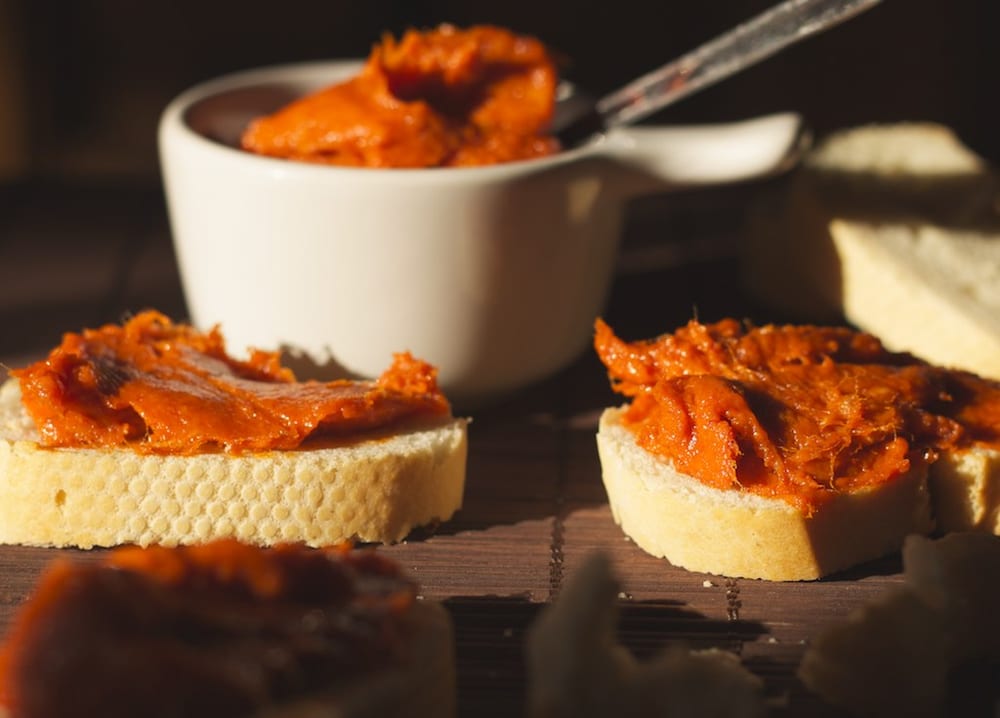
Sobrasada de Mallorca (IGP) — A dry-cured sausage that is never firm: after two to seven months it comes out as a soft brick-red paste you spread on bread. Class: dry-cured, and the exception proving every rule in it. More fat than lean (40–70% by spec), ground under 6 mm, 4–7% pimentón, and deliberately stopped at 30% weight loss instead of 40%. Soft leaf fat is used on purpose. Success is defined as failing to set.
Linguiça — The Portuguese garlic-and-paprika smoked sausage, coarse and pungent, and the one Iberian entry I actually own: I have four linguiça recipes. Class: cured and smoked. Its sibling chouriço runs fatter, coarser and hotter, often with wine, and in the Azorean and southern New England diaspora the two names get used almost interchangeably even though the products differ.
Italy
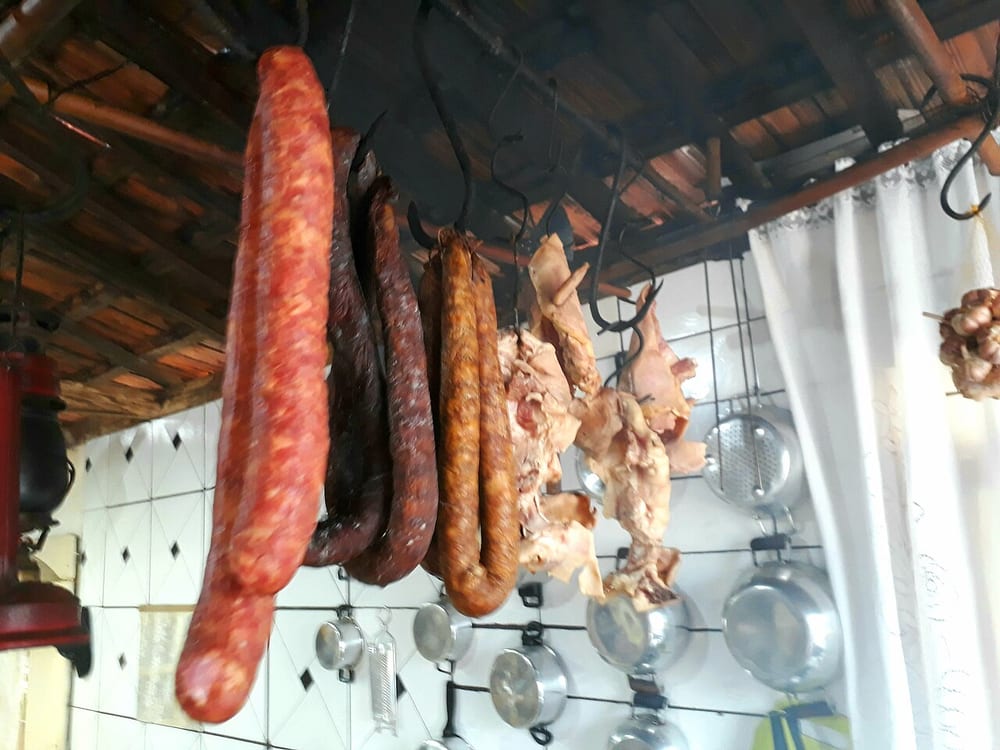
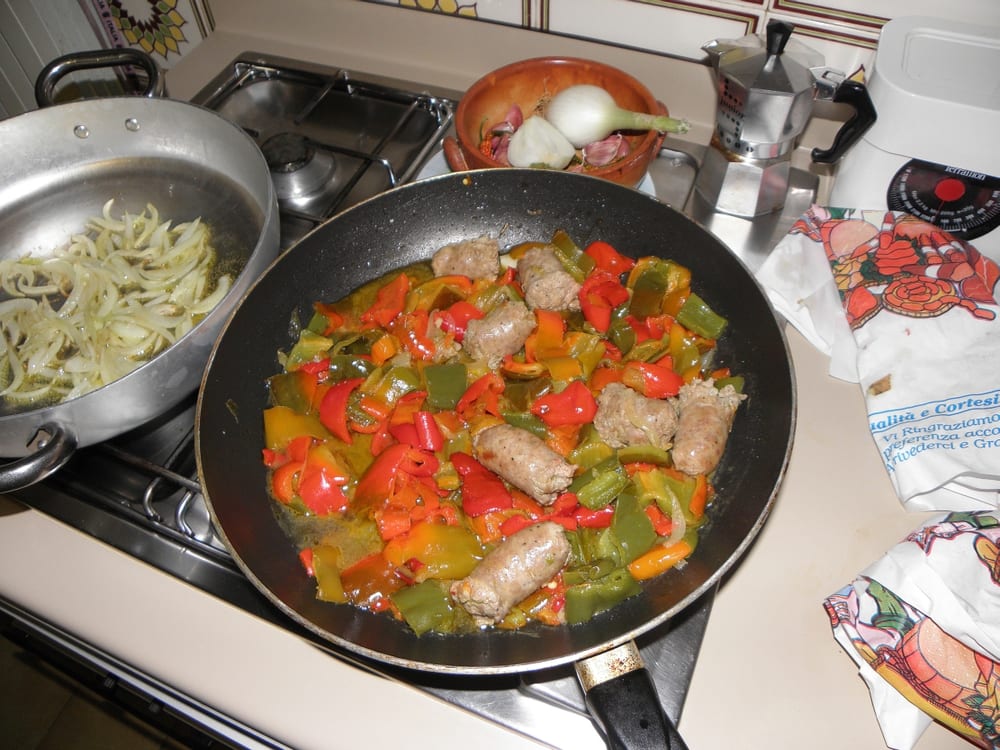
Salsiccia — Italian fresh pork sausage, and there is no single one: fennel in Tuscany and the south, chili in Calabria, plain and peppery in the north. Class: fresh. What travels as “Italian sausage” in the United States is a Neapolitan-American fennel sausage in sweet and hot versions, which I have several of. Cotechino, its winter cousin, is a different animal entirely — built on pork rind for a deliberately gelatinous, sticky texture.
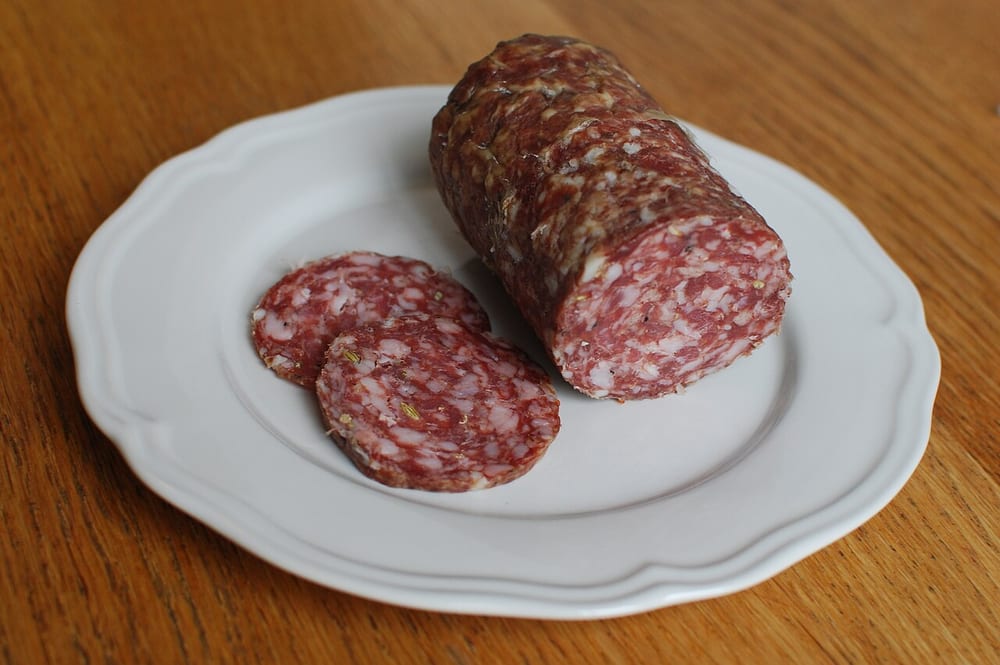
Finocchiona — Tuscan dry-cured salami whose defining ingredient is fennel seed, at a modest dose — around 0.35% — that nevertheless dominates the finished flavor. Class: dry-cured, fermented. Soft, wide, and traditionally low-acid rather than tangy. I have a finocchiona in the collection built on a slow T-SPX culture, which is exactly the right choice and the same one a French saucisson wants.
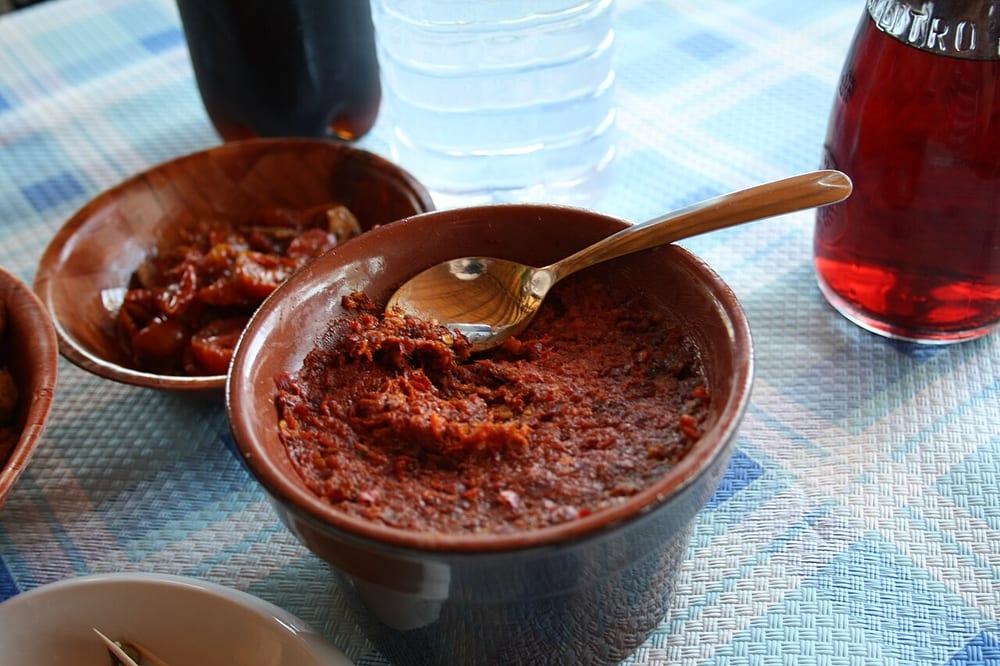
‘Nduja — Calabrian, spreadable, and violently hot: fatty pork and a huge fraction of Calabrian chili, fermented and briefly aged. Class: dry-cured, but spreadable rather than sliceable — structurally the Italian answer to sobrasada, arrived at independently. It melts into pasta, onto bread, into anything. The chili does here what pimentón does in Mallorca: at that dose it stops being a seasoning and becomes a preservative ingredient.
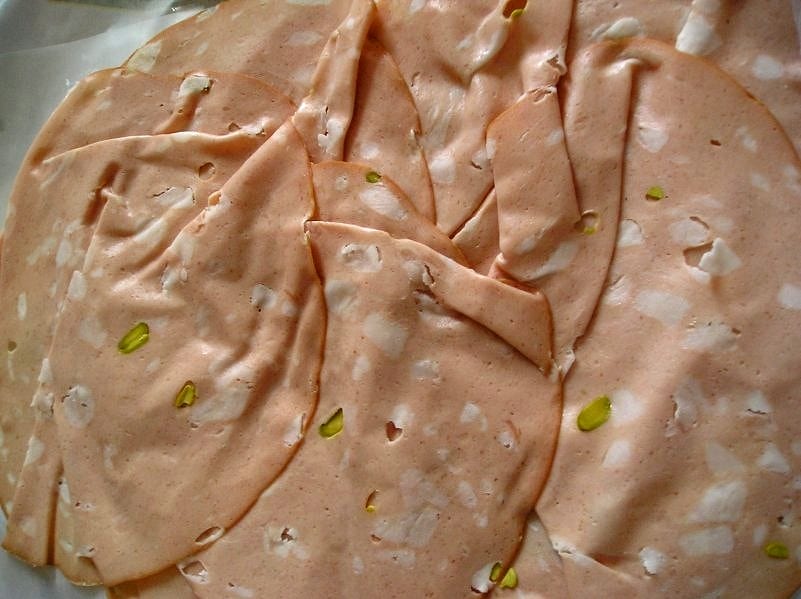
Mortadella — The great misunderstood sausage. Class: emulsified. Its white cubes are hand-cut fat folded whole into a finished emulsion, then baked slowly for hours — they are inclusions, not a coarse grind, and that distinction is the difference between mortadella and American bologna, which is its distant descendant. Pistachios and whole peppercorns often join them. Cut a slice thin enough and it is nearly translucent.
Central & Eastern Europe
Kielbasa — 🔴 Kielbasa is simply the Polish word for “sausage.” Treating it as one specific product is a diaspora simplification; Poland has dozens, fresh and smoked and dry. What Americans mean by it is usually kiełbasa wiejska or a smoked garlic-and-marjoram link. Class: cooked-smoked, in that form. Mine is my grandfather’s — hickory, staged 130 → 150 → 170 → 190 °F, and it took me years to get right.
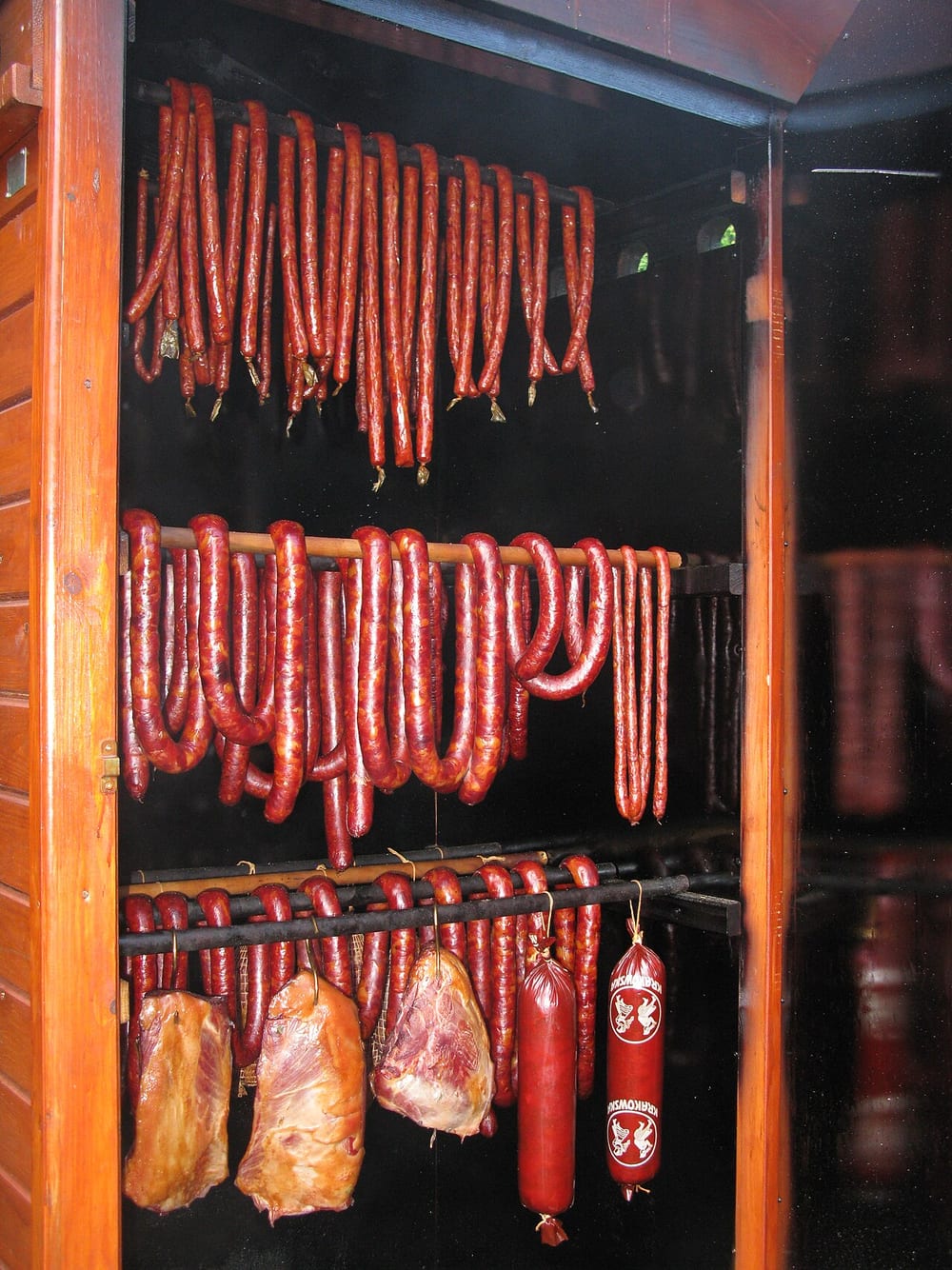
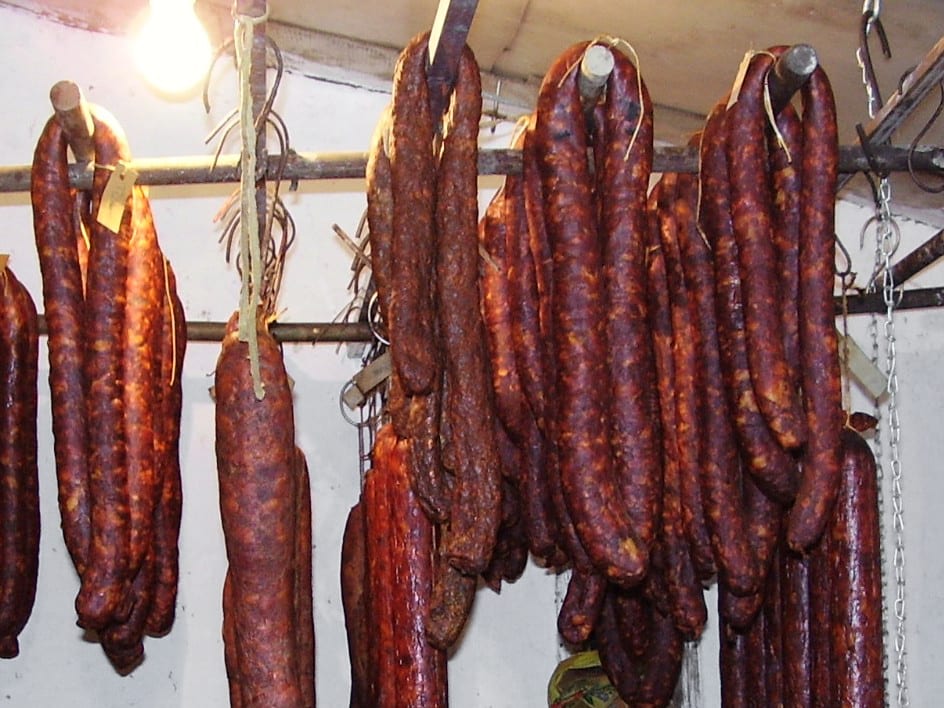
Csabai kolbász — Hungarian, from Békéscsaba, and the counterweight to the Iberian section above: heavily paprika’d, garlicky, dry-cured and cold-smoked. Class: dry-cured. Worth putting beside a chorizo precisely because they look identical and taste nothing alike — Hungarian paprika is dried, not smoked over oak, so the resinous phenolic layer that makes chorizo taste Spanish simply is not there. Same color, entirely different aroma.
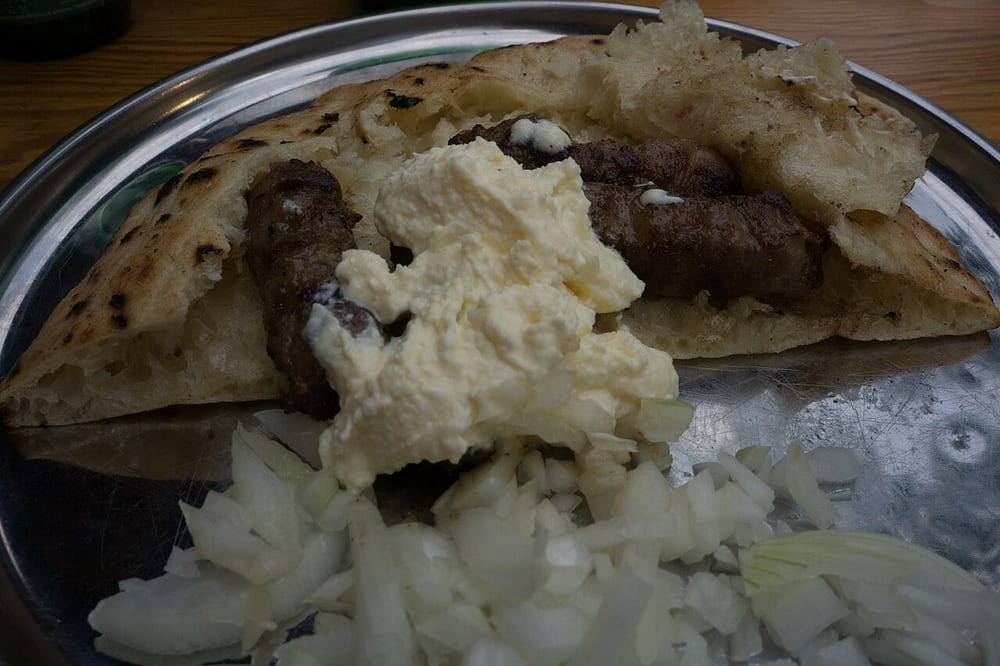
Ćevapi / ćevapčići — Fresh sausage that skipped the casing: small skinless fingers of beef, or beef and lamb, grilled hard and served in somun flatbread with raw onion and kajmak. Class: fresh. Serbian and Bosnian, and eaten across the whole Balkan region. In my own recipe note I wrote that this “little sausage from Serbia is another of my favorites,” which it is. I have a recipe. Romania’s mici are the same idea with garlic and often a little baking soda for lift.
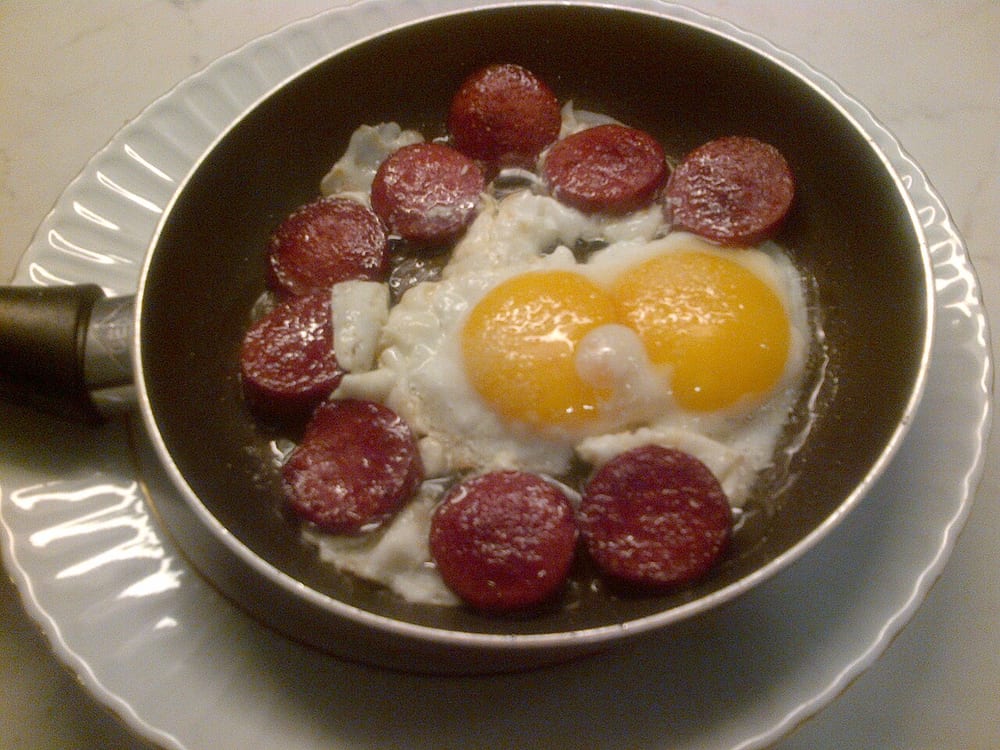
Sucuk / sujuk — Turkish and Balkan fermented beef sausage, garlic and cumin-forward, dried firm and then usually fried — which surprises people, because it looks like a salami. Class: dry-cured. It renders its own fat in the pan and goes translucent at the edges. I have three sujuk variations in the collection, which makes it the best-covered Eastern sausage I own.
Nordic & Baltic
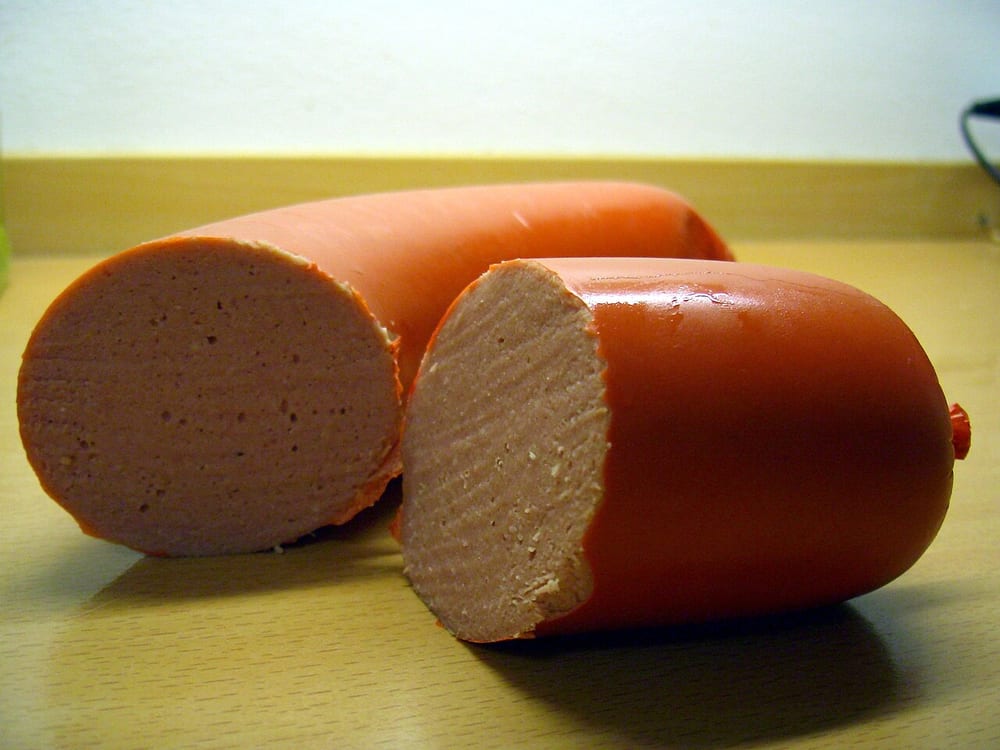
Falukorv — Swedish, and legally protected: a fat, mild, smoked emulsified sausage of pork and beef, sold in a slab and sliced thick, fried, or baked whole with cheese. Class: cooked-smoked, emulsified. Its origin is genuinely industrial — 17th-century Falun copper miners used ox hide for hauling rope and the meat went into sausage.
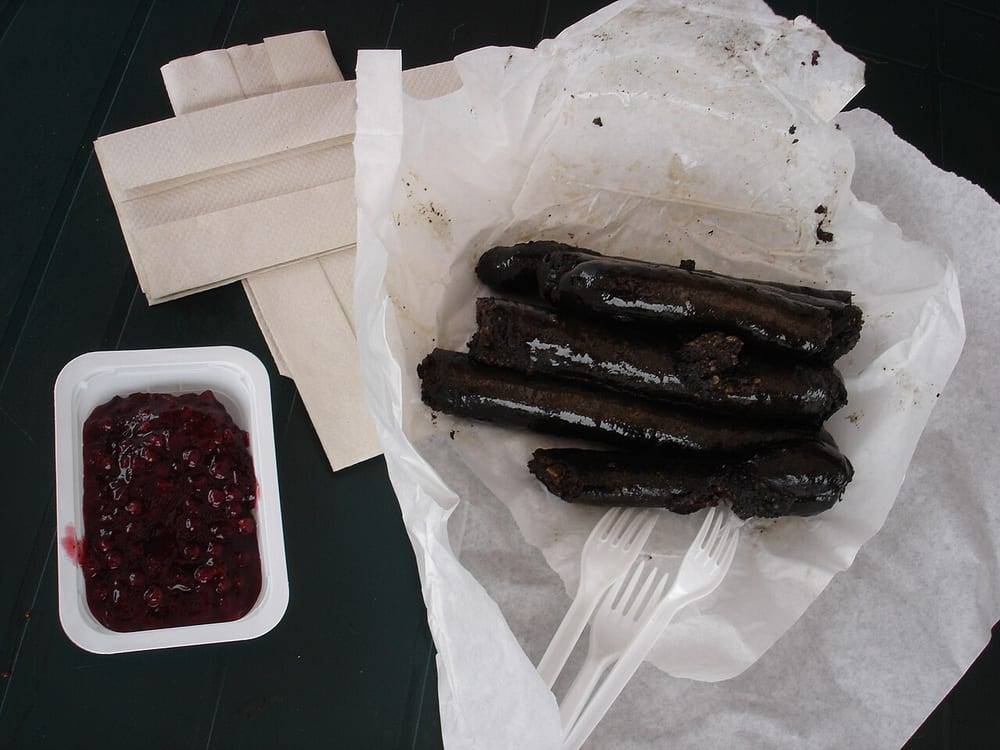
Mustamakkara — Tampere’s black sausage: blood, rye flour and pork, thick and coarse, sold hot from a market stall and eaten with lingonberry jam and cold milk. Class: blood and grain-extended together. The rye is the Finnish signature where Ireland puts oats and Burgos puts rice, and the sweet-sour jam against the iron of the blood is the whole point of the pairing. It is a street food, not a dinner.
Asia
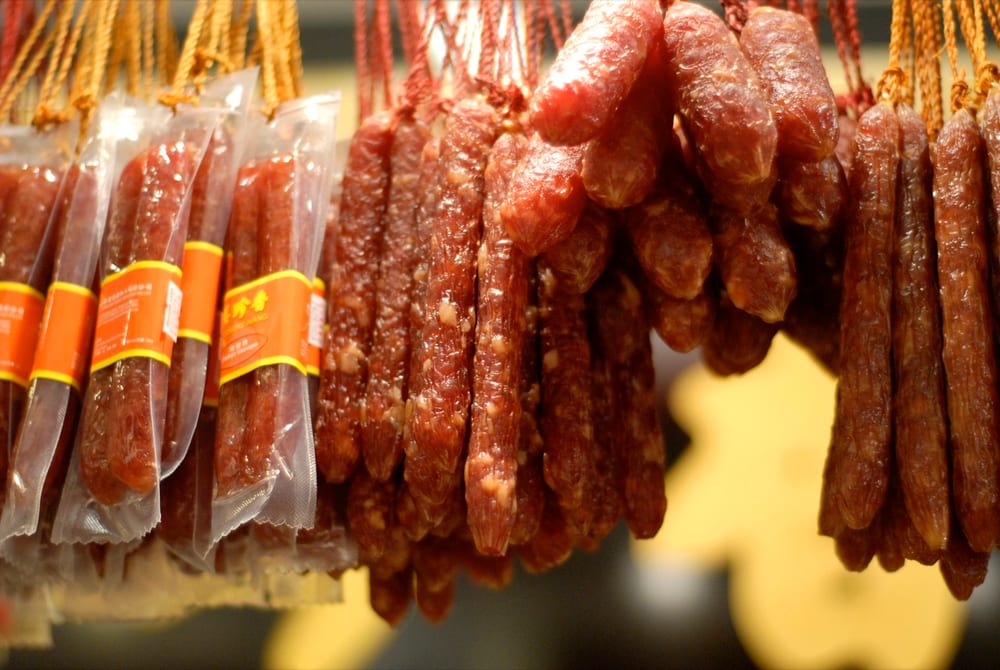
Lap cheong (臘腸) — Chinese dried sausage: pork, sugar, soy and rice wine, air-dried until hard and sweet-smelling. Class: dried, and here is the trap — it looks like it belongs with the salamis but it is generally not fermented and not ready to eat. It gets steamed or cooked into rice. Dry does not mean fermented, and dry does not mean raw-edible. I have a lap cheong recipe and it carries that asterisk.
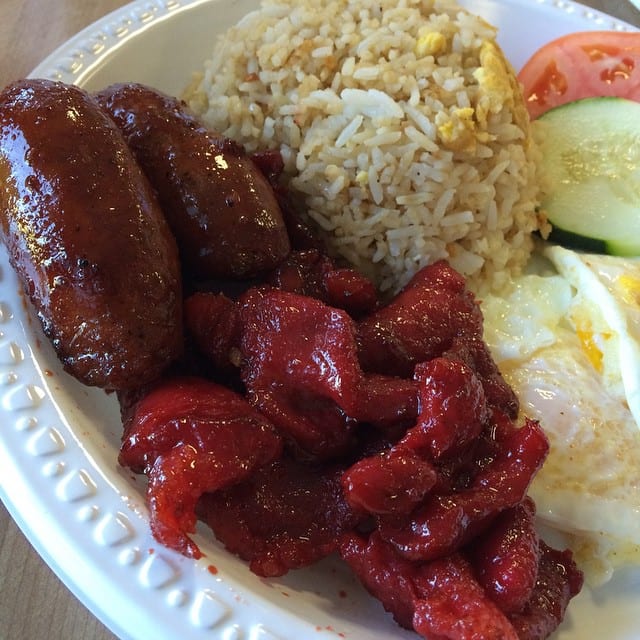
Longganisa — Filipino, and it is a family rather than a sausage: sweet Pampanga hamonado, garlicky sour Vigan, orange-red Lucban. Class: mostly fresh, some cured. It is eaten for breakfast with garlic rice and a fried egg, the trio abbreviated longsilog. I have a longganisa. The sweet versions caramelize hard in the pan, which is a feature — the sugar is doing the work the char does elsewhere.
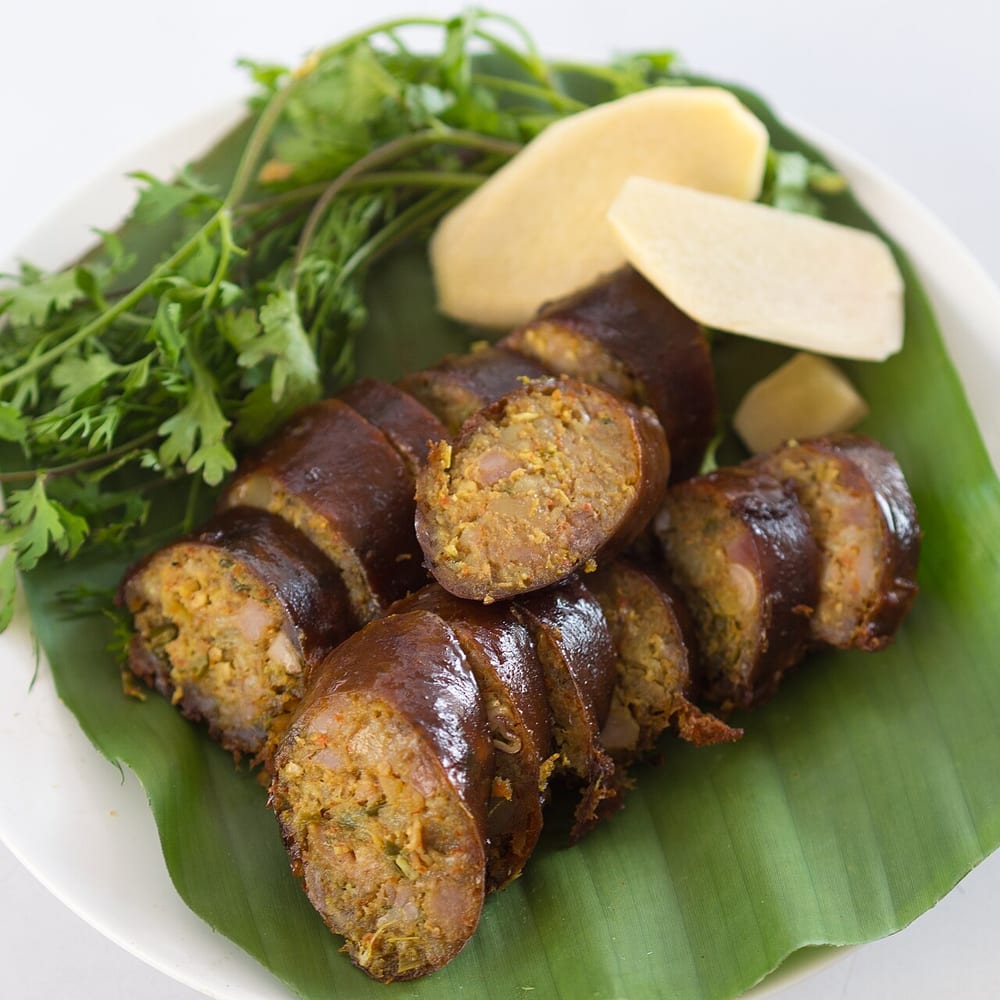
Sai ua (ไส้อั่ว) — Northern Thai fresh sausage, and one of the most aromatic on this page: pork with a curry paste of lemongrass, galangal, makrut lime leaf, turmeric and dried chili worked right into the farce. Class: fresh. Coiled, grilled slowly over charcoal, sliced across. I have a sai ua. Its Isan cousin sai krok Isan is a different proposition — fermented with cooked rice for a distinct sour tang.
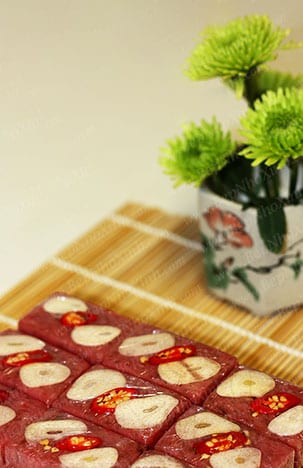
Nem chua — Vietnamese fermented raw pork, wrapped in banana leaf with garlic, chili and toasted rice powder, and soured at room temperature over a couple of days. Class: fermented, and genuinely eaten raw — the safety rests entirely on a fast acid drop, exactly as with a dry salami. Sour, springy and pink. It is the fastest fermented meat on this page, and the least forgiving of a sloppy schedule.
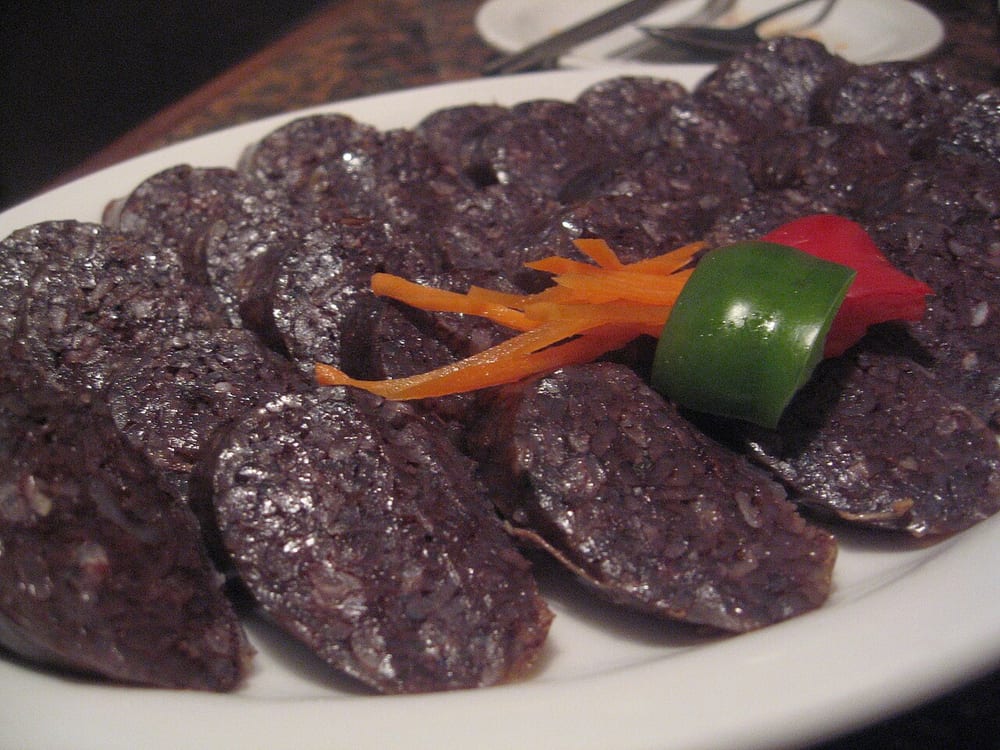
Soondae (순대) — Korean blood sausage, filled with pig’s blood, glass noodles (dangmyeon) and often barley or glutinous rice, steamed and sliced. Class: blood. The noodle is the structural filler where Ireland uses oats and Burgos uses rice — a fourth answer to the same problem. Sold from street carts with a salt-and-pepper dip, and served in soup as sundaeguk.
Africa & the Middle East
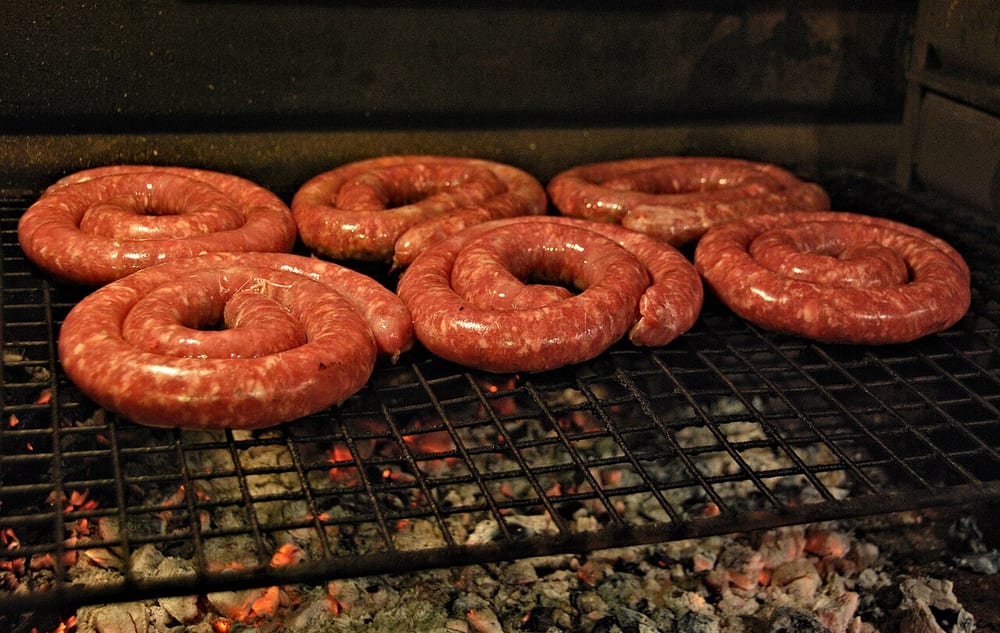
Boerewors — South African, and legally defined: at least 90% meat, no more than 30% fat, no mechanically recovered meat. Class: fresh. The signature is toasted coriander seed and vinegar, and it is always a coil — never links — cooked over wood on a braai. Coarse, beefy, and one of the very few sausages anywhere with a legal composition standard aimed at protecting it from filler. I have a boerewors.
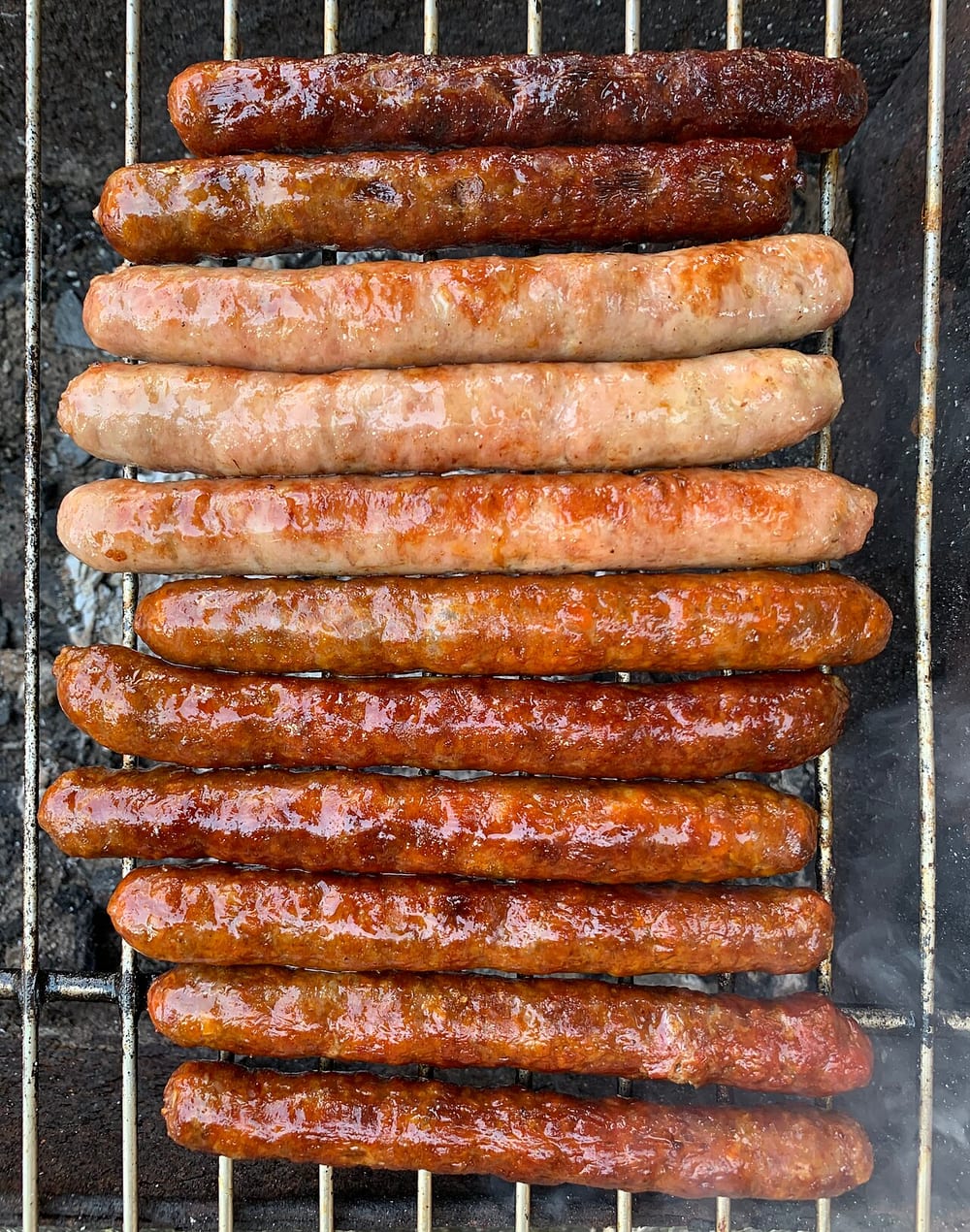
Merguez — Maghrebi in origin — Algerian, Tunisian, Moroccan — and French by adoption; it is now as ordinary at a Paris market stall as a Toulouse, which is why it gets filed under France. Class: fresh. Lamb, harissa, cumin and coriander in a thin 24–26 mm sheep casing, and the casing is the recipe: half the cross-section of a hog casing means twice the crust and a third of the cooking time. Grill it beside the coals, not over them — paprika burns.
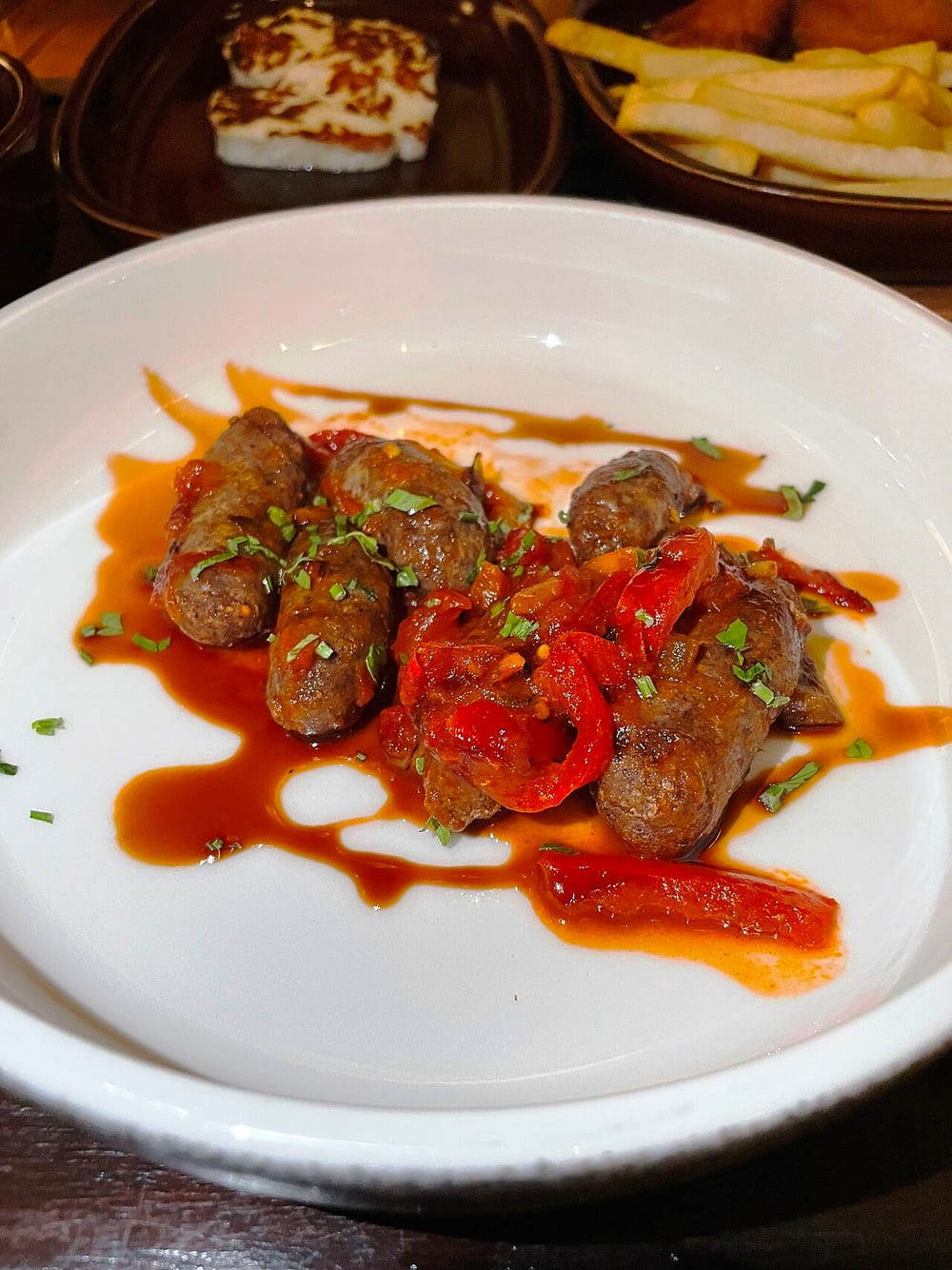
Makanek (مقانق) — Small Levantine sausages, Lebanese and Syrian, of lamb or beef seasoned toward cinnamon, allspice, nutmeg and pine nuts — a sweet-spice profile that reads as dessert baking to a Western palate until you taste it in context. Class: fresh, sometimes lightly cured. Fried in a hot pan and finished with pomegranate molasses or lemon, served as part of a mezze spread.
The Americas
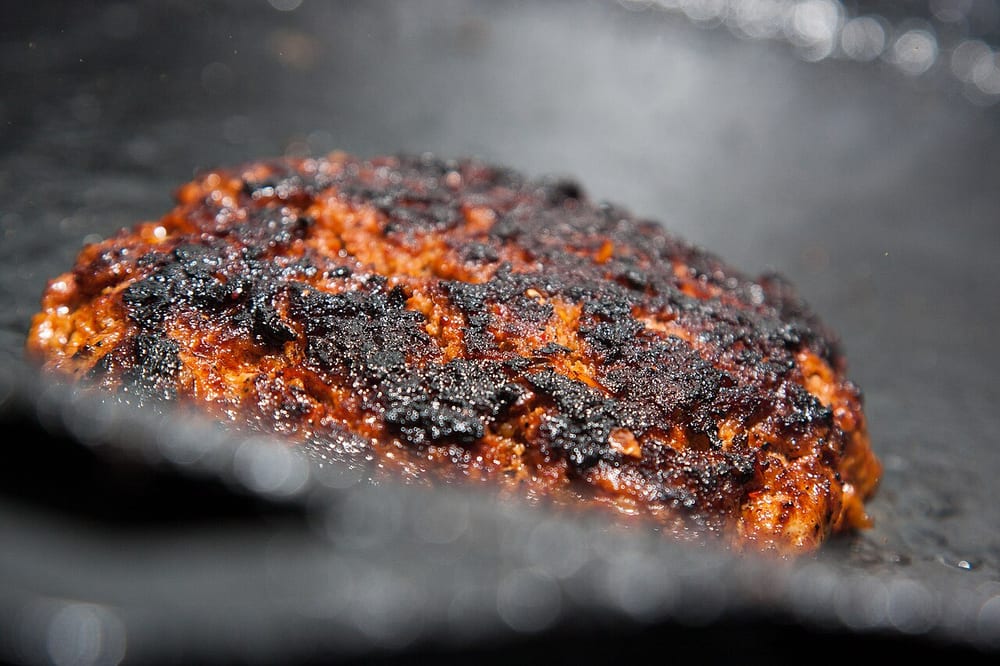
Mexican chorizo — 🔴 This is not a variant of Spanish chorizo. It is a different category of product. Class: fresh, bulk, uncured, perishable, and it must be cooked — usually squeezed out of the casing and crumbled into a pan. Its red comes from rehydrated dried chiles — ancho, guajillo, pasilla — and its acid from added vinegar, not fermentation. Spanish chorizo is a salami; this is hamburger. I have four, including my own, built because good chorizo is nearly impossible to buy in the States.
Argentine chorizo — A third product wearing the same word: a fresh, coarse, mildly seasoned beef-and-pork grilling sausage, cooked whole over wood on the parrilla, split, and eaten in bread as a choripán with chimichurri. Class: fresh. No dry-cure, no chiles, no vinegar. Its cousin longaniza varies across Latin America from thin fresh links to dried, which is a fourth reading of a fifth name.
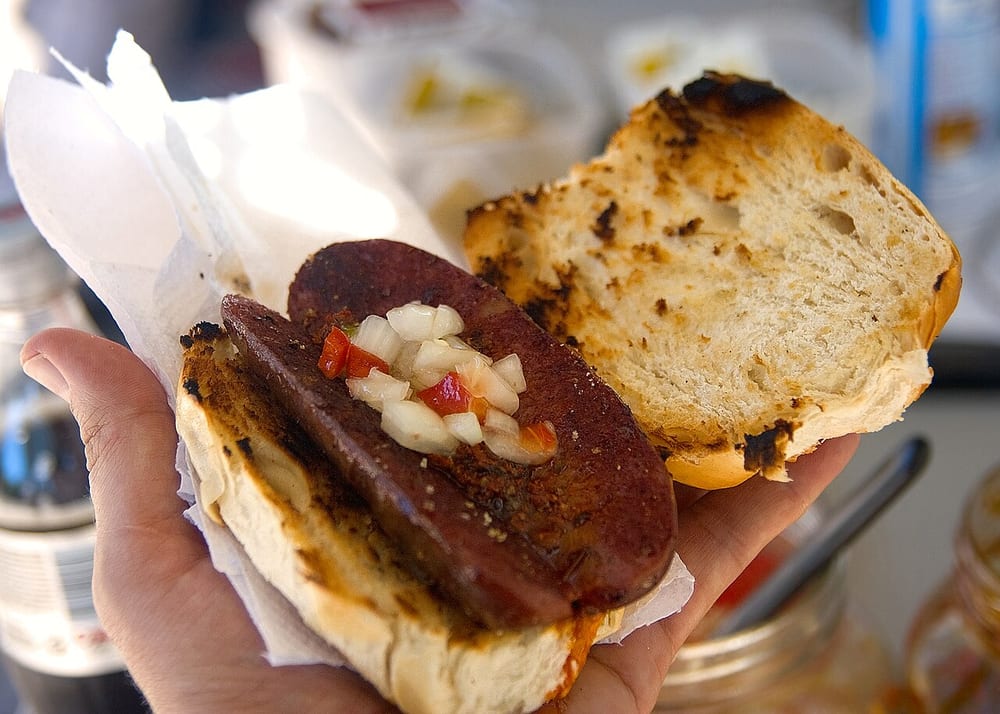
Cajun andouille — Coarse-ground smoked pork shoulder, heavy on garlic and cayenne, often double-smoked over pecan until it is nearly black. Class: cooked-smoked. It is the backbone of gumbo and jambalaya. 🔴 It has no relationship to French andouillette or French andouille beyond the word — no chitterlings, no tripe, no poaching. French colonists carried the name to Louisiana and made something else with it. I have six, which is more than I have of anything else on this page.
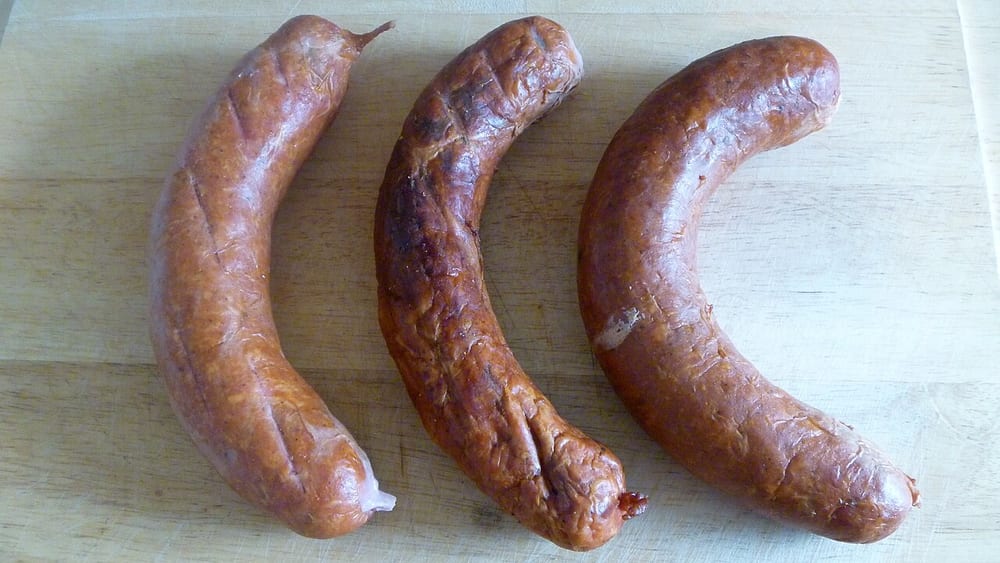
Cajun boudin — Rice-heavy pork-and-liver sausage, and the rice is more than half the volume: this is a rice sausage with pork in it, not the reverse. Class: grain-extended. Sold hot from gas stations across south Louisiana and often eaten by squeezing the filling straight out of the casing. ⚠ Note the name collision again — French boudin blanc is a delicate poached milk-and-veal sausage, an entirely different thing. Both of mine are Cajun.
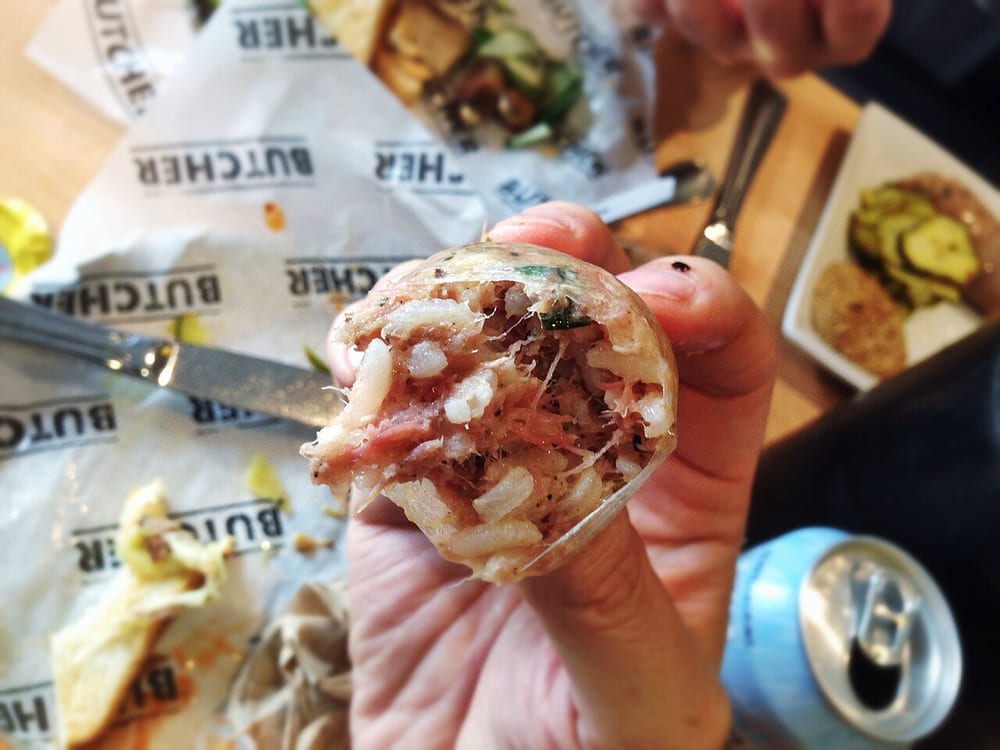
Scrapple & goetta — The two American grain sausages that gave up on casings entirely. Scrapple is Pennsylvania Dutch: pork scraps, cornmeal and buckwheat, set in a loaf pan, sliced and fried crisp. Goetta is Cincinnati German, built on pinhead oats. Class: grain-extended. Both exist because after a hog butchering nothing went in the bin, and both are far better than their names suggest. A well-fried slice has a shatter-crisp crust over a soft interior.
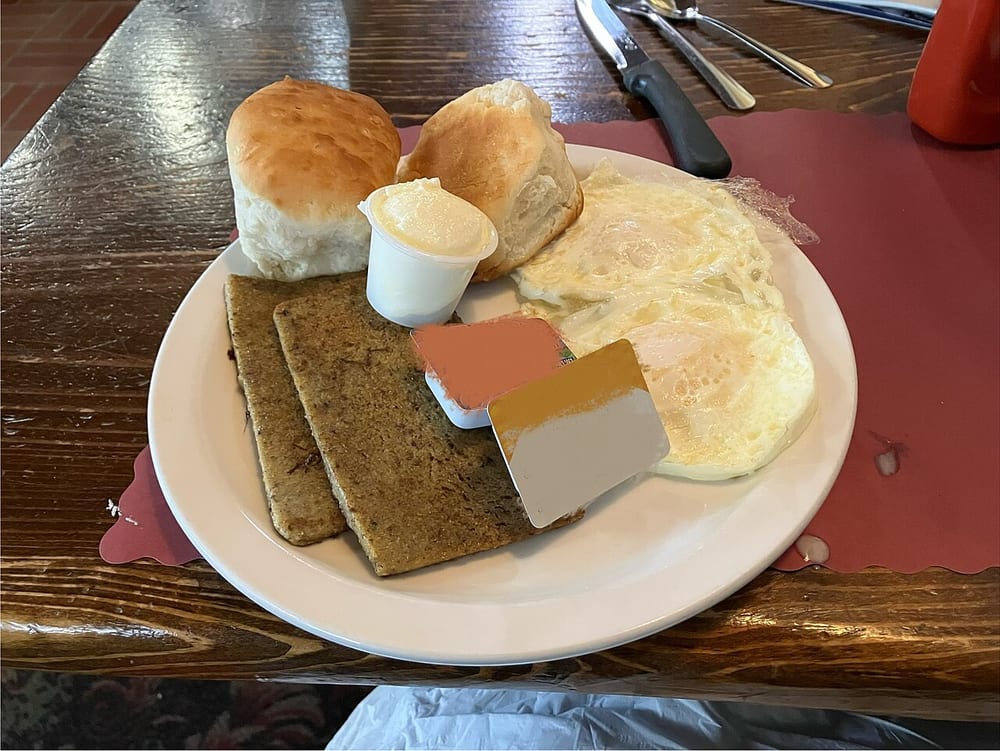
Summer sausage & snack sticks — The American home-smoker staples, and the same product at different calibers: a tangy, cured, cooked-smoked or semi-dry beef-and-pork chub, and its 19–21 mm sibling. Class: both, genuinely — some are fermented semi-dry and some are cured and cooked with the tang coming from encapsulated citric acid. I have three summer sausages, including my mother’s card — Tender Quick, no casing at all, five hours in a 200 °F oven — and snack sticks.
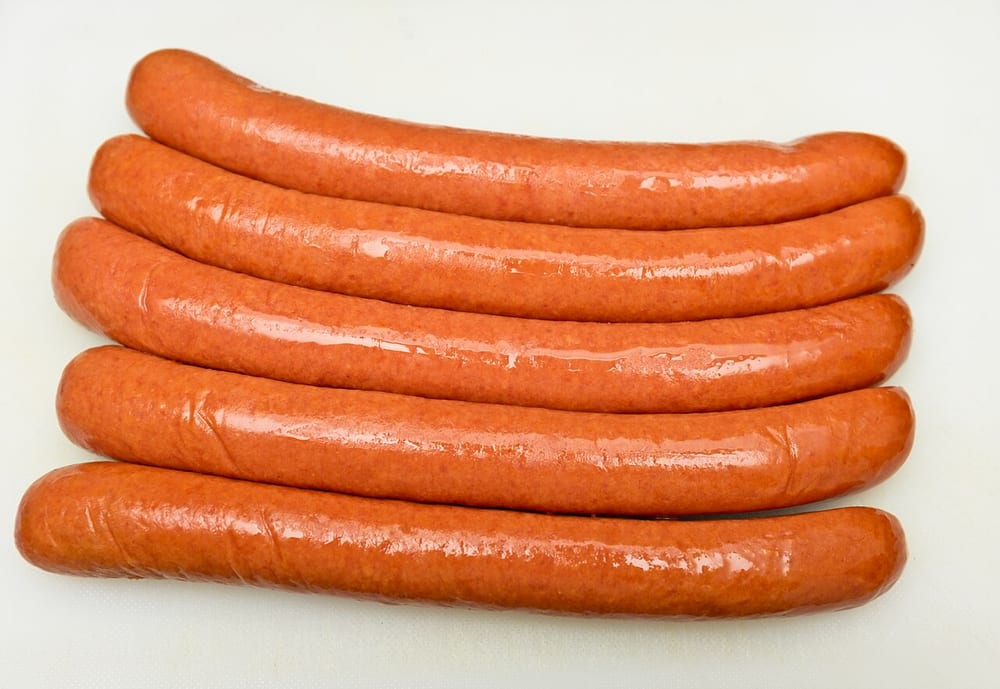
The hot dog — The most-eaten sausage on this list by an enormous margin, and technically the most demanding thing here. Class: emulsified. Its fat is dispersed as microscopic droplets held in salt-solubilized protein, and the batter has a ceiling around 58–60 °F — go over it and the emulsion breaks. Every industrial hot dog is a bowl-chopper product executed to a tolerance most home cooks never attempt. It deserves more respect than it gets.
What the tour tells you
Forty-six sausages, and almost none of the variety is in the recipe. It is in four decisions: how fine you cut, what cure goes in, what heat does and when, and how much water leaves. Rearrange those and a Toulouse becomes a saucisson sec; leave them alone and change only the diameter and a salchichón becomes a fuet.
The rest is local: the filler tells you the country — rice in Burgos, oats in Ireland, rye in Tampere, glass noodles in Seoul, nothing at all in France. One spice can define a nation’s entire dry-cured tradition, and one word can name three unrelated products on three continents.
If any of this made you want the mechanism rather than the map, go to the family tree. If it made you want to make something, start with a Toulouse — it has nowhere to hide, and it will tell you honestly what your technique is.
Comments (0)