The Family Tree
Every sausage on earth is the same four decisions made differently: how finely you cut the meat, how much salt and what curing agent goes in, what heat does to it and when, and how much water you let leave. Ninety percent of what looks like bewildering national variety — a Thüringer next to a lap cheong next to a black pudding — is four dials in different positions.
I’ve been making these things for forty years, and for the first fifteen I had no map. I had recipes, and a recipe tells you what to do without telling you what you are making. So I’d follow a summer sausage recipe and a snack stick recipe and a landjäger recipe without understanding that two of those three were the same product at different diameters, while the third was doing something chemically different in its first eight hours. When something failed I couldn’t diagnose it, because I didn’t know what class of thing had failed.
This page is the map I wish somebody had handed me, and every other page in this program hangs off it. If you take one thing from it: classify by process, not by outcome.
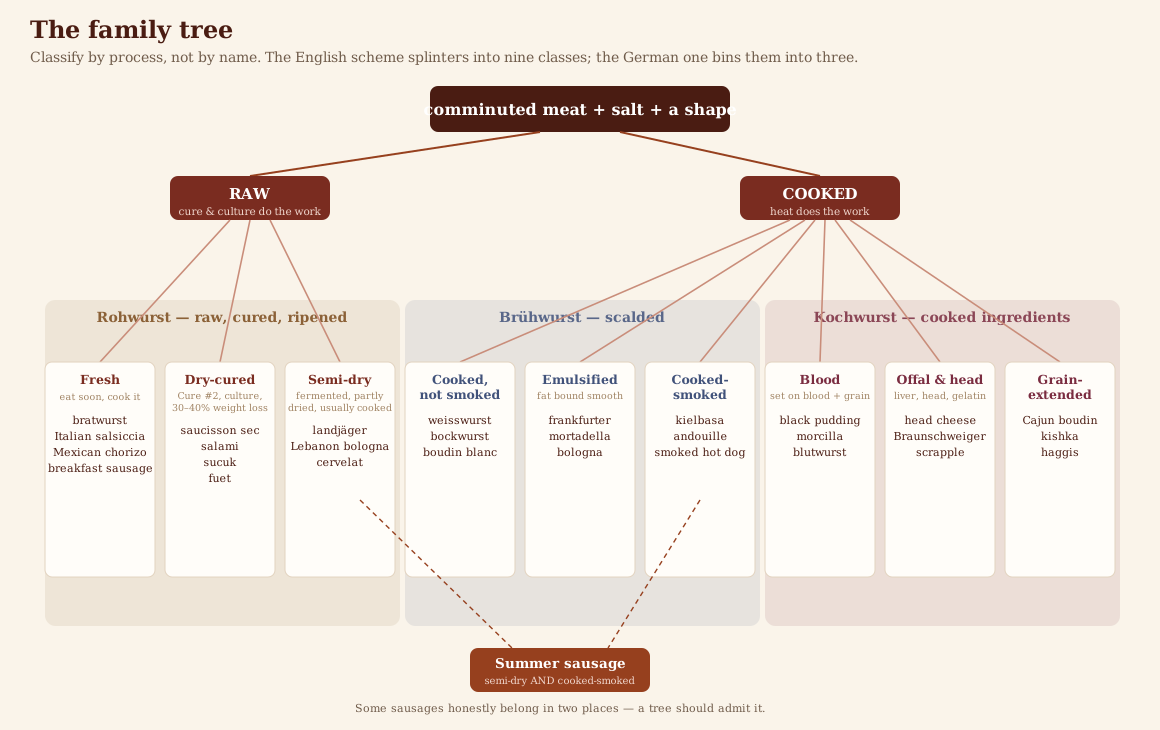
Why the German scheme is better than ours
English sausage vocabulary grew up by accident. We name sausages after where they come from (Italian, Polish, Toulouse), when you eat them (breakfast, summer), what they look like (snack stick, chub, link), and occasionally something that happened to them (smoked, dry-cured). Four incompatible naming systems at once. “Smoked sausage,” “summer sausage” and “Italian sausage” are not three members of one category; they’re a process, a season and a nationality standing in a row pretending to be siblings.
German has a proper taxonomy, and has had one for a long time because German sausage-making was regulated as a trade rather than left to marketing. It sorts everything into three bins on one question: what state was the meat in when it went into the casing, and what does heat do to it?
Rohwurst — “raw sausage.” Built from raw meat and never cooked as part of its manufacture. Made safe and shelf-stable by salt, curing salt, fermentation, drying, often cold smoke. Salami, mettwurst, teewurst, cervelat, landjäger. You eat it raw, months later, and that is the point of it.
Brühwurst — “scalded sausage.” Built from raw meat comminuted with ice and salt into a batter, stuffed, then scalded — heated in water, steam or a smokehouse to a temperature that sets the protein. The heat is the manufacturing step. Frankfurter, bockwurst, weisswurst, Lyoner, the fine-cut end of bratwurst.
Kochwurst — “cooked sausage.” Built from material already cooked before it became sausage: scalded liver, head meat simmered off the bone, blood, rind, tongue. Assembled hot, filled, heated again to set. Leberwurst, Blutwurst, Zungenwurst, Sülze. The bind comes from gelatin and fat and coagulating protein, not raw-meat myosin — there is no raw meat in it to extract myosin from.
Those three bins are mutually exclusive and jointly exhaustive, and membership is decided by a fact about manufacture you cannot fake with a label. A liverwurst and a blood sausage are obviously the same kind of thing here — same construction, same bind mechanism, same handling — while English puts them in different chapters.
The subtler payoff: the German scheme tells you where the danger is. Rohwurst never gets hot enough to kill anything, so the whole safety burden falls on salt, nitrate, competitive fermentation and water activity. Brühwurst has a cook step, so the burden is the cold chain before and refrigeration after. Kochwurst starts from cooked material and is handled warm, so its hazard is recontamination and slow cooling. Three classes, three completely different failure modes. The English list doesn’t organize around that at all — which is exactly why people who learn from English recipes get blindsided.
I’ll use the English nine below, because that’s the vocabulary in every American recipe and every butcher case in Michigan. But I’ll tag each with its German bin, and where an English class splinters across German bins — it does, in two places — I’ll say so.
One point of vocabulary before the list, because it’s the kind of thing that trips up an English speaker reading a German source. “Rohwurst” does not simply mean “raw sausage.” The Leitsätze für Fleisch und Fleischerzeugnisse — the German food code — defines it as sausage that is umgerötet (cured, reddened by nitrite or nitrate), storable without refrigeration above 10 °C, normally eaten raw, and either spreadable (streichfähig) or made sliceable (schnittfest) by a ripening that dries it out.
Every one of those clauses excludes a fresh bratwurst. It isn’t cured, it isn’t shelf-stable, and drying is the last thing you want to happen to it. So a fresh bratwurst is raw, but it is not Rohwurst — German handles it separately, as rohe Bratwurst. Worth knowing before you assume a German recipe labelled Rohwurst is telling you to make something you can cook on Saturday.
The same code notes that what counts as “Bratwurst” is itself regionally variable — which is a fair warning that even the rigorous scheme has soft edges where local usage overrules it.
1. Fresh
What defines it. Raw meat, salt, seasoning; no curing salt, no fermentation, no smoke, no cook step. It leaves your hands as raw ground meat in a shape and it is still that when it reaches the pan. German bin: raw — but not a keeping sausage. Not Rohwurst in the trade sense, because it fails all three of that term’s tests: it isn’t cured, it isn’t shelf-stable, and it isn’t ripened dry.
The process. Grind cold — I want the meat around 30°F going into the grinder — season, mix only until the batch grabs, stuff or leave it bulk, rest overnight so salt and spice equilibrate. That’s the whole manufacture; there is no chemistry with a clock on it. Mixing is the one place people go wrong: fresh sausage wants a modest bind, not the tacky primary bind you’d build for an emulsion, and hand heat will smear the fat before you get there anyway.
Keeping and serving. It keeps like raw ground meat, because that’s what it is: a few days refrigerated, months frozen, cooked to 160°F before eating. No cure means no nitrite, which means you cannot slow-smoke it at 120–150°F — that’s hours in the danger zone with nothing protecting it. Fresh sausage gets fast, hot heat.
Named examples. Bratwurst, the coarse fresh Thüringer and Nürnberger style · Italian, sweet and hot · Mexican chorizo — fresh, bulk, vinegar-and-chile, crumbled into a pan, and not a variant of Spanish chorizo, which is a dry-cured sliceable product from an entirely different class · Boerewors, the South African coriander-and-vinegar coil · Toulouse · Cumberland · Ćevapi, fresh sausage that skipped the casing · Loukaniko.
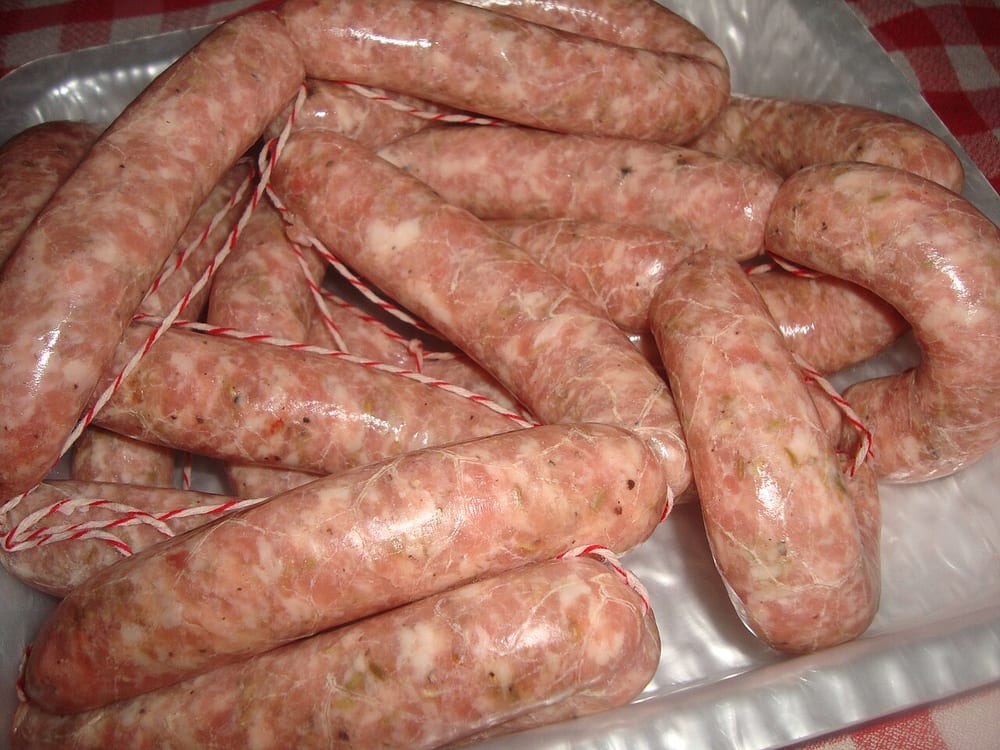
2. Cooked (poached or baked, no smoke)
What defines it. Raw meat and fat, mixed and stuffed, then fully cooked in gentle heat — water, steam or a low oven — with no smoke and usually no cure. The heat is the manufacturing step, not the meal. German bin: Brühwurst, for the coarser and medium-cut examples.
The process. The critical number is the poaching temperature: hold the water at roughly 165–175°F and bring the sausage to about 160°F internal. Boil it and you rupture the casing, drive the fat out, and get a hollow greasy sausage — the failure everyone has had once. Then straight into ice water. That’s not fussiness; the ice bath stops carryover cooking and prevents the shriveled skin that comes from letting a hot sausage cool in air.
Keeping and serving. Fully cooked but not preserved. Most carry no nitrite at all, so they behave like cooked meat: about a week refrigerated, reheated gently rather than cooked again. Weisswurst is traditionally eaten the morning it’s made, which isn’t romance — it’s an honest statement about a fresh, uncured, unsmoked product’s shelf life.
Named examples. Weisswurst — veal and pork, parsley, lemon, mace, poached and eaten before noon · Boudin blanc, the French one: pork or chicken, milk, sometimes egg, extremely delicate · Bockwurst · Liverwurst and Braunschweiger, which sit here in English but are properly Kochwurst in German because their liver is pre-cooked · Gelbwurst.
Note what just happened in that list. English “cooked sausage” pulled in both a scalded raw-meat batter (weisswurst) and a pre-cooked-liver product (liverwurst) and called them one category, because both arrive at the counter cooked. German splits them, because they were built by two entirely different methods and fail in two entirely different ways. That’s the splinter I promised you.
3. Emulsified
What defines it. The meat is comminuted so finely that the fat is dispersed as microscopic droplets held in a matrix of salt-solubilized protein and water. Cut it and it’s homogeneous — no visible meat particles. German bin: Brühwurst, the fine-cut end of that class.
The process. A bowl chopper or a proper emulsifier, not a grinder. Lean meat, salt and ice go in first and get chopped until the salt pulls myosin into solution — that solution is what will hold the fat. Then the fat, then the rest of the ice and the seasoning. The whole operation is a race against temperature: pork batters have a ceiling around 58–60°F, and going over it breaks the emulsion — the protein releases the fat and you get a greasy, gritty product with fat pockets under the casing. Stuffed, cooked, often smoked as well (which is why frankfurters straddle into the next class), then chilled.
Keeping and serving. Fully cooked, cured with Cure #1 at the standard 156 ppm ingoing nitrite for comminuted product. Weeks refrigerated, not months; vacuum sealing roughly doubles it. Ready-to-eat.
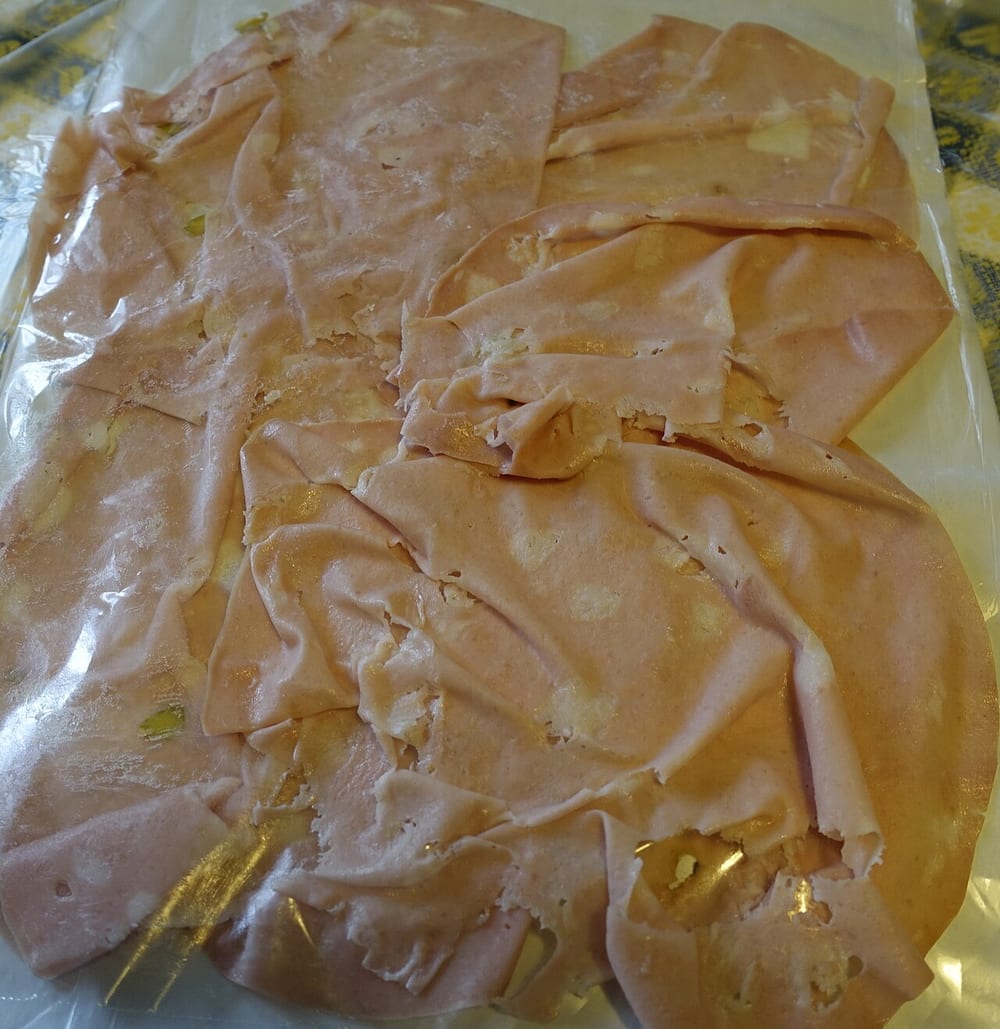
Named examples. Frankfurter and wiener · Bologna, the American descendant, a long way from Bologna’s · Mortadella — emulsified batter with hand-cut fat cubes folded in whole, then baked slowly for many hours; those white cubes are a garnish suspended in an emulsion, not a coarse grind · Lyoner · Knackwurst · Leberkäse, the same batter in a loaf pan and, despite its name, containing no liver · Gyoniku, the Japanese fish sausage.
4. Cooked-smoked
What defines it. Cured with Cure #1, stuffed, then taken through a staged low-temperature smoke that ends with the sausage fully cooked. Raw going in, cooked and smoked coming out. German bin: Brühwurst, in the sense that heat is the manufacturing step — though the German trade would sort many of these by their own subcategories.
The process. The class I know best, because it’s my grandfather’s kielbasa and it took me years to get right. The cure is non-negotiable: you will spend hours between 120°F and 150°F, precisely the band that makes Clostridium botulinum comfortable, and Cure #1 is what makes that safe. The schedule matters as much as the cure. The first hour is a drying stage — dampers open, no water pan — because smoke won’t deposit evenly on a wet casing; it streaks. Then climb in stages. Mine runs 130 → 150 → 170 → 190°F over hickory, pulled at 155–165°F internal. Then either a 165°F water bath to finish (a turkey roaster for years, now a bin with a sous-vide heater) or straight to an ice bath for ten to thirty minutes, then a two-to-three-hour bloom until the casing goes from pale tan to deep mahogany.
Keeping and serving. Fully cooked and cured: a couple of weeks refrigerated, much longer vacuum-sealed or frozen. It does not need cooking, only warming.
Named examples. Polish kielbasa in its smoked form — and remember kielbasa is simply the Polish word for “sausage”; treating it as one specific product is a diaspora simplification · Cajun andouille, coarse pork, heavily smoked, a gumbo sausage · Summer sausage in its cooked-smoked school · Snack sticks, 19–21 mm, essentially summer sausage at small caliber · Kabanosy · Debreziner · Falukorv.
5. Dry-cured / fermented
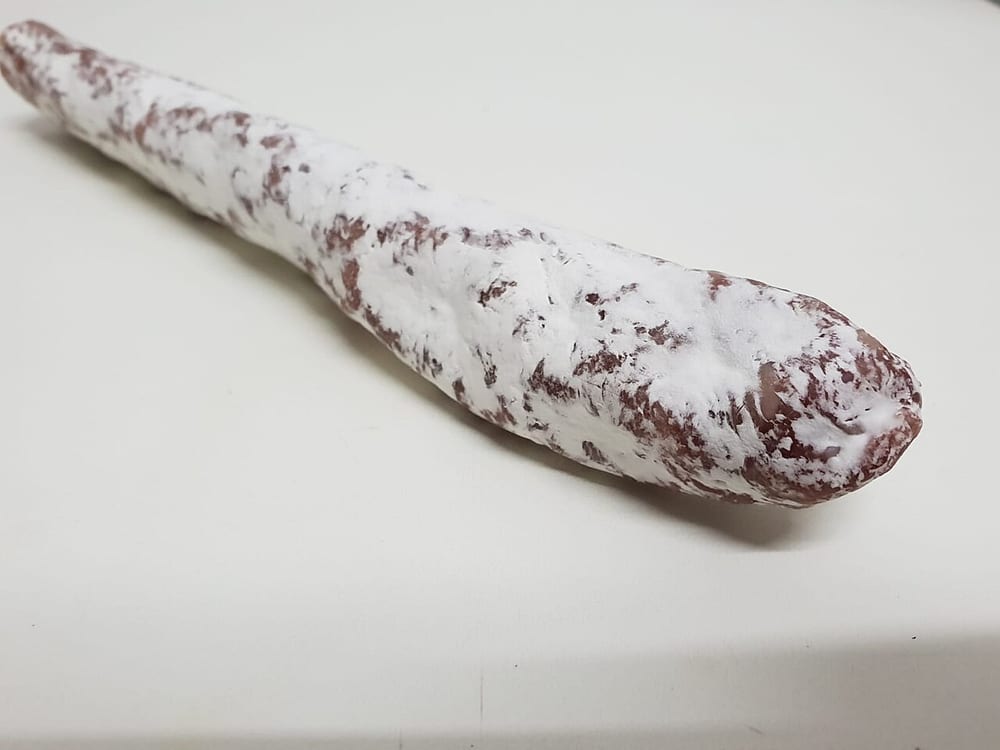
What defines it. Raw meat that is never cooked at any point, made safe and shelf-stable by a fast acid drop from bacterial fermentation followed by weeks or months of controlled drying. German bin: Rohwurst — the strict, proper sense of the term.
The process. The most demanding class in sausage-making, and the one where the safety margin is thinnest. Ground meat, salt, Cure #2, dextrose, and a starter culture. Cure #2 is the point of difference and it is neither optional nor substitutable: it carries a nitrate reservoir alongside its nitrite, so as nitrite is consumed over weeks, bacterial reduction of the nitrate keeps regenerating it. Cure #1 has no nitrate and will run out on you partway through a three-month dry. Neither one is Morton Tender Quick, a different composition at an entirely different use rate.
Then fermentation: warm and humid, the culture eats the dextrose and produces lactic acid, and the pH falls from around 5.8 to roughly 4.8–5.3. The reason it has to fall fast is not botulism. It is Staphylococcus aureus, which grows in exactly those conditions and produces a heat-stable toxin — cooking the sausage later will not destroy it. Degree-hours limits bound how long you may sit warm before the acid arrives. Get culture, sugar and temperature right and the acid wins the race; get sloppy and nothing downstream saves you.
Then drying: weeks to months at roughly 55°F and 70–75% relative humidity, targeting 30–40% weight loss. But weight loss is only a proxy. The real preservation metric is water activity — how much of the remaining water is available to microbes. That’s why you weigh and label every link, and why “it looks dry” is not a measurement. Dry too fast and you get case hardening: a sealed shell trapping a wet, spoiling core.
Keeping and serving. Shelf-stable at cellar temperature, for months. Sliced thin and eaten raw — that’s the entire purpose.
Named examples. Salami in a hundred regional forms · Soppressata, pressed, coarse, southern Italian · Pepperoni, an American invention and a genuinely fermented dry sausage, not merely “spicy salami” · Sujuk / sucuk, the Turkish and Balkan beef sausage, fermented, dried, then usually fried · Saucisson sec · Chorizo español · Fuet · Finocchiona.
⚠ The exception worth knowing: lap cheong. Chinese sausage is dried, sliceable, and lives on a shelf, so it looks like it belongs here — but it is generally not fermented and it is not ready to eat. It’s a sugar-and-wine-cured dried sausage that gets steamed or cooked into rice. Dry does not mean fermented, and dry does not mean raw-edible.
6. Semi-dry
What defines it. Fermented like a dry sausage but dried only partway and then usually cooked — a hybrid borrowing the tang of fermentation and the safety of a cook step, skipping the months of waiting.
The process. Cure (often Cure #1, because there’s a cook step and the process is short; Cure #2 where a longer dry follows), culture, dextrose, ferment to a modest acid drop, up through a smokehouse cycle to a finished internal temperature, then dry for days rather than months. Weight loss lands around 15–25% rather than 30–40%. The American Landjäger gets pressed flat in molds during its cycle, which is why it comes out rectangular.
⚠ Landjäger sits in two boxes at once, and it’s worth saying why. The American one is genuinely semi-dry — that’s the version above and it’s the one in most US recipes. But the German food code puts Landjäger under schnittfeste Rohwurst, alongside salami: raw, never cooked, dried to 30–40%. So it appears in the Rohwurst list further up and here, and both entries are correct about a different sausage. Whenever you read a Landjäger recipe, the first thing to work out is which of the two it is — the cure, the ferment and the finish all fork there. The deep dive takes the fork apart properly.
Keeping and serving. Weeks at room temperature, longer refrigerated. Firm, sliceable, tangy, no cooking required.
Named examples. Landjäger in its American cooked form · Summer sausage in its semi-dry school · Cervelat · Thuringer summer sausage · Some snack-stick formulations, depending on whether they’re fermented or merely cured and cooked.
7. Blood
What defines it. Blood is the primary ingredient, and it is what sets the sausage. German bin: Kochwurst.
The process. Here is what separates this class from everything above it: there is no myosin bind. No amount of mixing extracts protein from blood. What sets a blood sausage is blood proteins coagulating with heat, gripping a scaffold of grain and diced fat. So the whole troubleshooting vocabulary of meat sausage — primary bind, protein extraction, the patty-fry test — simply does not apply. A blood pudding that falls apart failed for grain and fat reasons, not mixing reasons. Fat goes in as cubes, deliberately, and must stay cubes: those white flecks in a good black pudding slice are structural, not decorative.
The manufacture: soak grain, warm the blood with fat and aromatics without letting it set, fill loosely into casings or a loaf pan, poach gently — around 175°F, never boiling — until set. Cool completely before slicing.
Keeping and serving. Cooked but not preserved. Days refrigerated. Almost always fried in slices to serve, which is the second cook and where the crust comes from.
Named examples. Black pudding — the Irish breakfast dive covers this one properly and I won’t repeat it · Morcilla, Spanish, often with rice or onion · Blutwurst · Boudin noir · Soondae, Korean, with glass noodles · Kaszanka, Polish, buckwheat-based · Mustamakkara.

8. Offal and head
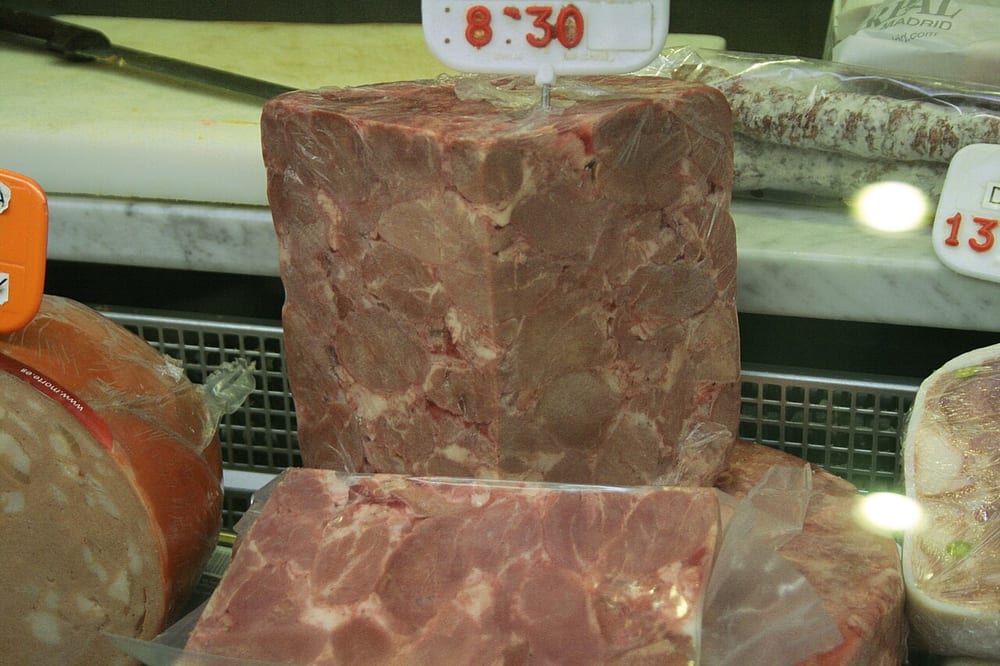
What defines it. Built from organ meat, head meat, tongue, rind and connective tissue — material that was cooked before it became sausage. German bin: Kochwurst.
The process. Simmer the head or trotters or pluck until the meat falls off and the collagen has converted to gelatin in the liquid. Pick the meat, chop it, season aggressively — vinegar, pepper, bay, allspice — reduce the liquid until it will set, combine, pack into a mold or a large casing, chill. The set is gelatin, not protein coagulation and not fat emulsion. It’s a terrine with a sausage’s genealogy.
Keeping and serving. Days, refrigerated. Served cold, sliced thick, with mustard and something acid. This is the great lost branch in American eating — it existed because after a hog butchering nothing went in the bin, and once meat stopped arriving as a whole animal the class had nothing to be made from.
Named examples. Head cheese / souse — the same thing, the second name Appalachian and Southern · Sülze and Presskopf · Andouillette, the French sausage of chitterlings and stomach, poached then grilled, and completely unrelated to Cajun andouille despite the shared root word · Kishka / kiszka in its offal-and-grain form · Zungenwurst, blood sausage with whole tongue set into it · Faggots.
9. Grain-extended
What defines it. Grain is a primary structural component, not a filler apologizing for itself. Oats, rice, barley, buckwheat, cornmeal. Usually cooked, usually poached or baked, usually sliced and fried to serve.
The process. Grain is cooked or soaked, meat cooked or ground, the two combined with fat and stock and seasoning, then filled and poached or set in a pan. The grain does the same job blood does in class 7 — body, and holding the fat — so you’re not relying on a meat bind. Scrapple and goetta take this to its conclusion, setting in a loaf pan with no casing at all.
There’s a persistent snobbery here: the idea that grain is what you add when you can’t afford meat. Rusk in a British banger isn’t dilution; it holds moisture and gives that specific soft, yielding bite a hundred-percent-meat sausage does not have and that people who grew up on bangers actually want. Extenders are texture decisions dressed up as economy decisions.
Keeping and serving. Cooked, not preserved. Days refrigerated, freezes well. Sliced and fried, almost universally.
Named examples. White pudding — Irish and Scottish, pork and oatmeal, and not “black pudding without the blood”: blood was doing two jobs, binding and moisture, and both have to be refilled by fat, more cereal, egg, and in the Irish version a real load of pork and pork liver · Cajun boudin, rice-heavy and pork-and-liver, what Louisiana means when it says “boudin” · Scrapple, cornmeal and buckwheat · Goetta, pinhead oats, Cincinnati · Haggis, oatmeal and sheep’s pluck in a stomach — the direct descendant of the blood-and-fat-stuffed stomach roasting on the fire in Book XX of the Odyssey, the oldest sausage reference in Western literature · Hog’s pudding.
The comparison table
| Class | Raw or cooked | Cure used | Keeps | Example |
|---|---|---|---|---|
| Fresh | Raw — you cook it | None | Days refrigerated, months frozen | Bratwurst, Italian, Mexican chorizo, boerewors |
| Cooked | Cooked in manufacture | Usually none; sometimes Cure #1 | ~1 week refrigerated | Weisswurst, boudin blanc (French), liverwurst |
| Emulsified | Cooked in manufacture | Cure #1 (156 ppm ingoing) | Weeks refrigerated | Frankfurter, bologna, mortadella |
| Cooked-smoked | Cooked in manufacture | Cure #1 — mandatory | Weeks refrigerated, months frozen | Kielbasa, Cajun andouille, summer sausage, snack sticks |
| Dry-cured / fermented | Never cooked | Cure #2 — nitrate reservoir | Months, shelf-stable | Salami, soppressata, pepperoni, sujuk |
| Semi-dry | Fermented, then cooked | Cure #1 (short) or #2 (longer dry) | Weeks at room temperature | Landjäger (American form), semi-dry summer sausage, cervelat |
| Blood | Cooked in manufacture | None | Days refrigerated | Black pudding, morcilla, blutwurst, soondae |
| Offal / head | Cooked before it’s sausage | None | Days refrigerated | Head cheese, andouillette, kishka |
| Grain-extended | Cooked in manufacture | None | Days refrigerated, freezes well | White pudding, Cajun boudin, scrapple, goetta, haggis |
One warning: the “cure used” column is the typical case, and typical is not universal. Lap cheong sits in the dry-cured row by appearance while behaving like none of it — unfermented, and it needs cooking. Use the table as a starting hypothesis, then read the actual formula.
The bins leak, and pretending otherwise makes you a worse sausage maker
Now the honest part. Every taxonomy I’ve just given you is a convenience, and there are at least four places where it visibly fails.
Summer sausage is two products with one name. There is a fermented semi-dry summer sausage — culture, dextrose, an acid drop, partial drying — and a cooked-smoked one that never ferments at all and takes its tang from encapsulated citric acid or from nothing but the cure. Both are correct. My mother’s card is a third thing again: Morton Tender Quick, a three-to-four-day cure in plastic wrap in the fridge, rolled into tubes with no casing at all, then five hours in a 200°F oven. No culture, no fermentation, no smokehouse. It fits none of my nine boxes cleanly. It’s also delicious, which is the point — the taxonomy exists to help you understand a process, not to tell anybody their sausage is wrong.
Andouille means two unrelated things. Cajun andouille is coarse-ground smoked pork shoulder for gumbo. French andouillette is chitterlings and stomach, poached, grilled and famously pungent. Same root word, same medieval ancestor, completely different products in different classes.
“Boudin blanc” means two things too, and my own collection proves it: both recipes I hold under that name are Cajun rice boudin, not the delicate French milk-and-veal poached sausage the name literally denotes. They’re class 9; the French one is class 2.
The same farce becomes three products. This is the deepest of the four. Take one batch of seasoned ground pork. Stuff a third fresh and grill it tonight — class 1. Add Cure #1 to a third, stuff, run it through a smokehouse cycle — class 4. Add Cure #2, dextrose and a culture to the last third, ferment it and hang it two months — class 5. Same meat, same grind, same spice. Three shelf lives, three safety profiles, three failure modes. Nothing about the farce determined the class. The process did.
Which brings the page back to the German scheme. Classify by what you did, not what you ended up with, and the leaks mostly stop leaking.
Where my own collection sits
I have examples of nearly every class on this page, and walking them is the fastest way to watch the taxonomy do real work.
Fresh: Italian, sweet and hot, Mexican chorizo — four of those, including my own, built because good chorizo is nearly impossible to buy in the States — plus boerewors, ćevapi, bangers, country sausage and cudighi, the Upper Peninsula’s own. Cooked: both boudin blanc recipes, with the caveat above about which boudin they actually are. Emulsified: old-fashioned bologna, whose own notes explain why the emulsion step isn’t optional — the author’s first attempt came out like a burger because they skipped the ice water.
Cooked-smoked: my grandfather’s Polish sausage, six andouilles, smoked beef sausage, hunter sausage and snack sticks. Dry-cured: soppressata, finocchiona, slow-fermented pepperoni, three sujuk variations, and lap cheong with its asterisk. Semi-dry: landjäger — whose own recipe notes you can use Cure #2 but you’ll get a very hard link, the nitrate-reservoir logic showing up as texture — and summer sausage three ways, including my mother’s card.
Blood: Irish black pudding, made with frozen blood from a market near the MSU campus. Offal / head: hog head cheese. Grain-extended: Irish white pudding, the rusk banger and Cajun boudin.
The shape of the file is as informative as the holdings. For years my cards carried no German sausage at all — no written-down bratwurst, weisswurst, leberwurst or blutwurst — in a collection with six andouilles on it. Not because I don’t make German sausage; I make it constantly, straight out of a shelf of fifty-some sausage books. I’d just never bothered to copy those formulas into my own file, which is a stranger omission than never making them. So the first thing this program did was fix it: the German sausages are on my cards now, right where the scheme I’ve spent this page praising says they belong.
Where this goes next
Every section of this program walks one branch of this tree. Equipment is about controlling comminution and temperature — dials one and three. Ingredients is dial two, and its most important page keeps Cure #1 and Cure #2 straight. Curing and smoking is dials three and four together.
But read casing or not next. The same farce becomes three products depending on process — and three different products depending on what you put it in. A patty, a link, a coil, a loaf and a skinless ćevap are five foods, and the meat never changed.
Comments (0)