Cudighi: The Sandwich the Iron Range Kept to Itself
Here’s a test. Say the word “cudighi” — it’s pronounced roughly COULD-uh-ghee, with a hard G — to someone from Detroit, or Chicago, or honestly anywhere more than about an hour’s drive from Ishpeming, Michigan, and watch the blank look. Now say it to someone from Ishpeming or Negaunee, and watch their whole face change. Cudighi is a sandwich that a few thousand people love completely and almost nobody else has ever heard of, and that is the entire hook. This is the most hyper-local food I know of in the United States that isn’t tied to a single restaurant — a genuine regional dish with a century of history, that essentially does not exist outside two adjoining towns in the Marquette Iron Range of Michigan’s Upper Peninsula.
I’ve had it. I remember the first time exactly, and I’ll get to that. But first let me tell you what the thing actually is, because “spiced Italian sausage sandwich” undersells it in a way that matters.
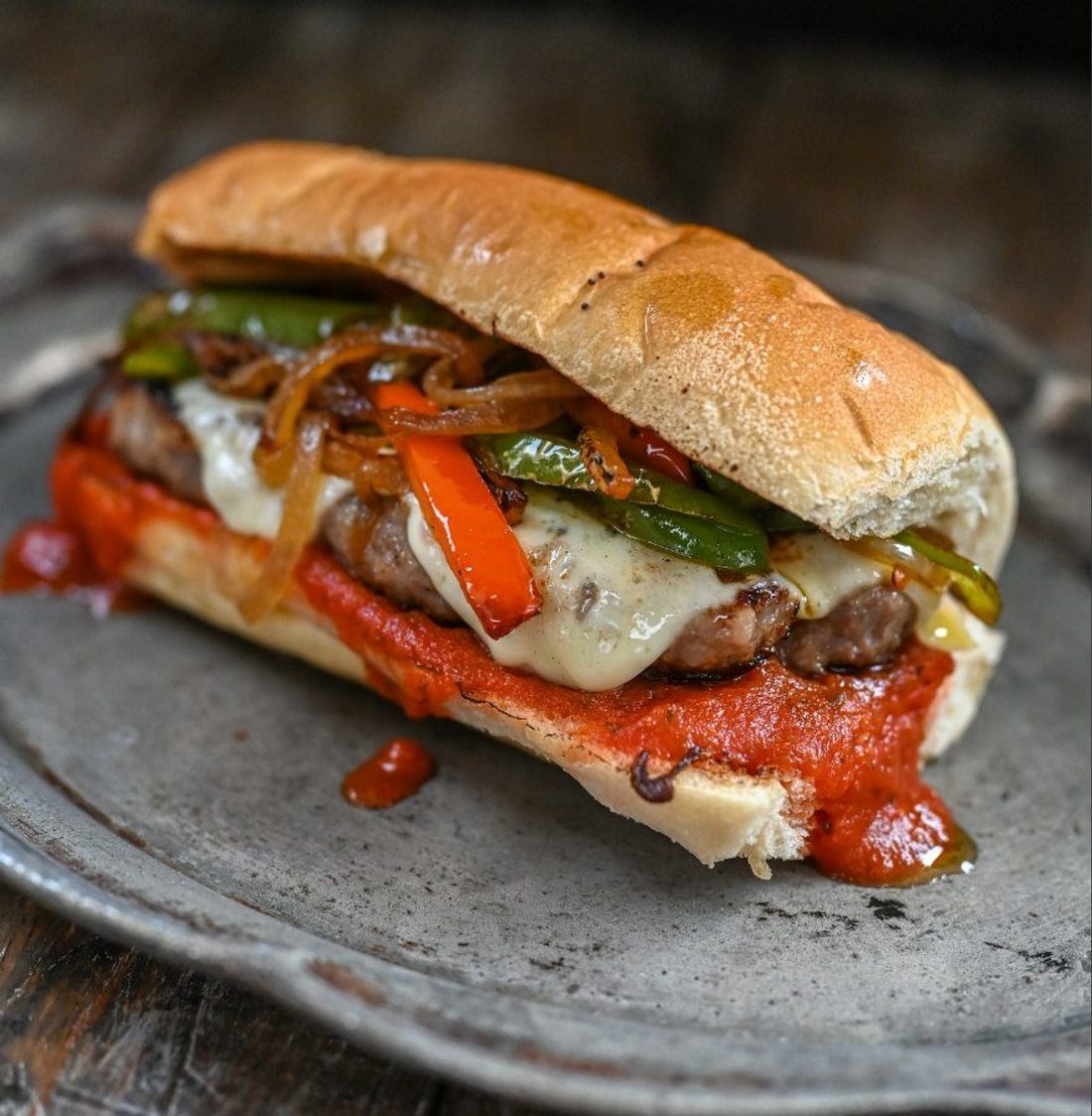 The classic build: a cudighi sausage patty on a bun, tomato sauce, melted mozzarella, onions. It looks like a meatball sub and tastes like nothing else, because of the spice.
What it actually is
Cudighi is a sweet-and-savory spiced Italian sausage, and it’s the spicing that makes it strange and wonderful. Most Italian sausage you’ve had is built on the savory-herbal axis: fennel, garlic, black pepper, maybe chili. Cudighi throws that out and reaches for the baking shelf. The signature blend runs to cinnamon, nutmeg, allspice, and clove — the warm sweet spices you’d expect in a spice cake or mulled wine — and some makers add a splash of red wine. The result is a pork sausage (some versions cut in beef or venison) that hits your tongue as savory and meaty and then, a beat later, blooms into something almost like Christmas. Sweet spice on ground pork. It sounds wrong on paper and it is deeply right in the mouth.
It’s served as a sandwich. The standard modern build is the sausage — as a patty, most often, though some shops use links — on a bun or a hard roll, topped with mozzarella, tomato or pizza sauce, and usually onions. Many places griddle or grill it, and the whole thing eats like a cousin of a meatball sub or a sausage-and-peppers grinder, except that the warm-spice profile makes every bite unmistakably its own. It is rich, it is a little sweet, it is messy, and it is exactly the kind of food a mining town invents to feed people doing hard work in the cold.
The toppings weren’t always this. In the early days the sandwich came dressed the old immigrant way — raw onions and mustard, sometimes ketchup, no cheese, no red sauce. The mozzarella-and-tomato-sauce version that most people now think of as “cudighi” is really a post-World War II development, when the sandwich drifted toward the pizzeria end of things and picked up the pizza toppings that surrounded it. Both versions are legitimate. If you order one at an old-school counter and it shows up with mustard and raw onion and no cheese, you’re not being shortchanged — you’re getting the original.
Tasting it honestly
Let me try to describe the actual eating of one, because “sweet-and-savory” is a lazy shorthand that could mean anything. What you notice first is that it reads as a normal, good Italian sausage — meaty, a little fatty in the right way, salted properly. It’s the finish that turns the corner. As you chew, the warm spices come up from underneath, and your brain does a small double-take, because cinnamon and clove are filed in most of our heads under dessert, and here they are in a pork sandwich, and they work. The nutmeg rounds it; the allspice ties it to the clove; if there’s wine, it leaves a faint dark sweetness behind. It is not a sweet sandwich — nobody’s putting sugar in it, and the tomato sauce and mozzarella keep it firmly savory — but it has a warmth and roundness that no fennel-and-garlic sausage has. The closest thing I can compare it to is the moment in a good bowl of chili or a Cincinnati chili when you realize there’s cinnamon in it and it’s exactly right. Cudighi is that surprise, built into a griddled sausage patty under melted cheese. It is unapologetically rich, it’s a two-napkin sandwich, and the first bite reorganizes your expectations of what Italian sausage can be.
Where the name and the sausage come from
Now the murky part, and I want to be honest that it is murky, because a lot of what gets written about cudighi’s origin is stated with a confidence the evidence doesn’t support.
The sausage descends from cotechino, a fresh pork sausage from the Po Valley of northern Italy — a fat, soft, slow-cooked sausage traditionally made from pork, fatback, and pork rind, with a folk legend tracing it to the siege of Mirandola in 1511. The general story is well founded: northern Italian immigrants who came to work the iron mines around Ishpeming and Negaunee brought their sausage-making traditions with them, and cudighi is what one of those traditions became on this side of the Atlantic — a cotechino-style spiced sausage, adapted into a faster, griddle-able form you could put in a sandwich.
The name almost certainly comes from cotechino itself, worn down through dialect and time — you can hear the bones of “co-te-ghi-no” inside “cu-di-ghi” — and in fact the older spelling around Ishpeming was “gudighi,” which sits even closer to the Italian. But I want to be clear: the exact linguistic path is not documented. It’s a reasonable reconstruction, not a proven etymology. Anyone who tells you precisely which Italian word became “cudighi” and when is guessing, however educated the guess.
The who-invented-it question is genuinely contested, and the honest answer is that no single person can be cleanly credited. A few real threads run through the local histories:
- Mario Gallizioli is sometimes billed locally as the “father of the cudighi,” and his version reportedly cut the pork with venison or lean beef.
- Felix Barbiere is the name that comes up most in the sandwich’s story. After a mining injury left him unable to work underground around 1920, Felix opened a confectionery on West Division Street in Ishpeming that grew into a hot-dog stand, and by the 1930s he was selling “gudighi” sandwiches dressed with chopped onion, mustard, and ketchup. The frequently repeated line is that Felix was not the first to make cudighi sausage, but is believed to be the first to sell it as a sandwich — and he raised his own pigs for it. (There’s a nice coincidence buried here: barbiere is simply the Italian word for “barber,” which is why some versions of the story remember the stand as sitting next to a family barbershop.)
- Several families — the Barbieres and the La Frenieres among them — are credited with popularizing it across the range, and the well-known Ralph’s Italian Deli in Ishpeming, run by Ralph Gervasi, was carried on by descendants of that same Barbiere line until it closed in 2024.
The commonly cited “an Italian immigrant opened a sausage stand in 1936” is a real thread, but you can see from the tangle above that pinning cudighi on one founder in one year flattens a messier truth: a cluster of northern-Italian families in one small mining district, each making a spiced sausage the old way, one or another of them being the first to slap it in a bun, and the sandwich becoming a shared local institution before anyone thought to write down who did what first. Much of the careful documentation we do have comes from Russell Magnaghi, a Northern Michigan University historian who has spent years on U.P. foodways, and even his work leaves the origin appropriately fuzzy. When the record is thin, I’d rather say “we don’t fully know” than hand you a tidy myth. Cudighi’s origin is the tidy-myth kind of story where the tidy version is probably wrong.
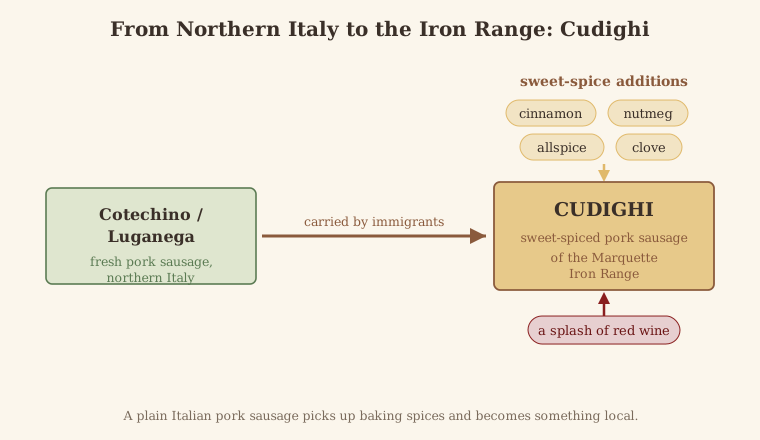
A plain northern-Italian pork sausage picks up baking spices and a splash of red wine to become the Iron Range’s cudighi.
Why the sweet spice? A note on northern Italian sausage
If the cinnamon-and-clove thing seems bizarre, it’s worth knowing it isn’t an American invention. Northern Italian fresh sausages have a real tradition of warm spicing that most Americans never meet, because the Italian-American canon we grew up on — the fennel-and-garlic sweet-or-hot sausage of the pizzeria — comes mostly from the south of Italy. The north is a different world.
The clearest ancestor to point at is luganega (or luganiga), the classic fresh pork sausage of Lombardy and the Veneto — long, thin, often coiled like a snail, cooked not cured. Traditional luganega is seasoned simply, but northern recipes reach for nutmeg and other warm spices in a way southern ones don’t, and richer festival versions of these sausages have historically carried cinnamon, clove, and even grated cheese and wine. That’s the world cudighi comes out of: a northern-Italian sausage grammar in which sweet spice on pork is normal, not weird. My own cudighi sausage recipe leans on that luganega lineage on purpose — it’s the honest ancestor, and it explains why the seasoning tastes traditional rather than gimmicky. The Marquette Iron Range didn’t invent sweet-spiced pork sausage; it inherited it, and then made it a sandwich.
It helps to remember which Italians came to the range. The mine labor that pulled Italians to Marquette County drew heavily from the north — Lombardy, Piedmont, the alpine and Po Valley provinces — rather than the Sicilian and Neapolitan south that fed most big-city Little Italies. That’s not a trivial distinction; it’s the whole reason cudighi tastes the way it does. Southern Italian immigrants gave America red-sauce cooking, fennel sausage, the pizzeria. The northern Italians who came to dig iron out of the ground near Ishpeming brought a different pantry — one where a festival sausage might carry cinnamon and clove and a little wine, where sweet spice and pork were an old friendship. Cudighi is a fossil of which Italy did the immigrating. Change the source region and you never get this sandwich.
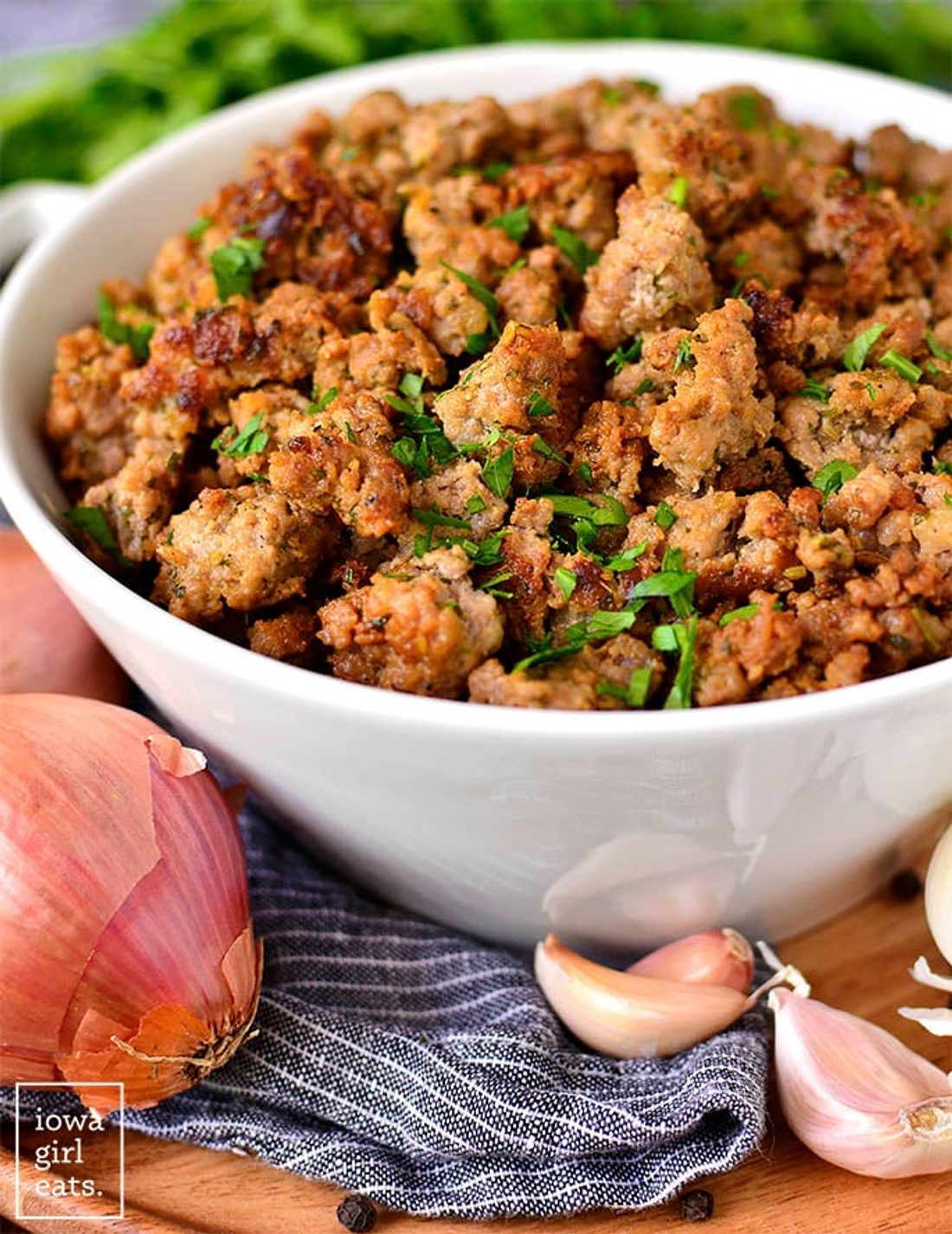 Ground pork meeting the warm-spice blend. This is where cudighi diverges from every fennel-and-garlic sausage you’ve had, and where the northern-Italian pantry shows itself.
Why it stayed this local
This is the question I find most interesting, because cudighi is good — good enough that by every normal rule of American food it should have spread. Coney dogs escaped Detroit. The Cornish pasty escaped the mines and colonized half the U.P. So why did cudighi stay pinned to Marquette County like a butterfly?
A few reasons, and they stack:
It’s a fresh sausage with a secret. Cudighi’s whole identity is the spice blend, and the spice blends were — and often still are — closely held family secrets. A shop’s cudighi recipe is a competitive asset it does not publish. You can’t franchise a secret your grandmother won’t write down, and you can’t spread a food nobody outside the family knows how to make.
It was made, not shipped. Unlike the pasty, which freezes and mails beautifully and built a whole national mail-order homesick trade, cudighi lived as a made-to-order griddle sandwich at a local counter. It didn’t develop the frozen-and-shipped commercial form that carries a regional food out into the diaspora.
The community that made it was small and stayed put. The northern-Italian iron-range population was concentrated in a handful of towns and never became a huge migratory group the way, say, southern Italians in the big eastern cities did. The food stayed where the people stayed.
And the region likes it that way. There’s real local pride in cudighi being theirs — an in-group food, a thing you have to come here to get. Yoopers are not, on the whole, trying to sell cudighi to Chicago. A dish this good staying this local is partly an accident of sausage-making and geography, and partly a choice.
The upshot is that cudighi has become a marker of place. Along with the pasty, it’s one of the two foods that tell you you’re on the iron range. If the pasty is the U.P.’s food — Cornish-born, Finnish-adopted, spread everywhere north of the bridge — then cudighi is the range’s food specifically: Italian-born, Marquette-County-bound, and proud of not being for everyone.
You can measure that devotion by what happens when a cudighi place closes. When Ralph’s Italian Deli in Ishpeming — the one descended from the Barbiere line, one of the sandwich’s founding families — shut its doors in 2024 after decades, it wasn’t treated locally as just another restaurant closing. It was mourned in the papers and online as the loss of a piece of the range’s identity, an institution, a keeper of one of the old recipes. That’s not how people react to a food that’s merely popular. That’s how people react to a food that means home — and it’s a good measure of why cudighi has stayed exactly where it is. When a dish carries that much of a community’s sense of itself, the community isn’t in any hurry to hand it out to strangers.
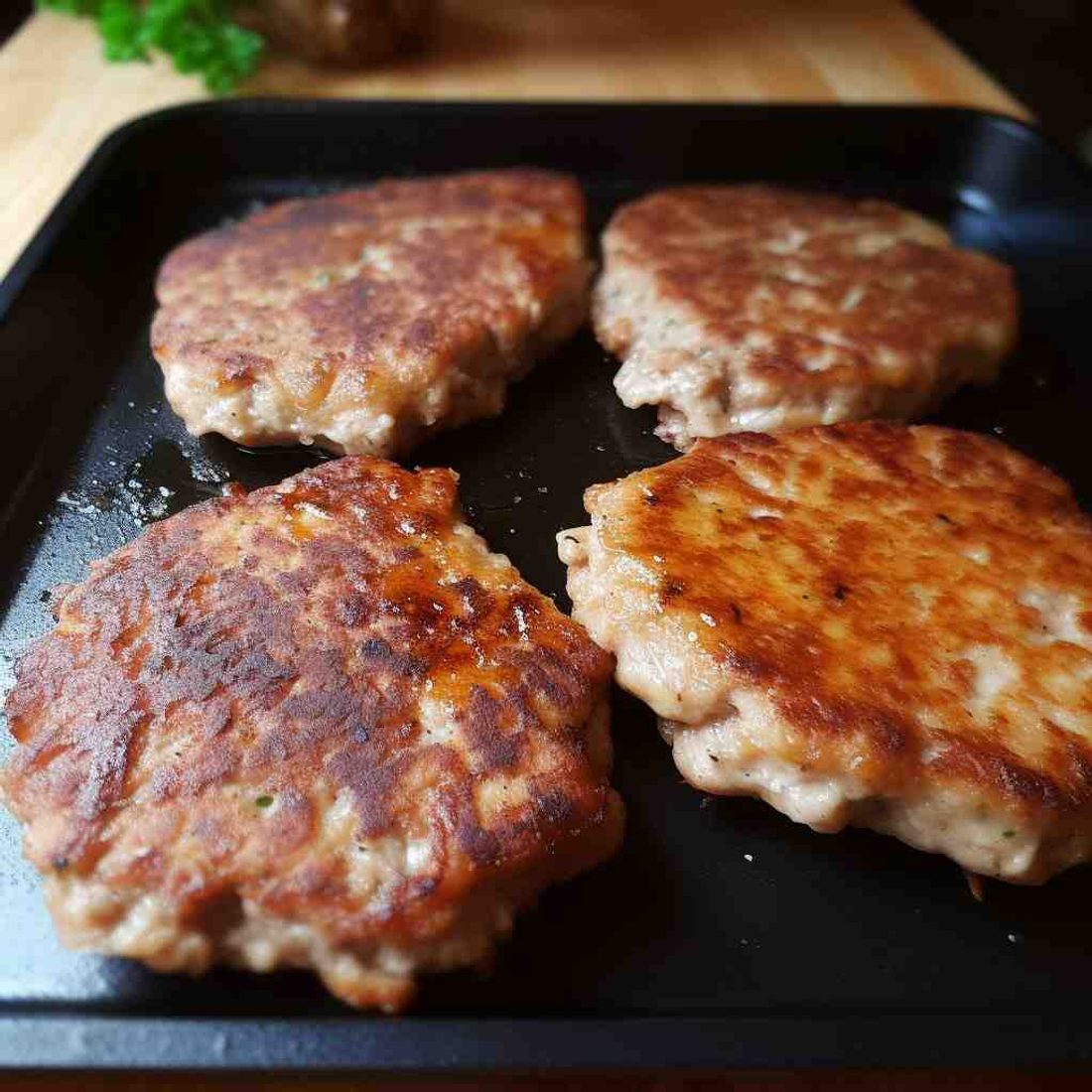 Made to order on the griddle, the way it always was. This is why it never became a frozen mail-order business the way the pasty did.
The variants: no two counters build it the same
Because there’s no official version and every shop guards its own spice mix, cudighi varies more than you’d expect for such a small area. Some of the real axes of difference:
- Patty vs. link. Some counters press it into a flat patty sized to the bun; others cook and split a length of link sausage. Different texture, same soul.
- The spice dial. How far the sweet spice is pushed is the biggest variable. Some versions are subtle, the cinnamon and clove just whispering under the pork; others lean hard into it and taste frankly dessert-adjacent. The wine, where it’s used, adds a background depth.
- The meat. Mostly pork, but versions cut with beef or venison are traditional and common — this is deer country, and a venison-and-pork cudighi is a very U.P. thing.
- The dressing. Old-school mustard-and-raw-onion at one end; full pizzeria treatment — pizza sauce, melted mozzarella, grilled onions, sometimes mushrooms or green peppers — at the other. Most places today land somewhere in the pizza-topping zone, because most places that sell it are also selling pizza.
That last point explains a lot about where you find it: cudighi lives at bars and pizzerias, not fine-dining kitchens. It’s tavern food, made by the same hands making pizza, which is why it wears pizza toppings and comes with a beer. And because it lives at bars, it doesn’t stay in the bun — cudighi turns up as a pizza topping, and, in my own favorite move, crumbled into a poutine right before the gravy, where the hot gravy blooms the sweet spice up through the curds. The Iron Range keeps finding new places to put it.
How a good one is actually made
You can’t taste your way to a shop’s secret spice ratio, but the method isn’t a secret, and understanding it is what separates a homemade cudighi that tastes right from one that tastes like a spiced meatball that lost its way. For the measured recipe, see my cudighi sausage and cudighi sandwich writeups — but here’s the reasoning behind the steps.
The sausage is where all the work is. Start with pork that has real fat in it — a fatty shoulder, or shoulder cut with some backfat — because the spice needs fat to carry it; a lean cudighi tastes harsh and preachy where a fatty one tastes round. Grind it, or buy it ground coarse. Then the spices: the warm quartet of cinnamon, nutmeg, allspice, and clove, plus salt, pepper, garlic, and — if you’re going the traditional route — a splash of red wine. The clove is the one to respect; it’s loud, and a heavy hand turns the whole thing medicinal. Season, mix just until it binds, and then the single most important step: let it rest, cold, overnight. Fresh sausage that’s just been mixed tastes flat and disjointed. Give the spices a night in the fridge and they bloom into the pork, the salt does its work on the texture, and the seasoning stops tasting like separate spices and starts tasting like cudighi. Skipping the rest is the most common home mistake.
Cook it like a burger, build it like a pizza. Form the sausage into patties sized to your buns, or into links. Griddle or pan-fry over medium heat — you want it cooked through and browned, with the fat rendering and the edges catching, not blasted so the outside burns before the middle’s done. Toward the end, lay on mozzarella and let it melt (a lid or a splash of water to steam it helps), and warm your tomato or pizza sauce separately. Build on a soft bun or a hard roll: patty, sauce, cheese, onions — raw for bite, or griddled alongside the sausage for sweetness. If you want the old-school version, skip the cheese and sauce entirely and go mustard and raw onion. Either way it should be hot, rich, and a little unruly.
The whole thing is technically simple. The flavor lives or dies on two decisions: enough fat in the grind, and enough patience to let the spiced meat rest before you cook it. Nail those and you’ll have a real one.
Cudighi and the pasty: the two foods of the range
Spend any time on the iron range and you’ll notice that the two signature foods sort people, gently. The pasty is the older, wider institution — Cornish-born, Finnish-adopted, sold everywhere from the bridge to the Keweenaw, mailed frozen to homesick Yoopers in Arizona. It’s the U.P.’s food, plural and diffuse. Cudighi is narrower and more particular: the range’s food, Italian-born, made to order at a handful of bars and counters in two towns, and largely unknown twenty miles away. One escaped and colonized; one stayed home on purpose.
What I love is that they coexist without competing. A place like Lawry’s sells both across the same counter without any sense of contradiction, because on the range they’re not rivals — they’re the two halves of the same immigrant story, the Cornish-descended hand pie and the Italian-descended sausage sandwich, sitting side by side because the people who made them dug the same iron out of the same ground. If the pasty tells you the U.P. raised this food, cudighi tells you these specific towns did — and both are true, and you should eat both, ideally in the same afternoon.
The two shops on our route
In a couple of weeks my son and I are driving the U.P. to revisit the places I’ve eaten over the years, basing out of a bed-and-breakfast in Ishpeming so we can hit the iron-range spots over several days. Two of them are cudighi institutions, and one of them is where this all started for me.
Lawry’s Pasty Shop — West Ishpeming
Here’s a nice U.P. wrinkle: one of the best-known cudighi stops is a pasty shop. Lawry’s sits on US-41 in West Ishpeming, and while its name and its fame are built on pasties — the business goes back to 1946, when Jim and Madelyne Lawry started selling pasties near the Blueberry Mine and literally picked the building up and moved it when the new highway came through — it’s also a reliable place to get cudighi, including raw frozen cudighi by the pound to take home. That doubling-up is very on-brand for the range: the two signature foods, the Cornish-descended pasty and the Italian-descended cudighi, sold under one roof, because up here they’re both just the food. I’ve eaten at Lawry’s, and it’s on the list for this trip.
Tino’s Bar and Pizza — Negaunee
And then there’s Tino’s Bar and Pizza at 220 Iron Street in Negaunee, which does a cudighi off a secret family recipe that locals have argued for generations is the best on the range — sausage patty on a bun with pizza sauce, onion, and mozzarella, made fresh to order. Tino’s is a bar and pizzeria first, which is exactly the right pedigree for a great cudighi, and it’s where mine began.
I had my first cudighi at Tino’s in Negaunee, in the summer of 2010. I was hosting a German exchange student that year — Chris, from Hamburg — and he’d come back over to visit, bringing his girlfriend, who’s his wife now. The whole point of that trip was to feed the two of them things they’d never heard of and couldn’t get at home, and cudighi was about as far off their map as a food can be: a sweet-spiced Italian sausage sandwich from a bar in a tiny iron-mining town in the middle of the Upper Peninsula. You can’t explain cudighi to someone from Hamburg. You just have to hand them one at Tino’s and watch them figure out, bite by bite, that the sausage tastes a little like Christmas and they can’t stop eating it. That’s the trip this coming one is a sequel to, and Tino’s is very much on the itinerary again.
Make it yourself
The good news, if you don’t happen to be within striking distance of Negaunee, is that cudighi is entirely makeable at home — it’s the one hyper-local U.P. food you can actually import into your own kitchen, because the magic is a spice blend, not a place. I’ve got both halves written up:
- The sausage itself, from scratch, ground pork and the warm-spice blend, built on that northern-Italian luganega grammar: cudighi sausage.
- The assembled sandwich — how to griddle the patty and build it with sauce, mozzarella, and onions: the cudighi sandwich.
Make the sausage a day ahead so the spices bloom into the pork, griddle it up, pile on the sauce and cheese, and you’ll have something almost nobody outside Marquette County has ever tasted. Which is, honestly, the best reason to make it.
Where cudighi sits
Cudighi is a small miracle of American food: a genuine regional dish, a century old, beloved and complete, that stayed almost perfectly local through a combination of secret recipes, made-to-order cooking, a small and rooted immigrant community, and a hometown that quietly prefers to keep it. It’s the Italian counterpart to the Cornish-Finnish pasty — the other food that tells you you’re on the iron range — and between the two of them they carry the whole immigration story of this place in a bun.
To see the world that made it, the immigrant kitchens of the U.P. trace how Cornish, Finnish, and Italian families each left their mark on the range’s table, and the mining industries explain why they all came in the first place. Its across-the-aisle rival and constant companion is the pasty. And if you want the sweep of how all of it fits together today, the U.P. table today is where this whole series lands. But if you take one thing from this page: cudighi is real, it’s spiced like a spice cake and eats like a grinder, and you have to come to the iron range to get the real one. Or make it. I’d make it.
Comments (0)