Who Came, and What They Cooked: The Peoples of the U.P.
If you want to understand why the Upper Peninsula’s food is what it is, you have to understand who carried it there — and why people crossed an ocean to end up in one of the coldest, most remote corners of America. The copper and iron and timber were the magnet. But the mines and camps didn’t pull a generic mass of “settlers.” They pulled specific peoples, from specific places, each with its own kitchen: Cornish hard-rock miners, Finnish farmers fleeing famine and the Tsar, northern Italian sausage-makers, Swedes and French-Canadians and Slovenians and Croatians and Germans and Irish. They came within a few decades of one another, packed into the same mining towns, worked the same shafts, and their foodways collided and cross-pollinated in a way that produced something genuinely new.
This is the human heart of the whole dive. Every food page in this series — the pasty, the cudighi, the Finnish table, the whitefish, Trenary toast — traces back to a group of people on this page. So let me introduce them, honestly, with the real immigration history, and then tell the best story of all: how one food, the pasty, jumped from the people who invented it to everybody else, until it belonged to no one and to all of them at once.
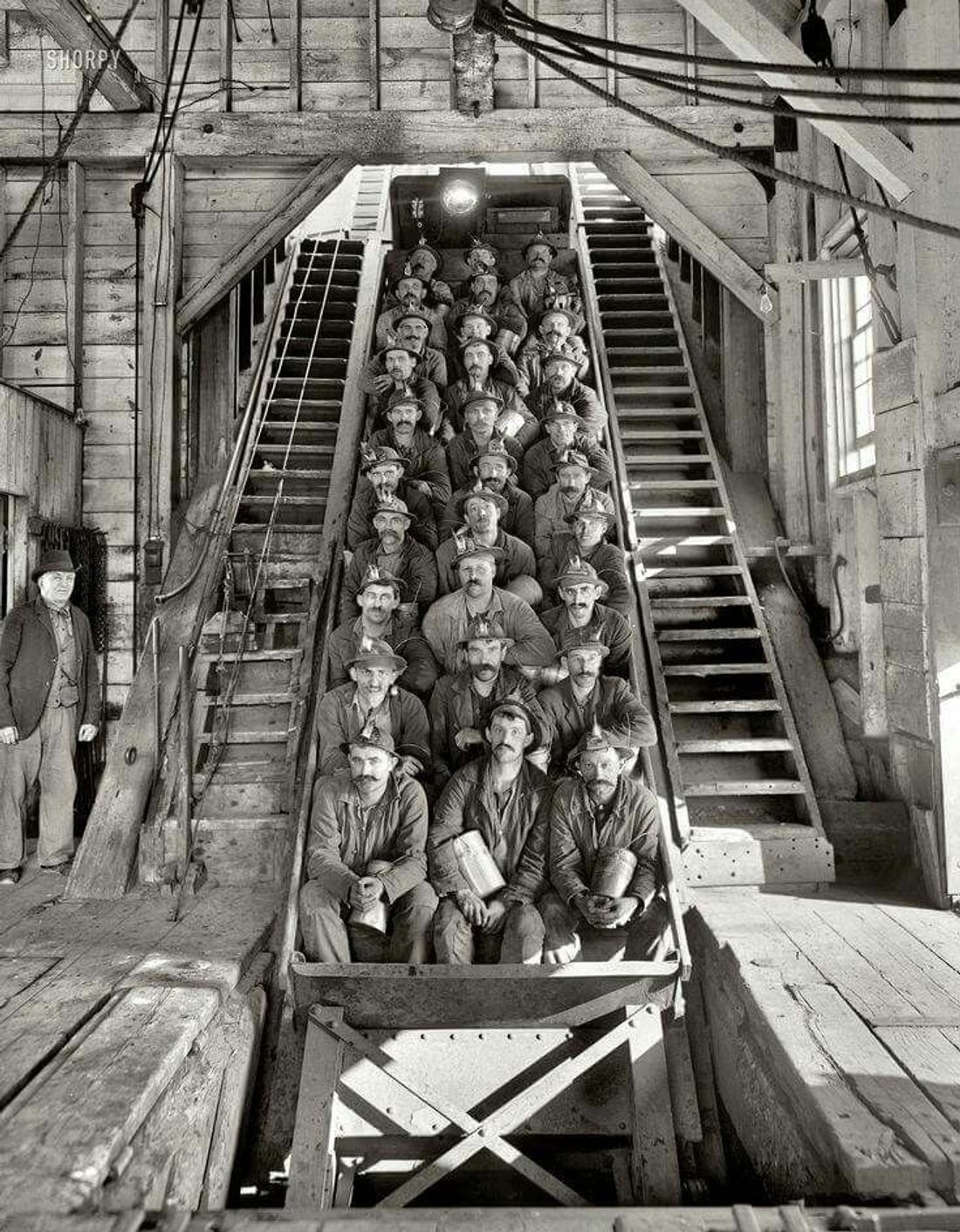 A mine crew in the Copper Country. In a single shaft you might find Cornish, Finnish, Italian, Swedish, and Slovenian men, each family cooking something different at home.
The Cornish: Cousin Jacks and the Food They Carried Down the Mine
The Cornish came first, and in a sense they came as professionals. Cornwall, the far southwestern tip of England, had been mining tin and copper for so many centuries that by the 1800s Cornishmen were simply the best hard-rock miners in the world — the people you hired if you were opening a deep, dangerous mine and wanted men who knew how to timber a shaft and read a rock face. When Cornwall’s own mines began to fail in the nineteenth century, its miners scattered across the globe to wherever new mines were opening, and a great many of them landed in the copper and iron country of the U.P.
They were nicknamed “Cousin Jacks” — the joke being that whenever a mine captain needed another skilled man, the Cornish miner always had a “cousin Jack” back home he could send for. (Their wives were “Cousin Jennys.”) They tended to rise into the skilled and supervisory jobs, and that position mattered, because it meant everyone else underground watched the Cornish to learn how things were done in America — including what to eat at lunch.
And what the Cornish ate at lunch was the pasty: a half-moon of sturdy pastry crimped shut around a filling of beef, potato, onion, and rutabaga, baked into a complete meal you could carry in a coat pocket, hold by its thick crimped edge with dirty hands, and eat cold or reheated a mile underground. Cornwall had perfected it in the tin mines for exactly those conditions, and it fit the U.P.’s mines so naturally that it became the region’s defining food. It gets its own full page — the pasty — and it’s the food that jumped to everyone else, which is the story I’ll come back to at the end.
The Finns: The Largest Wave, and the Deepest Mark
If the Cornish came first, the Finns came in the greatest numbers — at least in the western U.P. — and they left the deepest cultural imprint of any single group. To this day the Upper Peninsula is home to the highest concentration of people of Finnish descent anywhere outside Finland itself. That’s not a figure of speech: a cluster of U.P. counties — Houghton, Keweenaw, Baraga, Ontonagon, Gogebic — are the only counties in the entire United States where people claiming Finnish ancestry are the single largest ethnic group. The old copper country is, culturally, “Finn country.”
Why Finland, and why here? The push and the pull lined up almost perfectly. The first Finns were reportedly recruited to the Keweenaw copper mines after the Civil War, drawn from mines in Norway where they’d already built a reputation as tireless, uncomplaining workers. Word spread, and behind it lay a hard reality in Finland itself between roughly 1880 and 1920: the rural poor were multiplying, farmland was scarce, mechanization was destroying the old system of trading labor, and periodic crop failures brought the genuine threat of famine — Finland had suffered devastating hunger years in the 1860s. On top of that, Finland was then a Grand Duchy under the Russian Empire, and a wave of Russian pressure to “Russify” the country in the late 1800s drove out many who wanted no part of the Tsar’s army or rule. For a landless Finnish farm family, a mine job in Michigan — cold and dark, but paid, in a landscape of pine and lake and snow that looked and felt like home — was a real escape. The growth was explosive: from around fifteen hundred Finns in the Keweenaw copper counties in 1880 to something like seventy-five thousand people of Finnish descent across the U.P. by 1930, founding little towns with names straight out of the old country — Nisula, Tapiola, Toivola.
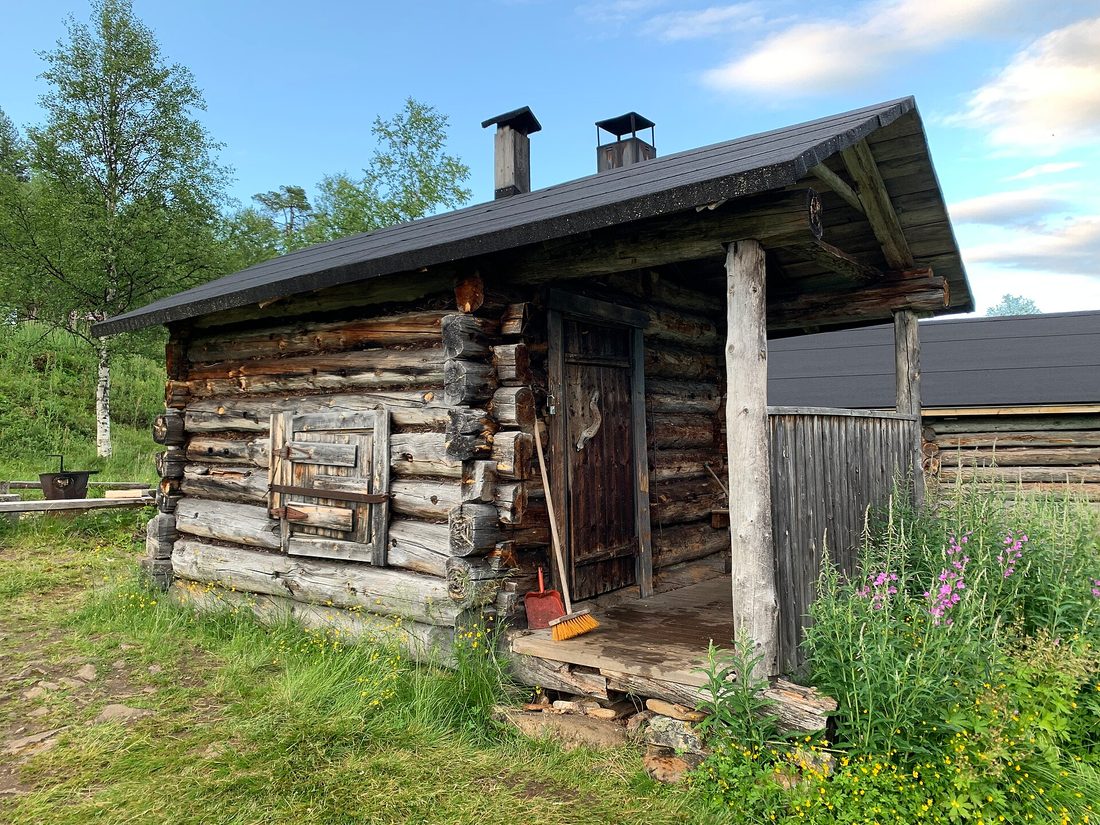 The sauna is the most enduring Finnish institution in the U.P. On a new homestead, it was often the very first building raised — used for bathing, birthing, curing meat, and gathering.
The Finnish food legacy is broad and it’s still alive. Nisu (also called pulla) is the beautiful cardamom-scented sweet bread that anchors a Finnish coffee table. Pannukakku is the baked Finnish pancake — closer to a custard than a flapjack, cut in squares and eaten warm. Mojakka is a plain, sustaining stew, made either with beef or, in a lakeside variant, with fish. Viili is a stretchy, tangy fermented milk, a heritage yogurt-like culture that Finnish families literally passed down and kept alive for generations. And korppu — the twice-baked, cinnamon-and-sugar-dusted rusk — is the ancestor of the food that the town of Trenary, Michigan, still bakes and ships across the country under the name Trenary toast. The Finnish table page goes deep on all of it.
Sauna as an Institution
You can’t talk about the Finns of the U.P. without the sauna, because the sauna is arguably their single most durable contribution to the culture up here — and it’s tied to food more closely than outsiders realize. In the old Finnish homesteading pattern, when a family cleared a patch of forest and started a farm, the sauna was often the first building they put up — before the house. You could live in it while you built the rest. It was where you bathed, where women gave birth, where the sick were tended, and — the food connection — where meat and fish were smoked and cured, hanging in the heat and woodsmoke. Saturday-night sauna was, and in many families still is, a weekly ritual, often followed by a meal. Sauna and food are bound together up here: you heat the sauna, you sweat, you cool off in the lake or the snow, and then you eat. The U.P. today is dotted with saunas, from old family ones behind farmhouses to a small modern revival of public saunas along the Lake Superior shore. It is the most Finnish thing about the most Finnish place in America.
The Italians: The Iron Towns and the Cudighi
Where the Finns dominated the western copper country, the Italians left their sharpest mark on the iron towns of the central U.P. — above all Negaunee and Ishpeming, on the Marquette Iron Range. Italians arrived a bit later, mostly around the turn of the twentieth century, drawn to the iron mines; by the 1890s there were already a few thousand Italians in Michigan, the great majority of them concentrated in the U.P.
Here’s an honesty point I want to make, because the lazy assumption is always Sicily and the south: many of the U.P.’s Italians came from northern Italy — from Piedmont, Lombardy, and the mountain regions — and that origin is written directly into the food. The signature Italian-American dish of the U.P. is cudighi, a sweetly spiced pork sausage that is almost unknown outside this corner of Michigan. Its very name and character point north: it’s widely thought to descend from cotechino, the slow-cooked fresh sausage of northern Italy, and it’s seasoned not with the fennel and hot pepper of a southern Italian sausage but with sweet, warm spices — cinnamon, nutmeg, clove, and the like — which is a distinctly northern, almost Alpine sensibility.
The cudighi grew up as a sandwich. The story usually told is that it was first sold from a stand in the Ishpeming–Negaunee area in the mid-1930s — 1936 is the year most often cited, under the older spelling “gudighi” — a griddled patty of the spiced sausage on a bun, originally dressed simply with mustard and onions. After the Second World War the toppings drifted toward what’s now standard: tomato sauce and melted mozzarella, turning it into something like a sausage sub. Competing shops and butchers across Ishpeming, Negaunee, and Marquette each developed their own recipe, and to this day the cudighi is a fiercely local point of pride with no single “correct” version. It’s one of my favorite things to make, and I’ve got two recipes for it — the cudighi sausage itself and the cudighi sandwich built on it. The full story is on the cudighi page.
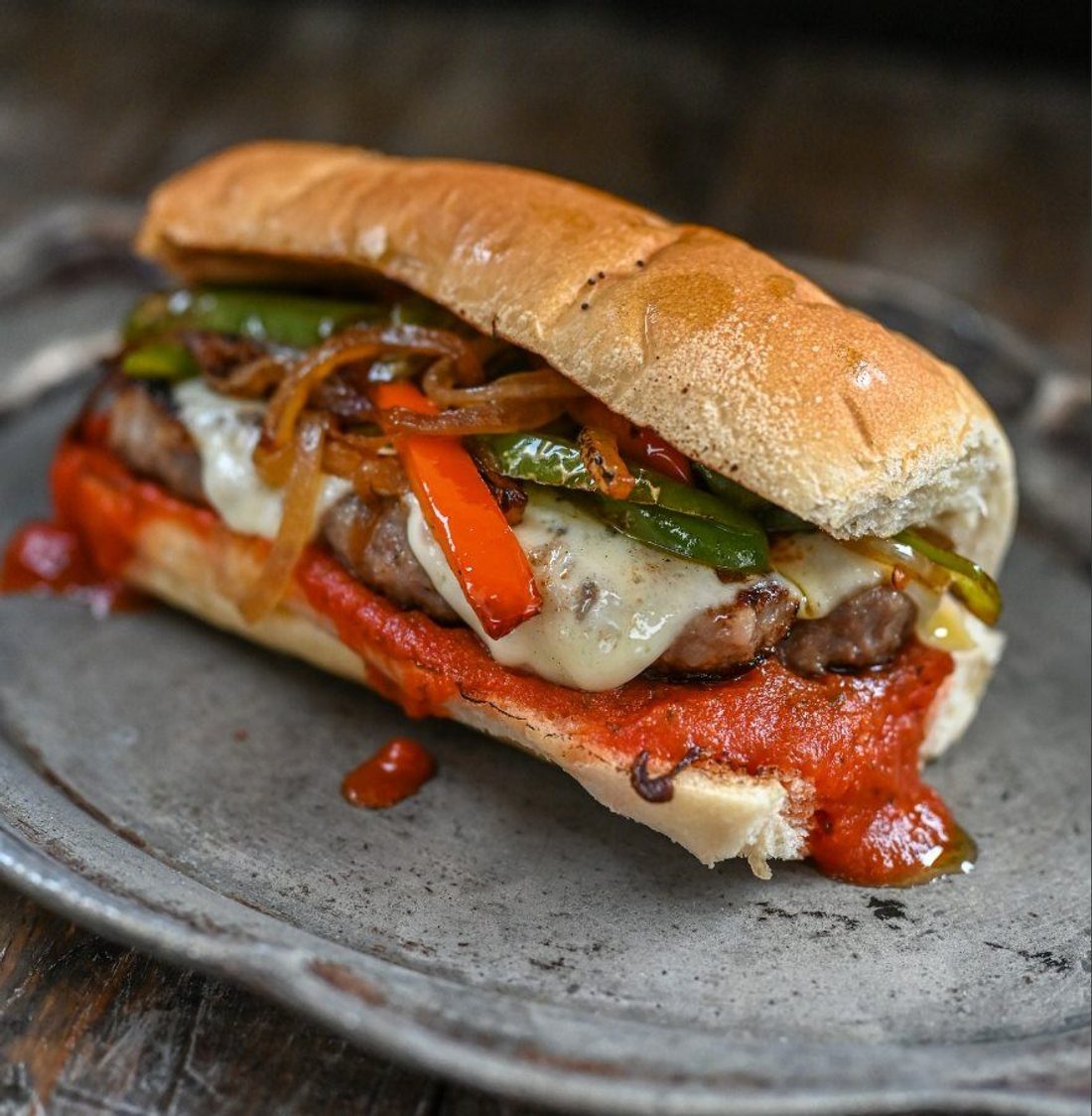 The cudighi sandwich — sweetly spiced Italian sausage, tomato sauce, and mozzarella — is the pride of Ishpeming and Negaunee, and almost impossible to find outside the central U.P.
Cudighi isn’t the only Italian legacy. The iron-range Italians also gave the U.P. porketta — a garlic-and-fennel-heavy roast pork that shows up at deli counters across the range (it’s shared with the Iron Range of Minnesota, which pulled from the same immigrant stream), other fresh and dry sausages, and the Italian bakeries and cheese-making that fed the mining towns. But cudighi is the crown, and it’s the clearest case in the whole U.P. of a food that exists only here, carried from one specific region of one country to one specific range of mining towns and nowhere else.
Swedes, French-Canadians, and the Northern Woods
The Cornish, Finns, and Italians get the headlines, but they were far from alone, and several other groups shaped the table in quieter ways.
The Swedes came in large numbers — Scandinavians as a whole, alongside the Finns, were the dominant immigrant stream in much of the U.P. — drawn to the same mines, and especially to the timber and the fisheries. Sweden in the late 1800s had its own crush of landless rural poor and its own famine years, and the northern Michigan forest and lake country felt like home. Swedish baking blends almost seamlessly into the wider Scandinavian-Finnish coffee-table tradition up here: cardamom breads, rye, coffee bread, the kind of restrained sweet baking that Escanaba, Houghton, and Hancock bakeries still turn out. In a lot of U.P. kitchens the line between “Finnish” and “Swedish” food long ago dissolved into a shared northern style.
The French-Canadians were, in a sense, there before almost everyone — the French had been in the Upper Great Lakes since the era of the fur trade and the voyageurs, long before the mines, and place names like Sault Ste. Marie and Marquette (after the Jesuit explorer Father Jacques Marquette) carry that older French thread. In the mining and logging era a fresh wave came down from Quebec for work in the woods and the mines, adding French-Canadian foodways — pea soup, tourtière-style meat pies (which sit interestingly close to the pasty), and a strong Catholic parish life — to the mix. That same cross-border thread is why poutine — fries, cheese curds, and gravy, the great Québécois export — turns up on U.P. menus everywhere today; I get into it, and the Iron-Range twist I put on it, on the table-today page.
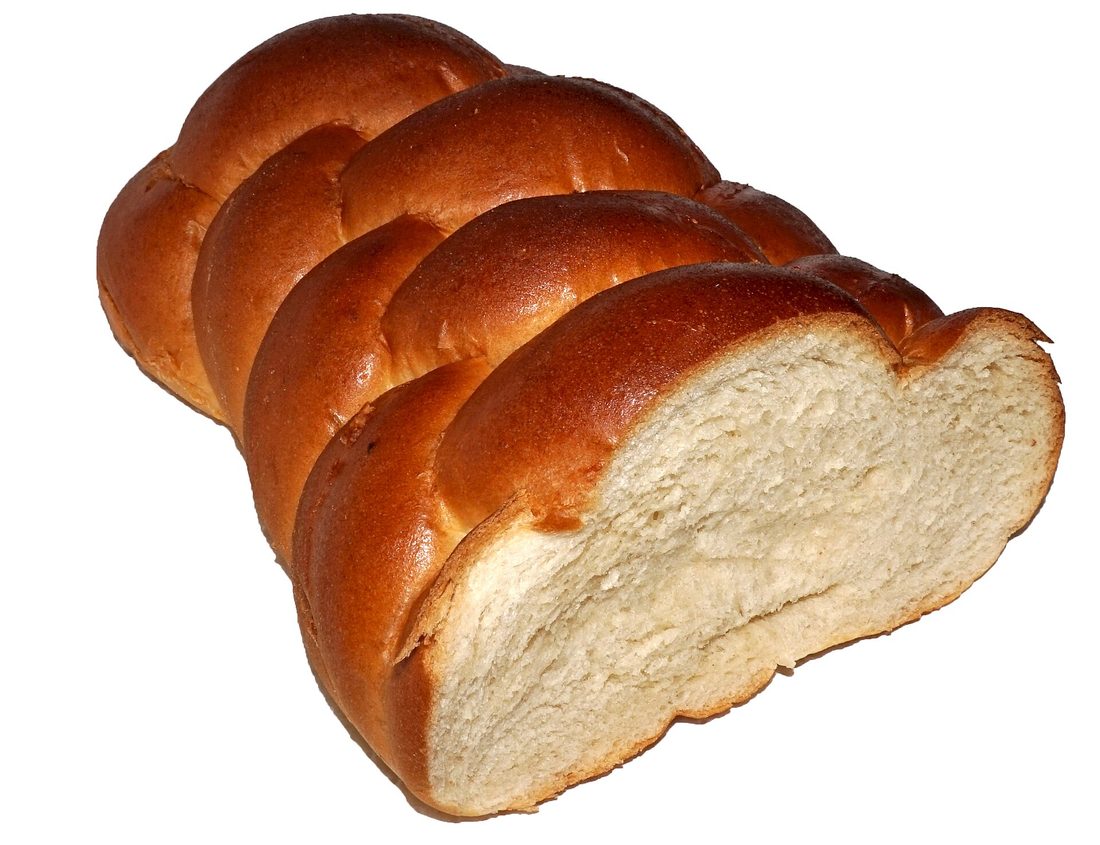 In many U.P. bakeries the Finnish and Swedish traditions have merged into one shared northern coffee-table style of cardamom bread, rye, and restrained sweets.
Slovenians, Croatians, Germans, Irish, and More
Keep going down the list and the U.P.’s ethnic map only gets richer. The mines pulled in Slovenians and Croatians from the South Slavic lands of the old Austro-Hungarian Empire, who settled especially in copper-country towns like Laurium. Their most delicious surviving contribution is potica (poh-TEET-sa), a tender yeast-dough roll spiraled around a dense, sweet walnut filling — still baked and sold in the Keweenaw, and a fixture of holiday tables. Croatian communities are also remembered for the roast-and-fried chicken that has anchored summer fairs and church fundraisers for decades. Germans came for mining, farming, brewing, and trades, seeding the beer-and-sausage side of the local table. The Irish came for the mines and the labor, and — like the French-Canadians — for the Catholic parishes that organized so much of immigrant social life. There were Poles, Hungarians, Greeks, Lebanese, and Belgians too, the last several especially in the confectionery and restaurant trades.
The point of running the whole list isn’t to be exhaustive for its own sake. It’s to show you the density. Cram all of these peoples — a dozen or more nationalities, half of them from cold northern homelands — into the same handful of mining towns, in the same couple of decades, doing the same dangerous work and worshipping in adjacent churches and buying from the same butchers, and something is going to happen to the food. It’s going to mingle. And the clearest, most beautiful example of that mingling is the pasty.
The Pasty That Belongs to Everyone
Here’s the story you’ll hear told across the U.P., and it’s mostly true — though, like all good stories, it’s told a little too neatly, and I want to give you both the tidy version and the honest footnote.
The tidy version: the Cornish brought the pasty, being the first and most experienced miners. Everybody else underground — the Finns, the Italians, the Swedes, the Slovenians — saw the Cornish “Cousin Jacks” pull out these perfect self-contained hot lunches, watched them thrive in the supervisory jobs, and copied them. In an immigrant world where you took your cues on “how to be American” from the group that had arrived first and risen highest, adopting the Cornish miner’s lunch was partly practical and partly aspirational. Each group then made the pasty its own. And within a generation or two the pasty was so completely absorbed by every ethnic group in the U.P. that plenty of Yoopers grew up assuming it was a Finnish food, or an Italian food — its Cornish origin forgotten. Today the pasty belongs to no single group. It’s simply the food of the U.P., full stop.
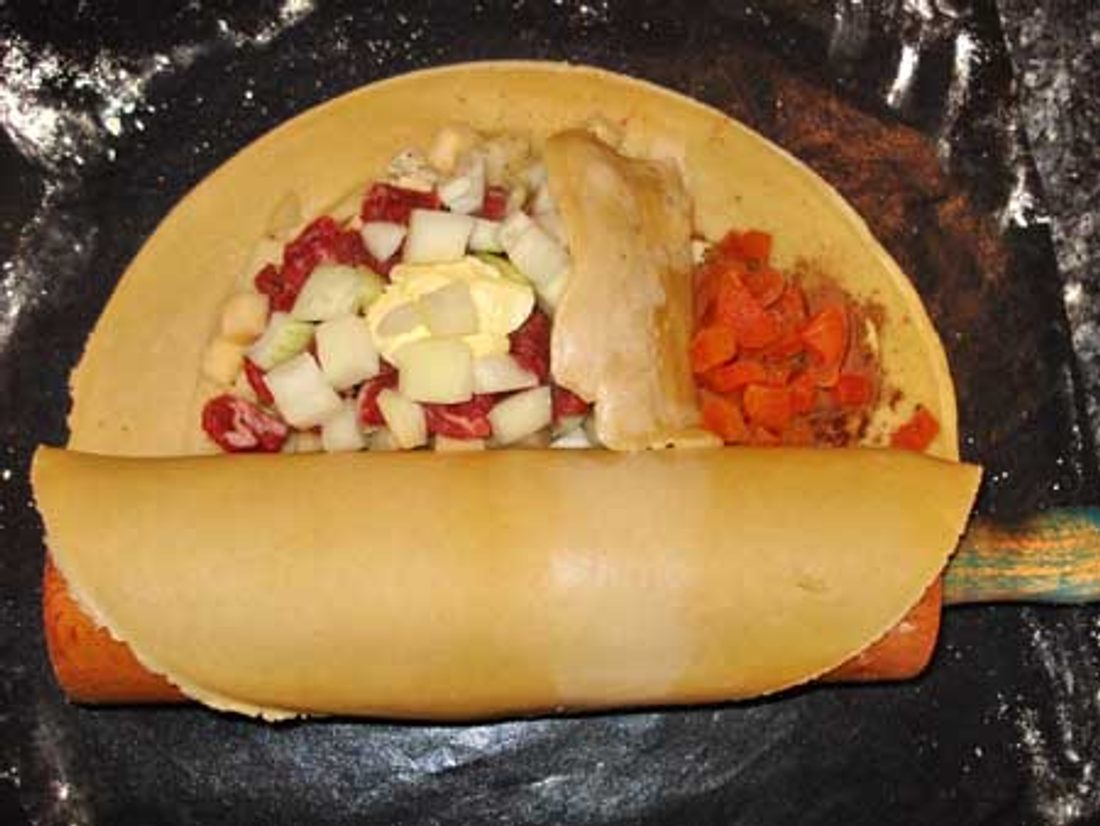 Cornish in origin, Yooper in the end. The pasty crossed from one immigrant group to every other until it belonged to the whole peninsula — and no single part of it.
That’s the story, and its core is real: the pasty genuinely is Cornish in origin and genuinely did become the shared food of every group in the U.P. But here’s the honest footnote. First, the “everyone copied the Cornish supervisors” line is a tradition, a widely repeated explanation, not something anyone documented in the moment — it’s how the U.P. tells its own story, and it’s probably broadly right, but it smooths over the fact that half these cultures already had their own filled-pastry and meat-pie traditions. The French-Canadians had their tourtière; plenty of European peasant cuisines had some version of meat and vegetables baked in dough to stretch a little meat a long way. The pasty didn’t drop into a vacuum; it landed among people already primed to appreciate exactly that kind of food, which is part of why it spread so fast and so completely.
Second, the famous flashpoint — the rutabaga-versus-carrot debate — is where you can actually see the cross-cultural adaptation happening. The Cornish original uses rutabaga (which, confusingly, the Cornish themselves call “turnip”). Many Finnish U.P. families, the story goes, swapped in or added carrot, and to this day arguing about whether a “real” pasty contains rutabaga or carrot — or whether the gravy-on-top habit is a crime or a blessing — is a genuine, if good-natured, U.P. sport. Those little variations are the fingerprints of each group leaving its mark on a borrowed food. The pasty is what it looks like when a dozen immigrant kitchens all rework the same dish.
So when I say the pasty “belongs to everyone,” I mean it in the fullest way. It’s not that the Cornish generously shared it. It’s that the Cornish planted it, and then Finnish, Italian, Swedish, Slovenian, and every other U.P. family grew their own version until the thing was collectively owned — a food that is genuinely regional rather than ethnic. That is a rare and lovely thing, and it only happens when you pack this many peoples this tightly into one cold, remote place and let their kitchens run together for a hundred years. For the deep version of all of it — the crimp, the fillings, the gravy wars, the shops still baking them — see the pasty page.
A Melting Pot That Actually Melted
There’s a version of “melting pot” that’s just a slogan — a lot of groups living near each other, keeping their own foods in their own kitchens, never really mixing. The U.P. is the other kind, the real kind, where the pot actually melted. The proof is on the plate. A shared Finnish-Swedish coffee table where nobody can quite say which sweet bread came from which country. A pasty that a Finnish grandmother, an Italian butcher, and a Cornish miner would each claim as their own. Cudighi and porketta from the iron-range Italians sitting in the same deli case as Slovenian potica and German sausage. A Friday fish fry of Great Lakes whitefish that every single one of these groups adopted, because Catholic Fridays and cold northern lakes gave them all the same reason to.
Why did it melt here, when in so many places it didn’t? I think it’s exactly the conditions this whole dive has been building toward. The cold. The isolation — cut off from the rest of Michigan by open water until 1957. The shared, brutal work in the mines and the woods, which threw these peoples into the same shafts and the same company towns and gave them the same problems to solve at lunchtime. The sparse population, which meant you couldn’t retreat into a big self-contained ethnic enclave the way you could in Chicago or New York; the Finnish family and the Italian family and the Cornish family lived on the same street in the same small town and ate at the same church suppers. And the landscape itself, which offered everyone the same raw materials — root vegetables that stored through winter, wild game, lake fish, rye and barley, cardamom and cinnamon off the shelf at the company store. Different peoples, same cold, same rock, same lake, same short growing season. Cook under those constraints for a century and the foods start to rhyme.
That’s the U.P. table. It isn’t Cornish food, or Finnish food, or Italian food, sitting in separate boxes. It’s what happened when all of them met on a snowbound peninsula and had to make dinner out of the same short list of ingredients through the same long winters. The pasty is the emblem of it, but the whole table is like that — a genuine regional cuisine, born of a genuine melting pot, in the one place cold and remote and stubborn enough to fuse it.
Where to Go From Here
Every group on this page has a food page waiting. The one that started it all and belongs to everyone now is the pasty. The iron-range Italians gave us the cudighi — and I make both the sausage and the sandwich at home. The Finns and Swedes built the Finnish table and, by way of the rusk called korppu, the town of Trenary’s own Trenary toast. The big lakes gave everyone the whitefish dinner — see also my Michigan whitefish recipe. The northern woods gave up the wild, unbuyable thimbleberry. And to see where all of it stands now, read the U.P. table today.
Or start further back, with the land and the work that pulled these peoples here in the first place: The Upper Peninsula: A World Apart and Copper, Iron, Timber and Fish.
In a couple of weeks my son and I will drive the whole story in a few days — Cornish pasties in St. Ignace, whitefish in Marquette, cudighi in Ishpeming and Negaunee, rusk in Trenary. We won’t be eating “ethnic food.” We’ll be eating Yooper food: the single, shared, melted-together cuisine that a dozen homesick peoples built together, up here where the road runs out and the snow comes down and the lake goes on forever.
Comments (0)