Lake Superior Whitefish: The Fish the U.P. Runs On
If you ask me what the Upper Peninsula tastes like, I don’t reach for a pasty first. I reach for whitefish. Pasties are the U.P.’s famous food; whitefish is its quiet, everyday one — the fish that shows up smoked on a cracker at somebody’s camp, fried and piled next to a lemon wedge at a supper club, flaked into a dip at a summer party, and pulled fresh off a Lake Superior boat at a fish house that’s been doing exactly that for sixty-odd years.
I’ve been eating it my whole life, and I still don’t think most people outside the Great Lakes have any idea what they’re missing. So let me make the case.
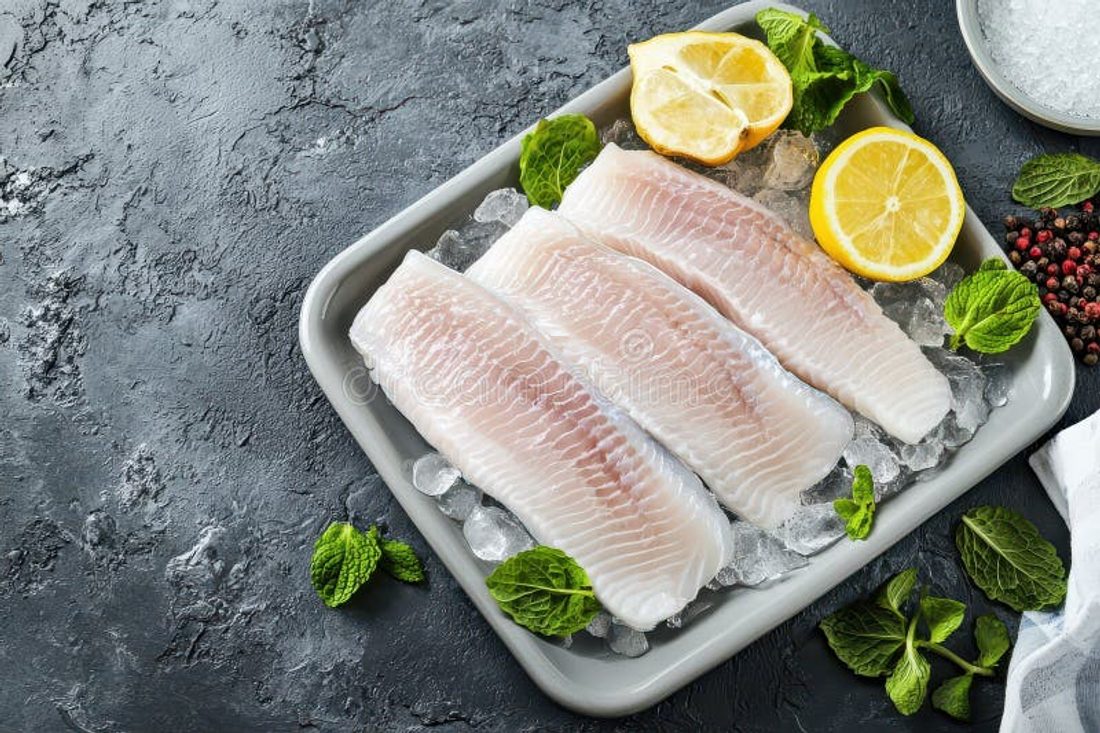
Fresh lake whitefish — mild, sweet, and a clean bright white when raw. This is the fish, more than any other, that the U.P. runs on.
What lake whitefish actually is
The fish is lake whitefish, Coregonus clupeaformis, and the first thing worth knowing is that it’s not some coarse “trash fish” of the deep. It’s a salmonid — same family (Salmonidae) as salmon and trout — sitting in the whitefish-and-cisco subfamily, the Coregoninae. That salmon-family lineage is exactly why the flesh behaves the way it does: mild, faintly sweet, snow-white, and flaking into big tender leaves when it’s cooked right.
It lives in the cold, clean, deep water of the Great Lakes and the colder inland lakes of the North. Whitefish are bottom-oriented feeders — they graze the lake floor for insect larvae, tiny crustaceans, and small mollusks — which is part of why their story is now tangled up with what’s happening on the bottom of Lake Superior. More on that below, because it’s the part most “here’s a nice fish” write-ups skip, and it’s the part that actually matters.
How it’s different from the fish it gets confused with
People lump the Great Lakes catch together, so here’s the sorting:
- Lake trout (Salvelinus namaycush) is not a trout in the everyday sense — it’s a char, a cousin. It’s oilier, richer, darker-fleshed, and stronger-tasting than whitefish. Great smoked, but a different animal on the plate. When a menu says “trout” up here, this is usually what it means.
- Cisco / lake herring (Coregonus artedi) is whitefish’s close relative — same subfamily — but smaller, leaner, and slimmer, more herring-shaped. Ciscoes are a huge deal smoked (the “smoked chubs” you see are ciscoes and their kin) and their roe is prized. If you love smoked whitefish, smoked cisco is the next door you should open.
- Walleye (Sander vitreus) is the one that trips people up because it’s the other great Northern eating fish — but it isn’t related at all. It’s a perch, not a salmonid. Firmer, denser, a little sweeter-savory. Walleye is the freshwater fish-fry king across the Upper Midwest; whitefish is its Great Lakes counterpart. Both are wonderful. They are not interchangeable.
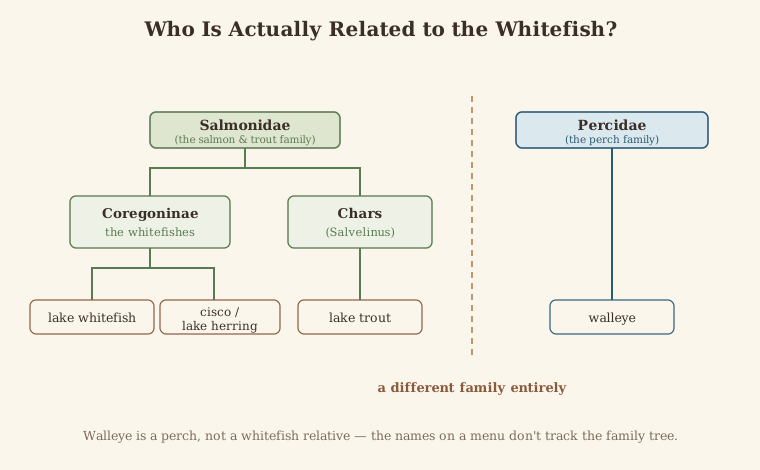
Lake whitefish, cisco, and lake trout share the salmon family; walleye is a perch, off on a branch of its own.
Whitefish roe — the caviar most people have never heard of
Here’s a thing worth knowing at the fish counter: whitefish roe makes excellent caviar. The eggs are small, pale gold to amber, and pop with a clean, briny snap. Great Lakes whitefish and cisco (the “lake herring caviar” some processors sell) are a real, underrated North American caviar — mild, not fishy, and a fraction of the price of the sturgeon stuff. If you ever see golden whitefish roe, buy it, put it on a potato pancake or a buttered cracker with a little crème fraîche, and thank me later.
Smelt, and the ritual of dipping
I can’t write about U.P. fish without smelt, even though it’s a small, silvery outsider to the whitefish story. Rainbow smelt aren’t native to the Great Lakes — they were introduced and spread through the system in the 20th century — but they became a beloved spring event anyway.
Every April, when the smelt run up the tributary streams to spawn, people wade into cold creeks after dark with dip nets and long-handled seines and scoop them by the bucket. That’s “smelt dipping,” and it’s as much a social ritual — bonfires, beer, cold feet, headlamps — as a way to get dinner. You clean them small, roll them in seasoned flour or cornmeal, and fry them whole; you eat them like fries, bones and all. The runs aren’t what they were decades ago, but the tradition holds.
The threats — and the honest state of the fishery
This is the part I want to be straight about, because a lot of food writing about whitefish is frozen in a rosier decade. The Great Lakes whitefish fishery is in trouble, and pretending otherwise doesn’t do the fish or the fishermen any favors.
Sea lamprey — the first catastrophe
The sea lamprey is a parasitic, eel-shaped fish that latches onto a host with a rasping sucker-mouth and drains it. It reached the upper Great Lakes through the shipping canals — it was established in the system by the late 1930s — and by the late 1940s the population exploded. It gutted the lake trout, whitefish, and cisco that were the backbone of commercial fishing. Combined with hard overfishing, it helped crash the fishery to historic lows through the 1950s and ’60s.
The response was one of the genuine conservation success stories of the region: a binational sea lamprey control program run through the Great Lakes Fishery Commission, built mainly on a selective lampricide (TFM) that kills lamprey larvae in the streams where they hatch, plus barriers and traps. It knocked lamprey numbers down by roughly 90% from their peak and let the fishery recover. It also has to run forever — the moment you stop, the lamprey come back. It’s less a cure than permanent maintenance.
Quagga and zebra mussels — the slower, deeper problem
The newer threat is quieter and, frankly, scarier, because there’s no lampricide equivalent for it. Zebra and quagga mussels, invasive filter-feeders from the Caspian/Black Sea region, have colonized the lakes by the trillions. They filter the water so relentlessly that they’ve stripped out the plankton at the base of the food web. The lakes have literally gotten clearer — and clearer here means emptier. A key bottom-dwelling shrimp-like organism, Diporeia, that young whitefish depended on has collapsed across much of the system.
The result: whitefish are spawning, but too few young survive their first year to replace the adults dying off. In Lakes Michigan and Huron the decline is severe. Commercial whitefish harvest across the Great Lakes has fallen from around 6.9 million pounds in 2009 to under 2 million pounds in 2024, and in 2025 fisheries scientists were openly using words like “collapse” for the Michigan and Huron populations. A lot of the whitefish still swimming are old — fish in their twenties — with too little recruitment behind them.
Lake Superior is the relative bright spot — its colder, less mussel-choked water has held up better than the lower lakes, and Superior still supports a working whitefish fishery. But even there the larval fish surveys have been running low, so “better” is not “fine.” If you eat Lake Superior whitefish and you love it, the honest posture is gratitude and attention, not complacency.
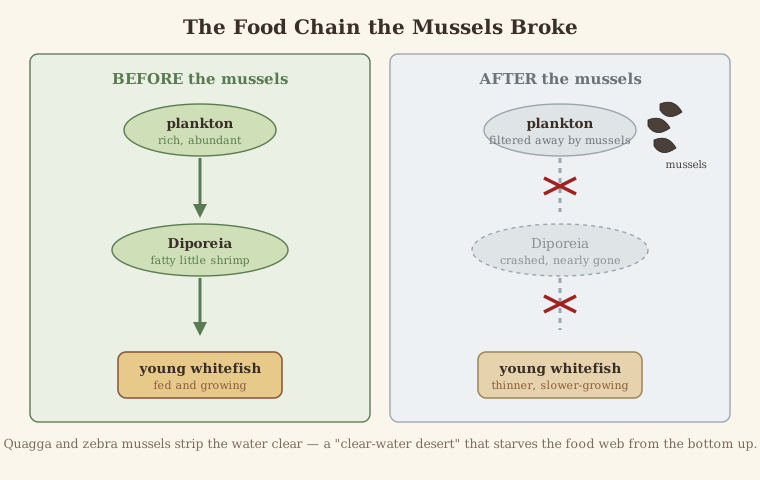
Invasive mussels filter the plankton and starve out Diporeia, cutting the food chain that once fattened young whitefish.
Who gets to fish it: the 1836 treaty
You cannot understand Great Lakes whitefish without the treaty rights, and they deserve to be told plainly and respectfully.
Under the 1836 Treaty of Washington, the Anishinaabek — the Ojibwe (Chippewa) and Odawa (Ottawa) bands of the region — ceded a vast territory that includes a big share of the Michigan waters of Lakes Michigan, Huron, and Superior, while reserving their right to fish those ceded waters. Those aren’t “special privileges.” They’re rights the tribes never gave up, kept in the treaty in exchange for the land.
For over a century the state largely ignored them. That changed with litigation in the 1970s: in 1979 a federal court affirmed the tribes’ treaty right to fish the 1836 waters commercially, and tribal commercial fisheries for whitefish and lake trout followed. The fishery has since been co-managed under a series of federal-court consent decrees — 1985, 2000, and most recently the 2023 Great Lakes Decree, which governs allocation, seasons, gear, and zones through 2047. Five tribes are parties: the Sault Ste. Marie Tribe of Chippewa Indians, Bay Mills Indian Community, Grand Traverse Band, Little Traverse Bay Bands, and Little River Band.
Under these agreements the tribes hold the majority share of the whitefish, and a long-running flashpoint has been gear: large-mesh gill nets (which catch efficiently but non-selectively) versus trap nets (which hold fish alive so the wrong ones can be released). Earlier decrees pushed tribal boats toward trap nets, partly with state-funded boats; the 2023 decree re-opened gill-net use in certain waters and seasons, which sport-fishing groups fought hard. Not everyone signed — the Sault Tribe refused and appealed, arguing the process trampled its treaty rights. That dispute is still live.
I’m not going to pretend to adjudicate a fight that federal judges, tribal governments, and the state have been in for fifty years. What I’ll say is this: the tribal fisheries are among the oldest continuous whitefish fisheries on the lakes, they’re a genuine expression of a reserved right, and a lot of the excellent whitefish you buy in the U.P. — including plenty of it smoked — comes off tribal boats. That’s part of the food, not a footnote to it.
The commercial fishery: tugs, nets, and family names
The commercial catch up here has always been a family business, and it looks the part. The iconic boat is the fish tug — a heavy, fully enclosed steel or wood vessel with the cabin run right out to the bow, built so a crew can haul nets in genuinely awful Lake Superior weather without being swept off an open deck. You lift the nets through a hatch, work the fish inside, out of the wind. They’re homely, tough, unmistakable boats, and a working one is a beautiful thing.
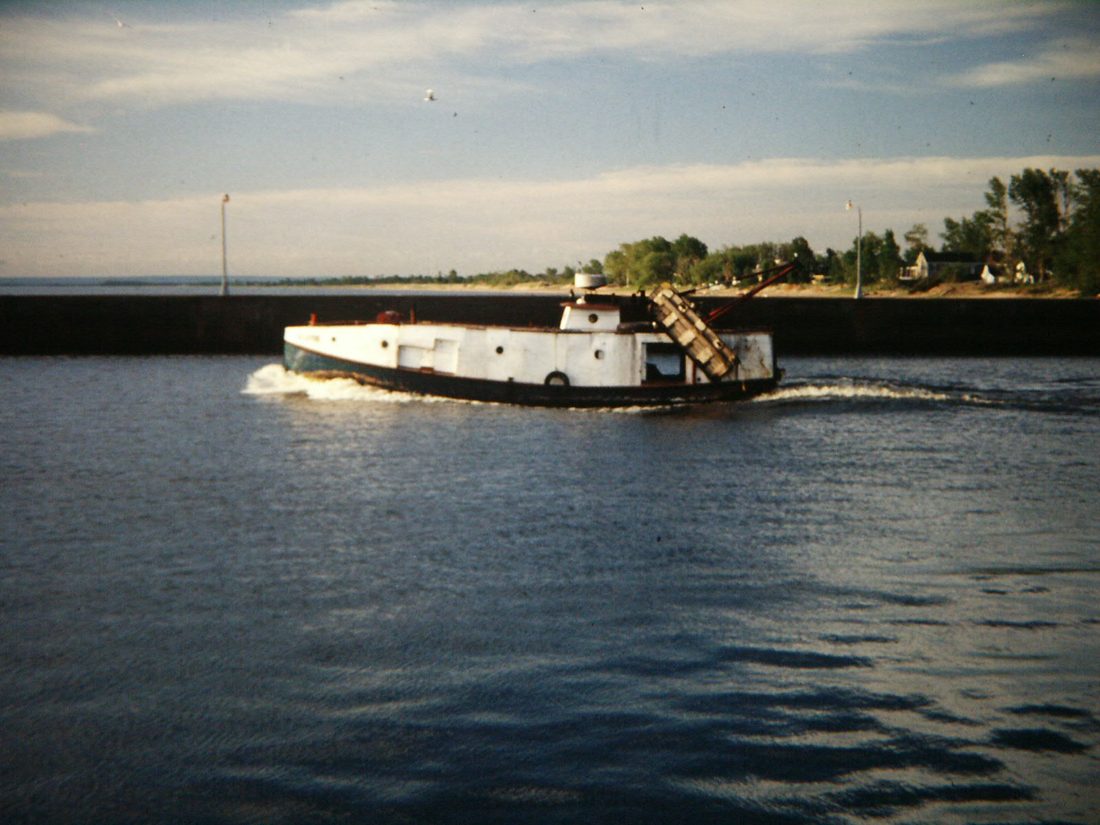
The fish tug — the enclosed workboat built to run nets in Lake Superior weather that would swamp an open boat. The design says everything about the lake it works.
The gear is mainly gill nets and trap nets. A gill net is a wall of mesh sized so a fish swims in to the gills and can’t back out; it’s efficient and it’s what most people picture, but it catches whatever’s the right size, wanted or not. A trap net (or pound net) is a fixed maze of netting that funnels fish into a holding pen where they stay alive — slower and more expensive, but selective, so undersized fish and the wrong species can be let go. That live-versus-dead distinction is exactly why the gear question sits at the center of the treaty negotiations above.
The arc of the fishery is the arc of the lake: enormous catches from the mid-1800s into the early 1900s (the Duluth area alone landed something like 10,000 tons in a single record year in 1915), then the mid-century collapse under overfishing and lamprey, then the slow, managed recovery — and now the new mussel-driven decline. It has never been a stable business. The families who are still at it are survivors.
How the U.P. actually eats it
Now the good part. Whitefish is one of those foods that’s genuinely versatile — mild enough to take almost any treatment, good enough to reward the simplest one.
Fresh: pan-fried, planked, broiled
Truly fresh whitefish barely needs help. The classic move is a pan-fry: season the fillet, dredge it lightly in flour (or flour cut with a little cornmeal for tooth), and fry it in butter until the skin crisps and the flesh flakes. Lemon, done. If you overthink it you’ll ruin it.
Cedar-planked whitefish is the showpiece — you soak an untreated cedar plank, lay the fillet skin-down on it, and roast or grill it so the wood steams the fish and gives it a faint sweet smoke. It’s an old idea, and a Northern one: planking a mild lake fish over wood is the kind of thing that predates the grill-culture version by a very long time. Broiling with butter and a crumb or paprika top is the old church-basement standard. The through-line: whitefish wants gentle heat and fat, and it wants to be left mostly alone.
And don’t sleep on the fresh whitefish sandwich — a fried or grilled fillet on a soft bun with tartar or a squeeze of lemon, the lake’s answer to a fish sandwich anywhere. A good one, made with fish that was swimming that morning, will ruin the fast-food version for you permanently. The mildness that some people mistake for blandness is actually the fish’s great virtue here: it’s a blank, sweet canvas that takes butter, smoke, lemon, batter, or a bun without ever fighting you. Strong-flavored fish are exciting; whitefish is versatile, which is a better thing to be if you’re going to eat it every week.
Smoked — the true U.P. staple
If there’s one preparation that is the U.P., it’s smoked whitefish. The method is old and barely changed: the fish is brined — salt, usually some sugar, sometimes spices — for hours, then hung on rods or laid on racks and smoked slowly over hardwood (maple is traditional; up at Thill’s it’s applewood) until it’s cooked through, glossy, and firm. What comes out is honey-colored, silky, and smoky-sweet, and it keeps for days.
You eat it a hundred ways: pulled off the bone straight out of the paper with your fingers; on a saltine with a little hot sauce; flaked over eggs. It also gets ground into smoked whitefish sausage and snack sticks — a genuinely great U.P. gas-station-cooler find that outsiders never expect. If you’re into smoking your own fish, this is a natural pairing with everything in my smoking deep dive; brined-and-smoked whitefish is one of the most forgiving, most rewarding things you can put in a smoker.
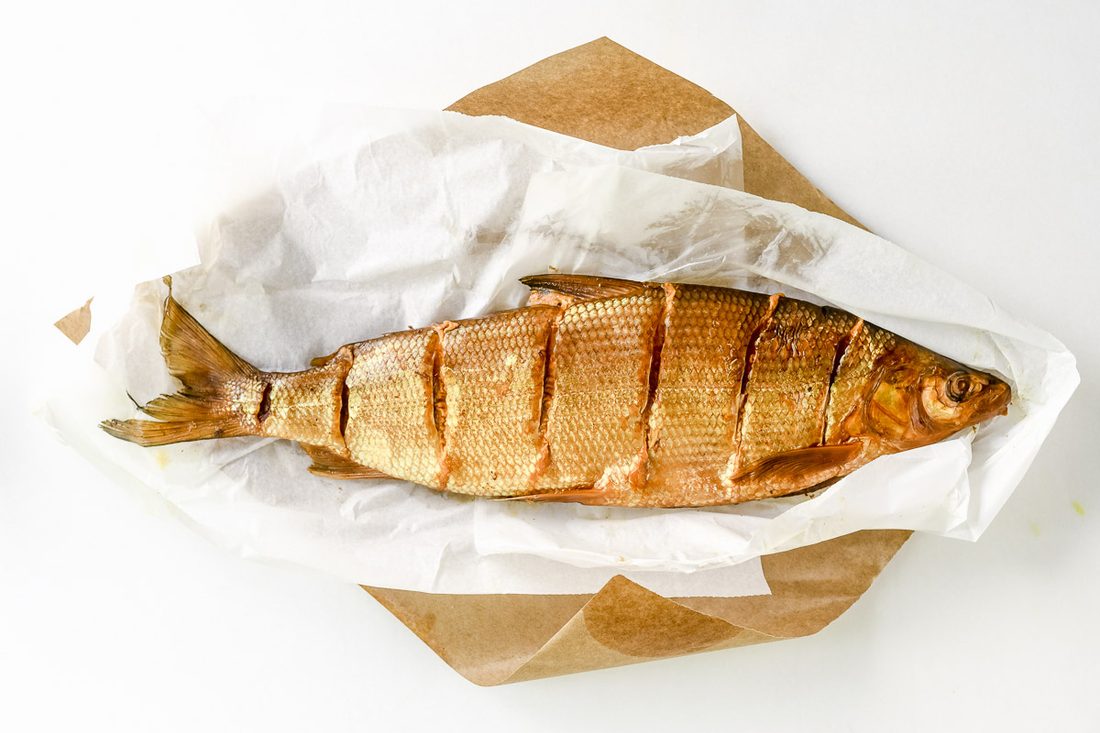
Brined and slow-smoked over hardwood. This — pulled off the bone with your fingers, standing in the parking lot of the fish house — is as close to the taste of the U.P. as anything I know.
Whitefish dip and pâté
Take that smoked whitefish, flake it off the skin and bones, and fold it into softened cream cheese (or sour cream, or crème fraîche) with lemon, a little grated onion or chive, a few grinds of pepper, and maybe a dab of horseradish. That’s smoked whitefish dip, and it is the single most reliable crowd-pleaser I know — every summer party, every camp, every cooler. It’s also almost impossible to get wrong, because the smoked fish is already doing all the work. A proper smoked whitefish dip recipe is right here on the site.
Fried whitefish and chips, and the supper-club fish fry
Walk into just about any U.P. supper club or tavern on a Friday and there’ll be a whitefish fish fry — beer-battered or breaded fillets, fries, coleslaw, a bun, tartar and a lemon. It’s the northern Great Lakes equivalent of the fish-and-chips shop, and it’s a whole social institution: Friday fish fry is a standing appointment, not a menu item. If you want to understand the rhythm of a small U.P. town, go to the fish fry.
At the fish market
The other institution I want to name is the fish market itself — the retail counter attached to a working fishery, where the case is whatever came off the boat, laid on ice, plus a rack or a cooler of the smoked stuff done on-site. These places are getting rarer everywhere, which is exactly why the U.P. ones matter. You walk in, you see the whole fish and the fillets and the golden smoked slabs, you ask what’s freshest, and somebody who was on the water that morning tells you. There’s no supply chain to mistrust because there’s barely a supply chain at all — it’s a boat, a smokehouse, and a counter. Buy the smoked whitefish, buy a smoked chub or two (that’s cisco — don’t skip it), and get a fresh fillet for the pan that night. If you want to understand a place through its food, the fish market is a better classroom than any restaurant.
Two buying notes worth carrying in. First, smoked whitefish keeps but isn’t immortal — it’s lightly cured and cooked, not canned, so treat it like the perishable it is and eat it within a few days. Second, ask whether it’s Lake Superior fish; given the state of the lower lakes (see above), Superior is both the better-tasting and the more defensible choice right now, and the people at a real fish house will tell you straight.
The fish boil — a note on regional overlap
You’ll hear about the fish boil, and I want to place it honestly. The classic theatrical fish boil — whitefish, potatoes, and onions dropped into a roaring cauldron over an open fire, finished with a kerosene “boil-over” that flames up and blows the fish oil off the top — is really a Door County, Wisconsin tradition, brought by Scandinavian settlers and going strong there for over seventy years. It uses Lake Michigan whitefish, and the Upper Great Lakes share the fish and much of the Scandinavian and Nordic heritage, so the boil floats around the region. But if someone tells you the fish boil is the U.P. tradition, gently correct them: the U.P.’s own signature whitefish rituals are the smokehouse and the Friday fry. The boil is a wonderful cousin from across the lake.
Thill’s Fish House, Marquette
I can’t write this page and stay abstract, because there’s a specific place I keep going back to.
Thill’s Fish House sits right on Lake Superior at the end of Main Street, tucked into Marquette’s Lower Harbor. It’s been a family fish house since 1961 (you’ll see 1960 in a place or two — close enough that the family itself isn’t fussed), and it does the thing a fish house is supposed to do and almost none still do: the boat goes out on the big lake, the catch comes in, and they smoke it right there, applewood, the same way, daily. Whitefish outsells everything else in the case something like ten to one. It’s now into its third generation of Thills running it out of the same building grandpa bought.
I’ve eaten their whitefish — fresh and smoked — for years, and in a couple of weeks I’m taking my son up to do the whole U.P. list: over the Mackinac Bridge, out along the Lake Superior shore with Marquette on the route, based at a B&B over in Ishpeming, hiking and fishing our way through it. Thill’s is on the list. It’s the kind of place I want him to know exists — a working fish house, on the actual lake, doing an honest thing well for sixty years.
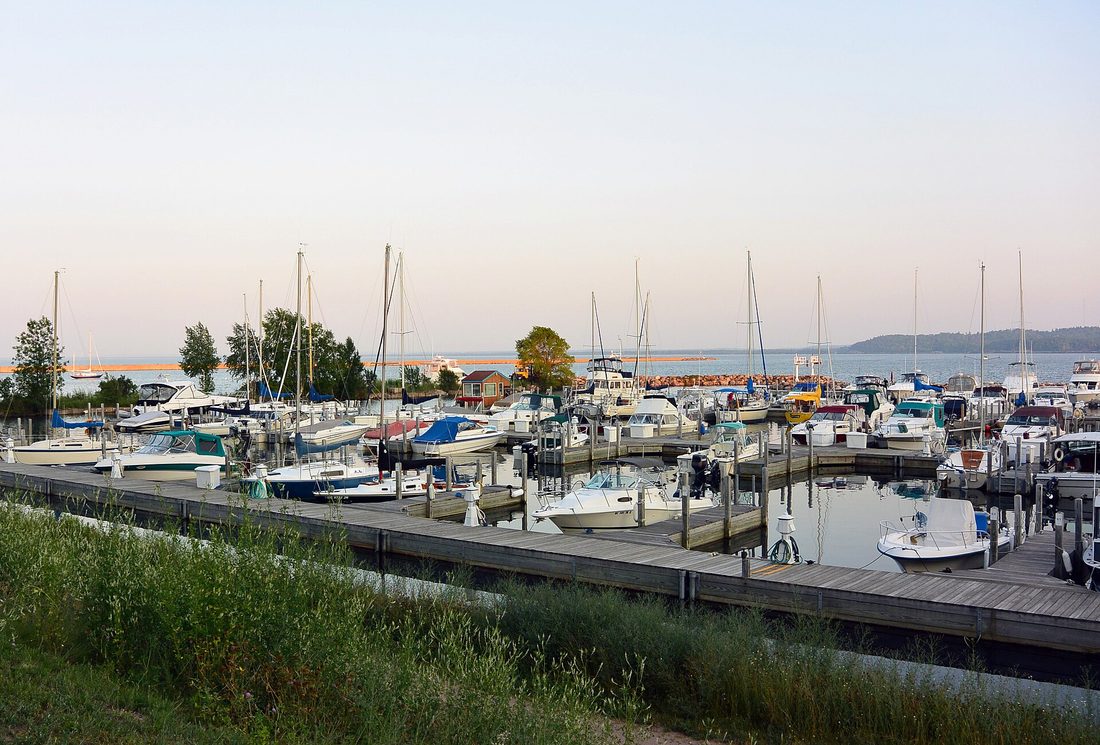
Marquette’s Lower Harbor. The fish comes in off this water and gets smoked a few steps from where it’s landed — which is the whole point.
Cook it yourself
The best way to understand this fish is to cook it. I’ve written up my own Michigan whitefish dinner — the fresh, pan-side of the story — and the smoked side pairs straight into my smoking deep dive, where brined-and-smoked whitefish is about as good a beginner project as exists. Add the smoked whitefish dip above and you’ve got the three faces of the U.P.’s fish: fresh, smoked, and spread on a cracker with a cold drink by the water.
That’s whitefish. Mild, sweet, endangered, treaty-woven, family-fished, and completely central to how the Upper Peninsula eats. Learn it before the lake makes the decision for us.
More of the U.P. table: pasties · cudighi · the Finnish table · Trenary toast · thimbleberries · the table today
Comments (0)