Trenary Toast: The U.P.'s Coffee-Dunking Rusk
Somewhere in my kitchen, more often than not, there’s a brown paper bag with a plain label and a window of what looks, to the uninitiated, like burnt toast. It is not burnt. It’s Trenary Toast, and it is one of my favorite small, stubborn, genuinely regional foods in America — a rock-hard slab of cinnamon-cardamom toast made in a town most people couldn’t find on a map, sold in a paper bag that hasn’t changed in decades, and designed for exactly one job: to be dunked in coffee.
I’ve been buying it for years, including from the outlet in Marquette — the little “All Trenary Products / Trenary Toast Cafe” storefront at 153 W. Washington Street — and in a couple of weeks I’m going right back up into the U.P. with my son to do the whole tour. Trenary Toast is on the list. It’s not fancy. That’s the entire point.
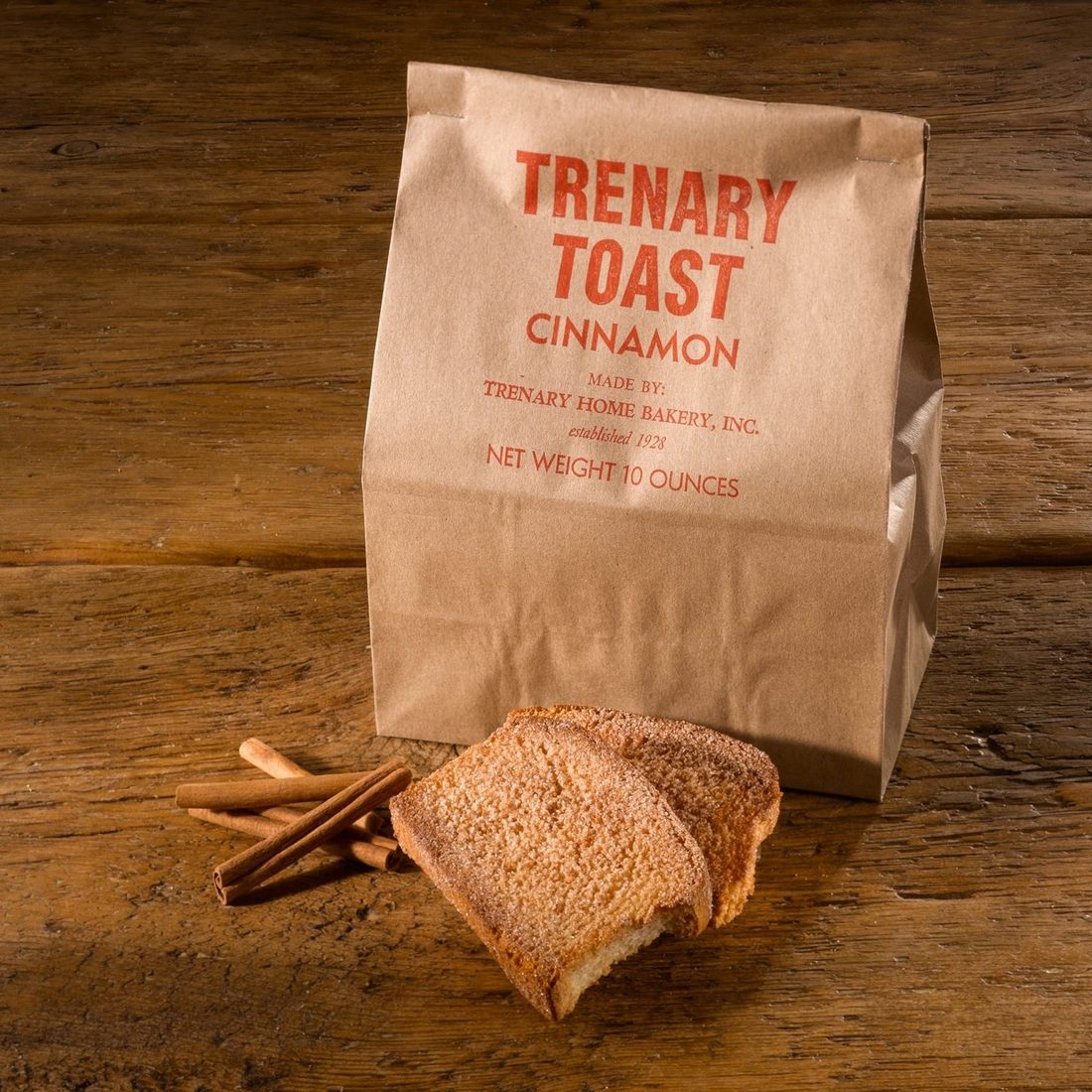
The bag hasn’t changed and neither has the toast: twice-baked, rock-hard, dusted with cinnamon and sugar, and made to go into a coffee cup. Bite it dry and you’ll regret it.
What it actually is
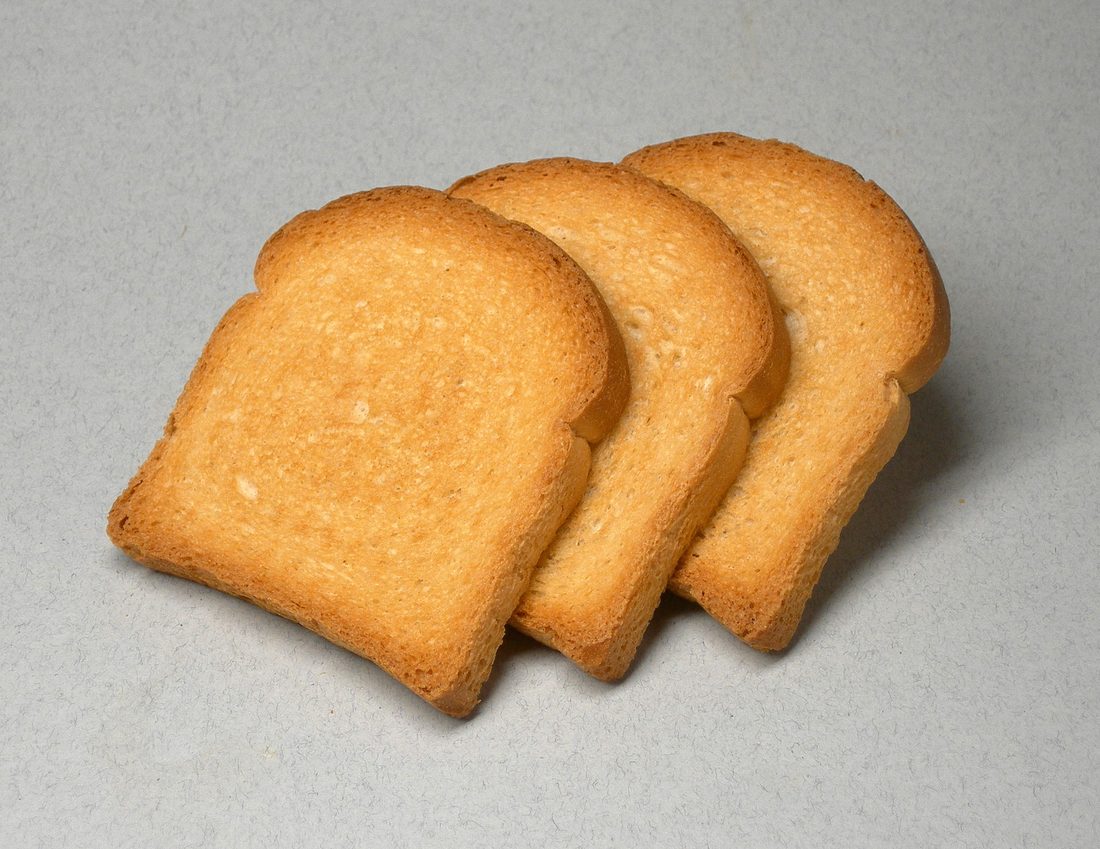
Trenary Toast is a rusk — a slice of sweet, cardamom-scented bread that has been baked twice. You bake a soft, lightly sweet loaf the normal way. Then you slice it, dust the slices with cinnamon and sugar, and put them back in the oven low and slow until every trace of moisture has been driven out. What you’re left with is dry, hard, and crunchy — closer to a biscotti or a piece of zwieback than to anything you’d butter for breakfast — and shot through with cinnamon and a background note of cardamom, the spice that quietly gives away its Finnish roots.
The texture is the whole identity. This is not soft toast, not crisp-but-yielding toast. It is hard — properly, seriously hard, a dense dry board of a thing that makes a loud crack when it breaks and an even louder one against your teeth if you try to chew it straight. People who grew up with it will tell you, only half-joking, that if you bite a dry piece wrong you’ll crack a tooth. That hardness isn’t a flaw or a fluke of over-baking — it’s the feature. Twice-baking a bread until it’s bone-dry does two things at once: it makes it essentially indestructible on the shelf (no moisture means nothing to go stale or mold), and it turns it into a purpose-built dunking vehicle. The dryness is what lets it drink up hot coffee and go from tooth-cracking to tender in a few seconds.
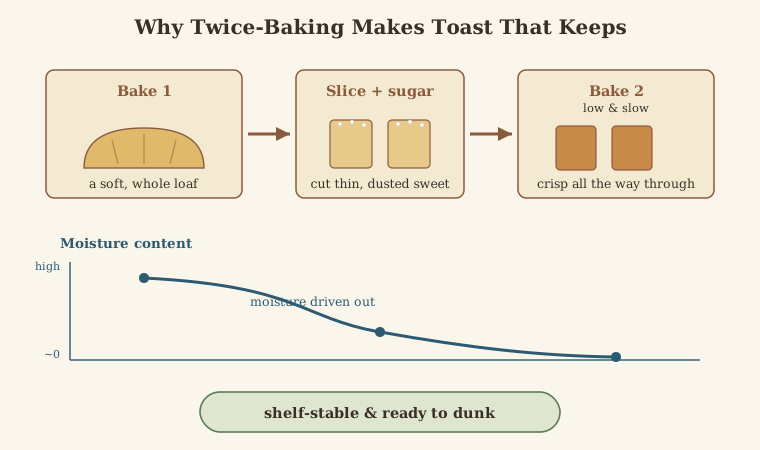
A soft loaf is sliced, sugared, and baked again low and slow until the moisture is gone — shelf-stable and made for dunking.
The whole point: you dunk it
Let me be emphatic, because it’s the single most important instruction on this page and the one newcomers ignore to their peril: you dunk Trenary Toast in coffee. You do not gnaw it dry.
Hold a slice, lower one end into a hot cup of coffee, count a few seconds, and lift it out. The dry, porous crumb wicks the coffee straight up; the surface softens, the cinnamon-sugar loosens and bleeds a little sweetness into the cup, and the bite you take is warm, coffee-soaked, tender, and spiced. This is the Finnish way — dunking hard rusks and even cheese into coffee is deep Finnish habit, and Trenary Toast is that habit, transplanted and canned. Tea works. Warm milk works, especially for kids. But coffee is the native pairing, and a strong cup is best, because the toast is sweet and will meet it.
The dunk itself has a rhythm you learn fast. Too short and the inside’s still hard; too long and the whole slice goes soft and sheds its far end into the bottom of your cup — the classic rookie mistake, a mush of cinnamon sludge you’ll be fishing out with a spoon. The sweet spot is a few seconds, in and out, so the outer layer softens while the core stays with some bite, and you take the bite before it fails. Regulars do it without thinking, cup in one hand, toast in the other, mid-conversation, the way other people handle a doughnut. It’s a small skill, and part of the pleasure is that it is a skill — the toast makes you participate.
There’s also a beloved second life for it beyond the coffee cup, and once you have a bag around you start finding uses:
- French toast. This is the big one, and it’s genuinely brilliant. Because the slices are bone dry, they drink up an egg-and-milk custard greedily without collapsing into mush the way fresh bread does — you get French toast with a custardy inside and structure that holds. It’s become a minor U.P. tradition in its own right, and if you’ve never made French toast from a hard rusk, it’s a small revelation.
- Crushed for crumb or topping. Smash it in the bag and you’ve got a sweet, spiced crumb for the top of a fruit crisp, a coating for baked fish or chicken, or a sprinkle over ice cream or yogurt. It’s essentially a ready-made cinnamon-cardamom streusel with none of the work.
- Cheese and jam. Because it’s sturdy, it holds up under a smear of soft cheese or a spoon of jam the way a cracker would — a slightly sweet base for a savory topping.
But the origin and the soul of it is the coffee dunk. Everything else is a bonus.
Where it comes from: Trenary, Michigan
The name is not marketing. The toast really is made in Trenary, a genuinely tiny former logging town in Alger County, in the central Upper Peninsula. It’s the kind of place — a few hundred people — that has no business supporting a food with national name recognition, and yet the Trenary Home Bakery has done exactly that for the better part of a century.
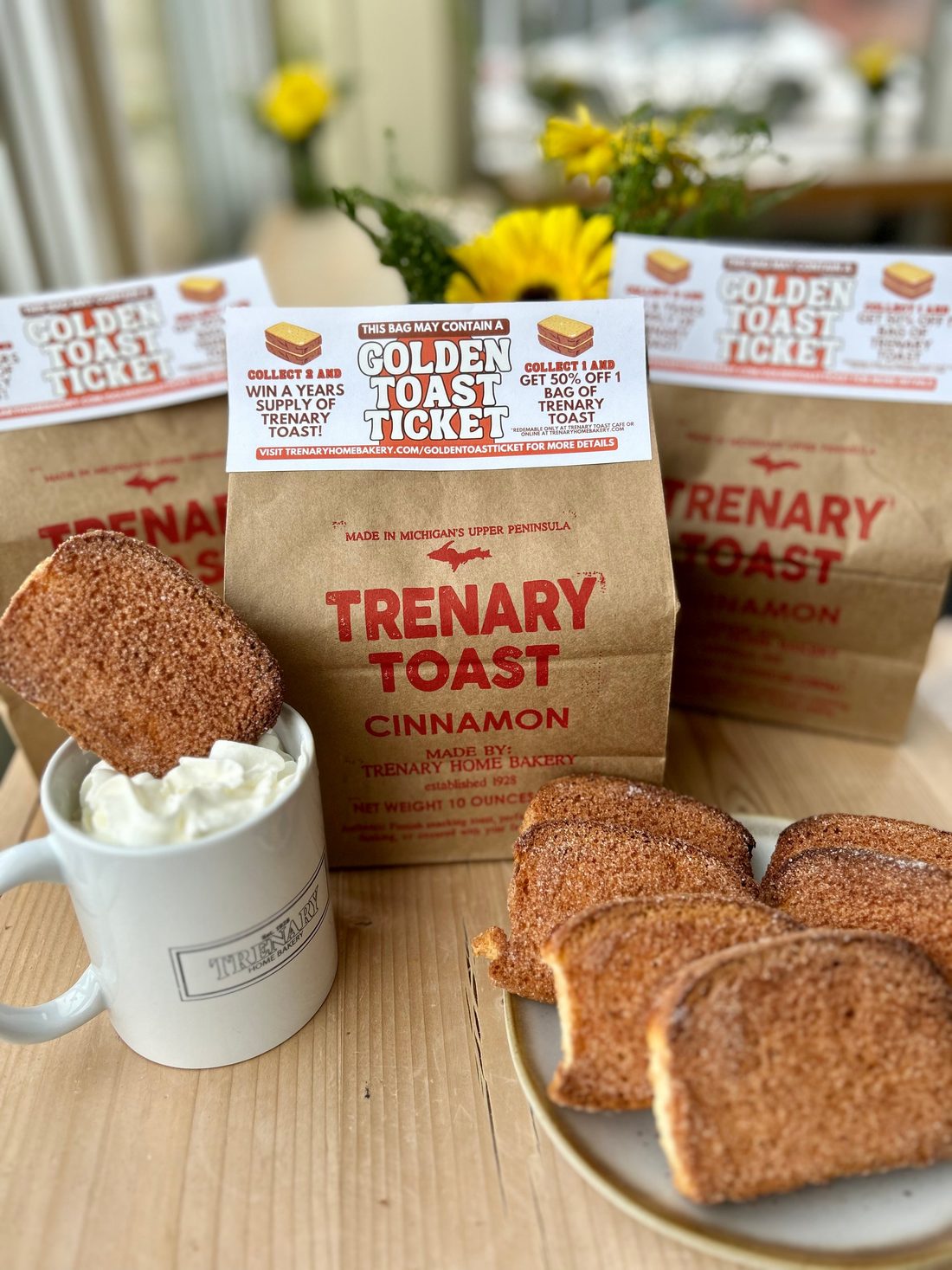
A working small-town bakery in the U.P. woods — which is all Trenary Home Bakery ever was, and exactly why the toast means what it does. No factory, no reinvention, just a town and an oven.
The founding is consistently dated to 1928, when a Finnish immigrant started the bakery and began making korppu — the twice-baked Finnish cardamom rusk — the way it was made in the old country. (You’ll see the founder’s name given as Jorma Syrjälä / “Syrannen” in various tellings; the spelling wanders from source to source, but the story is steady: a Finn, in 1928, baking the rusk of home.) The Syrjälä family ran it until around 1950, when the Hallie family took over and, across three generations and some fifty years, grew it from a local bakery into a regional institution. In 2019 it changed hands again to its current owners, who’ve kept it going. Through every one of those handoffs the product stayed recognizably the same thing: a Finnish rusk, made in Trenary, sold in a paper bag.
That paper bag deserves its own mention. Trenary Toast still ships in distinctive brown paper bags — humble, old-fashioned, instantly recognizable to anyone from the U.P. — and that plainness has become part of the brand’s charm. It reads as exactly what it is: a cottage food that got a little famous without getting slick about it. You’ll find those bags in gas stations and groceries all over the Upper Peninsula, at the Marquette cafe and outlet on Washington Street, and shipped mail-order to homesick Yoopers scattered across the country.
The bakery makes a few varieties now — the original cinnamon is the icon, but you’ll also see plain and other flavors turn up — yet the cinnamon-sugar rusk is what people mean when they say “Trenary Toast,” and it’s the one to start with. The formula has stayed close enough to the 1928 original that the appeal is precisely its refusal to change: it tastes like it always has, in a bag that looks like it always has.
A word about the town
It’s worth lingering on how small Trenary really is, because it’s part of why the toast is charming rather than corporate. This is a village of a few hundred people in the woods of central Alger County — a former stop on the railroad, logging country, the sort of place with a bar, a church or two, the bakery, and a lot of trees. Its other claim to fame is gloriously on-brand for the U.P.: the Trenary Outhouse Classic, a February festival where teams build outhouses on skis and race them down the main street. That a town this size gave America a nationally recognized food and an outhouse race tells you something true about the Upper Peninsula’s particular brand of stubborn, self-deprecating charm. Trenary Toast fits that spirit exactly — an unpretentious thing done well, for a long time, in a place nobody expects.
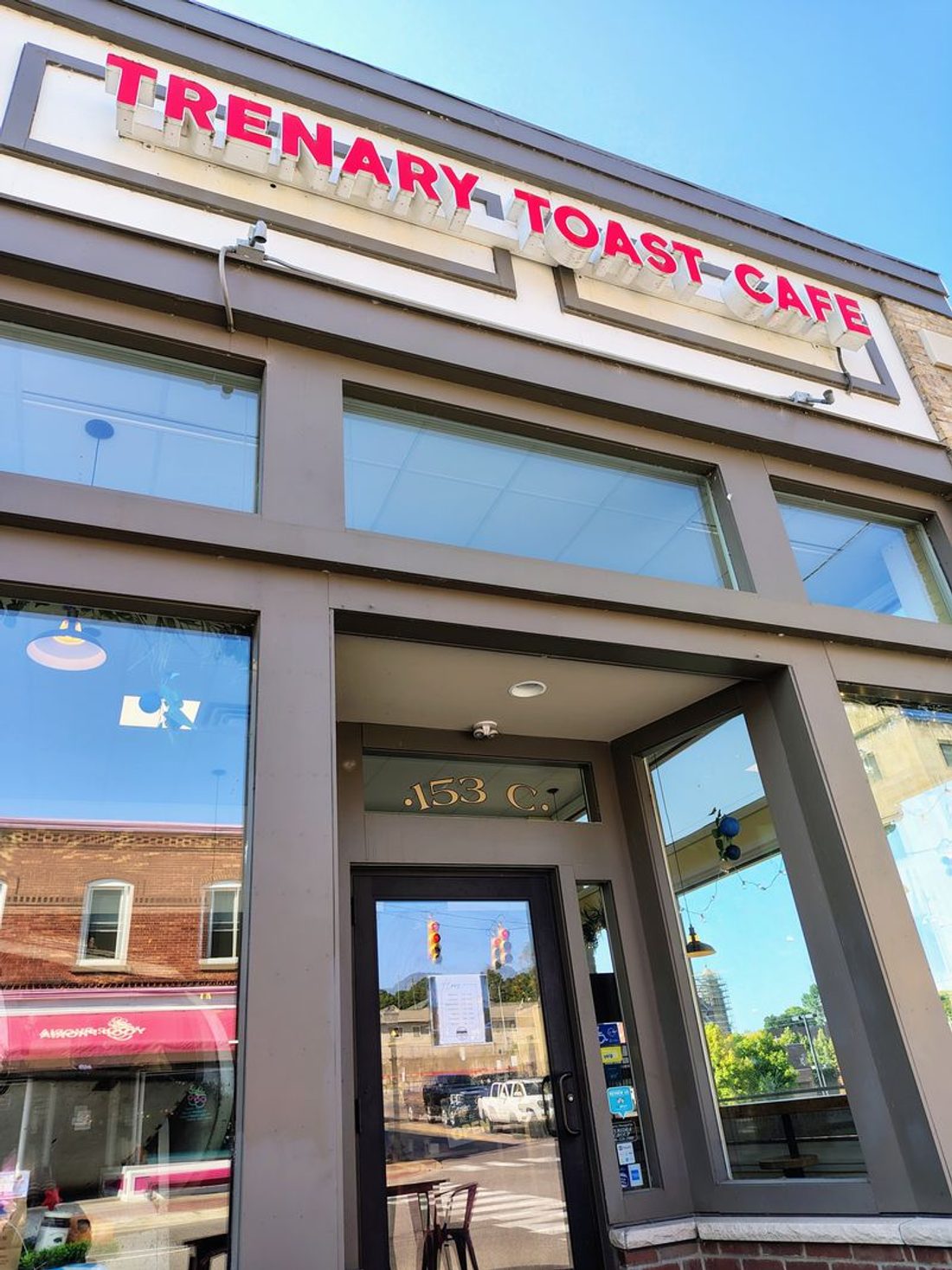
The Marquette outlet — All Trenary Products / Trenary Toast Cafe on Washington Street. A tiny central-U.P. town’s rusk, made famous one brown bag at a time.
Finnish or Swedish? An honest answer
Here’s a place where I have to slow down and be careful, because the sources genuinely disagree and I’d rather tell you the truth than pick the tidy version.
Trenary Toast’s own lineage is Finnish — it descends directly from korppu, and it was founded by a Finnish immigrant baking a Finnish rusk. That much is well documented and I’d stake the page on it. See the Finnish table for korppu in its home context.
The wrinkle is that the broader idea — a sweet, twice-baked, hard rusk you dunk in coffee — is not uniquely Finnish. The Swedes have skorpor (their own cardamom rusks, basically the same concept), the Germans and Dutch have zwieback (“twice-baked” — the word says it plainly), the Italians have biscotti, the Dutch have beschuit, and there are rusks across Scandinavia, the Baltic, South Africa, and beyond. These are cousins, and the Finnish korppu and Swedish skorpor are especially close cousins — Finland and Sweden shared centuries of history and kitchen. So when you see a source call Trenary Toast “Scandinavian” or reach for the Swedish rusk as the ancestor, they’re not crazy; they’re pointing at the wider family. But the specific lineage of this specific product, made by this specific immigrant in this specific town, is Finnish korppu. I’ll hold that line while cheerfully admitting the whole rusk family is one big overlapping mess of northern European thrift baking — which is exactly what makes it interesting.
The twice-baked family, worldwide
Because that’s the real context, let me put Trenary Toast where it belongs: in the great global tradition of baking bread twice on purpose. It’s an old, practical, almost universal idea, and once you see it you see it everywhere.
- Korppu (Finland) — the direct ancestor: cardamom sweet bread, sliced, sugared, re-baked to a hard rusk for coffee. This is Trenary Toast’s parent.
- Skorpor (Sweden) — the Swedish twin, also cardamom-scented, also for coffee.
- Zwieback (Germany/Central Europe) — literally “twice-baked”; a sweetened rusk long used as a gentle food for babies and the sick precisely because it’s shelf-stable and easy to soften.
- Biscotti / cantucci (Italy) — the famous one: a loaf baked, sliced, and baked again, meant to be dunked in coffee or wine. Same technique, same purpose, warmer climate.
- Beschuit (Netherlands) — round, crisp, dry rusks; the Dutch eat them at breakfast and, famously, with muisjes to celebrate a new baby.
- Paximadi / paximathia (Greece), rusks (South Africa, Britain), sukhariki (Russia), and on and on.
The wider family: biscotti, zwieback, skorpor, korppu. Every one is bread baked twice on purpose — dried for the shelf, softened again in a hot drink. Trenary Toast is the U.P.’s branch of a very old tree.
What every one of these shares is the logic behind the second bake: drive out the moisture and you get shelf life. Before refrigeration and cheap year-round bread, a hard rusk was how you kept bread edible for weeks or months — sailors, soldiers, farmers, and thrifty households everywhere figured out the same trick. Ship’s biscuit and hardtack are the savage, unsweetened end of the same family. Trenary Toast is the sweet, cinnamon-and-cardamom, coffee-loving cousin — the comfortable descendant of a survival food.
There’s a second thread worth pulling, too: several of these twice-baked breads became gentle foods — zwieback and beschuit were classic first solids for babies and easy nourishment for the sick and the toothless, precisely because a dry rusk softens to nothing in warm milk and keeps without refrigeration in a nursery or a sickroom. So the rusk sits at a funny intersection: hard enough to survive a long sea voyage, soft enough (once dunked) for a baby’s gums. That double-life — indestructible dry, tender wet — is the genius of the form, and it’s exactly what Trenary Toast does every morning in a coffee cup.
The Finnish korppu itself carried the thrift logic straight into the U.P. In the old country it was made from leftover wheat bread after the harvest, a way to make sure nothing went to waste and to bank calories that would keep through a long northern winter. Immigrants who’d known real scarcity didn’t throw bread away — they baked it again. Trenary Toast is that instinct, preserved past the point of necessity and kept alive because people simply came to love it. It started as thrift and became pleasure, which is one of the nicer things food does.
So when you dunk a piece of Trenary Toast, you’re doing something people have done, in a hundred languages, for a very long time: softening a deliberately hard, deliberately durable bread in a hot drink. It’s peasant cleverness turned into pleasure. I love it for that as much as for the taste.
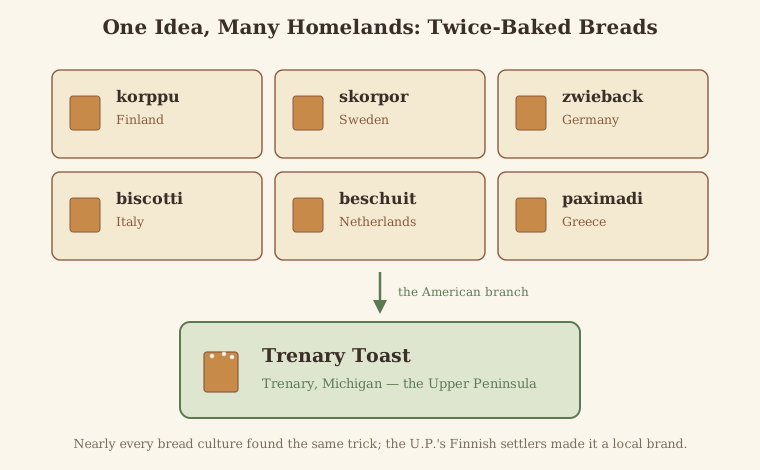
Nearly every bread culture found the same trick; Trenary Toast is the Upper Peninsula’s Finnish-rooted branch of it.
How a hard toast became an icon
Foods this plain don’t usually get famous, so it’s worth asking how this one did. Part of it is simple durability: a bone-dry rusk travels and keeps, which meant Trenary Toast could be mailed to Yoopers who’d left for jobs downstate or out west, and a homesick person opening a brown bag from home is the best marketer a food could ask for. The U.P. diaspora carried it, and the diaspora is large — the copper and iron economies shed a lot of people over the 20th century, and they took their cravings with them.
Part of it is that it became a regional identity marker — the kind of food you press on a visitor precisely because it’s strange to them. Handing someone a rock-hard piece of toast and watching them try to bite it dry, then teaching them to dunk, is a small U.P. initiation rite. Regional magazines and food writers picked it up as a quintessential “Yooper” thing; it’s been called, only half in jest, the official dunking toast of the Great Lakes. It even crosses the bridge: you’ll find it downstate now, sold as a taste of “up north.”
And part of it, honestly, is that it’s good — the cardamom-and-cinnamon flavor is genuinely lovely, and the ritual of the dunk is satisfying in a way a soft cookie isn’t. Novelty gets you tried once; the flavor and the ritual are why people keep a bag in the cupboard. A century in, the formula’s stubborn sameness has become the point: in a food world that reinvents everything every season, here’s a Finnish rusk from a town of a few hundred people, still made the old way, still in the brown bag. That constancy is its own kind of luxury.
Make it yourself
The good news for anyone not within driving range of a U.P. gas station: this is completely makeable at home, and it’s a genuinely satisfying project because the two halves teach two different things.
The first bake is just a lightly sweet, cardamom-scented enriched loaf — the same family of dough as nisu / pulla from the Finnish table, and exactly the kind of yeast baking I walk through in the breads deep dive. You don’t need it to be beautiful; it’s going to get sliced and re-baked anyway, so a plain loaf pan is fine.
The second bake is the fun part and the part with a little craft to it: slice the cooled loaf, lay the slices on a rack or sheet, dust with cinnamon and sugar (some folks add a touch more cardamom), and bake low and slow — a gentle oven for a good while, flipping once — until the slices are dry all the way through and hard when they cool. Low heat is the trick; you’re dehydrating, not browning, so if the edges are darkening fast the oven’s too hot. Done right, the result keeps for weeks in that brown-bag simplicity, and it will dunk exactly the way the real thing does.
A few things I’ve learned that save grief:
- Let the loaf cool completely — ideally overnight — before slicing. A warm loaf tears and squashes; a fully cooled, even slightly stale one slices clean, which matters because you want even slices that dry at the same rate.
- Slice on the thinner side, and keep them even. Thick slices take forever to dry through and can stay chewy in the middle; a wildly uneven batch means some slices are done while others are still damp. Aim for consistency over any particular thickness.
- Think “dehydrate,” not “toast.” A low oven — gentle, not the temperature you’d toast bread at — with the slices spread out so air moves around them. If you have a convection setting, it helps. You’re chasing bone-dry, not brown; real Trenary Toast is more tan than dark.
- Test by cooling one. A slice feels softer hot than it will once it cools — the crunch sets as it comes to room temperature. Pull one out, let it cool a minute, and see if it’s hard the whole way through before you call the batch done.
- Store it airtight once fully cool. Bone-dry and sealed, it keeps for weeks — that’s the whole ancestral point of the thing.
My homemade Trenary-style toast (korppu) recipe is on the site — the two-bake method, the cardamom-and-cinnamon ratio, and the low-oven timing that gets you dunkable without getting you tooth-cracking-in-a-bad-way.
Why a hard, plain toast is worth all these words
I get that spending this many words on what is, physically, a piece of very dry bread might seem like a lot. But Trenary Toast is one of those foods that’s bigger than itself. It’s a Finnish survival food that crossed an ocean, landed in a logging town of a few hundred people, got made by three families across a century, and became a thing that grown Yoopers get shipped to them when they move away and get homesick. It’s genuinely regional in a country that flattens its food into sameness. And it does one thing — go into a coffee cup — with total, unpretentious conviction.
That’s the U.P. in a paper bag. Get some, make a strong pot of coffee, and dunk it. Then come back to the Finnish table for the korppu it grew out of, the breads deep dive for the loaf underneath it, and the coffee deep dive for the cup it was born to swim in. When my son and I are up there in a couple of weeks, a brown bag of it is coming home in the car — it always does.
More of the U.P. table: pasties · cudighi · whitefish · the Finnish table · thimbleberries · the table today
Comments (0)