Birch
I have never tapped a birch tree.
I want that on the table in the first line, because this is the internet and everybody writes as though they’ve done everything. I run maple — sugar and red, buckets on spiles, a turkey fryer in the yard, fifty to two hundred taps in Michigan, and I sell the jars. Birch I have read about, thought about, and done arithmetic about for two winters now. I have not made it. I have not tasted my own. So everything below is research and reasoning, and where I’m inferring rather than reporting, I’ll say so.
Here’s why I keep coming back to it. Birch starts when maple ends. My rig sits idle from late April onward and my trees are done. Birch is the only one of these species that adds calendar instead of competing for it — black walnut wants your February, which is the one month I don’t have to give. On paper, birch is the second crop.
Then you look at what it actually asks for, and the paper gets complicated fast.
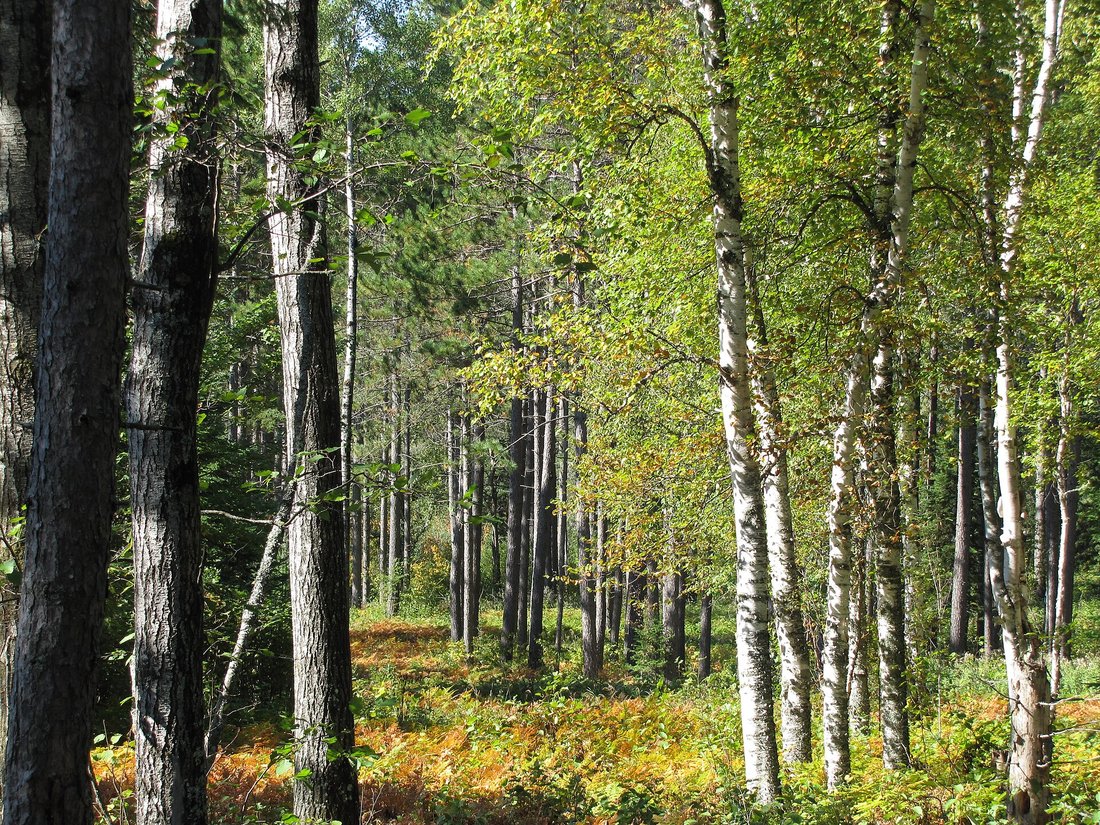
The one fact everything else falls out of: the sugar isn’t sucrose
Start here, because if you take one thing from this page, take this.
Maple sap is sucrose. Birch sap is fructose and glucose. They are not the same molecule and they do not behave the same way in a pan.
Cornell’s Maple Program puts it directly: birch sap is “primarily fructose with lower amounts of glucose and sucrose,” and — this is the sentence that matters — fructose has “a lower temperature threshold for caramelization than sucrose or glucose.” (Composition figures floating around put it near half fructose, half glucose with only trace sucrose; those numbers are consistent with Cornell but come from a weaker source, so treat the shape as solid and the decimals as approximate.)
Now follow the chain, because the chain is the whole craft:
- Birch sap is thin. Roughly 0.5–1.0% sugar against maple’s ~2%. So you have to remove an enormous amount of water — more than twice what maple asks of you.
- Fructose won’t survive the removal. Sucrose shrugs off a hard rolling boil for hours; that’s why I can stand over a turkey fryer all night and end up with something I can sell. Fructose caramelizes at a markedly lower temperature. Cornell’s warning is that “care must be taken not to burn or scorch the delicate sugars (high amounts of fructose).” The University of Alaska Fairbanks extension is blunter: “Be watchful, as it is easy to burn the syrup at this stage.”
- Therefore you must remove the water without cooking it. That’s not a preference. That’s arithmetic meeting chemistry.
- Therefore: reverse osmosis.
That fourth step is where a lot of us who came up through maple flinch, and I include myself. My entire operation is a defensible pile of buckets and a propane burner. RO is capital. But Cornell Small Farms is unusually direct for an extension source — they don’t usually talk like this — and the line is: “without an RO, I would not recommend trying to produce birch syrup.”
The reason isn’t heat. It’s time under heat. RO cuts boiling time by over 90%, and it’s the hours, not the flame, that walk your sap from syrup to burnt over-caramelized molasses. Maple lets you brute-force the problem with patience and propane. Birch does not accept patience as payment. Every hour you spend boiling is an hour spent degrading the product you’re trying to make.
I find this genuinely satisfying as a piece of craft logic. One fact about a molecule — fructose, not sucrose — propagates all the way out to what equipment you must own before you’re allowed to start. I go into what RO actually is and how it works over on equipment; no sense duplicating it here. Just understand that for maple it’s a nice-to-have that saves you firewood, and for birch it’s the price of admission.
What Cornell says the technique actually looks like
Since I can’t tell you what I do, here’s what the people who’ve done it say to do — Cornell’s recommended process, which reads nothing like a maple night:
- Double RO. Concentrate once to 4–6 brix, then run a second pass to 12–16 brix. You’re arriving at the pan with something already sweeter than raw maple sap.
- Finish in small batches — 5–10 gallons of concentrate at a time, to 67% brix. Small, so it’s fast, so nothing sits.
- Double filtration. Birch’s mineral content is very high. One pass won’t do it.
Notice the whole design philosophy is minimize time in the pan. Every choice is aimed at the same thing.
On finishing temperature there’s a real conflict and I’m not going to smooth it over. UAF gives the finish at 225–228°F for density. A widely repeated hobby figure says keep it under 200°F or you burn the batch. Those two numbers do not reconcile as stated, and anyone who blends them into a tidy average is making something up.
My read — and I’m labeling it a read, not a finding — is that they’re describing different moments: bulk evaporation should be gentle and brief; the final density push is short, hot, and watched every second. UAF’s own note supports the “watched every second” part — they report that the finish “came up to temperature very quickly and boiled over.” The 225–228°F number comes from an extension service and I’d call it solid. The sub-200°F number traces to a hobby blog and I’d call it what it is: someone’s hard-won caution, not a measurement. Take the caution. Don’t take the number as gospel.
Birch runs on root pressure — and that’s why the season is different
This is my favorite fact in this entire section, and it’s the one that made birch click for me as a tree rather than as a spreadsheet.
Maple and birch run on completely different physics.
Over on the science I take apart what actually drives a maple run, because almost everyone gets it wrong: it is not root pressure pushing sap up to the buds. It’s freeze-thaw stem pressure — gas and ice doing mechanics inside the wood, which is why maple needs freezing nights and thawing days in the same twenty-four hours and stops dead when that swing flattens out.
Birch is the tree everyone thinks maple is. Cornell: “birch sap flow is controlled through root pressure as sap is moving up the trees for bud break.” UAF, independently: “Sap flow occurs as root pressure changes and stops when leaves develop.” Two extension services, two states, same mechanism. That’s about as confirmed as this stuff gets.
And here’s why that explains everything else on this page, with no hand-waving required:
Root pressure needs warm soil. Not frost. Warm soil. Flow doesn’t begin until temperatures consistently hit 50°F or higher, and — read this next part twice if you’re a maple person — cold weather suppresses birch flow and warm weather increases it. That is the exact inverse of my season. Everything I’ve trained myself to want is wrong for birch. I spend February praying for a hard freeze. A birch tapper spends April praying the ground thaws.
The season isn’t a separate fact you have to memorize. The season is a consequence of the mechanism. Warm soil comes after maple’s freeze-thaw window closes. So birch comes after maple. Of course it does.
(One nice physiological footnote: birch’s root pressures exceed its own stem pressures — but birch never reaches the peak pressures maple generates. Different engine, smaller output.)
And the end of the season isn’t a date at all — it’s a signal. UAF: “When the leaves on the trees start to appear, the sugar is gone from the sap.” That’s the whole rule. The tree was moving sugar up for bud break; bud break happens; the errand is finished. You don’t consult a calendar. You look up.
I like that more than I expected to. My maple season ends when the buds swell and the syrup turns and I have to taste my way to the decision. Birch just… tells you.
The season: after maple, and I can’t give you Michigan dates
HIGH confidence that it follows maple. Medium on the dates. And on Michigan specifically — nothing.
Cornell Small Farms frames birch as flowing when “soil temperature warms to approximately 50F,” which “tends to coincide with the end of the maple sap flow.” They explicitly pitch it as letting a sugarmaker get two crops a year off existing equipment. That’s my situation described in a sentence, which is why the article stuck with me.
The best dated window comes from Cornell’s own Uihlein Research Forest in Lake Placid, New York — the closest climatic analog to Michigan I could find anywhere in the research:
“we generally tap our birch trees in mid-April with production lasting into the first week of May.”
UAF’s Alaska timing echoes it: “Around mid-April, when the days warm and the ground begins to thaw, the sap begins to run.” Season length is commonly given as 3–4 weeks, which lines up cleanly with mid-April to early May.
Now the honest part
I could not find an MSU Extension source — or any Michigan source — on tapping birch.
Not a bulletin, not a webinar, not a news piece. MSU has plenty on maple; I lean on it constantly on the maple page. They have a horticultural page on river birch as a landscape tree. On tapping birch for syrup in this state, there is nothing.
That’s a real gap and I’m not going to dress it up. If you came here hoping I’d hand you Michigan birch dates from a Michigan institution, they don’t exist as far as I can find.
What I’ll defend instead: Cornell’s Adirondack mid-April-to-early-May window is the best available proxy, and the mechanism transfers regardless of latitude. Soil at ~50°F; finished at leaf-out. That’s more useful than a borrowed date anyway — it’s the same reason I tell people the Michigan maple season is a wave, not a date. Northern Michigan and the U.P. should track Lake Placid closely. Southern Michigan, somewhat earlier. Watch your soil and watch the buds, and you don’t need me.
One hobby source offers a whole tapping order — maple, then box elder, then walnut, then birch. It’s plausible and it’s consistent with the mechanisms as I understand them. It’s also a blog, so I’m filing it under “sounds right, unverified.”
The ratio — and why 104 vs 110 is not the argument it looks like
Birch is dramatically worse than maple. That part isn’t in dispute. The headline numbers:
| Source | Ratio (sap : syrup) | Confidence |
|---|---|---|
| Cornell Maple Program (measured, NY) | 104:1 | High |
| UAF Cooperative Extension (Alaska) | “110 or more” : 1 at 67 brix | High |
| Kahiltna Birchworks (largest producer) | “over 110” | Medium |
| Common hobby shorthand | ”100:1” | Low |
Maple, from that same Cornell page, for contrast: 37:1.
Now — if you read around online you’ll find people treating the Cornell 104 and the UAF 110 as a disagreement, as though the experts can’t decide what birch is. They’re not disagreeing. They’re describing two different forests.
Here’s the resolution, and it’s the most useful thing on this page after the fructose:
Ratio is not a property of the species. It’s arithmetic on sap sugar. Cornell gives the formula outright:
87.5 ÷ % sap sugar = gallons of sap per gallon of syrup
Run it. Cornell measured their birch sap at an average 0.86% sugar. 87.5 ÷ 0.86 ≈ 102–104. There’s Cornell’s number — not a claim about birch, just division.
UAF reports Alaskan sap at 0.8–1.5%. That spread gives you 58:1 all the way to 109:1, depending on the tree and the year. UAF quotes the conservative end. There’s their number.
So 104 versus 110 isn’t a fight about birch. It’s two regions’ sap sugar, run through the same formula. Both are right. Neither is the ratio, because there is no such thing.
Maple people should recognize this instantly, because we have the identical situation and the identical confusion. Everybody quotes 40:1 for maple like it’s a law of nature. It isn’t — it’s the Jones Rule of 86 (86 ÷ % sugar) landing on ~2% sap. Same trick, same misunderstanding, different constant. I walk through Jones properly on the science.
So the honest framing: roughly 100–110:1 in the northeast, call it about 3× maple’s work per finished gallon — and measure your own sap and divide 87.5 by it. Anyone quoting you a single authoritative birch ratio is quoting you their forest, not yours.
On species: paper birch sap tests more concentrated than yellow birch, per preliminary New Hampshire work around 2009–2010. River birch (Betula nigra) is tappable but lower in sugar. For syrup, paper and yellow are the ones worth the taps. I’ll flag the sourcing: I got that through a hobby site relaying the research, and I could not locate the underlying NH study itself. So — directionally useful, not something I’d bet a season on.
That matters here, because paper and yellow birch are both genuinely Great Lakes trees. Yellow birch is standard company for sugar maple in the northern hardwood forest — I named it on the maple page as part of what grows alongside my own trees. The trees are here. It’s the knowledge about tapping them in Michigan that isn’t.
It doesn’t taste like maple, and that’s not a small footnote
This is the part most likely to disappoint somebody, so let me be blunt about it in a way the marketing copy won’t be.
Birch syrup is not a darker, edgier maple. It is not a sweeter maple. It is arguably not a “syrup” in the sense you mean when you say the word.
Cornell’s descriptors are the most concrete and the most credible I found:
“fruity-tart and complex caramelized sugar flavors reminiscent of raspberries, tart-cherry juice, apple-butter and molasses”
and
“flavors and aromas ranging from apple butter to a balsamic vinegar reduction”
Balsamic vinegar reduction. Sit with that one. That’s an extension service — people with no product to move — reaching for balsamic to describe a tree syrup.
Kahiltna Birchworks grades theirs by run, which is marketing but is also genuinely informative because it maps to the season:
- Early run — lightest and sweetest, “delicate caramel and molasses notes”
- Mid run — “rich toffee-like flavors and a bright, tangy finish”
- Late run — “bold, dark, and complex,” with “deep umami notes and a molasses-like richness”
That progression is real leverage if you ever run it. Early-run birch is the approachable one, the one you could hand to a maple customer without an argument. Late-run is the savory, umami product — the one that belongs in a kitchen, not on a table.
Which is Cornell’s actual guidance: it’s for cooking, not for pancakes. Drizzled on sandwiches, glazing grilled and roasted meats, in dipping sauces. The balsamic-reduction comparison is the right mental model — think pork, salmon, roasted vegetables, vinaigrettes. Not a stack of buttermilk pancakes on a Sunday.
I want to be careful here, because I haven’t tasted it and I’m not going to pretend otherwise. I have no tasting notes of my own to give you. What I can tell you honestly is what’s upstream of the flavor, and it’s the same molecule again: fructose caramelizing at low temperature through a long concentration, plus a very high mineral load, is exactly the chemistry you’d expect to produce something dark, tart, and savory rather than sweet. The flavor isn’t a mystery. It’s the fructose showing up again.
You’ll also find a lot of writing describing birch as “less cloying” with “a hint of wintergreen” and “light caramel.” That framing traces to consumer-food sites, not to extension research, and it reads to me more like marketing than description. Low confidence. The extension descriptions and the marketing descriptions genuinely disagree about what this stuff tastes like, and I know which one has a bottle to sell.
Commercial reality: why it’s $500 a gallon
Alaska owns this. Kahiltna Birchworks — Alaska Wild Harvest — is the world’s largest birch syrup producer; the East family essentially built the industry. Their scale gives you the clearest possible feel for the ratio in practice: roughly 135,000 gallons of sap a year yields 1,000–1,300 gallons of syrup. Hammers Family Birch is another Alaska name. The reason Alaska dominates is unromantic — vast wild paper birch stands, and no maple to compete for anyone’s attention or their spring.
Price. Kahiltna’s own store runs $21.95 to $149.95 across sizes from 3.4 fl oz up to 32 fl oz. Cornell Small Farms puts birch at 3–4× maple, reaching approximately $500/gallon sold in small bottles.
And that price is not mystique. It’s the arithmetic, item by item:
- ~104–110 gallons of sap per finished gallon — about 3× maple
- A season of 3–4 weeks, hard-stopped by leaf-out
- RO capital before you can make a sellable product at all
- High scorch-loss risk — you can destroy a batch in the last twenty minutes
- Double filtration, because of the mineral load
Every one of those traces back to the same two facts at the top of this page. The price is the chemistry.
Then the hard part, which is not the syrup. Cornell Small Farms is refreshingly unsentimental: the market does not exist ready-made. Customers are “unfamiliar with the product and skeptical of its taste.” Success requires “invest[ing] the time and resources in developing retail markets,” and “it will take a lot of time.”
That lands squarely on me, and it’s the thing I keep chewing on. I sell at a store and a farmers market. I know exactly what happens at that table: somebody’s kid points at the dark jar, and I have thirty seconds. With maple I need zero seconds — everyone already knows. With birch I’d need to explain that it isn’t maple, isn’t for pancakes, tastes like a balsamic reduction, and costs three times as much. At a farmers market. In thirty seconds. To someone who came for pancake syrup.
So the honest conclusion for a Michigan maple producer, and I’d rather say it than sell it: birch is a marketing project as much as a production project. The syrup is the easy half. And I say “easy” knowing it requires an RO I don’t own.
Where I actually land
Birch is the only true second crop. That part holds up — it starts when maple ends, it fills the weeks my rig sits cold, and it’s the one species that adds calendar instead of fighting for it. The trees grow here; paper and yellow birch are Great Lakes natives standing right alongside the maples I already tap.
What stops me isn’t the tree. It’s the stack: an RO before I’m allowed to start, a technique that’s the opposite of everything my hands know, a 3× ratio, and a customer I’d have to build from nothing at a folding table. That’s not a no. It’s a not-yet, and it’s an honest one.
If I ever run it, you’ll know, because this page will change. It’ll get tasting notes I earned and a photo of my own dark jar and a paragraph about the batch I burned. Until then this is what the research says, told by someone who tapped a different tree.
The part I’d want you to keep, whether or not either of us ever hangs a birch spile: two trees, thirty feet apart in the same Michigan woods, run on entirely different physics. One waits for the frost. One waits for the thaw. One gives you sucrose that forgives you; one gives you fructose that doesn’t. That’s not a syrup fact. That’s just a good fact.
For the mechanism behind both, see the science. For the RO that birch demands, see equipment. For the tree I actually run, see maple.
Comments (0)