Boxelder
I have never tapped a boxelder. I want that in the first line, same as I said on birch, because this is the internet and everybody writes like they’ve done everything. I run maple — sugar and red, buckets on spiles, a turkey fryer in the yard, fifty to two hundred taps in Michigan, and I sell the jars at a store and a farmers market. Boxelder I’ve read about and argued with myself about. I have not made it. So what follows is research and reasoning, and where I’m inferring instead of reporting, I’ll say so.
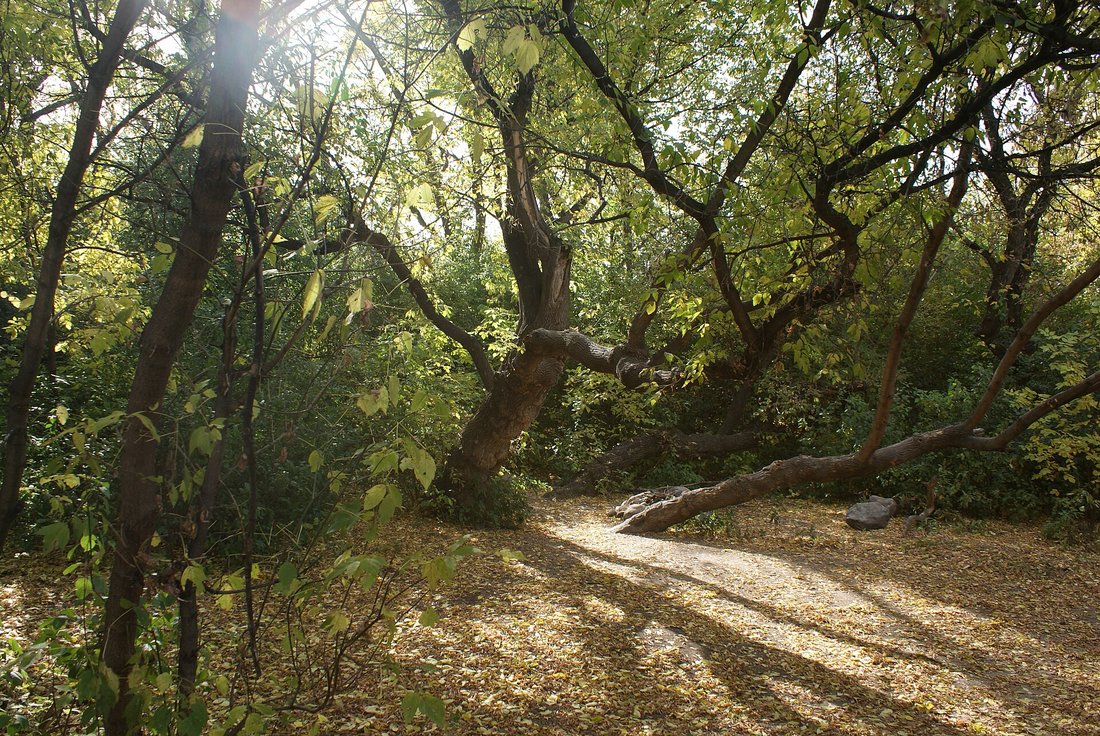
But boxelder is a different kind of not-yet than birch. Birch is a tree I’d have to go find and buy equipment for. Boxelder is standing in the fencerow. It’s in the ditch. It’s the volunteer behind the barn that somebody’s been meaning to cut for six years. If you live anywhere in the Midwest you have walked past a hundred of them this month without looking up.
And here’s the thing that made me sit down and write this page.
It’s a maple.
Not a “maple-like tree.” Not a cousin, not a near-miss, not a folk name that stuck. Acer negundo is a genuine member of the genus Acer — the same genus as the sugar maple I hang buckets on. Taxonomically it is exactly as much a maple as the tree in my sugarbush. It’s just that nobody believes it, including a lot of people who tap maples for a living.
The leaf is why nobody believes you
Look at a boxelder and your eye tells you it isn’t a maple, and your eye is wrong.
Every other maple you know has a simple leaf — one blade, the palmate silhouette that’s on the Canadian flag and on my own jar labels. Boxelder has a compound leaf: three to seven separate leaflets strung along a stem, which looks for all the world like an ash. Hence the other common names — ash-leaf maple, box elder, Manitoba maple. Two of those names are the tree being mistaken for two different trees it isn’t related to.
So boxelder walks around wearing a disguise it can’t take off. It’s the only maple most people would fail to identify as a maple at gunpoint. And the reputation follows from there: weedy, fast, weak-wooded, splits in a windstorm, seeds itself into every fence line, and hosts the boxelder bug that shows up on the south side of your house in October by the thousand. Nobody plants it. Everybody cuts it. It’s the definitive trash tree of the middle of this continent.
And it makes maple syrup. Real maple syrup, from a real maple.
That tension is the whole page. Real maple, bad reputation, right there in the fencerow.
⚠ The ratio question — where almost everything you’ll read is wrong
This is the intellectual core of the page, and I’d rather spend the words here than anywhere else, because it’s the best example I know of a bad number becoming a fact by repetition.
Search boxelder syrup and you will be told, everywhere, that the ratio is 60:1. Sixty gallons of sap to one gallon of syrup, against maple’s forty. The framing that comes with it is always the same: boxelder sap is half as sweet as sugar maple, around 1% to 1.7% sugar, so you have to boil half again as much of it. It’s on the hobby sites, the gear retailers, the self-reliance blogs. It is the single most repeated fact about this tree.
As far as I can tell, it’s wrong — and the way it’s wrong is more interesting than the number.
Trace it
Here’s what actually exists, sorted by what kind of thing it is:
| Source | What it is | Sap sugar | Ratio |
|---|---|---|---|
| Mathews 2024 (Utah State thesis / HortTechnology 34(1):52) | Peer-reviewed. 30 trees, Cache Valley, Utah, 2022–23 | 2.2–2.8% | ~35:1 |
| Kort & Michiels 1997, Forestry Chronicle 73(3):327–330 | Peer-reviewed. Indian Head, Saskatchewan, 3-year field data | — | 42.6:1 |
| Jaciw 1967 | Older study, cited secondhand | 2.6% mean | — |
| Univ. of Wyoming Extension (Abby Perry) | Extension educator, quoted | ~2% | ~43:1 implied |
| The blogs | One unsourced claim, repeated | ”1%” or “1.7%" | "60:1” |
Look at the shape of that table. Every measurement anybody actually took says one thing. Every source that took no measurement says the other.
Two peer-reviewed datasets, on two different continents, thirty years and two thousand miles apart, agree with each other: boxelder sap runs somewhere around 2.2–2.8% sugar. Kort and Michiels got 42.6:1 as a three-year mean in Saskatchewan. Mathews got about 35:1 from thirty trees in Utah.
Sugar maple, for reference, runs about 2%.
Boxelder sap is not half as sweet as sugar maple. It is statistically indistinguishable from it — and in the Utah data it measured sweeter.
The methodological problem, stated plainly
The 60:1 figure isn’t a competing measurement. It’s a calculation from a sap-sugar number that nobody appears to have measured. Somebody, somewhere, wrote down “1–1.7% sugar,” somebody else ran the arithmetic on it, “60:1” came out, and then it got copied. What propagated wasn’t a finding. It was a premise, wearing a finding’s clothes.
And you can check it yourself in about ten seconds, which is the part I love. Run the Rule of 86 — the same rule I use on my own sap, which I take apart properly over on the science:
86 ÷ % sap sugar = gallons of sap per gallon of syrup
Feed it the measured numbers. 86 ÷ 2.8 = 31. 86 ÷ 2.2 = 39. So the measured sugar content predicts 31–39:1 — which lands right on top of what Kort and Michiels and Mathews independently got in the field. The arithmetic, the Canadian data, and the Utah data all close the loop on each other.
Now feed it the blog premise. 86 ÷ 1.4 ≈ 61. There’s your 60:1. The famous number is just the Rule of 86 run on a sugar content the literature contradicts. It’s internally consistent and externally false. It was never a measurement of boxelder. It was a measurement of somebody’s assumption.
So: boxelder’s ratio is roughly 35–45:1. Essentially sugar maple’s 40:1.
I’m going to be careful about my own confidence here, since I’m the guy insisting on sourcing. The two peer-reviewed studies are solid and they corroborate each other, which is the strongest thing you can say about a fact like this. I’ll call the ~2.2–2.8% and the ~35–45:1 high confidence. What I will not claim is that I’ve measured it. I have a refractometer and no boxelder. If you have one in the fencerow, put a hydrometer in the bucket and settle it for yourself — and if your sap reads 1.4%, I want to hear about it, because it would mean there’s regional variation nobody has published.
But please stop repeating 60:1. If a site tells you boxelder is half as sweet as sugar maple, that site did not check.
Then why isn’t everybody doing this?
Good. This is the right question, and it has a genuinely satisfying answer — one that got buried under the sugar myth for years.
Because if the ratio is really 40:1, the whole story falls apart, doesn’t it? Free trees nobody wants, same ratio as the tree everybody fights over, and yet no boxelder industry. Something has to explain that, and “the sap is weak” was a convenient explanation that happened not to be true.
The real answer is volume.
Kort and Michiels’ Saskatchewan trees gave 0.23 litres of syrup per tap across a three-year mean — which they characterize as roughly one quarter to one half of what a sugar maple gives you.
Read that against the sugar number and the picture snaps into focus. The sap is just as sweet. There’s just less of it. You are not boiling harder per gallon. You are getting fewer gallons to boil. The deficit was never in the sap’s chemistry — it was in the tree’s plumbing.
That reframe matters to me practically, because it changes what the problem is. If boxelder sap were 1% sugar, the fix would be equipment — reverse osmosis, more fuel, the whole birch argument. It isn’t. The fix would have to be more taps, and more taps means more trees, and that’s where the rest of it comes apart.
Here’s the honest list of why nobody’s built a business on this, and I’d rate this synthesis high confidence because each piece is independently supported:
- Low sap volume per tap — a quarter to a half of sugar maple. Your economics per tap are bad, and every tap costs the same labor regardless of what it gives you.
- The trees are scattered. Boxelder grows in shelterbelts, fencerows, riverbanks, and ditches — not in dense stands. There’s no sugarbush. And no sugarbush means no tubing network, which means no gravity, no vacuum, no economies of scale. You are walking to every single tree, forever.
- Short, early, erratic season (more on this below).
- The reputation. Universally dismissed as a trash tree. Weak-wooded, weedy, bug-hosting. This is not a small factor — it’s why nobody looked in the first place.
- Sugar maple is cheap. Quebec and Ontario supply is so large and so dominant that there’s no price gap for a novelty maple to slide into. You can’t undercut it and you can’t premium your way past it.
That’s a real answer. Not “it doesn’t work” — “it works, and it doesn’t pay.” Those are very different sentences, and only one of them is true here.
And notice what item 2 actually says: the barrier is geometry, not botany. Boxelder’s problem is where it grows, not what it is.
The prairie: where boxelder is the only maple
Here’s the part that turns boxelder from a curiosity into a real story.
Acer negundo is native to Manitoba, Saskatchewan, and a corner of Alberta — the only maple native to the Canadian prairies. Not the best one. The only one. There is no sugar maple to be dismissed in favor of. If you are standing in Manitoba and you want maple syrup, this tree is the entire conversation.
So they tapped it. The Sioux and the Cree tapped Manitoba maple for sugar. And when the Ojibwe migrated west into the Red River region in the mid-18th century — a people who already knew sugaring intimately from the eastern hardwood forests — they got there, found no sugar maple, found this instead, and tapped it. Birch-bark buckets, a drilled hole, a wooden spile. The same craft, transplanted onto the tree that was available.
I find that quietly moving, and I’ll tell you why. Everything I do in February is a technology that was handed to me. The drilled hole, the spile, the collection vessel, the patient boil — that’s Indigenous engineering, and every sugarmaker in North America is using a borrowed method whether they say so or not. What the Red River story adds is that the method was portable. It survived a migration and a species change. The knowledge wasn’t “how to tap a sugar maple.” It was “how to tap a maple” — general enough to travel.
There’s also a repeated account of Manitoba maple syrup being used in First Nations maple-cured meats for its distinct flavor. I’ll flag that one: medium confidence — it shows up in several places but thinly sourced, and I couldn’t get behind it to a primary.
Then the 20th century did something accidental and enormous. Under the prairie shelterbelt programs — the PFRA era, trees handed out by the hundreds of thousands to break the wind after the Dirty Thirties — boxelder was planted across the prairies on purpose, at scale. It was tough, it was fast, it was free, it grew where nothing else would.
Nobody was thinking about syrup. They were thinking about topsoil.
But the result is that there is now a very large accidental resource of tappable maples across the Canadian prairies, and it exists because of windbreak policy rather than forestry. That’s the structural fact under the whole prairie syrup scene. Those trees were planted to hold dirt down, and three generations later somebody hung a bucket on one.
Statistics Canada — Statistics Canada! — published a school lesson called “Tapping the Manitoba maple — a Prairie cottage industry.” The phrase cottage industry is the government’s own framing, and it’s exactly right: not an industry, a cottage industry. A thing people do.
The season: earlier, shorter, and it doesn’t wait for you
Same physics as my trees — prairie boxelder runs on spring freeze–thaw, the same stem-pressure mechanism I go through on the science. No surprises there; it’s a maple, it runs like a maple.
But the calendar is different, and the difference is the operationally important part:
- The Utah study window was tight: tapped February 19, season over by March 27. Thirty-seven days, start to finish.
- Wyoming Extension’s guidance is blunter: tap in February. March is a late start. Flow stops once the trees green up.
Boxelder breaks dormancy earlier than sugar maple. So the window opens earlier and closes earlier, and it’s shorter on both ends.
That’s the exact opposite of birch’s problem, and I want to put the two side by side because together they explain my whole calendar. Birch is the second crop — it starts when maple ends, so it costs me nothing but April. Boxelder is a competitor. It wants February. February is the one month I have nothing left to give — it’s when my own trees run, when my buckets are out, when I’m boiling until two in the morning.
So a Michigan sugarmaker weighing boxelder isn’t asking “should I make this syrup?” He’s asking “should I take taps and hours away from sugar maple, in the same weeks, to make the same syrup from a tree that gives a quarter to a half the sap?”
Written out like that, it answers itself. And that — not sugar content, not flavor, not the trash-tree reputation — is the real reason my rig will probably never see a boxelder.
The one honest asterisk: I can’t give you Michigan dates. The Utah window and the Wyoming guidance are the best dated material that exists, and neither is Michigan. What transfers is the mechanism — earlier dormancy break, shorter window, done at green-up — and mechanisms travel better than dates anyway. Watch your trees.
Flavor: the sources genuinely disagree, and I’m not going to pick one
I have not tasted boxelder syrup. I’m not going to write you tasting notes I didn’t earn — I don’t do that on birch and I won’t do it here.
What I can do is show you the disagreement honestly, because it’s real and it’s unresolved, and every page that hands you one confident answer is quietly discarding the evidence it didn’t like.
Camp one: it’s just maple.
- Kort & Michiels, 1997 — peer-reviewed, the same Saskatchewan study behind the ratio data — report a “light-coloured syrup which has been judged to have a distinctly pleasant flavour.” That’s it. No caveat, no exotic descriptor. Pleasant.
- Abby Perry, University of Wyoming Extension, goes further: “it’s indistinguishable from a sugar maple’s.”
Camp two: it’s butterscotch.
- Alan Bergo — the Forager Chef — and a number of tappers describe something pronounced and specific: butterscotch. Also molasses, also buttery. Bergo didn’t just say it in passing; he built a Butterscotch Box Elder Pudding recipe around it. When a cook with that palate builds a dish on a flavor, he’s not hedging.
Those two camps do not reconcile, and I’m not going to average them into “mildly butterscotchy,” which would be a description of nothing.
Two more voices worth having:
- A dissenting note calls it heavy, almost sorghum-like, possibly somewhat bitter. That’s the least-supported claim of the bunch — blog-sourced, low-to-medium confidence.
- Manitoba tourism and festival framing goes the other direction: “lighter and more delicate” than eastern syrup. Prairie-style. That’s medium confidence and it’s coming from people selling the region, which I’d note.
What I’d actually say
The light color is the one thing everybody agrees on — the peer-reviewed source, the extension educator, and the tourism board all land there, and they have no reason to collude. Call that solid.
The butterscotch is the interesting claim. It comes from good palates and it comes with specificity, which is worth something. But it lives alongside an extension educator saying she can’t tell it from sugar maple, and I can’t make those agree.
My guess — labeled a guess, from a man who hasn’t tasted it — is that “sorghum-like and bitter” isn’t the tree at all. Scorched sugar tastes like that. Late-season sap tastes like that. Anyone who’s carried a maple season past the buds knows exactly what that flavor is, and it isn’t a species; it’s a processing artifact and a calendar mistake. Given that boxelder’s window closes early, late-sap flavor seems like an easy trap to fall into. But that’s reasoning, not evidence, and I’d like it on the record as reasoning.
Where I’d leave it: light in color, and past that the sources disagree — plausibly butterscotch and buttery where sugar maple is vanilla and caramel, plausibly just indistinguishable. If you tap one, you’ll know more than I do.
The people actually doing it
Small, real, and mostly on the prairies. This is what a cottage industry looks like when you go find it:
- Josh Wiebe, Osler, Saskatchewan — sells at the Osler farmers’ market and through Facebook. Which is, I’ll note, exactly my business model, on the other side of the border, with the other maple.
- Allan Bennett, Kamsack, Saskatchewan — about twenty years at it, and he ships 25-gallon drums to a distillery, a bakery, and a sausage maker. That’s the most commercially serious operation in the file. (Sourcing note: the article about him wouldn’t load for me and I’m working from a search snippet — medium confidence on the details.)
- Bob Gass, Manitoba.
- Pine View Farms, Saskatchewan — small-batch, retailed through SaskMade Marketplace in Saskatoon.
- Matt Mosher / Matt’s Mushrooms and More, Minnesota — one of very few selling boxelder sap to the public rather than syrup.
Bennett’s drum list stopped me: a distillery, a bakery, a sausage maker. Not a breakfast table. Nobody in that list is buying it to put on pancakes; they’re all buying it as an ingredient. That’s a quiet argument for the butterscotch camp, and it’s a quiet argument that this product’s real home might be a kitchen rather than a jar with a leaf on it.
And then there’s McCreary, Manitoba, which calls itself the Maple Syrup Capital of Manitoba — from boxelder. There’s a Manitoba Maple Syrup Festival, Friday and Saturday of the second weekend in April: a working sugar bush, tapping clinics, taffy on snow, bannock on a stick. It sits on Treaty 2 Territory, Anishinabe traditional land and Métis homeland.
Second weekend in April. My season’s dead by then and my pans are washed. There’s a real chance I go someday, if only to taste the thing I’ve written three thousand words about.
The live edge: somebody is funding this right now
The story isn’t finished, which is my favorite thing about it.
There’s a three-year, roughly $500,000 USDA-funded feasibility study running across five Intermountain West states, Utah-led, testing whether boxelder can be commercialized — including tubing systems. Abby Perry at Wyoming Extension is a contact on it.
Look at what that’s aimed at. Not the sugar — that question got answered in the peer-reviewed literature and the answer was “it’s fine.” Tubing. They’re going after item 2 on my list: the trees are scattered, so there’s no network, so there’s no scale. If you can run tubing through a shelterbelt or a river bottom, the economics change — and the economics were the only thing actually wrong with this tree.
That’s a real experiment on a real bottleneck. I don’t know how it comes out. Nobody does yet. But somebody with half a million dollars looked at the trash tree and thought the question was open, and I think they’re right.
Where I land
I’m not tapping boxelder, and the reason is one sentence long: it wants February, and February belongs to my sugar maples. A quarter to a half the sap, from scattered trees I’d walk to individually, during the only weeks of the year I have no hours left. That’s not a knock on the tree. It’s arithmetic about my own calendar.
But I’ve stopped thinking of it as a trash tree, and I’d like you to as well, because the case against it turns out to be mostly a case of mistaken identity — twice over.
It’s mistaken for not-a-maple, because of a leaf. And its sap is mistaken for weak, because of a number nobody measured. Strip both mistakes away and what’s left is a genuine maple, with genuine sugar-maple sap, growing free in a ditch, whose only real sin is that it doesn’t give you very much of it and it doesn’t grow in rows.
The prairie already knew. The Cree and the Sioux tapped it. The Ojibwe carried the craft west and put it on this tree because it was the maple that was there. A soil-conservation program accidentally planted a sugarbush across three provinces. And a town in Manitoba throws a festival every April for a tree the rest of the continent cuts down for firewood.
The part I’d want you to keep, whether either of us ever hangs a boxelder spile: the tree in your fencerow is the same genus as the tree in my sugarbush, its sap is the same sweetness, and the only reason nobody taps it is that it grew up in the wrong shape. Not the wrong chemistry. The wrong shape.
That’s not a syrup fact. That’s just a good fact.
For the mechanism both trees run on, see the science. For how a hole and a spile actually work, see tapping. And for the maple I do run — the one that gets my February — see maple.
Comments (0)