Venezuela & Uruguay
A man patented the process that feeds a country, sold it, and died in 1959 — the year before the product launched. The company that made billions from it does not credit him.
That’s the Venezuelan half. The Uruguayan half includes a sandwich named after an ingredient it does not contain, and a beloved rainy-day tradition whose own sources decline to explain it.
I ate breakfast in both countries. As everywhere on this site, the corrections are the product.
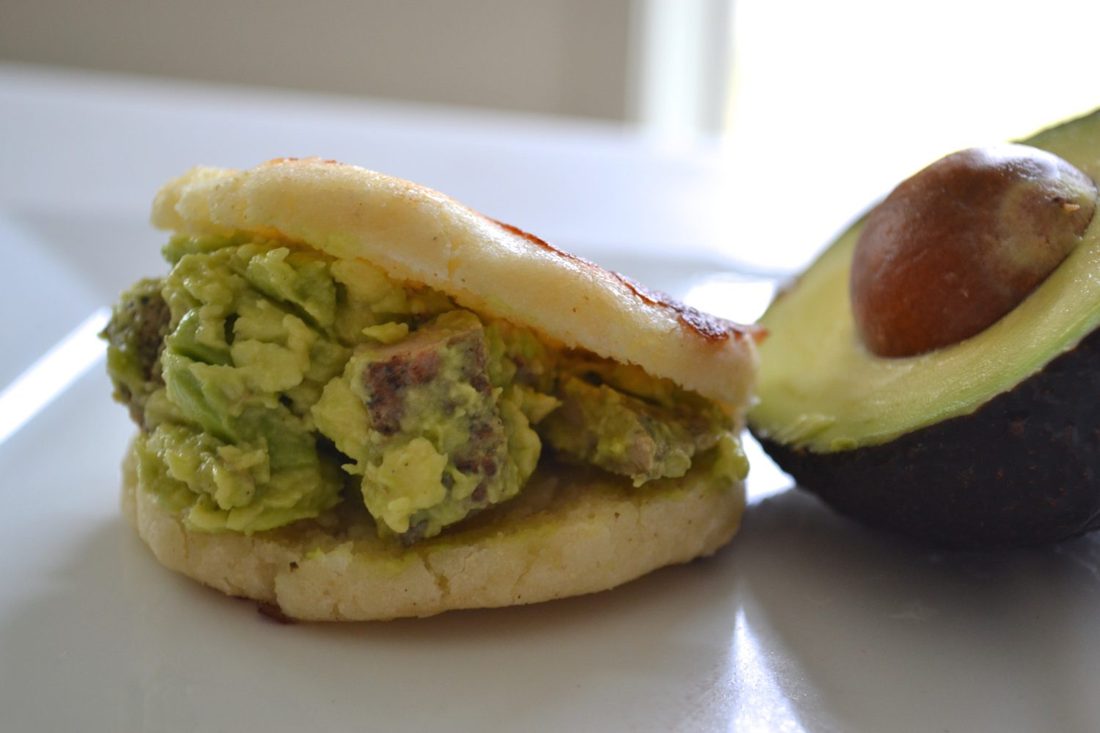
The arepa. Venezuela and Colombia both claim it, which is a category error: it predates both countries by millennia.
Venezuela
🔴 Masarepa is not masa harina. Nothing bridges them.
This is the single most important technical fact in this section, and it’s the same trap that catches people on the Mexico, Guatemala & Panama page from the other direction.
| Masarepa (arepas) | Masa harina (tortillas, tamales) | |
|---|---|---|
| Process | Precooked, then milled | Nixtamalized — cooked and soaked in limewater (calcium hydroxide), then milled |
| Nixtamalized? | NO | YES |
| Behaviour | Absorbs water into a pliable, putty-like dough; shapes easily into thick forms | Makes a dough for thin flatbreads; won’t hold a thick shaped form |
| Flavour | Clean, sweet corn | Nuttier, more complex — nixtamalization develops it |
| Brands | Harina P.A.N., Goya masarepa, Areparina | Maseca, Masienda |
Nixtamalization breaks down and gels some of the corn’s carbohydrates and changes the flavour. It is a chemical process masarepa has not undergone. These aren’t grades of the same thing. They’re outputs of different machines.
And there’s a third trap: plain cornmeal is milled raw and substitutes for neither. Three products, one crop, zero interchangeability.
What actually happens when you swap:
- Masa harina in an arepa → a cracking, crumbling dough that won’t hold the shape or develop the shell.
- Masarepa in tortillas → a pale, flat-tasting tortilla that won’t puff.
No technique bridges them. You cannot rest your way out of it, hydrate your way out of it, or knead your way out of it. Buy the right bag.
🔴 The arepa nationality dispute is a category error
Venezuela or Colombia? People will fight you about this. Here’s why the question is broken.
What both sides agree on: the arepa is pre-Columbian and Indigenous, and it predates both nations by thousands of years. Colombia and Venezuela became separate countries in 1831. The arepa is millennia older. Using modern borders to assign it is anachronistic on its face.
The Venezuelan argument:
- The Timoto-Cuica people — a pre-Columbian civilisation in the mountains of what is now Venezuela — were probably the first to eat arepas, drying and grinding corn into an unleavened corn cake.
- The etymology is Venezuelan Indigenous: “arepa” comes from “erepa,” the Cumanagoto word for maize.
The Colombian argument:
- Archaeological evidence suggests maize reached present-day Colombia about 3,000 years ago — roughly 200 years before it reached present-day Venezuela. If the corn was there first, the corn cake plausibly was too.
- Colombian Indigenous groups — Muiscas, Taironas — likewise ground corn for arepas.
Where the sources actually land: “it’s a bit ridiculous to use modern geo-political borders to define the dish’s origins because arepas existed thousands of years before either Colombia or Venezuela. The reality is that arepas are indigenous and belong to the area at large.” Pre-Hispanic groups across the whole region — Cumanagotos, Muiscas, Taironas, Timoto-Cuicas — made them.
So I’m not resolving it, because it isn’t unresolved. It’s malformed.
“Is the arepa Colombian or Venezuelan?” asks a 19th-century political question of a pre-Columbian food.
Both countries have legitimate Indigenous heritage claims. Neither has an exclusive one. The rivalry is real, generally friendly and genuinely heated, and it is unresolvable as posed — not because the evidence is thin, but because the question has a false premise baked into its grammar. There’s no answer to find. There’s a question to decline.
What is real and undisputed is the difference between the modern dishes:
- Venezuelan arepa: thick (2 cm-plus), split open like a pita and stuffed with substantial fillings. It’s a sandwich.
- Colombian arepa: typically thinner and flatter, often topped rather than stuffed, frequently a side. Variants include arepa de choclo (sweet), arepa paisa (plain, a side), arepa de huevo (egg fried inside).
That’s a real distinction about food. It’s answerable. It’s also, notably, not what anyone’s arguing about.
🔴 Harina P.A.N. — the industrial arepa, and an uncredited inventor
The modern arepa is a 1960 industrial product, and this story is fully documented and badly under-told.
- Luis Caballero Mejías, a Venezuelan mechanical engineer, invented the industrial process for precooked corn flour in 1954, for his own company La Arepera, C.A., under Venezuelan patent 5176. The point was to kill the brutally labour-intensive traditional process — soaking, nixtamalising and grinding maize by hand, daily.
- He sold the patent to Empresas Polar — founded 1941, and originally a brewery.
- Caballero Mejías died in Caracas in 1959. The year before the product launched.
- Empresas Polar began production of Harina P.A.N. in 1960.
- The name came from Polar’s then-President and Chairman Carlos Eduardo Stolk: P.A.N. = “Producto Alimenticio Nacional” — National Food Product.
- The commercial explosion is worth the numbers: 5,280 kg on the first day. 50,000 kg in the first month. Over 1,000,000 kg per month by 1961.
⚠ And the part to flag: Empresas Polar does not credit Luis Caballero Mejías for developing the process behind its maize flour.
He died a year before the product built on his patent went to market. The company that made billions from it does not name him. That’s not a conspiracy theory — it’s a sourced, checkable, pointed fact about a corporate history page.
Why it matters to the food, not just to the ledger: before 1960, making arepas meant hours of daily manual labour. Harina P.A.N. turned it into a five-minute food — and that is why the arepa is eaten three times a day by everyone rather than being an occasional dish.
The industrial product didn’t cheapen the tradition. It created the modern version of it.
Which also explains something that reads as snobbery and isn’t: when Venezuelans abroad hunt for Harina P.A.N., they’re looking for a specific 1960s industrial product, not a generic corn flour. “Just use masa harina” is heard as an insult rather than a suggestion because it’s a factual error delivered as helpfulness.
Making arepas
Arepas with Perico is the breakfast build; there’s also a plain Arepas in the collection.
Four things decide it:
Salt in the water first, then rain the masarepa into the water — not the reverse. Salt added to dry masarepa stays in pockets. Adding water to flour gives you lumps.
The texture test, which is the whole thing: roll a ball and press it flat. If the edges crack, add water — 15 mL at a time, kneading in. Correct dough is smooth, soft, plasticine-like, and does not crack at all. Cracked edges are the number one arepa failure and they are always under-hydration. Never anything else. Rest only 5 minutes — masarepa hydrates far faster than masa harina, and the dough will visibly stiffen while you watch.
⚠ The step almost everyone skips: the arepa must be finished, not just griddled. Six to eight minutes a side on a lightly oiled budare or cast iron at medium builds the shell. The interior is still doughy. Then either:
- Oven at 200 °C / 390 °F for 10–15 min, or
- Deep-fry at 180 °C / 355 °F for 3–4 min (arepa frita style), or
- Another 10 min on low on the griddle.
Done when tapping gives a hollow sound and the arepa feels light for its size. If it’s heavy, it’s raw in the middle, and the shell will lie to you about it.
Split it horizontally into a hinge, not two halves — most of the way through, not all. Scoop out a little of the soft interior to make room. Then stuff: reina pepiada (shredded chicken, avocado, mayo — the famous one), perico, domino (black beans and white cheese), pelúa (shredded beef and yellow cheese), catira (chicken and yellow cheese), or just butter and queso de mano.
Perico
The breakfast filling. Scrambled eggs with tomato and onion, and it’s simple enough that the details are the entire dish.
Cook the tomato down. Three to four minutes until it collapses and most of the liquid has cooked off. This is the step people skip and it’s why their perico is watery and grey. Wet tomato makes wet eggs. There’s no recovering it once the eggs are in.
And the onion goes soft and translucent, not browned — 4–5 minutes. Perico is not a caramelised dish. Then heat down, eggs in, stirred slowly and constantly for 2–3 minutes until just set and still glossy. Scallions off the heat. Into a hot arepa immediately.
A pinch of onoto/annatto gives the classic colour if you want it.
Cachapas
⚠ Cachapas are not made from masarepa. They’re made from fresh sweet corn kernels, blended. Entirely different product, despite both being corn. That’s the third corn confusion on one page and I don’t apologise for repeating it.
Venezuelan Cachapas with Queso de Mano. The moves:
Scrape the cobs with the back of the knife after cutting the kernels off. The milky liquid is flavour and body. Losing it is losing the dish.
Blend coarse, not smooth. Visible kernel pieces are correct and desirable. The masarepa or flour that goes in afterwards is a binder only — a quarter cup to seven hundred grams of corn — not the base.
Griddle lower than a pancake — medium-low, around 160 °C / 320 °F. The corn sugar burns. Four to five minutes until the underside is deep golden and the top has set at the edges, flip, three or four more.
Fold in half over a thick slab of queso de mano and a knob of butter. The cheese should soften and pull.
Cachitos, and an origin I don’t have
Cachitos — ham-filled, croissant-shaped (but not laminated), deep glossy mahogany from a thorough egg wash — are a fixture of Venezuelan panaderías, eaten with café con leche. That’s the Venezuelan bakery breakfast.
The context worth knowing: Venezuelan bakery culture is overwhelmingly Portuguese-immigrant in its founding. Mid-20th-century Portuguese migration — especially Madeiran — built the panadería trade. So the cachito is best understood as a Venezuelan pastry made by Portuguese-Venezuelan bakers, not an Indigenous or colonial-Spanish form.
⚠ NOT FOUND: the cachito’s own origin. No inventor. No date. The Portuguese-panadería context is well attested; the pastry’s own genesis is not. I’m not going to invent one, and if you see a confident cachito origin story somewhere, ask it for a source.
Two technique notes: the dough will look broken when the butter goes in. Keep going — 8–10 minutes more and it comes back glossy and elastic. And egg wash thoroughly. The deep glossy mahogany is the signature; a thin wash gives you a pale sad horn.
Venezuelan empanadas, while we’re here, are masarepa-based and deep-fried — not the wheat-pastry baked Argentine kind. Same word, different food, and by now you’ll have noticed that’s the theme. Use the plastic-bag method: press the dough on an oiled cut-open zip bag, filling on one half, then fold the plastic over to close it. Do not try to lift and fold masarepa dough by hand — it tears. Trim with a bowl rim for the clean half-moon and a compressed seal.
Uruguay
The chivito is named after an ingredient it doesn’t contain
The origin story is unusually consistent for a sandwich, which is itself suspicious, and then the date falls apart.
What every account agrees on:
- Place: Punta del Este, Uruguay
- Restaurant: El Mejillón Bar
- Person: Antonio Carbonaro, the owner
- The story: a woman from northern Argentina arrived — in some tellings in a hurry to catch a bus — and ordered a sandwich of chivito (roast goat), a dish she knew from home. Carbonaro had no goat. Improvising, he buttered a soft roll, grilled a thin slice of beef tenderloin, and added ham, cheese, lettuce and tomato.
And the name stuck to a sandwich that contains no goat at all. Chivito is the diminutive of chivo — kid, young goat. The sandwich is named for its missing ingredient. It’s a joke about an order that was never filled, and it’s been running for eighty years.
⚠ The date is contested. I’m giving you both.
| Date | Who says so |
|---|---|
| 31 December 1944 | Alejandro Sequeira & Armando Olveira Ramos, Chivito: The King of the Meat Sandwiches — a book-length treatment, and it gives a specific day, not just a year |
| 1946 | Wikipedia; and, per some accounts, the creator’s family |
Neither is clearly superior, and I want to be honest about why rather than just picking the one I like. The 1944 date has the more specific claim and comes from the only book-length study — but a precise date can be well-researched or false precision, and books are where false precision goes to become permanent. The 1946 date has Wikipedia and reportedly the family’s own account — close to the source, but families misremember and round, and Wikipedia is downstream of somebody.
Verdict: VERIFIED as to place, person, restaurant and mechanism. CONTESTED as to date. So: 1944 or 1946, depending on whom you ask — the book says December 31, 1944; the family and most references say 1946. Don’t let anyone tell you flatly.
(There’s a tension in the story worth noting and not over-reading: if it’s 31 December 1944, that’s New Year’s Eve — which sits a bit oddly with the “Argentine tourist” framing until you remember that December is peak season in the Southern Hemisphere, at which point it coheres fine. Suggestive. Not evidence.)
Chivito, Uruguayan — the canadiense, the full-dress version. The chivito al plato serves the same components on a plate with fries instead of in a roll.
The one technique point that decides it: the tenderloin is pounded to 8 mm and gets 60–90 seconds a side on a very hot plancha (~230 °C / 450 °F). That’s it. It’s eight millimetres thick. Anything longer is grey. This is the entire difference between a chivito and a bad steak sandwich, and it’s the thing every recipe undercooks in the instructions and overcooks in the pan.
And butter the cut faces of the roll and griddle them. That’s specified in the origin story itself and it isn’t optional.
Build it bottom to top: roll → mayo → lettuce → tomato → steak with the mozzarella melted onto it → ham → bacon → roasted red pepper (the morrones are what marks the “canadiense”) → fried egg → mayo → top. Olives and fries alongside. Uruguayan mayonnaise is not a garnish — be generous or don’t bother.
It should be structurally implausible. That is correct.
Choripán, and a third sausage called chorizo
Shared with Argentina — a Río de la Plata food, not exclusively Uruguayan. I’m not going to claim it for Uruguay. The name is a straight portmanteau: chori(zo) + pán(bread).
⚠ The sausage is chorizo criollo: fresh, coarse-ground, mild pork. It is not spicy and it is not paprika-dominated. It is not Spanish cured chorizo and not Mexican chorizo.
That’s three different sausages called “chorizo” across these pages — the Mexican and Spanish pair, plus this one. Buy the wrong one and you’ve made a different sandwich.
Three rules:
Chimichurri first, and chop it by hand. A food processor gives you green sludge; texture is the point. Rest it at least two hours; overnight is better.
⚠ Do not prick the sausages. Piercing drains the fat that is cooking them from the inside. I grind sausage; this one hurts to watch.
Medium coals, not hot — around 180 °C / 355 °F, 15–20 minutes, turning, to an internal 71 °C / 160 °F. Hot coals split the casings and dry the interior. The local trick is to cook them slowly at the cooler edge and finish over the hot side for colour.
Then the mariposa cut: split each chorizo lengthwise without cutting through, and return it cut-side down for 2–3 minutes. Maximum crust, and it sits flat in the bread.
⚠ Torta frita on rainy days — the custom is real, the reason isn’t
The tradition is real and strongly documented. In Uruguay and Argentina it’s a well-known custom to make tortas fritas on rainy days, eaten with mate or café con leche. It’s strong enough to have its own festival — the Festival de la Torta Frita, held annually in Canelones since 2002.
The explanation is where it goes soft, and I want you to look at how the sources phrase it:
“Se cree que el origen de esta costumbre se debe a que antiguamente los gauchos de campaña juntaban el agua de la lluvia para hacer la preparación de la masa…”
(“It is believed that the origin of this custom is that in the old days the gauchos of the countryside collected rainwater to make the dough…”)
“Se cree que.” “It is believed that.” That is a source explicitly declining to assert it — including Spanish Wikipedia. They know. They’re telling you they know.
⚠ VERDICT: folk explanation, not documented. There is no documentation of gauchos collecting rainwater for torta frita dough, and no cited primary evidence. It’s a just-so story explaining a real custom.
And so, if the sources decline to assert it, so do I. That’s the whole discipline: when the people closest to a story hedge it, you don’t get to un-hedge it because it’s charming.
Some more plausible mechanisms, which are also undocumented and which I’m labelling as my speculation, not history:
- Rain stopped outdoor ranch work, putting people indoors around the stove with time on their hands. The causation may simply be rain = leisure = frying.
- Tortas fritas are pantry staples — flour, fat, water, no shopping. Exactly the food you can make when you can’t leave the house.
- They’re fried, hot, and eaten with mate. A cold-wet-day food on the merits.
None of these is sourced either. The honest line: the custom is documented; the reason is not. The rainwater story is folklore, and the sources that tell it say so.
On the torta frita’s own origins, three competing theories, none settled:
- 18th century, influenced by European recipes arriving with immigration.
- Arab origin — the medieval Arab empire; after the Arab conquest of the Iberian Peninsula the form was adopted there, and Spaniards carried it to the Americas.
- Germanic immigration — Volga Germans and others arrived in Argentina and Uruguay from 1878, bringing a similar fried cake known as Kreppel.
These aren’t mutually exclusive and none is established.
Theory 2 is worth a pause, though, because it doesn’t end here. It’s the same medieval Arab fried-dough thread that Cathy Kaufman traces for the beignet in New Orleans — luqam al-qadi, in the Baghdad Cookery Book of 1226. Two fried doughs at opposite ends of the Americas, with independent scholars pointing at the same ancestor. Both hypotheses. Neither established. But two unestablished claims pointing the same direction is at least a thing worth writing down.
Torta Frita — and one instruction that isn’t decorative:
⚠ Cut or poke a hole in the centre of each disc. This lets steam escape and stops the disc ballooning into a hollow sphere, so it fries evenly and lies flat. A slash works; the round hole is traditional. It is not a design decision.
Beef fat (grasa) or lard in the dough and in the fryer is traditional and correct. Butter or oil work and taste less like the real thing.
Fry at 180 °C / 355 °F, about two minutes a side, dust with sugar while hot, and eat immediately, with mate, while it rains.
The thread
Two countries. Two industrial-era truths dressed as folklore.
The arepa people fight over as ancient national heritage is, in its everyday modern form, a 1960 corporate product built on a 1954 patent by a man the company won’t name. The chivito everyone dates confidently is dated two different ways by two credible sources. The rainy-day tradition everyone explains has an explanation its own sources refuse to endorse.
Very little of this is ancient, and the recent parts are the interesting parts.
Sources & further reading
- America’s Test Kitchen, “Masa versus Masa Harina versus Masarepa” — the distinction that makes everything else work.
- Wikipedia, Harina P.A.N. — the 1954 patent, the 1959 death, the 1960 launch, and the uncredited inventor.
- Luis Caballero Mejías feature (Spanish) — the long-form on the man himself.
- Matador Network, on Venezuelan vs Colombian arepas.
- Colombia One, “Arepa: Colombian or Venezuelan?”.
- Nuestro Stories, “The Arepa Wars: Colombia vs Venezuela”.
- The Takeout, on the arepa difference.
- Wikipedia, Chivito (sandwich) — the 1946 date.
- Culture Trip, “A Brief History of Uruguay’s Chivito” — Carbonaro, El Mejillón, and the Sequeira & Olveira Ramos 1944 date.
- Wikipedia (Spanish), Torta frita — the “se cree que” hedge, and the three origin theories.
- 196 Flavors (Spanish), torta frita.
- Cocina Uruguaya, “Tortas fritas: una tradición con sabor a lluvia”.
Comments (0)