Ahhh, Breakfast
It’s not just for breakfast anymore.
I love breakfast at any time of the day. There’s something about breakfast foods that I just love — and I’ve never been able to explain it any better than that. Eggs at nine at night. Grits for supper. A stack of French toast when everyone else is having pasta.
As you’ve probably worked out from the rest of these food projects, the Irish breakfast is one of my favorites. But there is so much more, and this dive is where I finally write the rest of it down: my favorites, where I first ate them, and how I make them.
And I went looking for a bit of history to open with, expecting the usual gentle throat-clearing about monks and the Industrial Revolution. Instead I found out that the single most famous sentence ever said about breakfast is a joke from 1878 — and that “breakfast for dinner” is a tautology.
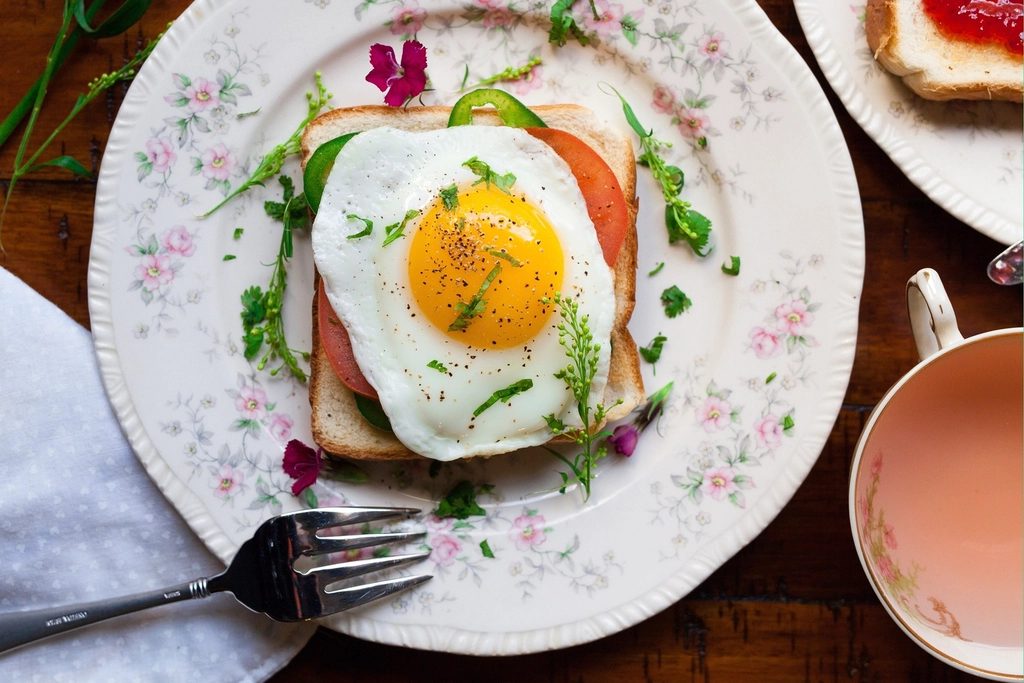
Eggs, at whatever hour you like. “Dinner” literally means break the fast — so this isn’t rule-breaking, it’s etymology.
”Breakfast for dinner” is a tautology
Start with the word, because the word settles the argument I’ve been having with people my whole life.
“Dinner” literally means “to break the fast.” It comes through Old French disner, from Vulgar Latin disieiunare — dis- (undo) + ieiunare (to fast). Undo the fast. Break the fast.
Which means “dinner” and “breakfast” are the same word twice, arrived at by two different routes, and when I eat eggs at nine at night I’m not breaking some rule. I’m obeying the older one. Dinner was breakfast, etymologically, before it drifted late.
(While we’re here — the popular claim that every language names it “break the fast” is wrong. French déjeuner and Spanish desayuno do. German Frühstück (“early piece”), Italian colazione, and Japanese 朝食 (“morning meal”) do not. It’s a Romance-language habit, not a human universal.)
So the next person who tells you breakfast food is for breakfast is welcome to take it up with Latin.
⚠ “The most important meal of the day” — the whole story is wrong
This is the correction I did not see coming, and it’s better than the myth it replaces.
You’ve heard the debunk: the phrase was invented by the cereal industry — by James Caleb Jackson, or John Harvey Kellogg, or a 1944 Grape-Nuts campaign — to sell you breakfast cereal. It’s a great story. Skeptics love it. It’s also wrong, and the way it’s wrong is the interesting part.
The research went to the Library of Congress newspaper archive and read the raw OCR of every hit rather than trusting the search index. Here’s what’s actually there:
3 November 1878, the New York Herald: “To a tramp breakfast is the most important meal of the day, but it usually takes him all day to get it.”
It’s a joke. A gag, syndicated nationally — which means the phrase was already a stock expression in 1878, familiar enough that a newspaper could riff on it and expect readers to get it.
Then:
- 1887 — the exact modern sentence, offered as earnest medical advice, in a syndicated Buffalo Express item that ran in twelve or more papers.
- 1885 — the same formula applied to lunch. It was a floating rhetorical cliché you could bolt onto any meal, not a breakfast slogan at all.
Now line the “culprits” up against 1878:
| The accused | Date | Verdict |
|---|---|---|
| Jackson / Kellogg coined it | — | Didn’t. The phrase predates the claim. |
| Lenna Cooper, 1917 | 39 years late | And misquoted — she wrote the hedged “in many ways it is the most important meal.” |
| The Grape-Nuts campaign, 1944 | 66 years late | The campaign is real — confirmed in a 1945 Post Cereals ad — but the slogan is “Eat a Good Breakfast — Do a Better Job,” not what’s usually quoted. |
| Edward Bernays, 1944 | NOT FOUND | A conflation. His bacon campaign was Beech-Nut, in the 1920s, and it rests on his own memoir. |
So here’s the honest version, and I think it’s sharper than the cynical one:
The marketing didn’t fabricate the slogan. It fabricated the slogan’s authority.
The cereal companies didn’t invent the phrase — they found a piece of folk wisdom already lying around, dressed it in a lab coat, and sold it back to us as science. That’s a subtler and more useful thing to know than “it was all an ad,” because it’s how most nutrition advice actually works.
⚠ One honest limit: 1878 is “attested by at least,” not a proven origin. British archives and Google Books were unreachable during the research, so an earlier use very likely exists. If you find one, I want to see it.
Did anyone actually skip breakfast?
The other story you’ll hear is that medieval Europe disdained breakfast — that eating before Mass or before labour was gluttony, and only the weak ate it.
That’s overstated, and two threads got tangled:
- The famous gluttony quote is Roman, not medieval — it’s been quietly relocated by a few centuries.
- The strongest medieval case is an argument from silence: breakfast isn’t much written about, so people conclude it wasn’t much eaten. That’s a weak inference about a meal eaten by people who didn’t write books.
What the record actually supports: breakfast was routinely eaten before 1500 — by labourers, monks, the old and the ill. What it lacked was prestige. It wasn’t a meal you bragged about. It was fuel, eaten by people who needed fuel — which, honestly, is still the truest thing anyone has said about it.
What actually changed was the clock. The Industrial Revolution put people on a fixed shift, and a fixed shift needs a fixed meal before it. Then coffee, tea, sugar and chocolate arrived — stimulants you could build a morning ritual around — and the Victorians made a performance of it. The full Irish is a direct product of that same Victorian moment, which is why that section and this one are cousins.
Battle Creek, briefly — and fairly
Two corrections, because this is where breakfast history gets sensationalized:
Jackson invented the cereal, not Kellogg. James Caleb Jackson made the first breakfast cereal; Kellogg copied it, got sued, and renamed his version “Granola.” Kellogg is the famous one because he was better at business, not because he was first.
And the corn flakes story needs care. Kellogg’s crusade against masturbation is real, and his actual writings are worse than the internet meme — I’m not going to soften that. But corn flakes were never marketed as an anti-masturbation food. The meme takes a true and genuinely disturbing fact about the man and attaches it to a product claim that didn’t exist. Both halves matter: don’t sanitize Kellogg, and don’t invent the advertising.
Is skipping breakfast actually bad for you?
Short answer: the evidence is much weaker than you’ve been told, and the way it’s weak is a small scandal.
Cohort studies — the observational kind — do associate breakfast-skipping with obesity. That’s where every headline comes from.
The randomized controlled trials — where you actually assign people to eat or skip breakfast and see what happens — are far less impressed. The Bath Breakfast Project and a 2019 BMJ meta-analysis on breakfast and weight change both land nowhere near the headline.
And then there’s the paper that makes this worth writing about. Brown, Bohan Brown & Allison (2013), in the American Journal of Clinical Nutrition, examined how the research literature treats the “proposed effect of breakfast on obesity.” Their finding:
Only 17% of the articles citing a key study cited it accurately.
Seventeen percent. That’s not a debate about nutrition — that’s a failure of citation, at scale, in a peer-reviewed literature, on the exact question everyone thinks is settled. The belief got ahead of the evidence and then the citations bent to fit the belief.
So eat breakfast if you like breakfast. I like it enormously and I’m going to keep eating it at nine at night. But I’m not going to tell you it’s the most important meal of the day, because a tramp joke from 1878 is doing more work in that sentence than any study is.
⚠ Two things the research couldn’t close, flagged rather than fudged: Snopes returned an HTTP error and the BBC was unreachable from the research environment, so the exact Snopes rating and the Caroline Yeldham quotes are second-hand relays here. They’re marked NOT FOUND and want reading directly before anyone leans on them.
What’s actually in this dive
The rest of it is the good part: my favorites, where I ate them, and how I make them.
The American core — the stuff I make constantly:
- Shrimp and Grits — Charleston and New Orleans, and why eating it in both isn’t the contradiction I thought.
- S.O.S. — on grits, on cheese grits, on fried cheese grit cakes, and the polenta comparison I still owe you. Plus the bacon-fat roux question, answered.
- Cornmeal — johnny cake the way I actually eat it, sugar and milk in a bowl, which I’ve never seen written down.
- French Toast — the open project. Cinnamon bread, the custards, the syrup. More questions than answers, and that’s the point.
- New Orleans — beignets and crêpes.
- Alaska — reindeer sausage, and the law that explains why it’s reindeer and not caribou.
The rest of the world — everywhere I’ve been lucky enough to eat in the morning:
- Mexico, Guatemala & Panama
- Jamaica, Barbados & Key West
- Venezuela & Uruguay
- Japan & China
- Vietnam
- Kuwait, Dubai & Qatar
- Amsterdam, Sweden & St Petersburg
- Somalia & South Africa
Some of those pages have gaps in them where my own story should go, and I’ve left the gaps showing rather than let anyone write a memory I didn’t have. They’ll fill in.
Sources & further reading
- Library of Congress, Chronicling America — the newspaper archive where the 1878, 1885 and 1887 attestations were found and verified against raw OCR. chroniclingamerica.loc.gov
- Brown, A.W., Bohan Brown, M.M., & Allison, D.B. (2013). Belief beyond the evidence: using the proposed effect of breakfast on obesity to show 2 practices that distort scientific evidence. Am J Clin Nutr. The 17% citation-accuracy finding.
- Betts, J.A. et al. — the Bath Breakfast Project RCTs.
- Sievert, K. et al. (2019). Effect of breakfast on weight and energy intake: systematic review and meta-analysis of randomised controlled trials. BMJ.
- Lenna Cooper (1917) — the hedged original: “in many ways it is the most important meal.”
- Post Cereals, 1945 advertisement — “Eat a Good Breakfast — Do a Better Job.”
- Full working notes, with every attestation and its OCR check, are in
02-inputs/breakfast-favorites-research/history-of-breakfast.md.
Comments (0)