Austria-Hungary: The Empire That Moved Sausages, and the American Pepper That Learned to Be Hungarian
Here is a thing I say to people who want to make a real paprika sausage, and it stops them cold every time: the spice you are about to reach for is not an old Hungarian spice. It is an American plant that took the long way around the world, sat in aristocrats’ flower beds for a century and a half being called poisonous, and only became Hungarian paprika — the sweet, deep-red, milled-to-order thing you buy in a tin with a Szeged address on it — in the 1800s, which in sausage terms is basically last Tuesday. The bright red color that most people think of as the ancient soul of Hungarian cooking is younger than the American Constitution.
That’s the correction this whole page is built around, and I want to do it justice, because it’s one of the cleanest examples in all of food history of how a thing can feel primordial and be recent. But paprika is only half the story. The other half is the machine that carried these sausages around — the Habsburg Empire, which for a few hundred years was one enormous, multiethnic, tariff-free marketplace, and which functioned, whether it meant to or not, as a distribution-and-standardization network for sausage. A link made in a Hungarian market town could pick up a German name in Vienna and end up written into an Austrian legal register, all without changing its recipe. Nowhere is that clearer than in the sausage I’ll spend the back half of this page on — the Debreziner, whose name traveled the exact opposite direction from what everybody assumes.
So: two engines. The pepper and the empire. Let me take the pepper first, because it’s the one people get wrong.
Paprika is not an ancient Magyar spice — it came over with Columbus
Start with the botany, because the botany settles it. Capsicum — the whole genus, every chile and bell pepper and paprika pepper on earth — is a New World plant. It was domesticated in the Americas thousands of years before any European saw it, and it did not exist anywhere in Europe, Africa, or Asia until Columbus. That’s not a soft claim or a “some scholars think.” It’s as solid as anything in food history: no Capsicum in the Old World before 1492, full stop.
Columbus and the Spanish carried peppers back across the Atlantic, and they reached Spain in 1493 — the second voyage’s return. That date is firm. From Spain, the pepper spread the way New World crops spread: slowly at first, ornamentally, a curiosity in gardens, and then along the trade and imperial routes that happened to be open. And the route that mattered for Hungary was not the obvious one. It did not come north overland from Spain through Western Europe and arrive in Budapest with a Spanish accent. It came up through the Ottoman Empire, from the southeast, through the Balkans, delivered by the Turks.
That’s the piece that surprises people, so let me sit on it. By the early 1500s the Ottomans had picked up the American pepper through their own Mediterranean contacts — Spanish, Italian, Greek traders — and as the Ottoman frontier pushed up into the Carpathian Basin, the pepper came with it. After the Ottomans broke the Hungarian army at Mohács in 1526 and settled into holding central Hungary for the next century and a half, the pepper had a highway straight into the Hungarian heartland. So the Turkish soldier and administrator and merchant is the delivery mechanism, and that is why for a long time Hungarians literally called it török bors — “Turkish pepper.” They knew perfectly well it came from the Turks. It’s only later that the memory got sanded down into “ancient Hungarian spice.”
I want to be honest about that 1526 date, because it’s the kind of tidy number that gets repeated as if it were a shipping receipt. Treat 1526 as convention, not proof. It’s a good peg — it’s the year of Mohács, the year the Ottoman grip on central Hungary begins in earnest, and it’s plausibly around when the pepper started arriving. But nobody has a customs record that says “paprika, first entry, 1526,” and the whole thing only works if the Ottomans had already obtained chiles from Mediterranean traders by then, which is itself an inference. The mechanism — American pepper, Ottoman frontier, 16th century — is rock solid and multiply attested. The specific year is soft. So I’ll tell you “16th century, via the Ottomans” with full confidence and hand you 1526 as a useful shorthand you shouldn’t tattoo on anything.
The 150 years when it was a weed for poor people
Here’s the part that really breaks the “ancient soul of Hungarian cooking” story. When the pepper first arrived, it wasn’t in the food at all. For roughly a century and a half it was an ornamental — grown in the walled gardens of aristocrats and monasteries for its pretty red fruit, widely believed to be poisonous, and generally treated as a botanical oddity rather than a seasoning. The nobility grew it to look at. They were not putting it in their sausages.
Who did start eating it was the peasantry, and for a reason that runs all through this history: money. Black pepper — real Piper nigrum peppercorn — was expensive, an imported luxury that came the long way from Asia and cost accordingly. This new red pepper, on the other hand, grew like a weed in any Hungarian kitchen garden and cost nothing but the effort. So the poor adopted it as a substitute for black pepper they couldn’t afford — “the poor man’s pepper,” almost precisely the way the poorer classes everywhere reached for the parts of the animal nobody rich wanted. It moved up the social ladder over generations, from peasant necessity to national pride, which is the opposite of the story usually told, where it descends from time immemorial as everyone’s shared heritage. It climbed. It started at the bottom.
The 19th-century wave that made it “Hungarian”
And then — this is the third distinct moment, and the one that actually created the product you buy — comes Szeged in the 1800s.
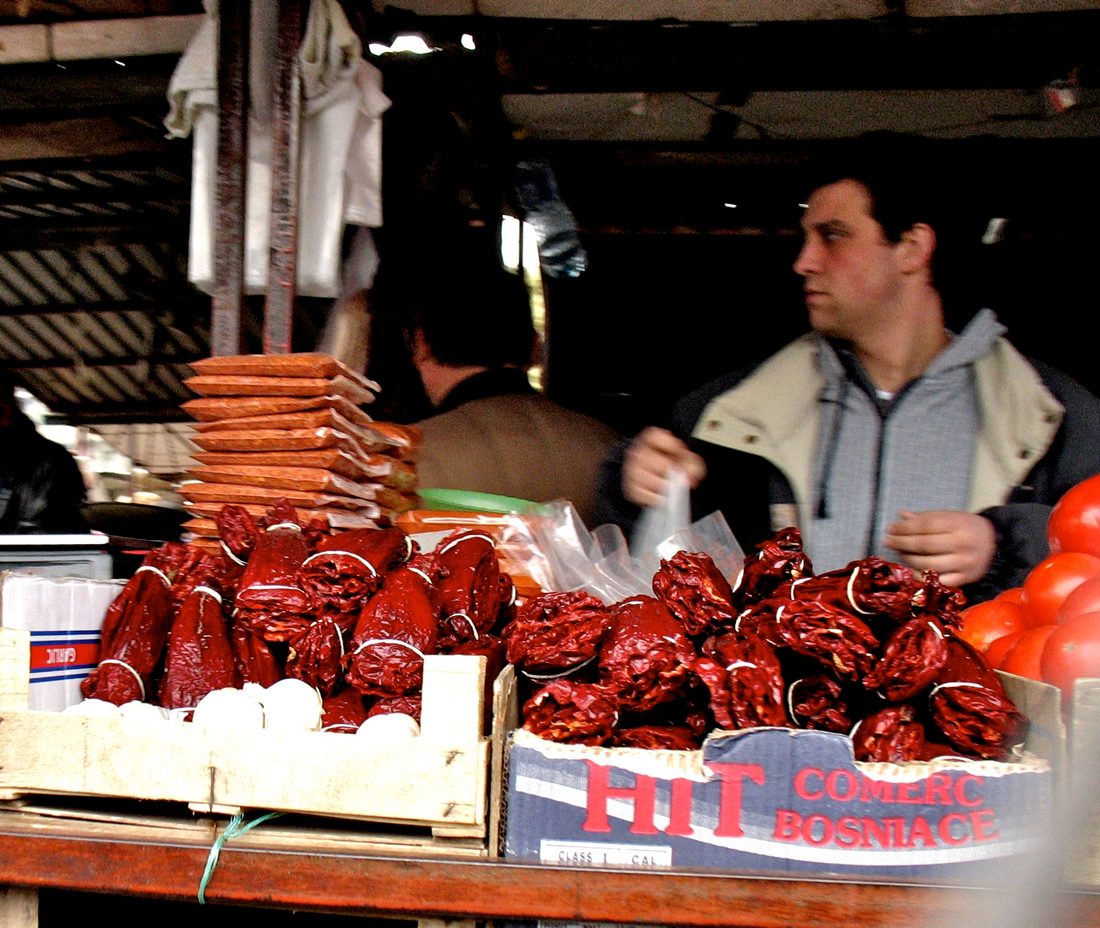
The paprika that arrived from the Ottomans and got eaten by peasants was, by and large, hot. The pungency lives in the seeds and the white internal veins (the placenta) of the pepper, where the capsaicin concentrates. If you grind the whole pod, you get heat. Sweet, mild, deep-red paprika — the kind that lets you use it by the tablespoon for color and flavor without setting your mouth on fire, the kind a paprika sausage actually needs — requires you to get the seeds and veins out before milling. And figuring out how to do that at scale is the innovation that turned a rustic peasant spice into an export commodity with a brand.
The town where it happened is Szeged, in the south of Hungary, along with its twin capital Kalocsa a little to the north. The story credits the Pálfy brothers of Szeged, in the mid-1800s, with working out a practical method to remove the pungent veins and seeds so mild grades could be produced consistently. I’ll flag that personal attribution as weak — the Pálfy-brothers name is repeated widely, but it has the flavor of a folk origin story, one clever pair of brothers standing in for what was surely a longer, messier, many-hands development. What is solid is the substance underneath the name: Szeged industrialized deseeding-and-grading at scale in the 19th century, and that’s what created sweet Hungarian paprika as a defined product. The first steam-powered paprika mill opened in 1859, and once you can mill mechanically and grade by pungency, you can produce tin after tin of consistent, mild, brilliant-red powder. That is the birth of “Hungarian paprika” as the world knows it — not in the mists of the Magyar past, but in a steam mill, during the same decades that gave us the railroad and the telegraph.
Today, “Ground paprika from Szeged” is a registered, protected Hungarian designation — a hungarikum, in their national register of cultural treasures. Which is a lovely irony to hold in your hand: the most protected, most “authentically Hungarian” spice in the country is a naturalized American immigrant that a Hungarian town taught to be sweet a hundred and fifty years ago.
Three waves, not one — the timeline that popular writing collapses
The reason this gets told wrong is that three separate events, spread across three centuries, get squashed into a single “paprika is ancient Hungarian” sentence. Pull them apart and the real shape appears:
| Wave | Roughly when | What actually happened | How solid is the date |
|---|---|---|---|
| 1. Arrival | 16th c. (conventionally 1526) | American Capsicum, already in Spain by 1493, is carried up the Ottoman frontier into the Carpathian Basin. Called török bors, “Turkish pepper.” | Mechanism SOLID; the year 1526 is WEAK, a convenient peg |
| 2. The long ornamental sleep | ~16th–18th c. (~150 yrs) | Grown for looks by aristocrats, thought poisonous; adopted by peasants as a free substitute for costly black pepper — “the poor man’s pepper.” | SOLID — multiple sources agree on this arc |
| 3. Becoming “Hungarian” | 19th c. | Szeged (with Kalocsa) works out deseeding-at-scale so sweet grades can be milled; first steam mill 1859. This is when the modern product is born. | Arc SOLID; the Pálfy-brothers personal credit is WEAK |
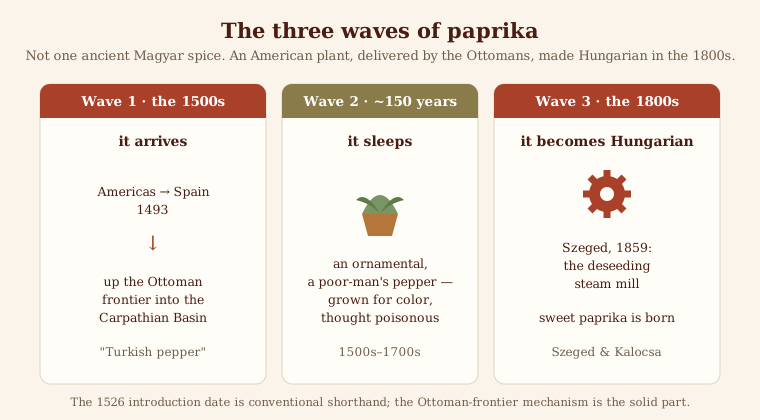
Read that table and the “ancient spice” instinct just dissolves. There’s a two-hundred-year gap between the pepper arriving and the pepper becoming the thing we mean by Hungarian paprika, and for most of that gap it was either a curiosity in a flowerpot or a cheap stopgap in a poor cook’s pot. None of which makes it any less Hungarian now — a food culture owns what it perfects, and Hungary perfected this. But the honest version is a much better story than the fake-ancient one, because it’s a story about immigration and poverty and 19th-century industry, which is what actually made most of the food any of us eat.
I’ll pick this thread up again in the wider-world Columbian-exchange section, because paprika is only one strand of an enormous swap — the same ships that carried peppers east carried tomatoes and corn and potatoes and chiles into cuisines that now can’t imagine themselves without them. Hungarian paprika, Italian tomato, Korean gochugaru, Indian and Sichuan chile heat — none of it is older than 1492, and all of it feels eternal. Paprika is just the cleanest sausage-shaped example.
What paprika did inside the sausage
Before I get to the specific sausages, the practical question a maker actually cares about: what does the pepper do once it’s in the meat? Two things at once.
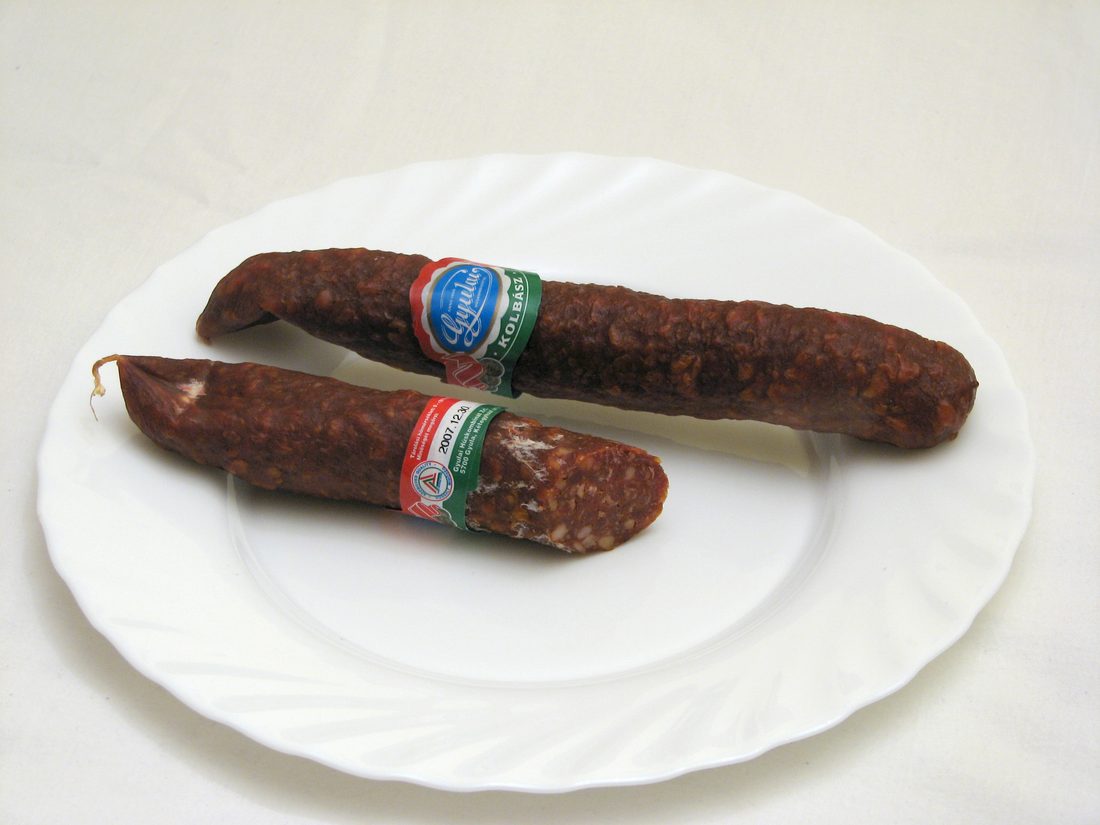
The obvious one is color and flavor. Good Hungarian paprika gives a cured sausage that deep, almost lacquered red and a sweet, faintly fruity, earthy warmth that black pepper simply cannot. It’s a different axis of seasoning entirely — and because the good grades are mild, you can use a lot of it, by the spoonful, building color and body without building heat. A Csabai or a Gyulai is red all the way through because it’s carrying serious paprika.
The second thing is subtler and I want to tag it carefully. Ground dried Capsicum has some mild antimicrobial activity — the compounds in the pepper are modestly hostile to certain spoilage and pathogenic bacteria, which in a cured, air-dried sausage is a small helpful hurdle stacked alongside the salt and the cure and the drop in water activity. That’s real chemistry. But you’ll see it framed as the reason paprika was adopted — “they put paprika in to preserve the meat” — and I’d tag that motive as weak. It’s plausible, it’s stated by secondary sources, and the effect exists, but adoption was surely also, maybe mostly, about taste, color, and economy — it was cheap, it was local, it was beautiful, and it tasted good. Reaching for the antimicrobial explanation as the driver is the same instinct that makes people over-explain every food tradition as secret food-science wisdom. Sometimes people used the free red pepper because it was free and red and delicious. Give the flavor and the economy their due; treat the preservation angle as a nice bonus that may have helped, not the hidden true cause.
With that in hand, the sausages themselves. These are the great paprika sausages of the Hungarian southeast, and each one teaches something slightly different.
Csabai: the sausage born the day paprika replaced black pepper
Csabai kolbász comes from Békéscsaba, a town in the southeast of Hungary, and its whole personality is paprika — it’s a spicy, coarse, paprika-heavy dry sausage, red through and through. Its origin is placed in the early 19th century, right in the window when the region’s cooks were making the switch, and there’s a line about it I love because it encapsulates the entire regional shift in six words: Csabai was “born when black pepper was replaced by spicy paprika.”
That’s a WEAK-tagged narrative flourish rather than a documented birth certificate — I wouldn’t put a year on it — but as a shape it’s exactly right, and it maps onto everything I just told you about the economics. The expensive imported peppercorn gives way to the cheap local red pepper, and in the handoff a new sausage is defined, one built around the paprika rather than merely dusted with it. Csabai carries PGI protection (Protected Geographical Indication), granted in 2010 by the EU, which ties the name to the place. When I make a hot paprika dry sausage on my own bench, Csabai is the tradition I’m working in — coarse grind, serious paprika, enough garlic to know it’s there, cured and dried until it slices clean and red. If you want to hunt for a version, search the collection for Csabai.
Gyulai: the sausage that won a gold medal in Brussels
A short drive from Békéscsaba sits Gyula, and its sausage, Gyulai kolbász, is the more refined cousin — the techniques were codified in the 1880s, it’s traditionally beech-smoked, and it’s a little milder and finer than the assertive Csabai. Same region, same paprika heritage, different personality, which is exactly the kind of close-quarters variation you get when a food tradition matures: two neighboring towns each perfect their own version of the regional idea and then defend it fiercely.
Gyulai has a genuinely charming credential: it won a gold diploma at the 1935 Brussels World Exhibition. A Hungarian market-town sausage taking gold at a world’s fair is a nice marker of how far these paprika sausages had traveled in reputation by the early 20th century — from peasant thrift food to internationally awarded product in a couple of generations, on the back of that 19th-century Szeged transformation. Like Csabai, Gyulai holds PGI status, granted 2010. The pair of them — Csabai and Gyulai, hot and smoky-mild, Békéscsaba and Gyula — are the twin poles of the Hungarian paprika-sausage tradition, and it’s worth knowing them together because the contrast teaches you the range.
Debreziner: one sausage, two nationalities, and a name that traveled backward
Now the sausage I’ve been building toward, because it’s the perfect illustration of the second engine — the empire as a distribution network. The Debreziner is named for Debrecen, a big market city in eastern Hungary; the Hungarian product is the Debreceni páros kolbász, the Debrecen “pair” sausage, sold in linked pairs, mildly smoked and strongly seasoned with paprika. And it’s a declared hungaricum — officially enshrined as a Hungarian cultural treasure.
But say the word “Debreziner” to an Austrian, and they’ll picture a sausage on a Vienna street cart, and they’ll think of it as theirs — a fixture of Austrian sausage-stand culture. So which is it? Hungarian or Austrian? The answer is both at once, and how it came to be both is the whole lesson.
Here’s the part people get backward. The instinct is to assume the name flowed the way tourism flows — that Austrians named a sausage after a Hungarian city the way you might name a dish after a place you visited. But it went the other direction, and it went through commerce. Debrecen held enormous trade fairs, among the most important in the region, and German-speaking merchants came to those fairs to do business. They ate the local sausage, they liked it, and they carried the reputation and the rough recipe home with them. In German-speaking lands the Debrecen sausage became the “Debreziner” — the German rendering of “from Debrecen” — and it spread through the German-speaking parts of the empire on the strength of those merchants’ word of mouth. By the 19th century it was being sold on Vienna’s street carts, and it settled into Austrian food culture so thoroughly that it stopped feeling foreign.
The name didn’t get put on the sausage by outsiders. It got carried out of Hungary by the people who came to buy it, and it kept the origin city right there in the word. “Debreziner” is a Hungarian sausage wearing a German spelling of its Hungarian hometown, distributed across an empire by the merchants who fell for it at a Hungarian fair.
And then the empire did the thing empires with good bureaucracies do: it wrote it down. The Debreziner formally entered the Austrian sausage codex — the Codex Alimentarius Austriacus — in 1921. So here is a sausage that is simultaneously a Hungarian hungaricum and an entry in the Austrian food register, defined and standardized on both sides of a border that, by 1921, the collapse of the empire had actually drawn between them. It is a Hungarian sausage and an Austrian sausage at the same time, and it got that way because for centuries there wasn’t a hard border in the middle — there was one giant marketplace, and the sausage, its reputation, and eventually its legal definition flowed freely across it. If you want to make one, look for a Debreziner recipe — it’s a great introduction to a mildly smoked, paprika-forward cooking sausage.
The Habsburg Empire as a sausage-distribution machine
Step back from the single sausage and you can see the general principle, and it’s the connective tissue of this whole page. For a few hundred years the Habsburg Empire was an enormous, multiethnic, more-or-less internally open market stretching across Central Europe — Austrians, Hungarians, Czechs, Slovaks, Poles, Croats, Serbs, Romanians, Italians, and more, all under one crown, with merchants and fairs and eventually railroads moving goods and people across the whole span with relatively little friction.
For a regional food like a sausage, that’s a superhighway. A link perfected in one market town could spread its name and its recipe across a vast space in a way it never could have if every little principality had been a walled-off market with its own tariffs and borders. The Debreziner is the clean case study, but the mechanism was general: the empire let sausages travel, let their names mutate as they crossed language lines, and — because the Habsburg state had a serious appetite for administration — let them get codified, written into codes and registers that fixed what a given named product was supposed to be. That’s the same codification instinct I wrote about on the Germany page, where the German gift to sausage turned out to be not the sausage but the filing system. Austria-Hungary had that instinct too, and the Codex Alimentarius Austriacus is where you see it — a sausage register maintained by a bureaucracy that wanted, as bureaucracies do, for a word to mean one definite thing.
It’s worth appreciating what a lucky arrangement this was. Two different imperial systems handed this region first its defining spice and then its distribution network — the Ottoman frontier brought the American pepper in, and the Habsburg internal market carried the sausages it flavored across a continent. The paprika sausage of the Hungarian southeast is a product of both.
What this region actually contributed
So let me close where I always want to close, with what’s actually true once you strip the romance off.
The Austro-Hungarian sausage tradition did not hand down an ancient, unchanging paprika heritage from the depths of the Magyar past. What actually happened is more interesting and more human: an American plant crossed the Atlantic with Columbus, rode the Ottoman frontier up into the Carpathian Basin as “Turkish pepper,” slept for a hundred and fifty years as an ornamental and a poor man’s substitute for costly black pepper, and was then taught to be sweet and milled to a fine consistent red by a 19th-century Hungarian town — three distinct waves, three centuries apart, that popular writing squashes into one false “ancient” moment. And once that spice existed, the Habsburg Empire’s open market and administrative machinery carried the sausages it flavored across a huge multiethnic space, letting a Hungarian sausage pick up a German name in Vienna and land in an Austrian legal codex, a Hungarian hungaricum and an Austrian register entry at once.
The teaching payoff, the thing I’d want a fellow maker to walk away with: the pepper in your paprika sausage is doing two jobs at once — laying down that unmistakable color and sweet, fruity, earthy flavor and contributing a small antimicrobial hurdle to the cure — but don’t let anyone tell you the second job is the reason it’s there. It’s there because it’s gorgeous and delicious and, once upon a time, free, and those are reasons enough for any spice to conquer a cuisine. Everything else — the preservation bonus, the world’s-fair medals, the protected designations, the codex entries — came afterward, layered on top of a poor cook’s clever, beautiful substitution for a pepper she couldn’t afford. That’s the honest heart of it, and it’s a better story than “ancient Magyar spice” every single time.
This is part of the old-world history of sausage. Next: Italy, where the salami tradition turns dry-curing into an art and a single word covers a whole peninsula of regional obsessions. See also Poland and the East, where “kielbasa” turns out not to be a sausage at all but the Polish word for one, and the Balkans and Turkey, where the same Ottoman line that delivered paprika delivered the caseless grilled sausage. The whole family and how these histories connect is on the family tree.
Comments (0)