Spain and Portugal: The Sausage That New-World Chili Repainted
Iberia is the one page in this whole history where I can point to a single date and say: everything on one side of that line is a different color than everything on the other. The date is 1493, the year Columbus’s second voyage brought New-World chilies back to Spain, and the ingredient those seeds eventually became — dried, ground, and folded into pork — is pimentón, Spanish paprika. Before it, an Iberian sausage was either white or black. White if it was meat, black if it was blood. There was no red sausage, because the thing that makes a sausage red hadn’t crossed the ocean yet.
Then it did, and it rewrote the map so completely that today the defining ingredient of the most famous Spanish sausage on earth is a plant that wasn’t on the peninsula when Columbus set sail. It’s rare in food history to get a change this total that you can date this precisely. Iberian sausage is the strongest corner of my collection — chorizo, morcilla, salchichón, fuet, sobrasada, a Catalan botifarra — and every one of them sits on one side or the other of the pimentón line. So let me draw the line, and then walk the sausages up to it.
No pimentón, no chorizo
Here is the cleanest way I know to state what pimentón did. A chorizo without pimentón is not a mild chorizo. It is not a chorizo at all. It has its own name — chorizo blanco, white chorizo — precisely because taking the paprika out changes the category, not just the seasoning. The red isn’t a garnish on the idea of chorizo. The red is the idea of chorizo. No pimentón, no chorizo.
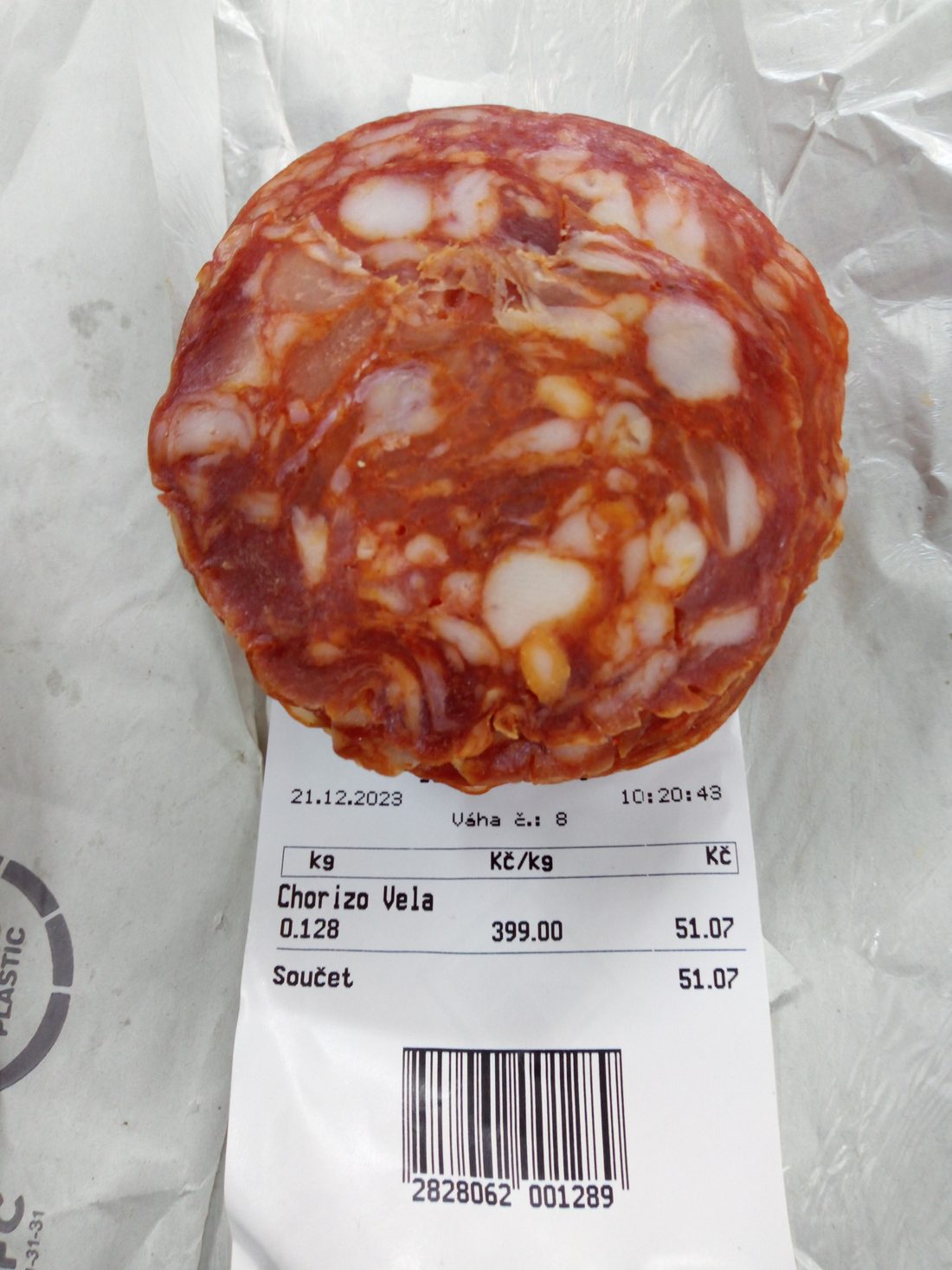
One distinction trips up half the people who cook chorizo in America, and I flag it every time. Spanish chorizo and Mexican chorizo are not two versions of one sausage — they’re two categories that share a name. Spanish chorizo is dry-cured, firm, sliceable, hung for weeks; you eat it like salami. Mexican chorizo is fresh, soft, bulk, crumbled into a pan; you cook it the day you make it. Both are red, both lean on chili — but the Mexican one gets its red from New-World chilies used fresh and various, the way Mexico always used them, while the Spanish one gets it from that same chili domesticated into one dried-and-ground product, pimentón. Same ocean-crossing seed, two different destinations. A recipe that treats them as interchangeable has collapsed two things a Spaniard and a Mexican would never confuse.
I make a dry-cured chorizo the Spanish way, and the pimentón in it isn’t a flavor decision I get to soften. It’s what makes the sausage the sausage.
The pimentón line runs straight through the flavor
Once you accept that pimentón defines the sausage, the next question is which pimentón — because there isn’t one. There’s a fork, and it sorts Spanish sausage by flavor and region as cleanly as the paprika line sorts it by era.
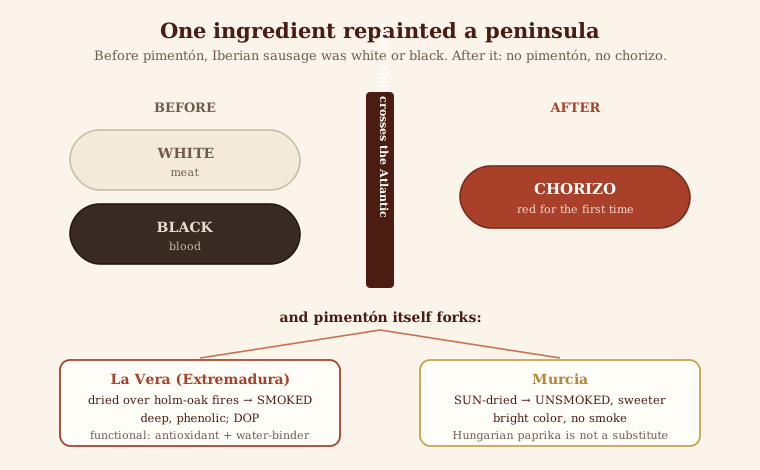
The fork is smoke. On one side is Pimentón de la Vera, from the La Vera valley in Cáceres, Extremadura, where the peppers are dried the old local way — over slow fires of holm-oak wood, for days, turned by hand — so the pimentón comes out smoked before it ever touches meat. That smoking is its protected trait; it carries a DOP and tastes like it, deep and resiny, a little campfire under the sweet. On the other side is Murcia, on the Mediterranean coast, where the peppers are sun-dried instead — cleaner, brighter, sweeter, no woodsmoke. Same pepper, same grind, wholly different sausage, because one spent its drying days in oak smoke and the other in the sun.
That is the flavor fork of Spanish charcuterie, and you can taste which side of it a chorizo was built on. A La Vera chorizo tastes smoked whether or not the sausage itself ever saw a smokehouse — the smoke rode in on the spice. A Murcia chorizo tastes of sweet pepper and pork and nothing woody. I choose that fork before I choose anything else in a batch, because it decides the whole personality of the finished sausage.
Pimentón is not just seasoning — it does a job
This is the part I most want a fellow maker to take away, because it changed how I think about the spice. Pimentón in a dry-cured chorizo is functional. It is not there for flavor alone. It is doing preservation work.
Think about what a dry-cured sausage has to survive. It hangs for weeks in air, its fat exposed, slowly losing water. The enemy the whole time is rancidity — the fat oxidizing into that stale-crayon taste that ruins a cure. Pimentón, at the levels a real chorizo uses — 2.5 to 7 percent of the meat by weight, a lot of spice, far more than you’d use just to color something — acts as an antioxidant: the phenolic compounds in the smoked, dried pepper slow the fat from oxidizing over the long hang. It also binds water, which helps the paste cure evenly instead of case-hardening. The red pepper isn’t decorating the sausage; it’s helping it not spoil while it dries. That’s why chorizo uses so much of it — you’re not seasoning to taste, you’re dosing to protect.
Two consequences fall straight out of that, and both of them are corrections I’ve had to make to my own understanding over the years.
First: the heat in a chorizo comes from pimentón, and only from pimentón. A hot chorizo — chorizo picante — is hot because it was made with picante (hot) pimentón instead of dulce (sweet). You do not add cayenne or fresh chili or chili flakes. The heat rides in on the same spice that’s already doing the coloring and the preserving; sweet and hot are just two grades of the identical ingredient. A recipe that adds chili powder on top of the pimentón for heat isn’t a Spanish recipe anymore — it’s picking sweet pimentón and then patching it, when the traditional move is to reach for the picante grade in the first place.
Second — and this is the one that costs people money — Hungarian paprika is not a substitute. They look identical in the jar; both are ground dried red pepper. But Hungarian paprika is bred and processed for color, and it brings almost none of the phenolic compounds that make Spanish pimentón do antioxidant work. Swap it in and you get a sausage that’s the right color and wrong everywhere else: no smoke if you meant La Vera, and, worse, none of the preservation chemistry the pimentón is supposed to be carrying. If a recipe says pimentón, it means pimentón — de la Vera or de Murcia — and the substitution isn’t a matter of taste, it’s a matter of whether the spice can do what the recipe is quietly relying on it to do.
Chorizo versus salchichón: paprika versus peppercorn
Now for the cleanest correction on the whole page, the one I lean on to explain the entire Spanish dry-sausage family in a sentence.
You’d think, given everything above, that all Spanish dry sausage is red. It isn’t — and the sausage that isn’t shows you exactly what pimentón does, by leaving it out. Salchichón is a Spanish dry-cured pork sausage seasoned with black pepper, not pimentón. That’s the whole difference. Same pork, same casing, same long hang, same dry-cure discipline — but where chorizo reaches for red paprika, salchichón reaches for peppercorns, and comes out pale, marbled, pepper-flecked, tasting of cured pork and black pepper rather than smoked chili.
| Chorizo | Salchichón | |
|---|---|---|
| Defining spice | Pimentón (paprika) | Black pepper |
| Color | Red | Pale, pepper-flecked |
| The one-line rule | ”No pimentón, no chorizo” | Chorizo minus the paprika, plus the peppercorn |
| Exemplar | Chorizo (dozens of regional forms) | Salchichón de Vic (Catalonia) |
| Era | Post-1493 (needs New-World chili) | Older idea — a pork-and-pepper cure needs no New World |
The exemplar is Salchichón de Vic, from the Catalan town of Vic, protected and the sausage people mean when they want to show you a great Spanish salchichón. I make a salchichón on the Vic model, and I teach it alongside chorizo because the two are a controlled experiment: hold everything constant, swap the pimentón for black pepper, and you’ve turned one classic sausage into another. Chorizo versus salchichón is paprika versus peppercorn. See the family that way and the whole Spanish deli case stops being a jumble and becomes variations on two spices.
The low-acid correction: Iberian dry sausage is not supposed to be tangy
Before I leave the dry sausages, there’s a correction that applies to salchichón, to fuet, to the whole Iberian dry-cured line, and to the closely related French saucisson — and it’s one that American recipes get wrong so consistently that I think of it as the signature mistake.
Traditional Iberian dry sausage is deliberately low-acid. It is not tangy. The finished pH sits up around 5.2 to 5.4 — barely below fresh meat, a whisper of tang at most. The flavor you’re chasing is deep, sweet, nutty, porky, funky from the mold and the time. It is not the sharp sourness of a Genoa salami or an American summer sausage.
Here’s where it goes wrong. A huge amount of American dry-sausage instruction is built around fast fermentation — pitch a heavy dose of starter culture, feed it dextrose, hold it warm, and drive the pH down fast and hard into the low 4s to get a safe, tangy sausage quickly. That’s legitimate, and for some sausages it’s exactly right. But apply it to a chorizo or a fuet or a salchichón and you’ve made a tangy sausage where the tradition is a sweet one. The traditional versions ferment slowly and gently if at all — many use no starter culture whatsoever, relying on the native flora, the salt, the pimentón’s antioxidant help, and weeks of patient hanging in cool, humid air. The sourness American makers prize is precisely the flavor the Iberian tradition is trying not to have.
I’ve made this mistake and tasted the result, and now when I build a fuet or a Vic-style salchichón I keep the acid low on purpose — low culture or none, cool and slow, long hang. If your Iberian sausages keep coming out tangy off an American recipe, that’s not you failing to hit the recipe. That’s the recipe pointing at the wrong target.
Fuet, and the white bloom that’s supposed to be there
Fuet is Catalonia’s thin one — a slender, dry-cured pork sausage, seasoned lightly (this is a black-pepper sausage, cousin to salchichón, not a pimentón one), hung until it’s firm enough to snap. Its regional names are worth knowing if you read old Catalan sources — secallona, espetec, somaia — but fuet is the one that traveled.
The detail I want on the record, because it scares beginners into throwing away good sausage, is the white surface mold. A properly made fuet develops a fine, powdery, chalk-white coat of mold on the casing as it dries, and that is supposed to happen. It’s a benign white Penicillium-family mold, the same family that whitens a good French saucisson, doing useful work — it crowds out the molds you don’t want, buffers the sausage against drying too fast, and adds to the flavor. What you reject is fuzzy, colored mold — green, black, anything aggressive or growing in patches — which is a contamination flag, not the friendly bloom. I make fuet, and teaching someone to tell the good white coat from the bad colored fuzz is one of the first things I do, because the instinct to wipe off all mold is exactly backward.
Morcilla: the black sausage, and a correction to make
Now cross back over the pimentón line to the other side — the black sausage, the one that was there before Columbus and owes the New World nothing.
Morcilla is Spanish blood sausage, and I have to correct a common framing here, because it’s wrong. You’ll sometimes see morcilla sorted the way chorizo is — as if pimentón were the dividing line within it too, smoked versus sweet. It isn’t. Morcilla is not defined by pimentón; morcilla is defined by blood. Some morcillas have pimentón, some don’t, some are smoked, some aren’t — but none of that is what makes a morcilla a morcilla. The blood is. Pimentón divides chorizo; it does not divide morcilla, because morcilla’s whole identity is on the far side of the pre-Columbian line, in the oldest and most preservation-driven sausage there is — the blood sausage that runs back through this whole history to Homer’s roasting paunch on the origins page.
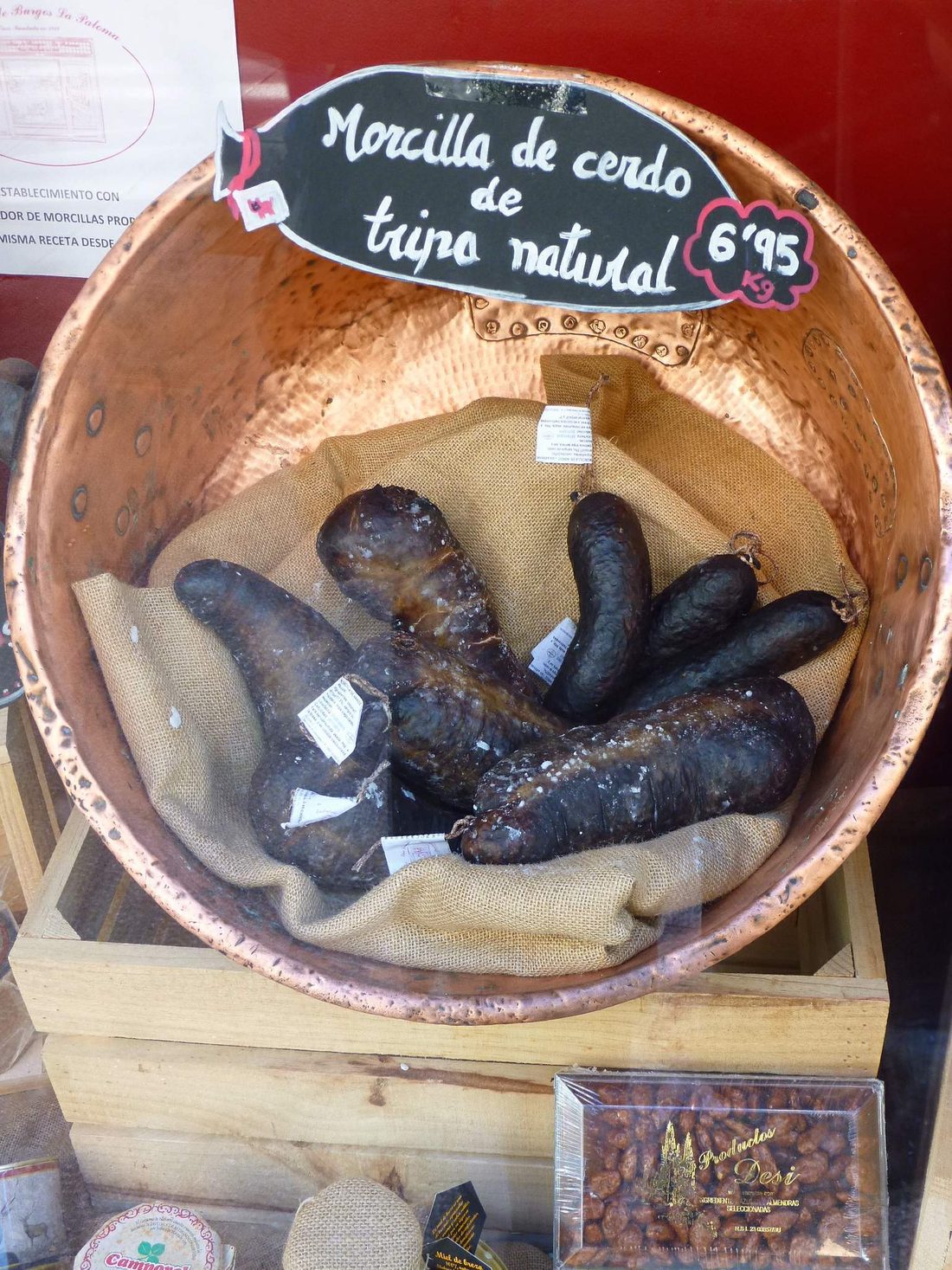
The one I make and know best is Morcilla de Burgos, and it makes the point beautifully, because it contains no meat at all. Its makeup is almost a shock: at least 30 percent onion — specifically the local Horcal onion, sweet and prized for exactly this — between 10 and 40 percent rice, and more than 9 percent blood, plus fat and spice and salt. Onion, rice, blood, and fat, in a casing. That’s it. It’s a blood-and-grain sausage, kin in structure to the kaszanka and kishke of the East, and it proves the point about what morcilla is. Stand a Burgos morcilla next to a chorizo and they share a shape and a country and almost nothing else: one is a meat sausage colored and preserved by New-World chili, the other a meatless blood-and-rice sausage that would have tasted exactly the same to someone in Burgos five hundred years before chili existed. I make a Morcilla de Burgos, and I love it precisely because it’s a window into pre-pimentón Iberia — the black sausage the red revolution never touched.
Sobrasada: the exception that proves every rule
Every good rule has one sausage that seems to break it, and for Iberia that’s sobrasada, from Mallorca in the Balearics. It carries a PGI, and it’s made of raw-cured pork and pimentón — so far, ordinary. Then it does the thing that makes it impossible: it’s spreadable. Soft. You don’t slice a sobrasada; you scoop it, or spread it on bread like a paste. It’s the Balearic cousin of Calabrian ‘nduja, that other soft, spreadable, chili-red pork paste — the two of them the great Mediterranean exceptions to the idea that a cured sausage has to be firm.
Here’s why sobrasada is the exception that proves the rule rather than breaking it. A normal dry sausage succeeds by losing water and firming up — 30, 35, 40 percent weight loss, until it’s hard enough to slice. Sobrasada is built to fail to firm up on purpose. It’s made with an enormous fat fraction — 40 to 70 percent fat — and the cure is stopped early, around 30 percent weight loss, right where a normal sausage would just be getting started. You halt it while it’s still soft, because for this one sausage soft is the finished state. Its success condition is the exact thing that would be a defect in a fuet. Every rule about dry-curing — lose water, firm up, slice it — sobrasada inverts deliberately, and it’s protected and beloved for it.
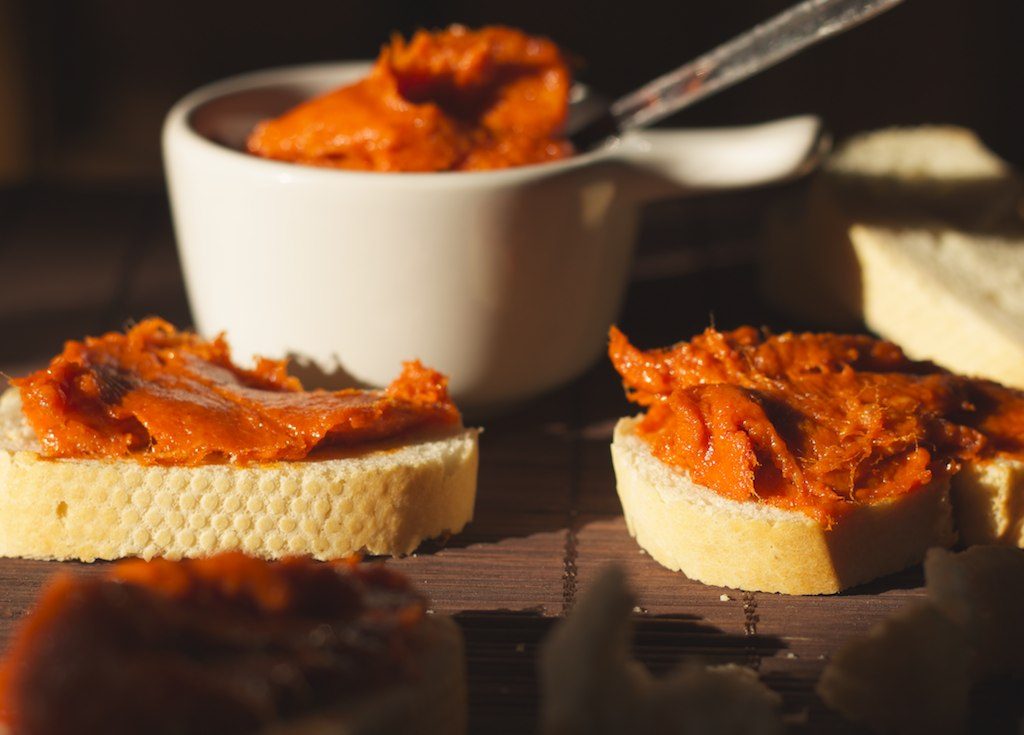
The pimentón dates the modern sobrasada, too. It’s been on Mallorca since the 16th century, but the paprika went in during the 18th — before that it was a paler fat-and-pork paste, and it was the addition of pimentón (the local Tap de Cortí pepper) that turned it the deep brick-red it is today. So even sobrasada, the exception to everything, sits downstream of the pimentón revolution — it just joined two centuries late. I make a sobrasada, and the hardest thing to accept the first time is that you’re supposed to stop — the softness in the middle isn’t underdone, it’s the point.
Portugal: chouriço, linguiça, and a paprika claim I won’t repeat
Cross the border west and the pimentón story keeps going — Portugal is just as committed to smoked, paprika-and-garlic pork sausage — but it speaks with an Atlantic accent and adds a couple of sausages Spain doesn’t have.
The two workhorses are chouriço and linguiça, and the reliable distinction is thickness: chouriço is the thicker sausage, linguiça the thinner, more slender one. Both are smoked, both cured with wine and garlic as much as with paprika — that wine-and-garlic cure is the Portuguese signature, the thing that makes a Portuguese sausage taste Portuguese rather than Spanish. I keep several linguiça in my collection, and it’s one of the corners of Iberian sausage I’m fondest of.
Now the honest hedge, because a fellow maker deserves it. You’ll read in a lot of sources that linguiça is the more paprika- and garlic-forward of the two — that the slimmer sausage carries the bigger pimentón punch. I’ve seen it stated confidently, seen it stated the other way, and seen sources that make the split about thickness and smoke rather than paprika at all. The sources genuinely conflict on which sausage has more paprika, so I won’t hand you a rule I can’t stand behind. What I’ll stand behind is what everyone agrees on: chouriço is thicker, linguiça slimmer, both smoked, both cured with wine and garlic. The paprika-ratio claim is folklore-grade — repeat it as “some say,” if at all, and don’t build a recipe on it.
Portugal’s blood sausage is morcela — the direct cousin of Spanish morcilla — and the detail worth carrying is regional: the Azorean version contains rice, the same blood-and-grain construction we just saw in Burgos, on a mid-Atlantic island. The black sausage is conservative that way: wherever it turns up, it’s blood and fat and often a cheap grain, doing the oldest job in the book.
Alheira: the sausage that was engineered to lie
I’ve saved the best story for last, and it’s not really about pimentón at all — it’s about what a sausage can be for. It ties directly to the kosher and halal page, whose whole theme is what happens when a food law deletes pork and blood, so I’ll tell it here without repeating that page’s engineering.
The sausage is alheira, from Trás-os-Montes in Portugal’s mountainous northeast, with the most celebrated version from Mirandela, which now carries a PGI. The origin story goes like this. Portugal forced the mass conversion of its Jews in 1497; the Portuguese Inquisition was established in 1536. Conversion on paper didn’t end suspicion, and in the mountains one of the ways the Inquisition and the neighbors watched for Jews still secretly keeping their faith was to look at the rafters: every Old-Christian household hung its smoked pork sausages — chouriço, linguiça — up to cure in plain view, and a house with no pork sausages hanging was a house under suspicion.
So — the story goes — the conversos of Trás-os-Montes made a sausage that would hang in the rafters and look exactly like chouriço but contain no pork. They built it from poultry and game — chicken, sometimes veal or venison — bound with bread and seasoned heavily with garlic. It smoked and hung like a pork sausage, fooled the eye, and let a family display the tell-tale cured sausages an inquisitor expected to see while eating something they were actually permitted to eat. The disguise is the recipe. You can read it in the name: alheira comes from alho, Portuguese for garlic — the seasoning that stepped in where pork’s fat and flavor used to be. The same story attaches to farinheira, the flour-and-fat sausage of the same region — another meatless link, another camouflage, same century, same logic.
That’s a wonderful story, and I lean toward believing it, but I’ll hedge it honestly, because you deserve to know where the ground is soft. The origin tradition is documented thickly in food writing and cultural history. What it’s thin on is a 16th-century paper trail — nobody can hand you a dated Inquisition-era record that says this sausage was invented as a disguise. It’s an oral and culinary tradition of real weight, not an archival fact, and I’d rather tell it to you as the celebrated, plausible origin story it is than pretend there’s a document behind it I haven’t seen.
And one more honest correction, because this one gets over-claimed: it’s often said flatly that “alheira has no pork” or that eating one “proves” someone’s secret faith. The precise version is narrower. Alheira was originally pork-free by design, as camouflage — but modern commercial alheira very often does contain pork. The disguise did its job centuries ago, the danger passed, and the sausage became simply a beloved regional food that makers now build however they like. The meatless origin is history, not a guarantee about the alheira in a Portuguese shop today. Read the label, not the legend.
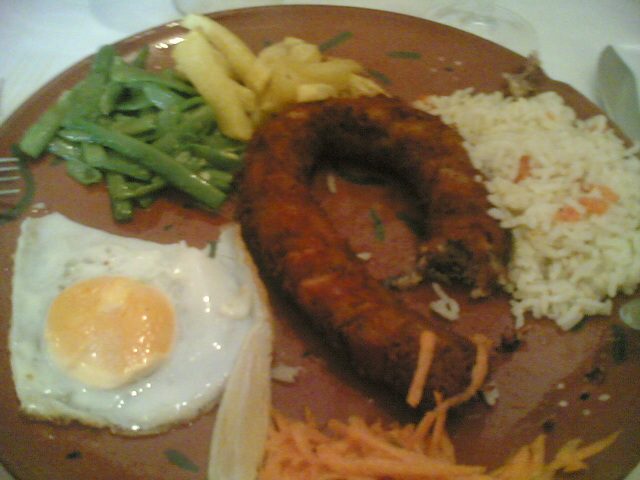
What Iberia teaches
Step back and the peninsula tells one clean story twice. Addition built the red half: a New-World chili crossed the ocean, became pimentón, and drew a line through Iberian sausage so total that a sausage on the wrong side of it isn’t even called by the same name — and it did that not as decoration but as function, coloring and preserving and, in its picante grade, spicing, all at once. Subtraction built the alheira: a food law deleted pork, and the hole left behind grew a sausage engineered to look like the thing it wasn’t allowed to be. One a triumph of a new ingredient, the other a triumph of hiding an absent one — and Iberia has both, a few hundred miles apart.
The pimentón thread doesn’t stop at the Portuguese coast, either. That same New-World chili kept traveling — into the Balkans and the wider world, wherever Iberian ships carried it — and I pick the thread back up in the wider-world history, where paprika keeps redrawing sausage maps a long way from Spain. The family tree lays out the shape of all of it in one view; and if you want to make any of these, the recipe collection has the chorizo, salchichón, fuet, morcilla, and sobrasada I’ve been talking about, waiting to be built.
This is the fifth page of the old-world history of sausage. Next: Britain, where the sausage is defined not by a meat but by a binder — rusk, the Cumberland coil, the black pudding, and the corrected myth of the “banger.” The whole family, and how these histories fit together, lives on the family tree; the master hub is here.
Comments (0)