Coffee · 29 of 35
The Coffee Market: the C Price, the 2024–25 Spike and What a Farmer Is Paid
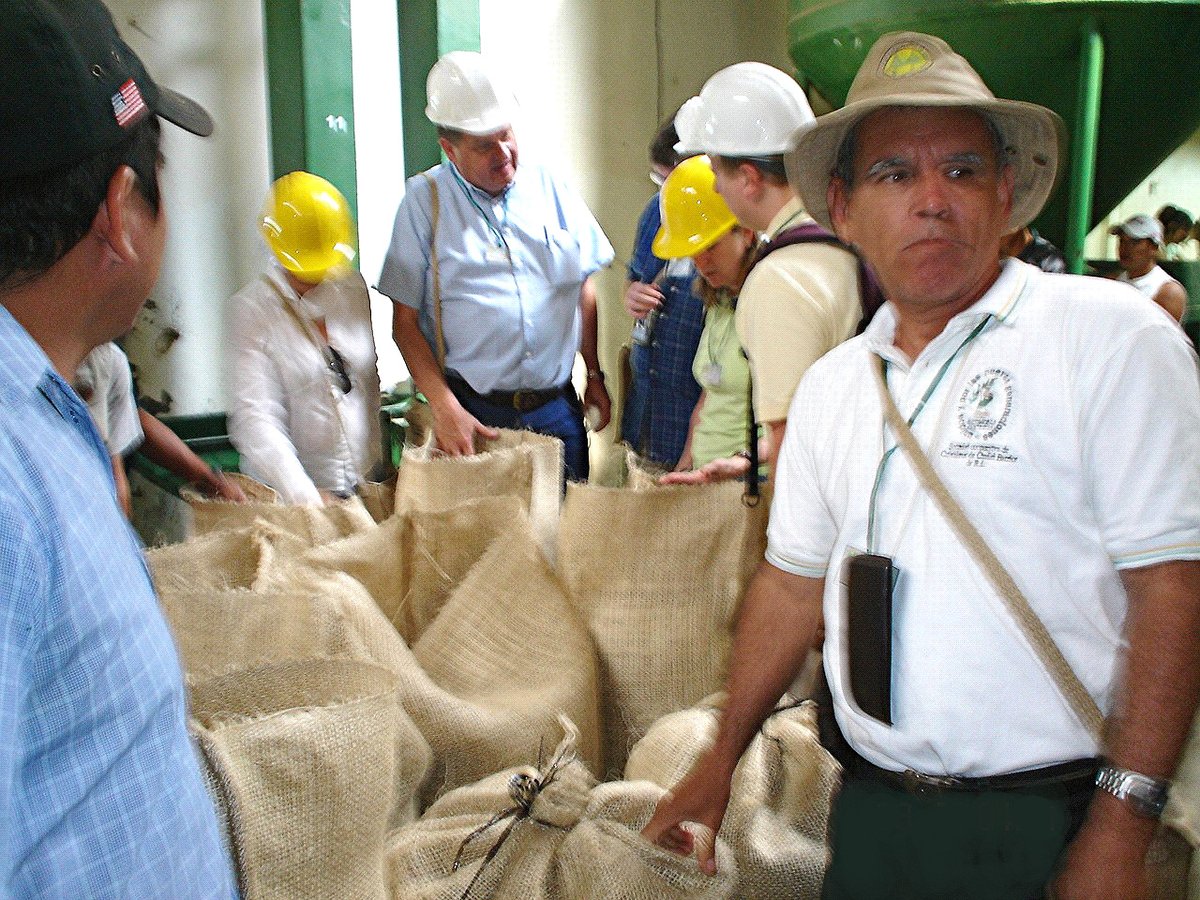
Every bag of coffee has two prices behind it. One is the price on a commodity exchange, quoted every second of the trading day and repeated in every news story about coffee. The other is what the farmer, the exporter, the importer, the roaster and the shop each actually get for their part of the work. They are related, but not in the simple way the headlines suggest. This page explains how green coffee is priced, why the price more than doubled between 2023 and 2025, where it stands in October 2026, and what each part of a $17 bag and a $4 cup pays for.
For a small roaster the practical side is on Green Coffee and the Line-Up, which lists what green coffee costs a one-person business today. For what the certification seals on a bag promise about the farmer’s price, see Labels and Certifications.
The short version
| Question | Answer, as of October 2026 |
|---|---|
| What is “the C price”? | The price of the arabica futures contract on ICE Futures U.S.: 37,500 lb of exchange-grade washed arabica, quoted in US cents per pound. It is a benchmark for traders, not the price a farmer is paid. |
| And robusta? | A separate ICE contract in London: ten tonnes, quoted in dollars per tonne. |
| How high did it go? | The C price passed $4 a pound in February 2025 for the first time; the highest daily figures, about $4.30 to $4.41, depend on which contract month is quoted. In 2025 the yearly average for mild arabica was 383 cents a pound, the highest in the IMF series. |
| Why? | Five poor arabica crops in a row in Brazil (drought, heat and frost), a robusta shortfall in Vietnam, world stocks drawn down by 15.5 million bags in four years, and in 2025 a 50% US tariff on Brazilian coffee. |
| Where is it now? | $2.93 a pound on 5 October 2026, down 23% on the year, after a record Brazilian crop. |
| Tariffs? | The Brazil tariff was removed in November 2025. The Supreme Court struck down the emergency tariffs in February 2026, and green coffee was exempted from the surcharge that replaced them. Roasted coffee was not. Check before importing anything roasted. |
| What does a farmer get? | In a large study of coffee sold in Germany, coffee growing took about 21% of the shop price, but a smallholder’s net income, including pay for the family’s own labour, was about 5%. |
| Of a $4 cup? | The green coffee in it costs 17 to 46 cents, depending on whether it is priced at the exchange, at the farm gate for specialty, or delivered to a small roaster. |
| Does a lower C price mean cheaper bags? | Slowly, if at all. North American specialty retail prices fell only 2.5% in the year to late 2025 while the commodity fell much further. |
| What should a small roaster do? | Buy a season’s worth of the core coffees when prices dip, keep the rest flexible, and read importers’ spot lists rather than the futures screen. |
How green coffee is priced
The futures contract
A futures contract is a promise to deliver a fixed amount of a commodity, of a defined quality, at a set place and month in the future, at a price agreed today. Most are never delivered. Roasters and exporters use them to lock in a price, and speculators trade them for profit. The price at which they trade becomes the reference for physical coffee everywhere.
The arabica contract (ICE “Coffee C”) sets out exactly what it stands for:
| Term | What the contract says |
|---|---|
| Size | ”37,500 pounds”, about 250 sacks |
| Price | ”Cents and hundredths of a cent” per pound |
| Months | March, May, July, September, December |
| Quality | ”A Notice of Certification is issued based on testing the grade of the beans and by cup testing for flavor” |
| Origins | Twenty countries. Mexico, Central America, Peru, Tanzania, Uganda, Papua New Guinea and others deliver at par; Colombia, Costa Rica and Kenya at 1,000 points (10 cents) above; Guatemala 500 points above; Brazil 600 points below |
| Delivery | Licensed warehouses in New York, Virginia, New Orleans, Houston, Miami, Bremen/Hamburg, Antwerp and Barcelona |
So “the C price” is the price of one particular, fairly ordinary grade of washed arabica sitting in a warehouse in a consuming country. It is not a farm price, and it says nothing about specialty coffee.
The robusta contract is traded in London: “Ten Tonnes”, priced in ”$ per metric tonne”, deliverable from “any Origin that is freely available for export.” To compare it with arabica, divide the dollars per tonne by 2,204.6 to get dollars per pound.
The C price is changing its unit. In May 2025 ICE announced that new arabica contracts will be priced in dollars per metric ton instead of cents per pound, will allow coffee stored in bulk “super sacks”, and that March 2028 is the last month of the old contract. For several years both will be quoted. A news story giving coffee “per ton” is not necessarily talking about robusta.
The differential
Physical coffee is sold as the futures price plus or minus a differential: a premium or discount, agreed between buyer and seller, for that origin, grade, quality and delivery date. A clean, high-grade lot trades at a premium over the futures price; a lot with defects at a discount. The two parts move separately. Futures move with world supply and money flows; differentials move with the supply of that particular coffee.
Contracts can be written so that the differential is agreed now and the futures part is fixed on a later day of the seller’s choosing. That is how coffee can be sold months before harvest without either side knowing the final price.
FOB (“free on board”) is the price of the coffee loaded on the ship at the port of export. It is the usual point at which coffee is priced between exporter and importer, and the point at which the specialty price studies below are measured. Other trade terms are in the glossary.
Specialty coffee is priced differently
Higher-quality coffee is often sold at a fixed price, agreed between roaster or importer and producer without reference to the C, or at a fixed premium over it. The Specialty Coffee Transaction Guide, run by researchers at Emory University’s Goizueta Business School, publishes what those contracts actually paid. Its 2024 edition drew on “data supplied by 123 companies… summarizing more than 100,000 contracts representing 2 billion pounds of green specialty coffee”:
| Quality (cupping score) | Median FOB price, previous three years | Median FOB, 2021/22 to 2023/24 |
|---|---|---|
| ”Regular” specialty, 80 to 83.9 points | $2.23 a pound | $2.93 |
| ”Fancy” specialty, 84 points and up | $3.43 | $4.18 |
| All specialty contracts | $3.48 |
Cupping scores are explained on Cupping.
At the top end, coffee is sold by auction. Cup of Excellence sells each country’s winning lots online after blind judging, and the private Best of Panama auction sells Geisha coffees at prices measured in hundreds of dollars a pound; a natural Geisha from Hacienda La Esmeralda set a record there of $601 a pound in 2017, and the record has been broken since. These prices are real, but they are paid for a few hundred pounds of coffee. They tell you what the very best coffee earns, not what coffee farmers earn.
Direct trade is the name roasters give to buying from a named farm at a negotiated price. It has no standard or audit; what to ask a roaster who uses the term is on Labels and Certifications.
The price over thirty years
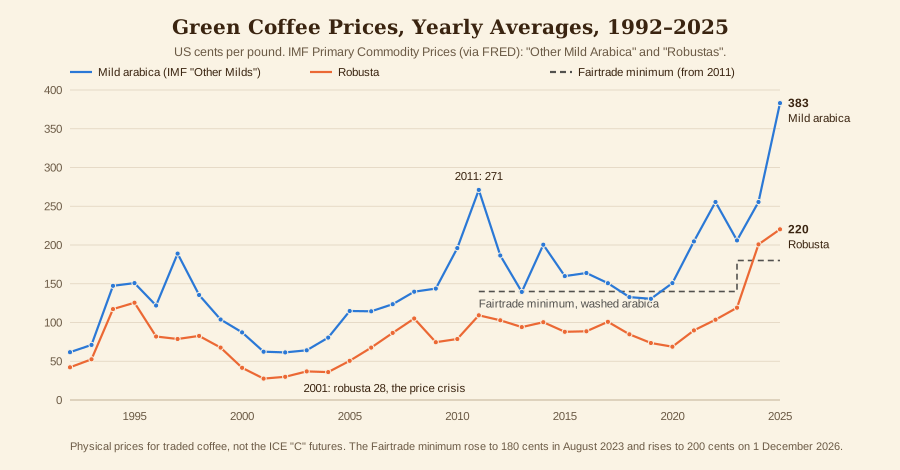
| Year | Mild arabica, cents/lb | Robusta, cents/lb | What happened |
|---|---|---|---|
| 1992 | 62 | 42 | The start of the series, near its low |
| 1997 | 189 | 79 | The 1990s high for arabica |
| 2001 | 62 | 28 | The coffee crisis: robusta at its lowest in the series |
| 2011 | 271 | 109 | The previous high; Fairtrade raises its floor to $1.40 |
| 2019 | 131 | 74 | Back down; Fairtrade’s $1.40 floor is above the market |
| 2021 | 205 | 90 | Brazil’s drought and heat cut the crop by 13.3 million bags |
| 2024 | 255 | 201 | Robusta nearly doubles in two years |
| 2025 | 383 | 220 | The record year |
Source: IMF Primary Commodity Prices, “Other Mild Arabica” and “Robustas”, annual averages, via the Federal Reserve Bank of St. Louis.
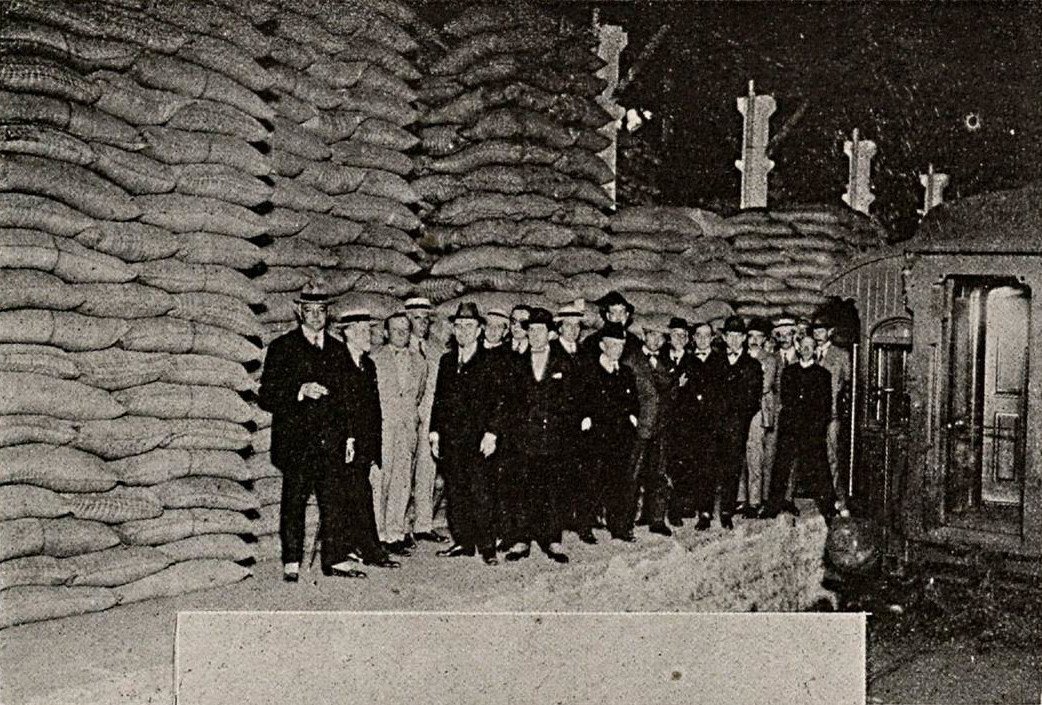
Two things stand out. The first is how long the price stayed low. In cents that were worth far more, mild arabica averaged about the same in 2019 as in 1995. The second is robusta. For thirty years it sold at roughly half the price of arabica; in 2024 it averaged 201 cents, more than mild arabica had fetched in most years of the series.
The 2024–25 spike
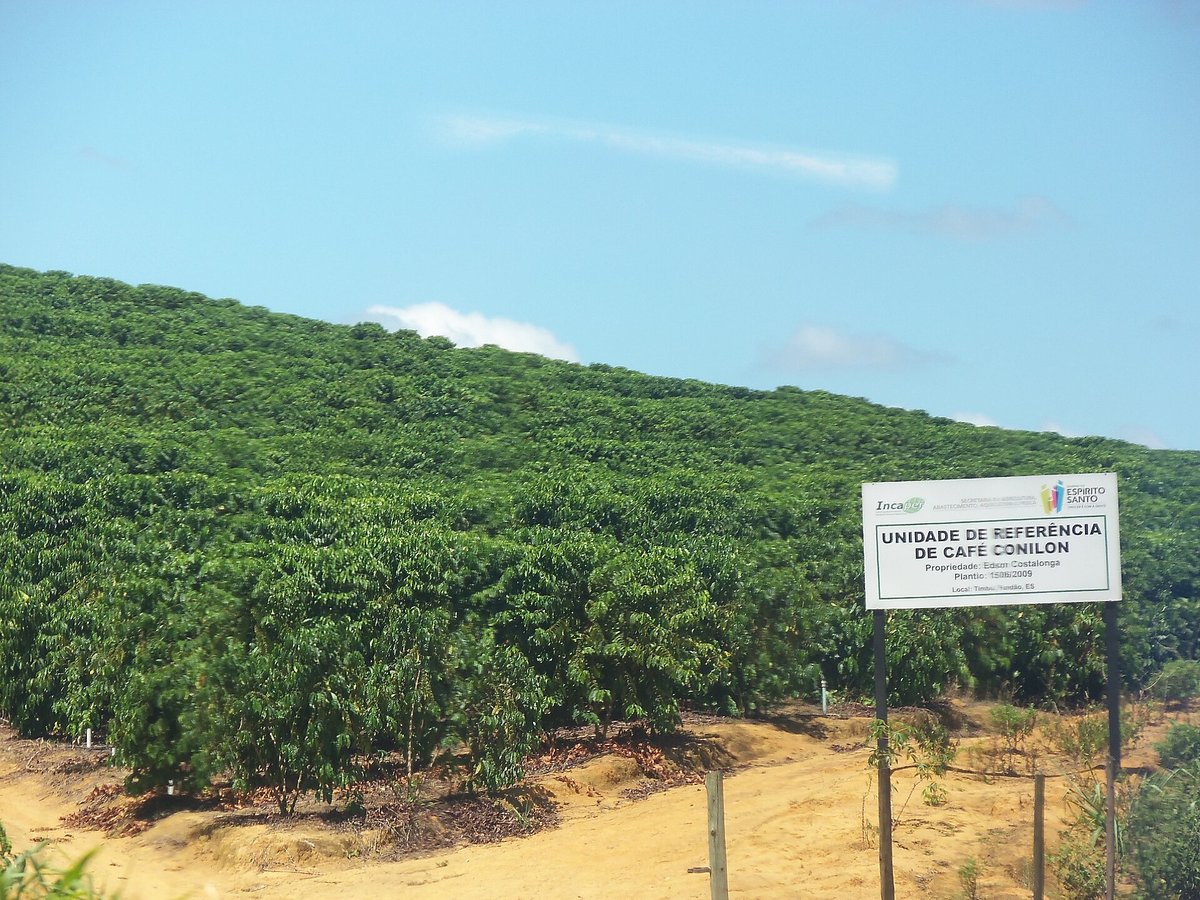
How high
The C price crossed $4 a pound in February 2025. Trading Economics gives an all-time high of 440.85 cents in February 2025 on its continuous front-month series; market reports in October 2025 described a new front-month record of about $4.38. The difference is which contract month is being quoted, not a disagreement about the market. Monthly, the IMF’s mild arabica price was above 400 cents in February, March, October and November 2025. The yearly average for 2025 was 383 cents, half as much again as 2024.
Why
The US Department of Agriculture’s July 2026 Coffee: World Markets and Trade sets out the cause plainly. Brazil supplies 40 to 50% of the world’s arabica, and its harvest swings with a two-year cycle that weather can exaggerate:
- 2021/22: “drought and high temperatures reduced off-year output by 13.3 million bags.”
- 2022/23: “only a modest rebound of 3.4 million bags due to severe frost, high temperatures, and below-average rainfall.”
- 2023/24: more coffee, but “yields lagged expectations because of excessive rainfall during fruit development.”
- 2024/25 and 2025/26: “2 consecutive years of declines as drought and heat again lowered yields.”
Other origins grew more, “however, these gains did not fully compensate for Brazil’s losses. As a result, global ending stocks fell 15.5 million bags between 2020/21 and 2024/25.” A bag in these statistics is 60 kg.
Robusta had its own squeeze, and its price nearly doubled between 2022 and 2024. Vietnam grows most of the world’s robusta and Brazil most of the rest, so weather trouble in either moves it. Stocks of coffee graded and held in the exchange’s own warehouses, the coffee that can be delivered against a futures contract, ran low; in autumn 2026 certified arabica stocks were still at 27-year lows. A futures market with little deliverable coffee behind it is a jumpy one.
Then came the tariff. From August 2025 (it was announced in July) Brazilian coffee entering the United States paid a 50% tariff (a 10% worldwide tariff plus 40% on Brazil), “essentially halting purchases of Brazilian coffee among U.S. buyers,” in Daily Coffee News’s words. American roasters bid for coffee from everywhere else instead.
Where it stands in October 2026
| Measure | Figure | Source |
|---|---|---|
| C price, 5 October 2026 | 293 cents a pound, down 23% on a year earlier | Trading Economics |
| Mild arabica, July 2026 (latest monthly) | 359 cents | IMF via FRED |
| ICO composite price | down 25% in the seven months to July 2026 | USDA FAS |
| Brazil crop, 2026/27 forecast | a record 71.9 million bags; arabica up 9.5 million to 47.5 million, “ending a 5-year period of underperformance” | USDA FAS |
| World crop, 2026/27 forecast | a record 189.7 million bags; Vietnam, Ethiopia and Uganda also at records | USDA FAS |
| World stocks | rising for a second year, to 26.3 million bags, “below the long-term average” | USDA FAS |
The price has come down a long way from the peak and is still well above anything seen before 2024. Exchange-certified arabica stocks remained tight into the autumn, and traders were watching rain over Minas Gerais during the Brazilian flowering, which is what decides the 2027 crop.
What will happen next
Nobody knows, and anyone who claims to is selling something. What is known is the mechanism: a big Brazilian crop pushes the price down; a frost, a drought at flowering, or a disease outbreak pushes it up. Climate change makes those shocks more frequent (Origins covers the long view).
US tariffs on coffee, 2025–26
Almost no coffee is grown in the continental United States (the exceptions are small: Hawaii, Puerto Rico and a few farms in California), so a tariff on coffee is paid by American roasters and drinkers.
| Date | What happened |
|---|---|
| Spring 2025 | A 10% “reciprocal” tariff on almost all imports, coffee included |
| August 2025 | A further 40% on Brazilian goods: 50% on Brazilian coffee |
| 14 November 2025 | The 10% removed from agricultural goods “not grown in the U.S.”, coffee among them |
| 21 November 2025 | The 40% on Brazilian coffee removed, for coffee entered on or after 13 November (Daily Coffee News) |
| 20 February 2026 | The Supreme Court rules that the emergency powers law used for these tariffs “does not authorize the President to impose tariffs” |
| 24 February 2026 | A temporary 10% surcharge on imports under a different law (Section 122 of the Trade Act of 1974), for up to 150 days. Green coffee is exempt; roasted coffee is not (Royal Coffee) |
| 24 July 2026 | The 150 days end; the surcharge lapses |
What applies after July 2026 has moved through the courts and trade agencies more than once. The ordinary duty on green coffee (tariff headings 0901.11 and 0901.12) has long been zero. Anyone importing roasted coffee, or buying from a foreign roaster, should check the current rate with U.S. Customs and Border Protection or a customs broker before signing a contract. Refunds of the tariffs the Supreme Court struck down are being handled through the Court of International Trade.
The EU Deforestation Regulation
The European Union imports about twice as much coffee as the United States (46.5 million bags against 23.1 million in 2025/26, by the USDA’s estimate), so a European rule changes how coffee is grown and traded everywhere. The EU Deforestation Regulation (EUDR, Regulation 2023/1115) bars coffee, cocoa, cattle, palm oil, soy, rubber and wood from the EU market unless they are “deforestation-free”: grown on land that “has not been subject to deforestation after 31 December, 2020,” and legally produced. Every shipment needs a due-diligence statement, which in practice means the geolocation of the plot where the coffee grew.
It has been delayed twice. The EU amended it in December 2024 and again in December 2025; it now applies from 30 December 2026 for large and medium companies and 30 June 2027 for micro and small ones.
For an American roaster selling in America it does not apply directly. It matters for two reasons. Exporters are building traceability to every farm for European buyers, so more coffee will arrive with a plot and a farm name attached. And a smallholder who cannot prove where a sack came from may find the European half of the market closed, which pushes that coffee towards buyers who do not ask.
Who gets what from a bag and a cup
The best study: coffee sold in Germany
The most careful public study of how the shop price of coffee is shared is The Grounds for Sharing (2024), written by the French research group BASIC for the Global Coffee Platform, IDH and Solidaridad. It modelled every stage for coffee from Brazil, Colombia, Ethiopia and Vietnam sold in German shops in 2021. Germany is the world’s third-largest coffee market, after the United States and Brazil, and has a coffee tax, which the study counts as its own stage.
For the average coffee sold in German shops (€9.71 a kilo), “Retail, Roasting and Coffee cultivation stages and the German Coffee Tax each amount to between 21% and 23% of the total value.” For national-brand whole beans, at €9.73 a kilo:
| Stage | Share of the shop price | Of which, net profit or income |
|---|---|---|
| Growing the coffee | €2.03 a kilo, about 21% | A smallholder’s net income €0.47 a kilo, about 5%, “includes remuneration for (family) labour” |
| Collection, export, shipping and trading | the rest, after the other four | low but steady margins |
| Roasting and packing | 23% | €0.25 a kilo |
| The shop | 21% | €0.49 a kilo |
| German coffee tax | 22% |
Three things follow. Most of the price is cost, not profit: once costs and taxes are taken out, the study puts everyone’s net profit together at 11% of the shop price. The farmer’s 21% is gross: it has to pay for labour, fertiliser and processing, so the family’s actual income is a fraction of it. And when the shop price rises, the extra mostly stays downstream: “Farmer prices are disconnected from consumer prices,” the authors conclude.
The study’s numbers are for 2021, when the C price was about half its 2025 level, and for German supermarket coffee. They are not a model of a US specialty roaster.
A $17 bag of specialty coffee, worked through
There is no equivalent published study for a US specialty bag. What can be done is the arithmetic, from published prices. Assume a 12 oz bag at $17, a typical price for a Michigan specialty roaster (Prices and Customers). It takes 0.882 lb of green coffee, because coffee loses about 15% of its weight in the roaster (Bags, Labels and Cost).
| Step | Price per pound of green | Green coffee in one $17 bag | Share of $17 |
|---|---|---|---|
| Futures (C), 5 October 2026 | $2.93 | $2.59 | 15% |
| Specialty “fancy” coffee, median FOB at origin (2021/22 to 2023/24) | $4.18 | $3.69 | 22% |
| Landed at a large roaster (importer, freight, warehousing; not published as a single figure) | |||
| Delivered to a one-person roaster in 20 lb lots | about $8.00 | $7.06 | 42% |
Arithmetic: 0.882 × price per pound. The FOB figure is the price at the export port, so it already includes the mill, the exporter and the transport from the farm. What reaches the farmer is a part of it, and how large a part varies from country to country and from a cooperative to a private exporter.
For a small roaster the green coffee is the biggest single cost, and most of the gap between $3.69 and $7.06 is the cost of buying 20 lb instead of a container: the importer’s warehousing, sampling and small-lot handling, and shipping by parcel. The rest of the $17 pays for the bag, the label, the roaster, the rent, the roaster’s own time, and the shop’s margin if it is sold wholesale. The Numbers works this through for a market stall.
A $4 cup
A 12 oz cup brewed at about 1:16 uses about 22 g of roasted coffee (Ratios), which is 26 g, or 0.057 lb, of green.
| Priced at | Green coffee in one cup | Share of a $4 cup |
|---|---|---|
| The C price, October 2026 ($2.93) | 17 cents | 4% |
| Specialty median FOB ($4.18) | 24 cents | 6% |
| Delivered to a small roaster (about $8.00) | 46 cents | 11% |
Arithmetic: 0.0571 × price per pound. The rest of the cup is the cup itself, milk, labour, rent, equipment and the shop’s margin. This is why the price of a café cup barely moved when the C price doubled, and why it will not fall much now that the C price has come down.
Prices at the shelf lag the exchange
The Specialty Coffee Retail Price Index, which follows 55 North American specialty roasters, put the average retail price at $31.52 a pound in the last quarter of 2025, 2.5% lower than a year earlier, while the commodity price “fell 7.6% during the fourth quarter” alone. Roasters bought their coffee months earlier, at the old price, and many raised retail prices less than their costs rose on the way up. A falling C price reaches the shelf slowly.
What this means for a small roaster
The roaster I plan to start would buy green coffee by the 20 lb lot and then by the 65 lb box (Green Coffee and the Line-Up). At that scale the futures screen is background noise. What matters:
- Read the importers’ spot lists, not the C price. Sweet Maria’s, Genuine Origin and Royal Coffee publish what they have in their warehouses at a fixed price. Those prices move weeks or months behind the futures market, because the importer bought the coffee earlier. The green-coffee page records what they were charging in autumn 2026.
- Small-lot prices fell less than the exchange. On 2 October 2026 the C price was down about a quarter on the year; retail green for small buyers was not.
- Forward-buy the core. Once a coffee is a staple of the line-up, buying a season’s supply when the price is good protects the bag price for months. Green coffee keeps for months in its sack if it is kept cool and dry (the green page covers storage). Larger roasters do the same with forward contracts, agreeing a price now for coffee shipped later.
- Keep one or two coffees flexible. A rotating single origin can follow what is good value this month.
- Brazil and Colombia set the floor. They are the cheapest and steadiest coffees on most spot lists, which is one reason they are the usual base of a beginner’s line-up.
- Do not hedge with futures. One contract is 37,500 lb of green coffee, many years of a market stall’s roasting. Hedging is for roasters buying containers.
- Tell customers why. When the price of a bag goes up, a short card at the stall with this page’s chart explains it better than an apology.
What this means for someone buying coffee
- A bag of specialty coffee is priced mostly by what happens after the farm: roasting, packing, rent and labour. That is why it costs much the same whether the C price is $2 or $4.
- Cheap coffee follows the C price more closely, because the green coffee is a larger share of a cheap bag. Blends and instant coffee with a lot of robusta in them are the most exposed to robusta’s price.
- Buying coffee that pays the farmer more is possible, but no label on its own guarantees it. Labels and Certifications sets out what each one actually promises.
What is not known
- The share of the 2024–25 rise caused by speculation, freight costs or currency moves. Each is cited in market commentary; none has a published measurement.
- A farm-gate price series for specialty coffee. The Transaction Guide measures FOB, at the port.
- An up-to-date value-chain study for coffee sold in the United States. The best study is of Germany in 2021.
- The tariff regime for roasted coffee after July 2026, which has been in the courts.
- The launch date of ICE’s new dollars-per-ton arabica contract.
Sources
- ICE Futures U.S., Coffee “C” futures contract specifications; ICE Futures Europe, Robusta coffee futures.
- Daily Coffee News, “The ‘C Price’ as the Coffee Industry Knows It is Being Phased Out” (30 May 2025).
- International Monetary Fund, Primary Commodity Prices, via FRED: Other Mild Arabica, annual; Robustas, annual; Other Mild Arabica, monthly.
- Trading Economics, coffee, read 5 October 2026.
- USDA Foreign Agricultural Service, Coffee: World Markets and Trade, July 2026.
- BASIC, The Grounds for Sharing: A study of value distribution in the coffee industry, for the Global Coffee Platform, IDH and Solidaridad (2024).
- Specialty Coffee Transaction Guide, 2024 edition, as reported by Daily Coffee News (18 February 2025); Specialty Coffee Retail Price Index, Q4 2025.
- Daily Coffee News, “Trump Order Eliminates All Tariffs on Brazilian Coffee” (21 November 2025); Royal Coffee, “Green Coffee Is Exempt From The New Tariffs” (25 February 2026).
- European Commission, Regulation on deforestation-free products; Regulation (EU) 2023/1115.
- Best of Panama auction record: Wikipedia, Geisha (coffee).
- The bag and cup figures are worked out from those sources and from this site’s bag cost and price survey.
Comments (0)