Roasting Machines
Once you’ve roasted a few batches by hand you start wanting a machine, and for a specific reason: not because hand-roasting doesn’t work, but because you get tired of being the machine — the thermostat and the stirring arm — instead of the person making the decisions. That’s what every roaster here sells you: not heat, but repeatability. This is the whole ladder, from a $200 countertop popper-with-a-degree up to a gas-plumbed production drum with its own permit file, and at every rung I’ll explain the mechanism, because the mechanism decides how the coffee tastes and what it costs to own. The chemistry inside the bean is a separate page; this one is about the iron.
The two mechanisms
Almost every roaster ever built is one of two ideas, and understanding the split is most of the knowledge on this page.
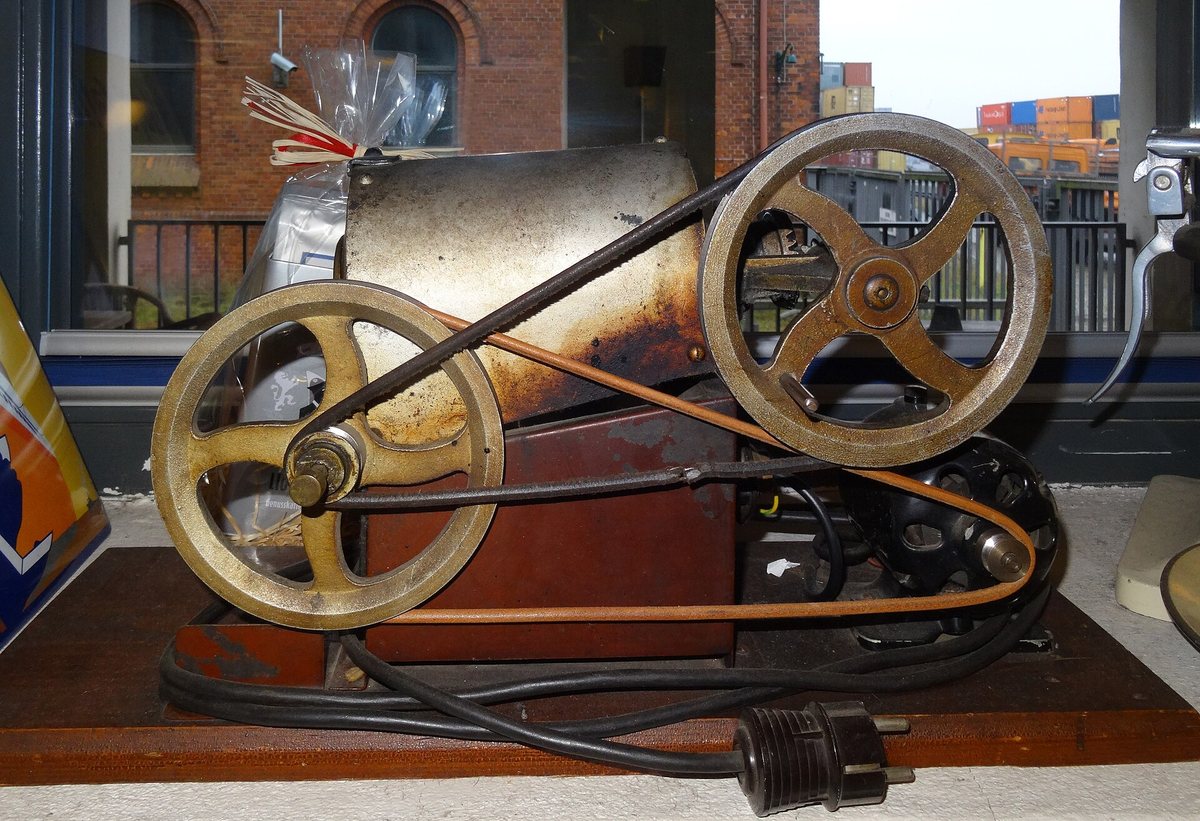
Fluid-bed (air). Hot air blown up through the beans hard enough to lift and tumble them. The air does both jobs at once — heats and agitates. No hot surface touches the bean at all; it’s suspended in a swirling column of heat. Your popcorn popper was one of these.
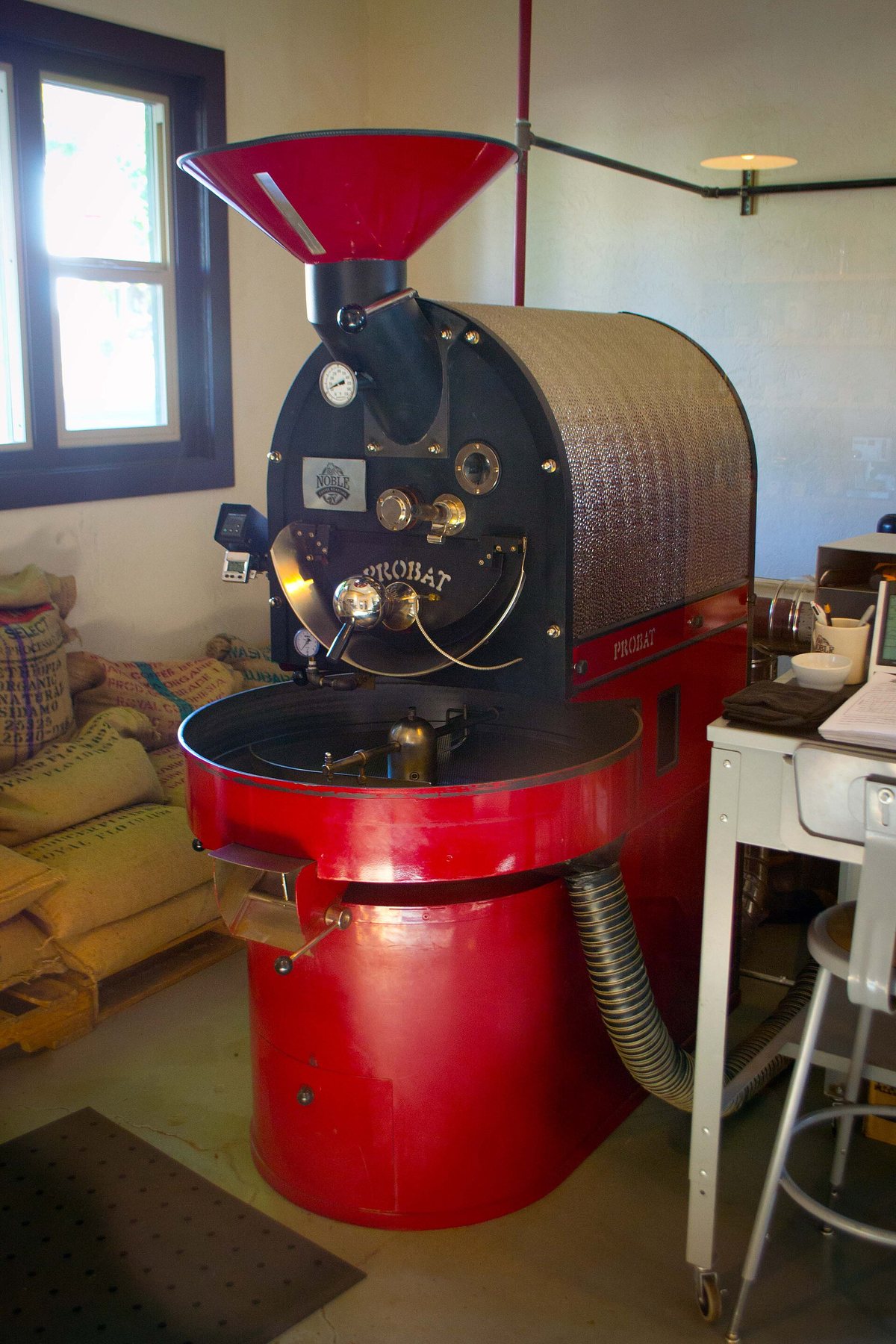
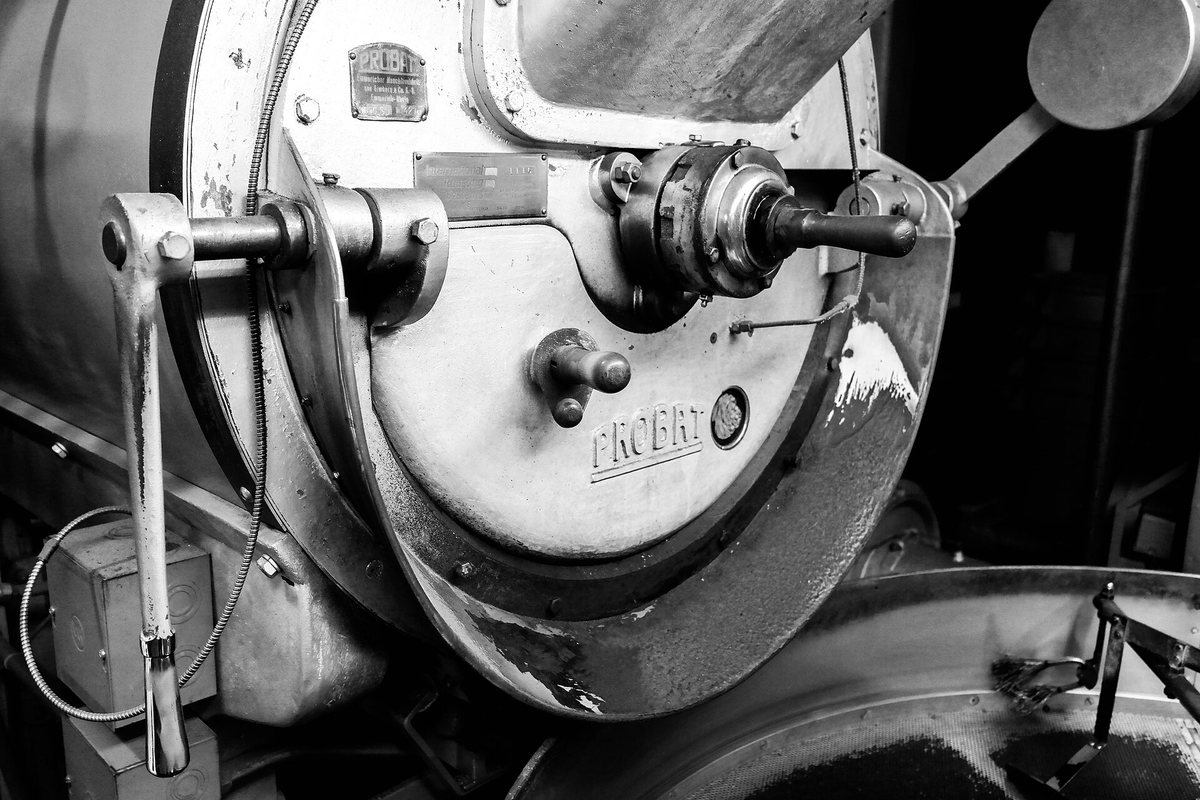
Drum. A rotating metal drum turns a bed of beans while heat is applied, usually a gas flame or an element under or behind it. The bean gets heat two ways: conduction from the hot drum wall, convection from air moving through. Internal vanes keep the bed folding over on itself. This is what nearly every commercial roaster on earth is.
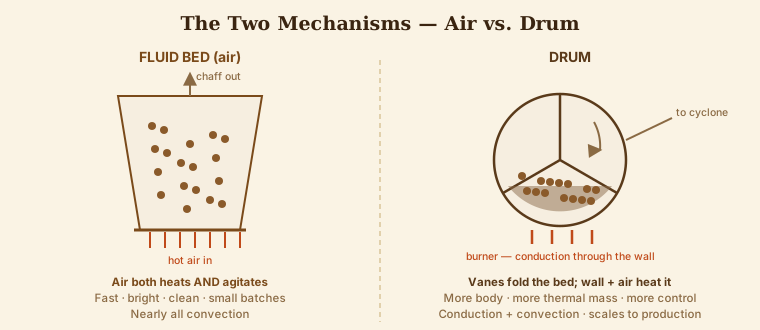
The flavor consequence, honestly. These do not produce the same cup, and anyone who says the difference is imaginary hasn’t tasted them side by side.
Fluid-bed is fast, bright, and clean. All-convection transfer is efficient, so roasts run short — often 5–9 minutes — and the hard airflow strips chaff out immediately, so no chaff smoke taints the bean. The result has pronounced acidity and clarity and not much body. Spectacular for a light-roasted African coffee where brightness is the point; less good at producing weight.
Drum is slower, rounder, heavier. The thermal mass of a steel drum is a flywheel — it stores heat, resists your inputs, evens out your mistakes. Roasts run 10–14 minutes, and that longer development plus conductive contact builds body, sweetness, and chocolatey depth at the cost of some top-end clarity. It’s why espresso blends are basically always drum-roasted, and why drum scales up and fluid-bed largely doesn’t: you can build a 60 kg drum, but blowing air hard enough to levitate 60 kg of coffee is a losing fight with physics.
Short version: air for bright and small, drum for body and big. Neither is better — different tools, exactly like a convection oven and a firebrick deck.
Rung 1: Entry home air roasters (~$150–300)
Where nearly everyone starts, and a genuinely good place to be.
The Fresh Roast SR540 and SR800 have been the default recommendation for years — glass-chambered fluid-bed roasters with variable heat and variable fan control, which is why they beat the modified popper they resemble: real independent control of the two variables that matter, on a machine designed to run at coffee temperatures instead of one you tricked into it. As of 2026 the SR540 runs roughly $200–220 at about 120 g a batch; the SR800 runs roughly $290–335 with a taller chamber, stronger fan, and around 220–250 g. Refurbs float around $180 and $240. Get the SR800 — the extra hundred buys nearly double the batch, and 120 g of roasted coffee is not much coffee. Both can eventually feed Artisan through a probe.
Hand roasters round out the rung: the Nuvo Eco is a ceramic hand-held you hold over a flame and shake, 30–70 g at a time for well under $50. A lovely object, and it works — but it’s functionally a nicer skillet. Buy one because it’s charming, not because it’s a machine.
The honest limit here: small batches and thin cups on darker roasts. Fluid-bed does bright beautifully and struggles to give you a chewy, chocolatey espresso bean.
Rung 2: Home drum and hybrid (~$300–1,000)
Where you buy body and batch size, and where the flavor conversation gets real.
The Behmor is the well-known name — a drum roaster the size of a microwave doing up to a pound (450 g) on household power. Its clever trick is a catalytic converter in the exhaust that burns off roast smoke, making it the one drum roaster people genuinely run indoors — the difference between roasting in your kitchen in February and not. ⚠ Model note: the famous 1600 Plus is discontinued; the current machine is the 2000AB Plus (roughly $480 as of 2026) — revised control board, double-paned glass, two-speed drum (16/32 RPM), improved fans. If someone points you at a 1600, they’re pointing at the used market. Fine, they’re durable; just know it.
The Gene Café CBR-101 (roughly $650–690) does the cleverest mechanical thing on this rung: the drum rotates off-axis, tumbling end over end rather than spinning on a horizontal shaft. Excellent bean movement and very even roasts, without vanes. Electric, about 250 g a batch. It vents its smoke, though — this one wants a window or a garage. Hottop tops the rung; the digital KN-8828B-2K+ runs around $2,150 for a proper metal drum, real profile control, and logging.
Why step up here at all: thermal mass. A drum forgives you. It also finally makes a decent espresso bean — the round, sweet, chocolatey thing fluid-bed can’t quite build.
Rung 3: Prosumer (~$1,500–4,000)
Machines that are, in every real sense, small commercial roasters that happen to fit on a bench.
The Aillio Bullet R1 V2 is the one I’d point at, because it’s built for exactly the way I think about machines. A 1 kg drum roaster — 200 g to 1,000 g a batch, about 10 minutes — whose headline is a drum heated by induction. That matters more than it sounds: a gas flame or resistive element has lag, so you turn it down and the mass stays hot a while. Induction dumps energy directly into the drum steel with a stated accuracy around ±2%, so power changes land now. Roasters describe it as feeling like gas but faster, and that responsiveness is precisely what profile control is.
Then the part that closes the deal: it’s a data machine. An infrared bean temperature sensor (IBTS) reads the actual bean mass rather than a probe guessing at it, it logs every roast, and it ships with software. You get a curve, rate-of-rise, and the ability to change one variable, roast again, and see what you did — the same loop as a PID-modded smoker or a CNC setup. About $3,600 as of 2026, toolkit and IBTS included on V2 units.
The Kaffelogic Nano 7 (about $1,200) plays a different game: a small fluid-bed doing 50–200 g, fully automated against a profile you load — repeatability without operating. Ikawa is the sample-roaster benchmark for evaluating green lots; the current Pro series (Pro50, Pro100) is priced as professional equipment, the Pro100 MSRP around $5,270. A measuring instrument, not a way to make your morning coffee.
This is the rung where “I roast my own coffee” quietly turns into “I could sell this” — a 1 kg roaster run hard is a farmers-market business, the same argument I make about the Rofco B40 for bread.
Rung 4: Small-commercial / micro-roastery (~$5k–25k)
Where it becomes a business decision instead of a hobby decision, and where the coffee program math starts to bite. Typical shop roasters are 1–5 kg batch drums. The names that matter:
| Maker | Origin | Known for |
|---|---|---|
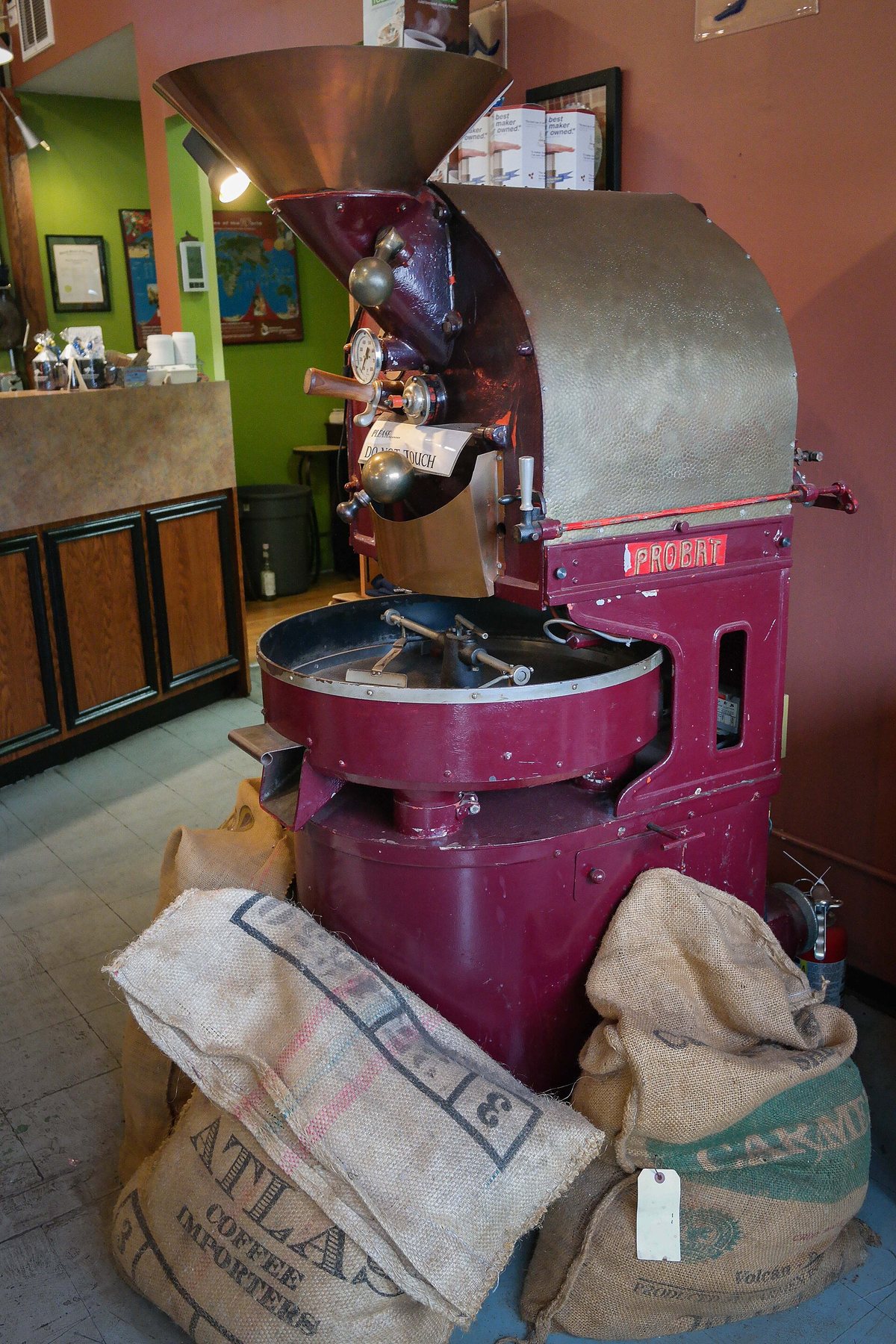
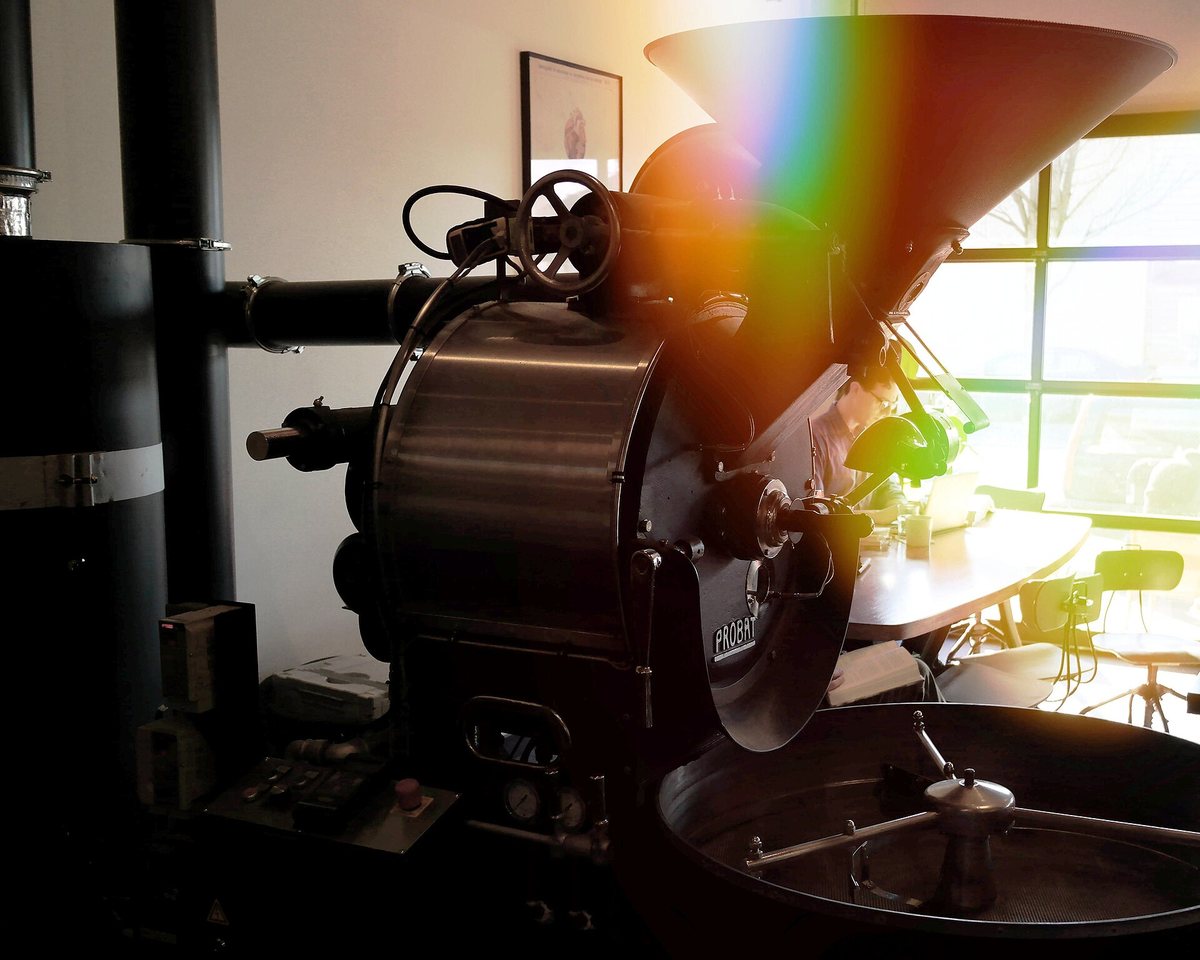
| Probat | Germany | The benchmark. Probatone / P-series. The Hobart of coffee — everyone measures against it |
| Diedrich | Idaho, USA | IR series (IR-1, IR-5, IR-12). Infrared burners, superb build, gentle roasts |
| Giesen | Netherlands | W-series (W1, W6, W15). Modern, well-instrumented, popular with new roasteries |
| Mill City | Minneapolis, USA | MCR series (MCR-2, MCR-3, MCR-30) + the new M-Series. Great training program |
| San Franciscan | Colorado, USA | SF-1 (500 g), SF-6, SF-10, SF-25. Hand-built, beloved, characterful |
| US Roaster Corp | Oklahoma City, USA | The Revelation line (1, 5, 15 kg and up), patented emission control |
Pricing, with a caution. This tier lands roughly $8k–25k for a 1–5 kg machine — and these are quoted, configured, freight-inclusive purchases, not shelf prices. Public figures put a Giesen W1 and W6 in the mid-teens to low-twenties, a 5 kg Probat in the low twenties, and used Diedrich IR-5 units around the mid-twenties. Treat that as directional, not as quotes. The used market is large and well-brokered (CoffeeTec, Coffee Equipment Pros), and a well-kept used commercial roaster is one of the better value buys in this industry — these run for thirty years.
Gas vs. electric. Most of this tier is gas — a burner under a drum, the roaster controlling flame and airflow. Responsive, powerful, cheap to run, and it means a gas line and everything that comes with it. Electric models (Mill City’s MCR-2E) are growing and solve real problems: no gas plumbing, easier permitting, viable in a space that won’t give you a line. They’re less responsive at the top end and cost more to run. Same conversation as electric vs. gas everywhere else in a kitchen.
The arithmetic — what a shop roaster actually produces
The calculation nobody does before buying, and then they buy wrong. A roast cycle is about 10–14 minutes of roasting plus 3–5 minutes to unload, cool, and recharge the drum — call it a realistic ~4 batches an hour, sustained.
| Machine | Batch | Per hour | Per 8-hr day | What that supports |
|---|---|---|---|---|
| 1 kg | ~0.85 kg roasted | ~3.4 kg | ~27 kg | One café’s own beans, retail bags, farmers market |
| 3 kg | ~2.5 kg roasted | ~10 kg | ~80 kg | A café + a couple of wholesale accounts |
| 5 kg | ~4.2 kg roasted | ~17 kg | ~135 kg | A small roastery with a real wholesale route |
Remember the ~15–20% weight loss — charge 1 kg of green, get about 850 g out. Now anchor it: a busy café pulling 300 drinks a day at roughly 18 g a dose burns 5–6 kg of roasted coffee daily, before a single retail bag. So a 1 kg roaster covers one café’s own consumption with room to spare — roughly a day’s roast per week — and it is nowhere near a wholesale business. A 5 kg machine is the honest entry point for actually selling coffee to other people. The trap is buying a 1 kg because it’s affordable and then discovering you’re roasting six days a week to keep up — a full-time job you didn’t budget a person for. Buy one size up from your plan.
Rung 5: Production (~15–120 kg+)
The top of the ladder, where roasting is the business and the constraints stop being about coffee.
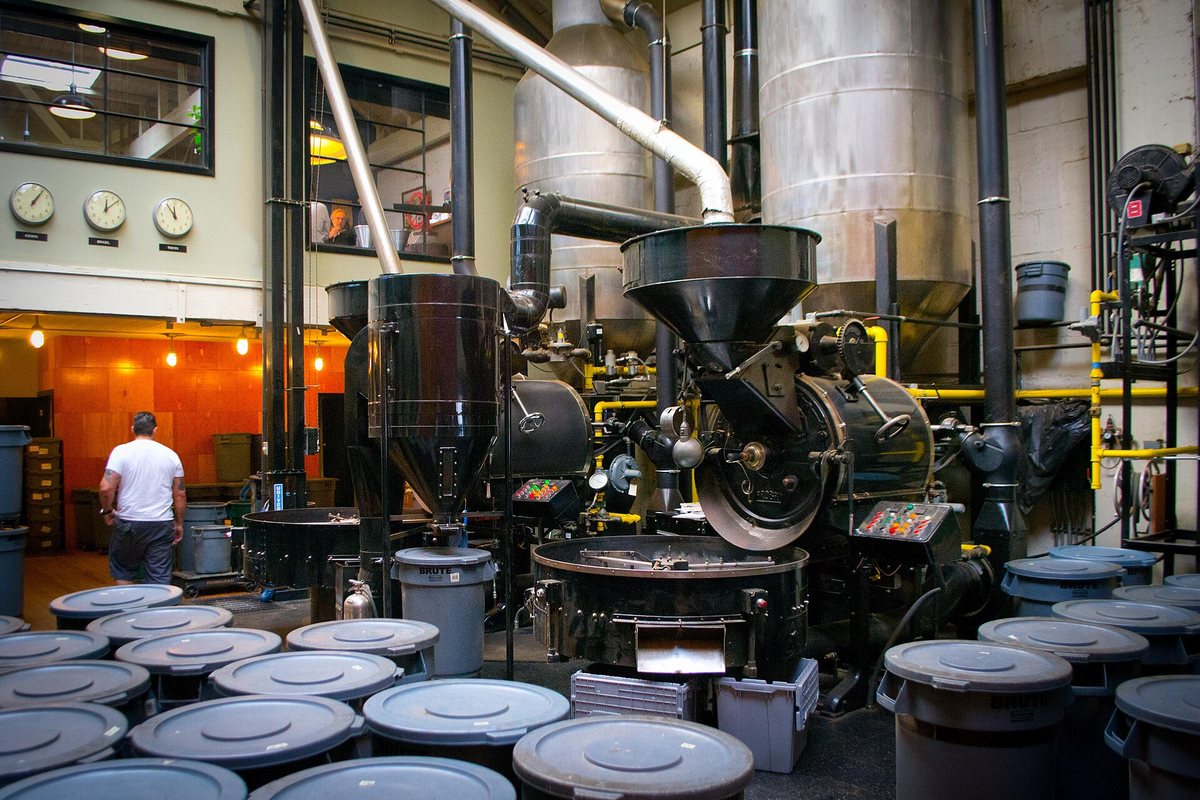
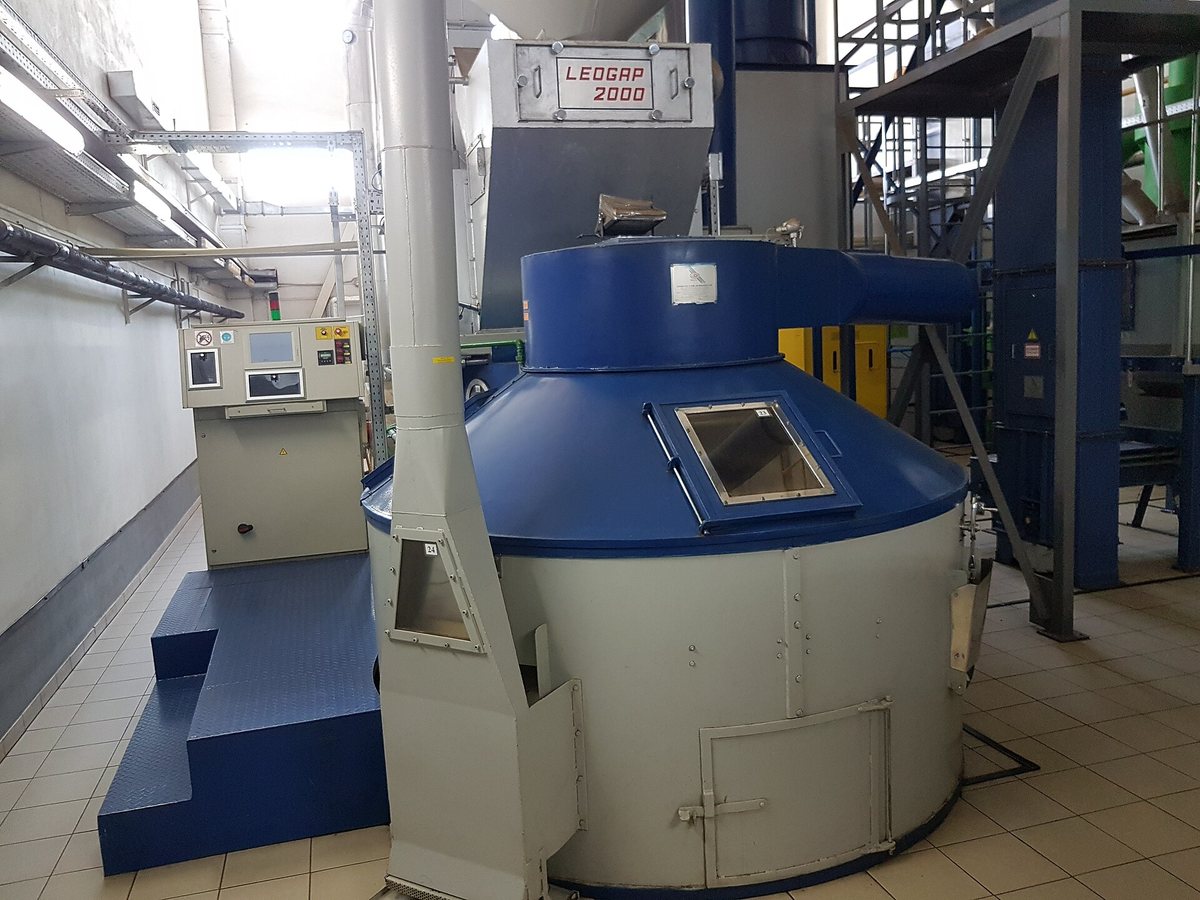
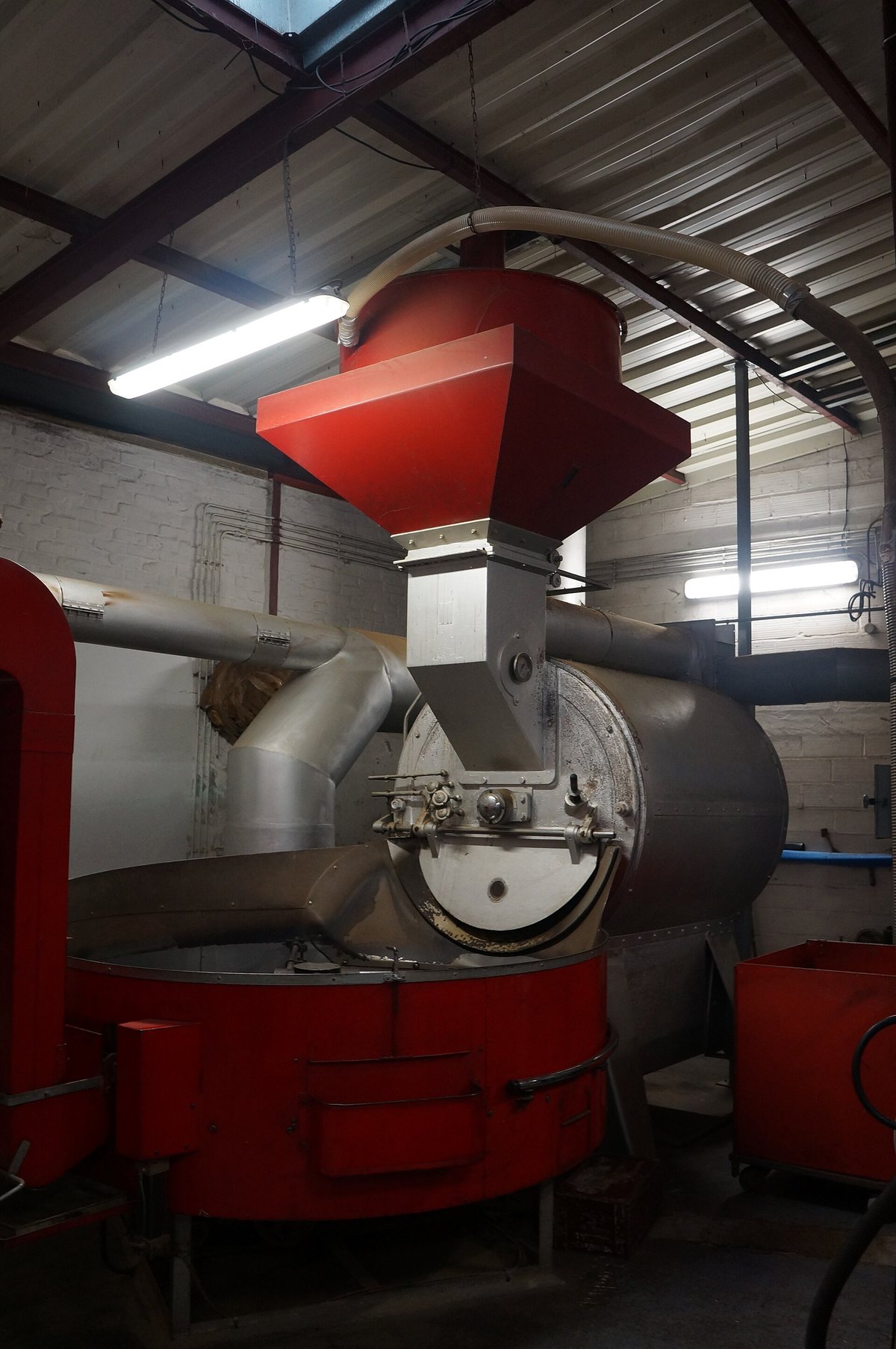
Loring is worth explaining, because it’s a genuine engineering divergence. Conventional roasters have a burner heating the drum and then a separate afterburner — a second gas-fired chamber whose only job is to incinerate the smoke before it reaches the neighborhood. You are literally paying to burn fuel twice.
Loring’s patented approach uses a single burner in a recirculating loop: it roasts by convection with hot air, and that same burner incinerates the smoke coming off the beans, then recycles the now-clean hot air back through. One flame, both jobs. The company cites up to 80% fuel savings and up to 70% reductions in gas use and CO₂ versus conventional roasters, and crucially, no external afterburner is required — which is why they’ve taken over so many production floors. The line runs S15 Falcon (15 kg) through S35 Kestrel (7–35 kg) and larger. Probat and Giesen scale here too, with conventional drums and afterburners.
Why the building is harder than the machine
The part I find genuinely fascinating, and the same lesson as every commercial kitchen build:
- Smoke abatement drives the cost and the permit. An afterburner can add tens of thousands and burns gas continuously while you roast. Air-quality regulators care about roaster emissions, and in many jurisdictions abatement is mandatory above a certain capacity. The biggest hidden cost in standing up a roastery — and precisely the problem Loring engineered around, which is why their efficiency story is really a permitting story.
- Ventilation is architecture. A dedicated roaster stack, correctly sized and routed, often to the roofline. It constrains what building you can even use.
- Three-phase power. Above the prosumer tier, motors and controls generally want it. If the building doesn’t have it, you’re paying the utility — a five-figure surprise.
- Gas capacity. Not “is there gas” but “is the line big enough.”
- Fire suppression. Roasters catch fire. Not hypothetically: chaff accumulates in ductwork and cyclones and burns, and every roastery has a chaff-fire story.
Which is why I think about the roaster question exactly like the Rofco for bread: the machine that lets you start without rebuilding the building is worth an enormous amount, even if a better machine exists. A 1 kg electric roaster that plugs into a wall gets you in business. A 15 kg gas production roaster gets you a contractor, a permit file, and a six-month delay. Only one lets you sell coffee next month.
The software layer
The part that turns roasting from cooking into engineering, and it’s free.
Artisan is open-source roast logging and profiling software — the industry standard from hobbyists straight through production. Connect thermocouple probes (a bean temp probe in the bean mass, an environmental temp probe in the air) and it plots the roast live, records it, and lets you overlay a previous roast as a template to follow. It talks to everything from a $30 USB thermocouple board on a modified popper to a production Probat.
The number it exists to show you is Rate of Rise (RoR) — degrees per minute the bean temperature is climbing, and the control variable in modern roasting. A healthy roast has a smoothly declining RoR: fast early, easing steadily, never flatlining and never crashing. A flick or crash around first crack, where the bean’s exothermic reaction dumps its own heat in, is the classic fault, and it produces flat, baked, lifeless coffee. You can’t see that by taste alone; you see it on the graph.
For anyone who thinks in curves and setpoints, this is where roasting clicks: a control problem with a delicious output. Log every roast, change one variable, compare the curves. That loop is how you get good in months instead of years — and why the Bullet’s built-in logging earns its price.
The unglamorous necessities
Nobody puts these on the website and every shop needs them.
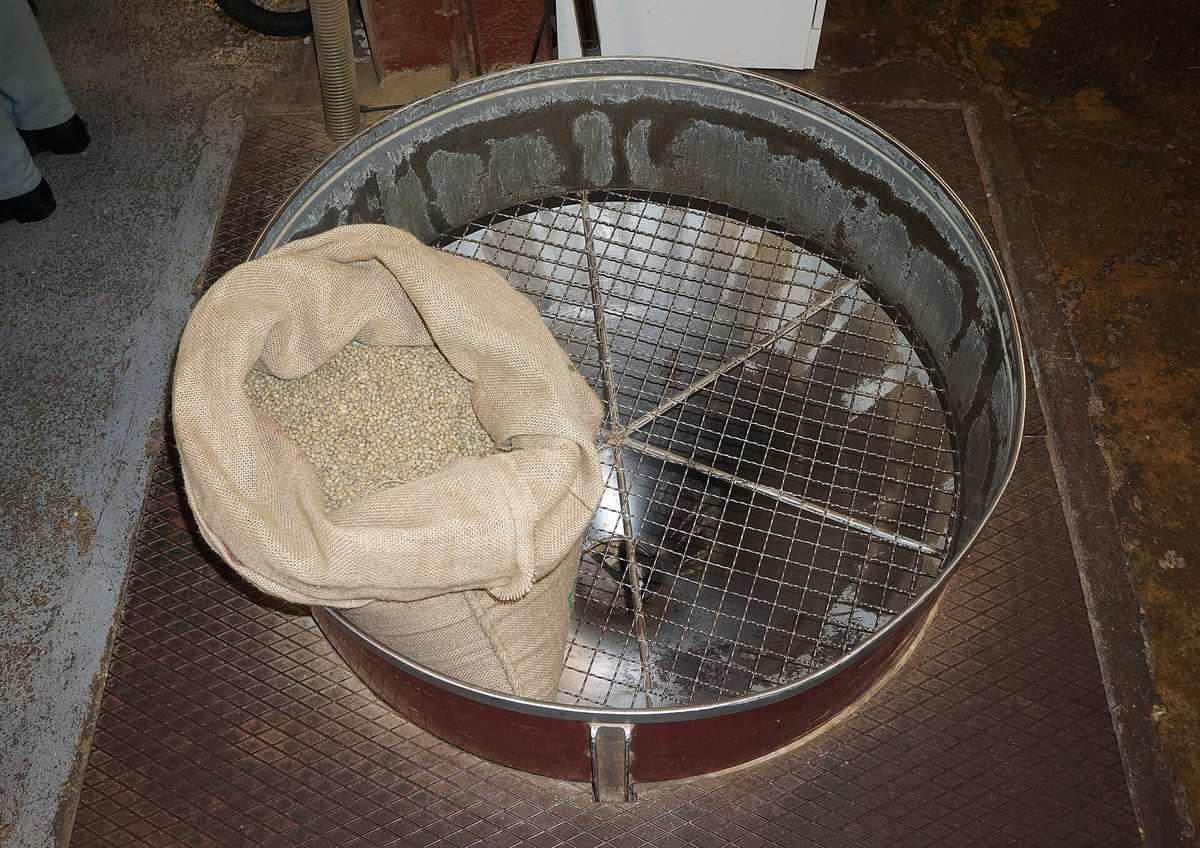
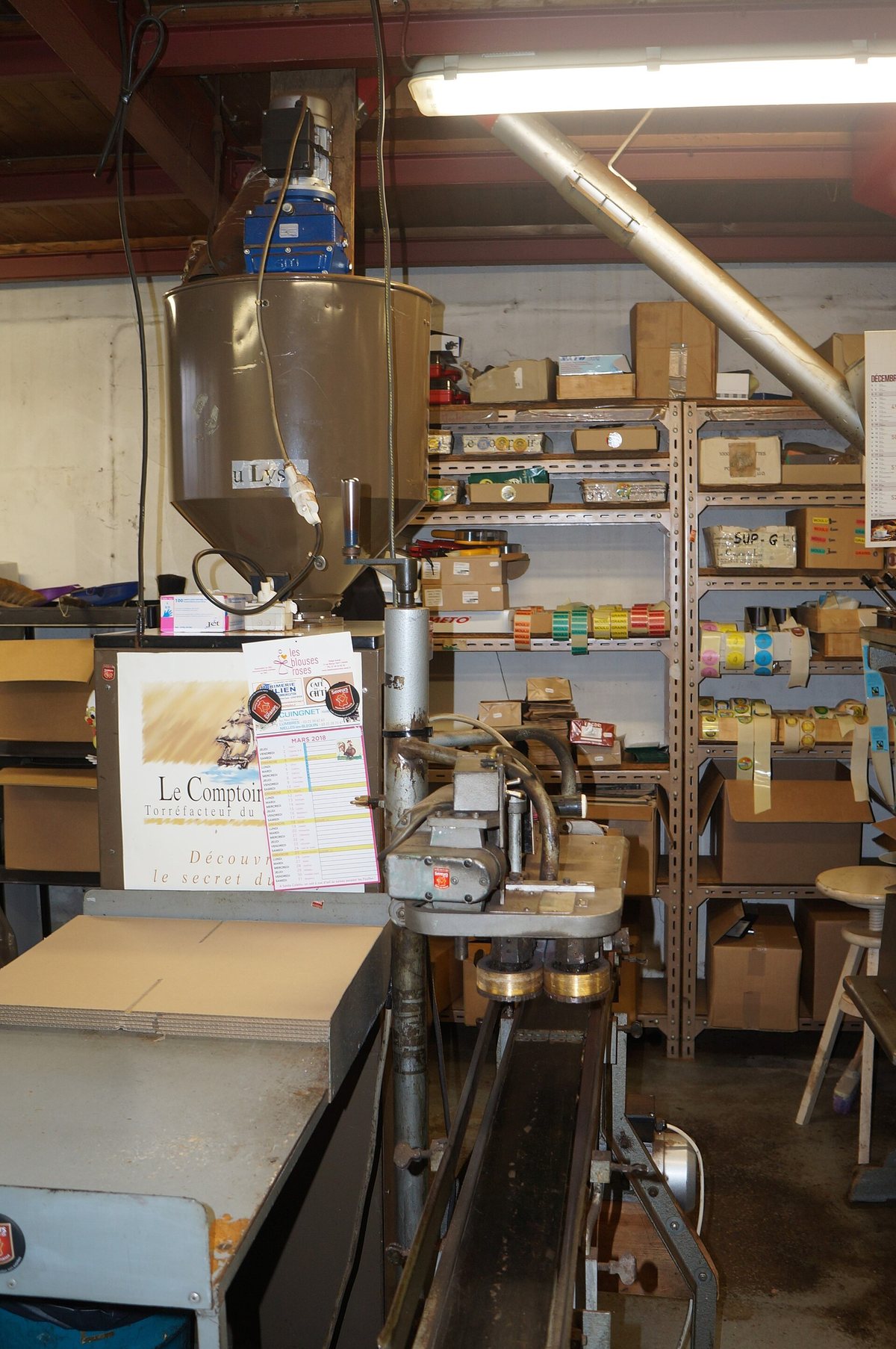
- Cooling tray — a perforated tray with a motorized stirring arm and vacuum fan pulling air down through the beans. The “cool it fast” rule from roasting by hand gets more urgent at scale: 5 kg of hot coffee holds a lot of heat and keeps roasting itself for minutes. Not optional at any volume.
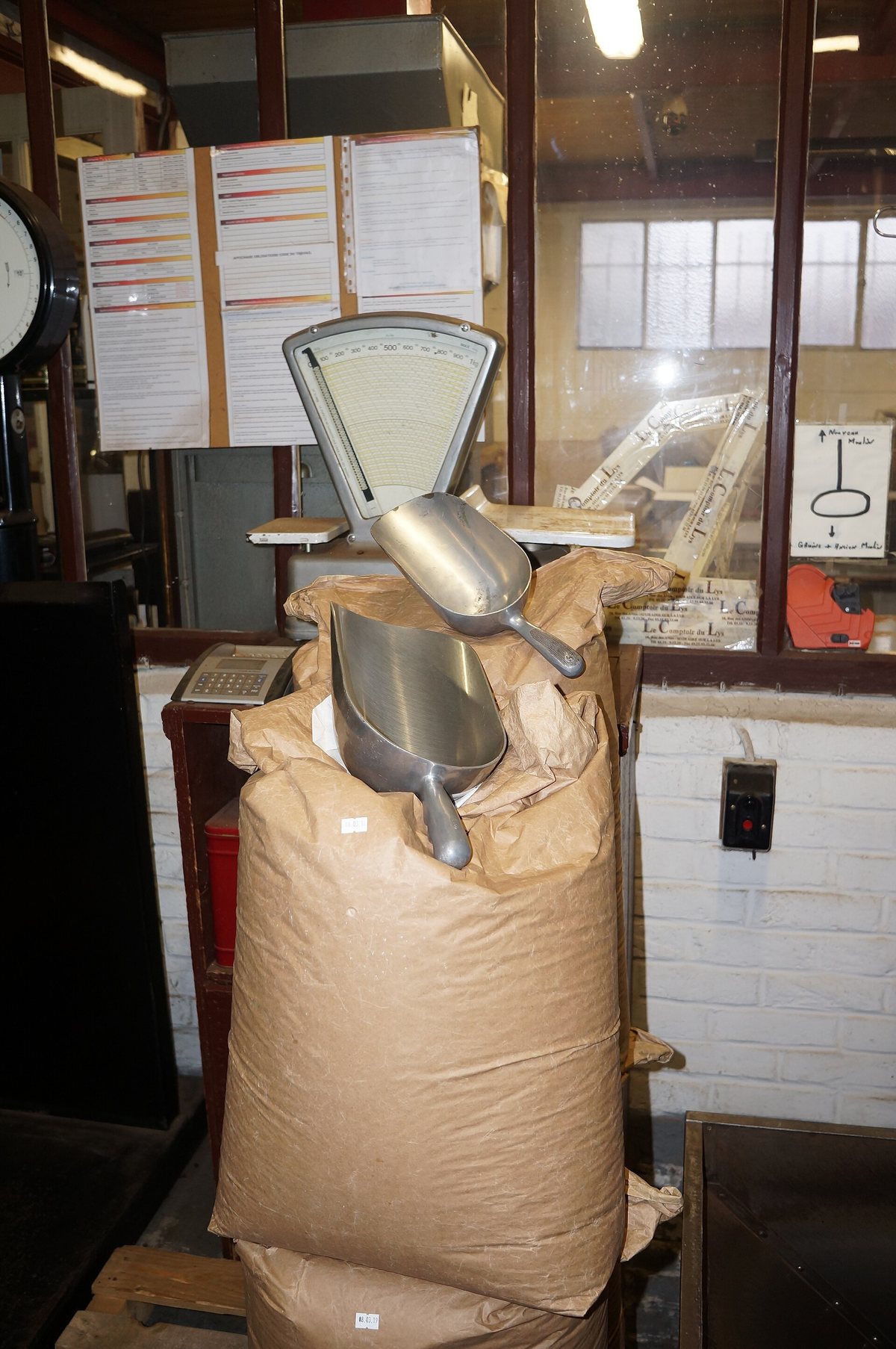
- Destoner — a gravity/air separator pulling stones, metal, and dense debris out of the bean stream. Green coffee is dried on patios and sorted by imperfect machines, and stones get through. One stone in a grinder is a several-thousand-dollar noise.
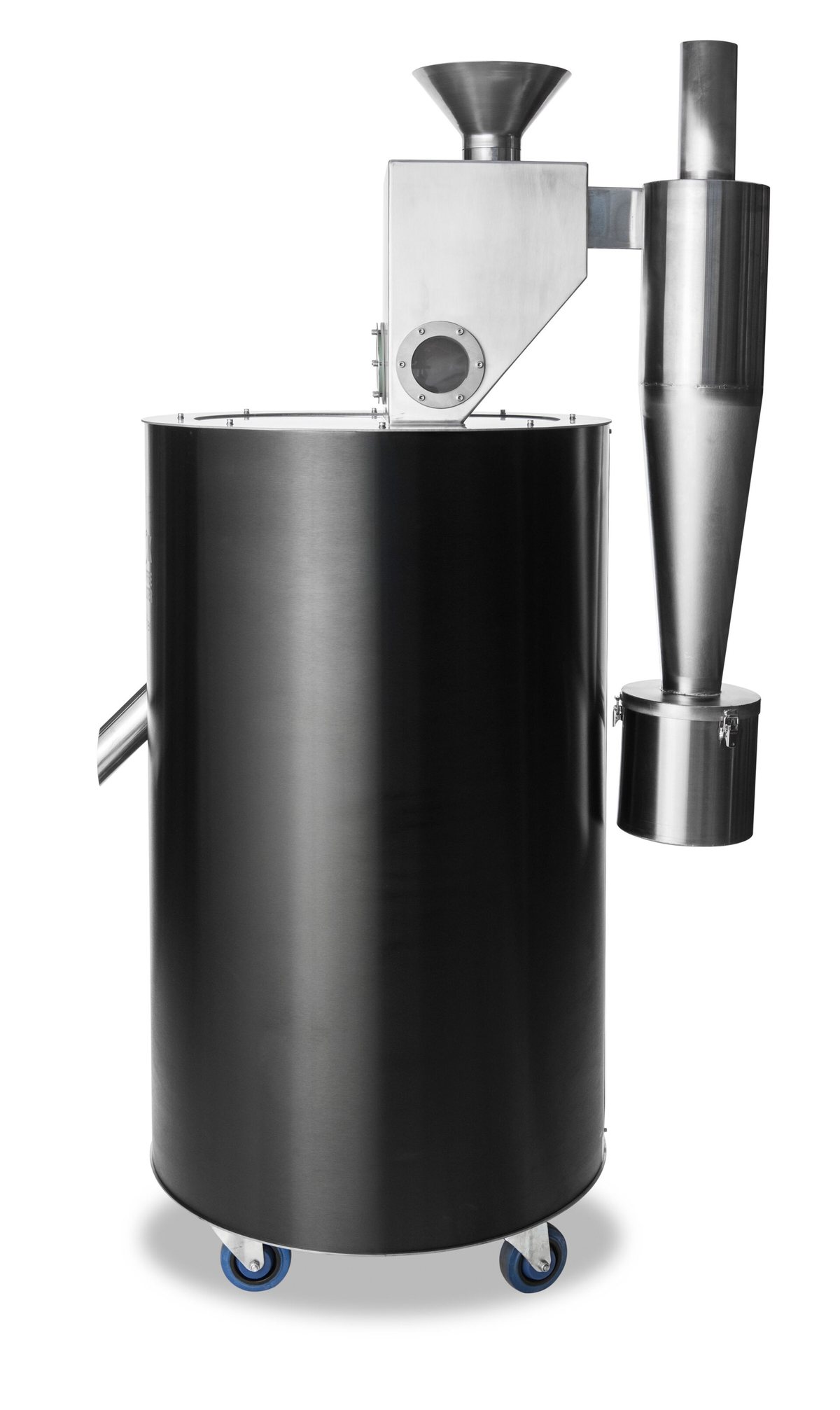
- Cyclone — spins chaff out of the exhaust into a bin. A fire-safety device as much as a cleanliness one: chaff is dry, light, and flammable, and letting it build up in ductwork is building a fire. Cleaning it is a daily task, forever.
- Green storage — coffee comes in 60–70 kg sacks. Somewhere dry and cool for them, and a way to lift them that isn’t your back.
What I’d actually buy, at each stage
Just trying it. Nothing. Use a skillet or a Whirley-Pop, and spend $20 on green instead — most people who buy first end up with a dusty roaster.
Good coffee every week. A Fresh Roast SR800. Cheap enough that quitting costs nothing, and the correct first purchase for approximately everyone.
Espresso-grade beans and a real batch. A Behmor 2000AB Plus if roasting indoors matters — that catalytic converter is the feature you’re buying — or a Gene Café CBR-101 if you can vent.
Serious, and want to understand what I’m doing. The Aillio Bullet R1 V2 — the one I’d keep. The rung where you stop guessing and start converging, and enough machine to quietly start a business on. If repeatability with zero operating is the goal instead, the Kaffelogic Nano 7.
Opening a café and roasting my own. A 3–5 kg drum, and buy used — these run for decades and the used market is excellent. Do the arithmetic above before picking a size, then buy the next size up. Take the manufacturer’s training; Mill City’s is worth the airfare.
A roastery. Loring if the smoke story and the fuel bill matter — at that volume you’re buying your way out of an afterburner and possibly a permitting fight. Probat if you want the benchmark. And plan the building before the machine.
The through-line is the same one I land on with ovens: buy the machine that lets you start, and buy it good enough that you keep it after you’ve outgrown it. A Fresh Roast still roasts a sample lot after you own a Bullet; a Bullet still roasts a single-origin special after you own a 5 kg Diedrich. Nothing here becomes garbage when you climb past it — which is exactly why you shouldn’t skip rungs to get somewhere you haven’t earned yet.
Now go pick some green, find out where it came from, and roast it.
Comments (0)